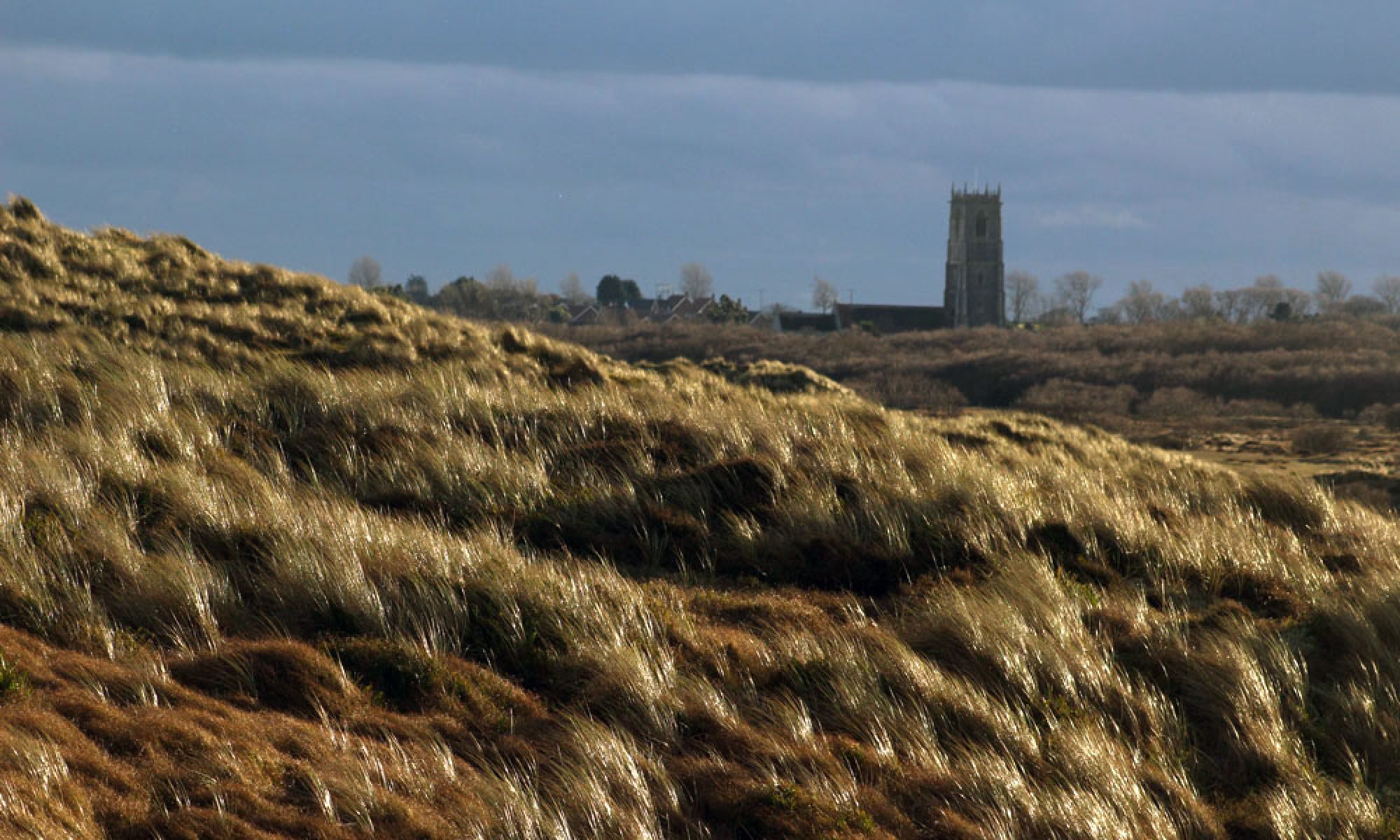
St Kilda

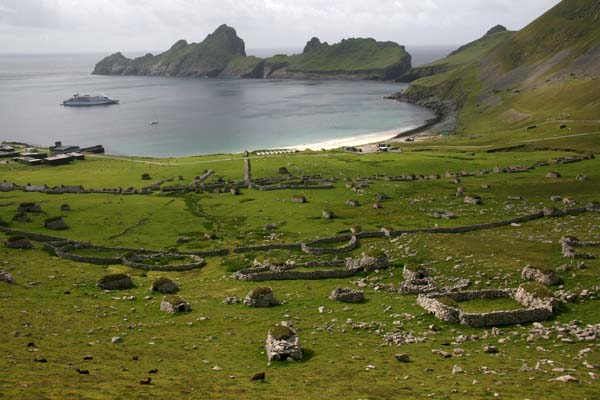
The St Kilda archipelago lies a choppy 45 miles west across the Atlantic Ocean from the Isle of Harris in Scotland’s Western Isles. Constantly settled from at least 5,000 years ago until 1930, when the inhabitants were finally evacuated, it is impossible to overestimate the brave determination of those early settlers who, seeing these rocky islands poke tantalisingly above the horizon in the far distance, pointed their flimsy boats in that direction and rowed through murderous seas to reach new land.
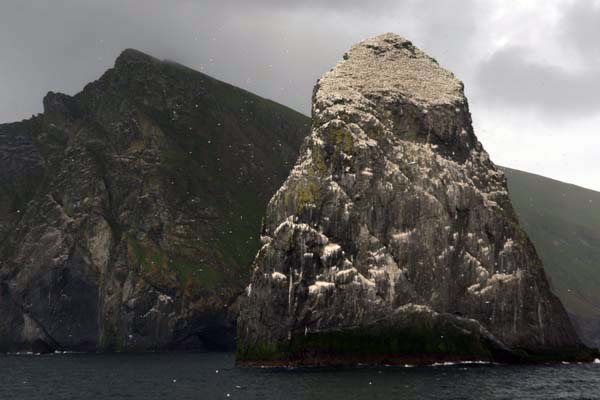
Rather than fish, the economy of the island – the main and only consistently settled one was also the largest, Hirta – was always linked to seabirds – gannets and fulmars in particular – and bare-footed St Kilda men used to gamble their lives dangling on horsehair ropes down treacherous cliffs faces in order to collect nesting birds and eggs.
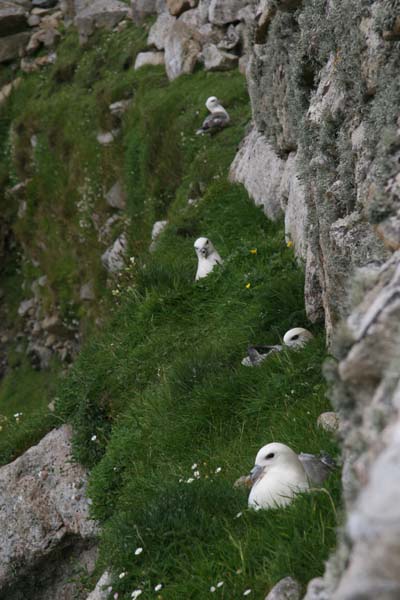
Once upon a time there was a demand for fulmar oil as a fuel and St Kildans were able to barter this plentiful resource for the items they needed like grain and tobacco. But the coming of the modern age meant that the demand for this commodity waned dramatically and many of the island’s young people started to leave in order to seek their fortune on the Scottish mainland and even as far afield as Australia. Given this sudden decline in what had hitherto been a small but relatively stable population, it was perhaps inevitable that Hirta’s population would finally ask to be evacuated in 1930. For their own part, centuries of inbreeding and the islanders’ insistence on using fulmar oil to anoint the umbilical cord of newborn babies had already ensured a savagely high infant mortality rate. An evacuation was arranged but, despite having spent their entire lives on a windswept island entirely devoid of trees, the displaced islanders were offered jobs in forestry on the mainland. Such ironies did not ensure a happy outcome.
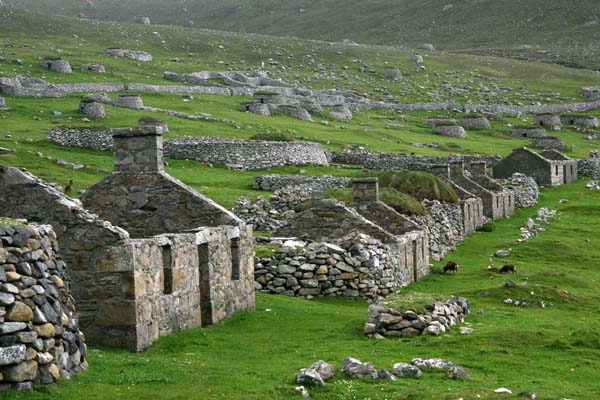
Hirta’s cottages, cleits and blackhouses may be empty and roofless now but the fulmars and gannets are still there in number, as are the high winds that characterise this archipelago, the most westerly situated group of islands in the entire United Kingdom. Visiting St Kilda is hardly straightforward even today – there is no regular transport and it’s a long rough sea trip west from the Western Isles. I am lucky to have arrived here yesterday morning on the MSS Clipper Odyssey on its Island Race expedition cruise around the British Isles. Today we visit Barra and Mingulay in the southern Outer Hebrides before heading south towards Donegal in Eire. By the miracle of a satellite-connected internet connection I am able to communicate this fact whilst on board (the connection was too slow to add images though – I added these later).

At over 8 degrees west, East of Elveden it certainly isn’t – West of Wester Ross might be a better description – but the St Kilda archipelago in the shape of Hirta, Soay, Berneray and other monumental stacks is still a place apart worthy of honour in any discussion of Britain’s special places. Not only does it stand at the very edge of the British Isles but it would seem to lie at the very edge of Europe and the entire Western world.

St Kilda already feels like a dream just one day after having left its shore. But St Kilda does not exist (the name is probably just a Norse corruption); you will find no saint of that name in the hagiographic annals.
Architecture without Architects

It all started more than 25 years ago when I bought a book called Architecture without Architects in a second-hand bookshop. The book, pithily subtitled A Short Introduction to Non-Pedigreed Architecture, and authored by Bernard Rudolfsky, came as a revelation, presenting all manner of strange and wonderful vernacular buildings from all over the globe.

The book was actually a follow up to an earlier exhibition of the same name at New York’s Museum of Modern Art. Within its pages were numerous black and white photographs of African mud huts, Galician stone granaries, Cappadocian cave dwellings and the tightly clustered dwellings of Italian hill towns. What struck me most though was
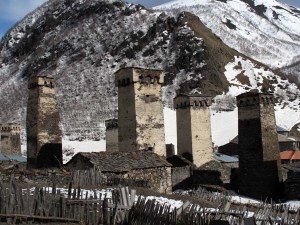
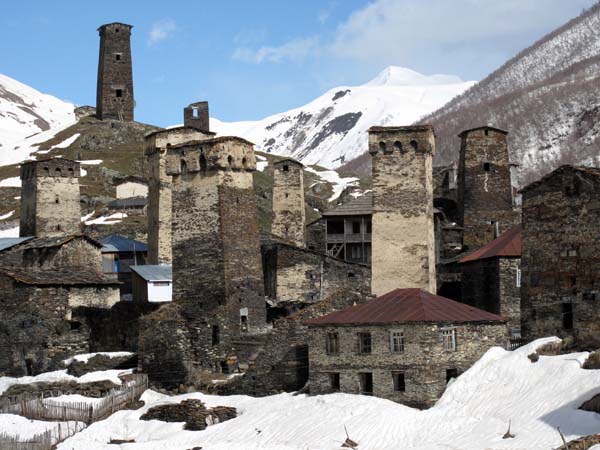
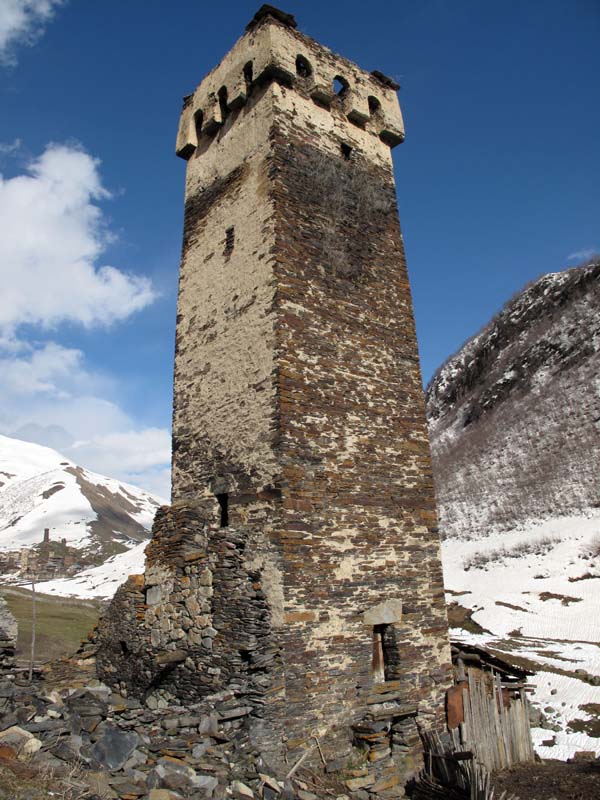
three grainy old photograph of titled: The fortified villages of Svaneti. Of all the fanciful structures depicted in the book, the buildings in these images looked the oddest, the most improbable of the lot – menacing stone skyscrapers set against a snow-covered mountainous backdrop. Accompanying the photos was a little text that explained that they
dated back to the 12th-century and were built and maintained by local families as defence against the ‘blood feuds and vendettas that raged unchecked’ in the region. It didn’t even say which country they were in, just ‘western Caucasus’. They were, I subsequently found out, in the Georgian SSSR of what was then still the Soviet Union.

Almost two decades later I get to visit Georgia – following the breakup of the USSR such things have become altogether easier – but it was not until my third visit to the country that I finally managed to travel to Svaneti and see the towers for myself. Svaneti happens to be home to some of Europe’s highest villages, with permanent settlements where snow lingers late into May, but the region is better known for its unique ancient culture and for its somewhat sinister reputation. Even within Georgia, the Svan inhabitants of the valley are treated with suspicion as Svaneti is usually thought of as a backward, lawless region with a reputation for brigandage. This certainly used to be the case, and until a decade ago Svaneti was a risky place to visit with robberies at gunpoint not uncommon. Thanks to a big clean-up operation a few years ago – the Georgian government is keen to develop tourism – it is now pretty safe.

Visiting Svaneti  for the first time I realise that the place I saw in Rudolfsky’s book all those years ago was a collection of villages  called Ushguli, nestled beneath high Caucasus peaks and stretching high up a valley. At 2,200 metres altitude, Ushguli is probably the highest permanently inhabited settlement in Europe (although currently no-go Dagestan on the other side of the Caucasus range also has contenders to the title) but it is its magnificent medieval towers that make it truly extraordinary. Some have collapsed over the years but there still sufficient to present an imposing spectacle and render Ushguli’s towers a UNESCO World Heritage Site.
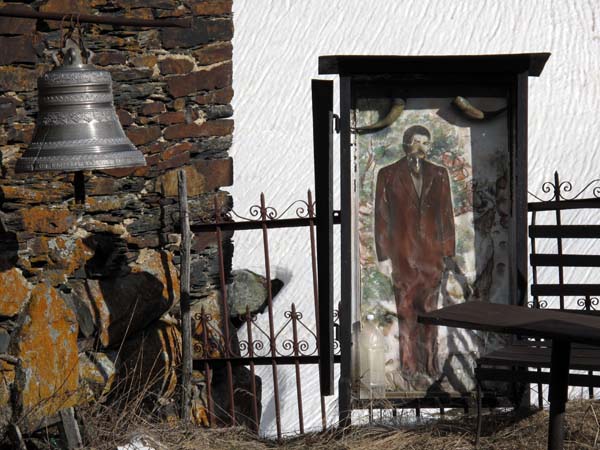
There has never been a better time to visit Svaneti, although things are changing fast – too fast for comfort perhaps. Following centuries of isolation – both the wheel and the internal combustion engine arrived here at roughly the same time during the 1930s – Svan villagers are starting to leave their high valleys for an easier life in Tbilisi, the Georgian capital. The building of a new road will no doubt help accelerate this change and the days of unadulterated Svan culture may now be numbered. For the time being though, travelling there is still to take part in an adventure.

Bradt Travel Guides have a good guide to the country. Authored by Tim Burford and recently updated by yours truly for the 4th edition, it contains all that you need to know about Georgia – Svaneti and Ushguli included.

Azerbaijan – Azerbaijazz

Eurovison Song Contest 2011. This year it is Azerbaijan’s turn to take the honours at the annual whine and cheese fest. As this year’s winners become next year’s hosts, May 2012 will no doubt see Baku, the Azerbaijan capital, shimmering with a million sequins and strobe lights as it reverberates with the overblown oompah-pop that characterises this glamourous event.

So exactly where is Azerbaijan, you might reasonably ask? Is it part of Europe? Well, politically yes; geographically and culturally, not really. What matters here is that Azerbaijan has been part of the European Broadcasting Union (along with Israel and Morocco) since 2008 and so is eligible to enter the annual Eurovision Song Contest.

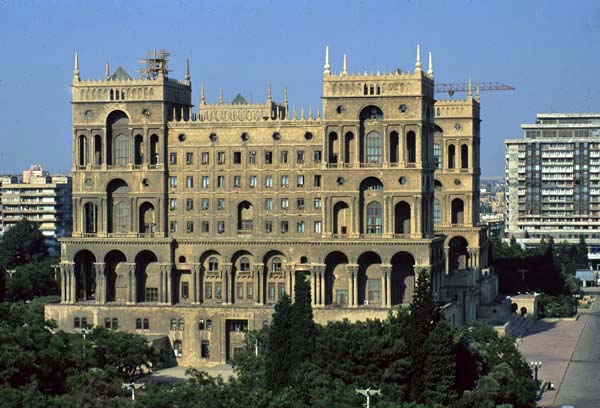
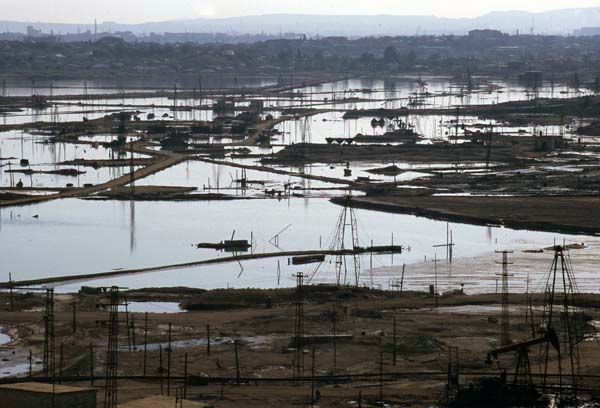
South of the Caucasus Mountains, straddling the Caspian Sea’s dark, once sturgeon-filled waters, Azerbaijan is but a stone’s throw from Central Asia. With Persian, Turkish and Russian colonial influences, current-day Azerbaijan has a culture that owes a debt to all three neighbours. To the casual visitor though, it probably seems more like an oil-rich Turkey than anywhere else and, rather than Euro-friendly pop music, it is the thick black stuff that sweats copiously out of the Apsheron Peninsula and Caspian seabed that normally attracts most attention from the rest of the world. In truth, Azerbaijan’s precise geographical provenance is really not that important unless you are one of those misguided individuals that consider ‘Asia’ to be some sort of pejorative (for instance, try telling someone from Tbilisi that Georgia is not really part of Europe).

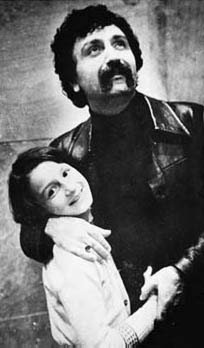
Eurovison notwithstanding, music has long been a thriving force in the country. Even New Orleans-style jazz was once regularly performed in Baku restauarants  in the heady days of the early 20th-century oil boom. During the Soviet period such music was labelled ‘capitalist’ and unceremoniously banned – rather ironic considering that Hitler had already done exactly the same thing in 1933. However, jazz never dies, it just withers a bit, and following Stalin’s death in 1953, a new form called mugham jazz that fused jazz and traditional Azeri folk forms began to emerge in Baku. A major proponent of this new music was the pianist Vagif Mustafazade whose daughter Aziza continues the musical dynasty as a well-respected international artist today. You can read Vagif Mustafazade’s story here.

There’s a small museum dedicated to Vagif Mustafazade in Baku today, and a statue. There are also clubs where mugham jazz is performed nightly by enthusiastic Azeri musicians. In its own modest way, the Azerbaijan capital has quietly become an unpaid member of the international jazz pantheon: New Orleans, New York, Paris…Baku. Not bad for a city that sits 28 metres below sea level. Coincidentally, New Orleans is mostly beneath sea level too so perhaps there is some sort of link between musical innovation and sub-maritime altitude.

Somehow it seems doubtful that there will ever be a statue dedicated to Eurovision 2011 winners Eldar Gasimov and Nigar Jamal.  You probably won’t hear much evidence of Vagif Mustafazade’s mugham jazz in Running Scared, the Eurovision winner either. There again, the UK’s 2011 contenders, the thirty-something ‘boy’ band Blue, manage to disguise their Evan Parker influences pretty comprehensively too.

Metal Box

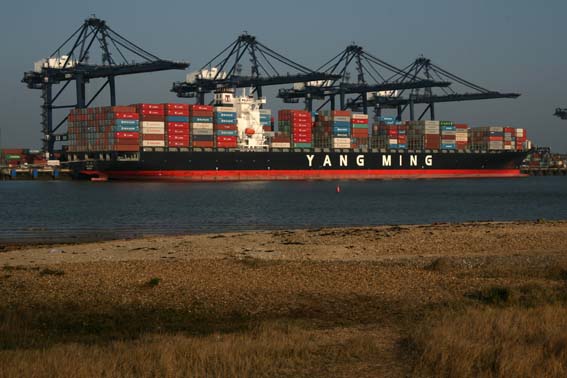
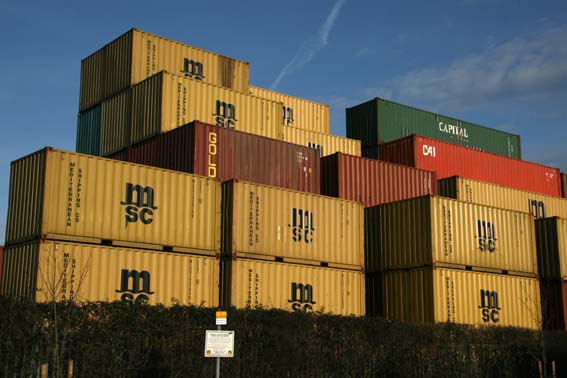
There are strange low hills in the vicinity of The Port of Felixtowe in Suffolk. Not the product of tectonic upheaval or Ice-Age earth shifting but man-made plateaus of painted steel. Around what is the largest container port in Britain vast acres of stacked shipping containers afford the local topography a distinct Legoland character. Ugly they may be, but containers can be piled high, safely and efficiently – this is really the whole point of them. Cross the Orwell estuary to the other bank and the mechanics of the terminal seem somehow easier to discern from a distance. Looking north across the water from Shotley Peninsula the enormity of the container ships becomes all too apparent, as does the immense volume of their gargatuan payloads. The juxtaposition of the tranquil saltmarshes, silent but for the piping of waders, and the distant metallic rumble of behemoths docking across the water strikes an oddly unsettling note.

There is something a little inhuman, sinister even, about shipping containers. Perhaps they are too much like a human-sized tin cans for comfort. They evoke fears of incarceration, claustrophobia – a living grave. Such fear affords them considerable dramatic possibilities.  A European shipping container was central to the plot of the second season of the acclaimed HBO production The Wire. In this, McNulty, the anti-hero cop who had been exiled to  Baltimore Docks, found himself involved in a case concerning a shipping container full of dead young East European women, the victims of a people trafficking scheme that had gone terribly wrong. Even the British soap Brookside once invoked a container for criminal purposes when top-dog ‘scally’ Barry Grant locked a business opponent in a shipping container at Liverpool Docks. We never learned of his fate – or if we did, I had stopped watching by then. Containers seem to fit snugly into the lexicon of crime pulp fiction and the threat of tinny incarceration provides a welcome alternative to hackneyed themes of ‘swimming with fishes’  or being concreted into flyovers.

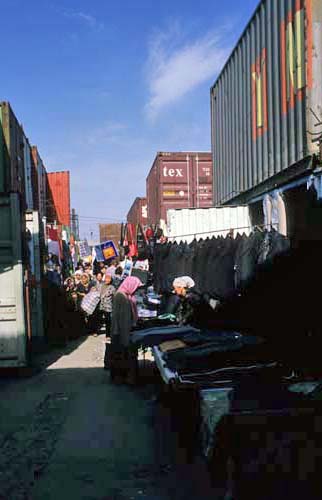
Shipping containers can be found in the most unlikely of places, not just ports. Travel about as far as you can get from an ocean – Central Asia, say – and you’ll still find them in large numbers, not so much as moveable storage but more as make-do business premises. Both of Kyrgyzstan’s two largest markets make extensive use of them, double-stacked in parallel rows to create narrow shopping streets of easily-secured retail premises. In the capital Bishkek, you can find pretty well anything you might need at the Dordoi Bazaar north of the city. While the sellers are mostly Kyrgyz, many of the shoppers strolling the market’s metallic thoroughfares come from further afield – Kazakhstan or even Russia.

Larger still is the market at Kara-Suu right on the Kyrgyz-Uzbek border close to Osh in the south. This one really is the largest market in all Central Asia. Kara-Suu is the grey economy writ large. Almost entirely populated by ethnic Uzbeks, this is the place to buy very cheap Chinese goods -clothes, electronic goods, household wares – just don’t expect a guarantee or 6-month warranty. The market is long-established and dates from Soviet times when the meandering Kyrgyz-Uzbek frontier really did not mean that much. These days Kara-Suu is closed down periodically by the authorities but most of the time shoppers from Uzbekistan are able to sneak or bribe their way across this the border to buy goods at much cheaper prices than at home.   Sometimes they even bring raw cotton to sell at a premium in Kyrgyzstan.

Bazaars like Kara-Suu are hardly typical. Away from Bishkek, Osh and a handful of small cities, Kyrgyzstan is by and large rural – wild, mountainous and very beautiful. The country may be very long way from any ocean but it does have some stunning high-altitude lakes like Issyk-Kul and Song-Kul (above). No container ships, though.

White City Blues

A couple of weeks ago I attended an event called A Taste of Serbia in London. The evening was arranged by the National Tourism Organisation of Serbia and we were all generously plied with tasty nibbles and a wide range of excellent wines from that country.

Of course, this being a press event the main emphasis was to promote all that Serbia has to offer British would-be travellers. To serve this purpose a promotional video was shown that featured a Belgrade DJ walking through the city’s streets whilst waxing lyrical about his hometown to chill-out music. The video showed a cool yet ecstatic crowd dancing in a Belgrade nightclub before cutting to our DJ hero walking through oddly unpeopled streets; then it swooped to Kalemegdan Park before cutting to the DJ encountering a dark-eyed beauty in an apparently deserted shopping mall. It told a story, certainly, but it seemed a strangely incomplete one.

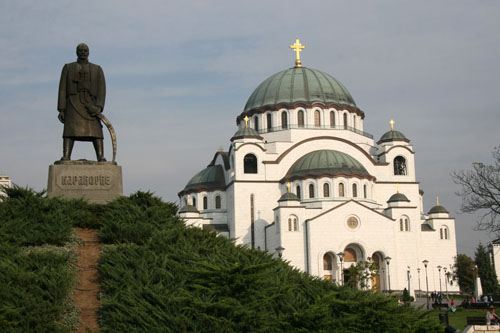
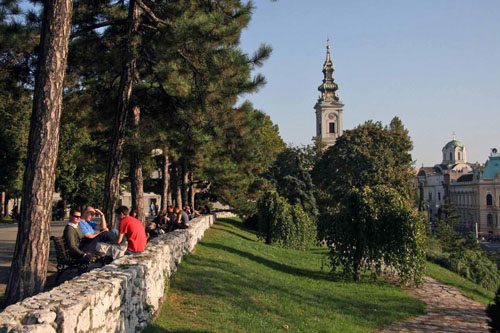
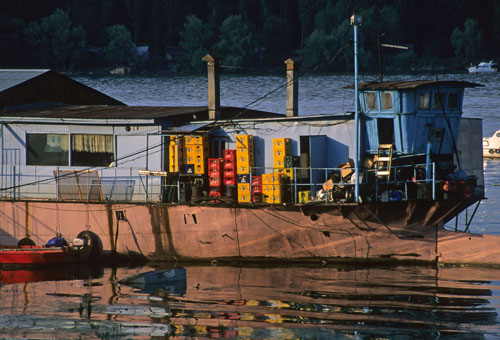
I recognised Belgrade alright but the video did little to flatter the Serbian capital. OK, it may not be Prague but the city does have a certain maverick charm that had been sorely overlooked. Maybe it was trying attract a young, ‘cutting edge’ crowd but the promotional film made the ‘White City’ look grey and drab — just like the stereotype.  As someone remarked as we watched it: ‘There’s nothing in this video that makes me want to go there.’ I had to agree. Where was Skadarlija – the so-called Bohemian quarter? Where were the floating splav cafes and restaurants on the river? Where were all the quirky cafes and wacky restaurants? Why was Kalemegdan Park, that wonderful spot above the confluence of the Danube and Sava rivers, so devoid of people? Where was the Zemun waterfront? Where was the Danube? Ada Ciganlija island? The list goes on. Why didn’t the film crew wait for a spot of sunshine to brighten things up?

Anyway, Serbia has a lot more to it than just its capital city, wonderful as that may be. To me, it’s forested hills, hidden Orthodox monasteries, Roma men driving carts, cartoon-book haystacks in fields, old rusting Zastavas serving as corn stores, solitary men fishing in rivers, storks clattering  their bills on village roofs. It’s the smell of Turkish coffee, grilling meat, roasting peppers and lime blossom. It’s the taste of sljivovica (plum brandy) and kajmak (a sort of cream). It’s tall men and elegant women; sometimes even tall women and elegant men. It’s the sound of violins, accordians and shuffling feet.

Perhaps all these things that I hold dear are considered a bit too backward and Old Europe for the marketing people? Still, at least they noticed the dark-eyed beauties. They got that bit right.

Crossing the Bridge

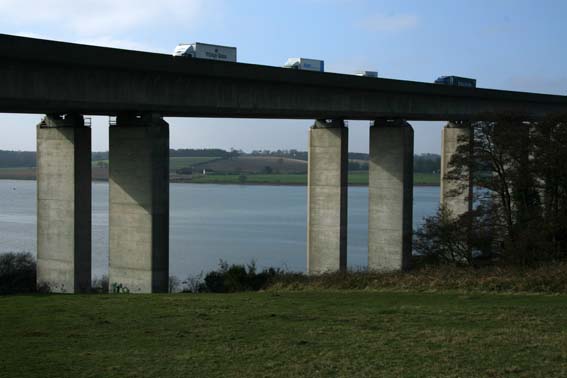
A little south of Ipswich, the vast concrete span of the Orwell Bridge stretches across the eponymous river like a conveyor belt to Hades. Well not Hades exactly, but the Port of Felixstowe. A constant rattling procession of lorries shunt to and fro the port, their drivers barely aware of the river they are crossing or the county town they are skirting by. The ciphers that identify their payloads have become household names — Maersk, China Shipping, Cosco – those magic metal boxes that contain the necessities of 21st-century life. Well-travelled, and more often than not coming from the Far East, the containers are the camels of the latter day Silk Road: a trade route, which, as any historian will tell you, was about a lot more than just silk.

The bridge might appear to be no place for pedestrians, but they are tolerated, and walkers intent on completing the Stour & Orwell Walk between Languard Point and Cattawade, and wishing to avoid the extra six or so miles of the alternative ‘Ipswich Loop’, are obliged to cross it on using the walkway on its southern side. The approach on foot from Orwell Country Park is intimidating – the noise, speed and volume of traffic all contributing to the inevitable feeling that this is an unnatural place for hikers to be setting foot. The 30-metre drop to the Black Ooze (yes, it really is called that) of the River Orwell below is held at bay by just a concrete ledge a little more than a metre high. This is certainly not comfortable strolling territory, nor a place to suddenly become aware of a hitherto undiscovered acrophobia.

Steps lead up sharply to the bridge walkway, past a Samaritans sign that bears a short but kind message and a phone number. Like steps to the gallows, the certainty that you are shadowing the last steps taken by some desperately unhappy souls is chilling. At the top is a free phone, proof that someone cares, although the lorries flying by seem wholly indifferent. The views along the Orwell estuary are pleasing – green fields, houses snuggled in woodland, little boats bobbing in silver water – but the constant thrum of the traffic, and a tangible sense of alienation, do not encourage lingering. The walk across takes around 15 minutes.

Bridges are powerful metaphors for the journeys of life, for transformation. The novelist Ian Banks wrote an entire novel – The Bridge, no less — using an enormous industrial super-complex of a bridge as the dream environment of his comatose crash victim protagonist. Religion and mythology make good use of the bridge as metaphor too and the crossing of a body of water — the River Jordan, River Styx — is ascribed a spiritual meaning. Most of the time though, our concerns are more mundane: if crossing the Orwell Bridge on foot is disturbing then it is because of its height and heavy traffic as much as its psycho-geographic imprint.

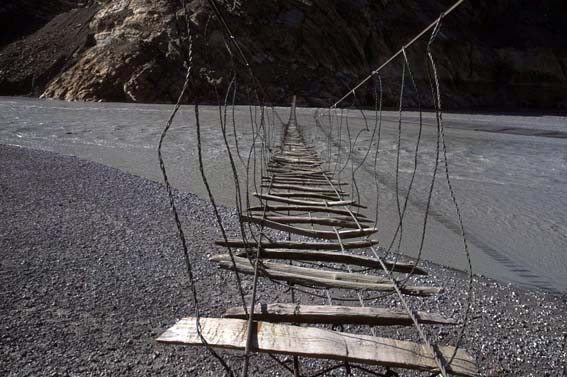
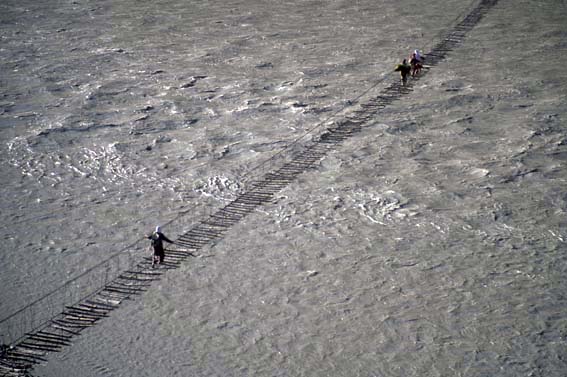
Elsewhere in the world, where health and safety concerns are not held as sacred as they are here in the West, dodgy-looking footbridges have been used daily for generations without much fuss. The one illustrated here is over the Hunza River in the far north of Pakistan. To be honest, it is a little nerve-wracking to traverse, especially when local villagers join you and the bridge sways nauseatingly above the rapid rock-filled glacial river beneath. More alarming still is to cross halfway only to discover a missing slat and the necessity of making a jump to the next complete one.

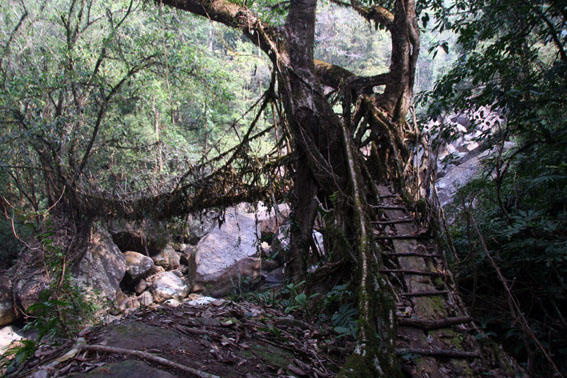
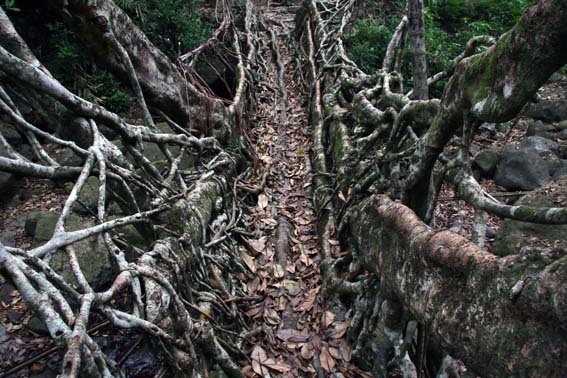
In contrast, this footbridge feels much safer; nurturing even. Perhaps it is its solid organic nature that reassures, and also the surprising realisation that it hardly sways at all? This remarkable feat of bio-engineering, which resembles something that Frodo might have encountered in The Lord of The Rings,  is one of many living root bridges found in the deep, rain-washed valleys of Meghalaya, northeast India. Fashioned from the living roots of fig (Ficus elastica) trees that grow alongside the region’s turbulent monsoon streams they take decades to build but last for centuries. You can read my article on them in Geographical magazine here.

Returning closer to home, to the Waveney Valley in fact, here is a short extract from Slow Norfolk & Suffolk that describes an encounter on the bridge across the Waveney at Mendham on the Suffolk/Norfolk border. Perhaps bridges do affect us psychologically more than we might credit?

This is classic Waveney Valley scenery — the sort of thing Munnings might have painted if he had not concentrated on horse fairs or attacking modernism quite so much. It’s the kind of landscape that brings reverie. The iron bridge crossing the Waveney seems like a giant staple attaching Norfolk to the Suffolk mainland. Brown cows wandering the meadows contentedly graze and flick flies away, keeping their eyes on a pair of locals fishing beneath the trees and catching nothing. As poplars rustle in the breeze, the very English sound of an accordion drifts down from the Munnings pub. It could almost be the 18th century, if it wasn’t from the fishermen’s car parked by the road. As I am taking all this in, a man who is clearly the worse for drink ambles down the road towards the bridge. He stumbles exactly halfway across, pauses for a moment, then goes back the way he has come. It is as if he is fearful to place his feet on Norfolk soil, or there is some sort of invisible barrier. Two minutes later, a sleek Jaguar arrives from the north to pick the man up. Then it turns around and ferries him back across the bridge… into Norfolk.