![2029[1]](https://eastofelveden.com/wp-content/uploads/2014/03/20291.jpg)
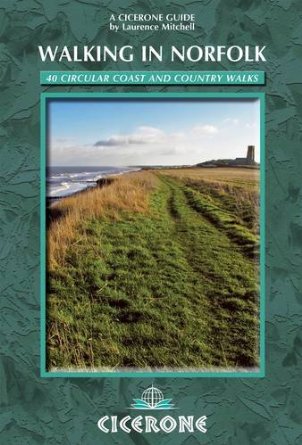
Well, it is finally out – my new book Slow Travel Norfolk.
Here is a brief extract from the book about an extraordinary rook roost that takes place at Buckenham Carrs each winter:
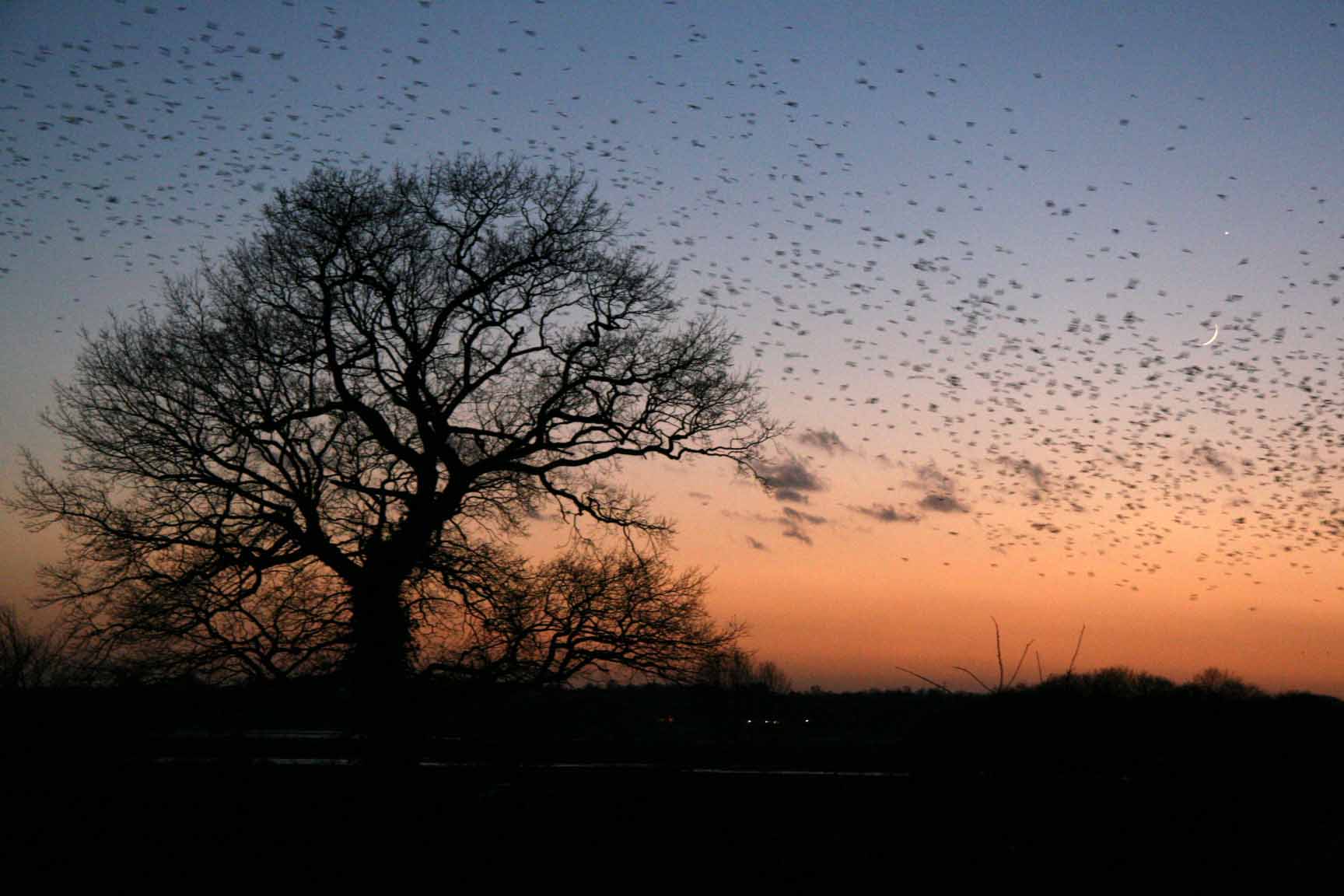
A large wooded area just east of Buckenham station, Buckenham Carrs is in winter home to an enormous rook and jackdaw roost mentioned in the Domesday Book. It’s thought there may be as many as 80,000 birds. The roost is the central motif of Mark Cocker’s Crow Country, which celebrates both crows and the Yare Valley where he lives. The Buckenham roost, which takes place in the winter months, roughly between late October and March, is quite a spectacle to behold, a natural phenomenon that has been taking place long before the fields were ploughed here and the church at Buckenham constructed. Ideally, you’ll want a crisp winter’s evening with a clear sky and a full moon. The best vantage point is to walk up the narrow road from Buckenham station until you reach a copse on the left with a small ruined brick shelter. You’ll see it all from here. The performance – if you can call it that – is a slow burn. Just after sunset, groups of rooks, and some jackdaws, fly in to gather on the large ploughed area immediately to the west; others land in the trees that surround it. Some have come quite a long way to be sociable but the crow conversation taking place sounds rather tetchy, all guttural complaining caws. Momentum slowly builds as more and more groups of birds fly in to land in the field. As the light fades, the noise from the congregation builds louder and eerily expectant: something is clearly about to happen. Eventually, when the darkness is almost complete some sort of signal spurs the birds airborne and the sky blackens with rooks that swirl noisily east to settle in the woods of Buckenham Carrs where they will spend the night together. It’s an astonishing, almost primal, event. One that almost laughs in the face of man’s perceived dominion over nature. No collective noun can adequately describe it: a building of rooks, a train of jackdaws. It’s less a murder of crows, more a mass execution.
For an another take on Slow Norfolk, here is a lovely post about Going Slow on the north Norfolk coast on The World According to Dina, which generously mentions my book too.
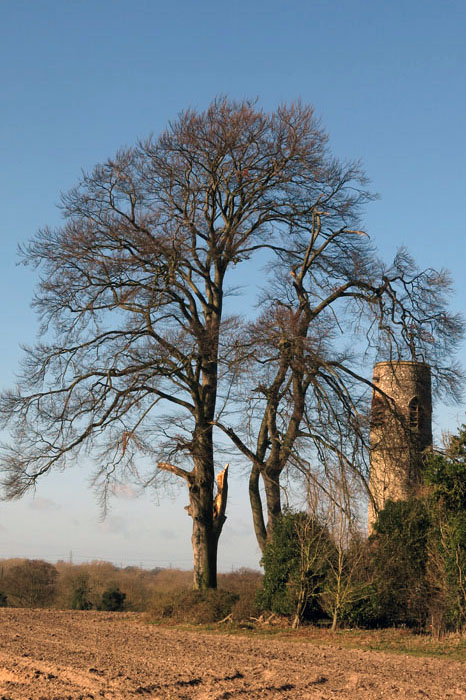
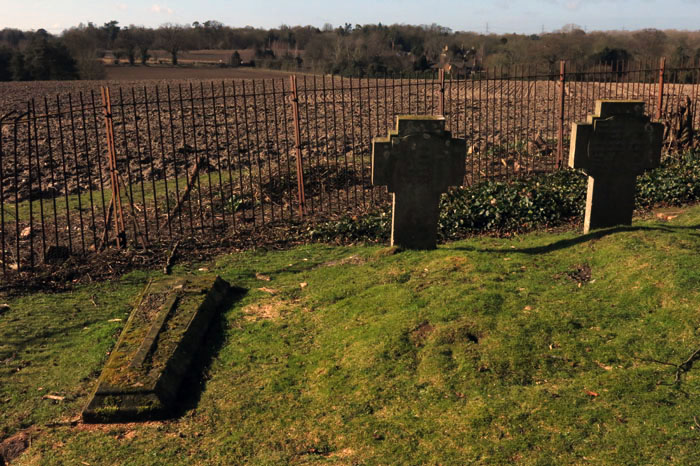
 A little way south of Norwich, standing atop what counts for a hill in these parts, is a tiny roundtower church nestled amidst trees. All Saints Church stands above the small village of Keswick in a crumpled corduroy landscape of wintry ploughed fields. Like most of the territory of this urban fringe, the church lies within the acoustic shadow of the city’s southern bypass and the dull thrum of traffic melds with the chatter of birds in the trees and hedgerows – mostly finches, tits and blackbirds at this time of year. Across the valley, a thread of pylons leads inexorably north towards Norwich where they will deliver electricity to power the city’s PlayStations, fridge-freezers and TiVo boxes.








![U237135ACME[1]](https://eastofelveden.com/wp-content/uploads/2013/09/u237135acme1.jpg)
![1849[1]](https://eastofelveden.com/wp-content/uploads/2013/08/18491.jpg)