Rain

Lying in bed this morning with the curtains still drawn it was obvious enough that it was raining outside, the thrum of workday traffic softened to a watery swash. Soon the hum became augmented by the unmistakeable sound of running water on the street – the drains temporarily overloaded such that a little stream was flowing downhill along the kerbside for a brief minute or two. This soothing sound was soon interupted by the piercing screams of a group of girls on their way to school – ‘Aaargh! Oh my Gaaaad’ – more an exclamation on the shock of suddenly getting wet than any profession of faith. Extreme weather like this tends to provoke a reaction but we are lucky – this is about as extreme as it gets in dry, temperate East Anglia. This year, though, it seems hard to believe that this is the driest corner of the country.

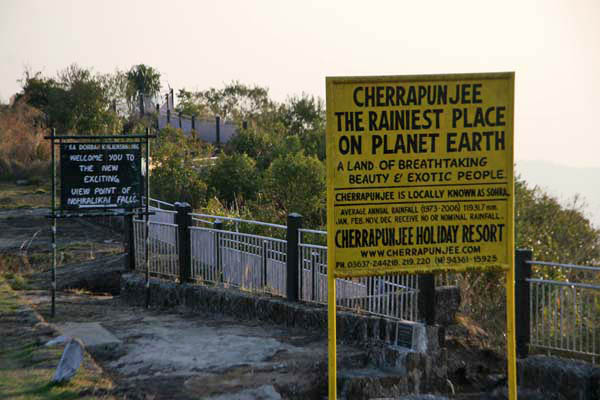
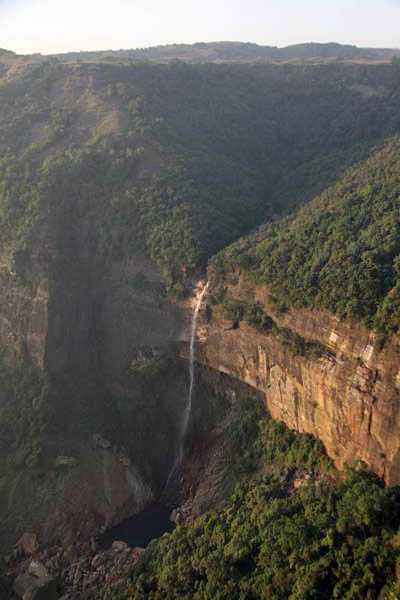
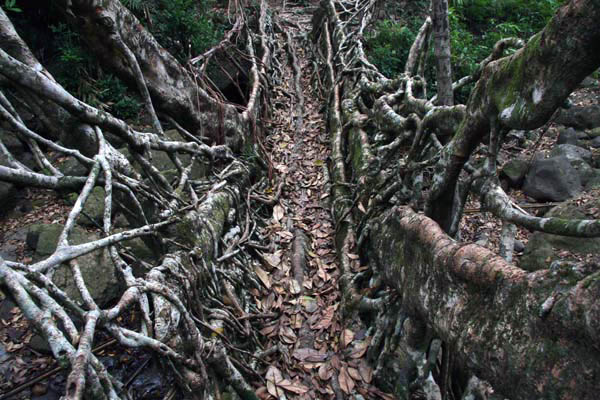
We had been warned: last night kindly TV weathermen had promised a month’s rain in a single day. This, on already saturated soils in many parts of the UK, did not bode well but at least here in Norfolk there would not be any major problems other than temporarily hazardous roads. It is all a matter of proportion, of course. To find really wet weather one has to venture much further east, to Meghalaya state in northeast India where the Cherrapunjee district holds the claim to be the wettest place in the world (although its soggy crown is challenged by neighbouring Maysynram, which likes to assert that it is just that little bit damper). Either way, it is wet: in excess of 12,000 mm per annum, and nearly 25,000 mm back in 1974, which is as much as some of us see in half a lifetime. I spent a happy week in this region a few years ago (admittedly in the dry season). You can read an article I wrote for Geographical magazine about the wonderful living root bridges of the Cherrapunjee region here.

Really wet days like this often put me in mind of places I am especially fond of – the English Lake District, the Scottish Highlands, monsoon India, Meghalaya. I remember washed-out camping holidays with long hours spent peering out of tents looking for a break in the clouds; taking shelter from the monsoon to drink sweet chai in an Indian teashop while the street outside turns into a muddy culvert; the sour smell of city pavements after heavy rain. I am also reminded of my favourite Beatles track, which features Ringo’s finest drumming, superb McCartney bass and a psychedelic backwards-vocals coda for good measure: Rain.

Orford Ness

Walking, whether rambling or hiking in the countryside, or the unplanned urban exploration of a would-be flâneur’s dérive – call it what you will – seems to be the hippest new literary genre. Often found cosily in tandem with what can only be described as ‘the new nature writing’, the genre undoubtedly has its stars. High in that firmament is Robert Macfarlane.

Almost everywhere you look in the literate media these days, Macfarlane’s name seems to crop up. As well it might, as his new book The Old Ways has instantly and deservedly become a best seller. Having already been lauded in features in the Guardian and suchlike, The Big Issue has this week also seized the opportunity to echo the zeitgeist and published a feature on Macfarlane taking a walk in the company of fellow writer and bipedalism enthusiast, the sardonic (and sesquipedalian) pavement-plodder Will Self.  The desired result: an interesting combination of styles and focii in which rural meets urban, wild nature confronts man-tamed landscape, and literary topography melds with psychogeography.  Given such a brief, it seems almost odd that the Psychogeographer General, Iain Sinclair, landscape ombudsman extraordinaire, wasn’t invited along for the stroll. There again, three is a crowd, and Sinclair was no doubt already busy enough with the Sisyphean task of hurling word-bombs of withering allusive prose at the perimeter fence of the Stratford 2012 Olympics site.

The Big Issue walk – delightfully, if almost predictably – took place along the crumbling Suffolk coast, the mysterious region between Bawdsey and Orford Ness, a coastline rich with legend and secret histories: a luminous landscape of shingle, rare birds and nuclear power stations where the mud itself murmurs of UFO sightings, secret weapons testing, silted estuaries, lost ports and sea-claimed monasteries – the most distinctly ‘Here be Dragons’ patch on the East Anglian map. Pleasingly, the Will and Rob walk also took in some of the territory I have described in my own humble walking guide to the Suffolk coast: Suffolk Coast and Heaths: Three Long-distance Walks in the AONB, available from all good book shops and even a few bad ones.

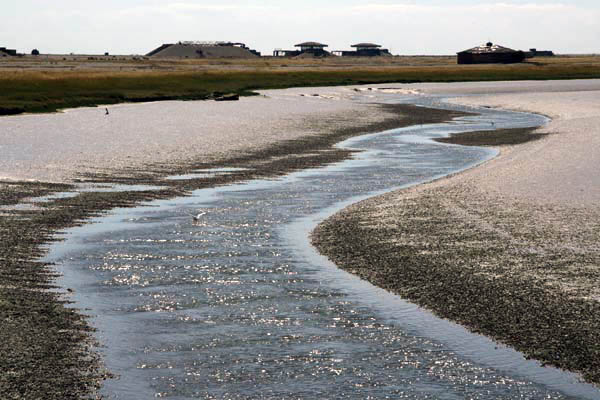
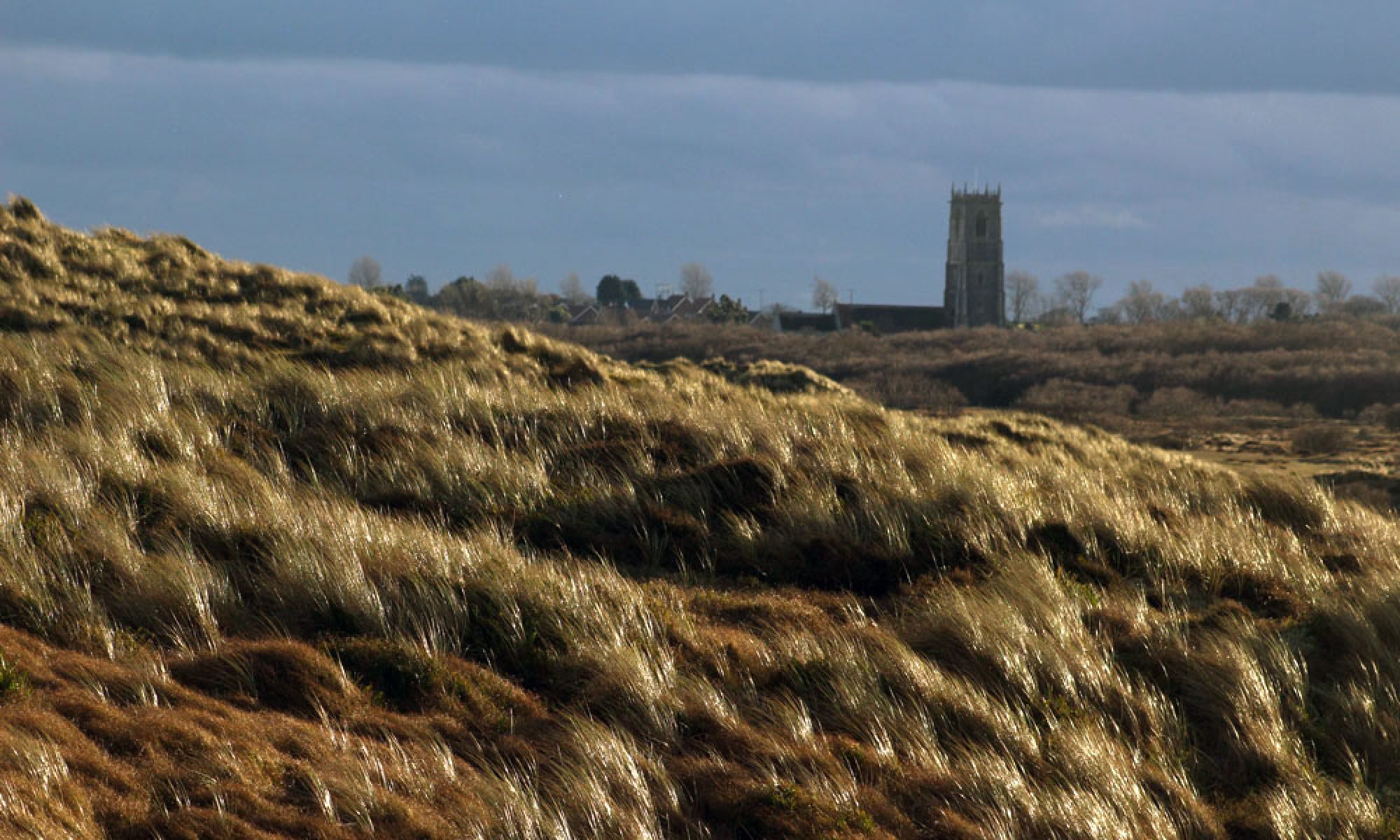
The Macfarlane-Self walk concluded at the lighthouse on Orford Ness, the mysterious island-like shingle spit that stretches south from Aldeburgh. Orford Ness is bypassed by the Suffolk Coast Path but it does feature in Slow Norfolk and Suffolk, another book of mine that hurrahs the Suffolk coastline. Here’s a brief extract:

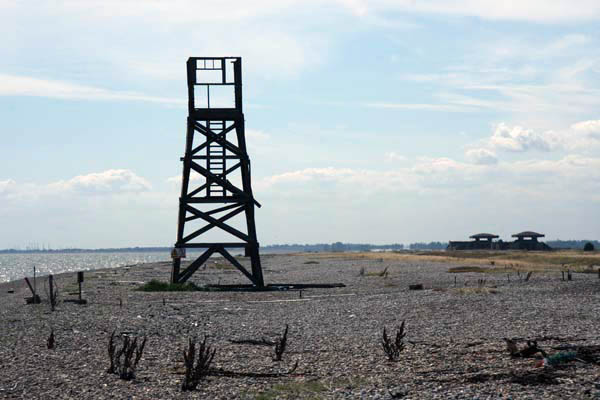
If you are not at Orford Quay for sailing, your eyes will no doubt be drawn across the water to Orford Ness, which exudes an air of mystery typical of places associated with forbidden territory. From 1913 to the mid 1980s, the spit was firmly closed to the public, a top secret, no-go area dedicated to military testing and radar research. The links with its secret past are part of its appeal; otherwise, it’s undeniable that Orford Ness is quite a remarkable bit of geography.

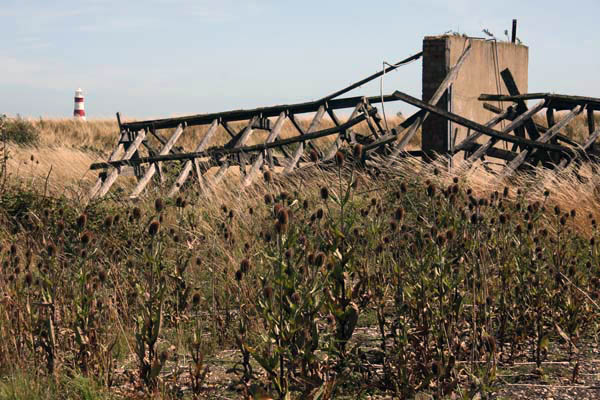
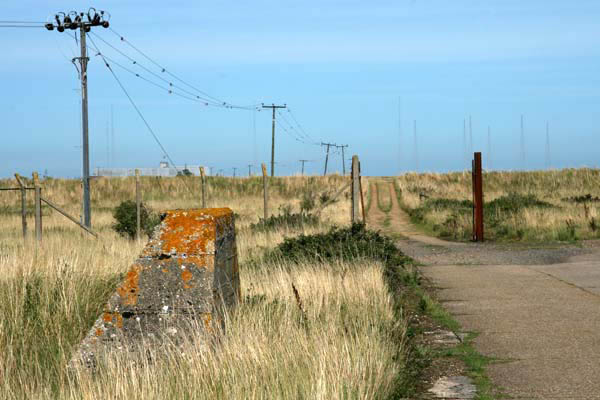
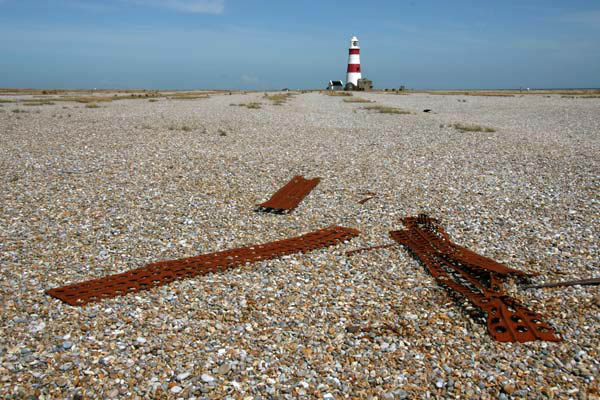
Though hardly pretty, this long shingle spit is undoubtedly evocative. Signs warn about unexploded ordinance, and everywhere you’ll see tangles of tortured metal and wire netting among the teasels in the shingle. Overall, it’s a rather melancholy landscape and you might begin to wonder if Orford Ness should actually be ‘orfordness’, a state of mind, rather than the name of a wayward landform.

Seen from Orford Quay, Orford Ness has the appearance of being an island, and the ferry trip across the River Ore simply adds to this impression, but it’s not – it’s actually a long sand spit that begins just south of Aldeburgh and gradually widens as it follows the coast south. It is the largest shingle spit in England (nearly ten miles long) and it is only when you disembark at the jetty that you can really appreciate the scale of the place. The National Trust has a number of recommended way-marked routes to follow but the reality is that you won’t see much unless you are prepared to walk some distance. Concrete roads lead around the spit and you have to trudge along these some way before you get to see anything of much interest. Bicycles are not permitted.


And yes, that is the Orford lighthouse on the East of Elveden gravatar

Iranian Street Art

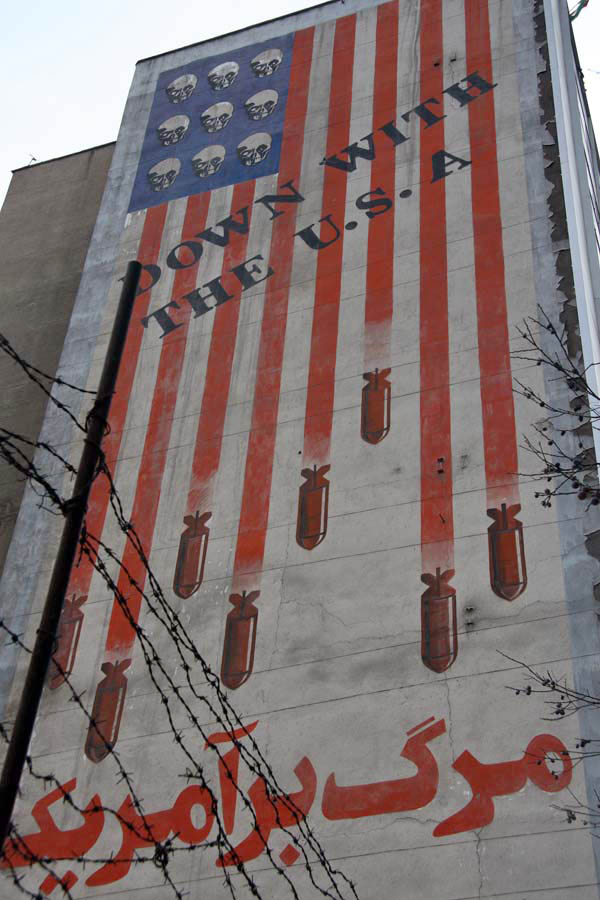
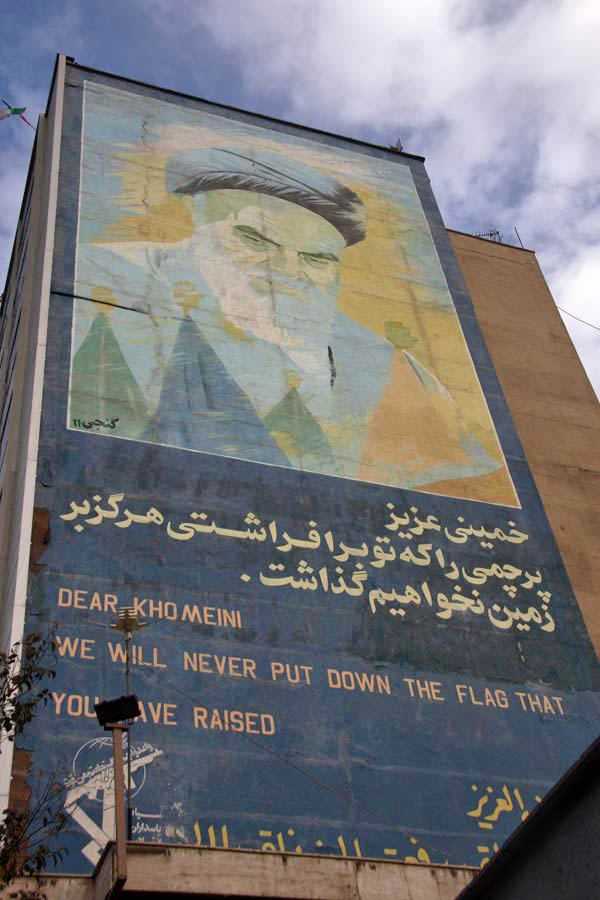
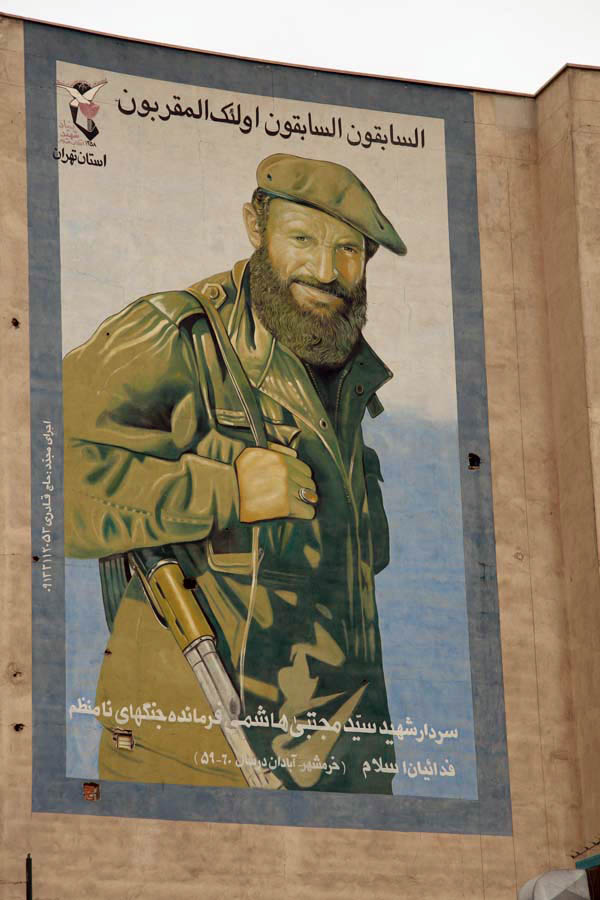
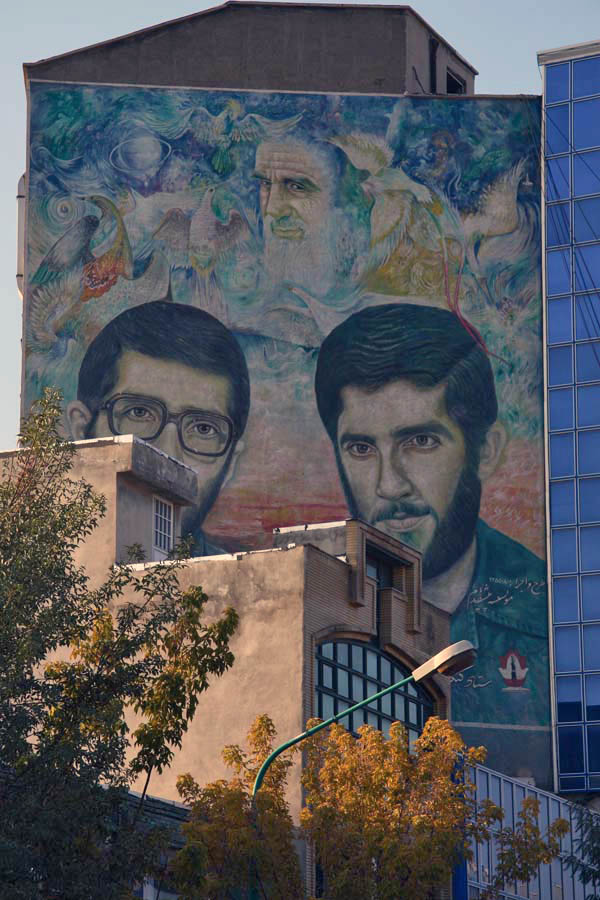
It is strange how what might be seen as radical and subversive in one culture is considered mainstream in another. Street art, wall murals and the like have nearly always belonged to the radical tradition in the West – Belfast’s paramilitary gables, both Loyalist and Republican, spring to mind. By its very nature, street art is art for the people – no fee, no exclusive gallery, it mocks those in power or at least makes a statement about some sort of alternative politics, subculture or way of life.

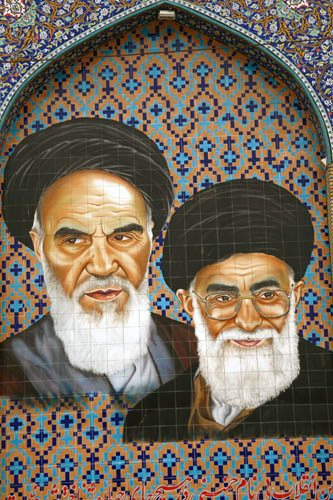
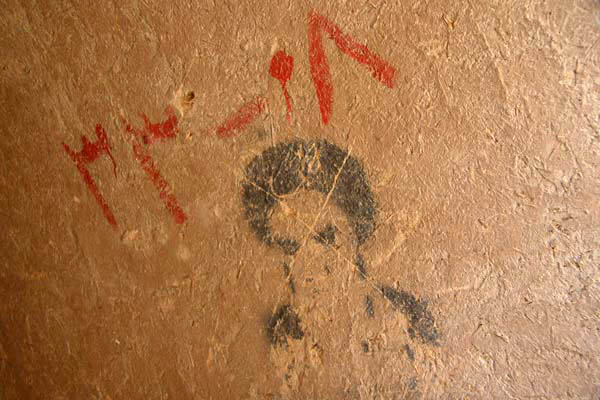
In Iran though, street art is officially sanctioned and  widely utilised to echo the government line. The subject matter is predictable – religious leaders, holy martyrs, Koranic verses and Western aggression (especially that of the USA). This is not to say that it is not creative and well-executed. Occasionally it might even be a little ambivalent and open to interpretation. But dissenters – and in Iran there are many who are not at all happy with their current theocratic governance – have to find alternative means of airing their views: Iranian street art represents the status quo rather than edgy subversion. In a way, it is the equivalent of the British government recruiting ‘Urban’ musicians to rap about the need for social service cuts and fiscal restraint. Art as non-protest.

These images from Tehran, Isfahan, Yazd, Hamedan and Orumiyeh were taken during my visit to Iran in late 2008.

Tofiq Bahramov, the ‘Russian linesman’

Last weekend England beat Norway 0 – 1 in a friendly football match at Oslo. Great Britain beat Norway at Eurovision too, although this was hardly cause for celebration as coming 25th, just a few points above 26th-placed Norway at the very bottom, is really nothing to be proud of. Many admire ‘null point’ Norway’s steely determination to achieve dependably low scores in this annual cheesy telefest, but those behind the Great Britain entry probably expected far more. But what what can you expect from a septuagenarian crooner named after an obscure German opera composer?

As we all now know, this year’s Eurovision was held in Baku, the Azerbaijan capital. The jury is still out as to whether this ex-Soviet country in the Caucasus geographically belongs to Europe or not but, for the purposes of this competition, Azerbaijan is as much a part of Europe as Norway or France…or even Israel.

I travelled to Baku back in 2000 and returned once more for a brief stay in 2010. In 2000, Baku had seemed quite a threadbare sort of place but by the time of my second visit the Azeri capital had visibly enlarged upwards and outwards to resemble a high-rise building site, with lofty buildings mushrooming near the port like blue glass monoliths. Now there was ferocious traffic too, but I braved this to seek out the Tofiq Bahramov football stadium in the north of the city. The national stadium, which had originally been a contender for the Eurovison 2012 venue, was not easy to reach on foot and necessitated the hazardous crossing of lanes of teeming city traffic. It would seem as if one of the consequences of rapid urban development is to make travel through the city on foot difficult, undesirable and even unwise. Planners seem to assume that, given shopping malls, high-rise offices and a blanket spread of MacDonalds outlets, the hapless pedestrian will happily abandon bipedalism for more appropriate means of locomotion. Clearly, those of us preferring foot power just stand in the way of progress with our unreasonable demands for footpaths, pavements and pedestrian crossings. But I digress.

The England football team’s most glorious moment back in 1966 may well owe a debt to Azerbaijan.  The sympathetic ‘Russian linesman’ at the 1966 world cup was actually an Azeri national named Tofiq Bahramov, although at the time Azerbaijan was an autonomous republic within the USSR. It was Bahramov who decided that Geoff Hurst’s extra time shot that bounced off the crossbar had actually crossed the line – a controversial decision that proved to be a vital turning point in the game in England’s favour. The final 4-2 scoreline clinched it. After the game, Bahramov, along with the referee and the other linesman,  received a golden whistle for his duties from HM the Queen. We can only presume that he would still have been given it even if England  had lost the final.

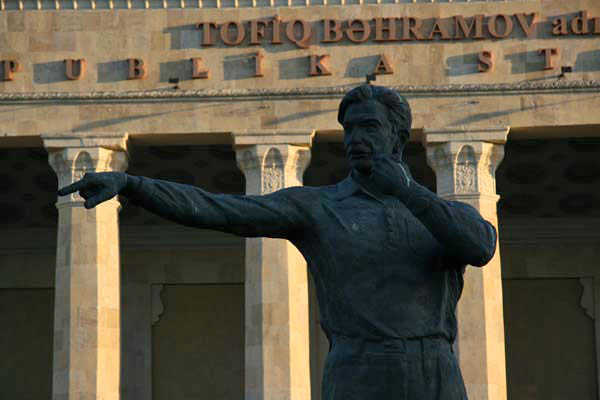
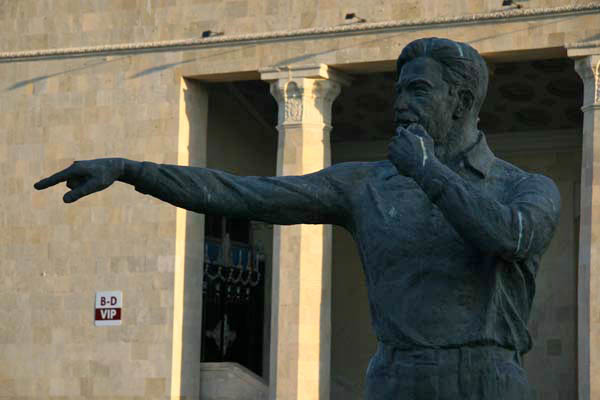
A statue of Tofiq Bahramov blowing a whistle in refereeing pose stands outside the national stadium that has borne his name since his death in 1993. The statue was unveiled in 2006 when England came to Baku to play Azerbaijan and none less than Geoff Hurst turned up to make a speech at the ceremony; FIFA president Sepp Blatter also attended. Ironically perhaps, the stadium, built in the shape of a ‘C’ to honour Stalin (C = S in the Cyrillic alphabet), was partially constructed by German prisoners during World War II. Bahramov had himself fought against the German army during WWII and on his death bed more or less admitted having a pro-English prejudice at the 1966 final –  an apocryphal story tells that when asked why he allowed the goal to stand he simply said, ‘Stalingrad’.

Ghosts of the Aral Sea

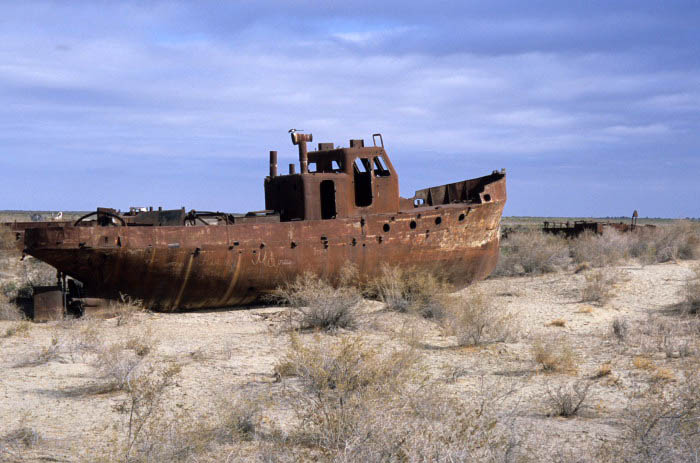
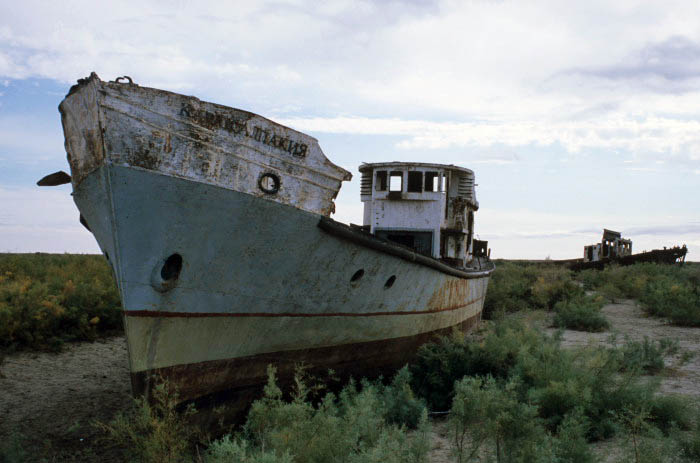
To continue from the earlier post about a hotel that thought itself a ship, here are some more landlocked boats. These, though, are real ones – the rusting remains of what was once a large fishing fleet on the Aral Sea in central Asia. The Aral Sea, which at one time was the world’s third largest inland sea, has shores in both Uzbekistan and Kazakhstan. Or rather it did have – it has now almost completely dried up (you might want to check it out on Google Earth).

It is a depressingly familiar story – large scale environmental damage thanks to government incompetence. In this case, the government was that of the Soviet Union, which diverted a vast volume of fresh water from the Aral Sea in order to grow huge expanses of cotton in Uzbekistan – a very thirsty crop in a very hot country. The fishing fleet used to catch several species of fish here, and much of the haul was transported an awful long way by train to the Baltic coast for canning. The main fishing port on the southern shore was Moynaq. Now the boats lie stranded just off the former shoreline. The water, such that remains – saturated with pollutants and virtually devoid of fish – lies hundreds of kilometres to the north.

Given mass employment, isolation, heavy metal pollution and an uncaring post-Soviet government in far off Tashkent, Moynaq is not a happy place.

I visited Moynaq by taxi from Nukus to the south. It was certainly the longest taxi ride I have ever taken – 220 kilometres each way – but even so I managed to bargain a return fare of just $60 (petrol is cheap in Uzbekistan, so is time). The road was surprisingly good, and we speeded north through Karakalpakstan (an autonomous republic within Uzbekistan that translates literally as ‘the land of the black hats’), through a flat landscape of cotton fields, reed beds and poplars yellowing with the arrival of autumn. The driver put his foot down and it took just a little over two hours to arrive at the erstwhile port.

In Moynaq, the scene from the ‘shore’ was both poignant and surreal: scrubby vegetation, sand and rotting boat hulks as far as the eye could see, everything shimmering slightly in a heat haze – the unwordly setting for a Sergio Leone Western that would never be made. My journal records it as ‘a sort of post-apolcayptic Wells-next-the-Sea where the tide never comes in’, and that seems reasonable enough. Away from the absent sea, the town itself, with its depressed air, street corner groups of listless youths and tangible taint of pollution, simply gave the impression that even with full employment, fishing and fresh water it would still be a dump. Now Moynaq was just a neglected and forgotten backwater… without the water.

(For another tale about another former Soviet fishing port now fallen on hard times you can read this about Balykchy, a threadbare port on Kyrgyzstan’s Lake Issyk-Kul.)

Nukus, where I had based myself for the dash to the rusting Aral fleet, was marginally better, although it had none of the Silk Road allure of other cities in Uzbekistan like Bokhara, Samarkand and Khiva, which despite heavy-handed reconstruction still hold  romantic appeal. Oddly enough, what Nukus does have is an incredible art collection. The Karakalpak Museum of Arts has a fantastic display of modernist work from the 1920s and 1930s that was collected by the artist Igor Savitsky (1915-84) and safely squirrelled away here in this distant corner of the former USSR. Here, far from Moscow, supposedly counter-revolutionary work such as that of the Russian avant garde managed not only to survive but also to go on display alongside ‘approved’ works of Soviet realism. There are even some who say that, in terms of Russian and Soviet art, the Nukus gallery is second only to the far more famous collection in St Petersburg’s Hermitage.

The Tarka Trail

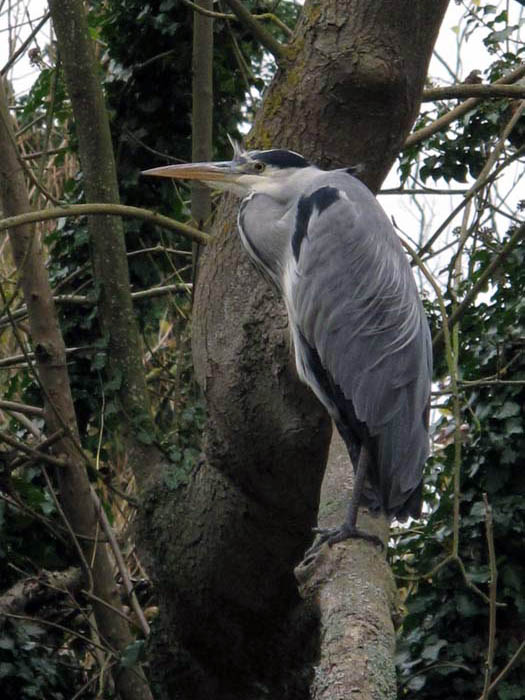
There’s a walk through Norwich’s western edgeland that Jackie and I must have done a hundred times. It begins close to a supermarket at Eaton, Norwich’s wealthy southern suburb, and follows the bank of the meandering River Yare upstream towards the broad at the University of East Anglia before the river veers west towards its central Norfolk source. A peaceful walk, frequented by just the odd suburban dog-walker and jogger, it is the epitome of the countryside in the city or, rather, its leafy urban fringe. Drooping willows frame the water, small fish swim, birds tweet in the bushes and reedbeds; herons and kingfishers are regularly sighted along the river. The houses on the opposite bank, with their expansive back gardens and private river frontage, give rise to occasional bouts of envy but on the whole we are simply happy to have the opportunity to walk somewhere like this so close to home.

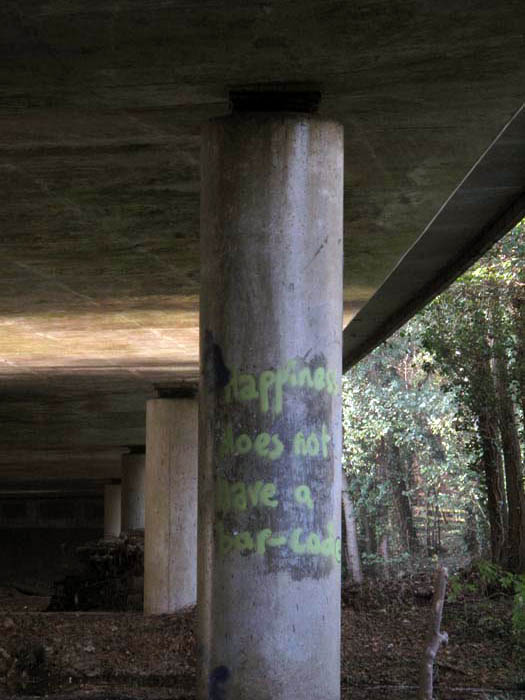
From the car park where the walk begins, a path leads to the river next to the medieval bridge that once marked the principal route into Norwich from the south. There is an attractive white wooden mill house here, a gushing weir and a NO FISHING sign. The path follows the river under a flyover that carries the bulk of traffic into the city these days – at weekends, a constant buzz of cars speeding into Norwich for retail therapy. Compared to the fine curves and warm sandstone of the nearby bridge, this has all the charm of a multi-storey car park: quotidian concrete and murky, permanently shaded water sheltering that ubiquitous creature of the urban waterway – a supermarket shopping trolley. A Ballardian microcosm, this edgeland non-place provokes an interruption in the pastoral flow of the walk; a frontier to be crossed (or underpassed) before continuing along the riverbank beyond. The smooth round pillars that hold up the flyover are splattered with spray-can ciphers – warnings and portents perhaps? A couple spell out ANARCHY, or words to that effect. Another graffito, more considered, pronounces HAPPINESS DOES NOT HAVE A BAR-CODE.

On Monday, our walk took an unexpected and delightful turn when we spotted a solitary otter at the mill pond near the bridge. Oblivious to the sign prohibiting fishing, the animal was busy hunting – diving and then resurfacing with just its head showing above the water like a small sleek Labrador. We knew that otters were frequently seen in the area by early-worm fishermen but we had never seen one here ourselves. This time, we were privileged. We watched in silence as the animal worked its way along the water’s edge, shaking the reeds at their base and leaving tell-tale trails of bubbles as it swam underwater. It eventually disappeared somewhere near the weir, just before the flyover, and we remarked on how lucky we had been to have had such a good view.

Five minutes later, I was just about to say something sagacious like, ‘It could be a year before we see one again’, when another otter –  probably the same, earlier one displaced further upstream – surfaced beneath a drooping willow. The animal progressed through the reeds at the river’s edge for some time before swimming to the opposite bank, foraging there awhile before returning midstream to dive once more with an effortless flex of its back. We followed it upstream for a full half hour, the otter hyperactive for most of the time – diving for fish, snuffling through vegetation, occasionally sneaking a look back at the two humans and one small dog that were politely in pursuit. We drew so close that we could hear teeth crunching bone as the animal munched the fish it had caught, the otter’s noisy chewing just one aural ingredient in a soundscape that included other familiar echos of the urban fringe in May: small birds chirruping, an overenthusiastic cuckoo (the first heard of the year), chiffchaffs chiff-chaffing, a background thrum of cars on the flyover and the distant eye-ore of the Cambridge train’s air-horn.

We lost track of the otter somewhere in the wider stretch of the river that leads to UEA Broad. It did not matter: our unexpected encounter had been far in excess of anything than we might have hoped for. It didn’t even matter that I did not have my camera with me: if anything, it was liberating to simply observe without the nagging distraction of having to keep a digital record.

Walking back to the car park, I made a short diversion back to the bridge on the off chance that the animal had returned there. No sign. Turning to leave, a metallic blue bullet flashed close to the water and darted beneath the arch of the medieval bridge: a kingfisher, often spotted here but hitherto unseen on this red letter day for wildlife. Happiness does not have a bar-code. True enough.

Lake Baikal

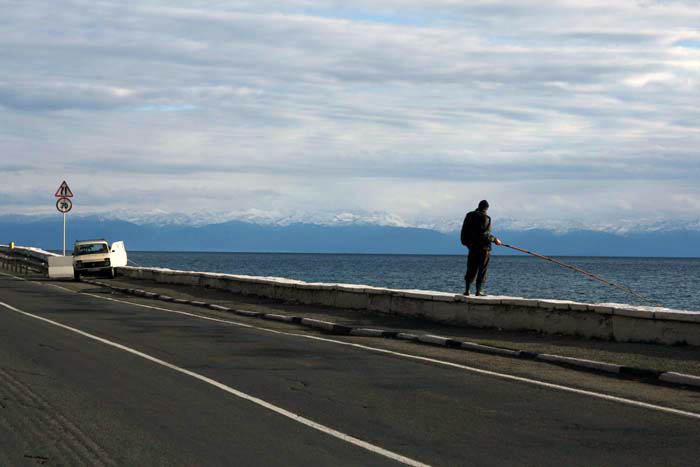
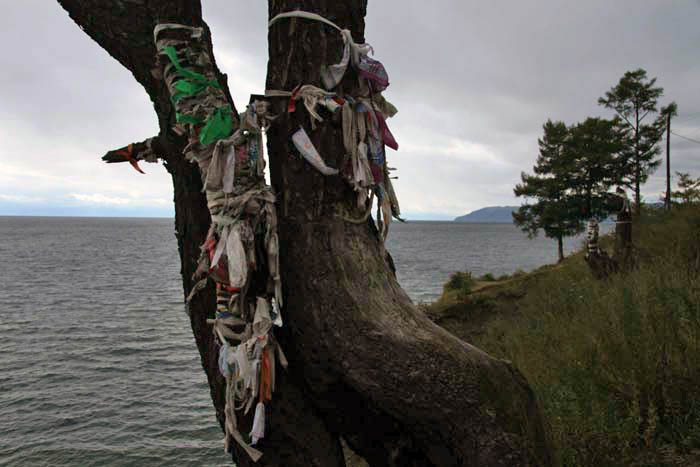
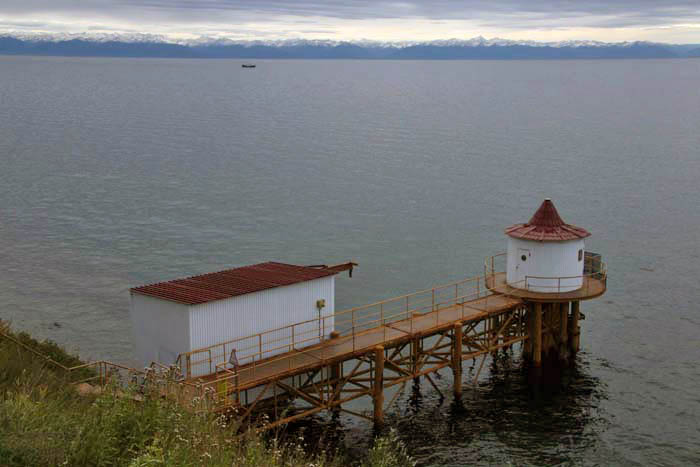
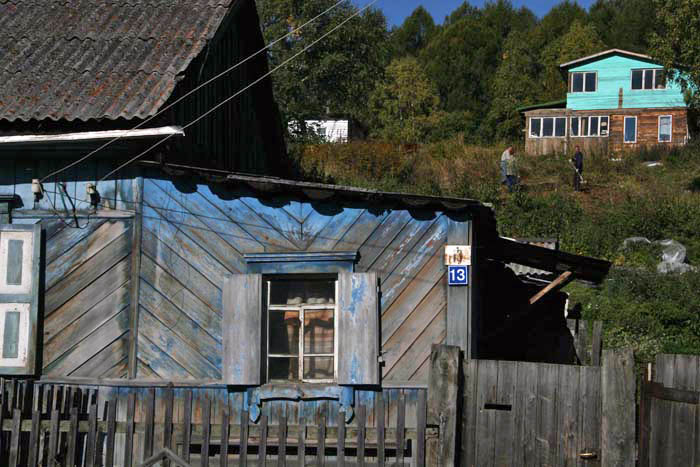
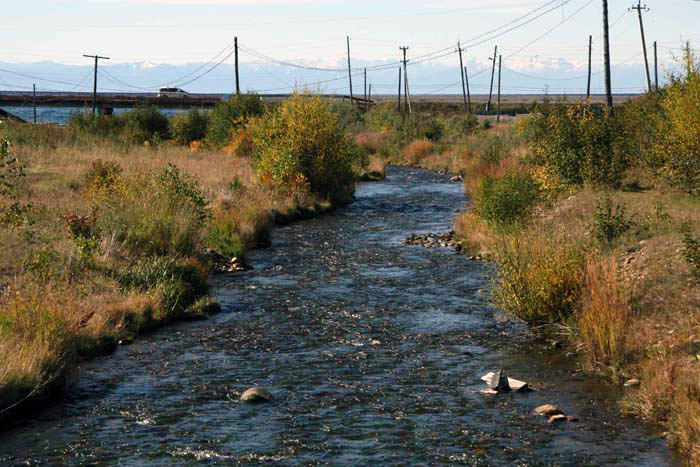
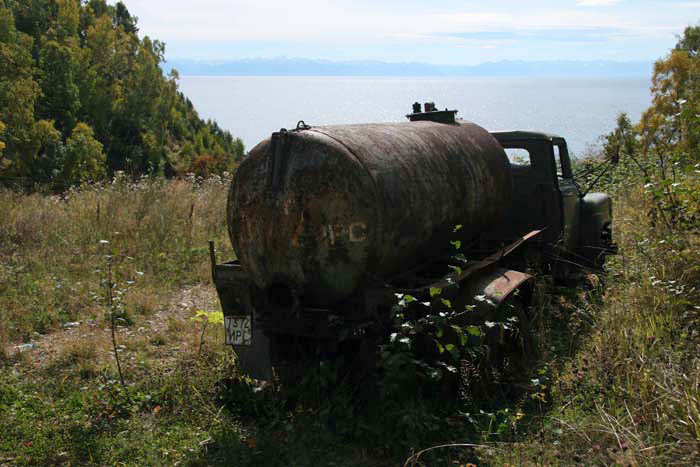
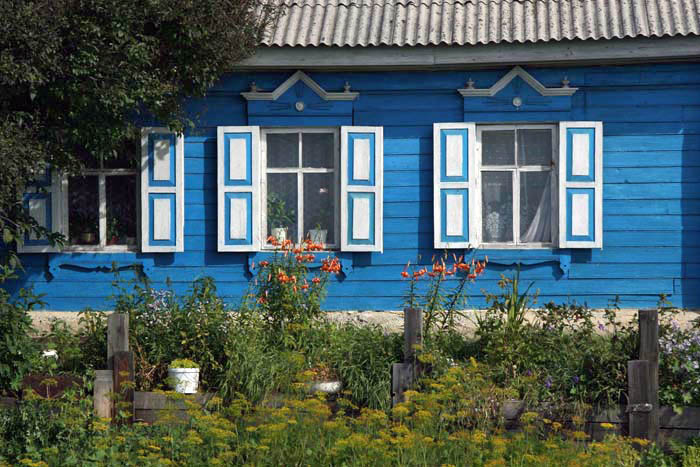
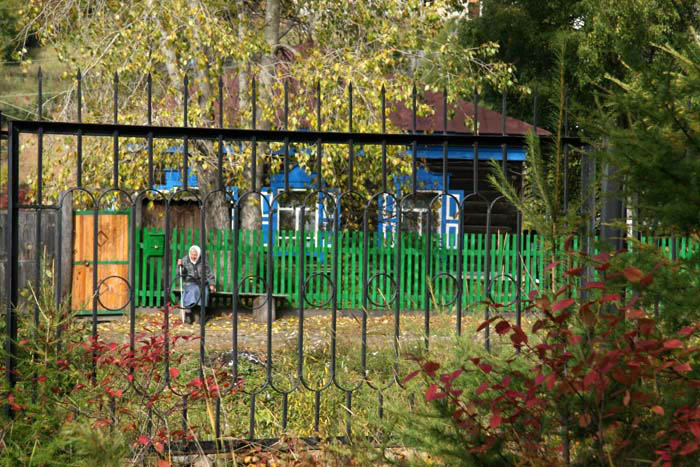
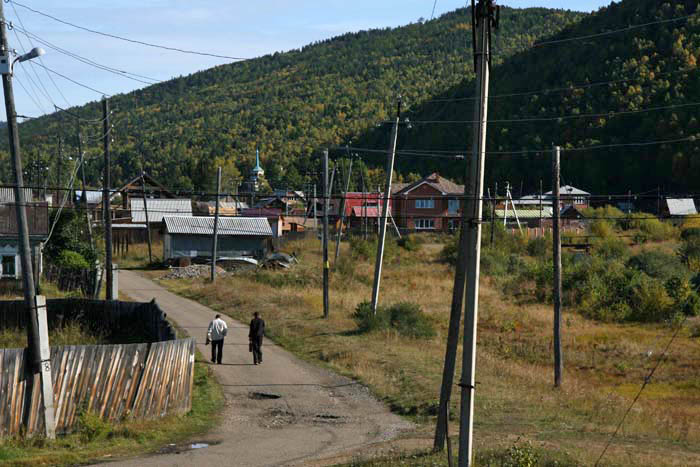
Listvankya on the northern shore of Lake Baikal in east Siberia is a small fishing village and port that also serves as a holiday destination for Russians in the short Siberian summer. By late September summer is definitely over and there was a melancholy end-of-season feel about the place when I visited in 2010. It was also surprisingly cold and the fact that Lake Baikal freezes so solidly in winter that you can drive trucks over it seemed perfectly believable.

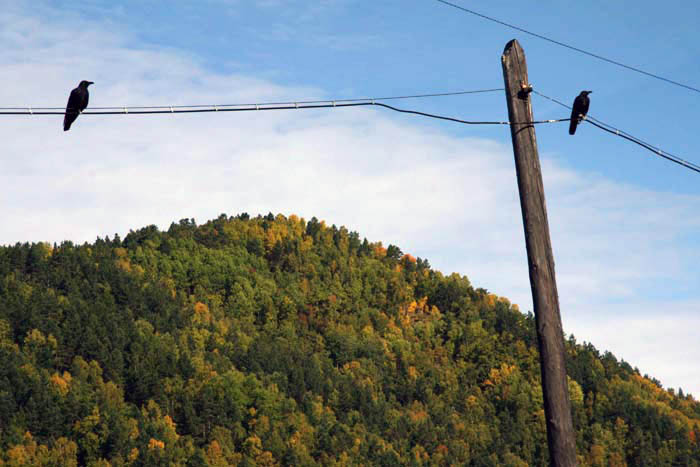
This was the furthest east I got on that trip, having arrived in the nearby city of Irkutsk on the Trans-Siberian railway from Moscow. The Russian tourists had all left Listvyanka by the time I arrived and apart from a few fishermen, a handful of locals and a large population of ravens I had the place very much to myself.

Hotel Titanic, Nagorno-Karabakh

With only the forthcoming Jubilympics stealing more media thunder so far this year, it has been nigh on impossible to ignore the fact that April 2012 marks the centenary of the sinking of a certain trans-Atlantic passenger liner. One hundred years ago this month, RMS Titanic, a vessel considered virtually unsinkable, disappeared beneath the North Atlantic’s icy waters on its maiden voyage, along with most of its crew and lower class passengers. The cause of this tragic event was seemingly the combined effect of hubris and a sneaky, yet massive, iceberg.

What does this have to do with a little-known corner of the Caucasus? Well, it is partly connected with the sense of irony so readily displayed in the post-Soviet territories of the Caucasus region. I remember spotting a restaurant on my first visit to Baku that was called, of all things, ‘Lady Diana’ (smallish helpings presumably) but even this pales into insignificance when compared to a hotel I once stayed at in the unrecognised territory of Nagorno-Karabakh.

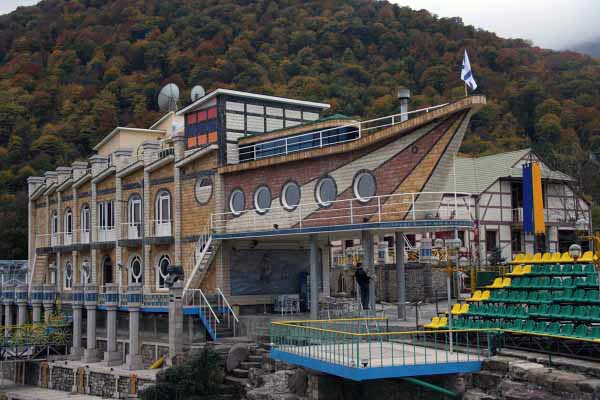
Nagorno-Karabakh, formerly part of Azerbaijan, now a de facto independent state (but only recognised by three fellow non-UN states – Abkhazia, South Ossetia and Transnistria), is a very odd place – and a sad place too, with visible traces of war damage almost everywhere. Given the state’s poverty, isolation and lack of infrastructure it might seem surprising to come across a hotel of any description in a small village, let alone one called ‘The Titanic’, but the small lumber village of Vank in northern Nagorno-Karabakh not only has a guest house that answers that description but also one that is actually built in the form of a ship.

The Titanic Hotel – officially Hotel Eclectica but everyone seems to calls it ‘Titanik’ and that is what it said on my restaurant receipt – is a striking edifice built in the form of a ship. This brick-built simulacrum even goes as far as having port-holes for some of its windows. In front of it stands a small swimming pool (no icebergs!) that must, almost certainly, be the only one in all of northern Nagorno-Karabakh. The hotel must be a thoroughly disturbing phenomenon to come across out here in the boondocks if you were not expecting to find it; it’s an arresting enough sight even when anticipated.

The Hotel Eclectica/Titanic is one of the most surreal sites you are ever likely to see but the village is the oddest of places too. Vank is the birthplace of a Moscow millionaire lumber baron called Levon Hayrapetyan who as well as asphalting the 12km-long road to the village has ploughed plenty of money back into his home village, building a school, a lumber mill and this highly incongruous hotel. Part of Hayrapetyan’s vision for the village of his birth is to develop tourism in the area, hence the hotel. It seems a long shot considering its isolation and the fact that Nagorno-Karabakh is the remnant of a frozen conflict and officially does not even exist. Technically speaking, Nagorno-Karabakh still belongs to Azerbaijan, although virtually all ethnic Azeris have left since the bloody conflict of the 1990s.

I spent a few days in Nagorno-Karabakh back in 2008, having first obtained a visa in Yerevan, the Armenian capital. The colourful ‘visa’, which I took the precaution of not sticking into my passport, was hardly glanced at when I arrived at the border post in the crowded marshrutka that plies daily between Yerevan and the Nagorno-Karabakh capital Stepanakert.  After a couple of days in Stepanakert – a bit of a threadbare Soviet theme park without really trying to be – I took another marshrutka to Vank for an overnight stay.

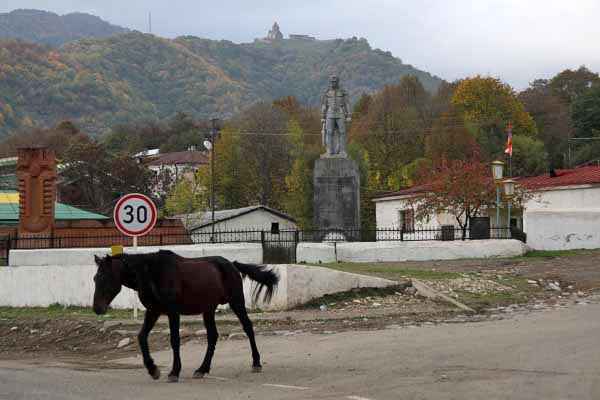
The village lies deep in a wooded valley with wispy strands of low clouds kissing the nearby hills, atop one of which stands the mysterious Gandzasar Monastery. I managed to get a room at the Titanic, although they didn’t really seem very keen on having a lone foreigner like me stay, perhaps disbelieving that I might seriously want to spend the night there. After paying 7,000 Armenian drams ($20) and leaving my bag I walked up the neatly tarmaced road to the monastery on the hill, which was swathed in mist so thick that it was impossible to see the church until the very last minute of ascent. In the monastery grounds I encountered a friendly trio of chain-smoking Armenian men but, after we had posed for group photographs together and they had sped off down the hill in their Lada, I was completely alone once more – the resident monks were either absent or keeping a very low profile. Not quite alone though. Mooching around, I noticed a small curved-beaked bird poking around on the stone of the gable. A sparrow? No, a wallcreeper – an exotic-looking mountain bird more at home on isolated cliff faces than the stone walls of churches. Perhaps, like me, it had become disoriented by the swirling mist that flanked the monastery like the overenthusiastic use of dry ice in a Hammer Horror production?

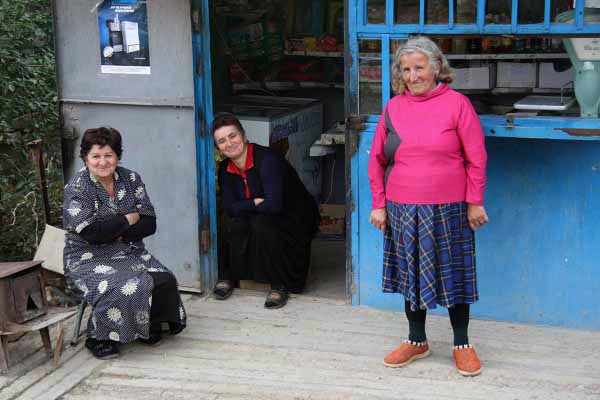
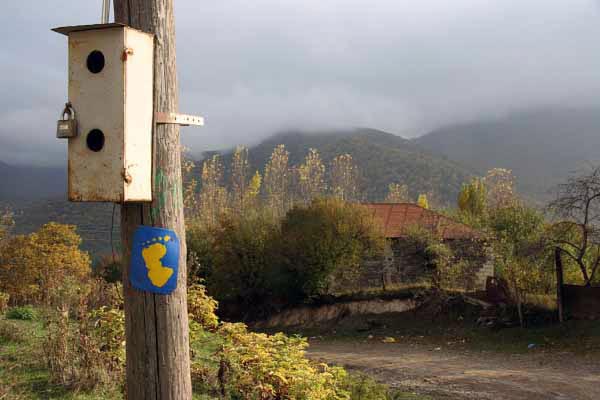
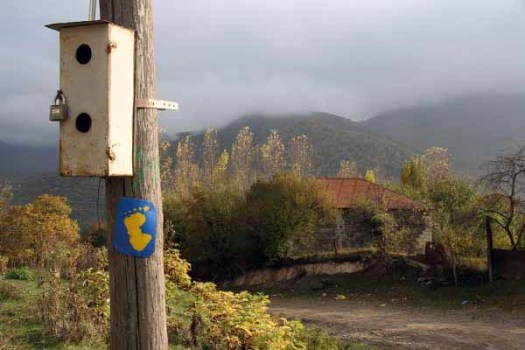
Later, walking up out of the village through lovely wooded countryside along a section of the long-distance Janapar Trail I came across a few more locals: friendly Armenian women at a village kiosk who wanted me to take their photograph and another villager who beckoned me into his garden to drink vodka with him. Less welcoming though, was the policeman who gruffly insisted on seeing my dokumenti. As he was dressed in civilian clothes I countered by asking to see his identification, which pissed him off a bit but made his friend roar out loud with laughter. I stood my ground and soon the policeman just walked off in a huff trailed by his still giggling accomplice.

By the time I got back to the hotel late afternoon the place had been virtually taken over by a wedding party and so things had become pretty chaotic. Nevertheless, I was hungry. The hotel’s ‘Van Gogh’ restaurant had a Chinese couple working there (who knows how they found their way here to Vank?), which might have been a good sign, although it seemed they were only capable of providing food for themselves and pre-ordered wedding feasts. Eventually, after much negotiation and shaking of heads, I managed to order an overpriced plate of barbecued mutton, which arrived after a full hour’s wait accompanied by a huge dish of fresh coriander.
One night was enough. I caught the early morning marshrutka back to Stepanakert the next day. Among the suspicious faces that turned my way when I took my seat was the policeman from the previous day. This time he was in uniform – quite high-ranking it would seem judging by the pips on his lapel. He didn’t bother asking for my passport this time.

Postscript: I am aware that Vank is not the only place in the world with a Titanic Hotel. There’s also a luxury beach hotel resort called Titanic in Antalya in Turkey, another beach resort in Hurghada, Egypt, a business hotel in Istanbul and others in Albania, Vietnam and Poland. You would be hard pushed to find this particular one on TripAdvisor though. The Hotel Titanic, Vank, Nagorno-Karabakh is not only a very odd place to stay, it is the Caucasus region’s very own Fawlty Towers.

For those interested in finding out more about the long-distance Janapar Trail you can look at my feature for Walk magazine here – the title Global Walk: Azerbaijan was not my idea.
Dacha

Reading a recent article on the excellent Earthlines blog about Gerry Loose, and then finding out more about the Scottish hutting movement and specifically the Carbeth hutters community in Stirlingshire, I have come to the conclusion that I am probably something of a closet hutter at heart. The best that I can ever probably hope for though is to have my own shed one day.
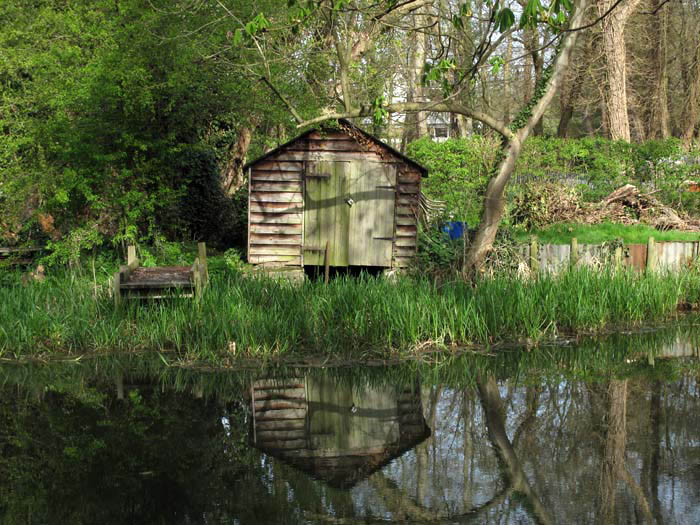
It is a common enough passion – indeed, books have been written about British (predominantly male) shed culture. But, with no rear garden and a backyard too small to comfortably squeeze a shed into, the closest I currently get to fulfilling my fantasy is my city allotment where I have inherited a tumbledown structure without door or window glass that is filled with garden tools and grumpy secretive spiders. Too small and decrepit to serve as a comfortable retreat, this shed is clearly no place to linger but at least I have a plastic chair en plein air for whenever I need a rest from wrenching couch grass out of the ground. 

In northern Europe, and especially in Scandinavia and Russia where even the middle classes live in apartment blocks,  the situation is quite different. Here, many city dwellers have a wooden hut and a patch of ground to call their own – a simple rural haven where they can enjoy a little R&R and temporary respite from urban life. No nation embraces this tradition more than Russia, where a country dacha is seen not only as a place to grow vegetables but something akin to a holiday home: a base for collecting berries and mushrooms in autumn, for fishing, for sunbathing; a place for friends and family to gather around food, to drink vodka, play games and sing. A dacha is a place to spend summer weekends al fresco, a place where city children can learn about nature. In Russian society, a dacha serves a function that is a combination of allotment garden, beach hut and social club. To have a dacha is not a Walden-like solitary pursuit but, rather, something that proudly shouts out ‘community!’

I was lucky enough to visit a dacha a couple of years ago on a long, late-summer Russian journey from Pskov, close to the Estonian border, to Irkutsk near Lake Baikal in eastern Siberia. At Krasnoyarsk, 18 hours west of Irkutsk on the the Trans-Siberian railway, I had arranged to stay in the family apartment of a local tour guide and political science lecturer called Anatoliy. After picking me up at the station and meticulously showing me all the permutations of the city bus route to and from his identikit Khrushchevki apartment block (the very last stop, thankfully) he took me out to show me his country dacha that, coincidentally, was close to the railway tracks that I had just travelled along. 

There is more to Siberia than gulags and permafrost but life is hard nonetheless. In the few months of the year when the ground is not snow-covered there are plenty of other things to contend with, notably predatory mosquitoes and nasty infective ticks everywhere in the grass. Given such limitations, I was hugely impressed by the size and vigour of Anatoliy’s cabbages and also by the efforts he took to tend them given that we had driven for more than an hour to reach the dacha. Even more  impressive was the air of autumnal tranquility that seemed to hang over the place like a healing balm. In Siberia, autumn may be just a brief golden precursor to a long dark winter but  September is the most glorious of months.

A River Wensum Walk

Early April in Norwich. It’s cool but the sky is blue and daffodils are glistening in Wordsworthian tribute to the bright spring sunshine. What better then than a morning stroll through the city along the banks of the River Wensum?

Like many cities – even London – these days, Norwich has largely turned its back on the river that runs through its centre. Once essential for transport and industry, the River Wensum that meanders through the city now seems to have little use other than as a backdrop for attractive new riverside apartments. Look a little closer though and you will still find plenty of reminders of Norwich’s medieval past along its course.

Hard to imagine now, but Norwich once held second city status in England and the banks of the River Wensum that dissect the city are still littered with traces of that period – medieval churches, priories, old bridges and defensive walls – as well as reminders of the city’s half-hearted dabble with Victorian industrialisation.

We begin our walk on St Benedict’s Street at St Lawrence’s Church. From the alley at the side of the church’s western gable you can see a little stone plaque set in the flint that depicts St Lawrence strapped to a grid iron, the means of his subsequent martyrdom. Understandably, he doesn’t look too happy about this but is blissfully unaware (well, perhaps not blissfully) that he will go on to become one of the earliest Christian martyr saints; indeed, the patron saint of comedians and chefs no less (and butchers and librarians too, apparently).

Descending the steps to cross Westlegate we pass the swish apartment block that in a previous incarnation used to be the Anchor Brewery. An enormous brick chimney once scraped the sky here – I still have a black and white photograph of it somewhere. As recently as thirty years ago Norwich used to be redolent of malt and hops (and chocolate too, from Rowntree’s, now Chapefield Shopping Centre) but its source did not originate from here as the Bullards brewery closed back in the 1960s.

We cross Coslany Bridge over the Wensum and  follow the pedestrian access along the river’s north bank. Across the water stands the disused warehouse where the entire text of Thomas Moore’s Utopia is scrawled in white paint across the brickwork as if it were the work of a hyperactive 16th-century graffitti artist with a taste for political philosophy.

Crossing Duke Street by means of Dukes Palace Bridge, a brief detour via Colegate is necessary in order to reach Blackfriars Bridge by the Norwich School of Art before we arrive at Fye Bridge and Fishergate. Whitefriars Bridge comes next and the eponymous friary once stood on the site of the large edifice that looms before us: the Jarrolds Printing Works, built n 1834 and formerly a mill owned by the Norwich Yarn Company – a tall stately bulding with brickwork elegantly draped with Virginia Creeper and wisteria. Looking back, the clocktower on Norwich City Hall, which to my mind resembles a cut-price Marrakech minaret, rises into view beyond the weeping willows, newly in leaf, that sway dreamily over the torpid water beneath.

Beyond the printing works, a renga – a word map created by means of an ancient Japanese tradition of shared writing – strings a snake of words and phrases along green hoardings beside the river. A Renga for St James was created here on site in 2009 and utilises the local Norwich vernacular and reference points. Someone – a well-educated graffitist, who clearly understands the renga ethos – has scrawled ‘Perfidious’ above the word ‘Albion’, which in this instance refers to one of the few remaining wherries that used to ply East Anglia’s rivers.

Continuing east the new bridge soon comes into sight. Peter’s Bridge, named after a former Jarrold’s chairman, has only been open a few months and, surprisingly, not a lot of people seem to know about it. Most of the Wensum’s bridges are so ancient that they are firmly embedded in the city’s psyche but there have been three new footbridges so far this millennium: this one, the 2009 Lady Julian Bridge close to the railway station, and the Novi Sad Friendship Bridge, opened by the Yugoslav ambassador in 2001, near Carrow Bridge (ironic, then, that NATO bombed and destroyed the far more substantial and economically important bridges of Norwich’s twinned Serbian city just two years earlier).

 Walking across this graceful, J (for Jarrold’s)-shaped footbridge, our riverside walk continues past Cow Tower towards Pull’s Ferry but before reaching this we pass what looks like a sluice leading into the river. This is, in fact, a rare 18th-century example of a swan pit, a tidal pool in which wild cygnets were kept and fattened for the table after having their wings clipped and beaks marked by their owners.

At Bishops Bridge, we leave the river behind to head for Cathedral Close and Tombland. A place called ‘Tombland’ next to a great church might reasonably be expected to be a place of the dead. But no, Tombland is Old English for ’empty land’ and this was the site of Norwich’s Anglo-Saxon market before the Normans came and shifted it to its present position next to St Peter Mancroft Church. Norwich Market has been operating there for over 900 years now and is still going strong, six days a week. Mind you, it did have a bit of an overhaul a few years back.