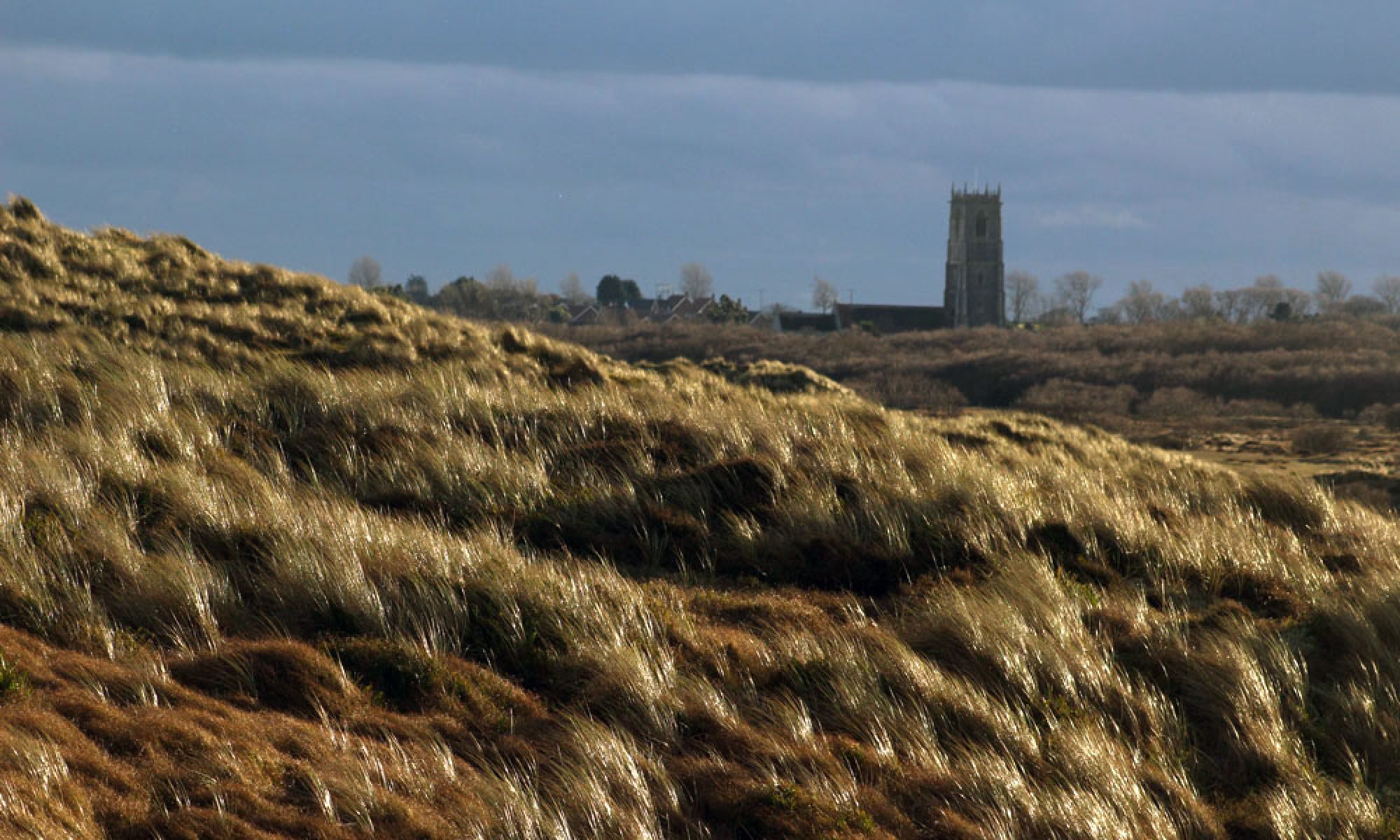
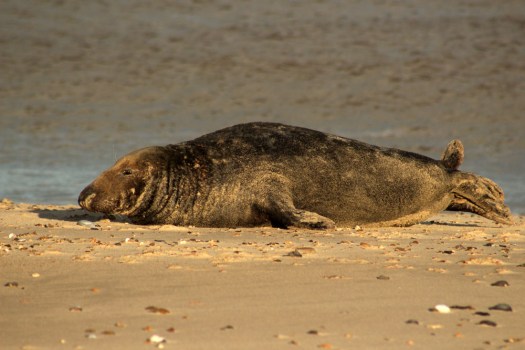
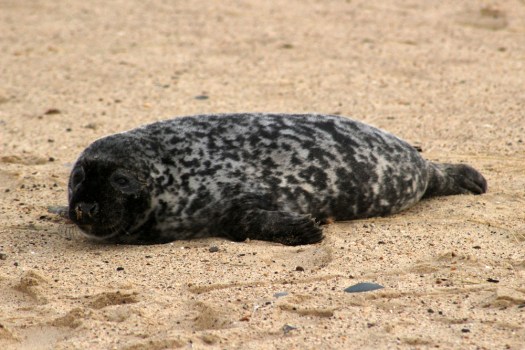
Even in winter, the northeast Norfolk coast has its attractions, especially over the Christmas and New Year period when many flock here to see the grey seals that come to the beaches of Winterton and Horsey to give birth. For many it is an annual outing, an opportunity to walk off seasonal excesses, to get close to nature, to delight in the spectacle of the seals and their pups. Some are tempted to get too close, of course, but these days a dedicated army of volunteers in hi-vis orange jackets ensure that visitors and their naturally curious dogs do not disturb the vulnerable animals on the beach.
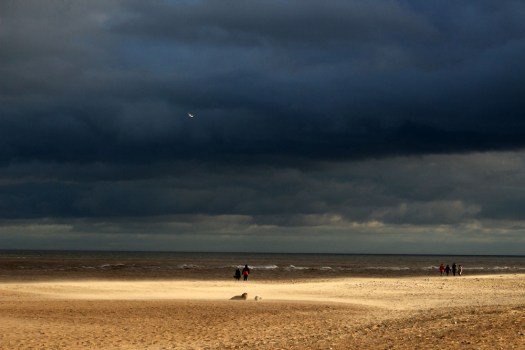
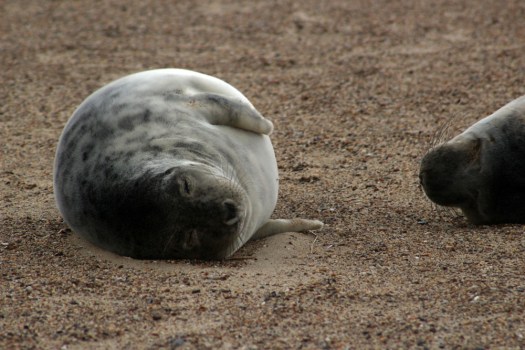
We arrive to find grey seal mothers and their fluffy-coated pups scattered like driftwood along the shoreline. Some are on the sand close to the breaking waves, while others are further inshore along the tideline, or even in the hollows of the dunes that back this coastline. Here and then along the beach, a hefty bull seal waddles in awkwardly from the surf to try his luck with one of the nursing females – this is the season for both breeding and mating.
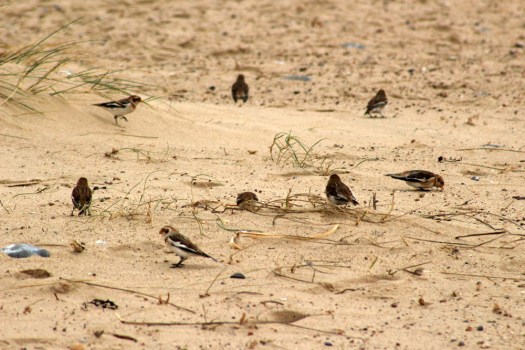
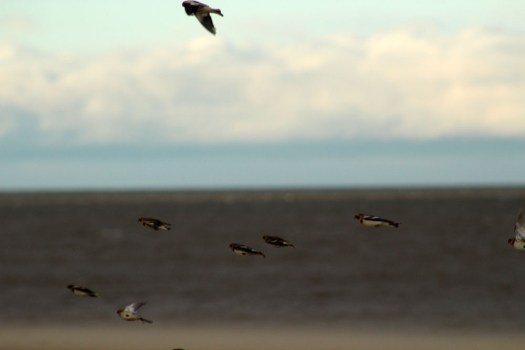
The seals are not the only creatures of interest here today: walking north along the beach, a small flock of snow buntings – perhaps 20 or 30 birds – rise like a flurry of sleet on our approach before setting down again a little further ahead. Winter visitors from much further north in Scandinavia and the Arctic, they resemble frosted sparrows as they peck busily at the seaweed, sticking close together for security.
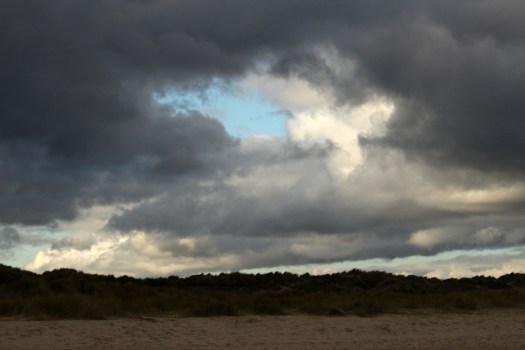
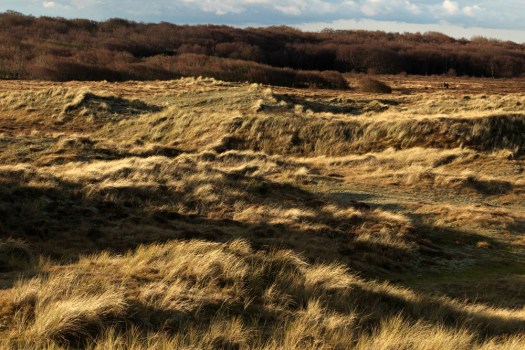
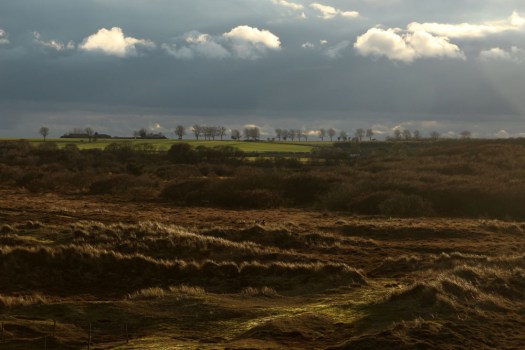
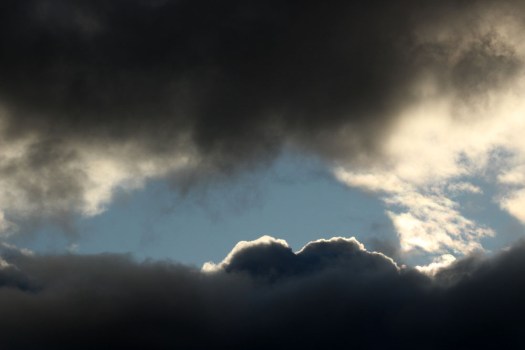
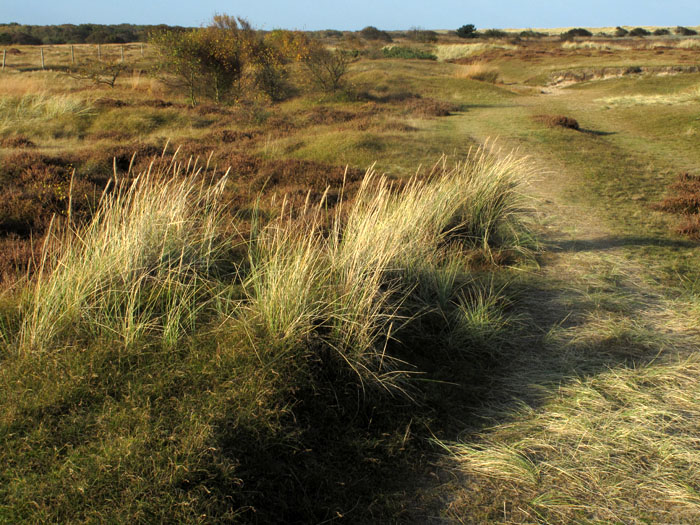
The seals and birds are engaging but the real star this cold January afternoon is the quality of the light, which morphs from gloom to gleaming in the space of half an hour. At first it seems as if the sky is weighed down like stone beneath a dense slate-grey sheet of stratocumulus but cracks soon appear and, like a hagstone held to the eye, an opening forms in the clouds to reveal the blue that lies beyond. As the sun loses height beneath the cloud layer, shafts of pale golden light break through. The play of light on the dunes invokes a ghostly atmosphere. The wind-bent marram grass of the dunes, caught in the glow, seems almost fluid – an impressionist rendering of a wave-tossed ocean. In the distance, beyond the luminous marram, the Perpendicular tower of Winterton’s Holy Trinity and All Saints’ Church rises loftily above the crouched bungalow roofs of the village. This fleeting serendipity of light gives the scene a numinous quality, an eerie supernatural glimmer. It is a scene that might be co-opted for the cover of a book of ghost stories – a lost work by M.R. James perhaps.
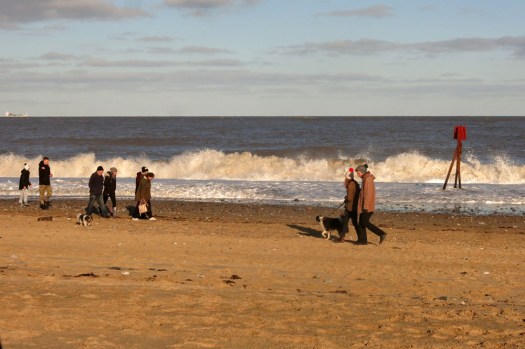
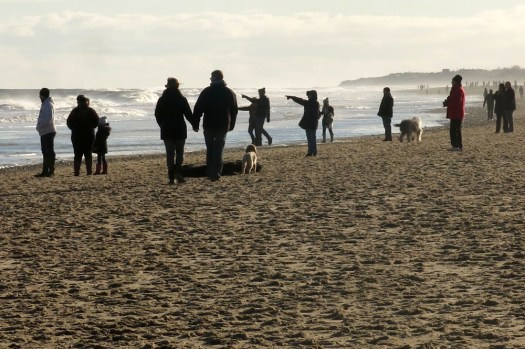
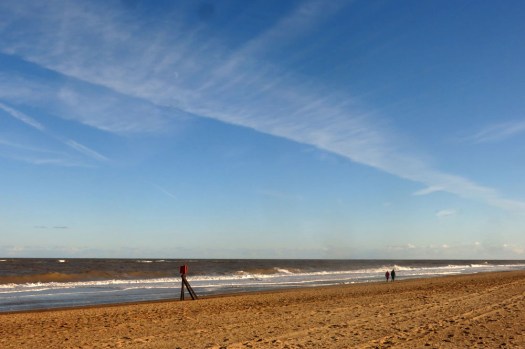 What is it that draws us to the sea; to the coast, the beach? On hot days in summer the answer is fairly obvious: to sunbathe, to swim, to cool off in the sea. Hot summer days are not such a common commodity these days – not in the British Isles anyway – but, whatever the weather brings, people tend to be drawn to the coast like moths to lanterns.
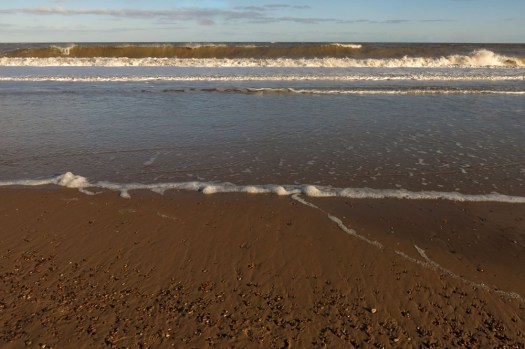 Perhaps it is part of an unwritten code of leisure etiquette, something that established itself in the British collective unconscious in Victorian times when those who could afford it caught trains to the newly developed resorts on the coast in order to take the air. The tradition persisted into the 20th century when, given more leisure time and improved public transport, the working classes too could enjoy the same privilege. Nowadays a trip to the coast is a commonplace activity: a Sunday outing, an hour or two spent strolling on the beach, exercising the dog, dragging the children away from the virtual Neverland of their electronic screens.
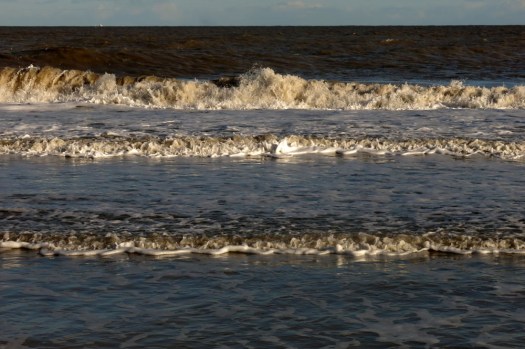 But maybe there is something that lies deeper? Some sort of atavistic compulsion to gaze at the sea, to see where we come from, from land masses beyond the horizon, from the primal sludge of the seabed. An urge look at the edge of things where seawater limns the shore and shapes our green island. We are, after all, an island race.
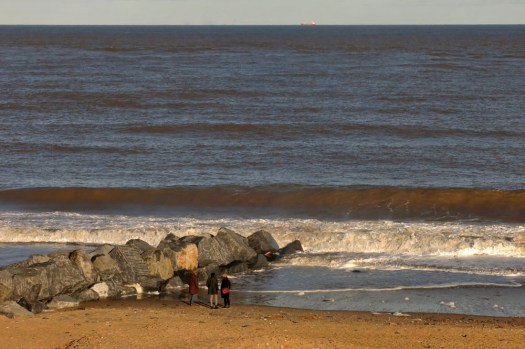
 Either way, there is beauty on the beach. Sensuous ripples of sand adorned with calcium necklaces and bangles; the pure white glint of breaking waves. Serried ranks of breakers on the incoming tide, parallels of swell and surf creating a liquid stave for the ocean’s moonstruck music: swash and backwash, the gentle abrasion of pebbles, the faintest tinkle of dead bivalves.

 East of Elveden