A midwinter walk – Horsenden Hill to Harrow-on-the-Hill

In the past I have chosen a rural walk to celebrate the turning of the year; this year though, I have opted for something more urban. Together with my friend, Nigel Roberts, I continued along the route we had both been following for some time: London’s Capital Ring. For this midwinter walk it would be the moderately hilly stretch that lies between Greenford and South Kenton in London’s northwest outer suburbs.

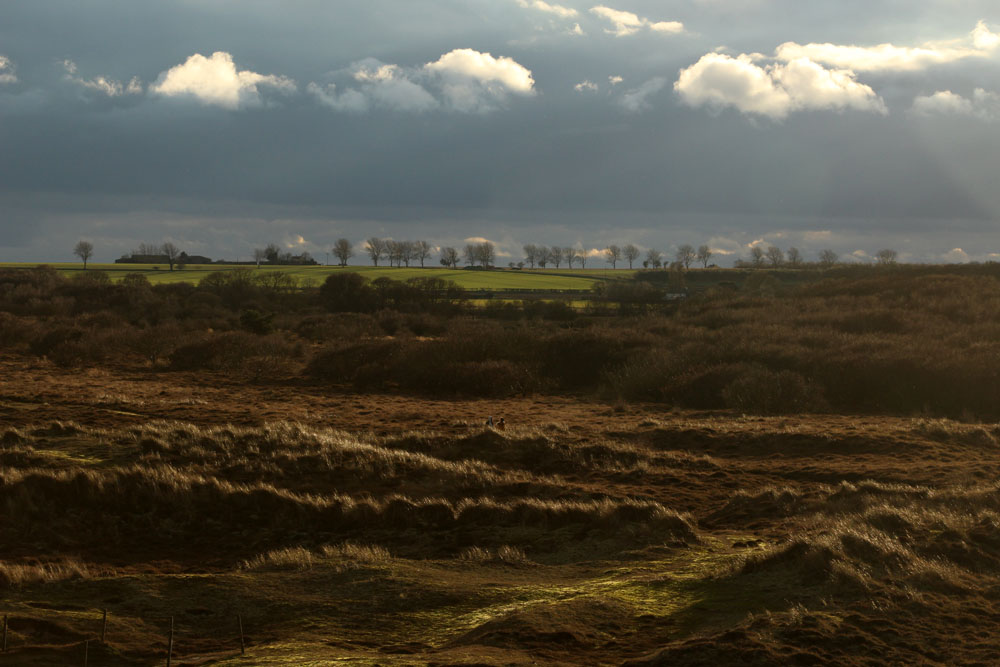
We convene at the small coffee bar at Greenford Underground station. The low winter sun is unseasonably bright in our faces, intense enough to require squinting. Light counts for everything at this time of year. Setting off under the railway arches we walk past the appropriately named Rising Sun pub and the entrance to a massive retail park. Soon, we reach the path that will take us up Horsenden Hill. The hill is one of the highest points in north London, and even halfway up the slope the view opens up to the west in the direction of Heathrow, an aerial procession of slowly descending aircraft confirming the hill’s location on the approach flight path.
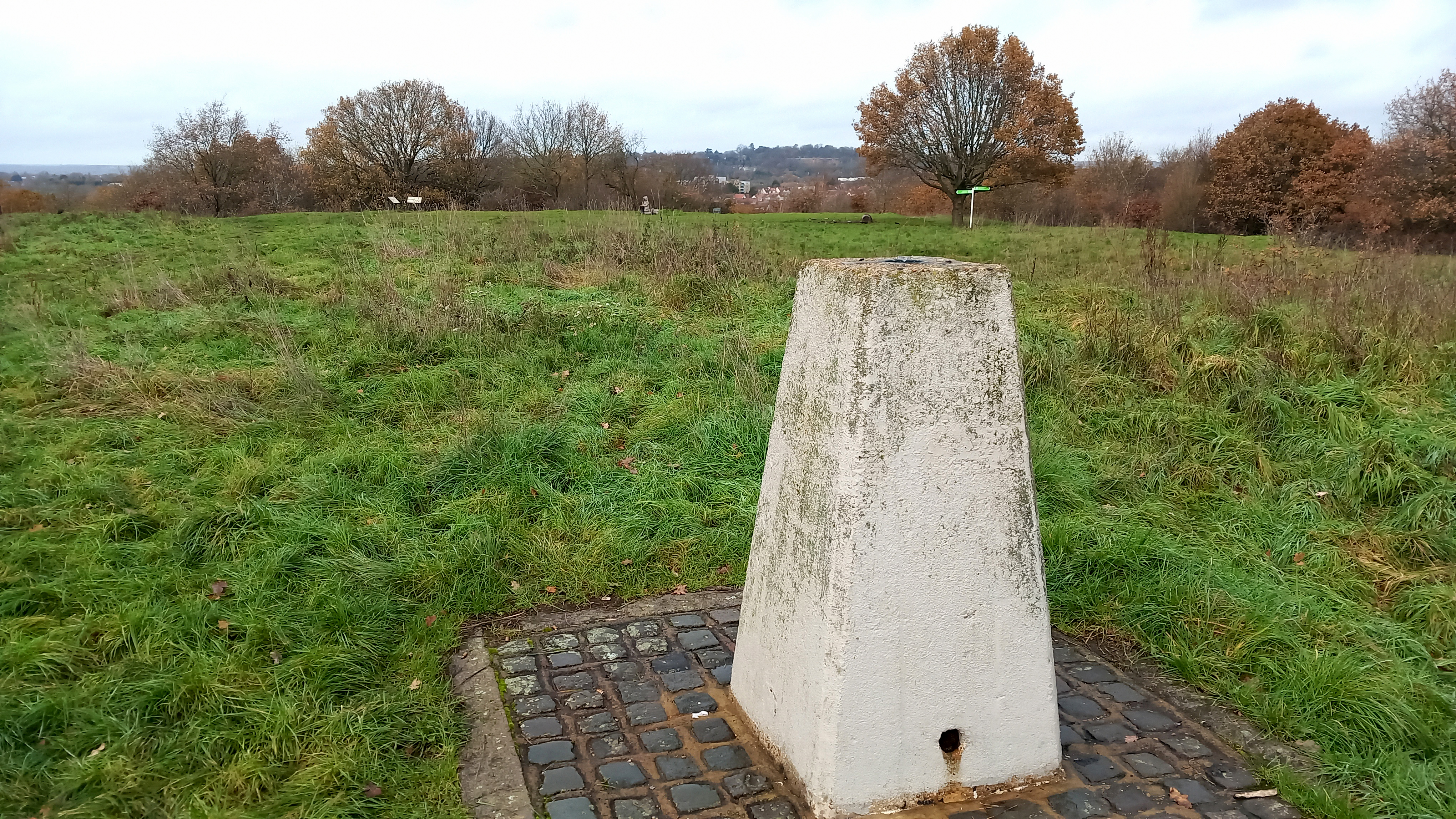
The hill was once an Iron Age settlement, and before this it was sometimes frequented by Neolithic flint knappers. The summit is furnished with a concrete trig point and a few benches – most have the seat part absent, rotted away or stolen for firewood. Up here, it is countryside quiet with no hint of city clamour although we do come across a few fellow wanderers: the men we see are mostly seated alone on benches with a can of lager in hand; the women, in contrast, tend to be walking purposefully, avoiding eye contact as they stride ahead. Who can blame them? Lone figures in the landscape engender a sense of melancholia and it is easy to assume that these are people with the weight of the world on their shoulders. But I know that when I am out walking on my own a casual observer may well think the same about me. The truth is: I enjoy walking alone sometimes; it is a pleasure, however it might appear.
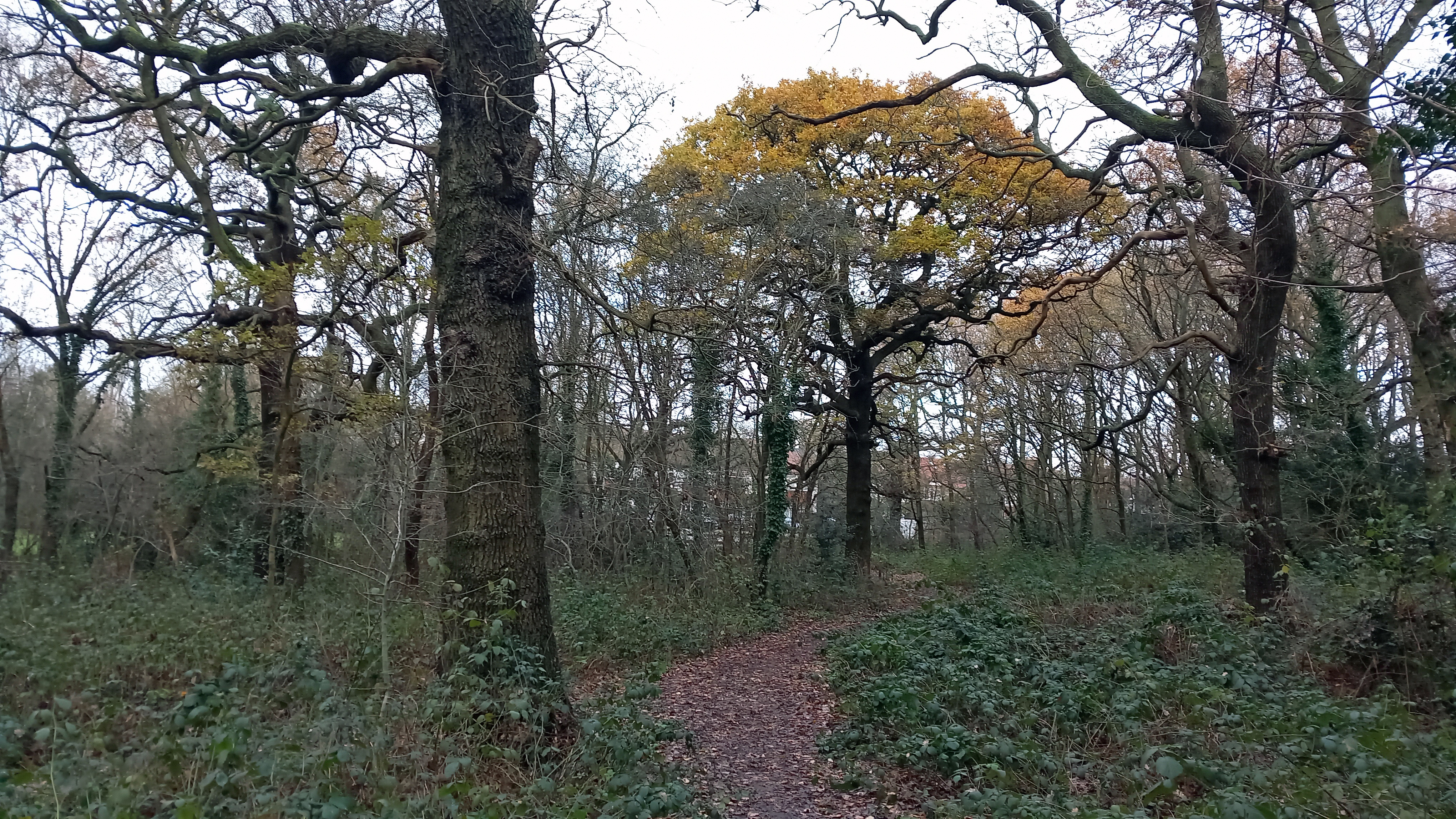
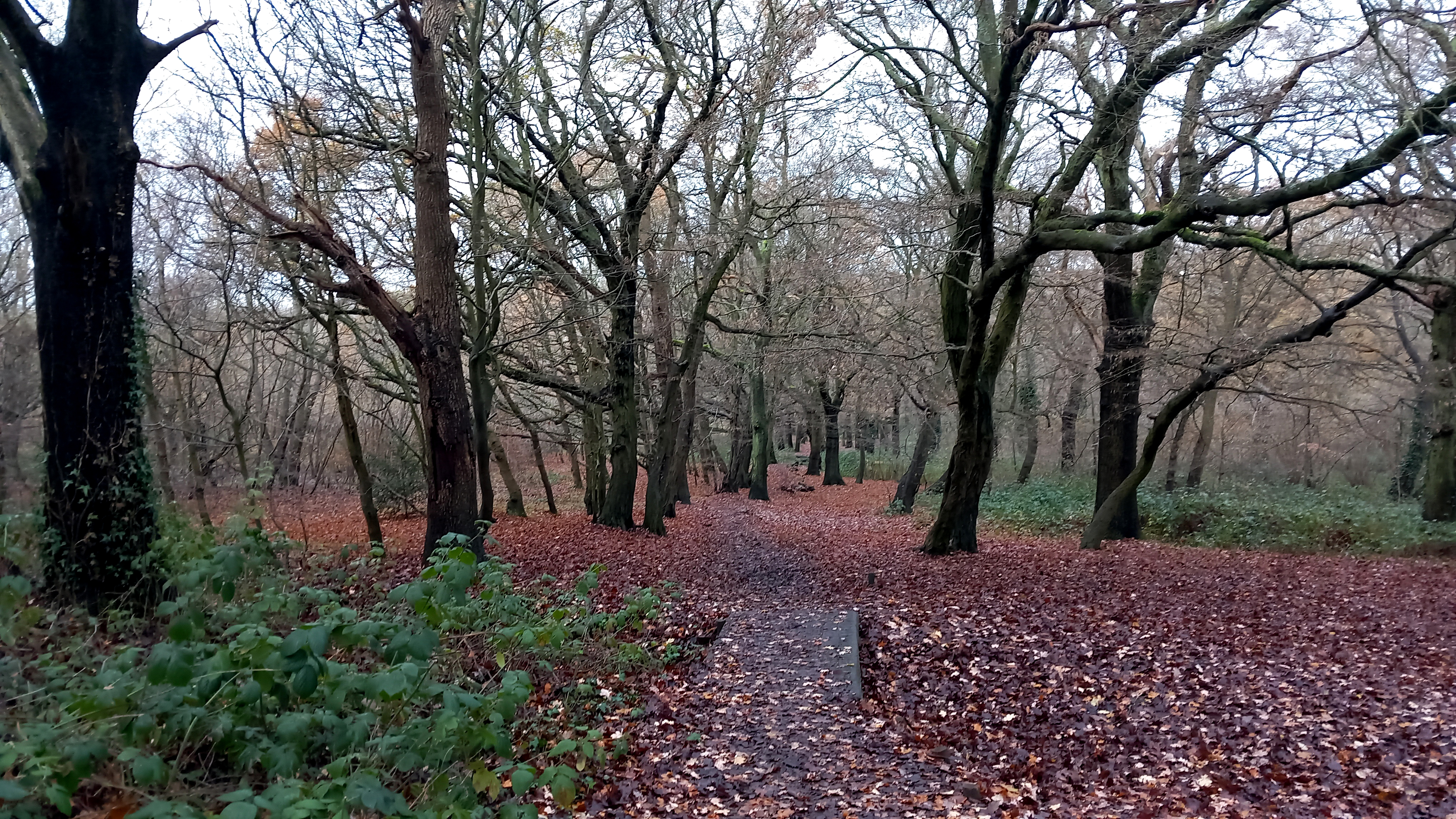
The path leads us downhill through woods of oak and beech. Parakeets screech in the branches overhead. The birds are ubiquitous now and certainly, within the orbit of London’s suburbs, they are rarely out of sight or earshot. I had seen my first of the day hours earlier whilst entraining to London that morning, a sleek green figure that swooped over the carriage as we passed over the M25 on our way to Liverpool Street. Parakeets, corvids – magpies, crows, jackdaws – woodpigeons: these are the birds that have taken over the green spaces of the capital. Small birds have been chased away to find sanctuary in suburban gardens. It comes as a relief to hear the passive-aggressive song of a robin holding firmly to its territory.

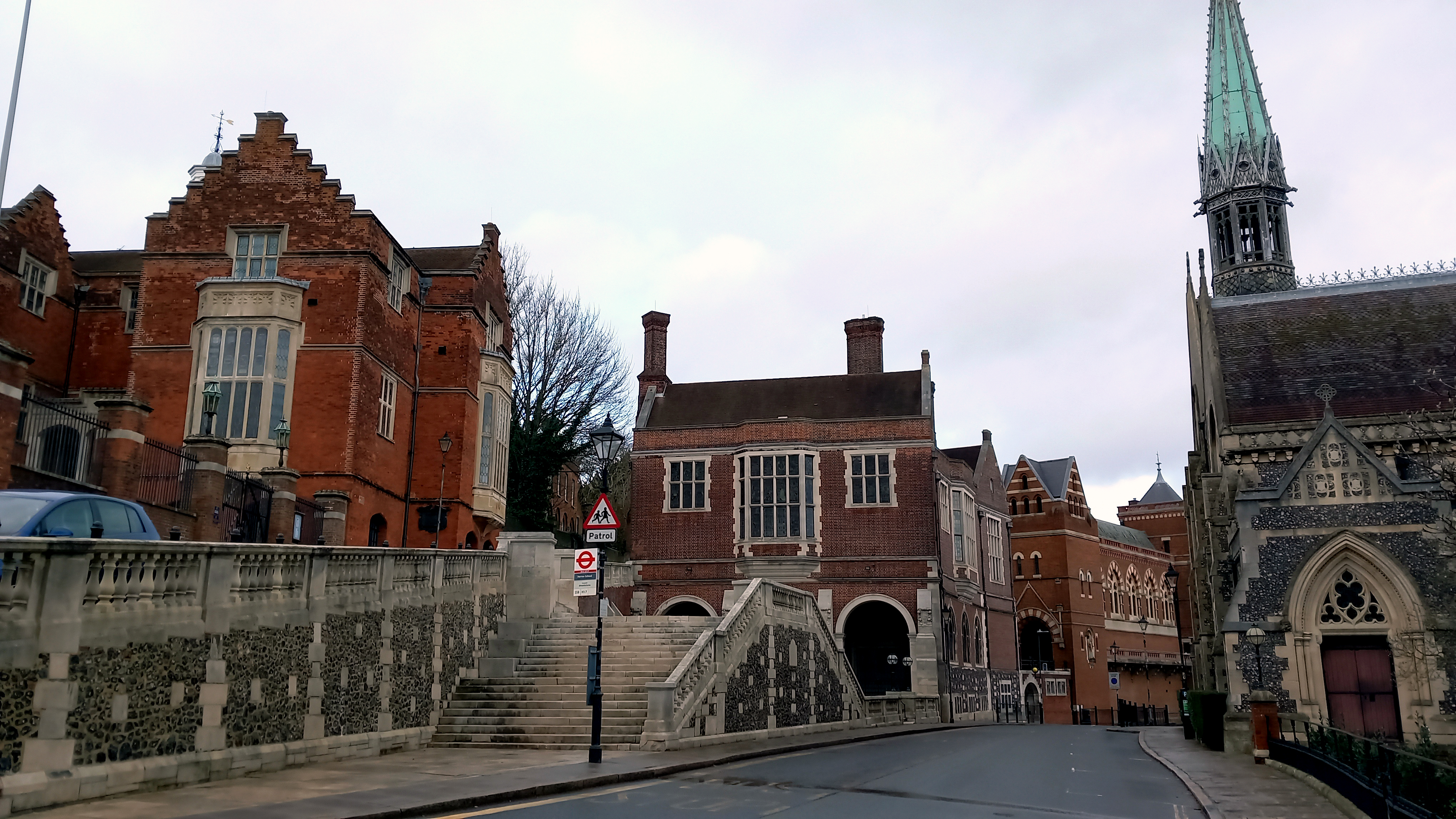
The route descends Horsenden Hill to Sudbury Hill before climbing again to Harrow-on-the-Hill. Harrow is as conspicuously wealthy as we imagined – huge house and gardens, security gates, high fences, a smattering of Arts and Crafts among the stylish mansions. Harrow – of Saxon derivation meaning ‘sacred grove’ – seems like a displaced Chilterns village: far enough from central London to give an impression of rurality; close enough to make commutes into the City feasible. It’s handy for the eponymous school too, of course. The various school buildings dominate the upper part of the village: crow step gables, decorative brickwork, signs announcing private property and CCTV. There’s a restaurant called Old Etonian that looks closed (even Harrow has to settle for being second best sometimes) and a specialist outfitters’ that displays various uniform items in its windows. The gaps between the buildings afford hazy views of the glass hi-rises of City of London, ten miles distant – a view that for many of the students is not so much aspirational but more a matter of destiny: inherited wealth, uncles that work  in City trading; money, old and new, that regularly takes itself on holiday to the Caribbean.
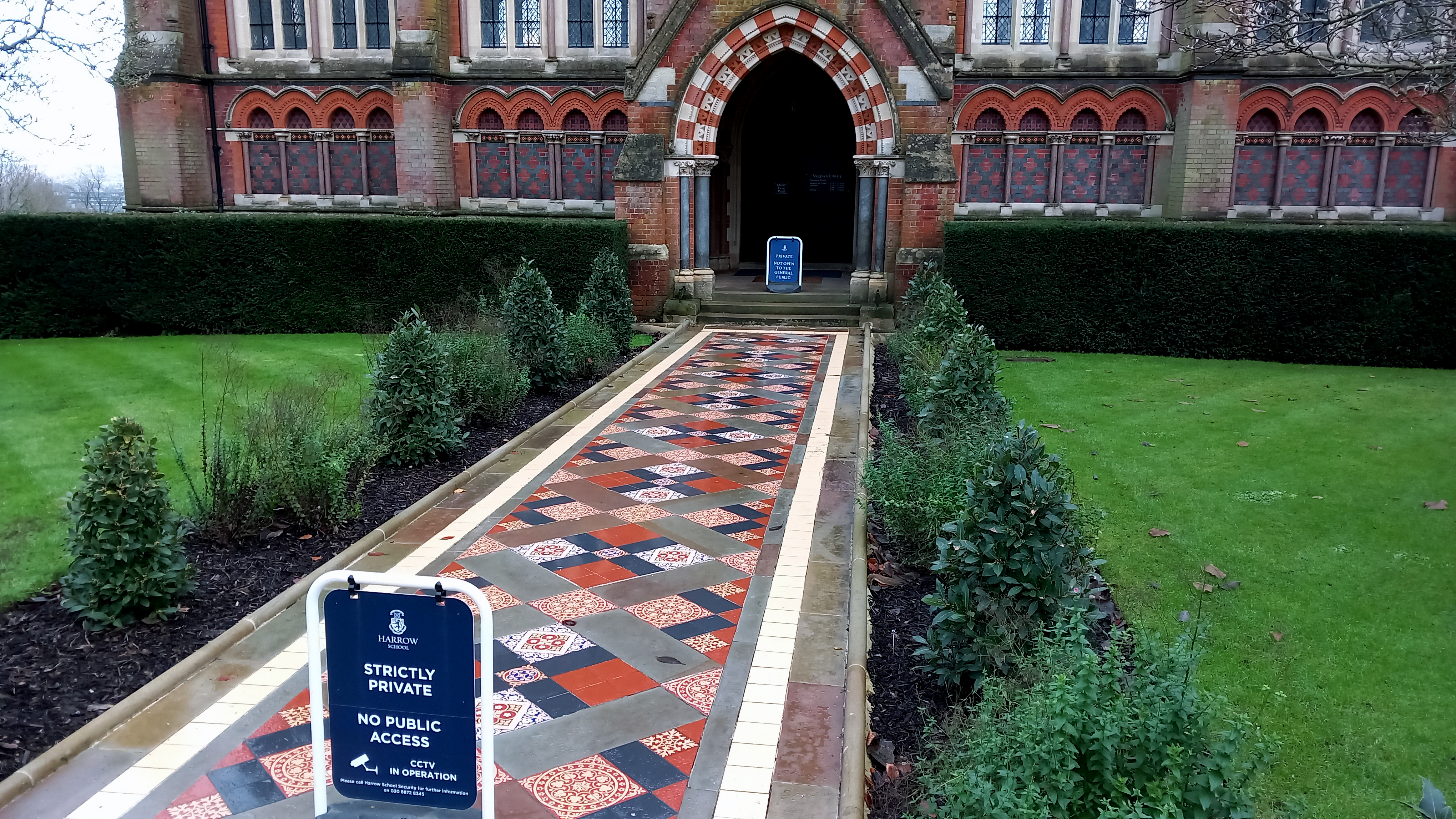
The flamboyance of the school buildings is one thing but it is on the playing fields that we pass through where the sense of privilege really hits home. Of course, to contemplate such things might be seen to participate in the politics of envy. But really it is the politics of inequality. The sheer scale of the sports facilities is breathtaking – a huge area with tennis courts, athletics tracks and so many football pitches that the widely scattered goal posts seem like hoops for a giant-sized game of croquet.
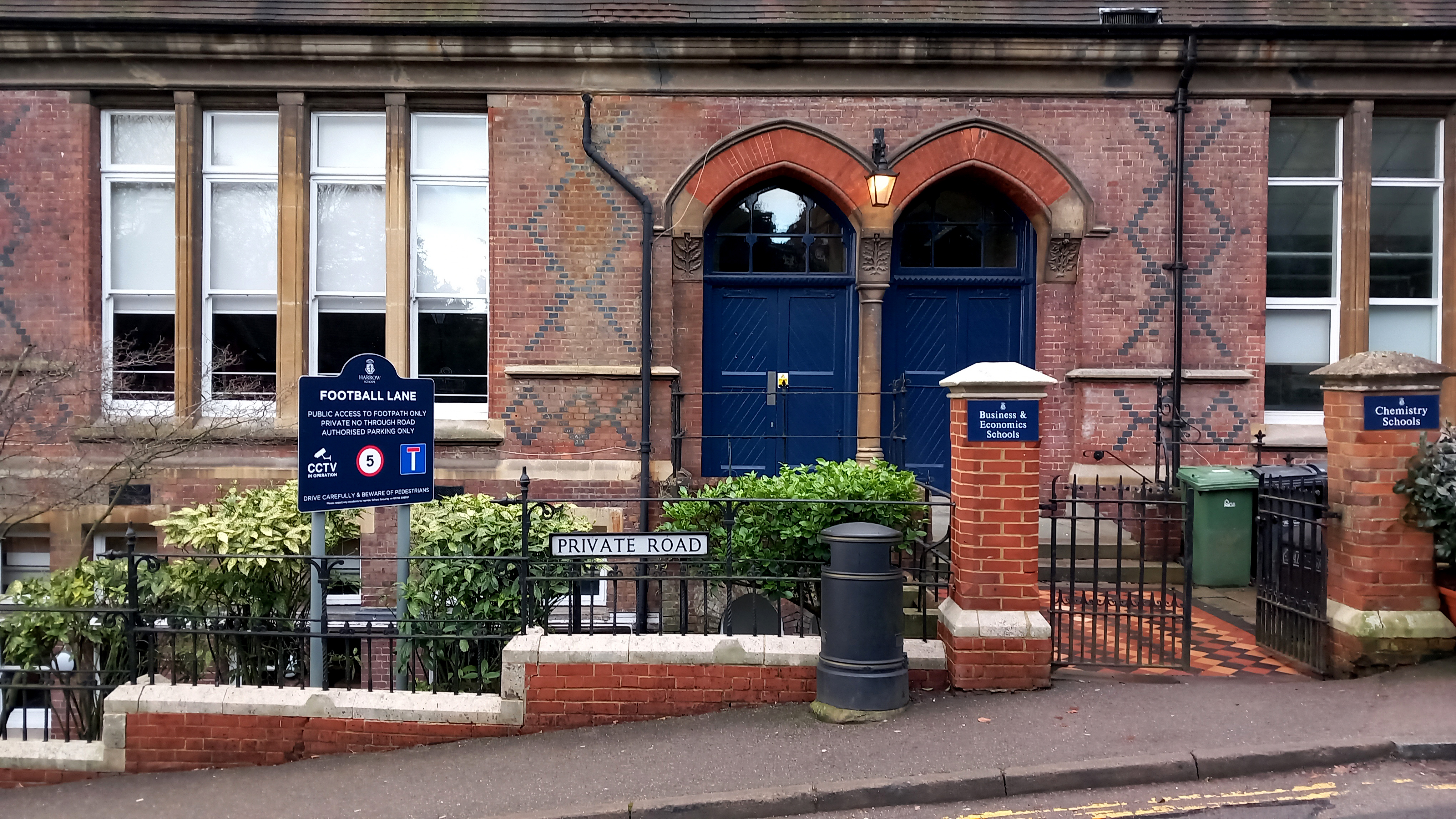
Eventually we leave the school premises behind to follow a track that traces the boundary of a hospital complex. Hemmed in behind lopsided Leylandii and a chain link fence, the side of the path is littered with disposable masks and drinks cans. In places there are signs of fly-tipping: old mattresses, a bin bag stuffed with large cuddly toys. When future archaeologists dig down to find the stratum that represents the Anthropocene what will they make of the artefacts they find there – the blue Covid masks, the slim energy drink cans and nitrous oxide canisters? Votive goods of some sort, or items connected with ritual use?

The underground station at South Kenton, our anticipated end point, is closed for repairs. So we walk to Preston Road then take the Metropolitan line to Baker Street. After beers and a Lebanese meal we head to Oxford Circus for our respective tube lines. Oxford Street, unlike the near lifeless streets of the outer suburbs we encountered earlier, is frantically busy with shoppers. Christmas lights in the form of brightly illuminated snowflakes span the street above our heads. Light is returning. As reliable as ever, the year has turned. 
Winter Light

IMG_7877

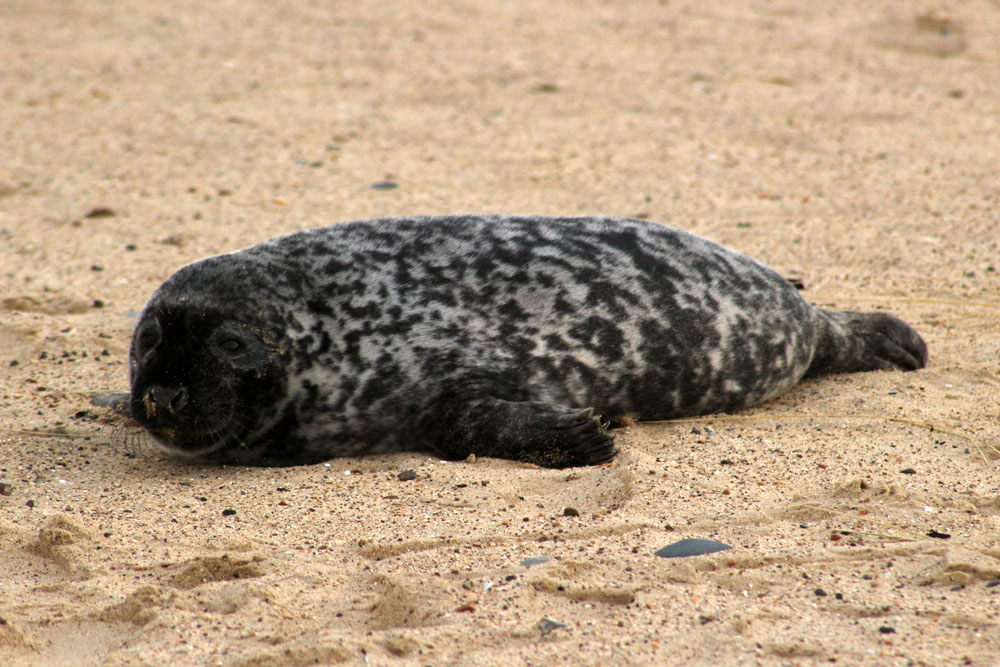
Even in winter, the northeast Norfolk coast has its attractions, especially over the Christmas and New Year period when many flock here to see the grey seals that come to the beaches of Winterton and Horsey to give birth. For many it is an annual outing, an opportunity to walk off seasonal excesses, to get close to nature, to delight in the spectacle of the seals and their pups. Some are tempted to get too close, of course, but these days a dedicated army of volunteers in hi-vis orange jackets ensure that visitors and their naturally curious dogs do not disturb the vulnerable animals on the beach.

IMG_7838

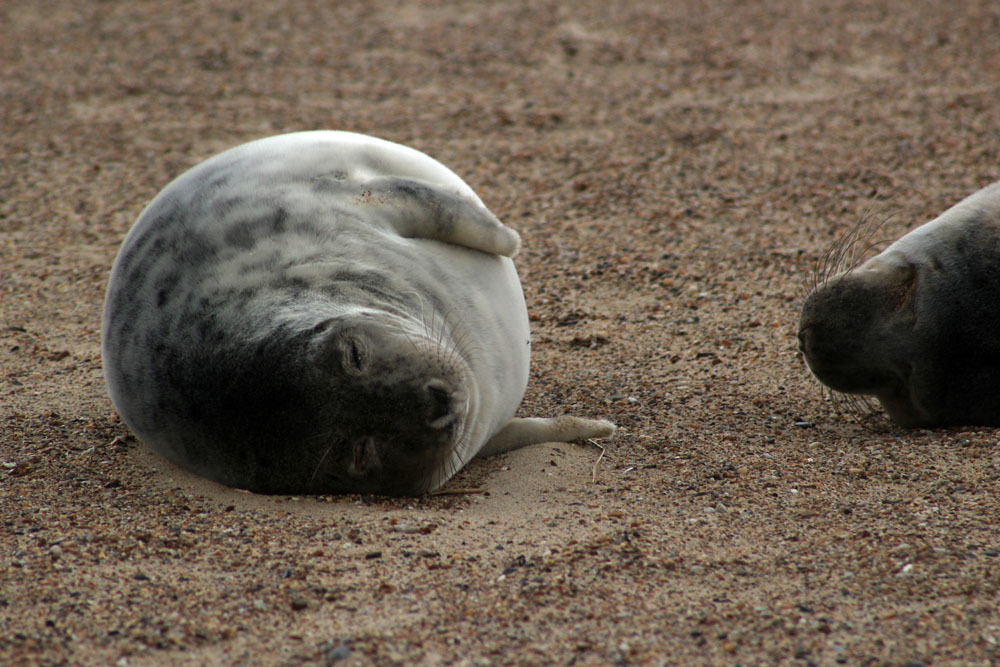
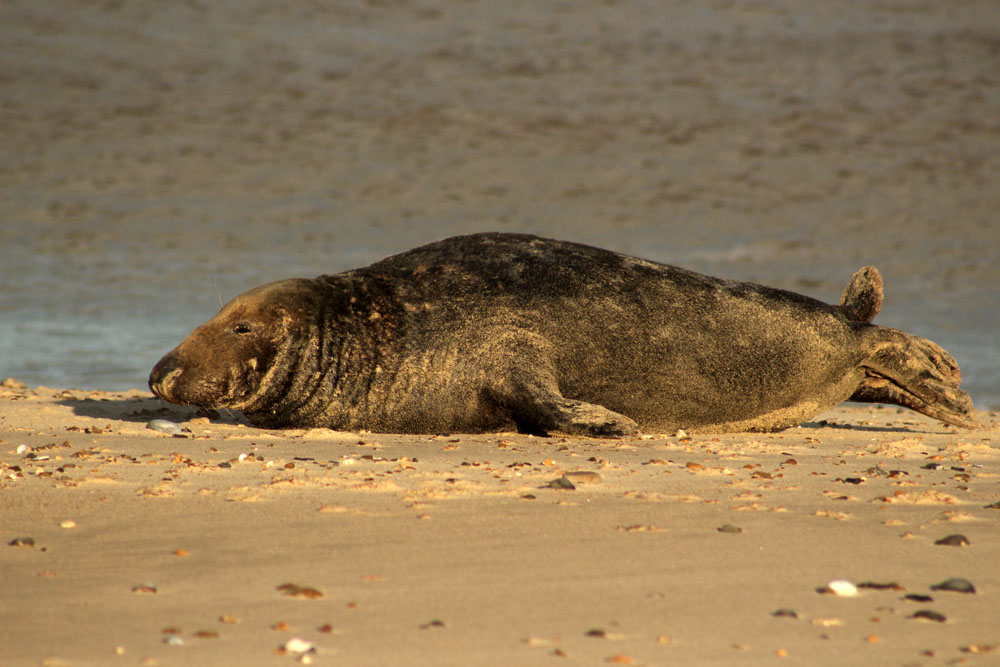
We arrive to find grey seal mothers and their fluffy-coated pups scattered like driftwood along the shoreline. Some are on the sand close to the breaking waves, while others are further inshore along the tideline, or even in the hollows of the dunes that back this coastline. Here and then along the beach, a hefty bull seal waddles in awkwardly from the surf to try his luck with one of the nursing females – this is the season for both breeding and mating.

IMG_7809

IMG_7859

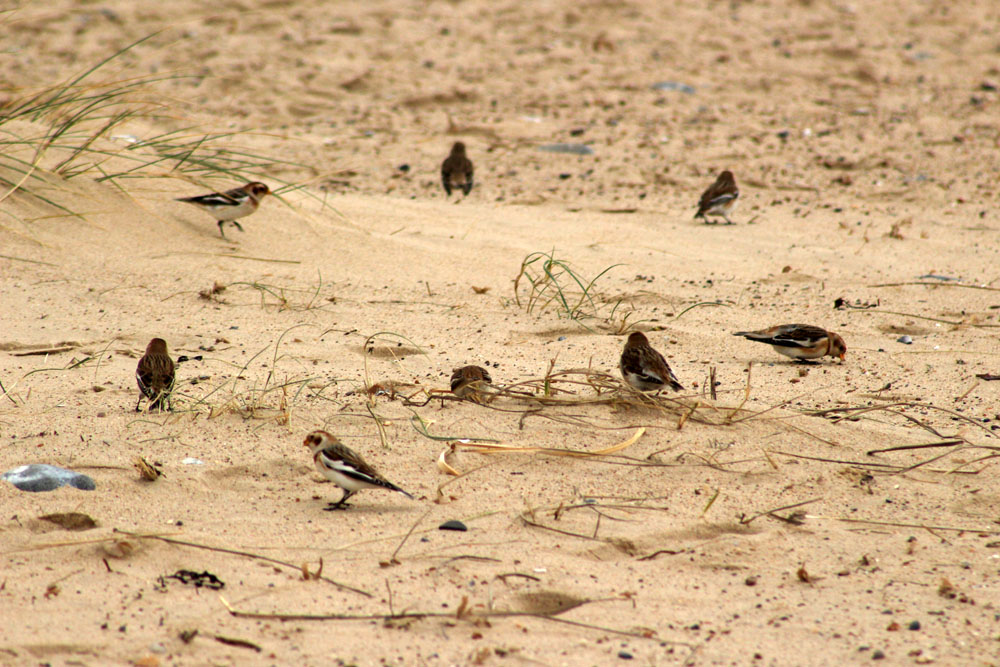
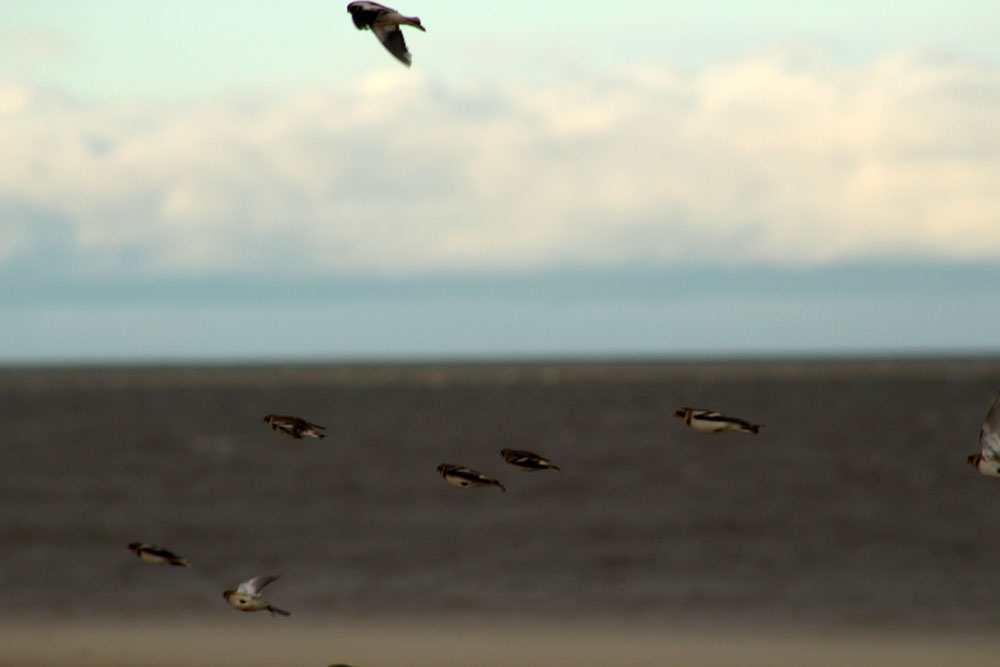
The seals are not the only creatures of interest here today: walking north along the beach, a small flock of snow buntings – perhaps 20 or 30 birds – rise like a flurry of sleet on our approach before setting down again a little further ahead. Winter visitors from much further north in Scandinavia and the Arctic, they resemble frosted sparrows as they peck busily at the seaweed, sticking close together for security.

IMG_7759

IMG_7828

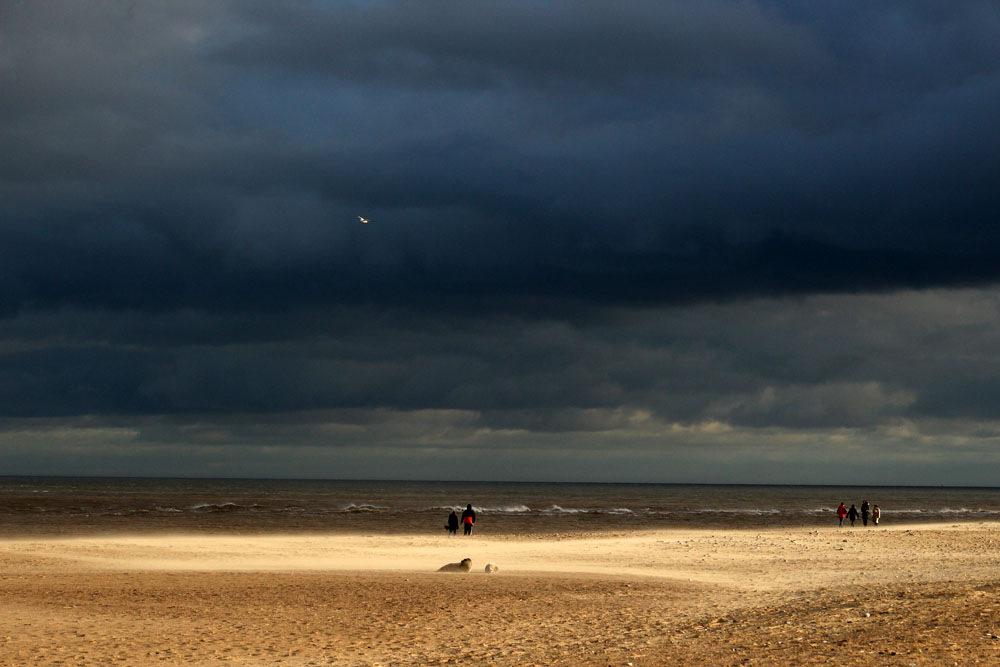
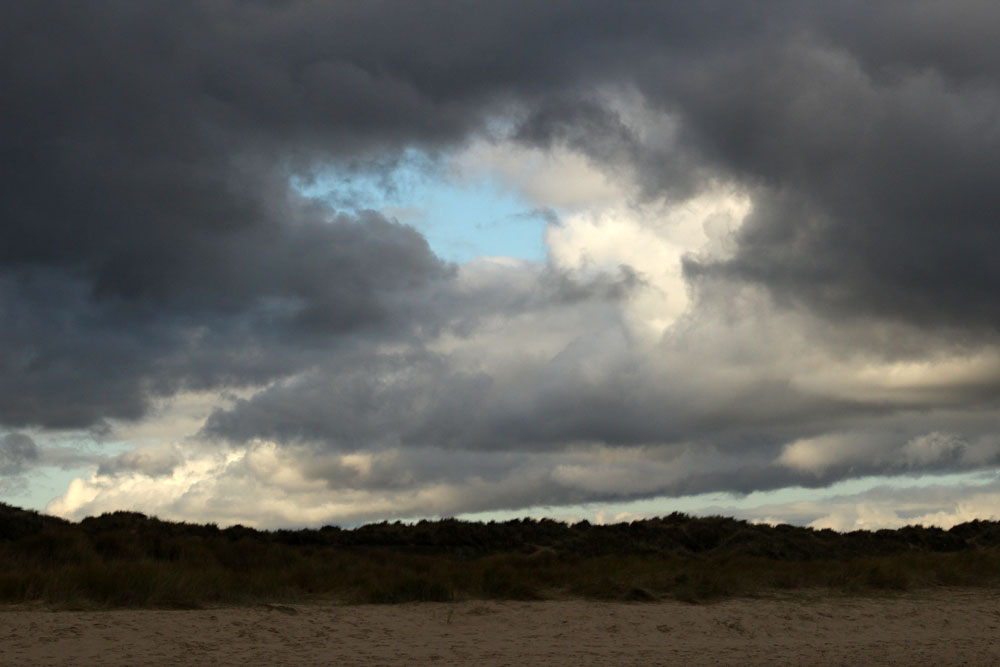
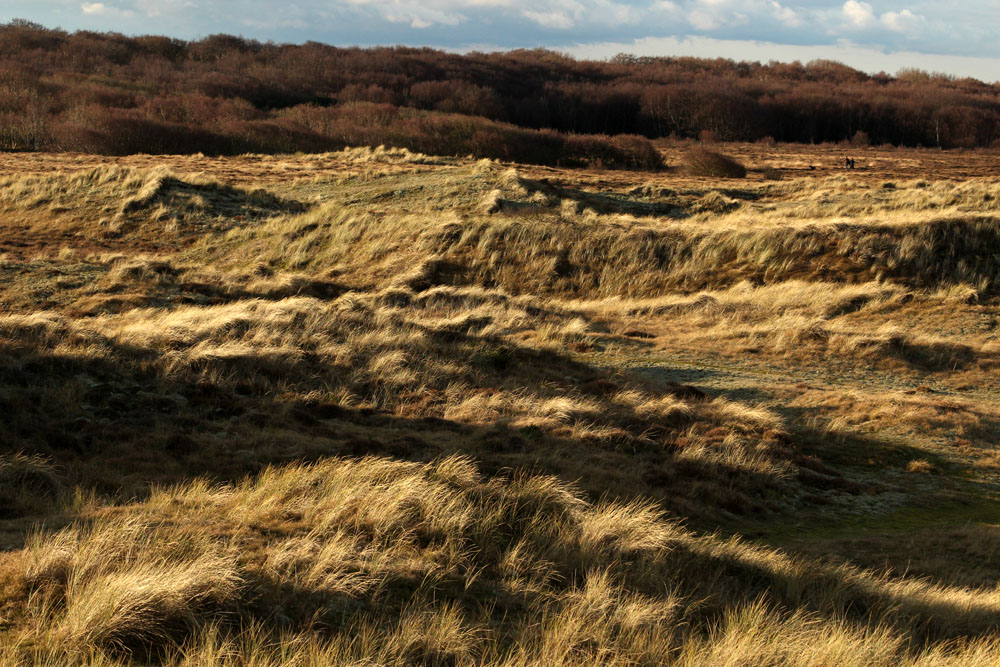
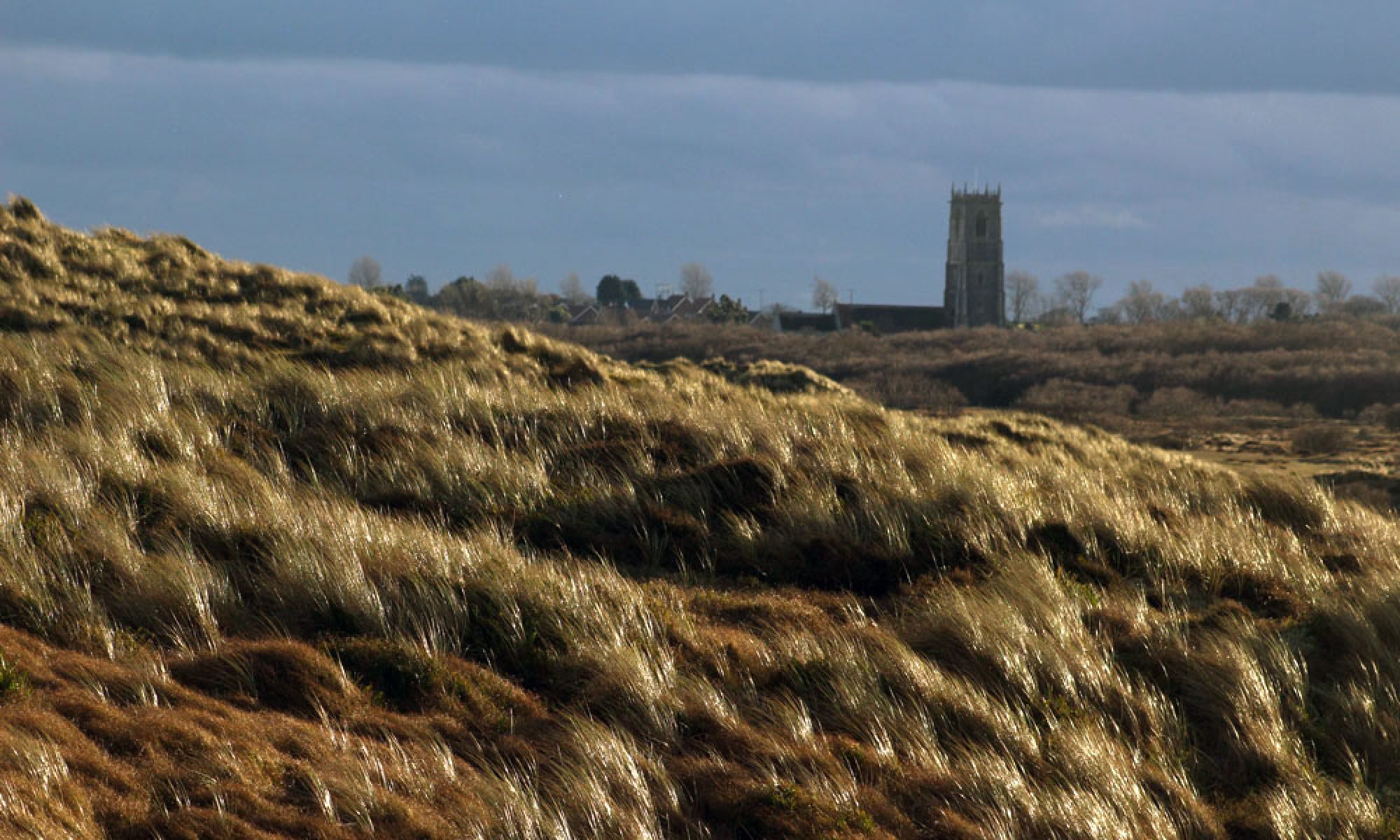
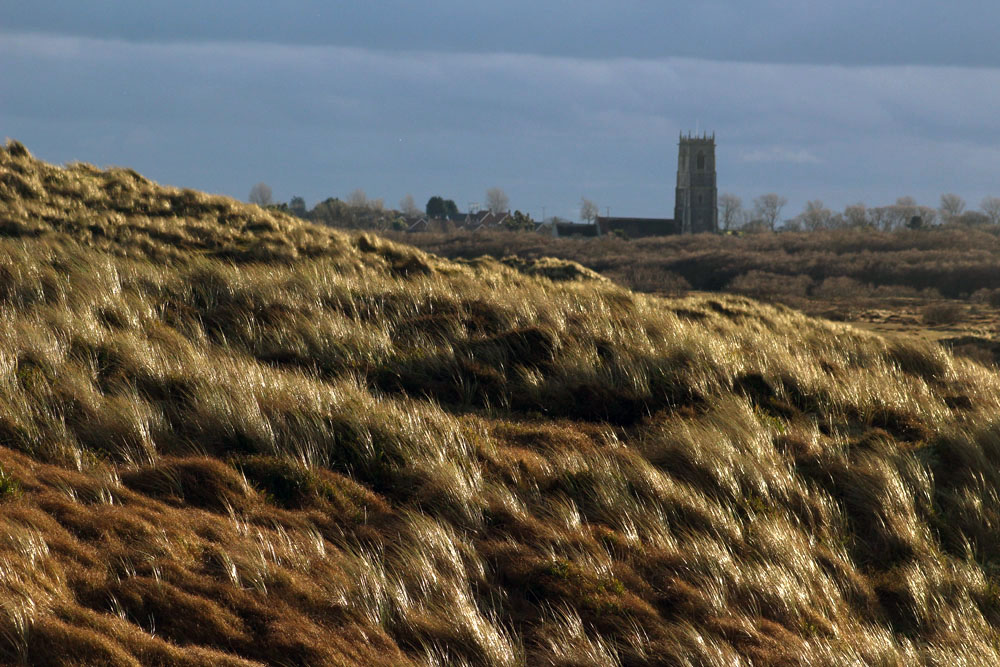
The seals and birds are engaging but the real star this cold January afternoon is the quality of the light, which morphs from gloom to gleaming in the space of half an hour. At first it seems as if the sky is weighed down like stone beneath a dense slate-grey sheet of stratocumulus but cracks soon appear and, like a hagstone held to the eye, an opening forms in the clouds to reveal the blue that lies beyond. As the sun loses height  beneath the cloud layer, shafts of pale golden light break through. The play of light on the dunes invokes a ghostly atmosphere. The wind-bent marram grass of the dunes, caught in the glow, seems almost fluid – an impressionist rendering of a wave-tossed ocean. In the distance, beyond the luminous marram, the Perpendicular tower of Winterton’s Holy Trinity and All Saints’ Church rises loftily above the crouched bungalow roofs of the village. This fleeting serendipity of light gives the scene a numinous quality, an eerie supernatural glimmer. It is a scene that might be co-opted for the cover of a book of ghost stories – a lost work by M.R. James perhaps.

IMG_7735

IMG_7890


IMG_7928

IMG_7991

IMG_7816

IMG_7818

A Berlin Interlude

img_1874What do you do on a drizzly grey day in Berlin? A midwinter day when the sun is enfeebled and hidden, cowering somewhere beneath a thick duvet of cloud. What do you do in a city that you do not know well and only have experience of in winter?
img_1875

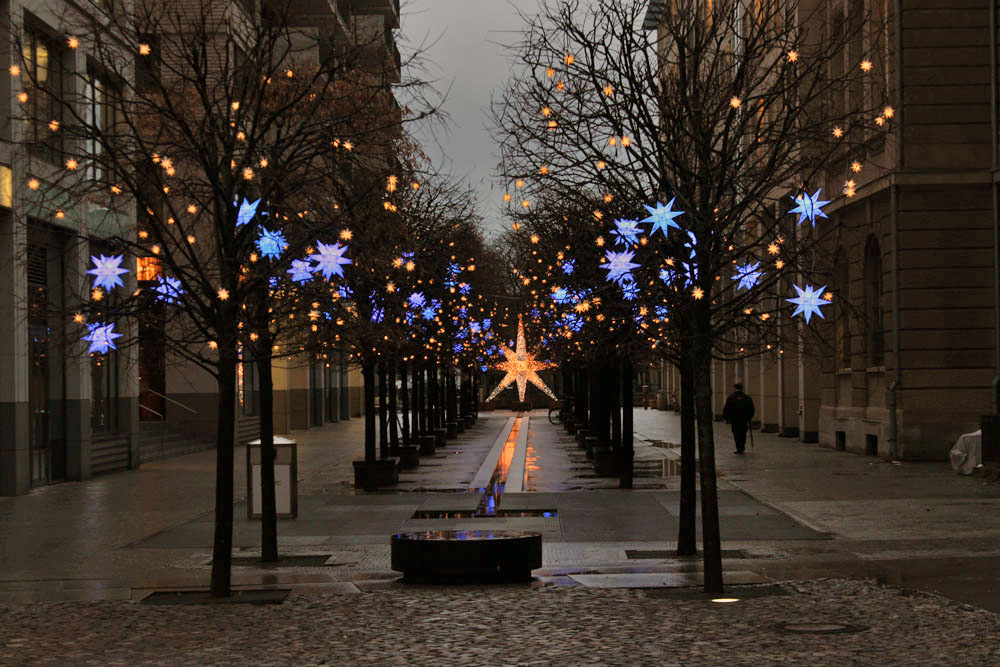
In early January the detritus of Christmas can still be seen in the streets – fairy lights cling obstinately to avenues of artificial trees, and discarded Christmas trees litter the pavements awaiting collection for recycling. The year has turned and spirituality and festivities will soon give way to politics. In less than a week, Berliners of a left-leaning persuasion will be attending another regular winter event, the commemoration of the deaths of the Spartakusbund (Spartacist League) leaders, Karl Liebknecht and Rosa Luxemburg, who were summarily executed during the uprising of January 1919. Each year on the second Sunday in January Berliners gather at the Memorial to the Socialists at Friedrichsfelde Cemetery to commemorate Luxemburg, Liebknecht and others who perished at the hands of the right wing Freikorps. This year is the centenary.

img_1883

img_1859img_1864

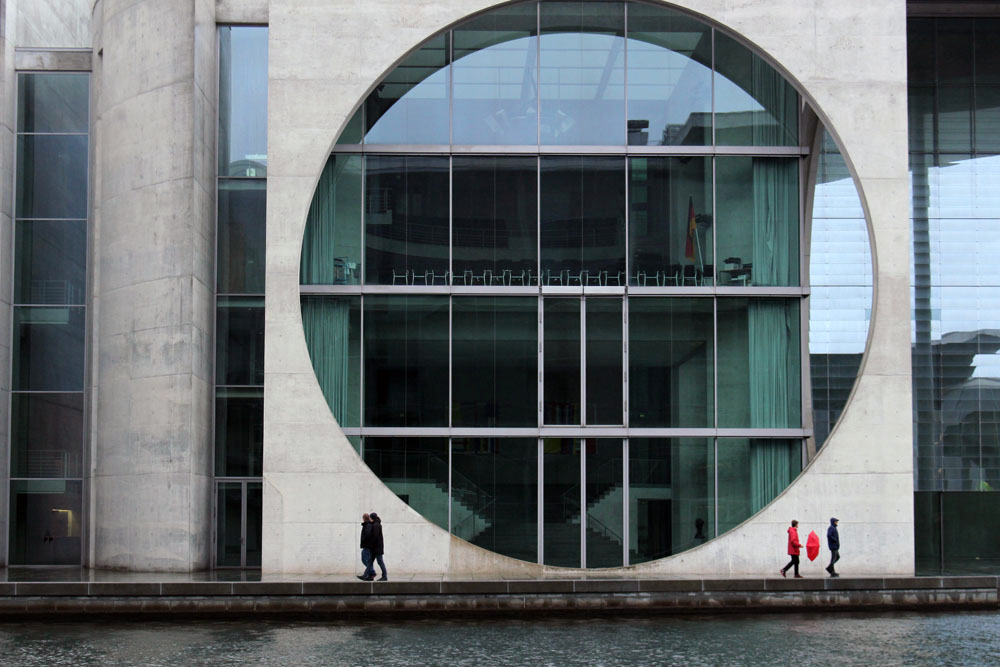
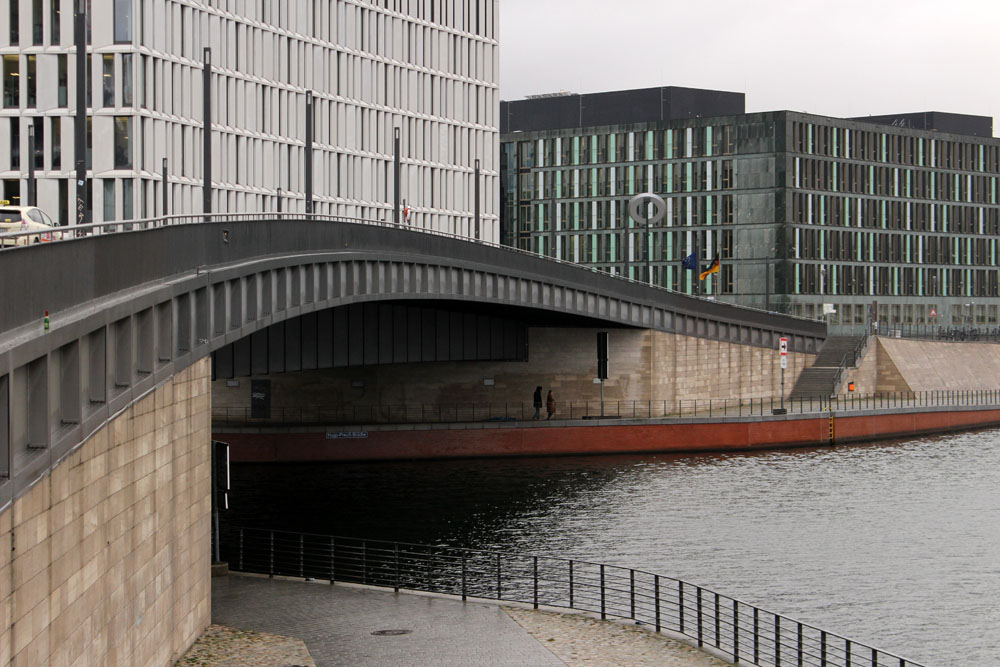
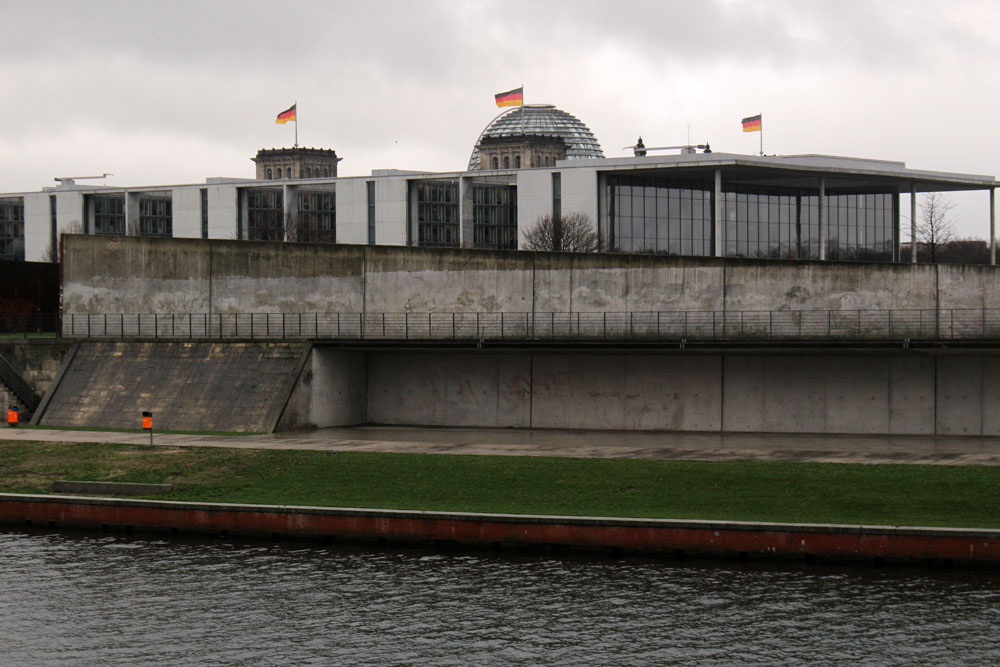
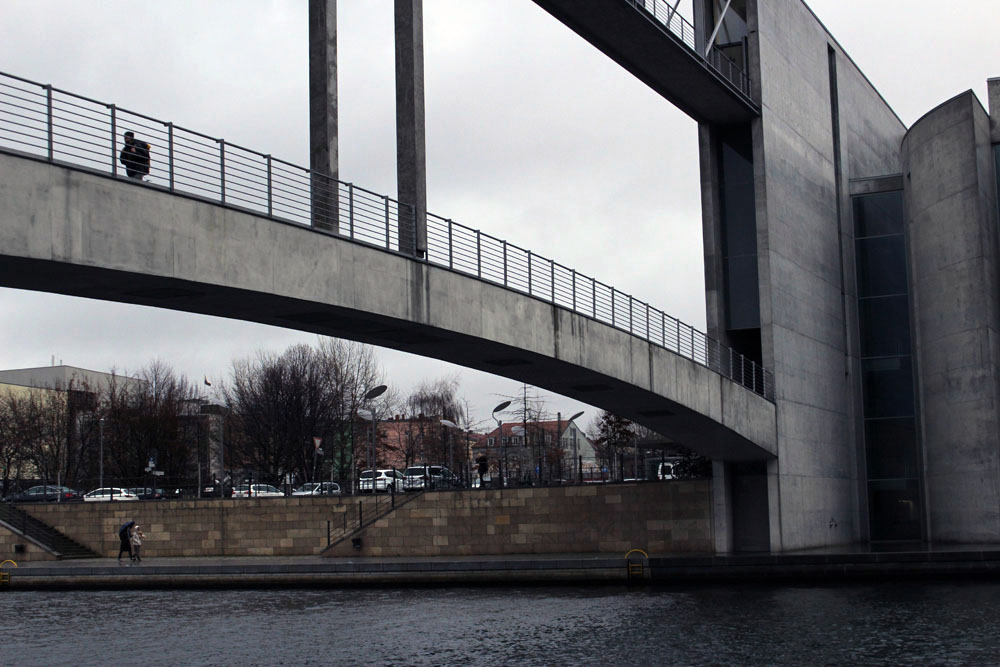
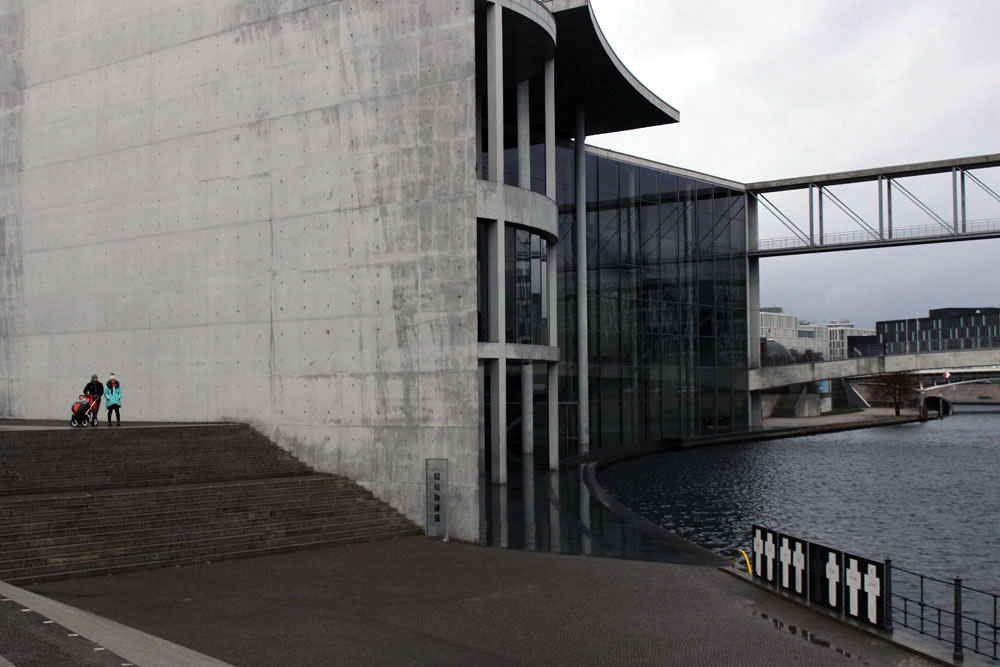
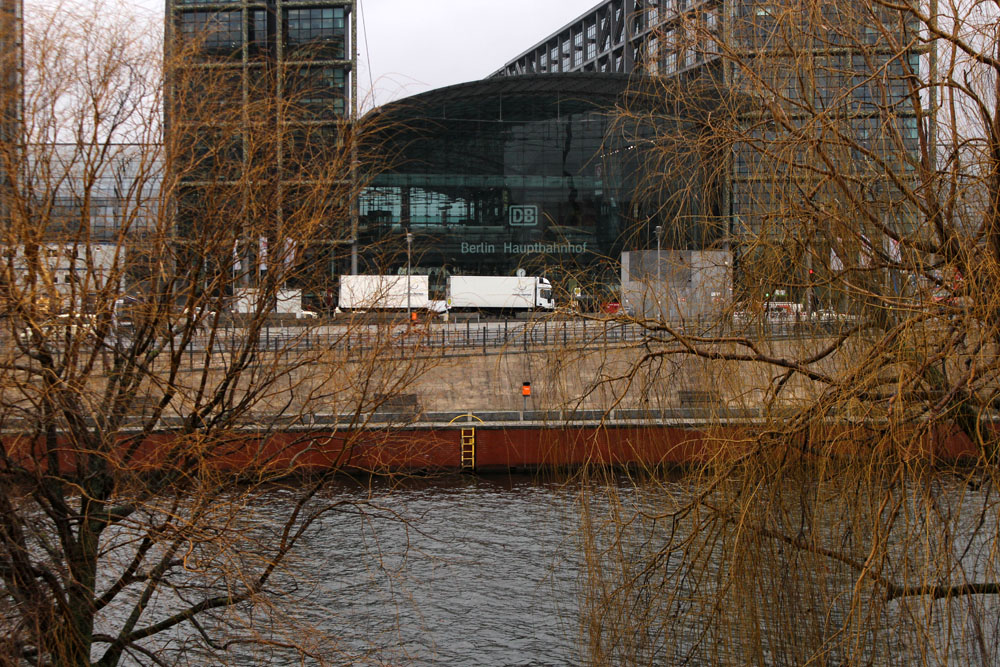
I am a few days too early for this event so I decide instead to take a walk along the main body of water that flows through central Berlin, the River Spree. I walk out of Berlin Hauptbahnhof railway station and cross the river to its south bank to follow the path to Museuminsel (Museum Island), from where I will strike west away from the river towards Alexanderplatz. Light rain and dense cloud renders the urban landscape almost monochrome. Such colour that there is stands out for its rarity – traffic lights, bright umbrellas, the hi-vis orange jackets worn by street workers. Although this is the heart of a populous capital city there are few other walkers to be seen – the poor weather has seen to that – but here and there is a jogger, a strolling couple, a woman pushing a pram. Tracing the river, I pass a succession of ultra-modern waterside buildings – enterprise temples of concrete and glass that give the impression of being hermetically sealed from the gloom outside. Office workers in a brightly lit dining canteen pay me no attention as I walk past on the other side of the glass wall that separates us. The Foster-designed glass dome of the Reichstag makes an appearance above the surrounding buildings as I progress; black, red and yellow flags flutter in the breeze.

img_1858img_1855

img_1865

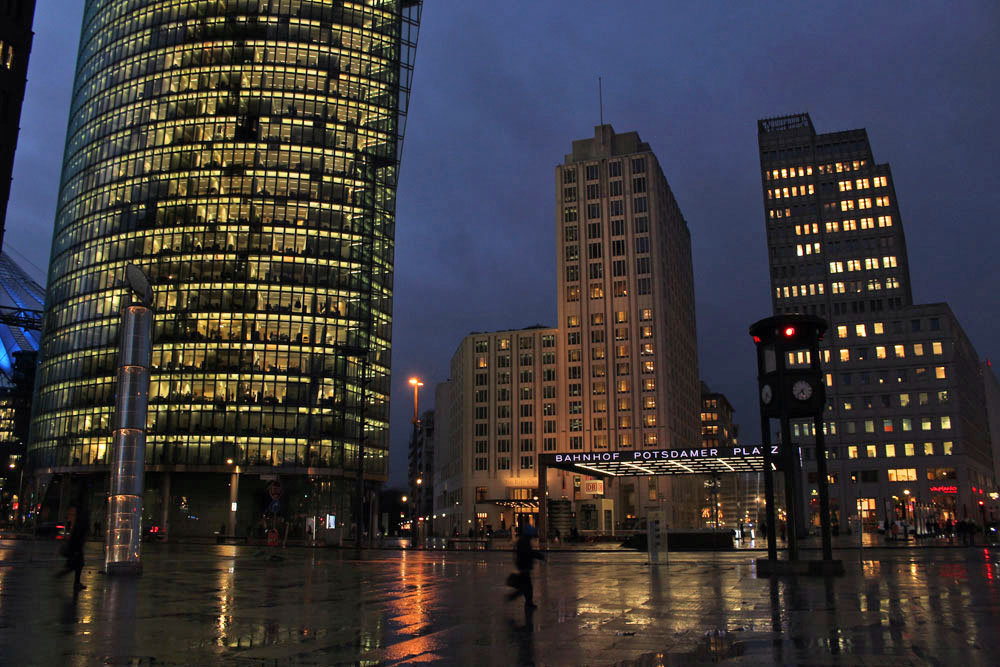
Leaving the canal behind after traversing Museuminsel, the lofty TV tower of the Fernsehturm at Alexanderplatz comes into view, as eventually do the twin Communist period tiered towers that flank Karl-Marx-Allee. At Alexanderplatz I descend underground to catch the U-bahn and a few stops later emerge once again at Potsdamer Platz where I cross the square to enter the railway station. Past sunset by now, the sky squid-ink black, the fluorescent blaze from the office blocks that fringe the square throws up reflected light from the rain-wet pavement. After colour-robbed days such as this the bright lights of human endeavour contrasted against the intense darkness of night can seem almost a comfort.

img_1932

img_1912


The Turning of the Year

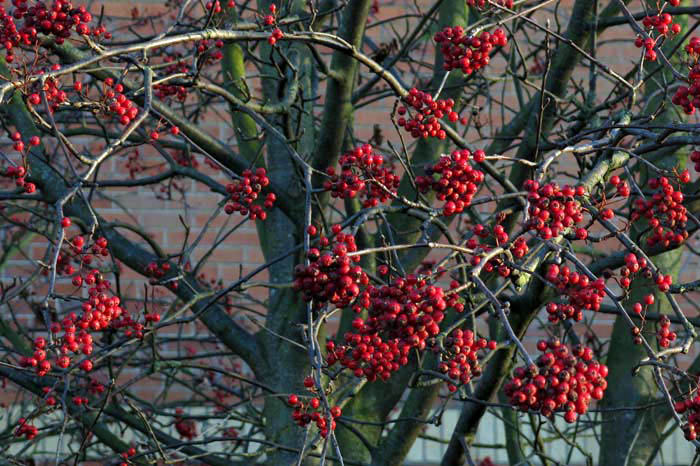
IMG_4891(This winter’s berries)

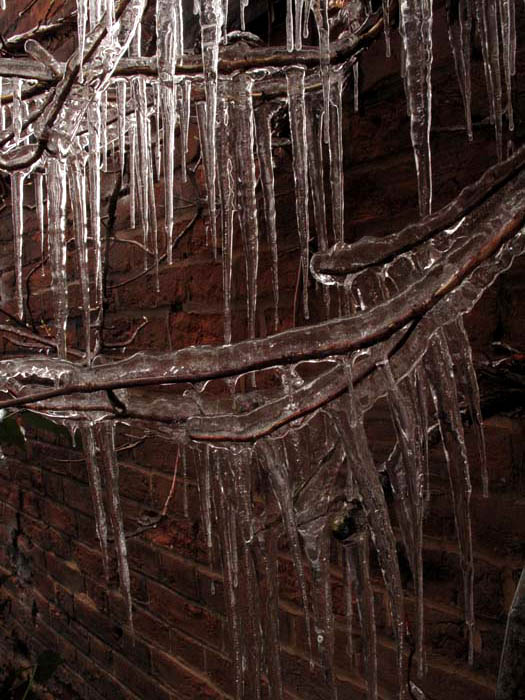
The turning of the year. These past few days mark the interregnum that sits uncomfortably between Christmas and New Year – a week of virtual Sundays and a period when some of us – those who are self-employed at least – do not know whether they should be at work or not, whether they should carry on regardless or surrender to the seasonal zeitgeist of calorific leftovers, television repeats and relentless retail opportunity. This is a living limbo marked by the dull ache of too much alcohol and rich food, and too little sunlight: rural Scandinavia in a parallel universe on a bad day, where Disneyesque fibre-optic conifers and tattered tinsel replaces the glittering white rime of pines, chain store neon glare subs for the aurora borealis and the petrochemical chug of cars queuing for city centre parking space drowns the imagined crooning of fur-clad carollers, the glassy tinkle of falling icicles and the satisfying crunch of snow beneath sensible Nordic footwear. We are now so far removed from the traditional Christmas tropes that any sense of irony has long been lost, and the multiple identities – spiritual and otherwise – of the winter soltice are now commonly, if erroneously, perceived as having been replaced by Winterval, a quasi-mythical simulacrum close to the hearts of apoplectic ‘PC-gone-mad’ bashers.

IMG_4958 (2)

(Last winter’s icicles)

The weather doesn’t help, of course – too mild, too wet, too windy this year. At least some sort of status quo continues in the back yard where non-denominational  (or possibly JW) goldfinches arrive in pairs to feast on niger seeds as they do every day, a suitably attired mirror-image illusion of avian dandies on opposite sides of the bird feeder. Meanwhile, out in the dun damp arable fields that surround the city beyond the new-build green belt, fieldfares flock – newly arrived winter visitors from Scandinavia, the real place that is, not the parallel universe version. Elsewhere, the TV flickers like a well-behaved heart monitor as a nation prepares for the ritual liver damage and rictus-grinned high spirits that signify New Year’s Eve. Or, rather, the younger ones do: most older folk ensure they are safely tucked up in bed by the witching hour when a nation stumbles forward, arse over tip, across the calendar date line. The circle is, as they say, unbroken. Happy New Year.