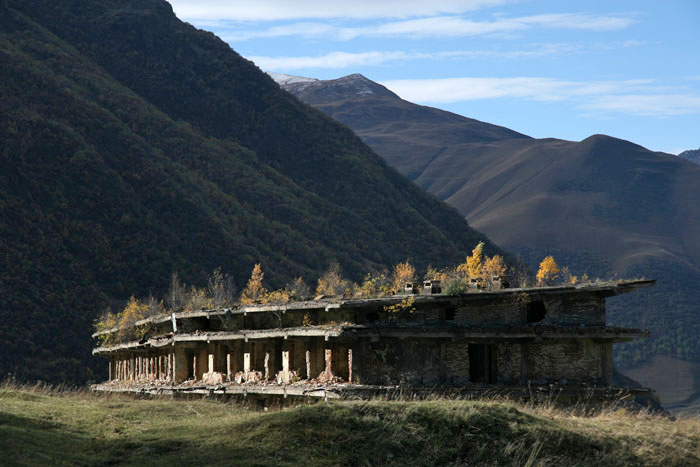
 Abandoned Soviet-era hotel, Kazbegi, Georgia
“You don’t know why ruins give so much pleasure. I will tell you. . . Everything dissolves, everything perishes, everything passes, only time goes on. . . How old the world is. I walk between two eternities. . . What is my existence in comparison with this crumbling stone?” Denis Diderot
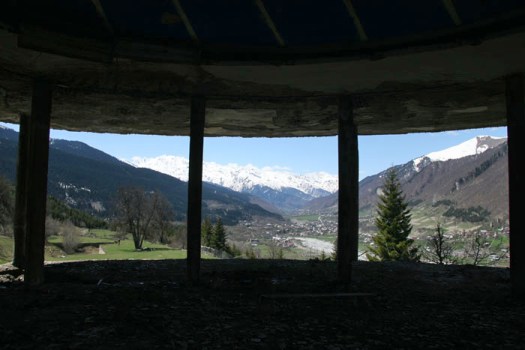
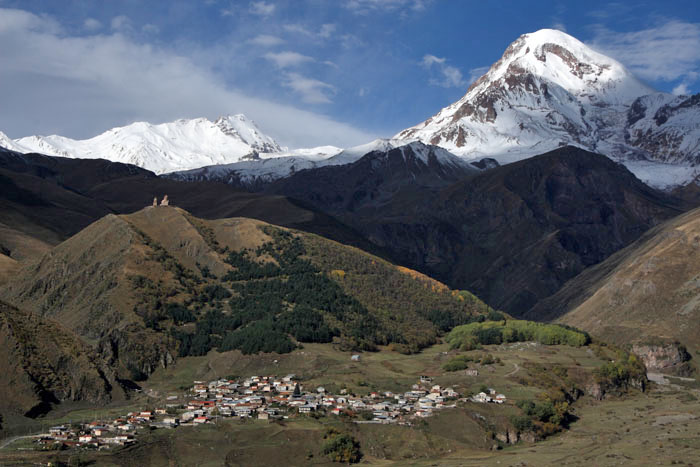 Mount Kazbek and valley seen from abandoned hotel, Kazbegi
Entropy has its own beauty: the serendipitous artfulness of decay – the romantic ruin aesthetic. The crumbling stone mentioned above, quoted in Rose Macaulay’s Pleasure of Ruins, refers to the classical world but the principal is the same. Like the effect of medieval cathedrals on awestruck, little-travelled peasants, ruins put the viewer in direct contact with the inevitability of time, with their own mortality and decay. Like mould growing in the Petri dish of mankind’s hubris, they illustrate the way in which the delicate interface of man and nature can perceptibly change in a relatively short period.
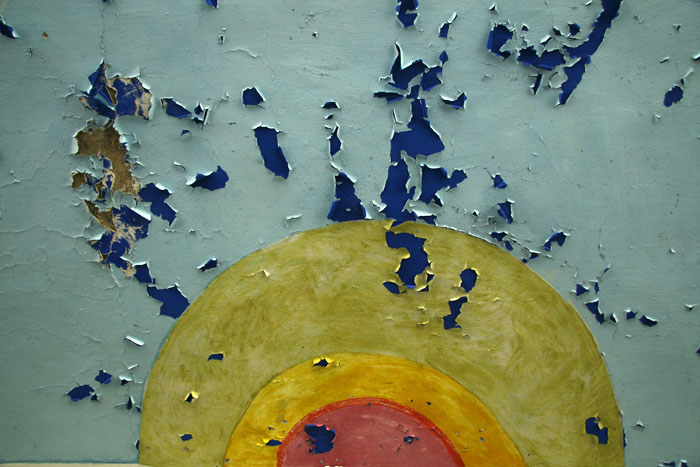
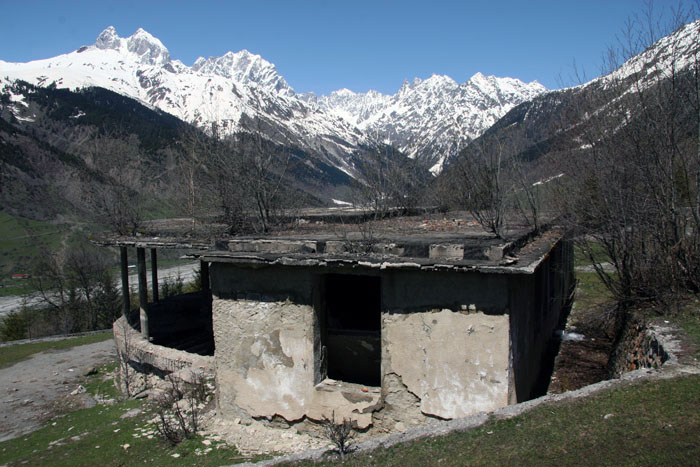 Abandoned Soviet-era restaurant, near Mestia, Svaneti, Georgia
Sometimes, there are darker violent forces at play, the guilty, flinching schadenfreude of gazing at post-conflict landscapes. More usually though, architectural ruins simply result from financial or political bankruptcy, of a national or regional ideological refit. Abandoned to nature, they stand quietly rotting before consignment to the architectural skip of failed (or rejected) narratives.
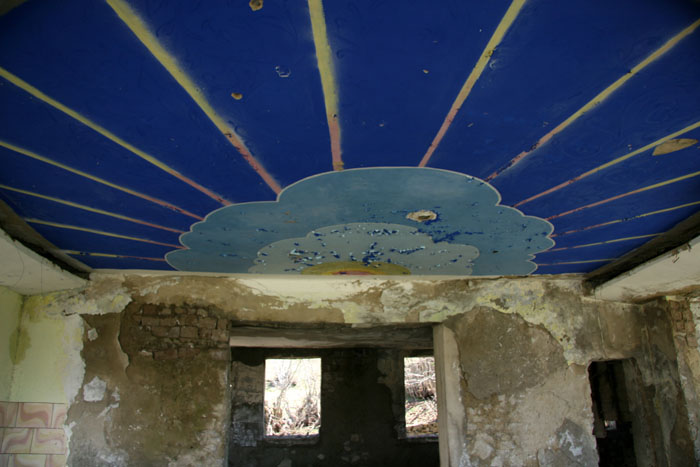 Abandoned restaurant near Mestia, Georgia
These days such sights tend to be more common in the countries of the post-Soviet world than they are in Western Europe. Nevertheless, even these are vanishing fast and I have no idea whether the Georgian buildings shown in these images from 2010 are still nobly rotting away or have been bulldozed to make way for new development. Georgia is, after all, a country that in recent years has distanced itself as much as possible from its neighbours across the Caucasus and, in defiance of its recent history, done its utmost to buddy-up with the neoliberal West. I like to imagine how these places might have looked 30 years ago: the Kazbegi hotel filled with holidaying Soviet workers; the Mestia restaurant, with Moscow apparatchiks slurping borscht and slugging vodka. Surely they must have enjoyed the view?
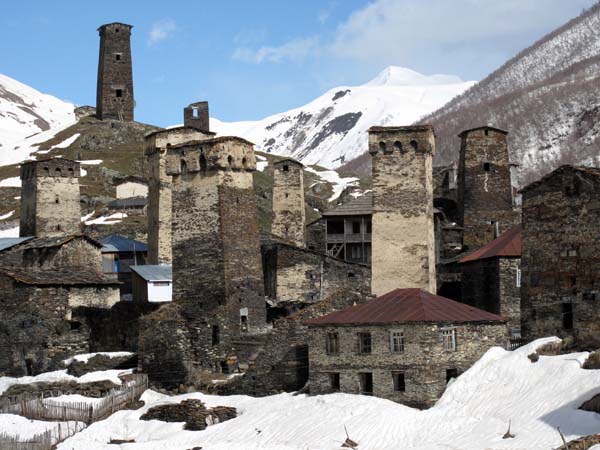
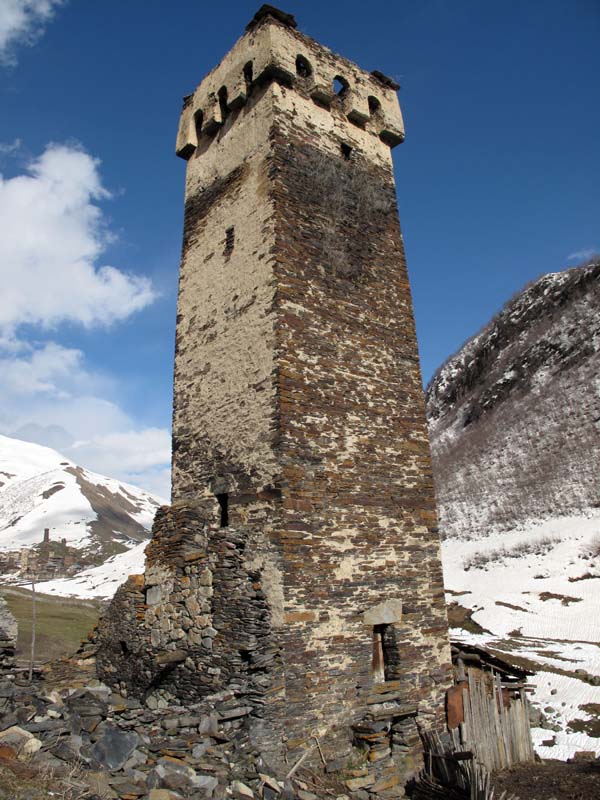
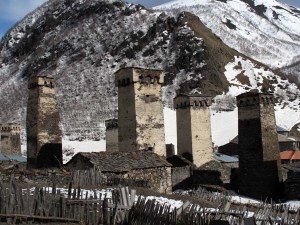 Visiting Svaneti for the first time I realise that the place I saw in Rudolfsky’s book all those years ago was a collection of villages called Ushguli, nestled beneath high Caucasus peaks and stretching high up a valley. At 2,200 metres altitude, Ushguli is probably the highest permanently inhabited settlement in Europe (although currently no-go Dagestan on the other side of the Caucasus range also has contenders to the title) but it is its magnificent medieval towers that make it truly extraordinary. Some have collapsed over the years but there still sufficient to present an imposing spectacle and render Ushguli’s towers a UNESCO World Heritage Site.

 East of Elveden