Journey to Avebury

A Journey to Avebury is the name of a short silent film made by Derek Jarman made in 1971. Shot in wobbly Super 8, and saturated with burnt orange hues, it has an otherworldly eldritch atmosphere that is hard to describe. Suffice to say it is hardly be the sort of thing that the then English Tourist Board might have chosen to promote the stone-encircled Wiltshire village. Too painterly and surreal by half for such considerations, the film is both beautiful and slightly disturbing, and has the feel of a psychedelic adventure about to go wrong. With wind-blown trees and shifting clouds against Martian skies, A Journey to Avebury evokes the strangeness of a landscape that is already inherently deeply weird. The weirdness owes much to the implacable monoliths that dominate the village, although Jarman’s focus on the rolling Wiltshire landscape that surrounds the village, with its bare fields and isolated clumps of trees, is equally suggestive of a territory that exists outside the usual constraints of time and space.
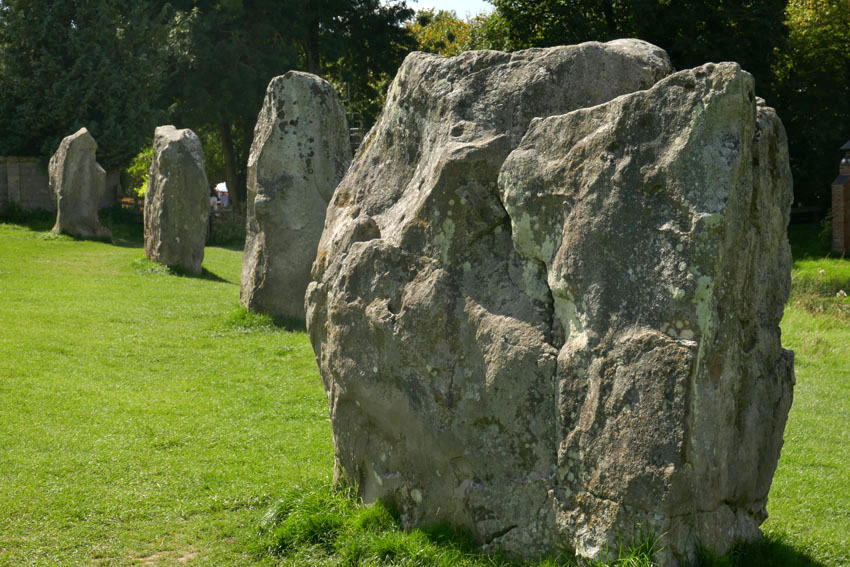
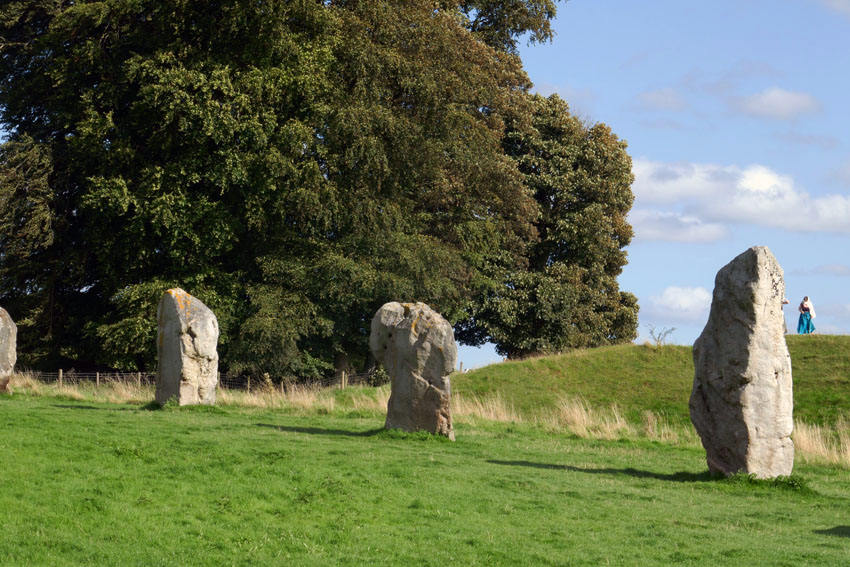
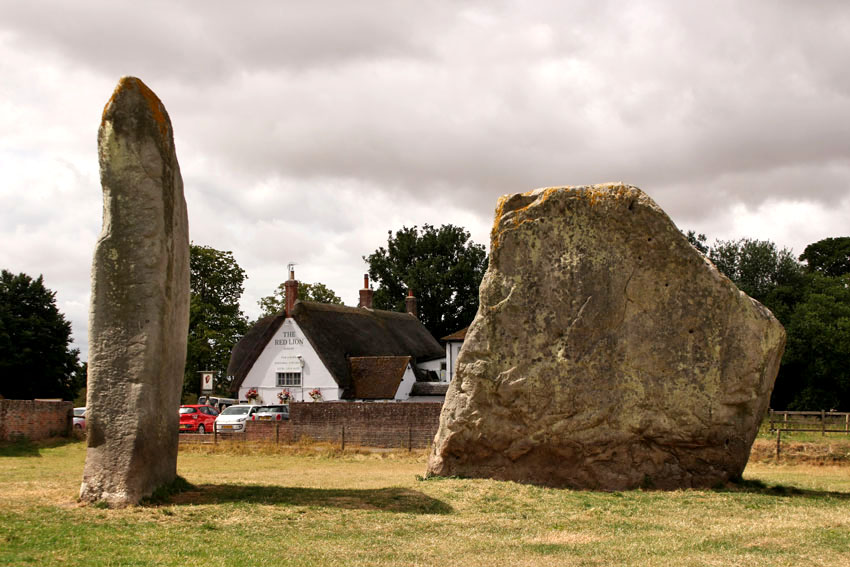
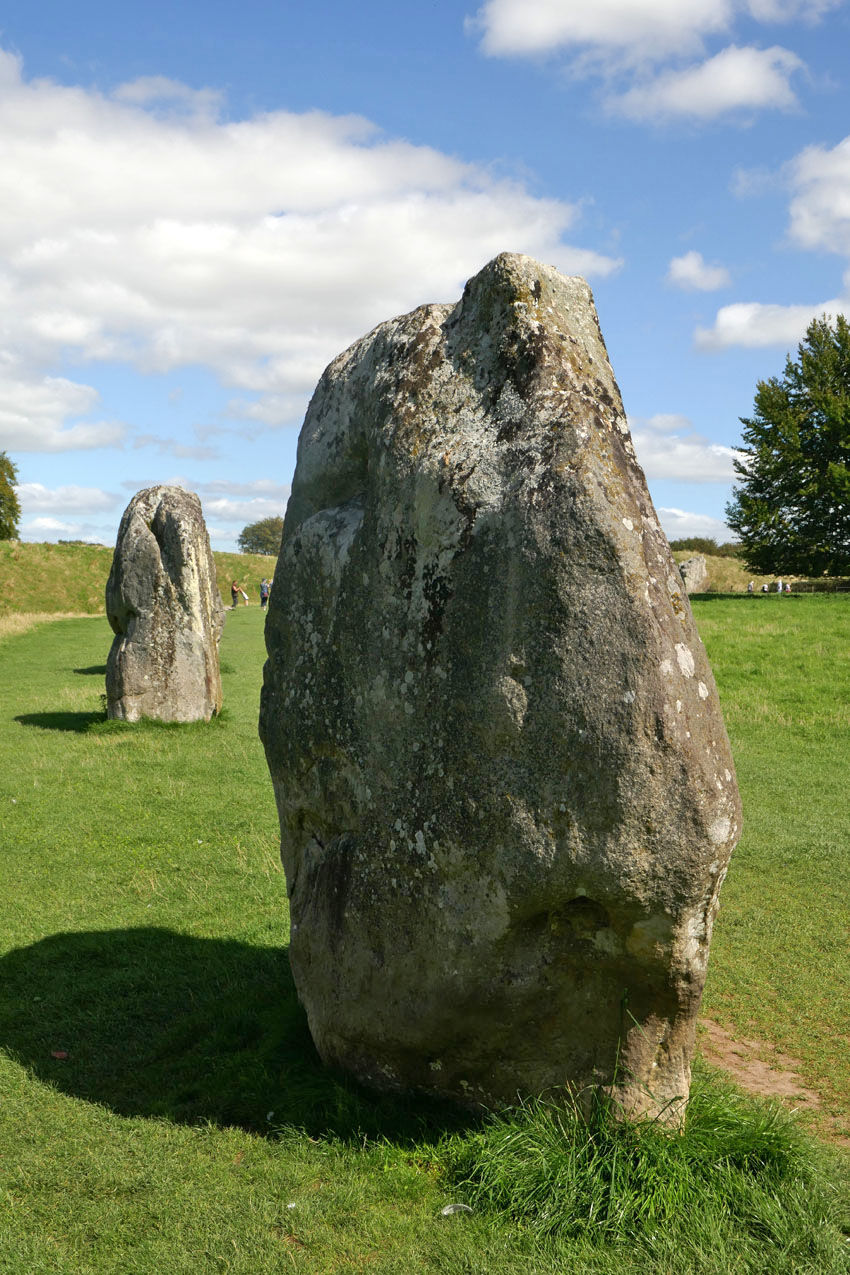
Avebury is undoubtedly an extraordinary place – a village that not only lies at the heart of a sacred Neolithic landscape but one that uniquely sits within the sweep of a stone circle. Not surprisingly it is a much visited location, especially in the summer months, as visitors that range from newly retired to New Age travellers come to walk the circle of stones and pay tribute to this ancient, stone-bound place. After several visits to the village myself, its megaliths and raised banks, pathways and lanes have become firmly imprinted in my mind. Some places fade quickly but Avebury is somewhere that etches itself on the memory.
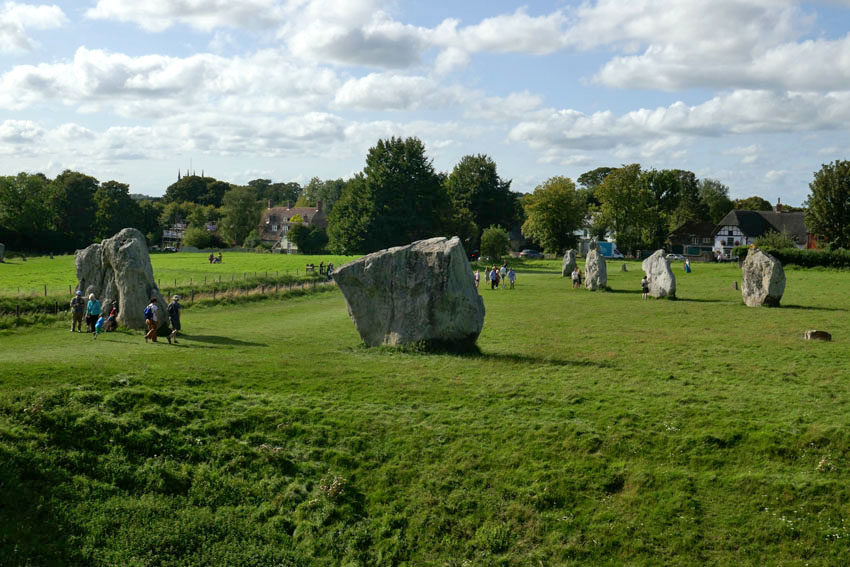
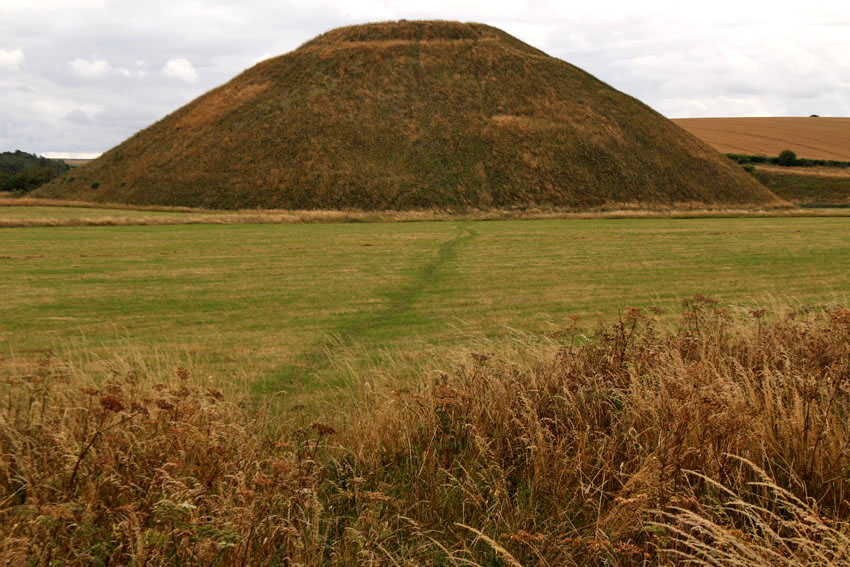
Even in prehistoric, monument-rich Wiltshire, Avebury has a particular gravity. It feels as if it is at the centre of things, a focal point for the megalith-strewn landscape that surrounds it. Nearby are other, even older monuments that put the stone circle and avenues of Avebury into context: the destroyed stone and timber circle of The Sanctuary, the chambered West Kennet Long Barrow and, most remarkable of all, the man-made chalk Mount Fuji that is Silbury Hill. These are all connected, by footpaths, tracks and, as many believe, ley lines, although it is the monument of Avebury that gives the impression of lying at the beating heart of it all.
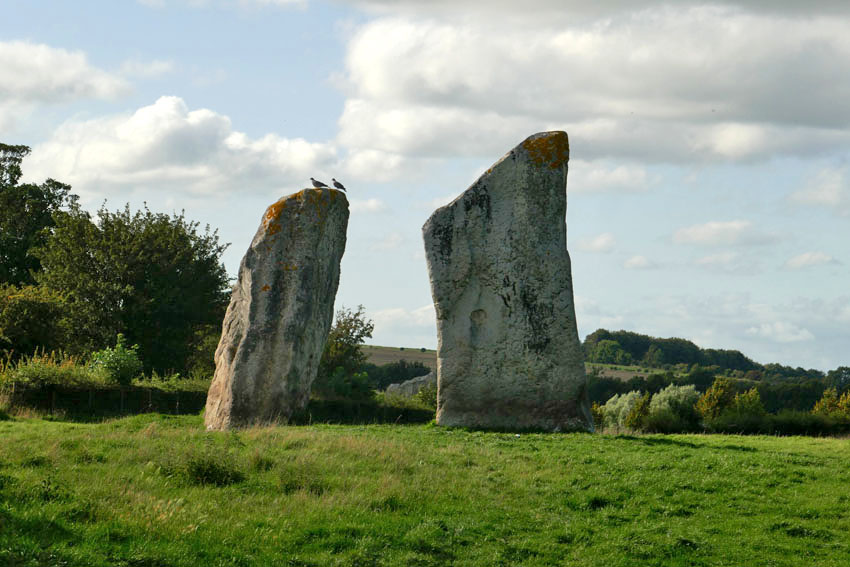
Visiting Avebury is like going to meet an old friend from the past. Last summer, I did just that: arranging to meet a friend whom I had not seen for decades at the village. We sat at a bench in the churchyard of and reminisced about shared memories from forty years ago. Time stretched and compressed obligingly – but perhaps the location helped.
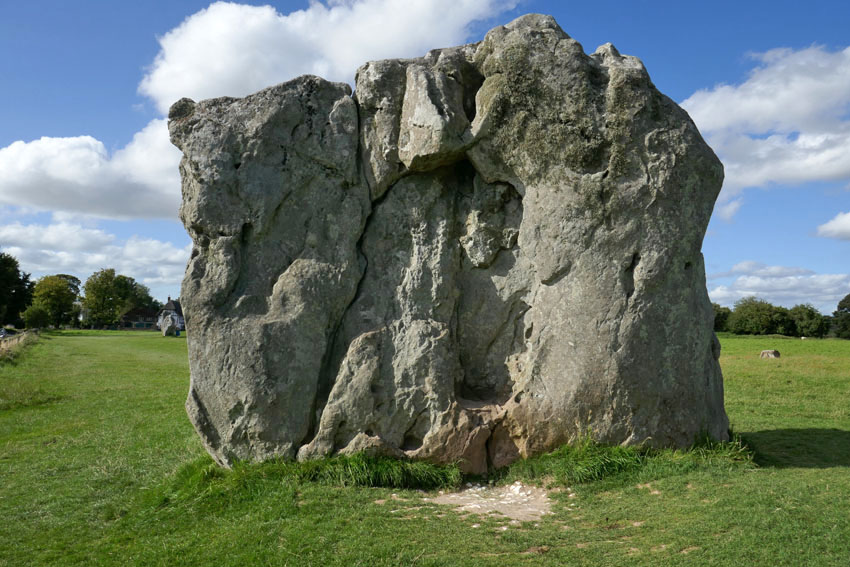
Like Stonehenge, the megaliths of Avebury were likely associated with ritual and social gatherings. They may also have functioned as some sort of solar calendar. But if Avebury is a place of measured time, it is also a place that stands outside time. The past, present and future rest easy here, although in the right light the village with its New Age atmosphere can appear to be perpetually locked in the 1970s – perhaps 1971, the same year that Jarman came here to make his film.
A Journey to Avebury (1971) by Derek Jarman

Also, this excellent fantasy drama TV series for children, broadcast on ITV in 1977, was filmed almost entirely at Avebury. Children of the Stones by Jeremy Burnham and Trevor Ray
Callanish

IMG_7822

a place appointed for worship in the time of heathenism

Martin Martin A Description of the Western Islands of Scotland circa 1695

Someone once said that the wonder evoked by historical sites is inversely proportional to the number of eyes that have already gazed upon them. ‘Must-see’ tourism and mystery tend to stand in direct opposition. This is partly connected with the familiarity of the site itself — how well we think we already know somewhere from postcards, tourist board propaganda, travel features and social media. The Pyramids at Giza, probably the oldest tourist destination in the world, are a prime example. Magnificent though they may be, there is much at the site to detract from unbiased appreciation: crowds, trinket hawkers, faux guides, camel-hire men, and the very fact that an image of them has been burned into the retina since childhood even if we have never even stepped from these shores.

Similarly Stonehenge, England’s prime sacred site, which is of even greater antiquity and in many ways even more mysterious than the Egyptian pyramids in terms of function. In recent years, for perfectly understandable reasons, the monument has  been sanitised and practically cling-film-wrapped by its guardians at English Heritage. New Age travellers, modern-day druids and miscellaneous stone-huggers are kept well away if at all possible, while the sightseeing general public is discouraged by means of fences, timed tickets, high entrance fees and the benign tear gas of lavender-wafted gift shops. The presence of large coach parties and the constantly rumbling A303 does little to engender a mystical atmosphere either. This may seem a little harsh but, personally speaking, I can no longer bring Stonehenge to mind without thinking of the film Spinal Tap and a particularly comical stage set.

Stonehenge! Where a man’s a man

And the children dance to the Pipes of Pan.

IMG_7812

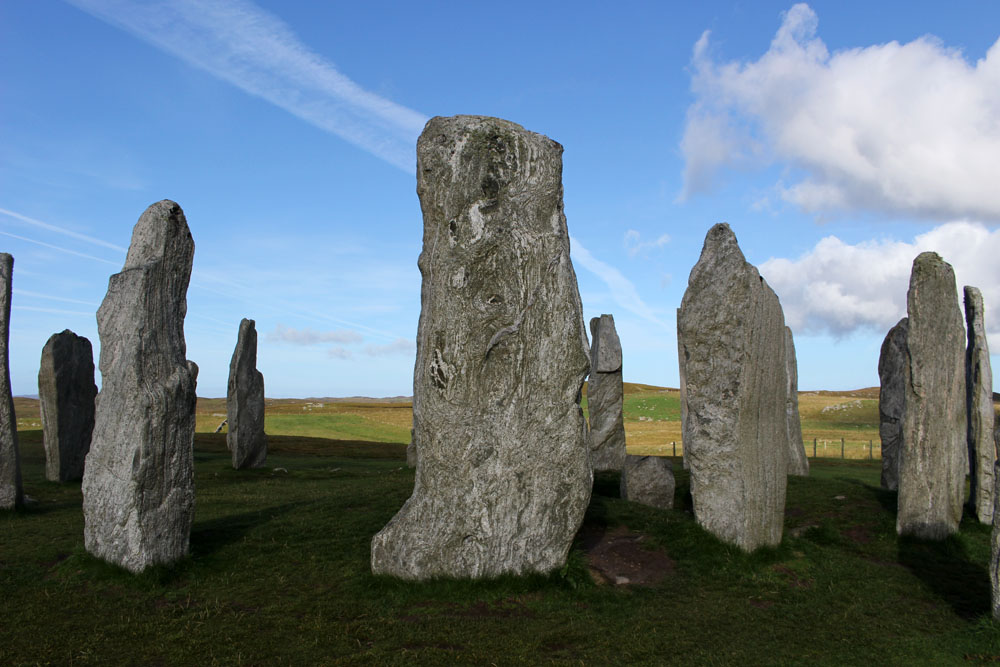
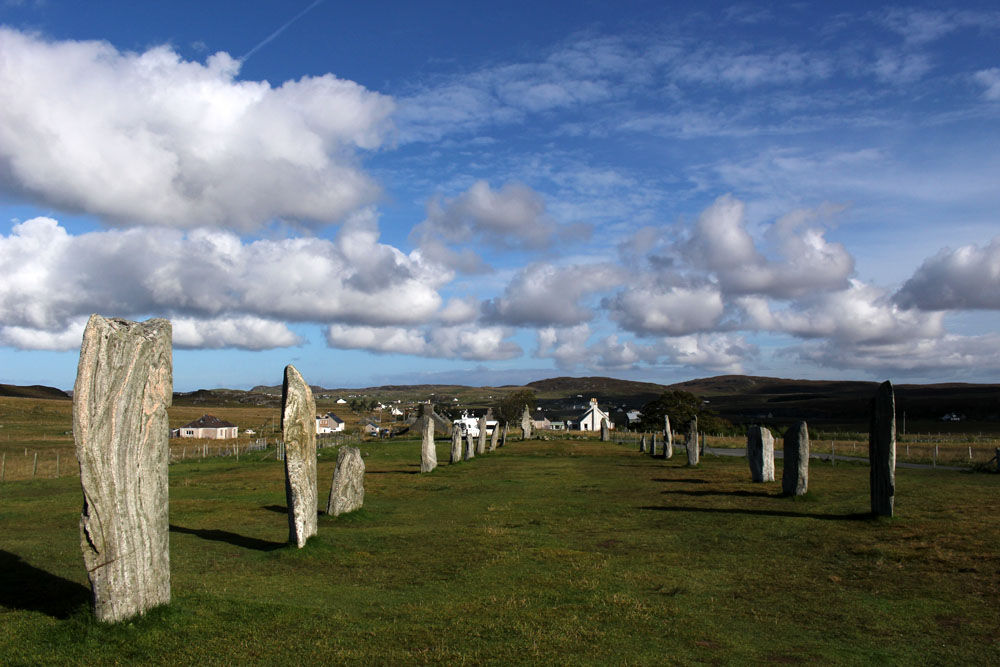
A place which, for me, has far more resonance is Callanish on the Isle of Lewis in the Outer Hebrides. Not that it is undiscovered, far from it — this 5,000 year-old stone circle has long served as a poster girl for Scottish Highlands and Islands tourism promotions — but Callanish/Calanais is at least suitably remote, close to the western shore of Lewis and the best part of an hour’s drive from Stornoway, the main town on the island.

IMG_7820

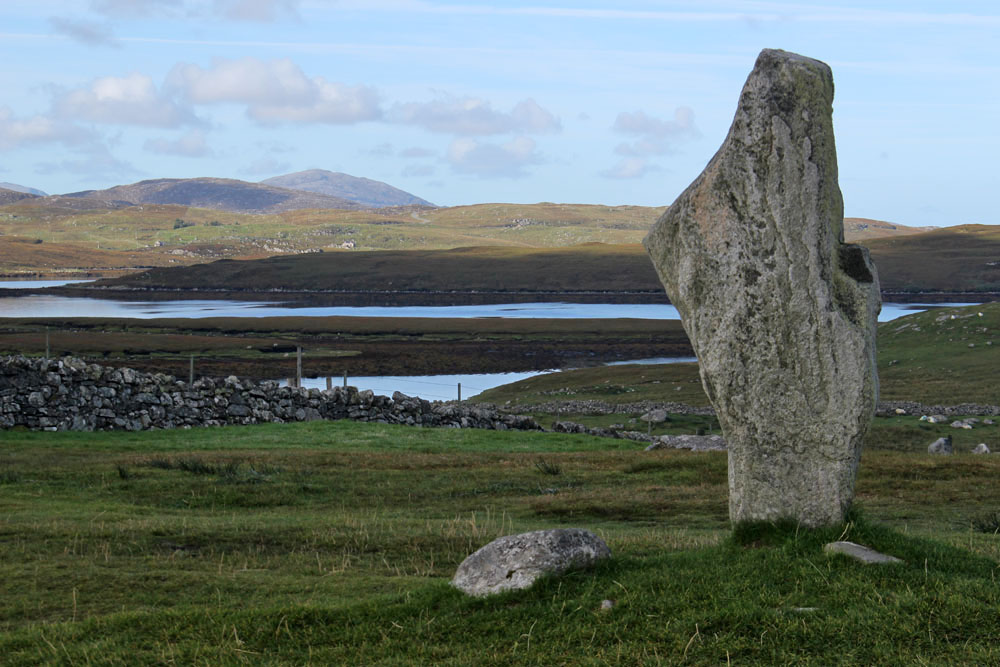
The first thing you notice on arrival — the stones themselves are already half-familiar thanks to photographic reproduction — is the immense beauty of the landscape that surrounds the site. Less raw and perhaps a little softer than some Lewis scenery, the stones stand on a bluff above the small eponymous village that developed in their shadow. The view from the hill is a pleasing vista of lochs and inlets, with the low hills of Great Bernera rising in the distance, the outlying stones of Calanais II and III pinpointed by distant figures on their way to view them.

IMG_7838

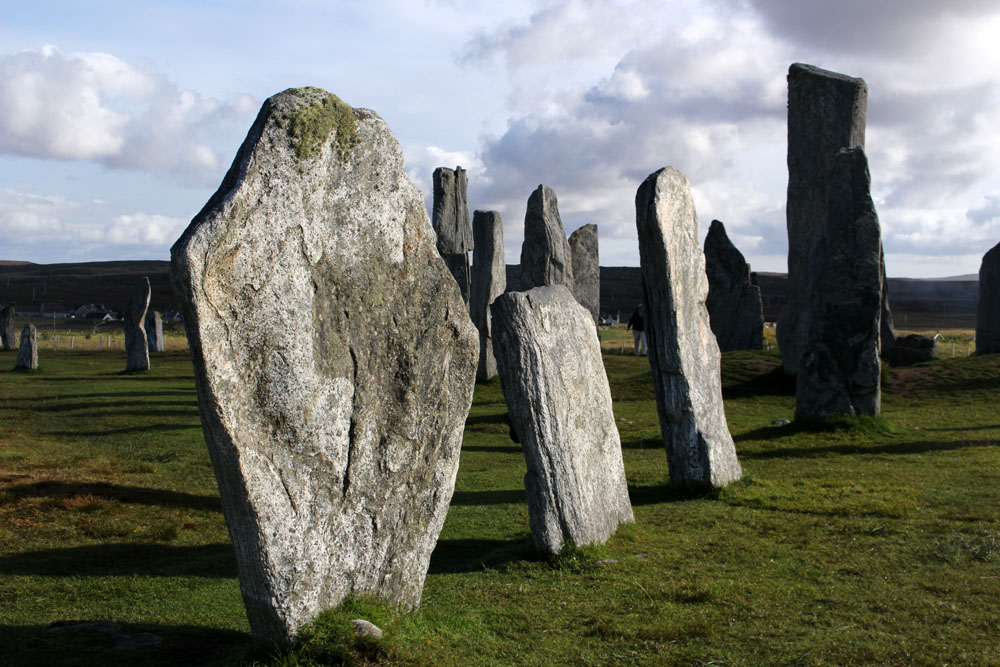
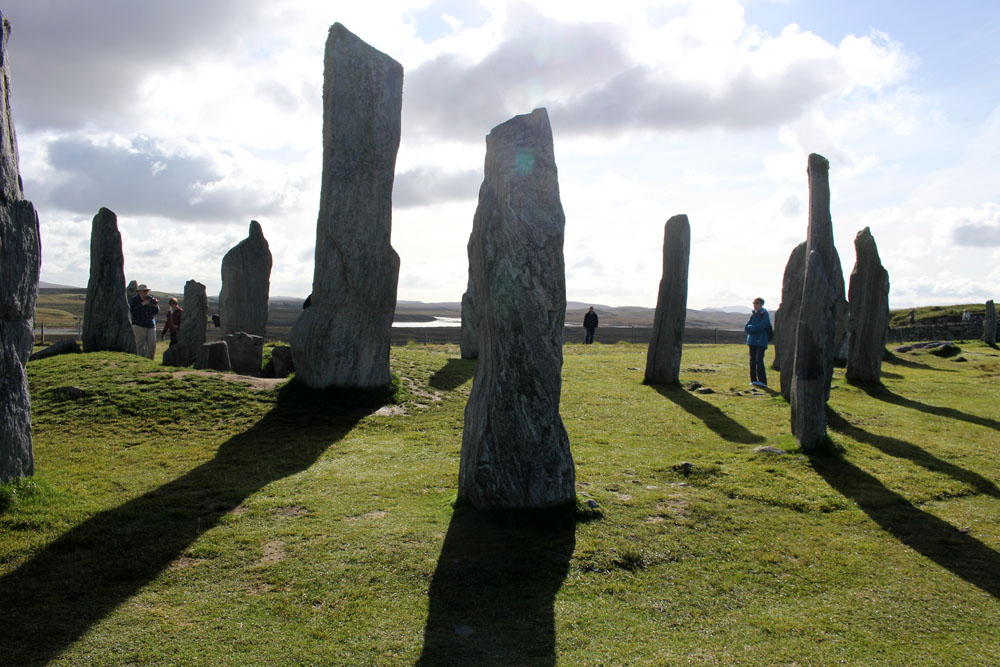
The stones, of course, are not deserted of people — it is a fine late September day when we visit and visitors are making the most of the clement weather. A couple of tour minibuses are parked up outside the visitor centre and the gift shop and café are both enjoying a brisk trade. Walking the short track that leads to the stones we come upon a French tour group who are engaged in photographing each other as they stroll around the monoliths. Most of the women of the group sport black midge masks that droop in front of their faces like saggy proboscises — the fine mesh protecting them from ravaging insects. The donning of masks also appears to be an unconscious act of sympathetic magic as their chosen headgear makes them look uncannily like giant flies — biped flies, that is, garbed in Gore-Tex and Barbour. Truth be told, the midges are really not all that problematic and it seems that the French fly-women are perhaps overreacting to the perceived threat. It seems a little ironic, too, that they hail from a country that banned all-enveloping face coverings like the burqa just a few years ago.

IMG_7832

The site is relatively busy yet the proverbial camera proves to be an efficient liar. It is approaching lunchtime; the crowd around the stones has already thinned, and it does not take long to snap a number of images in which no human presence is detectable. No doubt, with sufficient Photoshop tweaking, I could possibly also adjust the contrast and saturation to simulate a sunrise rather than late morning scene. But I am happy as things are and reflect that as most of the evidence points towards Callanish being constructed as a temple orientated to moon-rise I really ought to be here at night instead.

IMG_7817

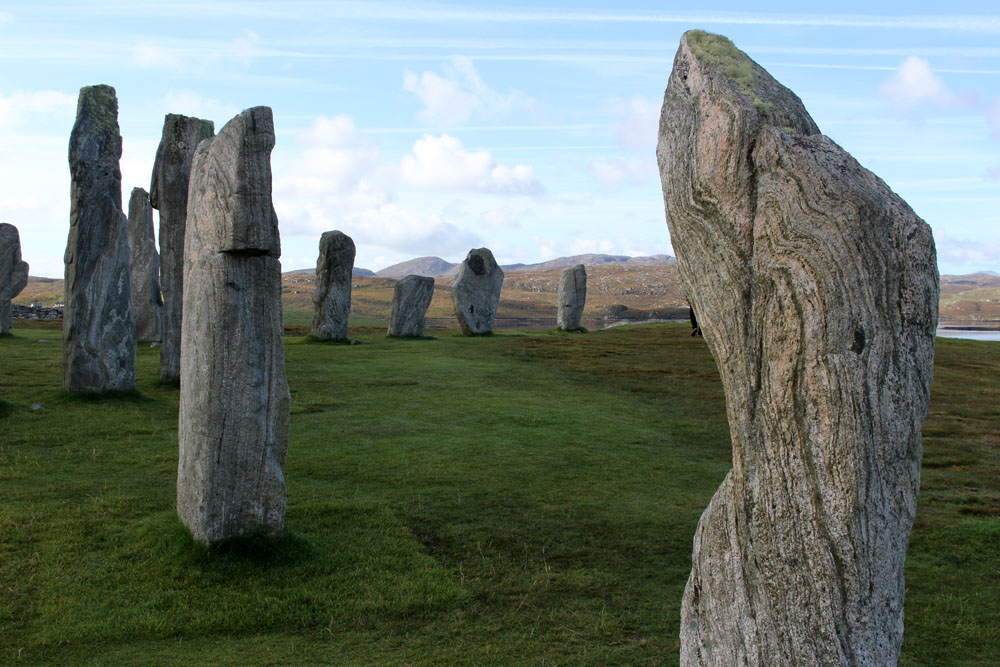
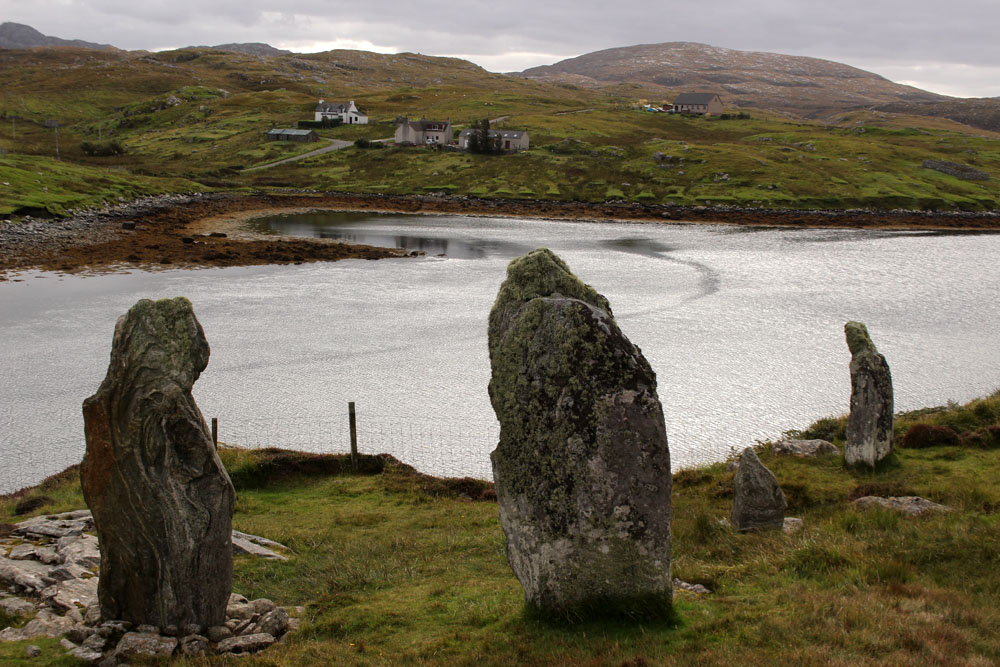
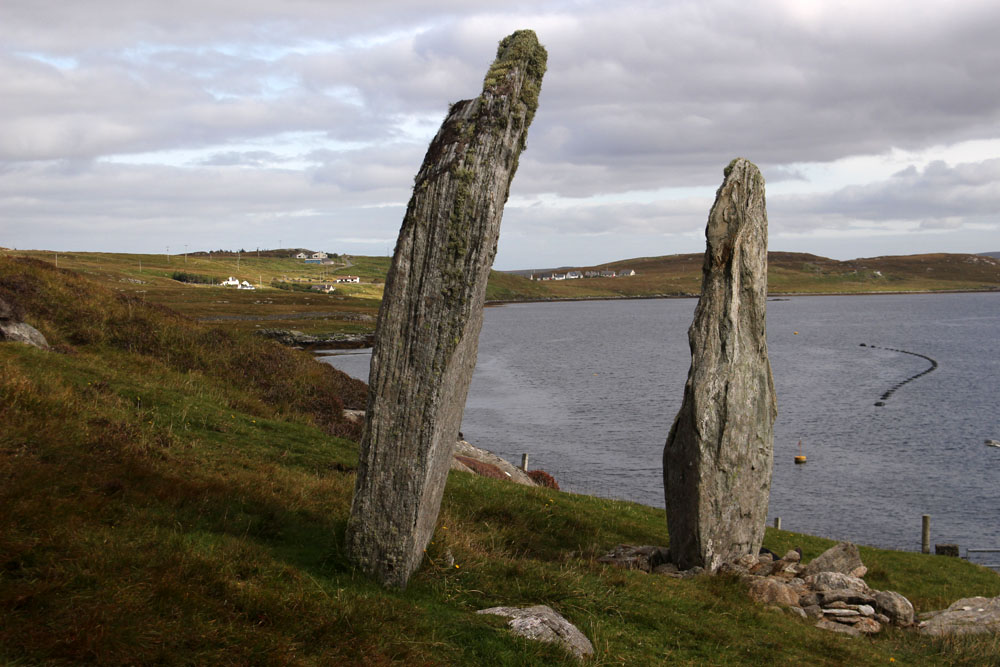
The Callanish site is well known and rightly cherished but there are other, less-heralded standing stones in the vicinity. The previous day we had come across a small group of monoliths close to the bridge that leads across to Great Bernera. These stones, fewer but similar in size and shape to those at Callanish, were of the same three-billion-year-old Lewisian gneiss, one of the oldest rocks on Earth. Known locally as Tursachan (Gaelic for ‘standing stones’), or more prosaically by archaeologists as Callanish VIII, they stood on the island of Great Bernera overlooking the bridge from the Lewis mainland. Formerly an island off an island (Lewis and Harris), which, in turn, stands off a much larger island (Scotland, England and Wales), Great Bernera has only been connected to Lewis by bridge since 1953. When first erected, the semi-circle of four large stones would have stood sentinel-like overlooking the straight between the island and Lewis; now they overlook the bridge that connects them. Unlike their better known neighbours to the east these stones are now almost forgotten. With little more than a modest signpost to point them out, they are a sidebar of prehistory, mere cartographic marginalia on the OS Explorer 458 West Lewis map.

IMG_7712

IMG_7704

IMG_7724