The Road to Dirē Dawa

The road to Dirē Dawa is a long one: an eight-hour drive from Addis Ababa, or so we are told.

We left Addis Ababa at dawn, our bus rattling through empty streets shadowed by new-build office blocks. As with almost everywhere currently in Ethiopia, the pavements were piled with concrete rubble, the result of Prime Minister Abiy Ahmed’s ambitious nationwide road-widening project, a controversial scheme that had already demolished parts of some poorer city districts and displaced many residents in its wake.

For the first hour or so we sped along a pristine tarmacked dual carriageway, the brightening horizon ahead weighed down by clouds the colour of watermelon juice. We could have been almost anywhere; or, at least, anywhere that comes blessed with a backdrop of purple-shadowed mountains and lush tropical greenery. Eventually the freeway morphed into a narrow two-lane highway, which meandered around the heads of valleys as we plied our way eastwards. Traffic was heavy in both directions. Coming towards us was an endless stream of heavily laden trucks from Djibouti, each one towing a trailer, vehicle and driver bonded in lockstep like driven cattle. We slotted into a gap in the fast moving crocodile of trucks that were heading east towards the coast, some of which were piggybacking another truck strapped to their flatbed.

As elsewhere in the country there were checkpoints and roadblocks to slow things down. We had already experienced these travelling the roads of the south, especially in Oromia state, although they had rarely delayed us for long. Sometimes they were administered by the Ethiopian army but more often than not they were manned by local militia who wanted to keep an eye on who was coming into their territory. It had not taken long in the country to come to the conclusion that, rather than the unified sense of national identity promoted by the government, Ethiopia was in the process of becoming increasingly fragmented by region, language, culture and political persuasion.

Before our arrival in Ethiopia we had made firm decisions as to our itinerary. These were based on information gleaned from online travel forums and British FCO warnings regarding more unstable areas of the country. Much of the north – the highlands of Amhara and part of Tigray – was considered unsafe because of rebel activity and kidnappings. Similarly, part of the large sprawling region of Oromia that fans south, west and east from Addis Ababa also came with similar warnings about safety. The FCO had produced a map of the country that divided the country into three zones according to perceived safety: red (‘Advise against all travel’), amber (‘Advise against all but essential travel’) and green (‘see our travel advice before travelling’). I had consulted the updated map frequently throughout the second half of 2024 in the vain hope that brotherly love might prevail throughout the land but the map did not appear to change very much. Much of the south, in particularly the area around Hawassa where we had spent the previous week, was largely amber and therefore considered relatively safe. The highway between Addis Ababa and Dirē Dawa appeared to pass through both amber and green zones, nudging the red briefly between the Oromia towns of Welenchiti and Metehara.

Road blocks and heavy traffic aside, the other barrier to easy progress was roaming animals – donkeys, goats and camels. The donkeys especially were a law unto themselves, totally unfazed by the vehicles that swerved around them as they pottered along oblivious to any danger. It seemed almost as if the animals understood the fast and loose rules of the road – fully aware that if they were harmed then their owners would require compensation from the guilty driver. On a couple of occasions I actually saw one cross the road using a zebra crossing. Camels were a different matter though, large enough to call the shots, they were generally unwilling to step aside or allow any vehicle to manoeuvre past them.
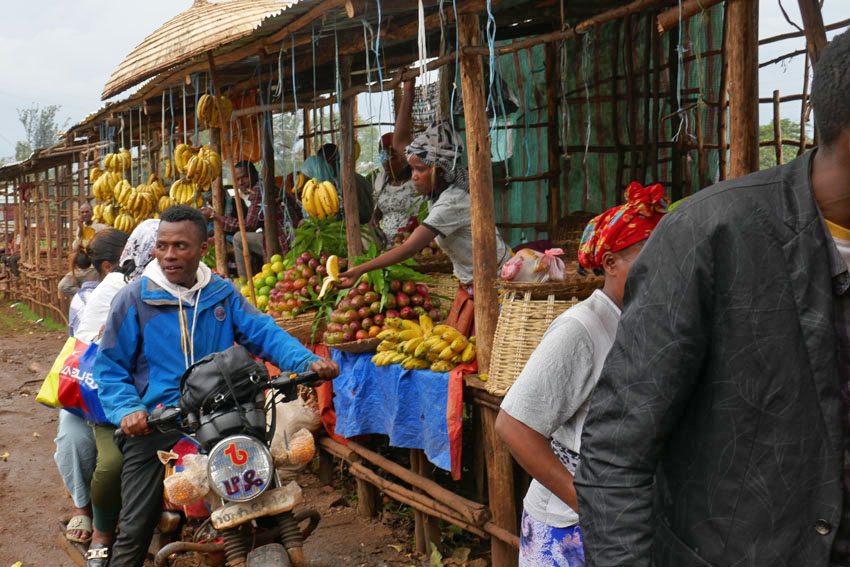
We passed through an endless parade of villages that had little to differentiate themselves from one other: a blurred flash-by of roadside settlements, all flimsy housing and lean-do shops thrown together out of scrap wood, plastic sheets and corrugated iron. The goods on sale – fruit and vegetables, flyblown meat, second hand clothes, spare parts for vehicles – were the bread and butter (or, perhaps, injera) of everyday life. As always in the Global South, it was intriguing how such a base-level financial system managed to thrive, a poor man’s economy in which ragged ten birr notes continually changed hands until all the value had been squeezed out of them.

There was another product on sale that seemed to be ubiquitous in this part of the world – we had seen it on display along almost every roadside in southern Ethiopia the previous week. Khat, the stimulant of choice across much of the Horn of Africa, is an innocuous looking leaf that resembles bay or privet. Legal throughout the region, khat is, as many Ethiopians will attest, less a stimulant, more a way of life. Our driver was clearly an aficionado; as was our guide, a young man who kept his own counsel throughout the journey and did not utter a word of information about the foreign (to us) country that lay beyond the window. The pair just stared ahead for the whole way, locked in herbal reverie as they slowly worked through the pile of leaves that lay at their elbow.

Khat seems to be very much a driving drug, an herbal alternative to the so-called energy drinks whose slim cans over-caffeinated motorists toss out of their windows along Britain’s motorways. It might even be considered to be a green alternative to caffeine, although there is absolutely no shortage of coffee in this land of stay-awake plenty. A week earlier, motoring through the coffee-rich Sidama region of the south, our previous guide, Wonde (‘Wander’), had regaled us with horror stories about khat-crazed drivers careering off the road due to lack of sleep and/or poor decision-making. It seemed perfectly believable. Between Addis and Dirē Dawa I counted at least eight trucks that had crashed and gone off-the-road; some lay forlornly on their side, while others had ended up completely upside down with wheels akimbo. It was unclear as to what had become of the drivers, although it did not look as if they would have escaped unscathed.

One crashed truck that we passed had unleashed a load of crated beer bottles onto the slope beside the road. Slowing down to make our way around the crowd that had gathered around the wrecked vehicle, the air smelled as malty as a Sunday morning pub. A couple of armed men were guarding the booty as approved wreckers sifted through the debris, placing the unbroken bottles in crates ready for resale. Who the men with guns were was anybody’s guess. It was the same at some of the checkpoints we were obliged to stop at, where youths with rifles peered inside the bus before lowering the barrier – no more than a rope stretched across the road – to allow us to pass. A single word from the driver, ‘Turist’, and a glance at our pale well-fed faces within, was usually sufficient for us to be waved on.

While khat consumption is widespread, it was something that was shared with other countries in the region like Somalia. Other aspects of Ethiopian culture are decidedly more unique. One is the country’s unorthodox calendar, which is seven or eight years behind the rest of the world. While the year elsewhere might be 2024 according to the Gregorian calendar, in Ethiopia it is currently 2017. ‘Welcome to Ethiopia, and congratulations,’ we had been told more than once, ‘here you are seven years younger.’ Another Ethiopian curiosity is the music that is played loud and proud almost everywhere, which whether traditional, pop, or the rather wonderful Ethio-Jazz that I had already developed a taste for, uses a pentatonic scale that has a distinctive modal sound to it. A world away from other African music that is generally more accessible to Western ears, Ethiopian music has a tendency to sound rather other-worldly and even a little Chinese at times.

Another facet of Ethiopian culture that sets the country apart is the food, which is quite unlike anywhere else. The mainstay of the diet is a sour spongy pancake called injera, which is made from an ancient indigenous grain called teff. This is eaten along with small helpings of spicy vegetable or meat sauces. For many Ethiopians, if they can afford it, kitfo (spicy raw beef) is the preferred accompaniment, although, perhaps counter-intuitively, there are actually two days of the week, Wednesday and Friday, when restaurants are obliged to serve only ‘fasting’ food, which is strictly vegan. Whether meat or vegetable, raw or cooked, freshness is probably the most important factor in regards to health, and I believe it was the suspicious, rather tired-looking sauce that came with the injera I had eaten the previous night in Addis that had been the cause of the stomach cramps that troubled me throughout the long journey.
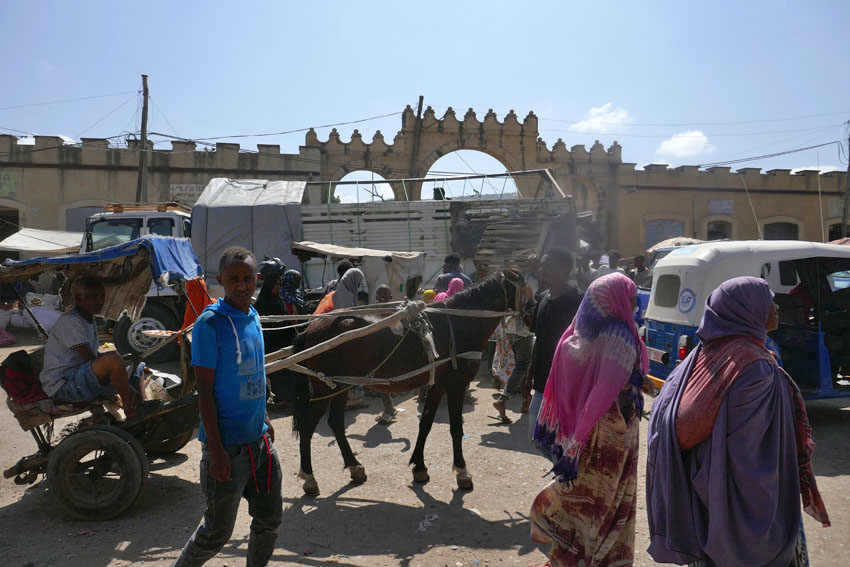
We pulled into Dirē Dawa just as it was becoming dark, the onset of the city’s flickering neon countering the rapid tropical plunge into night. The journey had taken twelve hours – sunrise to sunset. Considerably lower in altitude than where we had come from, the city felt hot and humid compared to Addis’s fresher, spring-like climate. But it was as bustling and noisy as the capital, with a honking stream of three–wheel bajajs (tuk-tuks) plying Dirē Dawa’s wide boulevards. Tomorrow there would be the opportunity to visit the city’s sights, such as they were. Tonight though, after a day of unremitting motion, it was the promise of laying still on an immobile bed that held the greatest appeal.

Ghost Factory

Much of the fabric of Birmingham’s history is, like the city’s modest river, the oft-culverted Rea, half-hidden or tucked away from sight. Occulted beneath flyovers and underpasses, the city’s past flows sluggishly beneath redundant factories and car parks. Unconvincingly disguised, and with the vaguest hint of rusting metal, it escapes as vapour from drains and manholes. It goes with the territory: this is a city where there is a strong tendency for destroying evidence of the past, of knocking things down only to build them again in rearranged form. As the city’s coat of arms proclaims in its simple motto, it is the Birmingham tradition – ‘Forward!’ The subtext is ‘Don’t Look Back!’ The past is bulldozed. Even so, modern high-rise Birmingham, brash and shiny though it may be, is replete with ghosts of the past, of industry, of once busy factories and workshops. The whole city is a ghost factory.

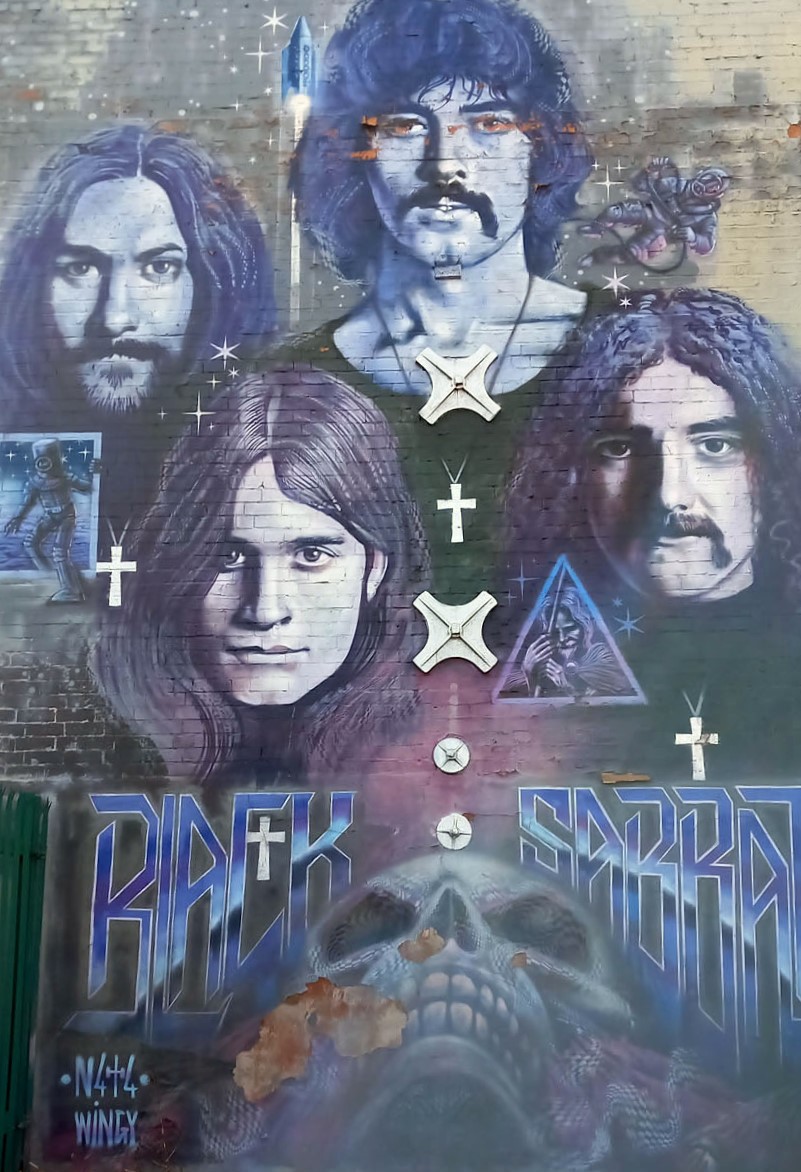
 These days there is a new-found reverence for some of Birmingham’s more iconic anti-heroes.  Peaky Blinders with its skewed myth-making has afforded the city some retro-gangster glamour, while established city brands like Black Sabbath have become the stuff of legend. Now there is even a Black Sabbath Bridge on Broad Street spanning the canal, where the likenesses of Aston’s own heavy metallists – Geezer, Bill, Ozzy and Tony – are immortalised on a bench (iron, naturally). Who’d have thought that in the halcyon days of my Birmingham Town Hall gig-going youth it would be faux-demonic Black Sabbath who would be chosen as the musical emblem of the city? My money would probably have been on the Moody Blues or Roy Wood.

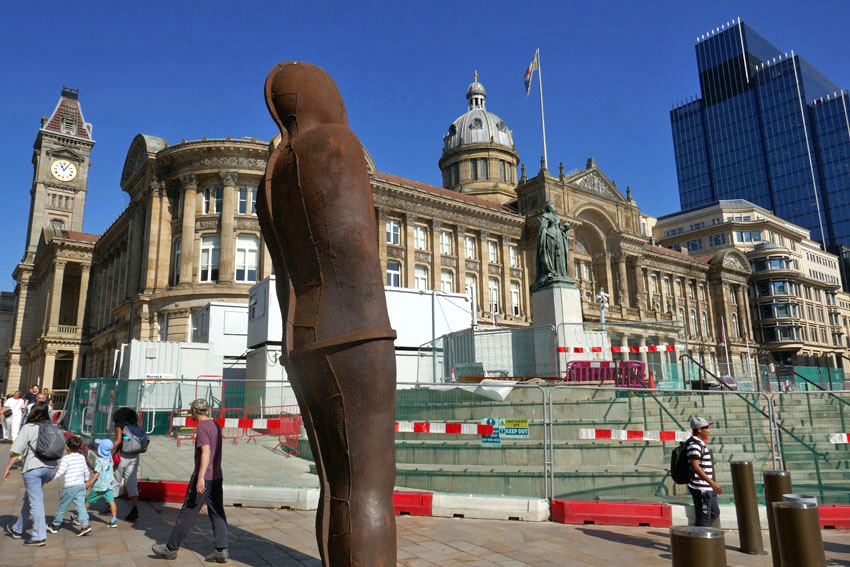
In Victoria Square, the neoclassical Town Hall is just as I remember it, all pale stone and Corinthian columns, but its immediate surroundings have changed dramatically in recent years. A tram line now passes in front of it that follows a route through the Black Country to Wolverhampton, somewhere that seems exotically distant from this city centre ground zero. Between the town hall and the tram tracks stands Antony Gormley’s Iron:Man, a six-metre-tall leaning metal figure that pays tribute to Birmingham’s erstwhile industry, its original heavy metal heritage.

Head downhill from Victoria Square, past the stainless steel, baking foil roof of New Street station, past the aluminium-disc-clad blobitecture of Selfridges, through the Southside district and the areas that are now marked on maps as Gay Village and Chinatown. Soon you’ll arrive at the former industrial district of Digbeth, which nowadays is probably the closest thing Birmingham has to a Bohemian quarter. This part of the city is actually the oldest quarter, the location of the original Saxon village at a ford on the River Rea, around which the satanic mills of Victorian Birmingham would later cluster.

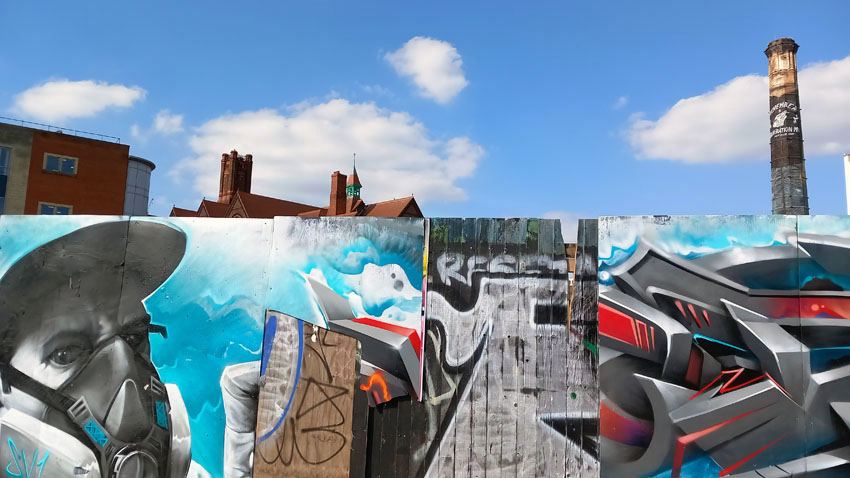
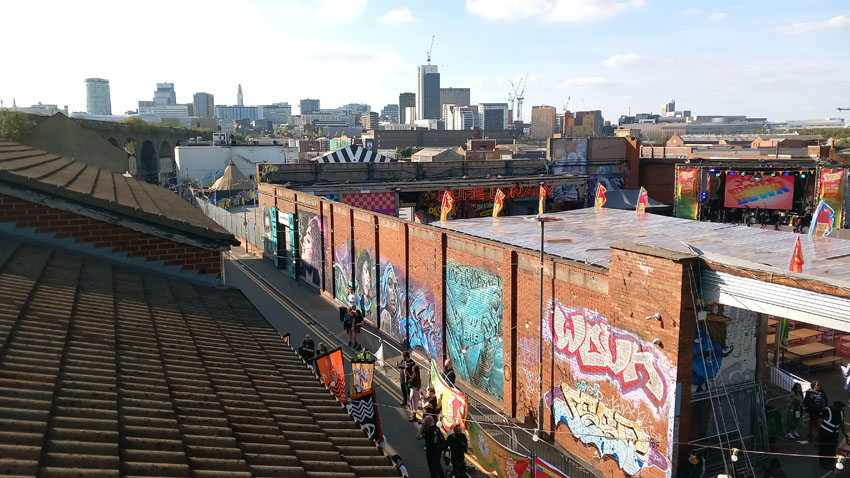
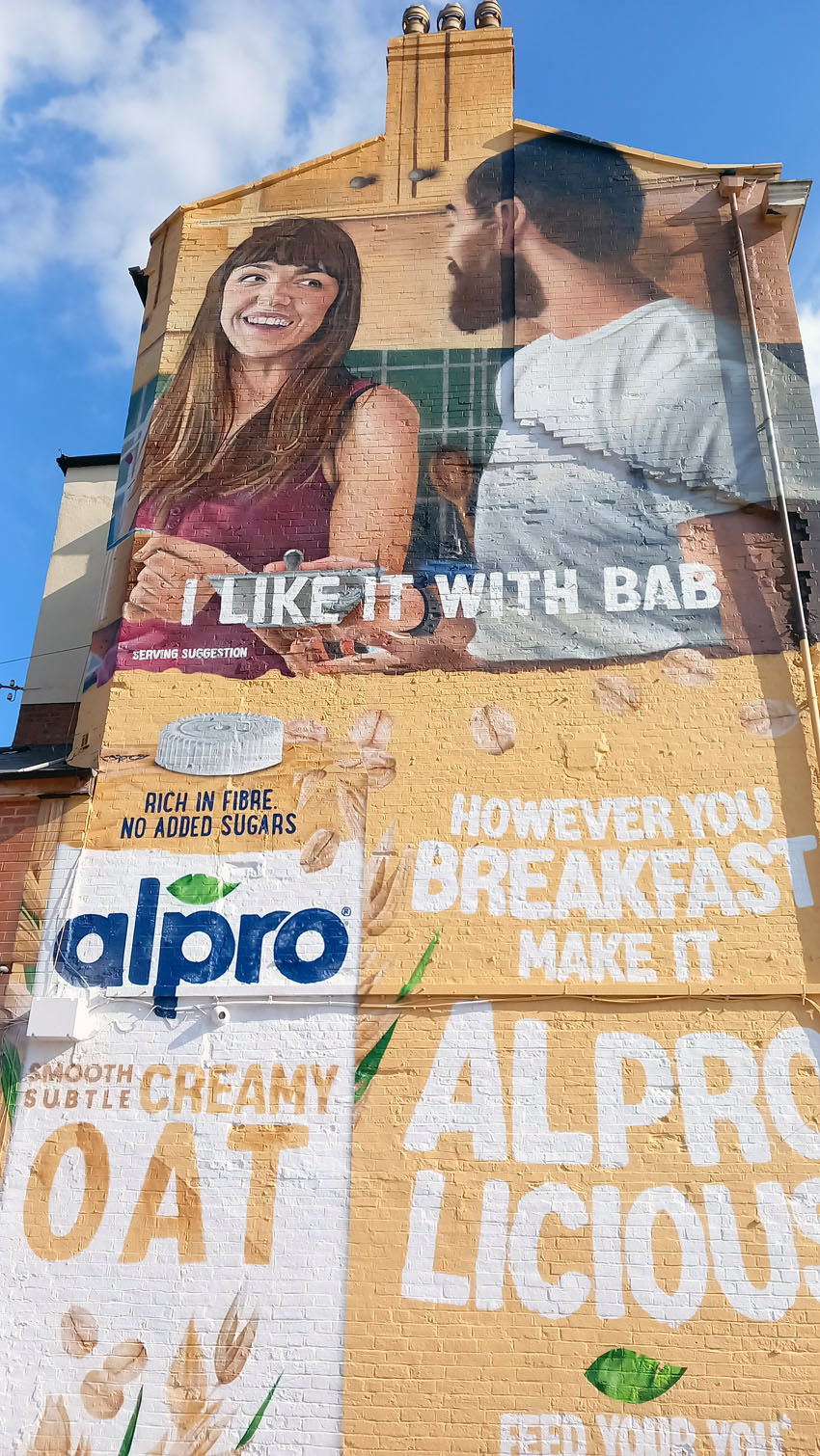
Digbeth High Street is in a state of flux, one side of it enclosed in chain-link. Gentrification might be too strong a term, but Digbeth is undergoing change: empty factory sites are being cleared to await new development. Tram tracks are being laid down; pavements are being widened and made pedestrian-friendly, flower beds are being set out awaiting planting. The side streets that slope down beneath the railway arches are lined with one-time industrial buildings that have morphed into event spaces – ghost factories stand at every corner. The wall murals that abound have already been here long enough to develop a patina of age. As I wrote in an earlier post, the transformation has already been going on for several years.

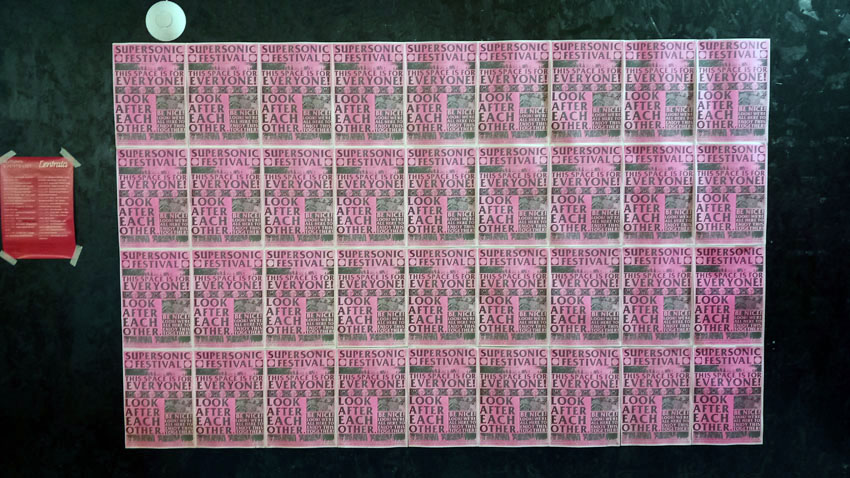
Digbeth is the location for Supersonic, an annual festival of experimental music that celebrated its twentieth anniversary this year. Supersonic is by no means a heavy metal festival but the spirit of Black Sabbath permeates like a benign, if mischievous, presence. Performances take place in two neighbouring buildings, one of which served as a warehouse in a previous life. Dark clothing is almost de rigueur, as are Sunn O))) T-shirts. Light-hearted doom is perhaps the oxymoron that best fits an atmosphere that I can only describe as feel-good apocalyptic. The music is loud but the mood is calm; the ethic is kind, inclusive and super-friendly. Perhaps it helps that this is Birmingham. Would it be the same in Manchester or London?

The Sunday night headliners Lankum play a glorious set of drone-laden alt-folk to an ecstatic crowd. Alternating between heart-rending murder ballads, frantic Irish jigs and dark sea shanties, the music veers from gentle to violent, from elegiac to almost frightening. In one of the between-song chats with the audience, guitarist Daragh Lynch mentions that he was delighted to discover that both of Sabbath bassist Geezer Butler’s parent’s were Irish and concludes from this that heavy metal must therefore be an Irish invention. We all laugh. But Birmingham, and especially Digbeth, did once have a sizeable Irish presence. It’s all part of Birmingham’s proud black, white and brown cosmopolitanism. The city was built on metal and people. Iron Man (Black Sabbath); Iron:Man (Antony Gormley) are both worthy tributes. While Birmingham’s iron has rusted to be replaced by stainless steel and aluminium, its people shine on.

Lunar Sun (Ra)

IMG_2069This post comes not from Elveden or points east but from Arden, as in Tanworth-in-Arden; from the lush green countryside between Redditch and Solihull in northwest Warwickshire, that rolling bucolic Eden that lies just south of the diesel-rank treadmill that is the M42.  Umberslade Farm near Tanworth-in-Arden is the inspired location for the Lunar Festival, which has just enjoyed its third annual convocation.

“Hello Lunar. I’ve been living in North Wiltshire in a mystical state” was how Julian Cope introduced himself to the audience before launching into a troubling but catchy song about ‘sleeping in the room that they found Sadam in’. Cope, enthusiastic psychedelic practitioner, occult archaeologist, Krautrock chronicler and self-parodying rock survivor, seemed a natural choice for the Sunday afternoon slot at Warwickshire’s Lunar Festival. Dressed like a fallen Hell’s Angel and accompanied by only a sparkly 12-string guitar he entertained the crowd with darkly melodic songs that he interspersed with rambling tales of how no-one would work with him these days because of his errant Byronic ways.

IMG_2114Sadly I missed The Fall and Mark E Smith’s malevolent mumblings on the Friday night, along with Tuareg camel-rockers Tinariwen, but had enjoyed Wilko Johnson and a resurgent, partly septuagenarian Pretty Things on the previous day. I had also witnessed Mike Heron and Glaswegian nu-folk-rockers Trembling Bells covering some early Incredible String Band back catalogue in the Bimble Inn bar – a slightly shambolic but warm-hearted performance with Heron grinning broadly at the crowd, clearly enjoying himself as they performed the likes of “This Moment” and “A Very Cellular Song”. And it was – very cellular.

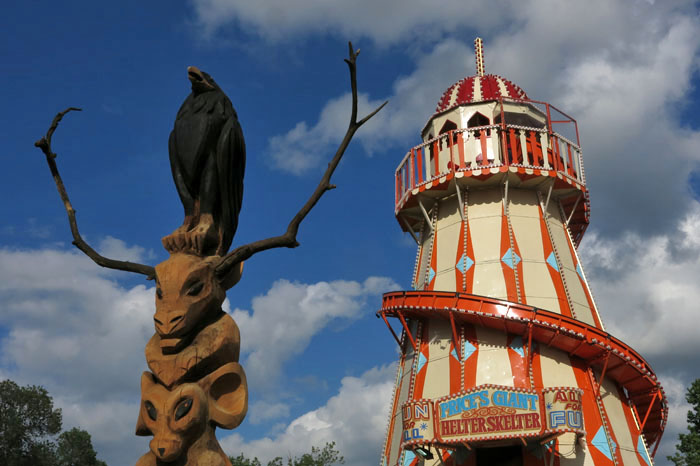
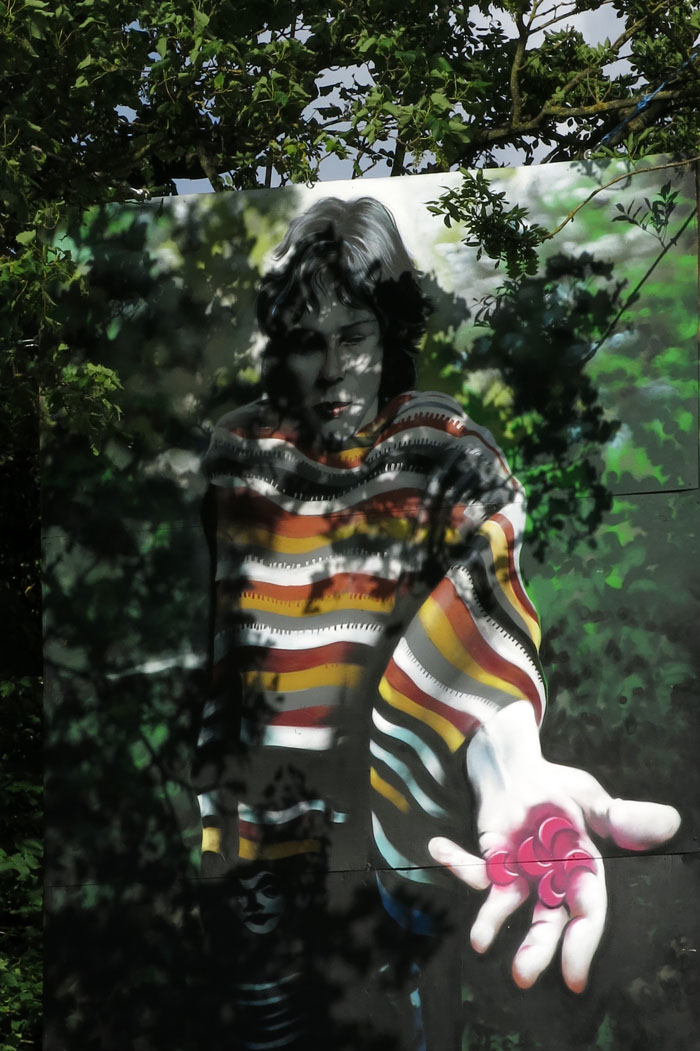
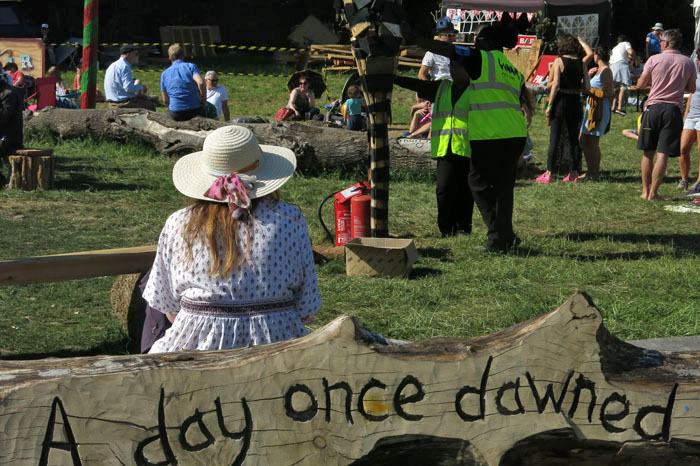
IMG_2075The Lunar Festival is intimate and small-scale with a local feel. The lingua franca spoken here is mostly Middle Brummie, a tonal language spoken throughout the West Midlands, north Worcestershire and Warwickshire: a tongue in which I have working proficiency having grown up nearby, although decades in East Anglia have stymied full fluency. The Lunar vibe is early Glastonbury: gently pagan, psychedelic and counter-cultural. Imagine a Midlands Wicker Man without the unpleasant sacrificial burning at the end. Crow symbols abound, there are quite a few animal-headed folk strolling about, and the wood-smoked air is pleasantly redolent of 1967, as are some of the attendees – patchouli and other popular herbal fragrances may possibly be discerned. An oak tree trunk next to the arena’ s central camp fire is carved with the legend: ‘A day once dawned and it was beautiful’ – a line from a song by Nick Drake, a large portrait of whom hangs from a tree branch next to the Crow Bar beer tent at the top of the field. The reference is deliberate: leafy Tanworth-in-Arden was the childhood home of troubadour Nick Drake, whose tragically short life created a musical canon of great longevity.

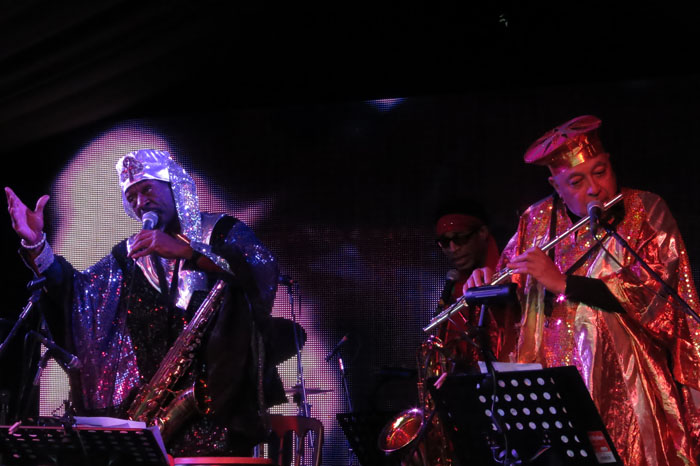
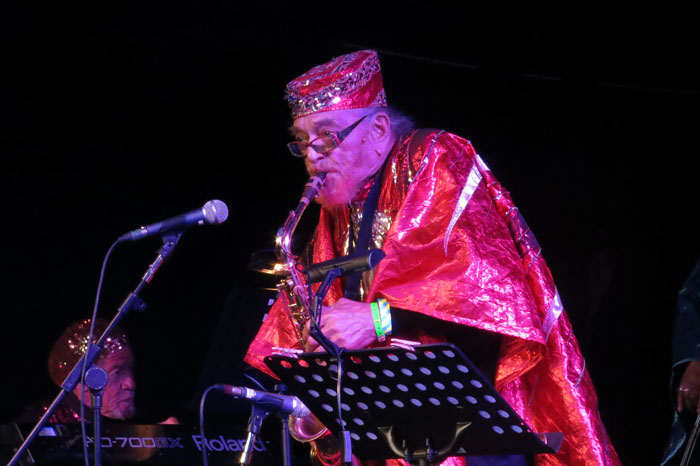
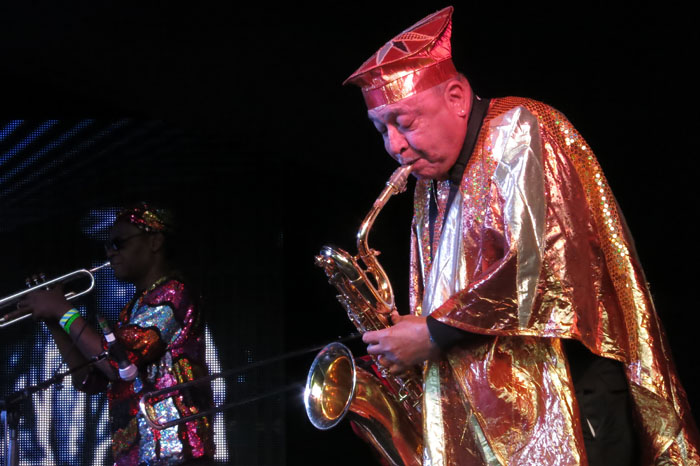
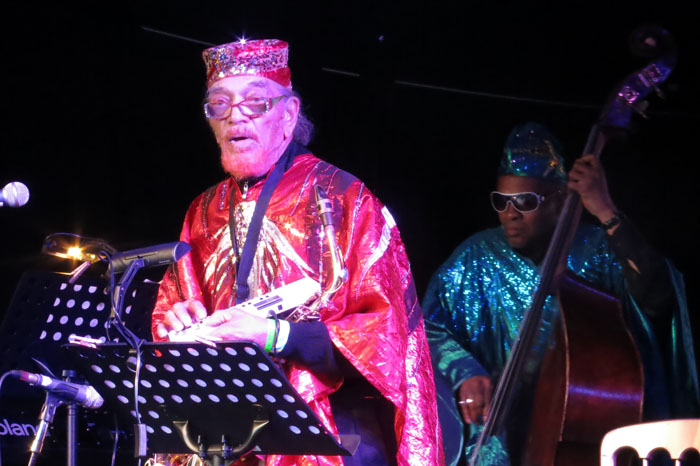
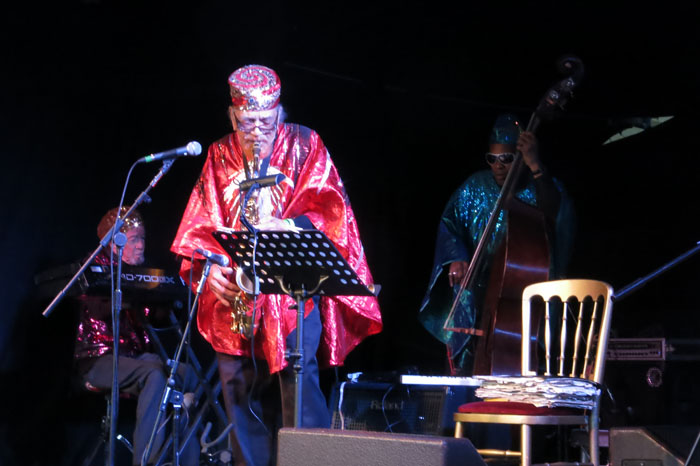
IMG_2161The Bootleg Beatles concluded the festival on Sunday, and were glorious with their note-perfect trawl through the very best of the Fab Four’s 1966—70 material, but for me the real star of the festival was the penultimate act, the Sun Ra Arkestra directed by 91-year-old Marshall Allen. Allen joined the band way back in 1957 and took over the musical directorship in 1993 when their controversial leader Sun Ra (born Herman Poole Blount, legal name Le Sony’r Ra  1914—93) ‘left the planet’ to return to his native Saturn.

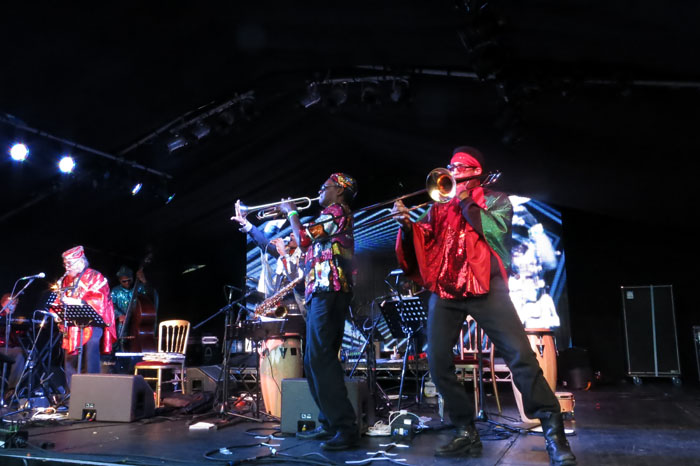
IMG_2179I had seen the Arkestra perform last year at London’s Barbican Centre when they celebrated their erstwhile leader’s centenary. They were good but somehow it seemed that they did not quite gel musically on that occasion. At Lunar though, they dazzled, segueing from one tune to another, Marshall Allen directing his cohorts with hand gestures, ear-whispers and alto sax squeaks. Despite a playful sense of humour and the faintly ridiculous galactic-warrior outfits sported by the Arkestra players, the music they generated was deadly serious: spontaneous, risky, and on occasion quite unsettlingly beautiful. At times the music seemed to teeter on the edge of anarchy but it was usually only a brief time before the band swiftly gathered itself together to swing into another languid yet skin-tight ensemble passage.  It has sometimes been dubbed ‘space-jazz’ or ‘afrofuturist’ but to accurately describe the scope of the Arkestra’s music is a futile endeavour – never has the dictum ‘Writing about music is like dancing about architecture’ seemed more apposite. There were a couple of tunes I recognised: “Saturn”, I think, and “Angels and Demons”, and near the end of the set we were treated to a superb straight-ahead blues in which everyone took a solo and the Arkestra seemed momentarily to almost be a normal sort of jazz band, albeit one where the adjectives ‘left-field’, ‘spacey’ and ‘psychedelic’ still seem to be wholly appropriate.

IMG_2191

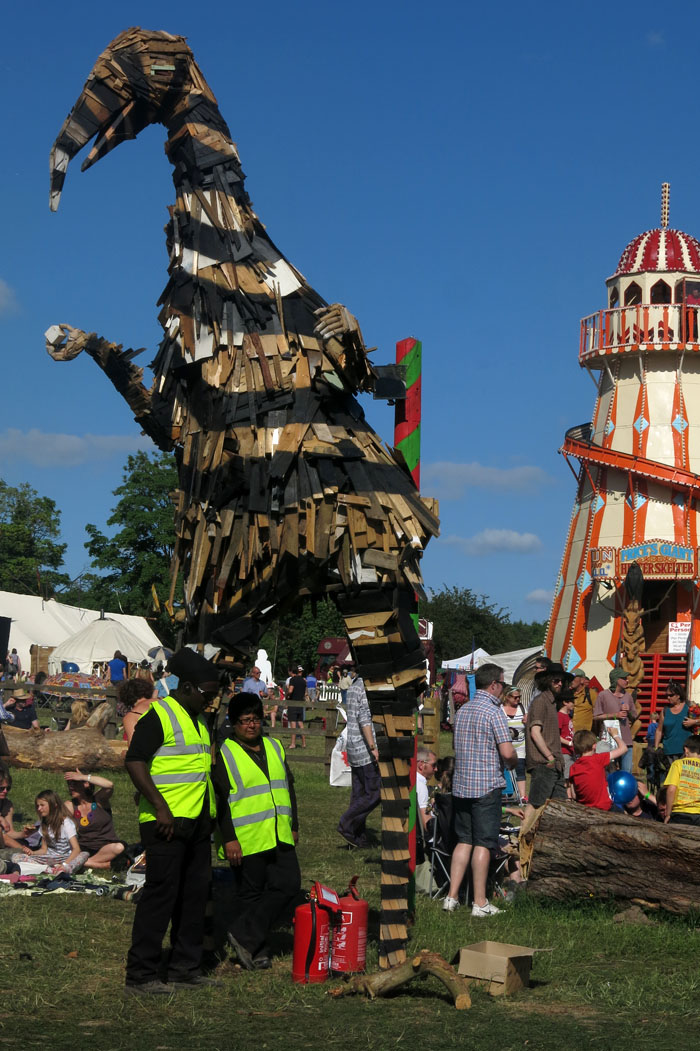
The set concluded with the Arkestra leaving the stage to lead a procession around the site: a motley pageant of aged jazzmen in sparkling capes followed by an assortment of folk in badger and crow outfits, black-faced Molly dancers and a few adventurous children. The denouement came with the ritual combustion of the wooden crow-man totem that had stood in the centre of the site for the duration of the festival. The crow-man burned hard and bright, sparks crackling to the strains of “Space is the Place” played by the Arkestra’s gamely marching horn-men.

Perhaps space is the place? But then so is Tanworth-in-Arden in early June. Magic is undoubtedly in the air around this time. Wicca comes to Warwickshire; Sun Ra smiles down from Saturn. Lunar, I’ll be back.

IMG_2203IMG_2178

IMG_2212IMG_2204IMG_2130

East of Everett – Riding the Empire Builder

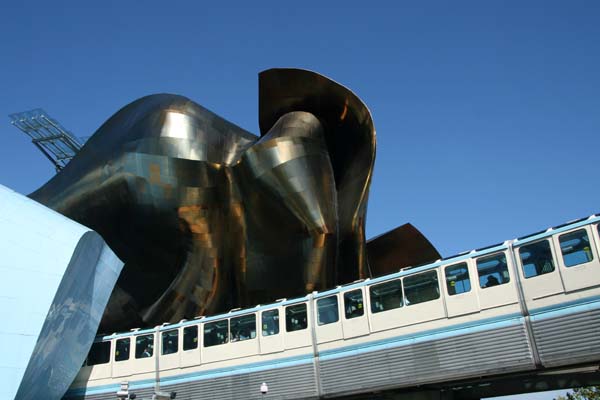
Arriving in Seattle, having spent the last two weeks on a small boat, it was time to make use of other forms of transport to get home. Flying all the way Seattle-New York-London would have been straightforward enough but after a fortnight at sea where 8-10 knots was routine I was keen to not only feel the earth beneath my feet for awhile but also to continue at a relatively stately pace. So I opted for the train: first to Chicago, then to New York City from where I would, begrudgingly but inevitably, finally take to the air to cross the Atlantic. By way of a prelude to all this cross-continental railroading I made use of the few hours I had in the city by taking the Seattle Centre Monorail to visit the Space Needle – an all-too-short run across the city centre that actually passes through the multi-coloured sheet metal flanks of Frank Gehry’s Experience Music Project Museum before arriving at its terminus.

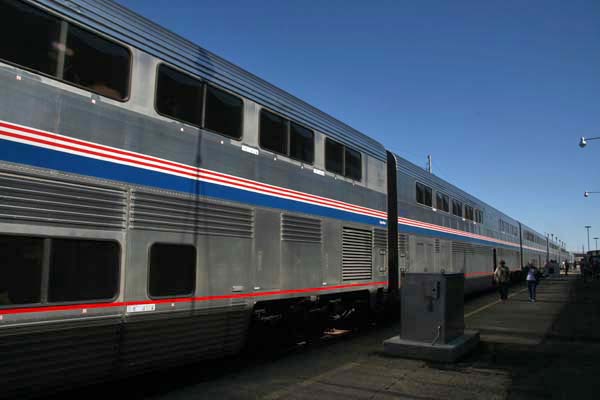
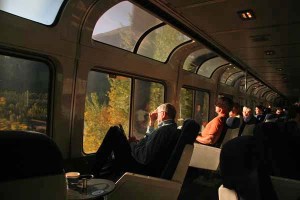
Amtrak‘s Chicago-bound Empire Builder leaves every afternoon from Seattle, taking around 46 hours – the best part of two days and nights – to reach the windy city on Lake Michigan’s shore. A parallel service runs from Portland in Oregon and both trains join up in the middle of the night at Spokane, Washington. On my first evening on the train I decided to head for the dining car just after passing through Everett, Washington. Here, I met up with Anne (Amtrak waiters insist on grouping solo travellers together at tables – dining on a train in the US is a sociable event whether you like it or not), a grandmother from Seattle on her way to visit various offspring way out east. Travelling in the United States, instant life stories and the brandishing of family photographs to total strangers are pretty much the norm and a shared meal is viewed as a welcome opportunity to make new friends. Anne was no exception. We were all friends here on the train – relaxed friendliness being the default setting of any sort of public transport in the USA. As our conductor would announce later on that night, “Ladies and gentlemen please ensure that you have not put your belongings on the neighbouring seat. We are expecting quite a few travellers to get on at Leavenworth and so you will probably have a new friend joining you when we get there. Let’s make them feel welcome.”

No-one came to sit next to me at Leavenworth but at Wenatchee an hour or so later I was joined by an elderly man called Dale who had just come from a week-long Lutheran Church retreat in the wilds of Washington State. “I see we’ve got us a groaner here”, were his first words to me as he wearily slumped down alongside, throwing a casual nod at the source of the shrill metallic wail that was emanating from the carriage wheels beneath us and had been doing so intermittently since leaving Seattle several hours earlier. Lean and bearded with plaid shirt and baseball cap, Dale might have looked like a typical retired Mid West farmer but was, in fact, a lay preacher in the no-nonsense undemonstrative Lutheran tradition. Despite an outward appearance that might give the impression of being a little ‘ornery’ Dale was the gentlest of men, with a playful, twinkly charm and a thoughtful, considered take on the world. We got talking about Alaska. He had spent a year there as a preacher on an isolated island close to the Arctic Circle just 40 miles from Russia (“And I mean 40 miles, not like that fool idea that that Sarah Palin woman had that she could see Russia from her house in Wasilla”). Dale’s northern sojourn had given him the greatest respect for the native people that endured the difficult living conditions of Alaska’s far north although he acknowledged that there were serious problems of alcohol abuse. “It was supposed to be a dry island but people being people they snuck it in somehow.”
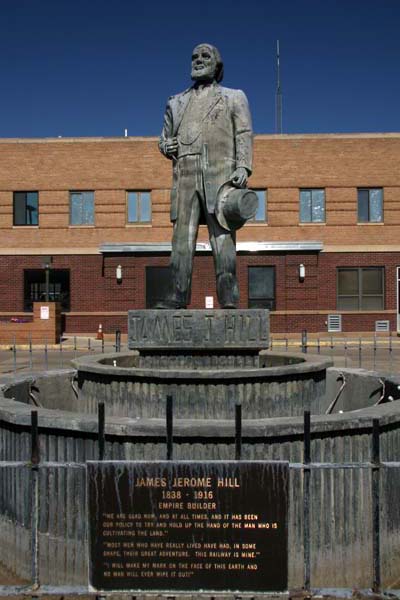
Catching a glimpse of western Montana’s Glacier National Park early the next morning – and adding on an hour as we reached the USA’s Mountain Time zone – the landscape soon settled down to the flat prarieland that we would be passing through for the rest of the day. This was cattle country but the grass looked thin and parched after a hot, dry summer. After Shelby, Montana, we entered cereal-growing territory, with newly harvested wheatfields rolling away to the horizon and tall grain silos by the roadside. Stopping at Havre, there was enough time to stretch our legs on the platform and examine the statue of James J. Hill, the founder of the Empire Builder route, in front of the station. A small group of Amish dressed in 19th-century added a touch of local colour. Amish generally spurn modern technology but are nothing if not pragmatic and for long distances it seems the train is an acceptable alternative to travel by horse and cart. Leaving Havre, we reached Glasgow (Montana, that is) two and a half hours later and passed into North Dakota and the Central Time zone in the early evening. North Dakota looked very much like eastern Montana had done and the view out of the window would not really change that much until we reached the industrial cities of the Great Lakes the following morning.

An entire day spent passing through relentless treeless praries has an unsettling effect. It instills a sense of melacholia. Perhaps it is not so much its appearance but its sheer scale that affects one so: the isolated farming settlements, the unknown family dramas lived out behind closed doors; small lives in a big landscape. It is humbling to think that the pioneer settlers who ventured this way in the 19th century had little idea of what lay beyond the next mile west other than almost inevitable danger of one sort or another.

As a reminder of the early days of this great western migration we stopped at Fargo, Minnesota in the early hours, although most of us were asleep at the time. The city, originally called ‘Centralia’, later became ‘Fargo’ in honor of Northern Pacific Railway director and Wells Fargo Express Company founder William Fargo. The arrival of the Northern Pacific Railroad here bestowed the city with the reputation as ‘Gateway to the West’.

Early next afternoon we shuffled through the endless urban sprawl of Milwaukee. Famous for its brewing industry (inspiring the song, What’s Made Milwaukee Famous Has Made a Loser Out of Me), the city’s huge car parks and warehouses put me in mind of a super-sized Swindon, although to my knowledge no tragic country anthems have ever been written about the Wiltshire town. Two hours later we pulled into Chicago, just twenty minutes behind schedule. Chicago’s Union Station lies in the heart of the city’s downtown district, towered over by some of some of the tallest buildings of the world. After southeast Alaska, where tall buildings and even tall people are scarce, this was the most urban environment imaginable. Quite a stark contrast from the tranquil waters of the Inside Passage I had been sailing through just a few days earlier. There again, so was Seattle.

Dancing about Architecture

St Peter Mancroft Church, Norwich, May 19

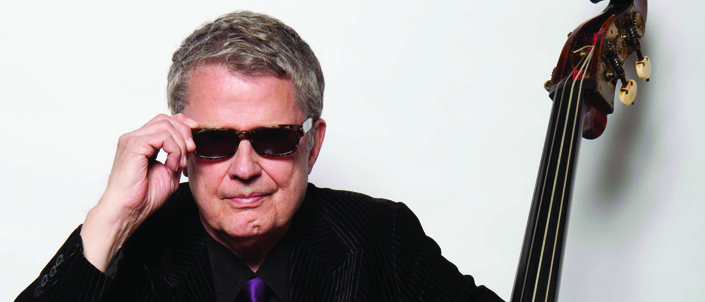
Yesterday’s BBC Radio 4 Today programme included a short feature on the 73 year-old American jazz bassist Charlie Haden. In the interview Haden discussed his musical history and how he had started out singing with his family in the Midwest but after contracting polio had taken up double bass and embraced the church of jazz. There was also talk of his political activities and his arrest by police in Portugal in 1971 just before the revolution there. The feature concluded by saying that Charlie would be performing in London this weekend. True enough, but it failed to mention that he would also be performing with his Quartet West at the Norfolk and Norwich Festival that same night.

St Peter Mancroft’s Church next to Norwich millennium-old Market Place is a wonderful place to hear music, even if its pews are unforgivingly Calvinist. Charlie Haden took the stage more or less on time and after introducing his fellow musicians announced that he hoped we would all be able to see them play in London too as there the band would be accompanied by a female singer or two and perhaps even a string section. He held his new Sophisticated Ladies CD aloft to indicate the 1940s and 50s material they would be performing with the fuller line-up – not here, though. Nothing against the Great American Songbook, female jazz singers or violins but I was quite pleased to hear him say, “Tonight, there’ll just be the four of us. We’ll be playing some beautiful music for you; some old and some new.”

The quartet set off on a series of four tunes, each one with plenty of space for solos. On the first composition Haden’s bass seemed a little lost and meandering, as if he could not quite find his way, but I sensed that it was a sort of practice lap for muscle memory as he tried out different progressions and constantly readjusted his tuning. By the fourth song of the sequence, the gorgeous First Song (For Ruth), he was really in his stride, playing a beautifully developed and poignant solo before handing over the creative reins to tenor man Ernie West. West, whom I have since learned was responsible for providing solo saxophone on many of Marvin Gaye’s 1970s recordings, has an impeccable technique, enviable musicality and what appears to be enormous stamina. A genial, gentle-looking man who seems able to breath through his ears, West moulded clusters of quicksilver notes into a procession of aural sculptures, each one rising like bubbles to float up to the hammerbeam roof and make the wooden angels on the mediaeval frieze smile. It was also around this time that the sun must have set outside, lighting up the sandstone pillars and high clerestory windows with a warm golden glow that seemed to give approval to the music rising from the nave. Fifteenth-century English Perpendicular architecture and 21st-century American music go surprisingly well together.

During a break to talk to the audience Haden announced that they would be playing something he had first recorded in 1957. “1957!”, he exclaimed, “Why, that’s way back in the 20th-century!” He was wrong in fact, by my reckoning Lonely Women was actually recorded with Ornette Coleman in 1959 and released on the iconoclastically modal (and prescient) The Shape of Jazz to Come, but why quibble? An angularly dark musical refrain led into more wonderful slow-cooked solos, from Haden, West and pianist Alan Broadbent, while new drummer Rodney Green kept time in the same sensitive and understated way he had been doing all evening.Ten, maybe fifteen, minutes elapsed before some sort of natural conclusion was arrived at. The audience, almost in shock, erupted into thunderous applause.

An encore was maybe too much to hope for but musicians that play in churches have nowhere to hide. “Thank you for listening so carefully. You’re good listeners; you’re an audience with good ears,” said Haden, genuinely moved. A lengthy, heart-aching Blue in Green ended the evening. More beatific tenor saxophone, more bass solos that sounded more like compositions in the making than mere exercises in dexterity, more lush piano that on occasions hinted at Bill Evans and at other times, Keith Jarrett without the self-importance. More rapturous applause. Haden was right: we did have good ears.