Stoke Newington, London N6. We are here to walk part of the Capital Ring that circuits the capital by way of 15 stages. Slightly perversely we decide to begin at Stage 13, which links Stoke Newington with Hackney Wick by means of a park and a path alongside the River Lea and Lea River Navigation. Less defiantly, we will follow the overall route clockwise as suggested. To go widdershins might be an enticement but we are civilised men not maniacs.
Firstly though, Abney Park cemetery beckons. The main Egyptian Gate on the high street is closed but there is a way round the side that funnels us between barriers into the non-conformist boneyard. The park, as much arboretum as cemetery, is quiet – dense foliage neutralising the din of traffic from the roads that surround it; just a few muffled barks from exercising dogs and the jungle shriek of an unseen parakeet. Quiet or not, the tree-lined paths are fairly busy with strollers and dog-walkers. We come across one woman who has no less than seven small lead-dragging dogs in her charge, including a one-eyed pooch that clearly bears a grudge against binocular humans.
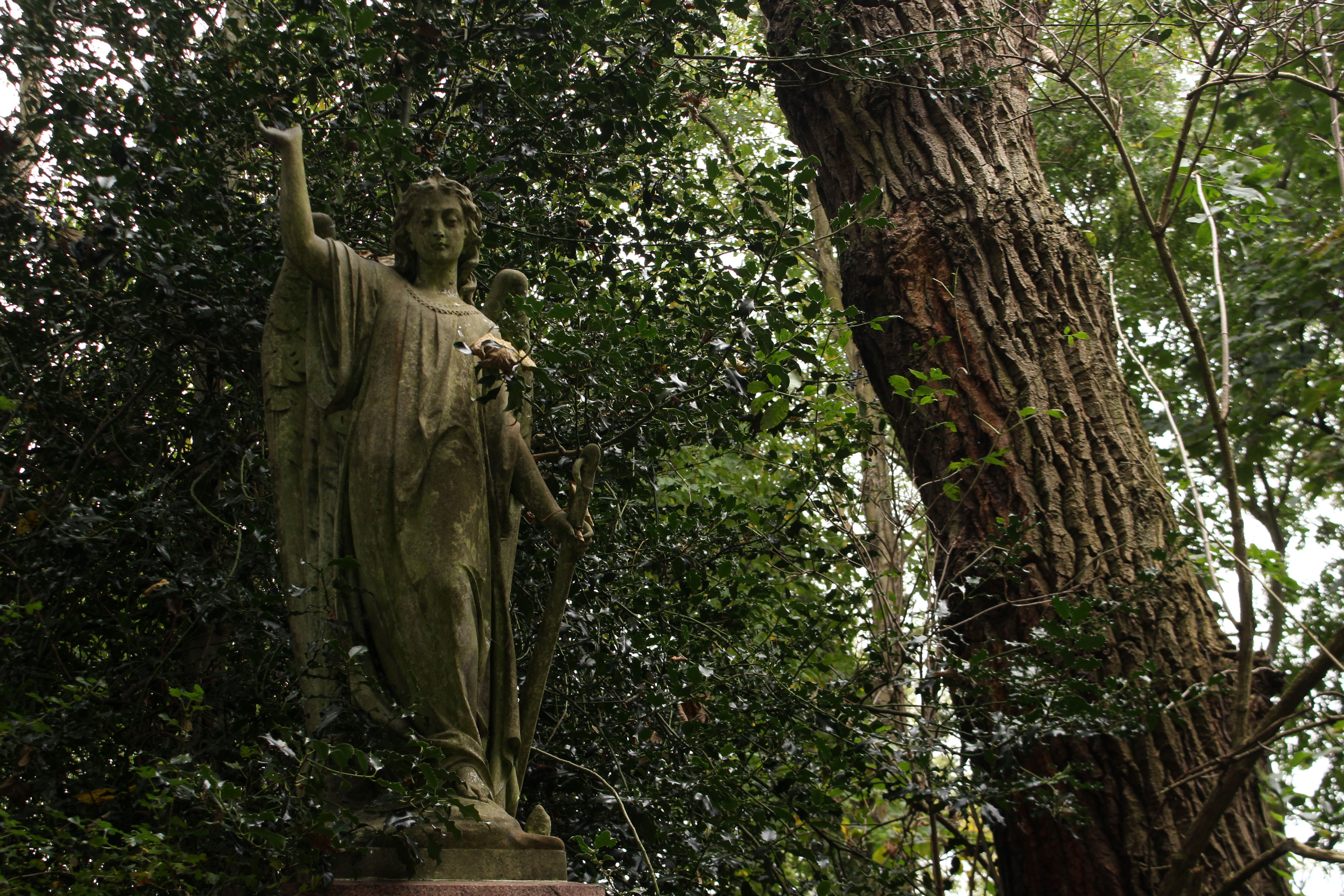
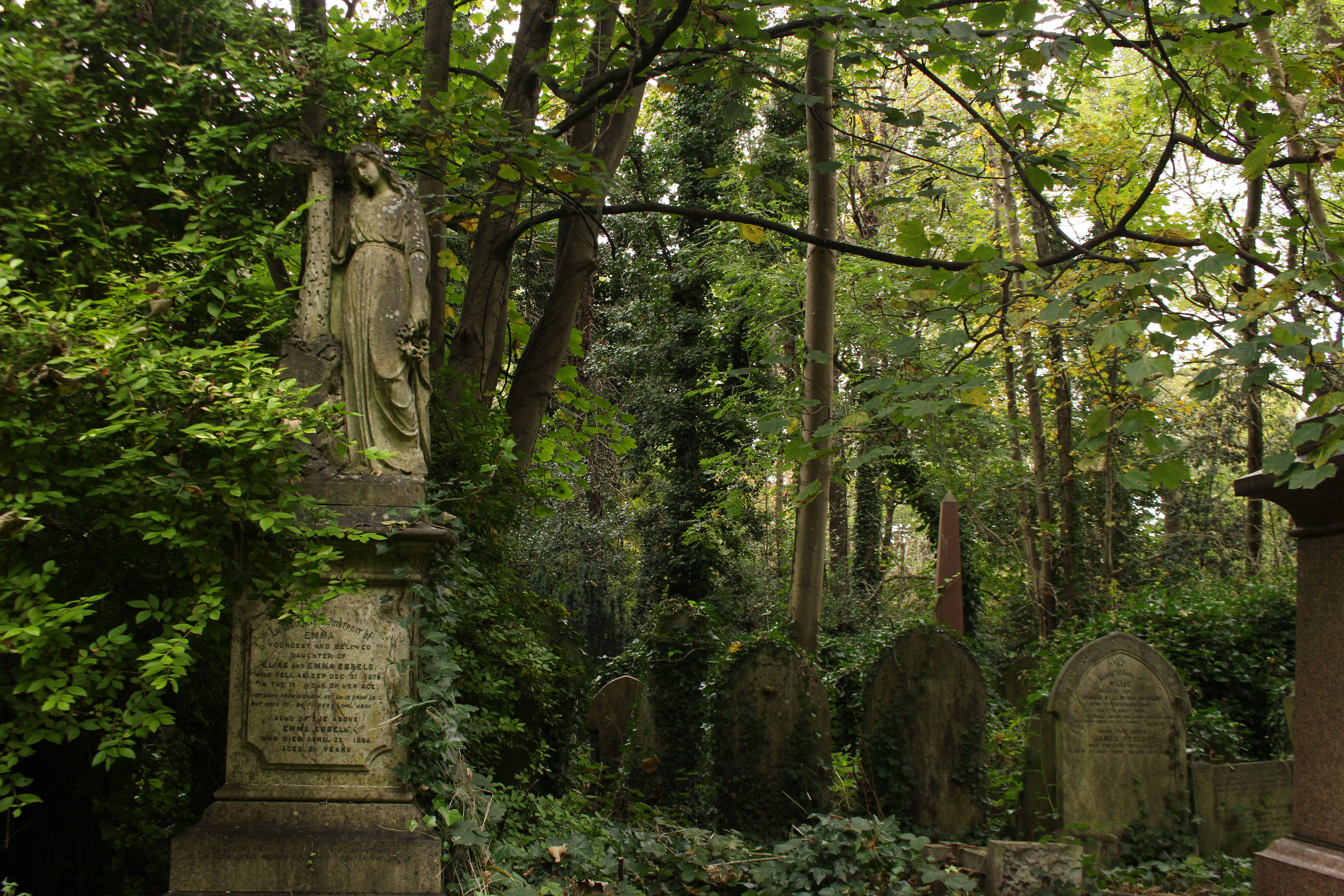
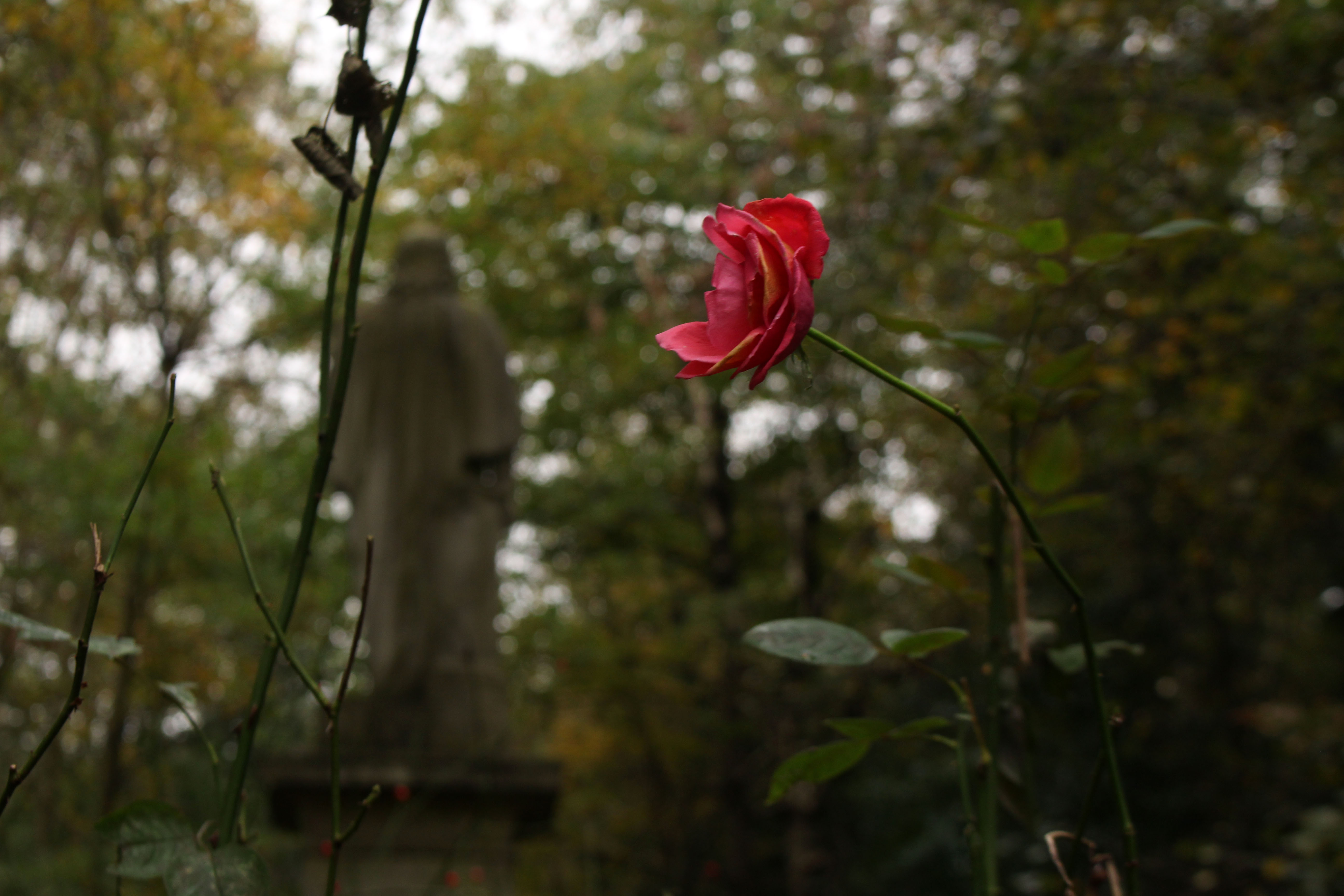
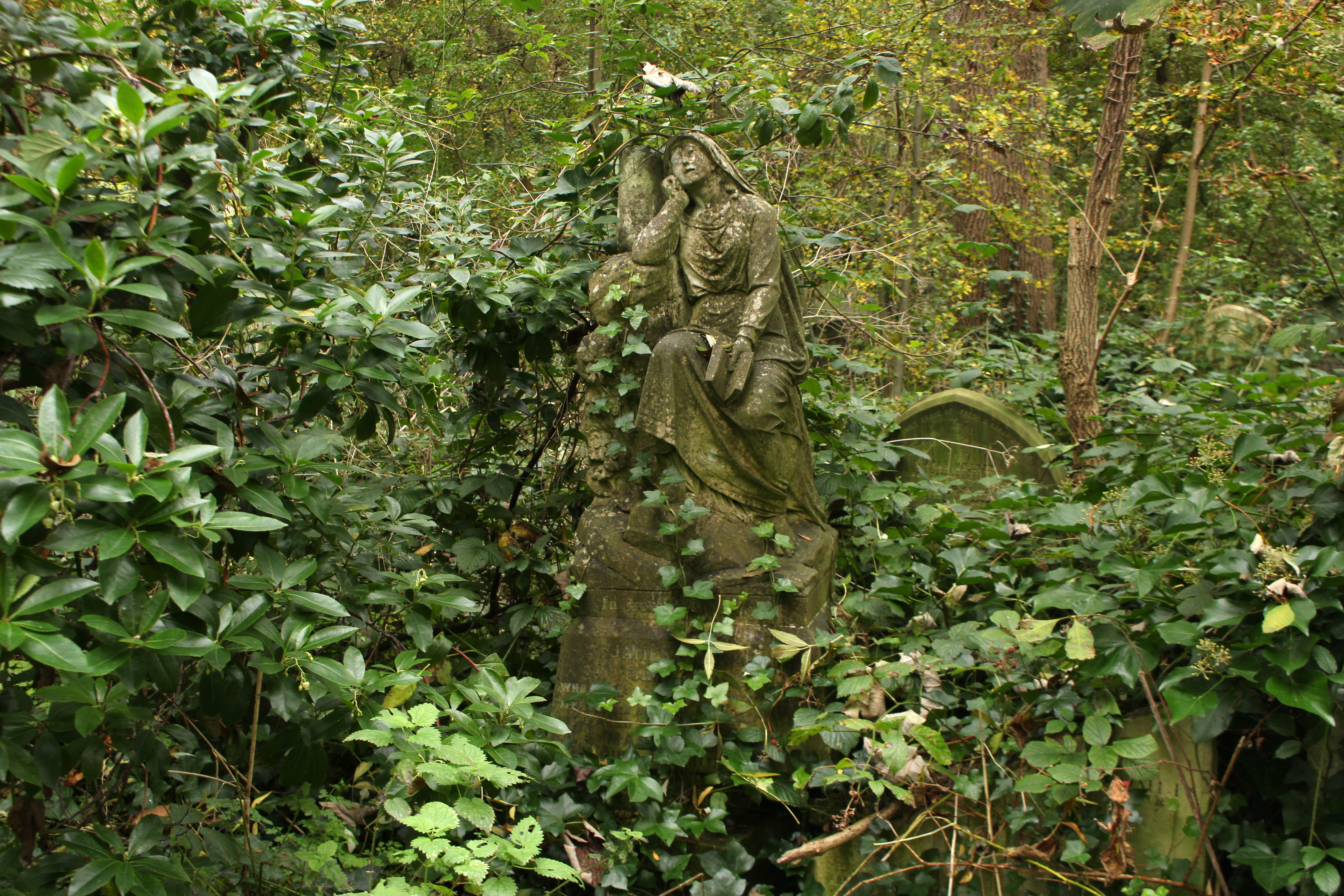
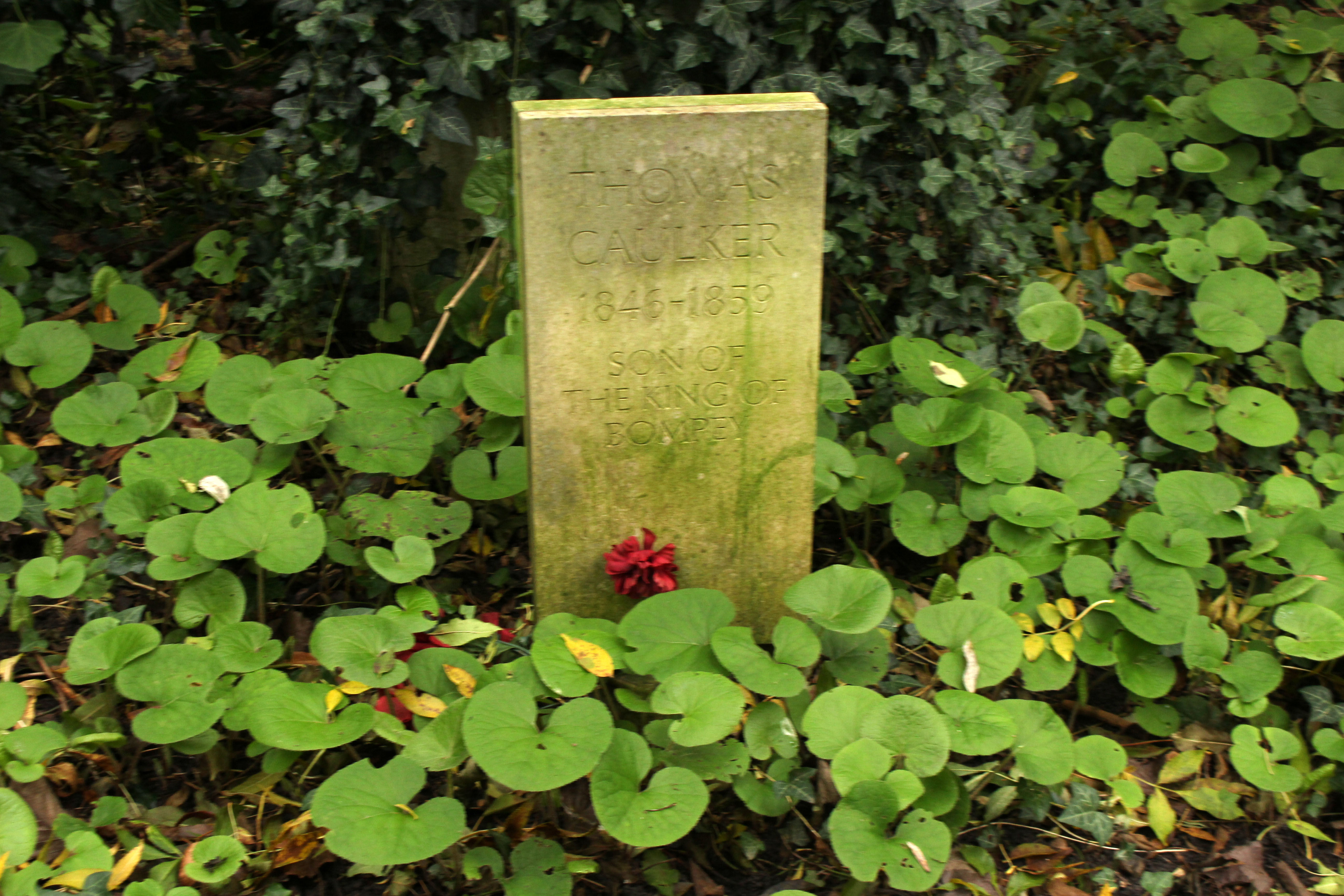
We have no purpose or aim other than just to wander and take it all in – the trees, the gravestones, the gothic atmosphere, the knowledge that this cemetery was the inspiration for the hidden fragment of Paradise that Arthur Machen wrote about in his short story N. We find no such paradise garden but instead plenty of interesting angel-perched tombs and several oddities – a wooden marker that asserts mysteriously ‘Elvis put his hand on my shoulder’ and the simple stone gravestone with the legend: ‘Thomas Caulker 1846—1859 Son of the King of Bompey’. Bompey, we later discover, was an early 19th century West African chiefdom that was eventually incorporated into Sierra Leone in 1888. The stone looks like a fairly modern replacement. What is curious is that the 160-year-old grave is still attended – a single flower has been recently placed upon it.
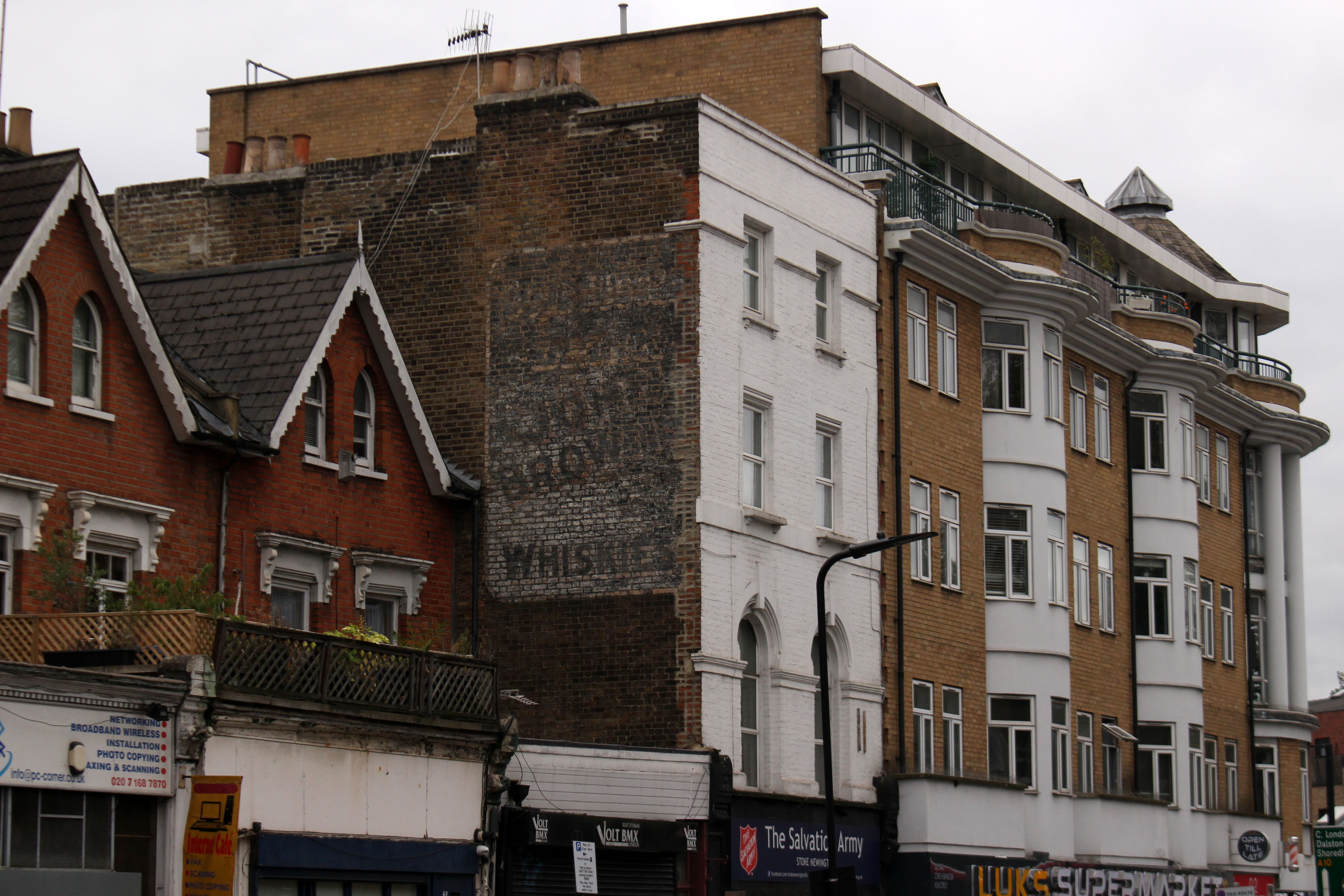
We exit the park to join the Ring; a sign right outside the cemetery confirms we are on the right path. My companion Nigel takes a photograph of me in front of the sign and as he does this a cheerful Black woman pushing an empty shopping trolley offers to take a snap of the two of us – she assumes we are tourists, and in many ways she is right. We head up Cazenove Road, where a fading ghost sign on a gable advertises a discontinued brand of whisky and an abandoned charity shop, as niche as you like, boasts a Bosnia & Herzegovina connection. It is all comfortingly multicultural – orthodox Jewish men in black hats and long coats rub shoulders with Muslims in white skullcaps and shalwar kameez. Looking at our map to check the route, one of the latter, a helpful elderly Pakistani, asks if we need directions and points us towards Springfield Park. There is no denying it – we really do look like tourists.
At the rise of the park the Lea Valley suddenly comes into view beyond – a proper valley, a river-carved ha-ha that slopes down to the water and sharply up again. A sign at a viewpoint helpfully informs us that we are standing on Hackney gravel, below that is London clay. Another parakeet screeches, this one perched in a tree, lurid green, channeling the tropics.
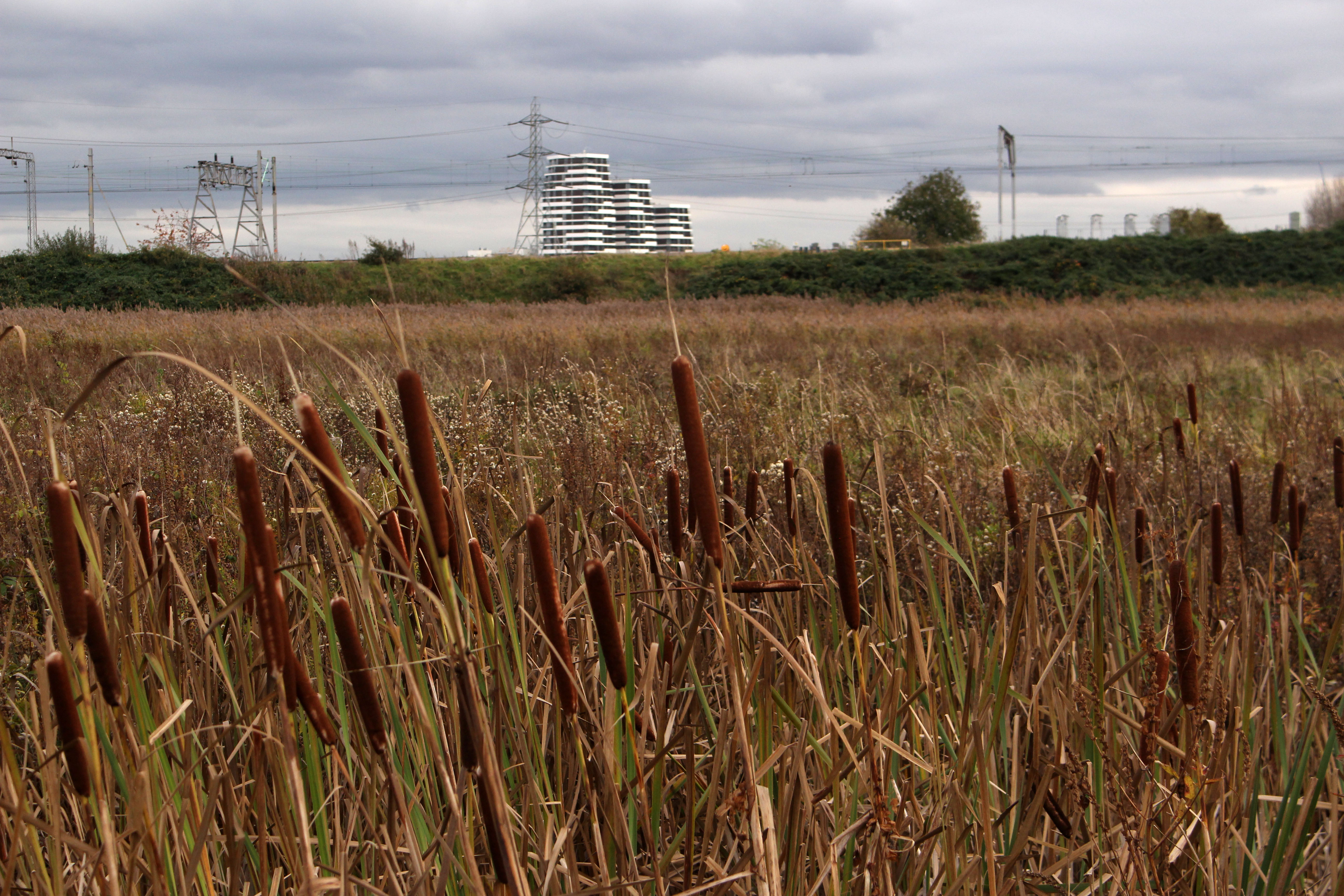
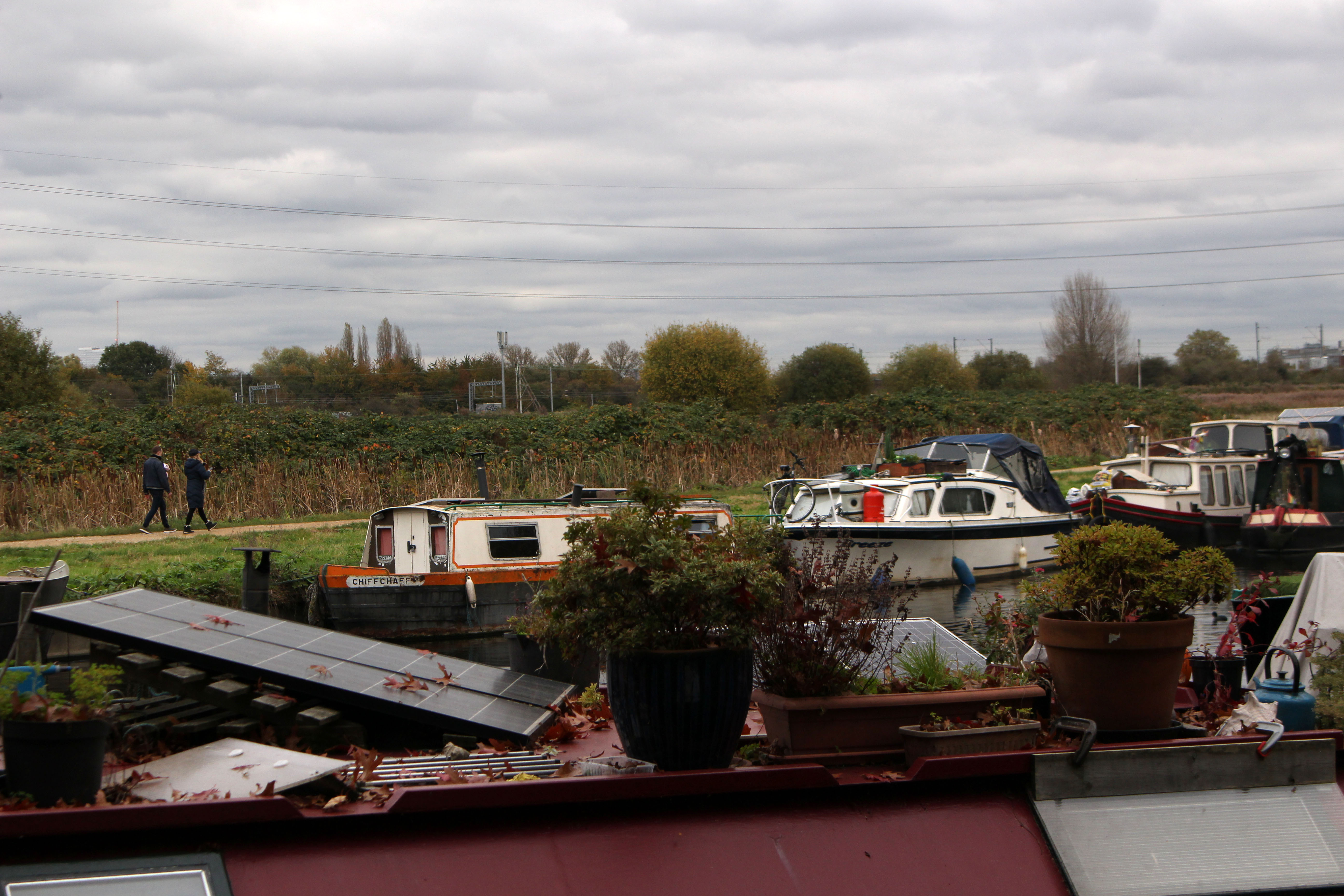
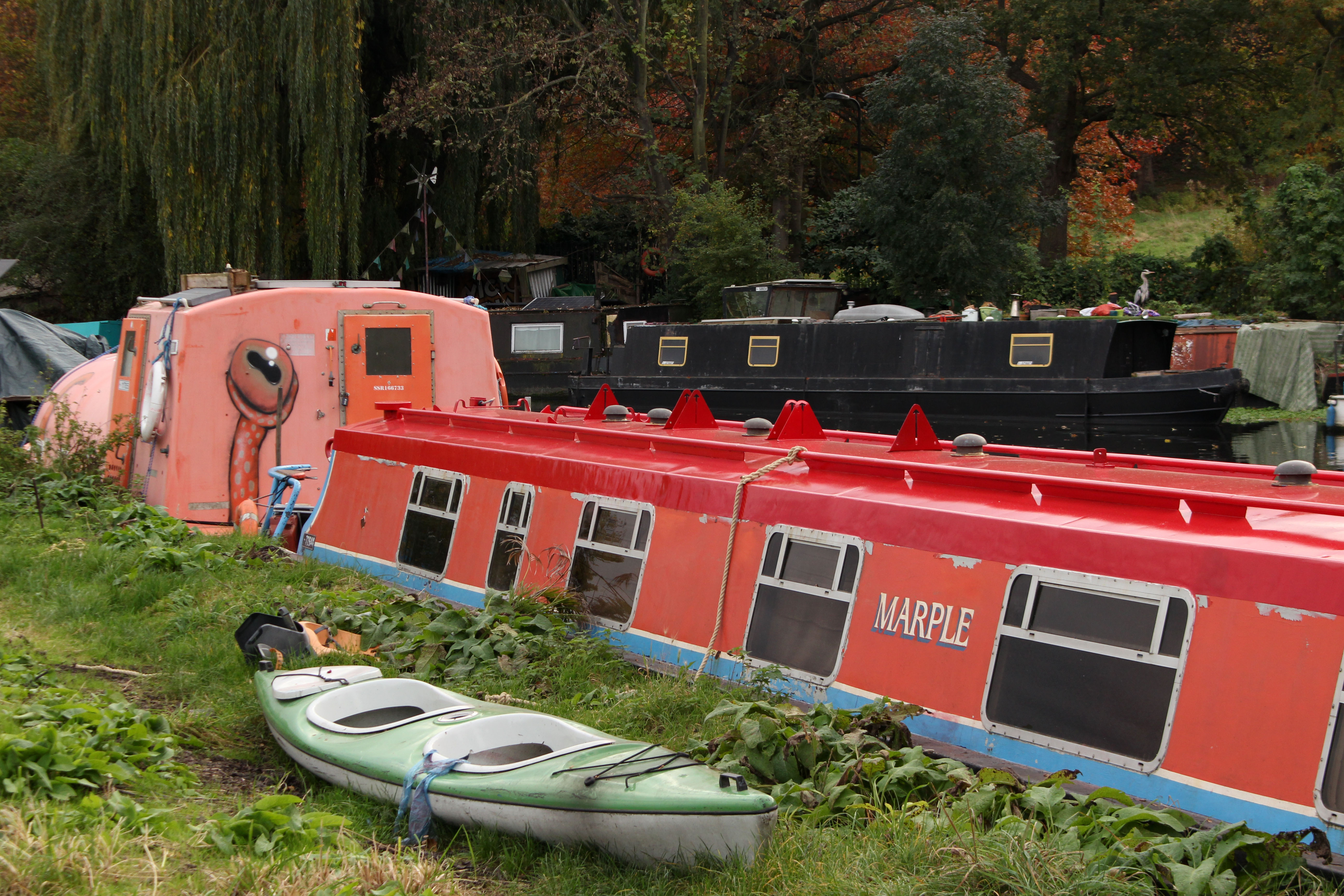
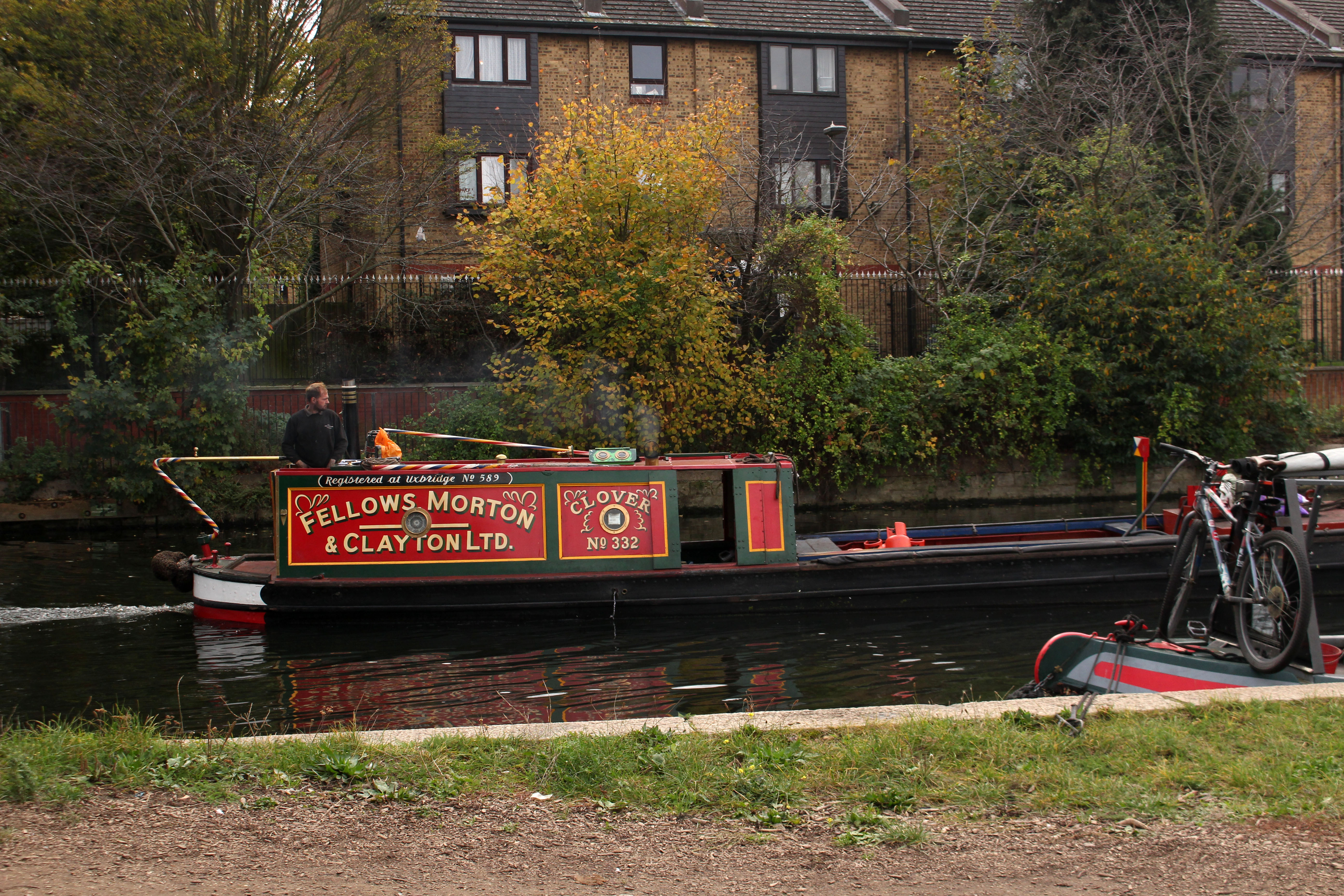
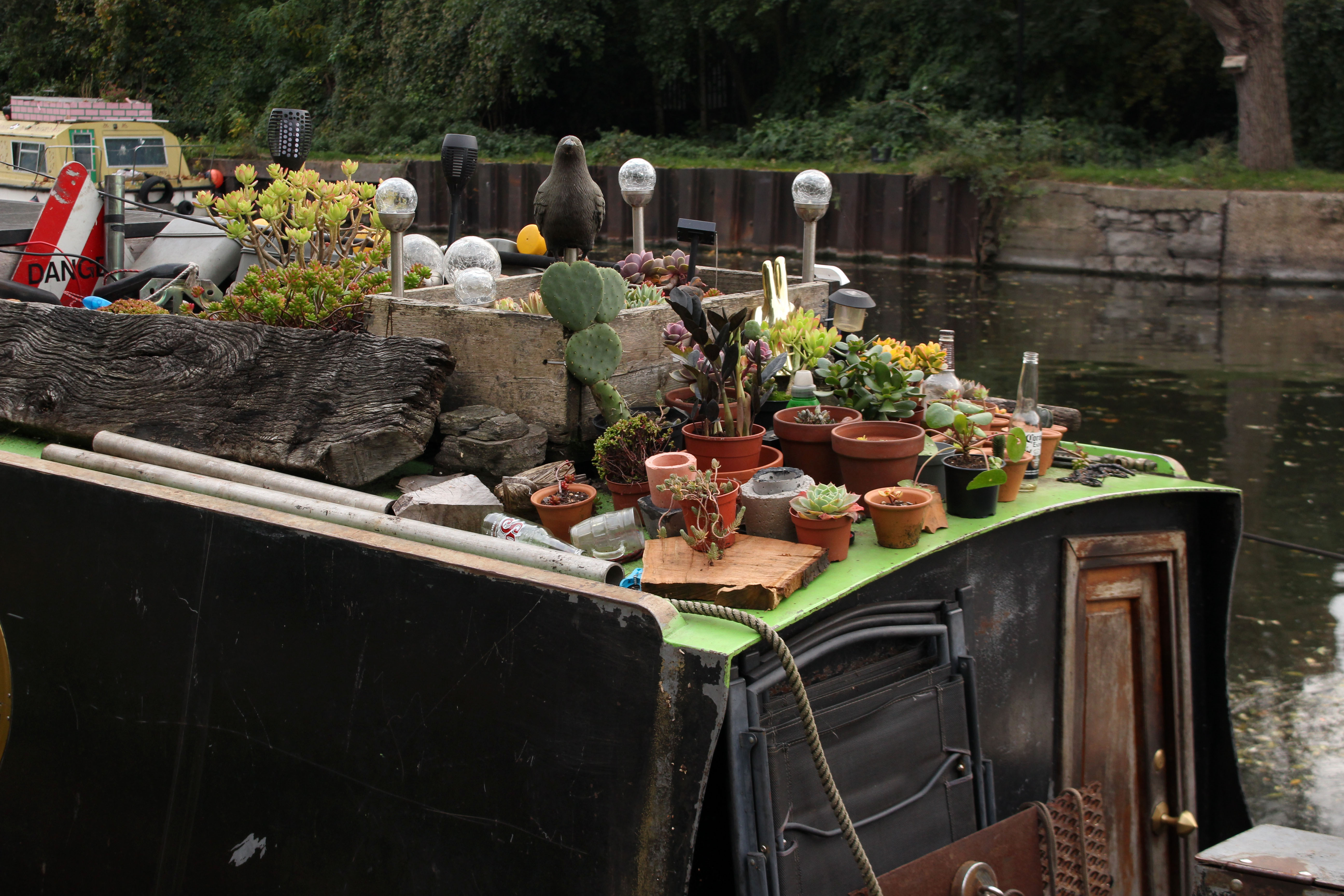
A more at home, native species – a heron – stands guard on a houseboat close to the footbridge at the bottom of the park. It sees us but looks unperturbed. We cross over the river to the east bank and start walking south. Walthamstow Marsh stretches away to the east, all reed, sedge and soggy pasture; rising above the marsh, beyond the railway, stands an island of modern development that may or may not be offices. There is an almost endless line of houseboats moored to both banks. Nothing too chi-chi – vaguely counter-cultural but mostly no-nonsense make do and mend: heaps of burner firewood, car batteries, plants in plots, well-used bicycles; a few seasoned boat dwellers going about daily chores, clenched roll-ups, dreadlocks piled high.
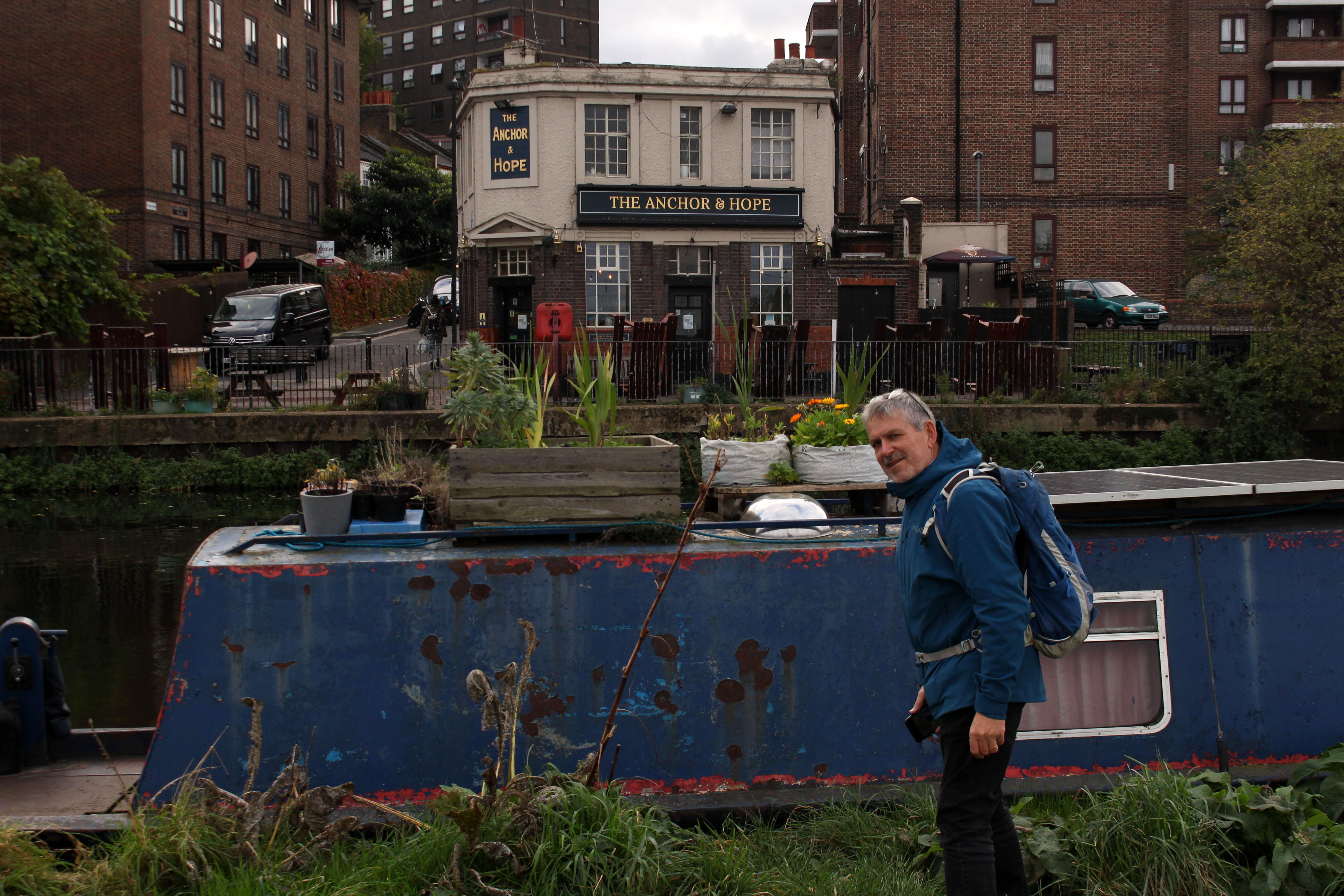
Across the water, a little further along, is a pub with outside trestle tables stacked for winter: The Anchor & Hope. Not the Hope & Anchor, the historic pub rock venue in Islington that we remember hearing tales of in our youth. Anchor & Hope – Anchor (or at least moor) and Hope your boat doesn’t sink? Anger and Hope maybe? There seems to be plenty of anger about but hope can be elusive; as they say, it is the hope that kills.
Approaching Clapham Junction Viaduct we hear the two-stroke put-put of a barge on the move. Another barge comes from the rear to slowly overtake and the two boatmen exchange chummy bargee greetings as they pass on the water. A sign under the viaduct arches indicates that this is the original location of A V Roe’s workshop where the first all-British powered flying craft, a precarious-looking tri-plane held together with wire and glue, was built in 1909. Inspired by the Wright Brothers’ achievement of just six years earlier, the aeronaut successfully managed a short wobbling flight across the adjacent marshes, a sight that must have given the local herons quite a start.
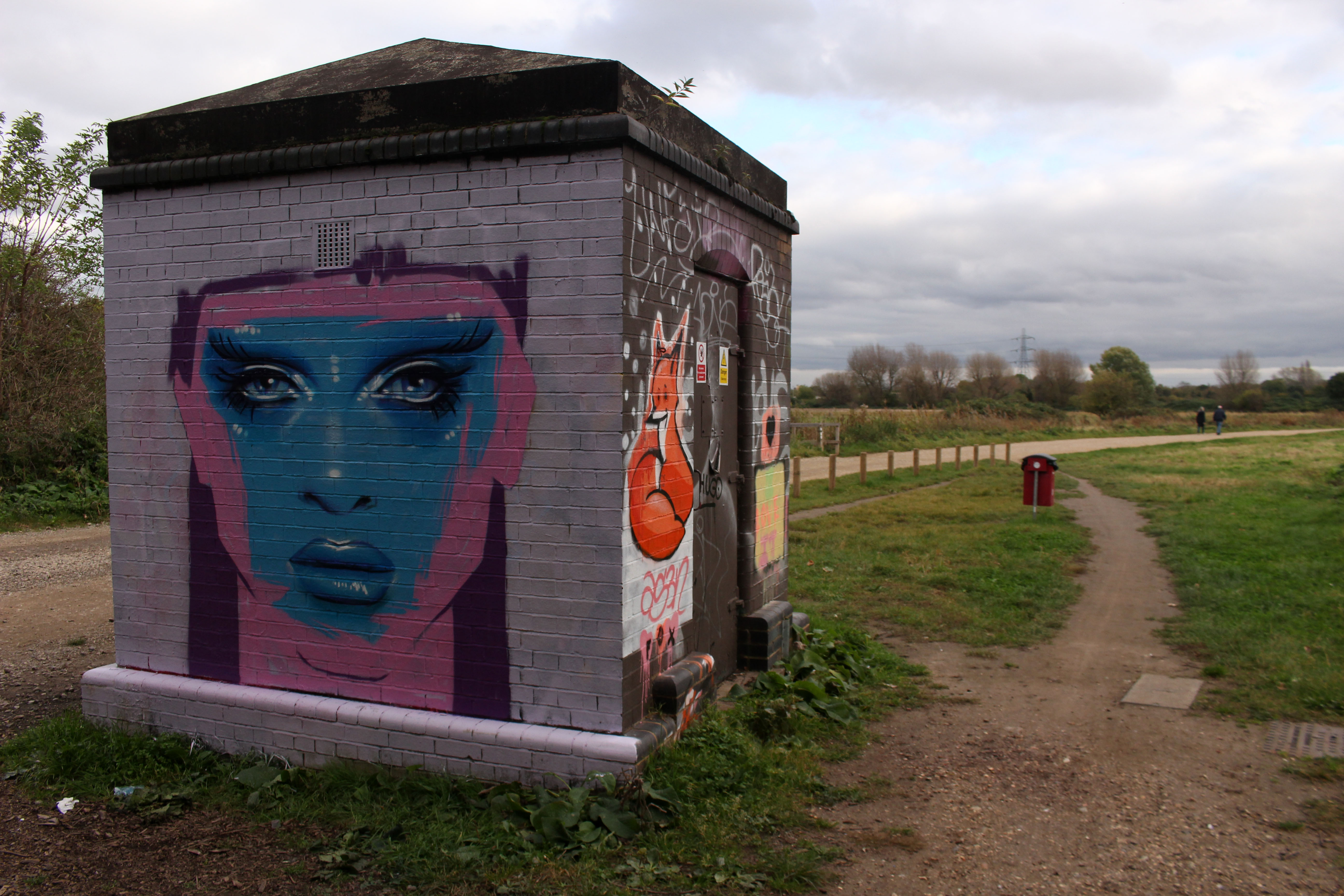
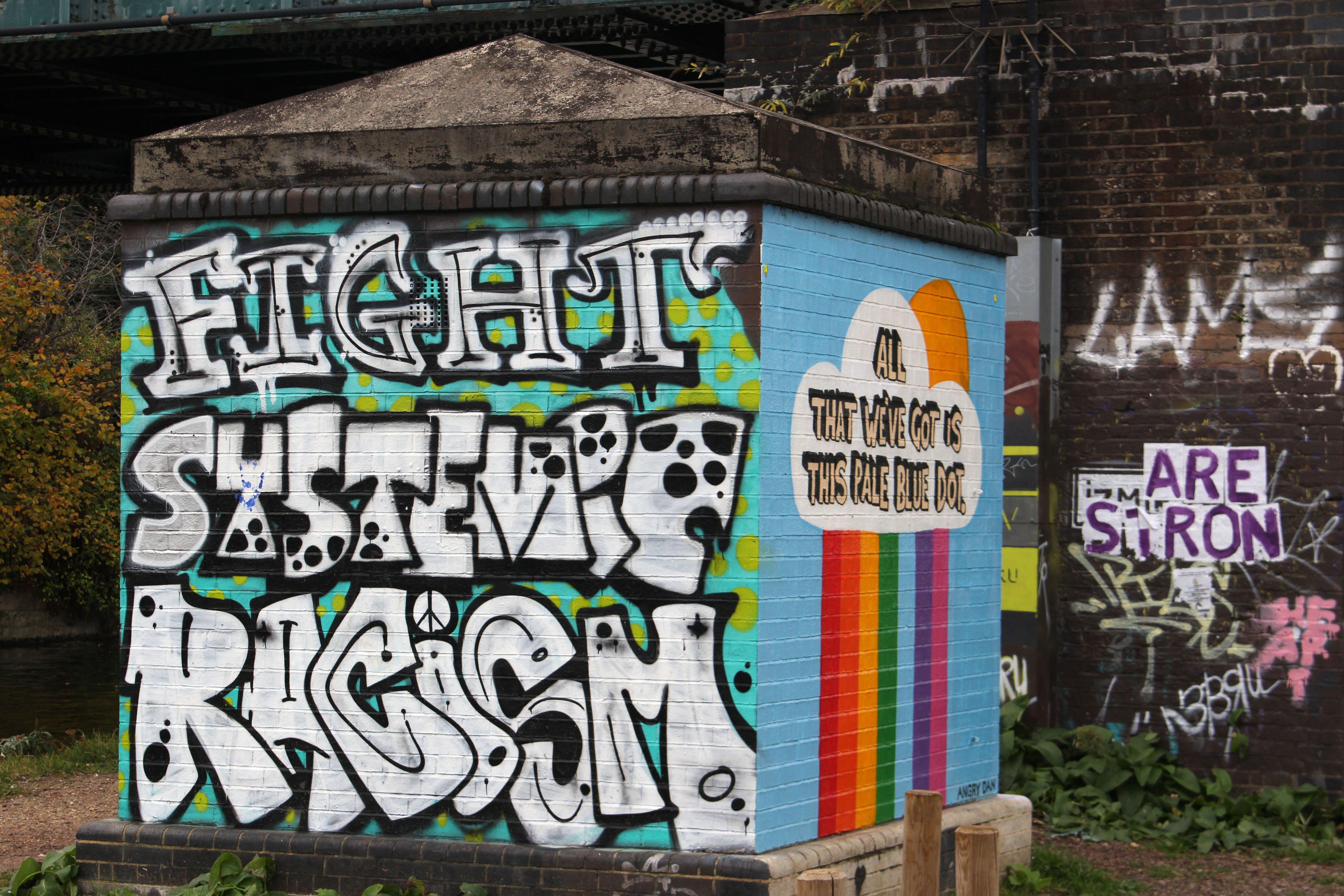
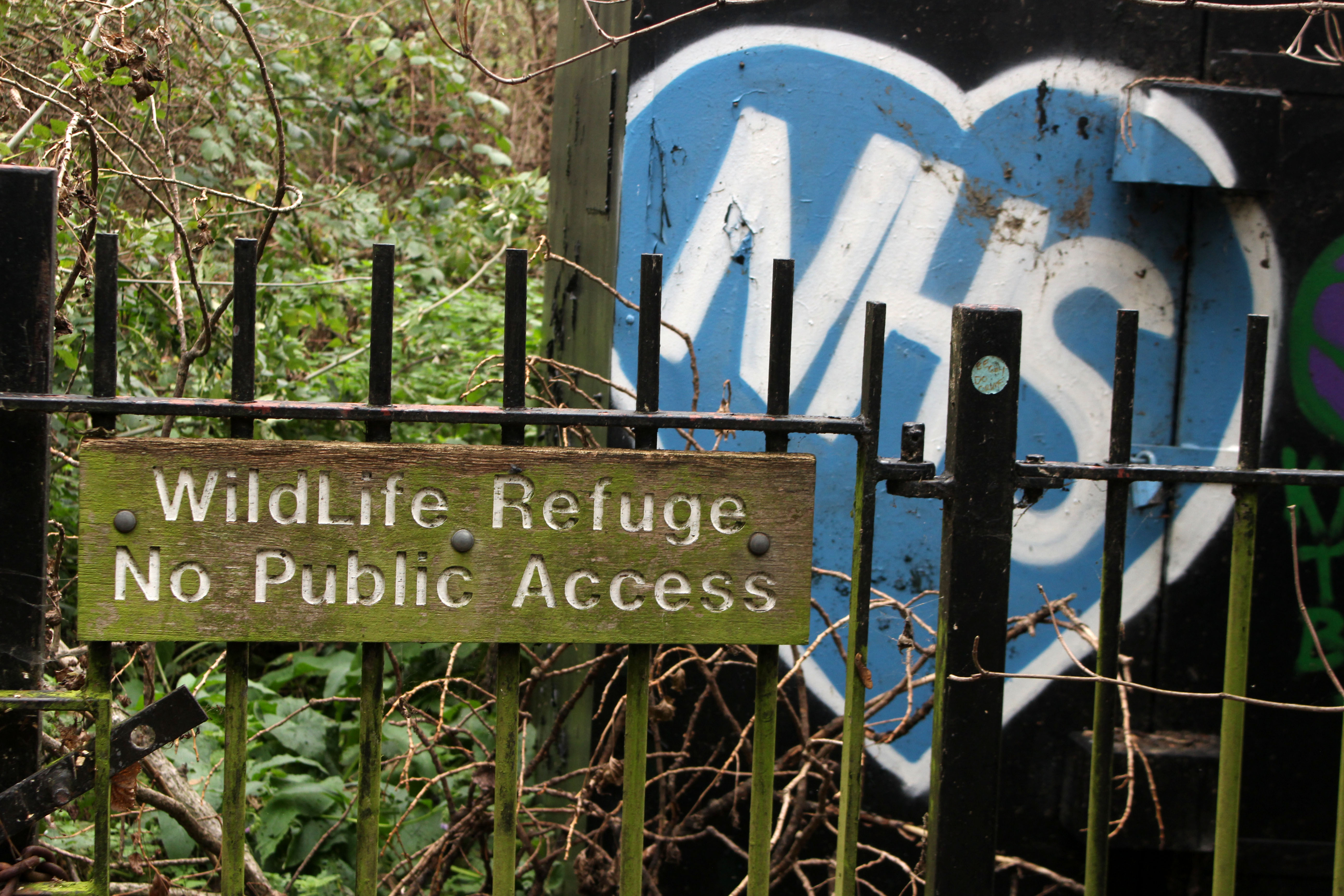
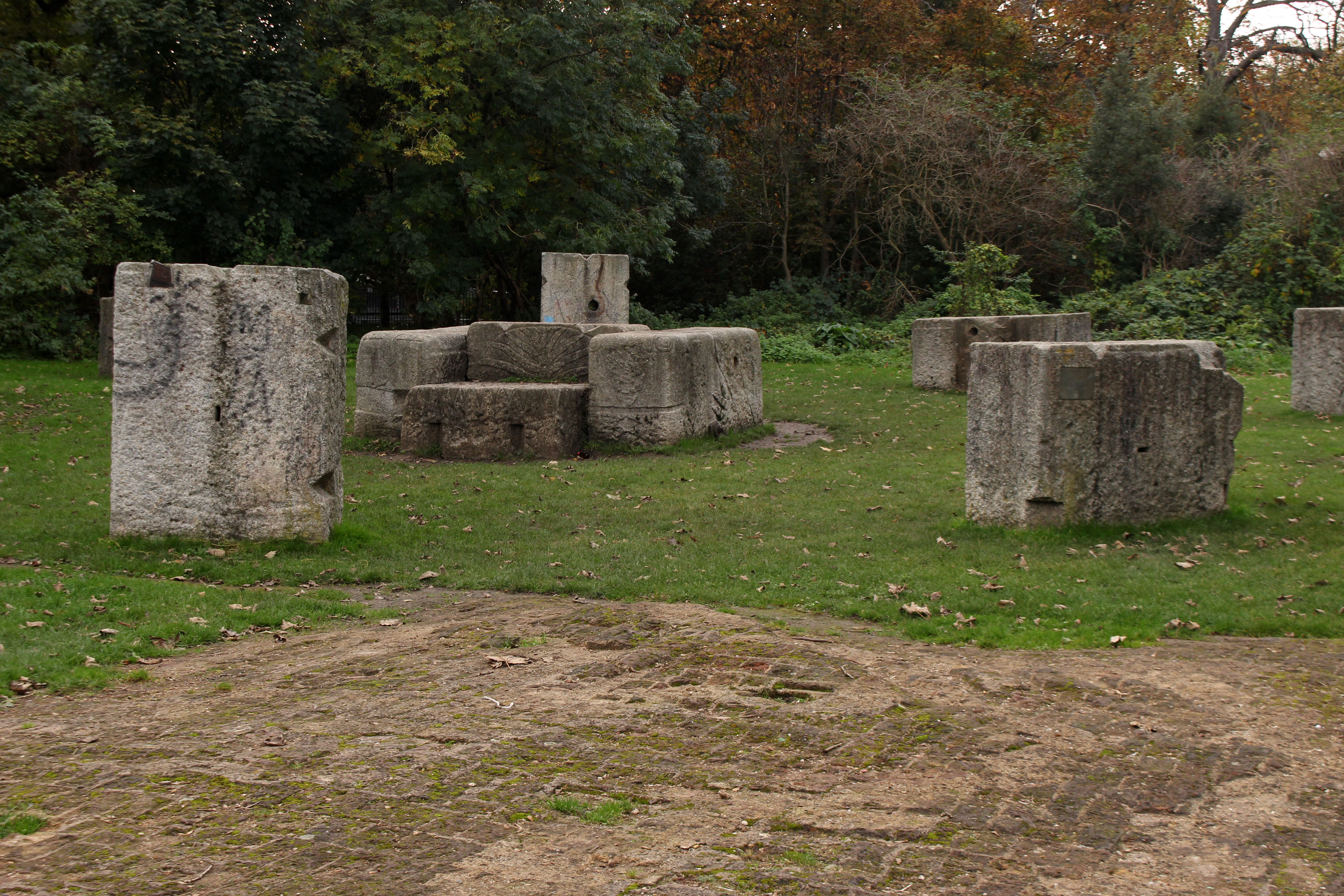
At Lea Valley Ice Centre the path diverts along the canalised Lea River Navigation, the wide green expanse of Hackney Marshes stretching invitingly to our left. We detour briefly to view the former site of the Middlesex Filter Beds, now a designated nature reserve, where we find the granite blocks that once held the pumping engine in place rearranged into what has become known as the ‘Ackney Enge’. A little further on we find the hope we had been looking for back at the waterside pub: a footbridge over the water has a draped banner that proclaims BELIEVE IN OUR COLLECTIVE IMAGINATION on one side, and on the other, DARE TO DREAM BEYOND CAPITALISM. Hope indeed.
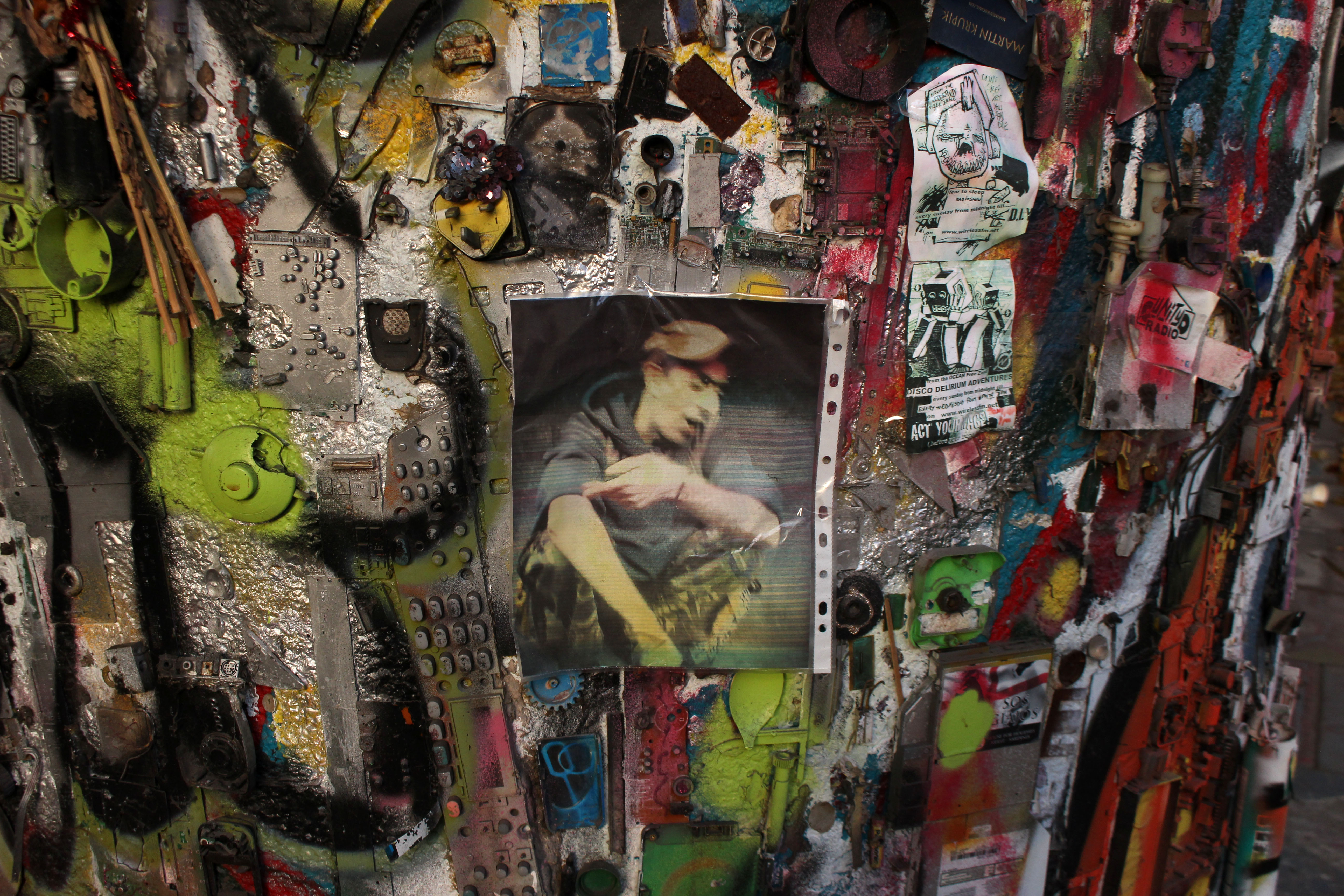
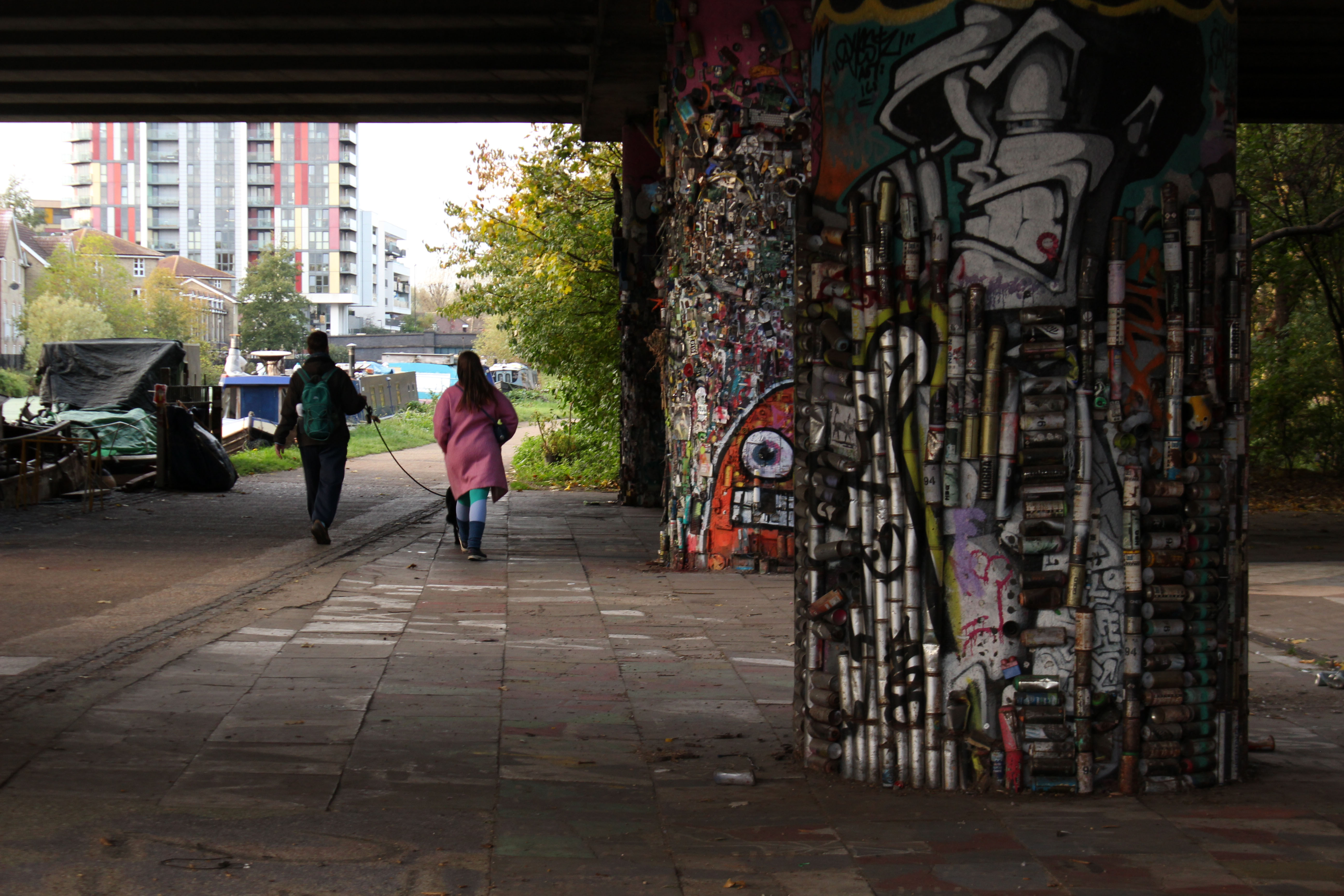
Shortly before reaching Hackney Wick we pass beneath a roadway where the supporting concrete arches have been comprehensively decorated with all manner of found objects – bottle tops, cans, bits of wire, keys, keyboards, electronic components, beer cans – all lovingly glued in place and spray-painted. As I stop to take a photograph, a man on a bike appears out of nowhere to inform me that the artist, a lovely fellow by all accounts, was a friend of his who had died quite recently. He pedals off back into the shadows as quickly as he arrived. Then I notice a portrait of the artist attached to the second of the pillars. The artist in question looks remarkably like the man I have just spoken to. Could this be a ghost artist obliged to return and show visitors around his urban art gallery, a revenant on a bicycle?

Our walk ends at Hackney Wick. We know we have arrived when we see West Ham’s London Stadium at Queen Elizabeth Olympic Park in the distance, the deranged helter-skelter of Anish Kapoor’s ArcelorMittal Orbit alongside it. Somewhat disoriented by the glare of the new development that engulfs us on all sides, we look for the bus stop we need for the service back to central London. I know that it is close to the Church of St Mary at Eton but its location proves to be elusive. My A to Z is well out of date, the streets marked on it have since been redacted; new ones with new names have taken their place. Nigel employs his smart phone to engage with a satellite to find the correct route and we beat a path past Hackney Wick Overground station and along streets parallel to the thrumming A12. Despite the nearby traffic frenzy, the area is relatively quiet and uncluttered by commerce, just a scattering of car body repair shops and the occasional cafe. A random sign offers sourdough pizza – you can almost hear self-respecting Neapolitans crying in anguish. But nothing is sacred and change is inevitable: the deeply layered lasagne that is East London has had its time-honoured béchamel topping scraped away and replaced with something considered to be more wholesome. As ever, the city is a palimpsest.
 East of Elveden