‘It is just the one crag of rock, as everybody knows, but great enough to carve a city from.’
Robert Louis Stevenson Catriona
Japan’s Mount Fuji is a dormant volcano that looks just like a volcano should. An almost perfectly symmetrical, snow-capped cone, its image is deeply embedded in the Japanese psyche. Sacred, beautiful, mysterious, its most iconic representation in art is the Thirty-Six Views of Mount Fuji series painted late in life by the ukiyo-e artist Katsushika Hokusai (1760—1849). Probably the best known of the series is Under the Wave off Kanagawa, which depicts a distant Fuji framed by a terrifying tsunami wave. My own favourite is no. 33 Fine Wind, Clear Morning, which shows Fuji’s cone rendered deep crimson by the rising sun. Featuring delicate cirrus clouds against a blue sky and iconic sun-lit mountain, its aesthetic simplicity ticks all the essential boxes of classic Japanese woodblock art.

In the United Kingdom, a long way from the tectonic frontline of the Pacific’s Ring of Fire, our volcanoes are of a more ancient vintage. Not so much dormant as comatose, long inactive through an aeon-slow unfolding of geological time, all that we have are fossilised remnants of our islands’ distant fire-spewing past. In Scotland, Arthur’s Seat just outside Edinburgh is one such example, as is the rock upon which Edinburgh Castle sits — both volcanic remnants from the Carboniferous period that gripped the Earth over 330 million years ago. Further east, close to the mouth of the Firth of Forth, the island of Bass Rock, located about two kilometres offshore, is of similar pedigree. An igneous volcanic plug created when magma hardened within the vent of an active volcano, the surrounding rock eventually eroded to expose the plug and leave an upstanding landform that rises 100 metres above the water it finds itself in today.
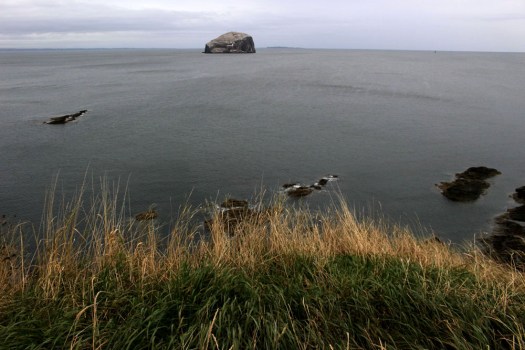
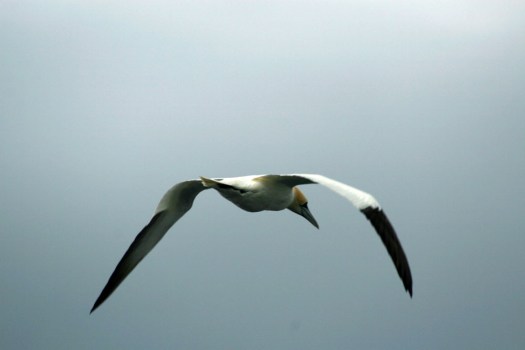
Bass Rock is probably better known for its bird life than its geology. Northern Gannets nest here in enormous numbers — something in the order of 150,000, making the rock the largest colony of the seabird in the world. The gannets are not permanently resident but leave the rock after breeding each year, migrating their way south for the winter. They were still present when we viewed the rock from the East Lothian shore at Tantallon Castle in October, a small number of the birds straying from the security of the rock to fish close to the shore.

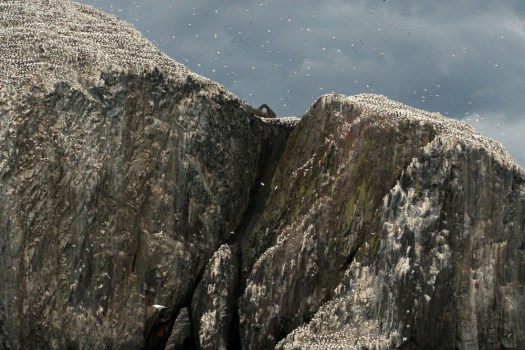
We had seen Bass Rock from a much closer viewpoint six years previous when we had sailed past it on a boat. It was June then, the height of the breeding season, and the birds seemed to fill the sky above the guano-washed rock, crisscrossing haphazardly above our heads before peeling off to plunge vertically at great speed into the sea in pursuit of fish. On that occasion we were able to smell the colony long before we arrived – an ammoniacal stench so strong that you could almost see its vapour shimmer skywards. Our boat drew close enough to the rock to be able to identify the individual nests of birds, and we could also make out the ruin of St Baldred’s Chapel atop the rock – not the most obvious place for a retreat into the spiritual life given the omnipresence of eye-watering guano deposited by the rock’s hyperactive tenants.
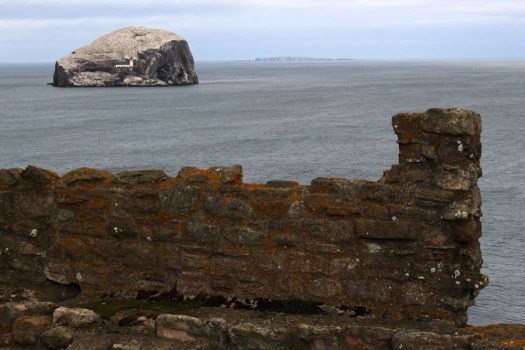
Even from the more distant viewpoint of the shore we could discern the rock’s landing places, a fragment of the old castle remains and the white lighthouse, designed by Robert Louis Stevenson’s cousin, David. Although there was nothing to be seen now, there was also once a gaol here. James I incarcerated a number of political enemies here in the 15th century, and two centuries later religious prisoners, Presbyterian Covenanters mostly, were also held on this island prison.
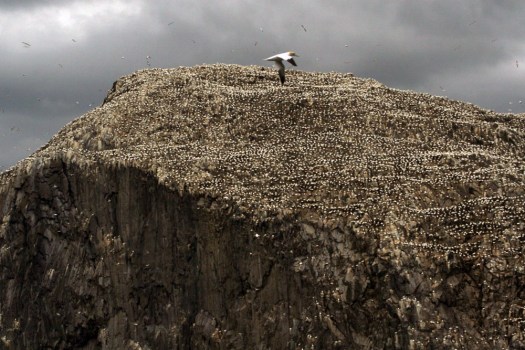
Comparisons between Mount Fuji and Bass Rock are, of course, futile. But there is at least some commonality: both are/were volcanoes; both are capped with white. Hokusai famously produced 36 different views of his beloved mountain, each work unique in terms of distance, viewpoint and time of year. I can only offer something far more modest. Here then, are six views of Bass Rock, taken either in June or October, from shoreline (Tantallon Castle and North Berwick) and from sea.

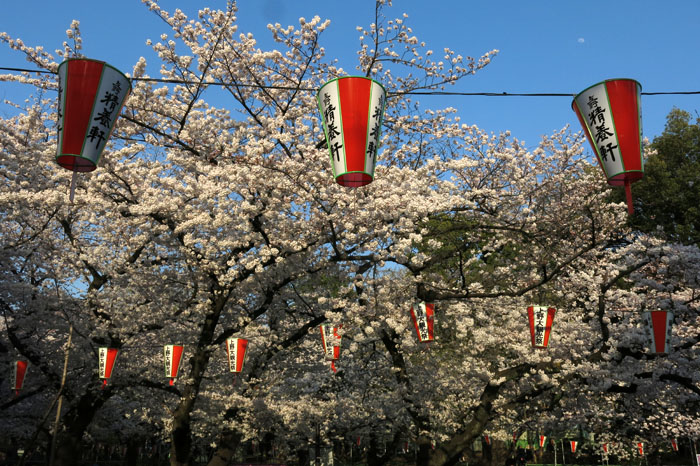
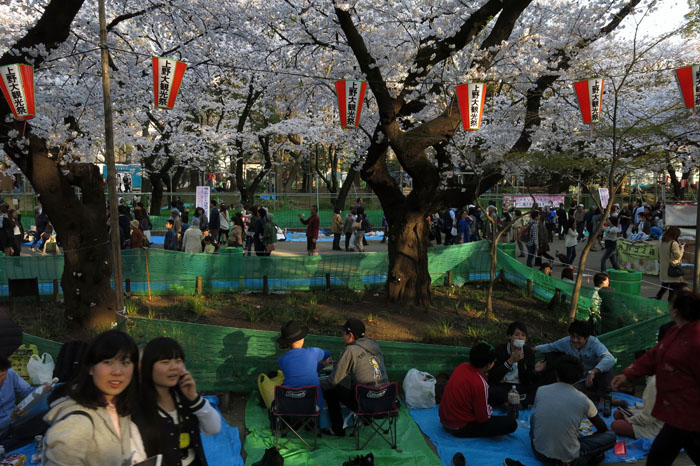
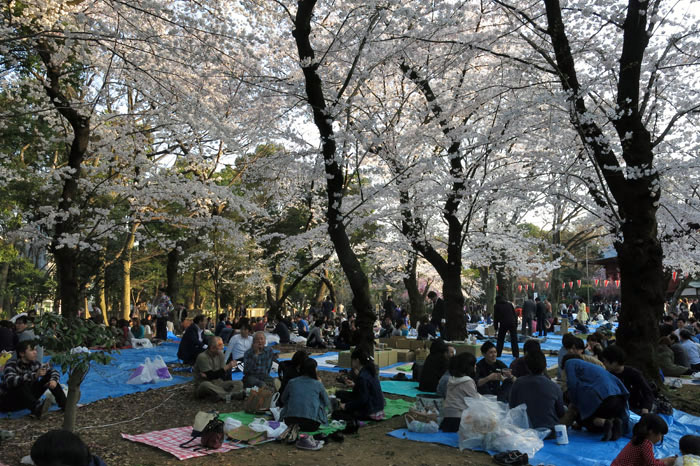
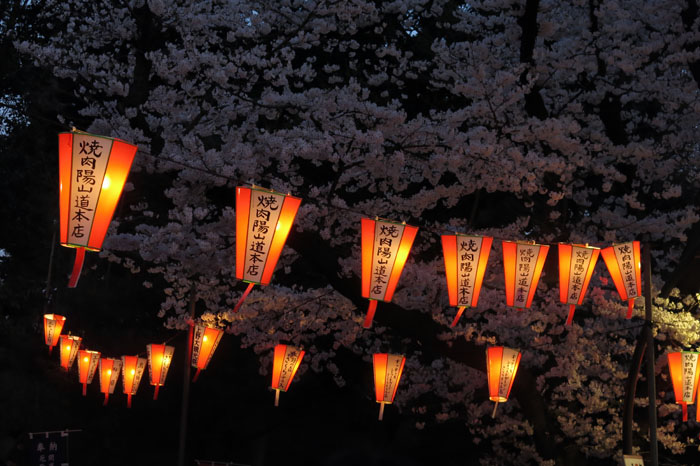
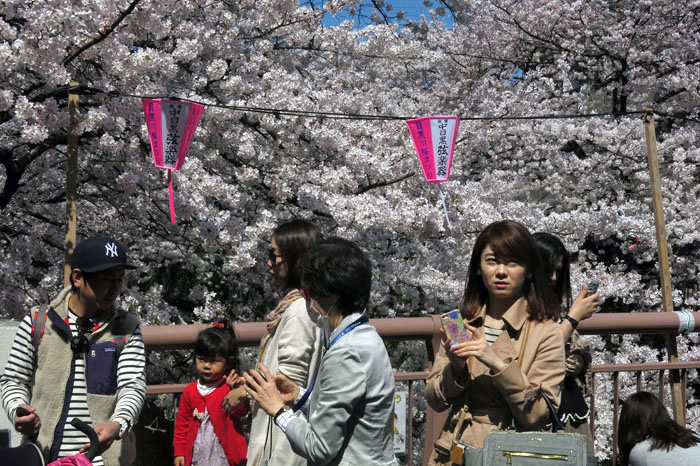
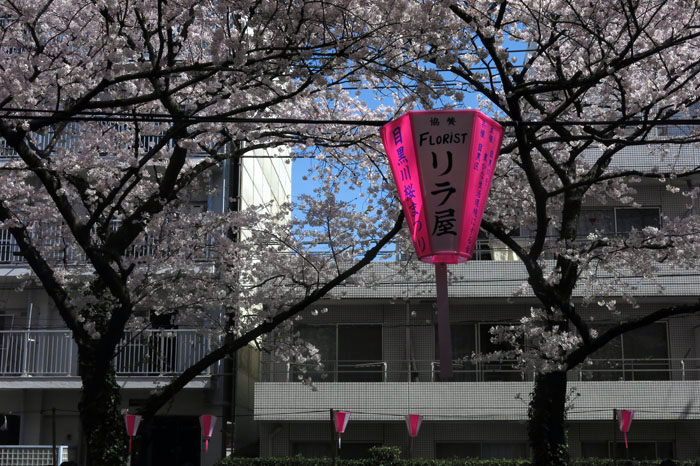
 The Japanese have an expression – shirin-yoku (‘forest bathing’) — which refers to time spent in a wood or forest for purposes of health and relaxation. Scientific field studies have demonstrated that spending even a short time among trees promotes a lower concentration of cortisones, lower pulse, lower blood pressure, decreased levels of stress and improved concentration. In Japan activities such as shirin-yoku are part of the culture and hold an important place in the national psyche. Modern Japanese culture is still rooted in ancient nature-worshipping Shinto beliefs that are expressed in a variety of ways. Perhaps the most striking of these for westerners is the annual celebration of the
  The forest, the greenwood, comes with cultural baggage. It is sensed to be a place of ‘the Other’, a place of wild things, of decay, of hidden danger; of runaway fugitives, mythical outlaws — Robin Hood being prime example — deserted children (Babes in the Wood), ghosts and malevolent spirits. There is no denying that some tracts of woodland are downright spooky, places where dark forces can be felt to be at large. Traditional children’s literature does not help much in mitigating this irrational if primal fear. In fact, it nourishes it — one of the very first books I remember reading as a small child was Winkie Lost in the Deep, Deep Woods, the very title of which suggests some sort of unspoken dark menace. As an archetype, a forest is perceived as an eldritch zone where wicked witches live alone in eerie hovels, where red-cloaked little girls are preyed upon by egregious wolves, and large gatherings of ursine cuddly toys attend sinister secret picnics. Go into the woods (today) and you might well be ‘sure of a big surprise’. In adult life the same fear is perpetuated as a trope of the horror genre — the psychological terror of The Blair Witch Project springs to mind. The forest is a place where bad things happen — a place to bury the bodies. Be afraid. Even Japan with its devotion to sakura and forest bathing traditions has its fair share of indigenous forest demons. The country even has its own haunted forest, Aokigahara, at the foot of Mount Fuji, which has the unenviable reputation of beings the world’s second most popular choice as a place for suicide.
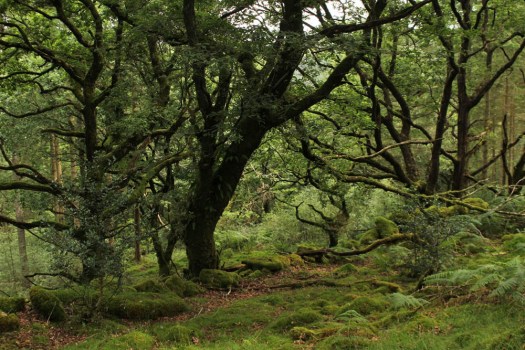
 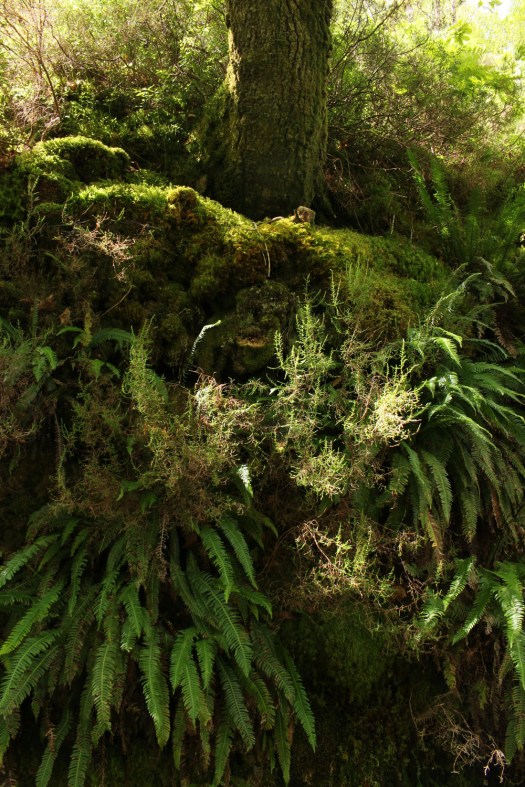 But let us embrace a positive outlook and view woodland as a place of wonder and nurture rather than fear and loathing, a place to breathe in the beneficial volatile oils emitted by trees and enjoy their beauty. Where better to delve into the greenwood in Britain than a tract of temperate rainforest that has hardly changed since the last glacial period? Coed Felinrhyd in North Wales has stood largely untouched since from this period and, although tracts of this woodland have been partially managed over the centuries, other parts have remained undisturbed for around 10,000 years. Coed Felinrhyd, owned by the Woodland Trust, is just a fraction of the remnant temperate rainforest found in this damp corner of Wales: a 90-hectare tract of woodland on the southern side of the narrow Ceunant Llennyrch gorge through which the mercurial Afon Pryser, a tributary of the Afon Dwyryd, flows. Coed Felinrhyd’s particularities of relief and climate, tucked away in a sheltered, virtually frost-free gorge close to the Welsh coast in a region where it rains on average 200 days a year, ensure that the ecosystem here is in many ways unique. Scarce plants and ferns thrive in the understory, rare lichens and mosses cloak the trees. But this is more than simply remarkable ecosysytem, this is also a place where geography and legend intertwine – the forest receives a mention in the ancient Mabinogion myths written down in the 12th century and is said to be the location where two warriors once fought to the death.
  The entrance is a little hard to find, hidden away just beyond the entrance to the Maentwrog power station on the Blenau Ffestiniog to Harlech road. A Woodland Trust notice board by the gate gives background information on Coed Felinrhyd and a signpost points out the direction of a well-defined trail that circuits the forest. The trail climbs steeply at first, then more gently before levelling off. The first thing to be noticed, other than the towering oaks that stretch in every direction, is moss. Although ferns are almost as prolific, sprouting like green shuttlecocks wherever they can secure a foothold, it is moss that is everywhere cloaking every surface — on the bark of trees, on the rocks that line the pathway, on the dry stone walls that partition the woodland; on any surface where moisture can collect. Even most of the tree stumps are upholstered with velvety jade cushions of moss, their cut surface having been rapidly colonised by the feathery fronds of bryophytes. Each of these is a pedestal-raised forest in miniature, a Lilliputian lost world — this small tract of woodland contains a million tiny moss forests within it. Some of the tree stumps have been cut mischievously into the shape of a chair or a four-legged stool, the work of a rogue woodsman with a sense of humour and an artistic streak. A few of are fresh enough to not yet sport the forest’s inevitable green uniform, although no doubt soon they will.
  Having reached a plateau in the woods we come across a ruined slate barn beside the trail, its roof long gone and ferns sprouting like bunting on top of the walls where the eaves should be. Long abandoned, the building is probably at least two hundred years old and a remnant of the old farming practice of ‘hafod a hendre’ in which shepherds would remain on higher pasture with their flocks during summer. The track continues past clumps of trees that seem to emerge directly from the moss-carpeted boulders at their base. The blanket of moss and lichens that covers both gives the impression that both tree and rock are born of the same material, something primal and green that is neither strictly vegetable or mineral but something in between.
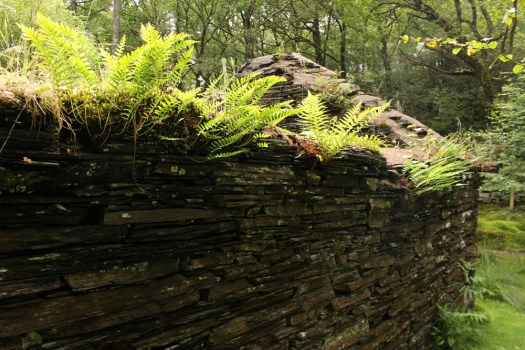 Descending back down into the valley we arrive at a dry stone wall that has a gate which leads into Llennyrch, a neighbouring tract of forest of similar pedigree to Coed Felinrhyd. We follow the wall to the left and the sound of rushing water becomes gradually louder as the gorge reveals itself. A small viewing platform gives a glimpse of the waterfall of Rhaeadr Ddu that plummets down onto the rocks below although the view is partly obscured by the dense foliage. The river is still some way beneath us but we draw closer to it as the path gradually descends. Finally we come to Ivy Bridge, which, true to name, is enveloped by long trails of ivy that hang over the edge almost touching the water and rocks beneath. Beyond the bridge, on the other side of the river, the unsightly machinery of an electricity substation can be discerned beyond a fence; beyond this, unseen from this position, lies the Maentwrog power station.
 After two hours of slow walking, looking, taking photographs and what can only be described as mobile ‘forest bathing’ we are back where we started. It suddenly occurs that we have met absolutely no one on our walk even though it is a relatively bright day with little threat of rain. No hikers or dog walkers, no botanists or tree-huggers, no Celtic warrior ghosts. And, to the best of our knowledge, no malevolent woodland sprites either.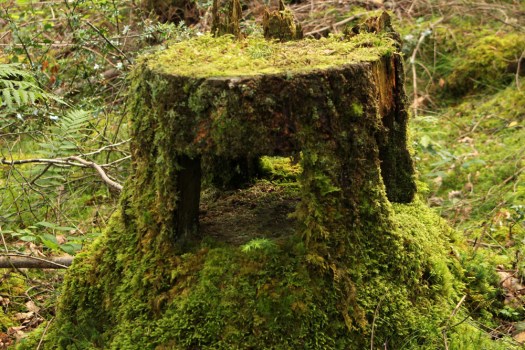


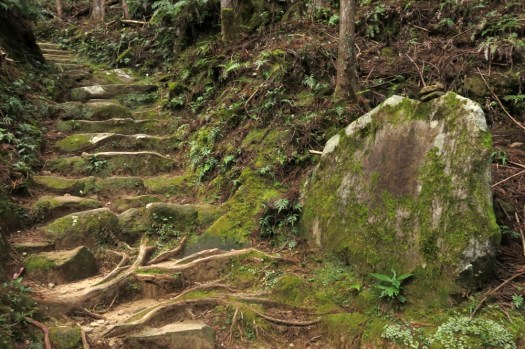
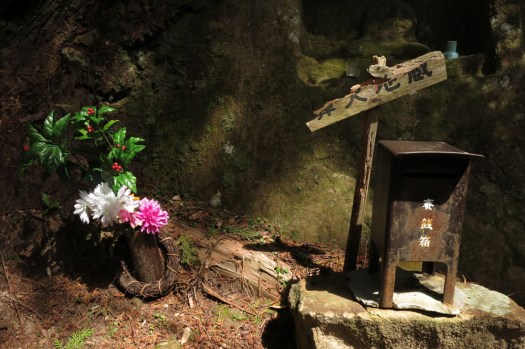
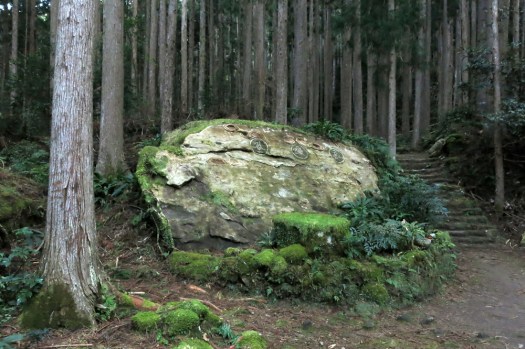
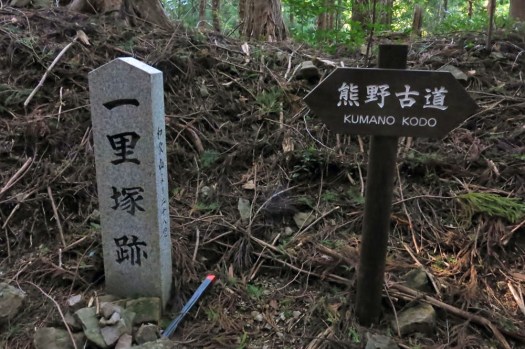
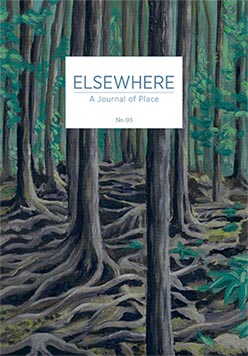 My feature on walking part of the Kumano Kodō pilgrimage trail in Japan will be published in a few days time in Elsewhere journal. Elsewhere is a Berlin-based print journal, published twice a year, dedicated to writing and visual art that explores the idea of place in all its forms, whether city neighbourhoods or island communities, heartlands or borderlands, the world we see before us or landscapes of the imagination.






 East of Elveden