Even in winter, the northeast Norfolk coast has its attractions, especially over the Christmas and New Year period when many flock here to see the grey seals that come to the beaches of Winterton and Horsey to give birth. For many it is an annual outing, an opportunity to walk off seasonal excesses, to get close to nature, to delight in the spectacle of the seals and their pups. Some are tempted to get too close, of course, but these days a dedicated army of volunteers in hi-vis orange jackets ensure that visitors and their naturally curious dogs do not disturb the vulnerable animals on the beach.
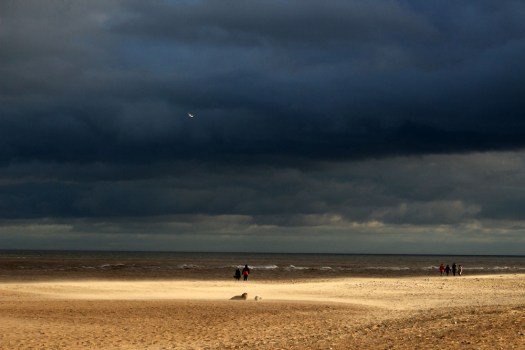
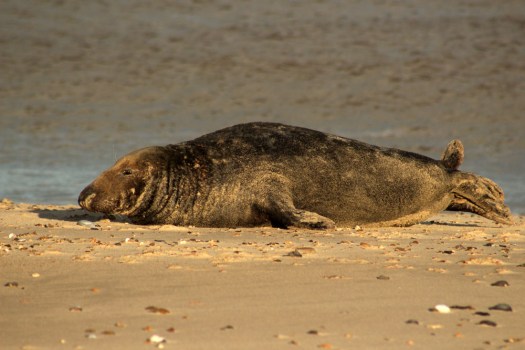
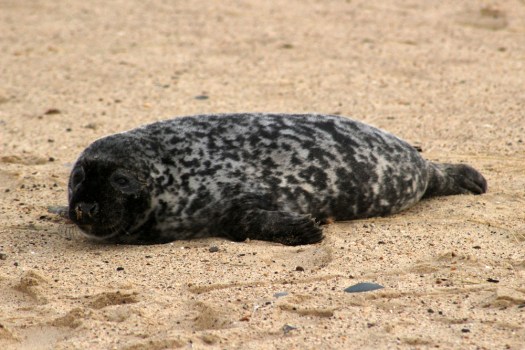
We arrive to find grey seal mothers and their fluffy-coated pups scattered like driftwood along the shoreline. Some are on the sand close to the breaking waves, while others are further inshore along the tideline, or even in the hollows of the dunes that back this coastline. Here and then along the beach, a hefty bull seal waddles in awkwardly from the surf to try his luck with one of the nursing females – this is the season for both breeding and mating.
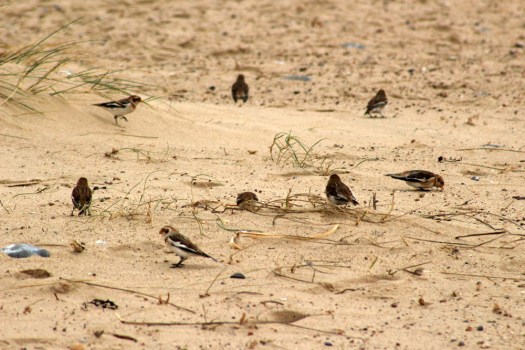
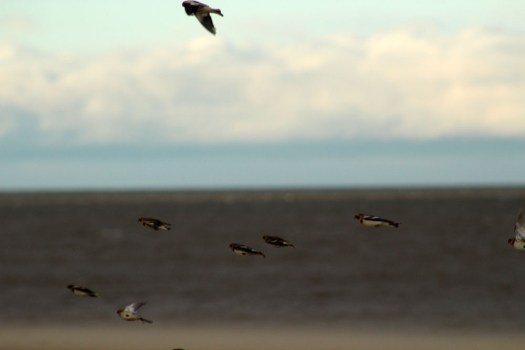
The seals are not the only creatures of interest here today: walking north along the beach, a small flock of snow buntings – perhaps 20 or 30 birds – rise like a flurry of sleet on our approach before setting down again a little further ahead. Winter visitors from much further north in Scandinavia and the Arctic, they resemble frosted sparrows as they peck busily at the seaweed, sticking close together for security.
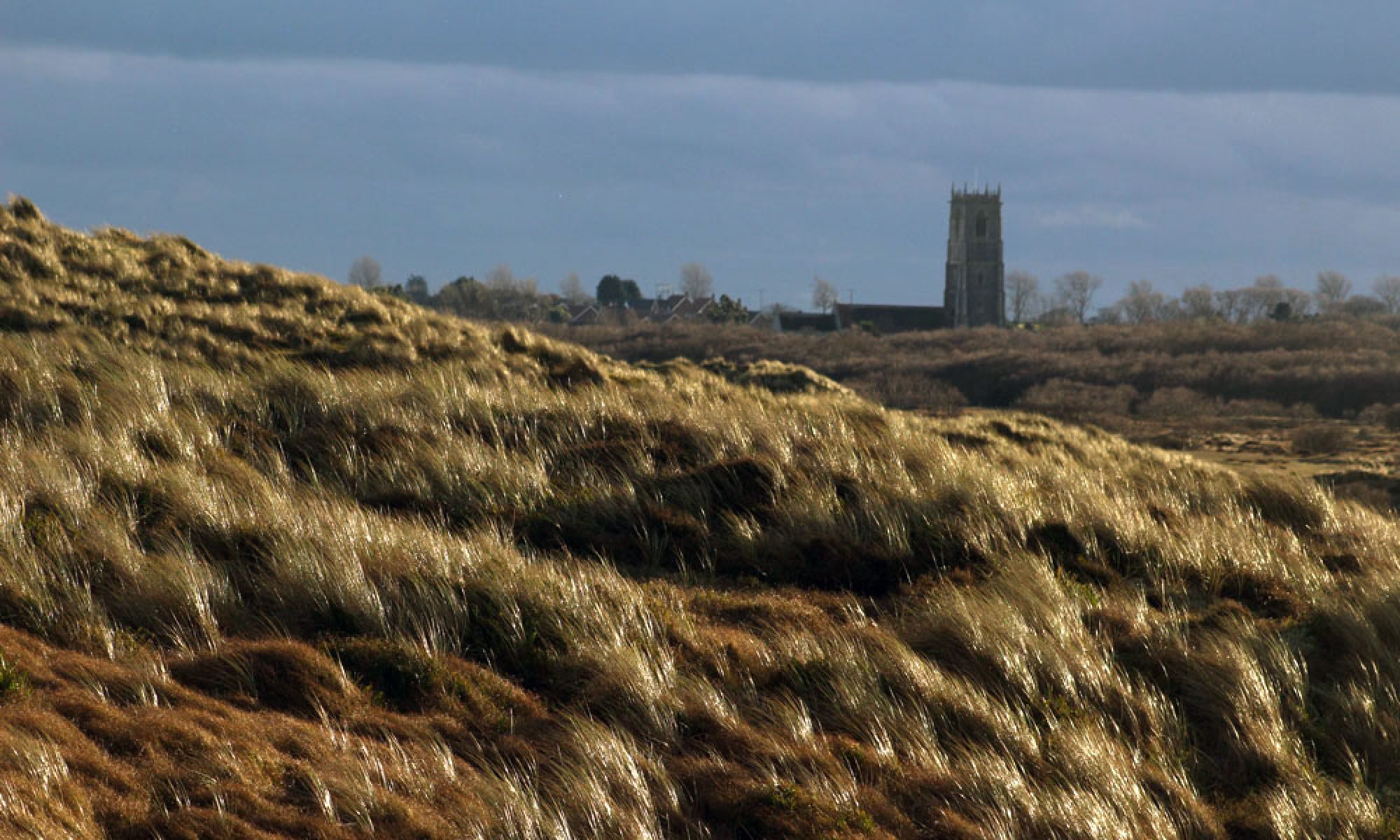
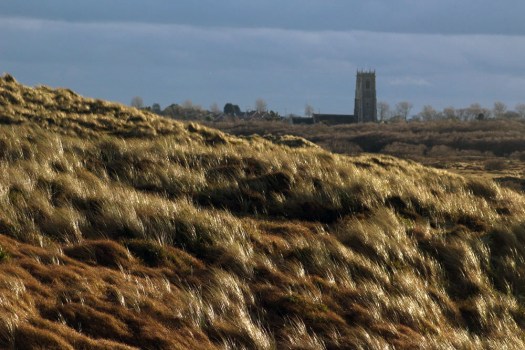
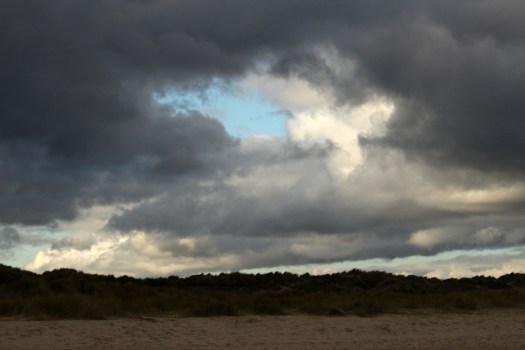
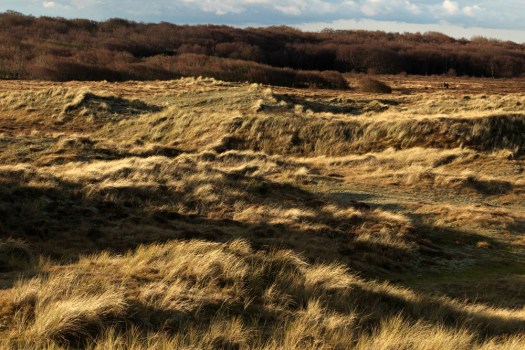
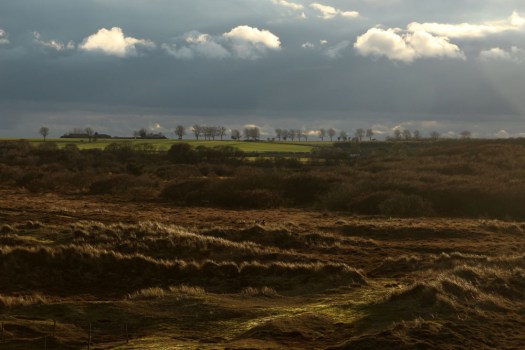
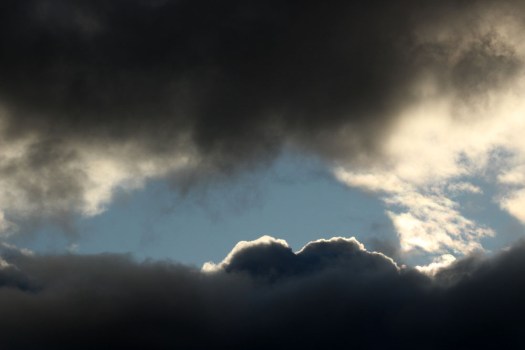
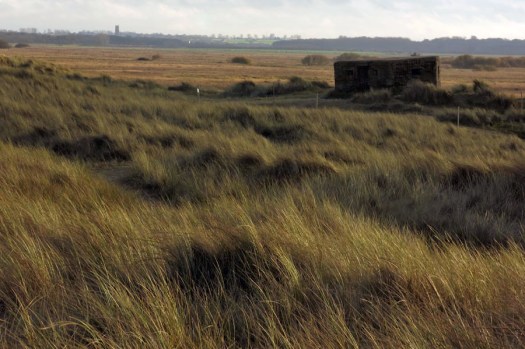
The seals and birds are engaging but the real star this cold January afternoon is the quality of the light, which morphs from gloom to gleaming in the space of half an hour. At first it seems as if the sky is weighed down like stone beneath a dense slate-grey sheet of stratocumulus but cracks soon appear and, like a hagstone held to the eye, an opening forms in the clouds to reveal the blue that lies beyond. As the sun loses height beneath the cloud layer, shafts of pale golden light break through. The play of light on the dunes invokes a ghostly atmosphere. The wind-bent marram grass of the dunes, caught in the glow, seems almost fluid – an impressionist rendering of a wave-tossed ocean. In the distance, beyond the luminous marram, the Perpendicular tower of Winterton’s Holy Trinity and All Saints’ Church rises loftily above the crouched bungalow roofs of the village. This fleeting serendipity of light gives the scene a numinous quality, an eerie supernatural glimmer. It is a scene that might be co-opted for the cover of a book of ghost stories – a lost work by M.R. James perhaps.
 A grey morning, late November; a blanket of thick, high-tog cloud slung over the wet flatlands of northeast Norfolk. The day begins serendipitously when, approaching the car park at Horsey Windpump, two distant grey shapes are spotted in a roadside field – grey forms that have enough about them to demand a second look. Binoculars reveal them to be common cranes, an ironic name even here in one of their few British strongholds.
 We had, in fact, come to Horsey for the seals. But first, a walk through the marshes alongside Horsey Mere, then to follow the channel of Waxham New Cut before crossing the coast road to Horsey Gap to reach the dunes and the beach. Close to Brograve Mill, a solitary marsh harrier was quartering the reed-beds on the opposite bank. The jackdaws that had gathered on the broken remains of its wooden sail flew off as we approached the mill. Long an icon of the Norfolk Broads, this photogenic ruin looked to be reaching critical mass in its ruination; the brickwork of its tower leaning, Pisa-like, in a losing battle with gravity.
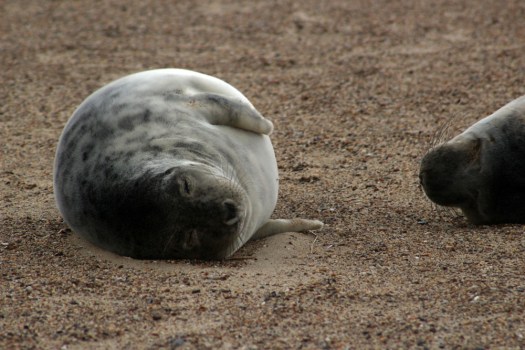
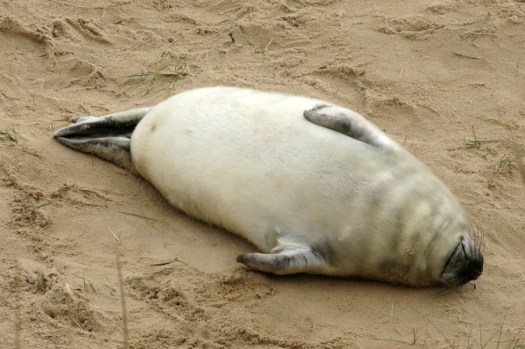 The car park at Horsey Gap had its usual compliment of visitors – most folk do not want to have to walk far to fulfill their annual seal pup quota. Clearly it has been a good year for grey seals, with more than 300 newly born pups along this stretch of coast. Signs and plastic ribbon barriers do their best to encourage the over-inquisitive to keep at bay. Grey seals, despite their bulk, are the epitome of vulnerability. On land anyway – slumped on the beach liked huge slugs with lovable Labrador faces, their awkward obese bodies are an encumbrance out of the water.
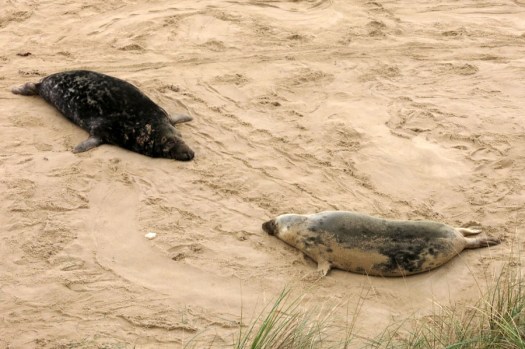 The beach action is minimal: an occasional clumsy rolling over; the odd shuffle forward using flippers for traction; sporadic barking and baring of teeth between rival males. The scene looks like an aftermath of overindulgence, bodies adrift on the beach sleeping off the effects of a heavy night. Perhaps it is all that hyper-rich seal milk that explains this torpor: the effort the pups take to digest the 60%-fat fluid, the energy involved in the cows’ synthesising the milk from a diet of fish? Such extreme inactivity brings to mind an assembly of turkey dinner-replete families on Christmas afternoon, individuals sprawled on sofas somnolently waiting for the Queen’s speech. Maybe this is the subliminal reason that so many people come here to see the seals on Boxing Day and New Year’s Day?
 Heading inland back to the car, the lowering sun finds a gap in the clouds to paint flame red those that lie beneath. We stop for a pint in the pub and, looking out of the window observe a deer, emboldened by the burgeoning dark, casually crossing a field of sugar beet. At the car park, as the last traces of daylight evaporate, three V-shaped formations of geese fly overhead, their high, wild calls preceding the appearance of their silhouettes in the sky.


 East of Elveden