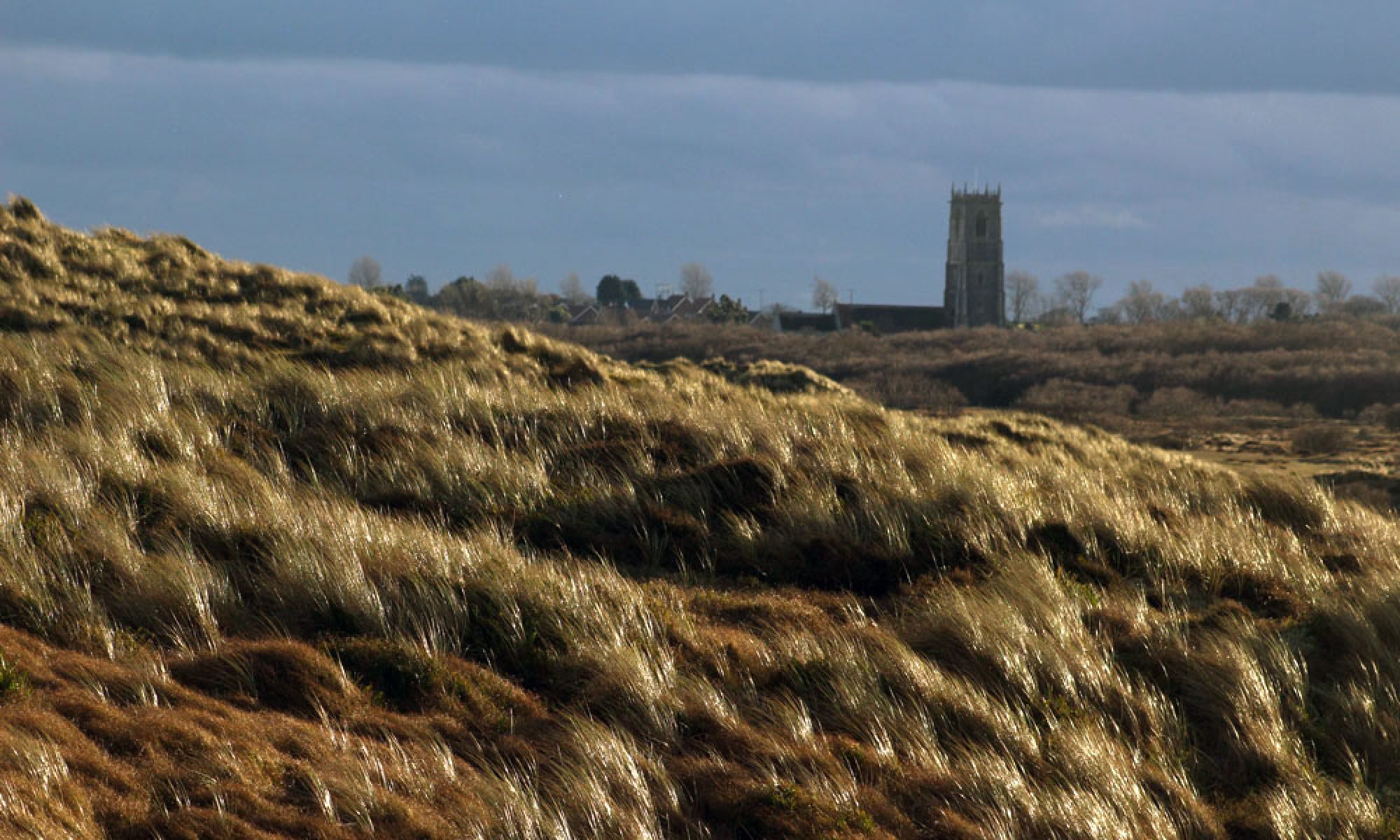
For a number of reasons it had been weeks since I had ventured out of the city for a walk. Cities are fine but brick, concrete and tarmac can get monotonous: too much noise, too much body swerving of fellow humans and traffic. I wanted water and trees, a church or two maybe; breeze and birdsong, a chance to breathe. So I took the train to Brandon in the Brecks.
Leaving the station I walk south along the main road towards the town centre and then, after crossing the Little Ouse River and the county boundary into Suffolk, turn left down a minor road called White Hart Lane. Here, almost immediately, is an edgeland of newly built bungalows on one side of the street and fenced paddocks on the other, although the separation between urban and rural is fluid in places like this.. Beyond the paddocks is a line of trees that hides the river. Brandon lies in the midst of a large forested expanse – the vast conifer plantations of Thetford Forest – and a sort of unthreatening wolf border rings the town. The forest is relatively new, though: just over a hundred years old – considerably less than the life span of many trees. Before the intervention of the Forestry Commission in the 1920s and 30s, this expanse of southwest Norfolk and northwest Suffolk was a relatively infertile, sand-blown region where the main industries were flint mining and raising rabbits for the fur trade. Indeed it was overgrazing by large rabbit warrens that was partly responsible for the poverty of its soil in this dry region known as the Brecks.

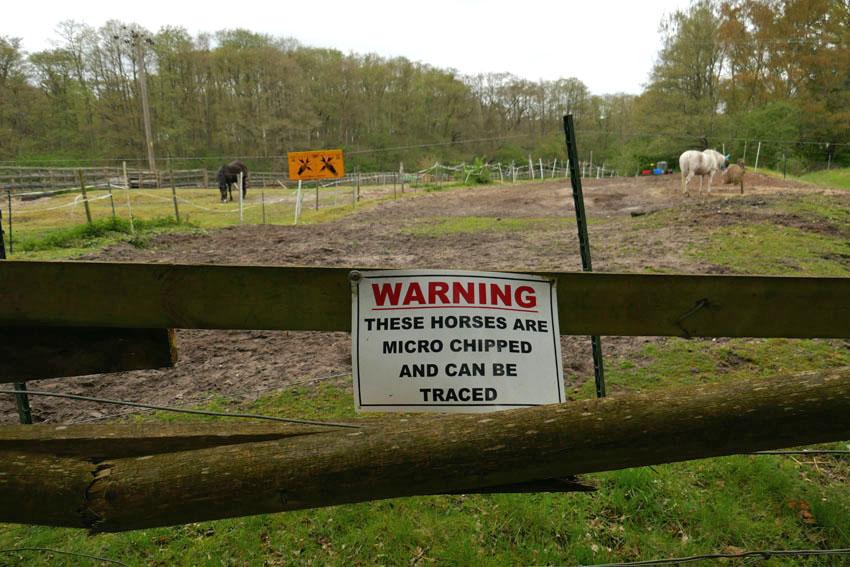
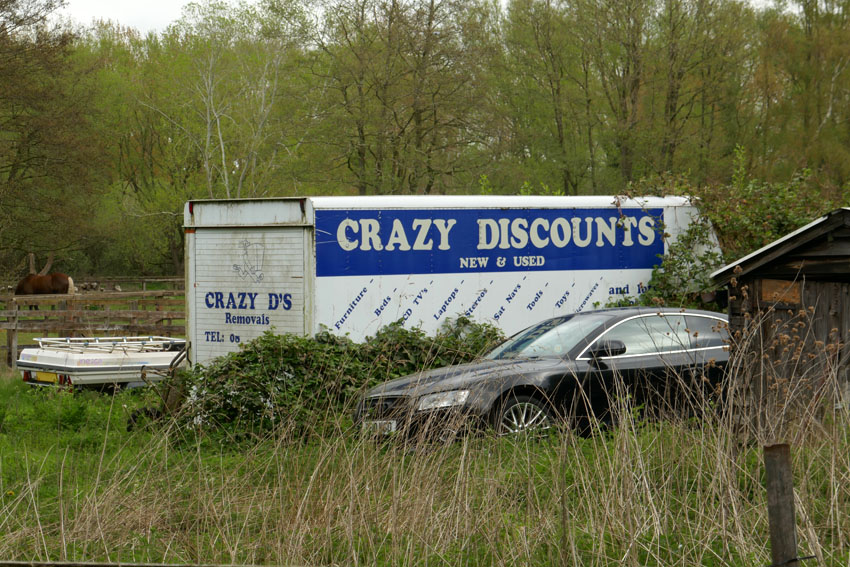
White Hart Lane gives way to Gas House Drove, a narrow lane that traces the back walls of gardens. More paddocks stretch away towards the river to the left; ponies graze unworriedly. There are notices attached to field gates that request visitors not to feed the horses; other signs inform would-be horse thieves that the animals are electronically tagged and fully traceable – the equine equivalent of ‘no cash left in this vehicle overnight’. Further on, beaten up caravans and abandoned rusting cars enhance the edgeland feel – a seldom observed zone where the accepted rules of orderliness do not apply.
The track narrows further as it threads through tall pines. Crossing a wide woodland ride I come across man on a mobility scooter walking his dog. ‘Is it straight on to Santon Downham?’ I ask. ‘It is if you want to take the scenic route,’ comes the cheerful reply. So I take the ‘scenic route’ and soon arrive at a cluster of houses around a large green – the village of Santon Downham – where a telephone box has been repurposed as a booth for a defibrillator. The box also serves as a library. I scan the books, Len Deighton’s mostly, but there is also a DVD of Sexy Beast, a personal favourite that stars Ben Kingsley as a sociopath gangster in a role that is a far cry from the actor’s portrayal of Gandhi earlier in his career.
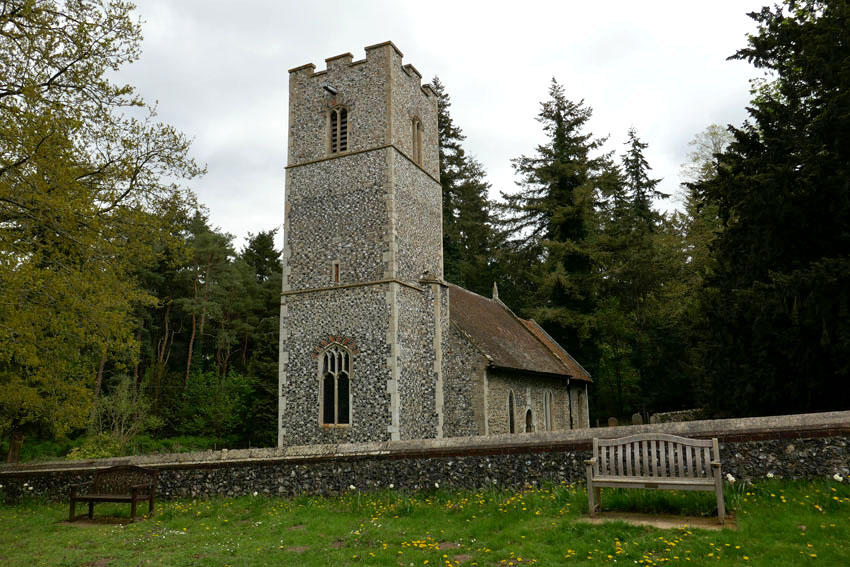
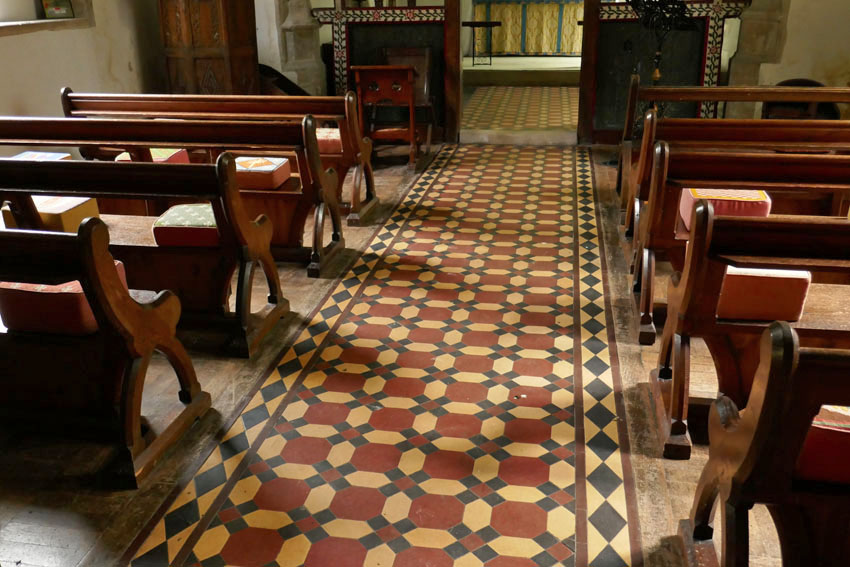
The Church of St Mary’s, the self-titled ‘Church in the Forest’, is on the far side of the green. I venture inside to find the bright unfussy interior illuminated by dappled forest light filtered through stained glass. One window featuring St Francis is particularly charming as it depicts the saint surrounded by the sort of birds that are local to the Brecks – crossbill, golden pheasant, kingfisher, heron and barn owl. While it is endearing, it doesn’t flinch from realism – the owl is shown holding a freshly killed mouse in its beak.

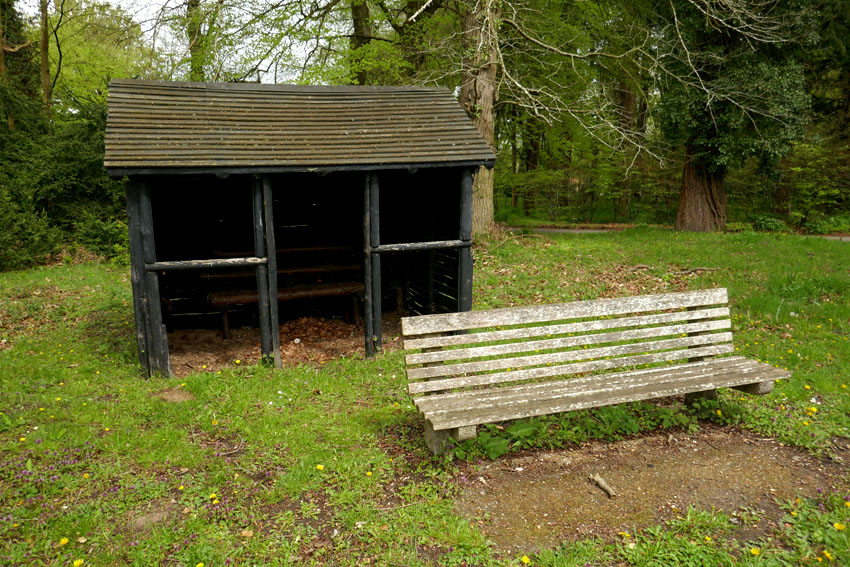
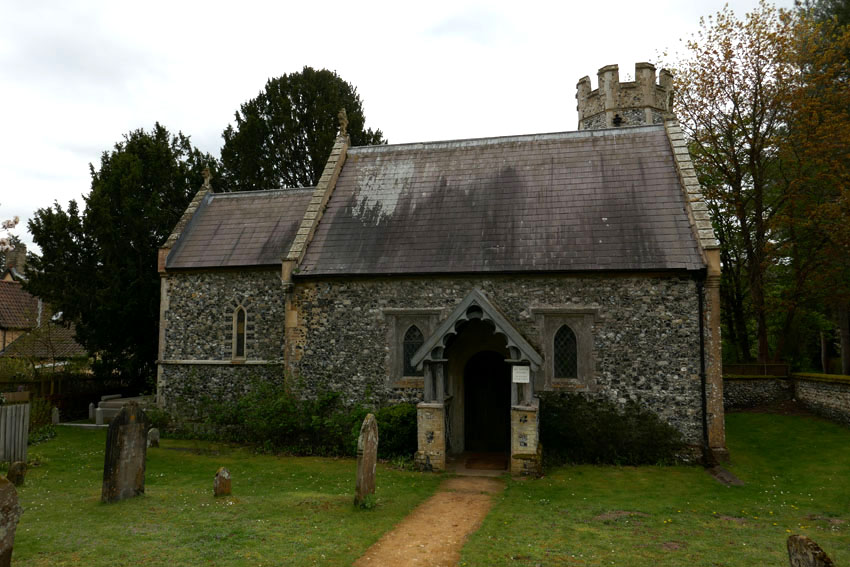
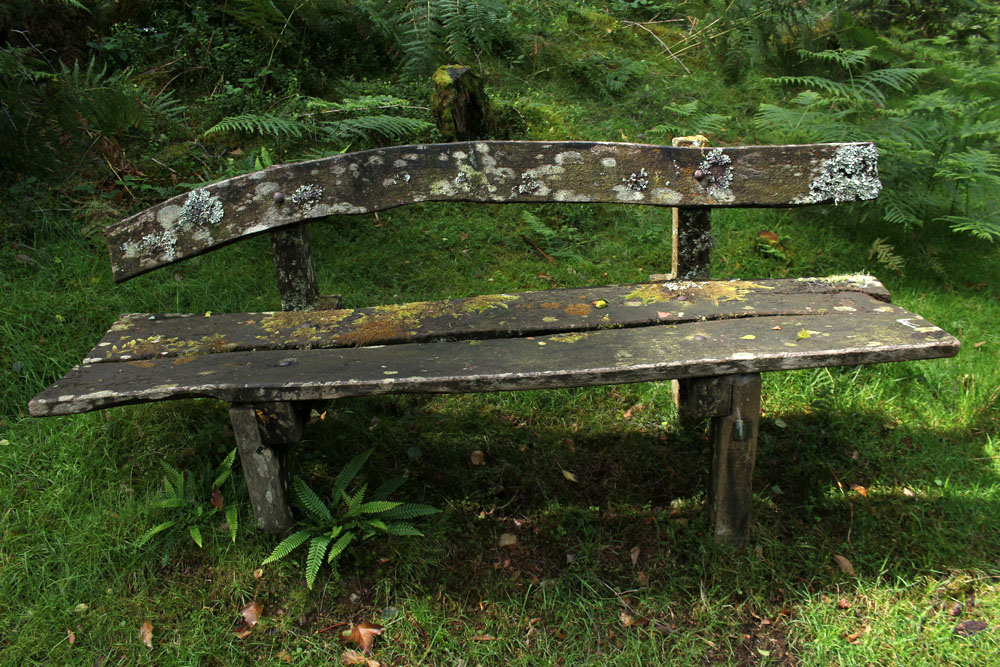
The river is not far away and I end up at the footbridge by the St Helens Picnic Site on the Norfolk bank. A group of youths with rucksacks are lounging by the water and I identity them as Duke of Edinburgh award initiates although I could be wrong. A few minutes later they march off together in an easterly direction, some individuals clearly more enthusiastic than those who straggle at the rear. A little further along the road is Santon House where the tiny Church of All Saints stands complete with tiny turreted tower. I take a quick look inside before sitting on a bench outside to eat the sandwich I had brought with me. A chaffinch sings perched on the very top of a pine tree, cock of the walk, although the jackdaws shuffling proprietorially around the picnic site probably think differently.
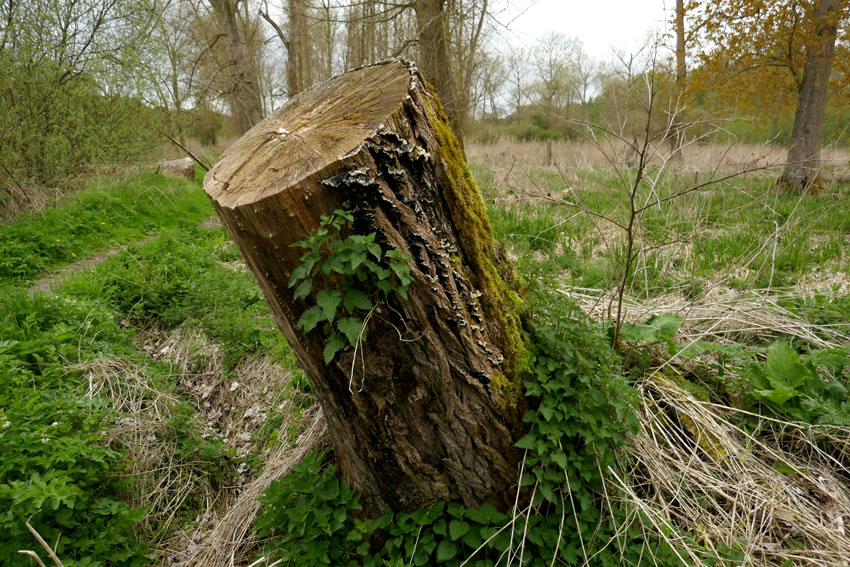
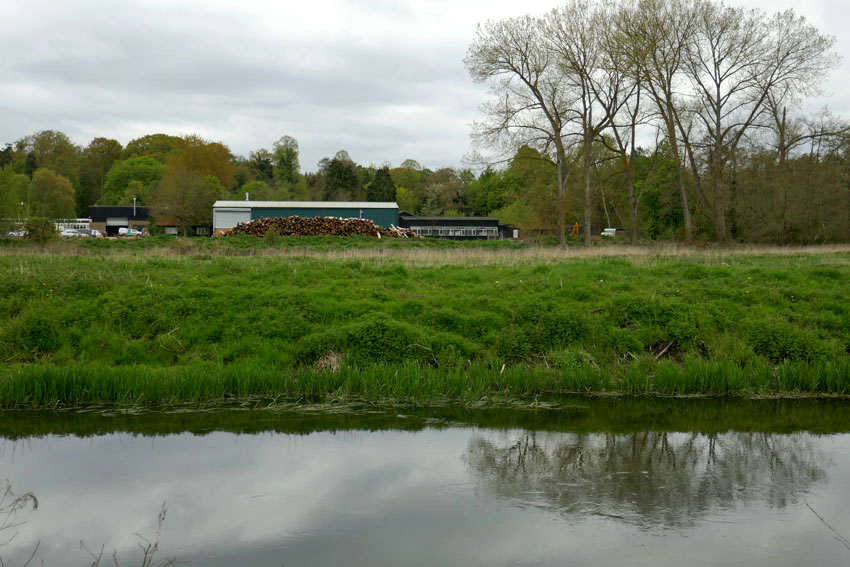
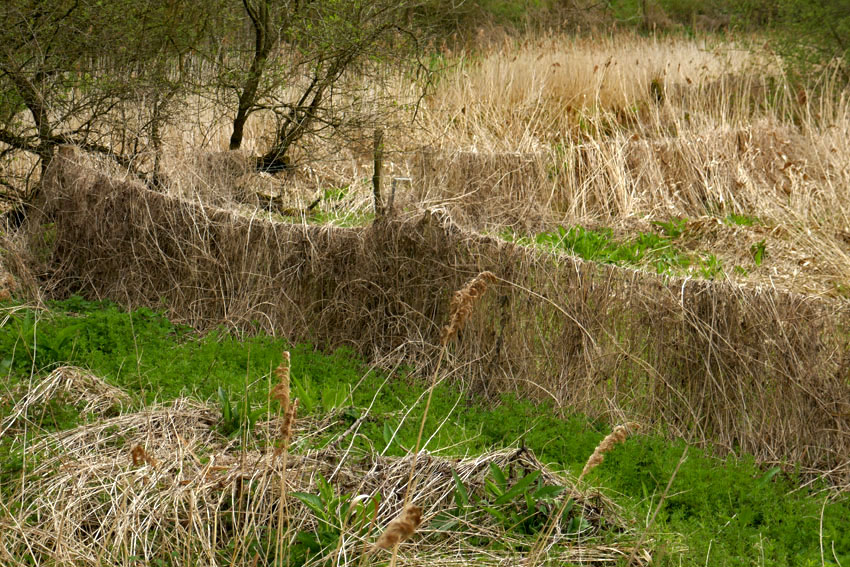
Back at the St Helen’s footbridge, instead of crossing back to the Suffolk side I follow the path that leads west along the river’s north bank. A few hairy Highland cattle are slumped in the long grass of the meadow between the road and river. Mature willows line the riverbank; it looks like perfect otter territory but these are elusive creatures and I see no sign of them. Reaching the bridge at Santon Downham I decide to continue along same river bank all the way back to Brandon. Although the path is well-defined and firm underfoot, the surrounding landscape is pleasingly unkempt, with plenty of rotting timber and tangled dead grass that has weaved itself into a carpet over posts and fences. Nature, I am told, thrives on untidiness such as this.
I meet a group of birders coming the other way: green-clad middle-aged men with sensible outdoor clothing and expensive German optics; one of them carries a heavy tripod with mounted SLR. They tell me they are on the lookout for lesser spotted woodpeckers. This stretch of riverbank woodland is supposedly one of the most likely places to see these elusive birds in East Anglia. They have had no luck as yet but they accept their failure gracefully. We compare notes. I have seen the mandarin duck and grey wagtail they mention, and had heard greater spotted woodpeckers drumming away unseen on my way to Stanton Downham on the Suffolk side, but lesser spotted…no.
Lesser spotted woodpecker: it sounds like a made-up name, the sort of thing a non-birder might come up with to make fun of those with an interest in birds. While to some ears it might sound prissy and pedantic, to the average birder it is merely a precise non-Latin description of appearance and habit.
Thoughts of the bird transport me far away in space and in time. I tell the birders that I have not seen a ‘lesser spot’ for decades but this is not strictly true. A memory comes back of a trip to Japan in 2015 where, walking a trail through cedar forest south of Osaka, a lesser spotted woodpecker flew down to a low branch close to where I had sat down for a rest. It was a fleeting view but an unexpected one in a country where birds, other than ubiquitous large-billed crows, seemed quite elusive. Much of Japan is anything but unkempt and nature is contained and controlled – topiary is unbounded, trees are pruned within an inch of their lives, rivers are canalised. Then I thought back to a time decades earlier in south Norfolk where a lesser spotted woodpecker had nested in a branch above a footpath close to my rented cottage, a place that I called home for three years. A small, undemonstrative black and white bird: like so much else they had become rare and were now one of our fastest declining species. Who would have thought a shy, sparrow-sized bird could evoke such a sense of loss and trigger that sense of emotional distress associated with environmental change known as solastalgia*? At least, here in the untidy, bird-rich woodland that flanks the Little Ouse River, there was still hope. After all, nature thrives on untidiness.
*Solastalgia – a neologism coined by philosopher Glenn Albrecht in 2005, which he describes as ‘the homesickness you have when you are still at home’ and is usually related to environmental change in a home environment.

 The Japanese have an expression – shirin-yoku (‘forest bathing’) — which refers to time spent in a wood or forest for purposes of health and relaxation. Scientific field studies have demonstrated that spending even a short time among trees promotes a lower concentration of cortisones, lower pulse, lower blood pressure, decreased levels of stress and improved concentration. In Japan activities such as shirin-yoku are part of the culture and hold an important place in the national psyche. Modern Japanese culture is still rooted in ancient nature-worshipping Shinto beliefs that are expressed in a variety of ways. Perhaps the most striking of these for westerners is the annual celebration of the
 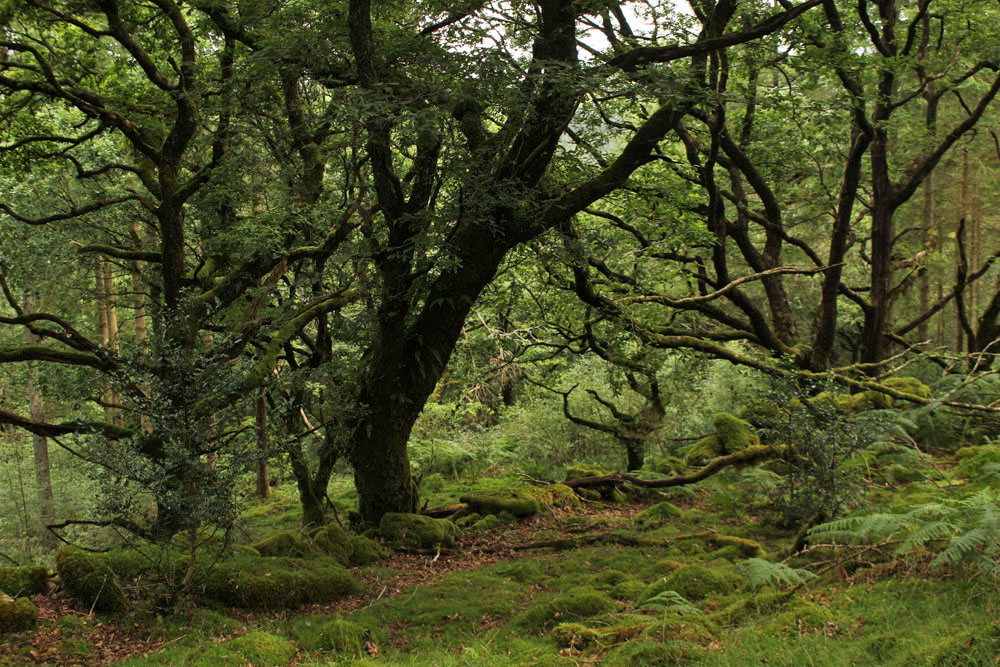 The forest, the greenwood, comes with cultural baggage. It is sensed to be a place of ‘the Other’, a place of wild things, of decay, of hidden danger; of runaway fugitives, mythical outlaws — Robin Hood being prime example — deserted children (Babes in the Wood), ghosts and malevolent spirits. There is no denying that some tracts of woodland are downright spooky, places where dark forces can be felt to be at large. Traditional children’s literature does not help much in mitigating this irrational if primal fear. In fact, it nourishes it — one of the very first books I remember reading as a small child was Winkie Lost in the Deep, Deep Woods, the very title of which suggests some sort of unspoken dark menace. As an archetype, a forest is perceived as an eldritch zone where wicked witches live alone in eerie hovels, where red-cloaked little girls are preyed upon by egregious wolves, and large gatherings of ursine cuddly toys attend sinister secret picnics. Go into the woods (today) and you might well be ‘sure of a big surprise’. In adult life the same fear is perpetuated as a trope of the horror genre — the psychological terror of The Blair Witch Project springs to mind. The forest is a place where bad things happen — a place to bury the bodies. Be afraid. Even Japan with its devotion to sakura and forest bathing traditions has its fair share of indigenous forest demons. The country even has its own haunted forest, Aokigahara, at the foot of Mount Fuji, which has the unenviable reputation of beings the world’s second most popular choice as a place for suicide.
  But let us embrace a positive outlook and view woodland as a place of wonder and nurture rather than fear and loathing, a place to breathe in the beneficial volatile oils emitted by trees and enjoy their beauty. Where better to delve into the greenwood in Britain than a tract of temperate rainforest that has hardly changed since the last glacial period? Coed Felinrhyd in North Wales has stood largely untouched since from this period and, although tracts of this woodland have been partially managed over the centuries, other parts have remained undisturbed for around 10,000 years. Coed Felinrhyd, owned by the Woodland Trust, is just a fraction of the remnant temperate rainforest found in this damp corner of Wales: a 90-hectare tract of woodland on the southern side of the narrow Ceunant Llennyrch gorge through which the mercurial Afon Pryser, a tributary of the Afon Dwyryd, flows. Coed Felinrhyd’s particularities of relief and climate, tucked away in a sheltered, virtually frost-free gorge close to the Welsh coast in a region where it rains on average 200 days a year, ensure that the ecosystem here is in many ways unique. Scarce plants and ferns thrive in the understory, rare lichens and mosses cloak the trees. But this is more than simply remarkable ecosysytem, this is also a place where geography and legend intertwine – the forest receives a mention in the ancient Mabinogion myths written down in the 12th century and is said to be the location where two warriors once fought to the death.
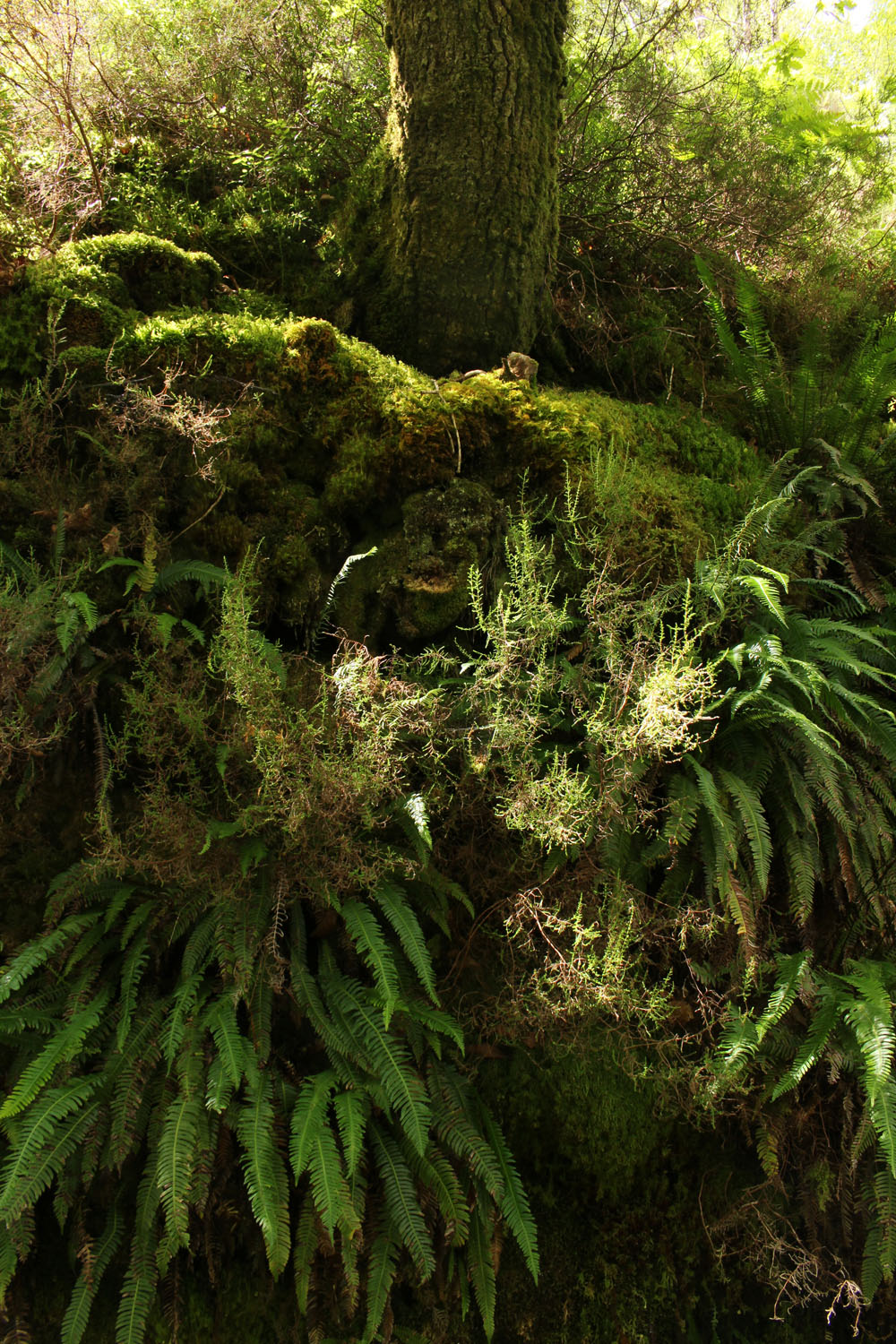
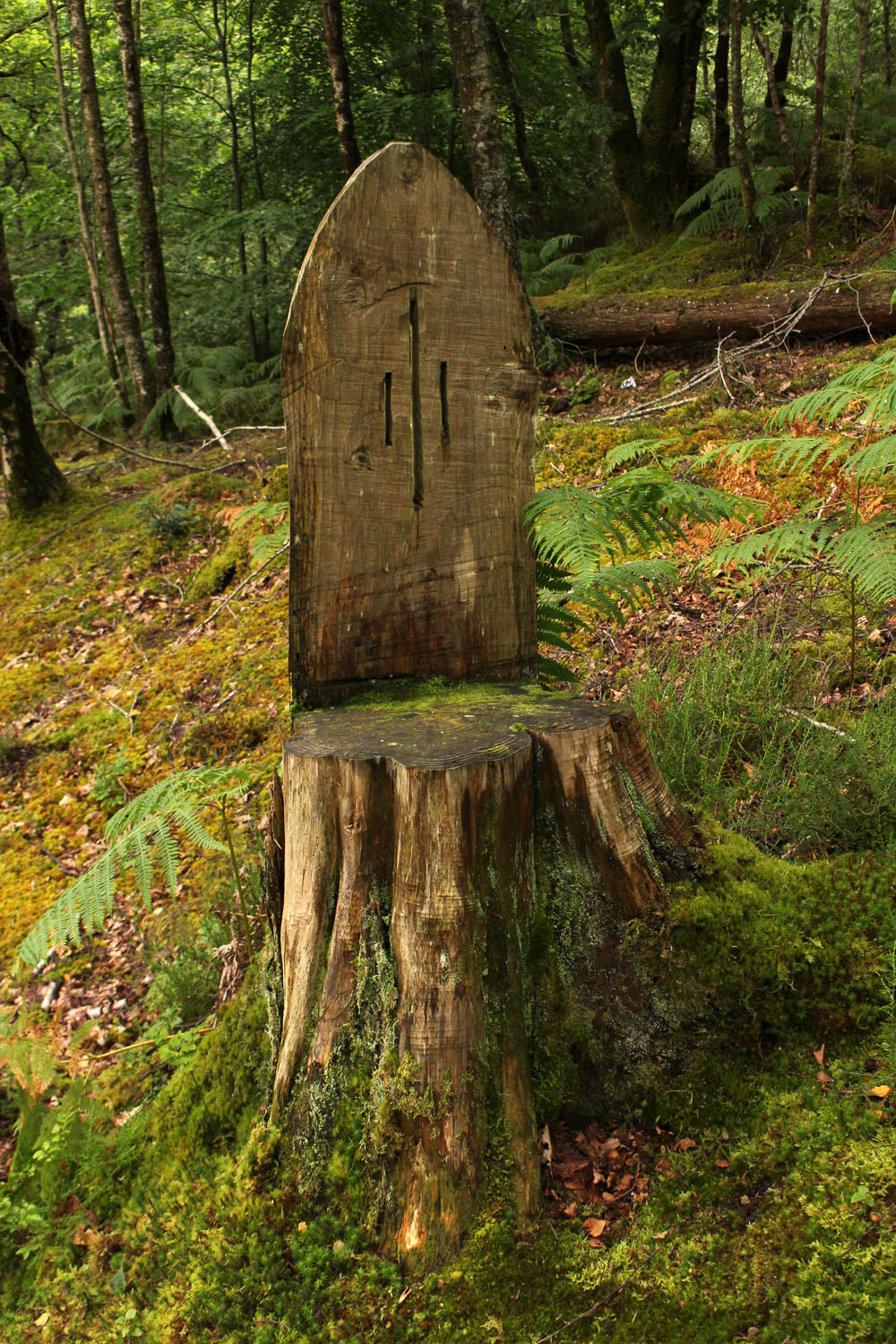
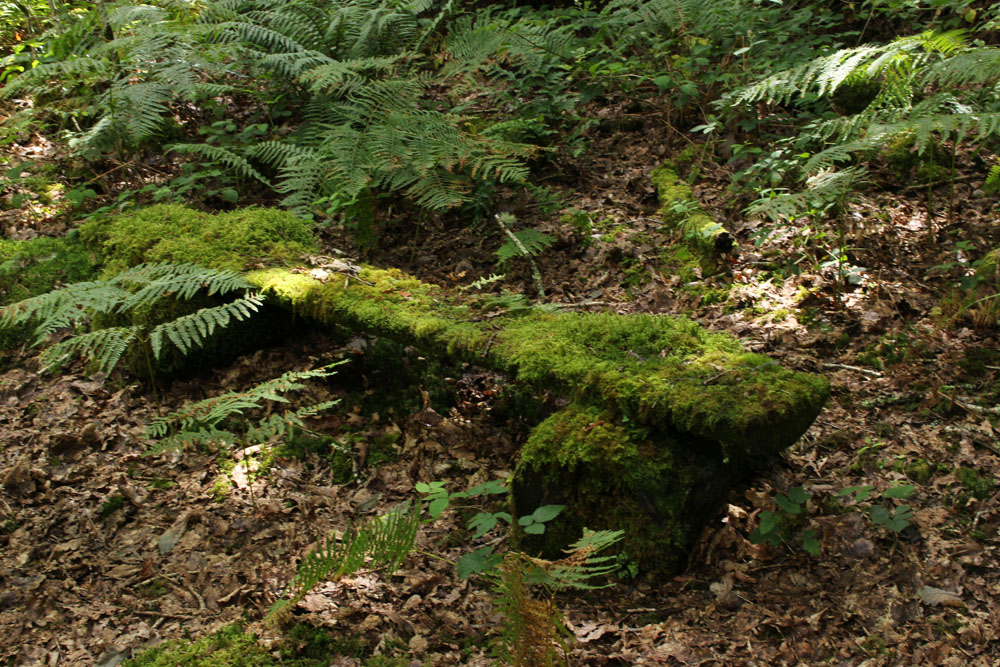
 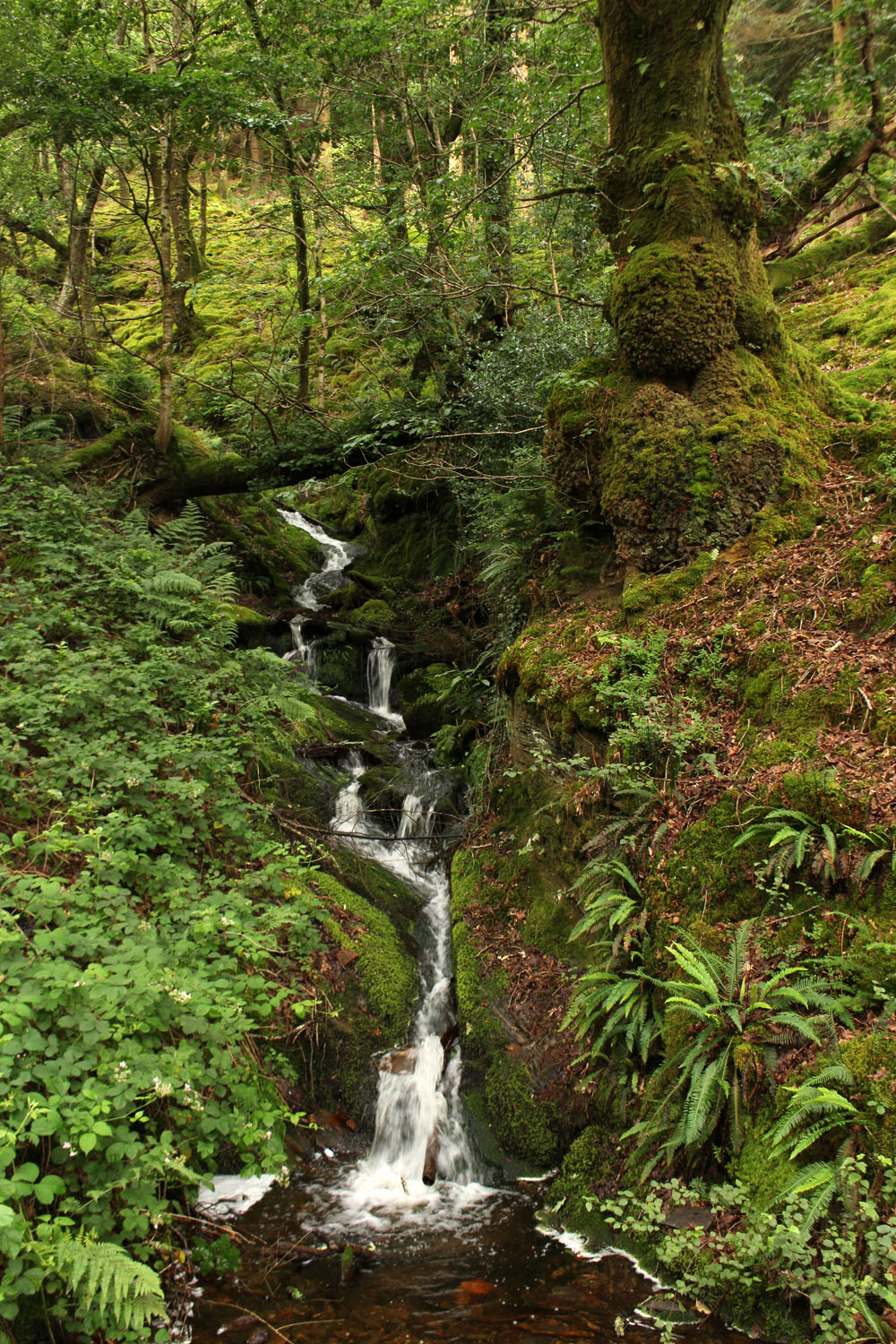 The entrance is a little hard to find, hidden away just beyond the entrance to the Maentwrog power station on the Blenau Ffestiniog to Harlech road. A Woodland Trust notice board by the gate gives background information on Coed Felinrhyd and a signpost points out the direction of a well-defined trail that circuits the forest. The trail climbs steeply at first, then more gently before levelling off. The first thing to be noticed, other than the towering oaks that stretch in every direction, is moss. Although ferns are almost as prolific, sprouting like green shuttlecocks wherever they can secure a foothold, it is moss that is everywhere cloaking every surface — on the bark of trees, on the rocks that line the pathway, on the dry stone walls that partition the woodland; on any surface where moisture can collect. Even most of the tree stumps are upholstered with velvety jade cushions of moss, their cut surface having been rapidly colonised by the feathery fronds of bryophytes. Each of these is a pedestal-raised forest in miniature, a Lilliputian lost world — this small tract of woodland contains a million tiny moss forests within it. Some of the tree stumps have been cut mischievously into the shape of a chair or a four-legged stool, the work of a rogue woodsman with a sense of humour and an artistic streak. A few of are fresh enough to not yet sport the forest’s inevitable green uniform, although no doubt soon they will.
  Having reached a plateau in the woods we come across a ruined slate barn beside the trail, its roof long gone and ferns sprouting like bunting on top of the walls where the eaves should be. Long abandoned, the building is probably at least two hundred years old and a remnant of the old farming practice of ‘hafod a hendre’ in which shepherds would remain on higher pasture with their flocks during summer. The track continues past clumps of trees that seem to emerge directly from the moss-carpeted boulders at their base. The blanket of moss and lichens that covers both gives the impression that both tree and rock are born of the same material, something primal and green that is neither strictly vegetable or mineral but something in between.
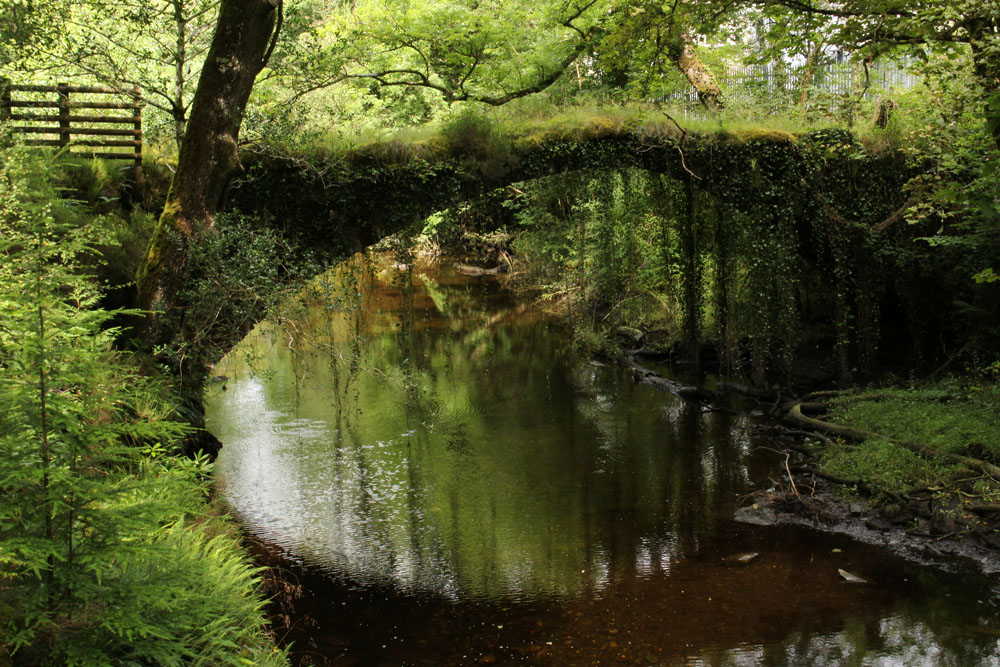
 Descending back down into the valley we arrive at a dry stone wall that has a gate which leads into Llennyrch, a neighbouring tract of forest of similar pedigree to Coed Felinrhyd. We follow the wall to the left and the sound of rushing water becomes gradually louder as the gorge reveals itself. A small viewing platform gives a glimpse of the waterfall of Rhaeadr Ddu that plummets down onto the rocks below although the view is partly obscured by the dense foliage. The river is still some way beneath us but we draw closer to it as the path gradually descends. Finally we come to Ivy Bridge, which, true to name, is enveloped by long trails of ivy that hang over the edge almost touching the water and rocks beneath. Beyond the bridge, on the other side of the river, the unsightly machinery of an electricity substation can be discerned beyond a fence; beyond this, unseen from this position, lies the Maentwrog power station.
 After two hours of slow walking, looking, taking photographs and what can only be described as mobile ‘forest bathing’ we are back where we started. It suddenly occurs that we have met absolutely no one on our walk even though it is a relatively bright day with little threat of rain. No hikers or dog walkers, no botanists or tree-huggers, no Celtic warrior ghosts. And, to the best of our knowledge, no malevolent woodland sprites either.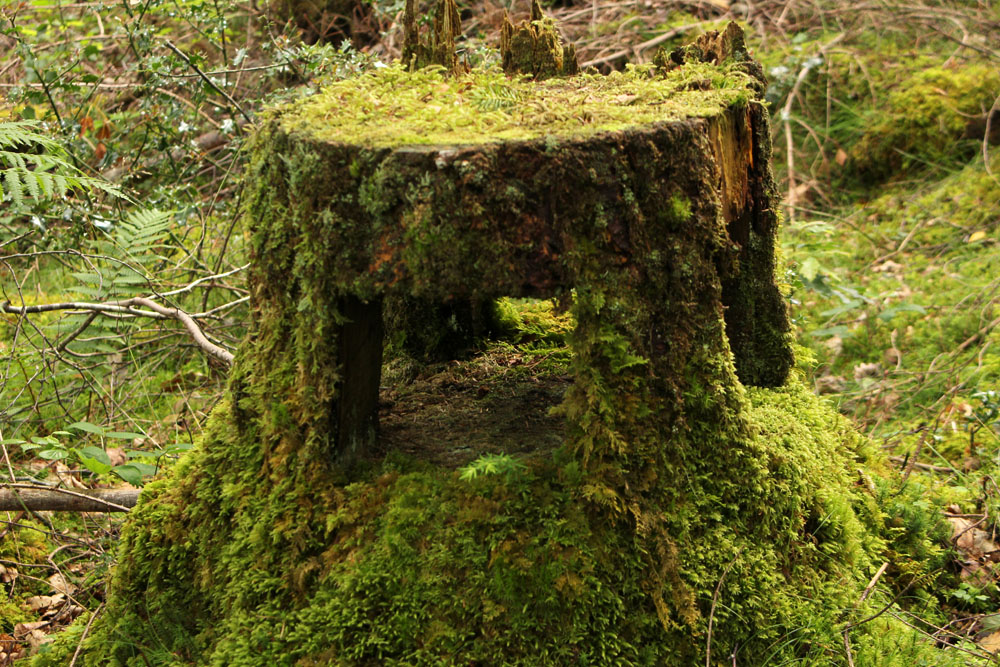
 East of Elveden