Trinity Buoy Wharf, down by the River Thames on the Leamouth peninsula in Poplar, is a place where the past is deeply layered. It is also somewhere that seems to beckon an uncertain future. Even to reach it is to cross some sort of temporal boundary, from humdrum modern metropolis to another London where the past and future converge. Waters come together here too: Trinity Buoy Wharf lies at the end of Bow Creek, the meandering estuarine section of the River Lea, the city’s largest tributary. Here, at London’s eastern edge, is its confluence with the Thames. To reach the wharf on foot from East India, the closest DLR station, you are obliged to trace a dual carriageway through an anonymous, rather faceless part of the city. The only thing that holds any sort of familiarity is the logo of a Travelodge glimpsed in the distance across the busy highway.
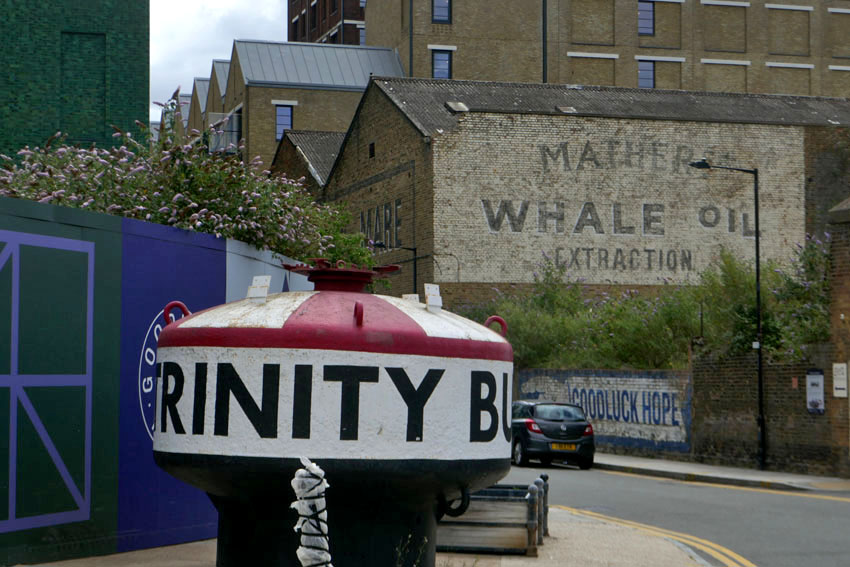
The entrance to the wharf announces itself with a large red-painted buoy. It is an apt introduction, as, in a previous life, this was a place centred upon the manufacture and repair of buoys. Further along Orchard Place, the almost traffic-free main thoroughfare, are the high brick walls of old warehouses and industrial buildings. One bears the ghost lettering: Mathers Whale Oil Extraction. It feels almost a little too self-aware, as if history has been carefully curated to engender a tangible sense of place in this heavily revamped zone of erstwhile maritime London. A couple of information boards do much the same thing, expanding on the theme of whale oil production that dominated this neighbourhood in the late 18th century. But such industry is now a thing of the past and the new focus is on comfortable living in a post-industrial setting.
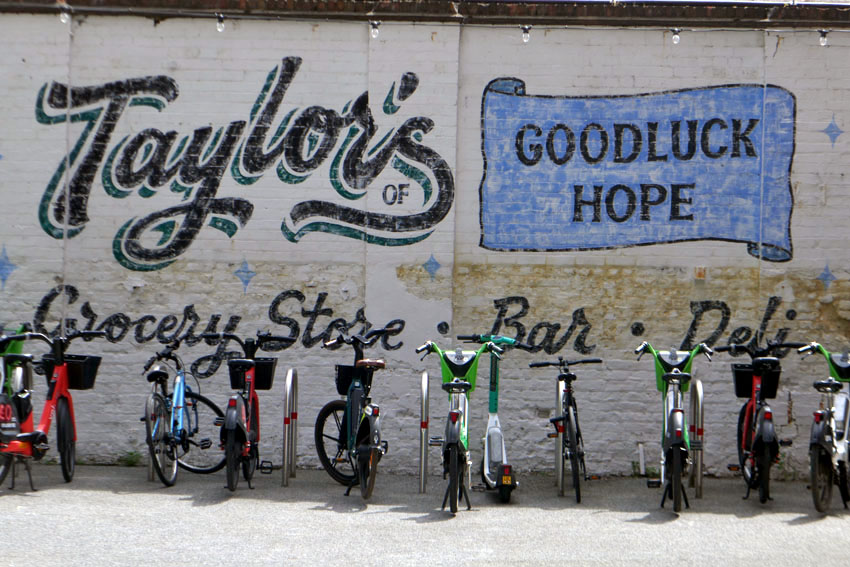
You can tell that estate agents and developers have already been busy here, doing their utmost to create a desirable brand that combines housing, place and historical context. The bakers and baristas have already moved in, and so we spend a pleasant half-hour sipping cappuccinos at a newly opened artisan bakery. Sitting outside, shaded by geometrically spaced trees and new-build apartments with balconies, I wonder who actually lives here; or, more to the point, who is meant to live here. I suspect that many of the properties have already been snapped up by members of the owner-occupier niche that estate agents term ‘young professionals’.
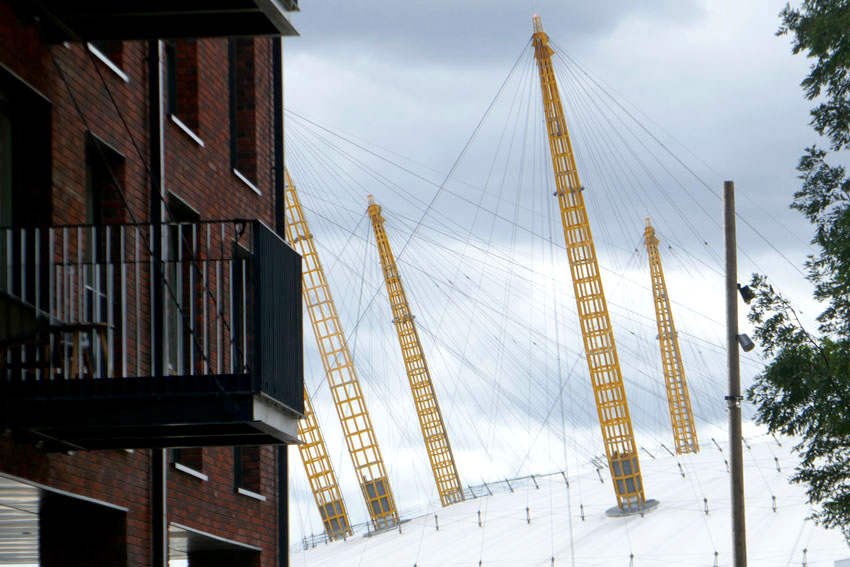
In plain sight, immediately across the Thames, is the O2 arena on the Greenwich Peninsula. The view is telescopic; the O2, née Millennium Dome, a semi-collapsed Bedouin tent (or ‘sorry meniscus’ as Iain Sinclair has more scathingly described it) seems almost close enough to touch. At the next table a young couple in wedding outfits greet a photographer before they leave together to find a suitable backdrop for shots for their nuptial photo album. The O2 is clearly a romantic location as well as a capacious centre of entertainment, which brings to mind couples in Eastern Europe doing much the same with historic churches, castles and mosques in their country: the notion of iconic viewpoint as wedding photo setting.
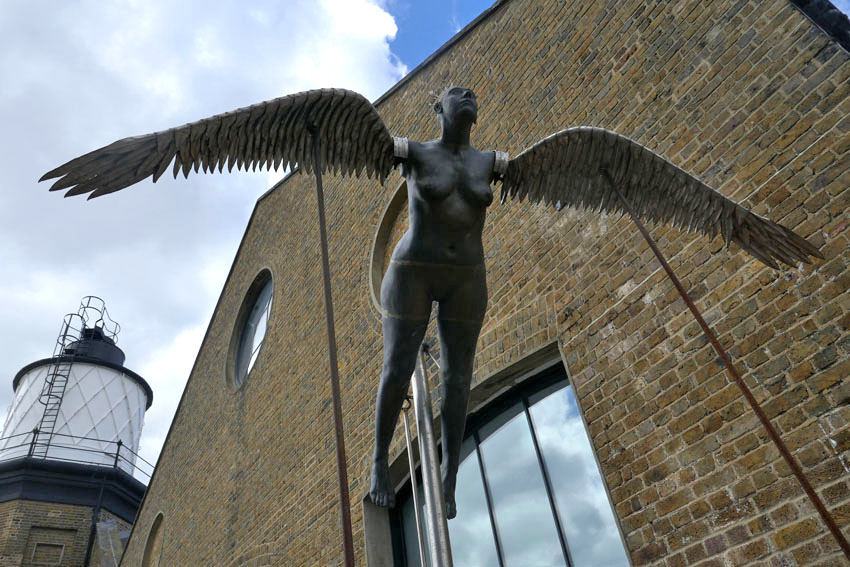
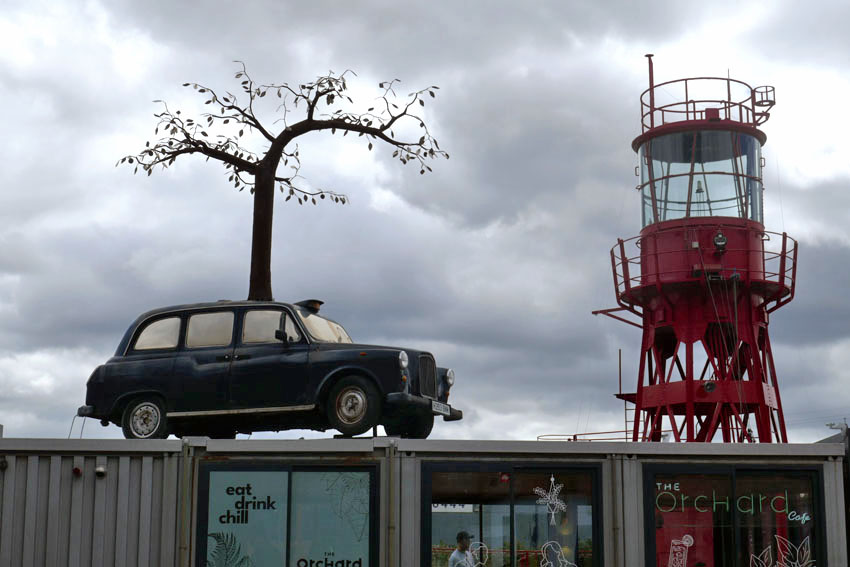
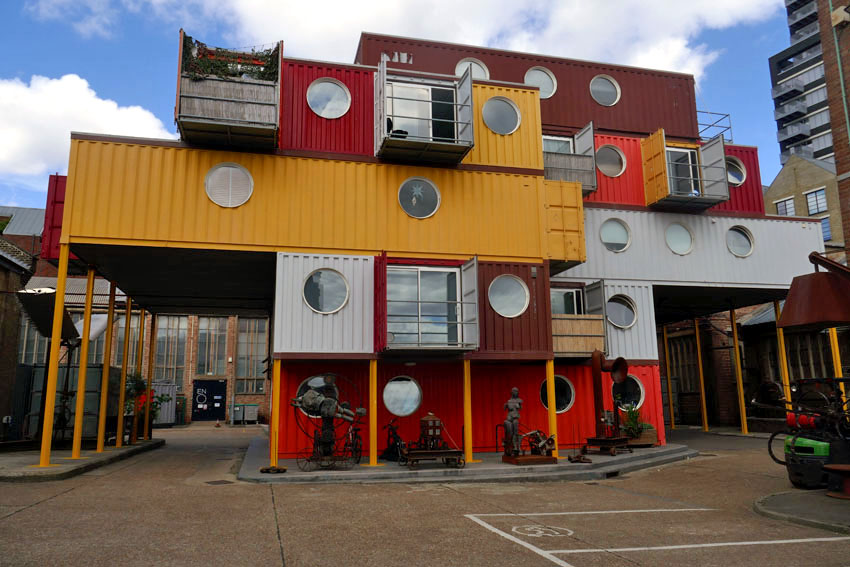
Trinity Buoy Wharf is more than simply a photogenic backdrop and fresh location for city living, it is also an artistic hub, something apparent in the quirky statuary and murals that abound here. A little further on along Orchard Place is a café housed in a shipping container that has a black cab taxi with a tree sculpture growing out of it on its roof. What does it signify: green roots taking hold of familiar London emblems, or a post-apocalyptic vision of an abandoned city of the future? The same artist, Andrew Baldwin, has several more works around the wharf, and art is clearly encouraged here, with a choice of galleries and workshops available for hire. Most eye-catching is a colourful ziggurat of repurposed shipping containers that serve as offices and arts studios.
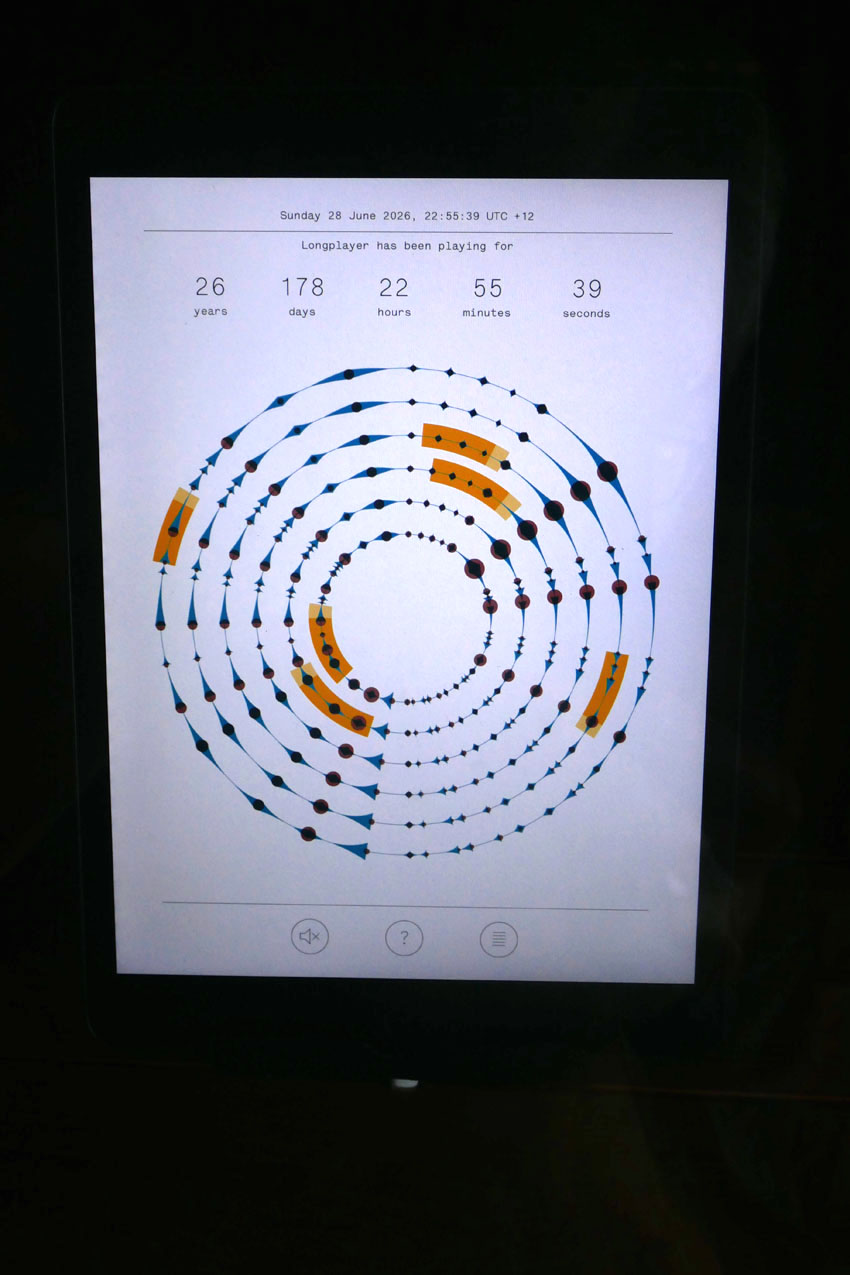
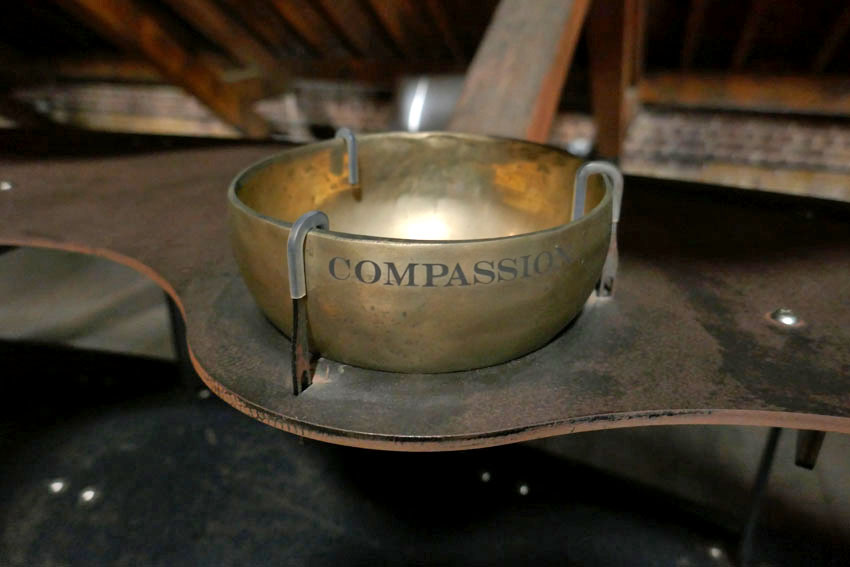
But we are here for something else; something that will outlive all of this worthy but ephemeral creativity. If the past has been remodelled to provide a new vision of the present, then what of the future? At the end of the wharf, occupying the upstairs space of the Bow Creek Lighthouse, is Longplayer. Longplayer utilises an instillation conceived and designed by former Pogues banjoist, Jem Finer. Materially, it consists of 234 brass ‘singing’ bowls and gongs of various size and pitch, although Longplayer in essence is actually a musical composition designed to last for a thousand years. Based on an original piece of music recorded in December 1999, just twenty minutes long, the composition is processed by an algorithm to self-generate a piece that will continue until midnight December 31, 2999 CE. A glacially slow build of subtle musical variation, Longplayer will never repeat itself. Naturally enough, given its planned longevity, the piece is aimed at reflecting the concepts of time and impermanence from a cosmological and philosophical perspective. To house such a conceptual work of art in a redundant lighthouse seems somehow wholly appropriate.
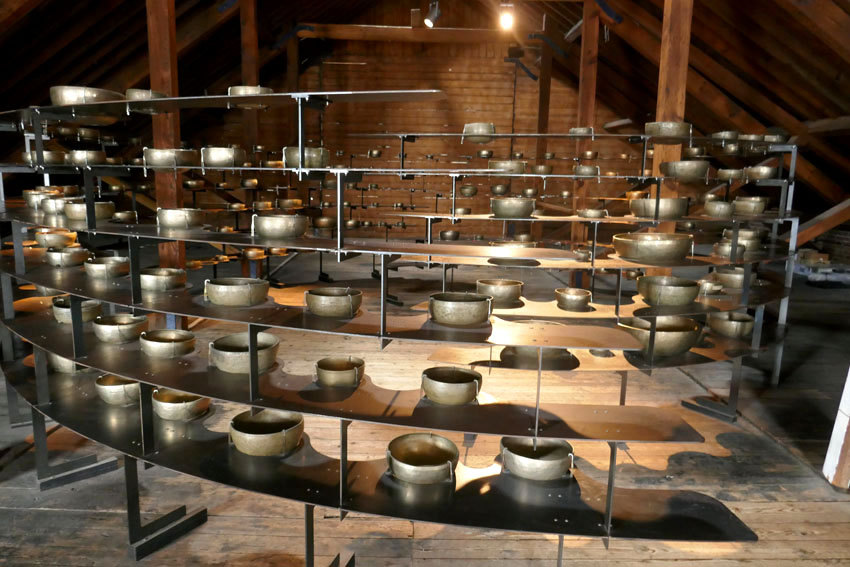
The brass bowls, arranged in a swirling, concentric pattern are beautiful in their own right. Many are adorned with discrete messages or the names of sponsors. Longplayer can be heard best upstairs, where the latticed lantern glass looks out across the river to the high-rises of the Greenwich peninsula. As we view and listen, the ethereal ambient ring of metal is embellished percussively by workers banging on wooden beams elsewhere in the building. The uninvited drummers will soon stop, of course, but the composition will go on, inexorably, chiming with the ever-changing tide lapping the foreshore. A question lingers: where will the river be when the composition finally draws to its millennial conclusion? Will the lighthouse itself be high and dry above the water, or drowned in the Thames? And who will be here to listen?