Ho, Ho, Ho Chi Minh!

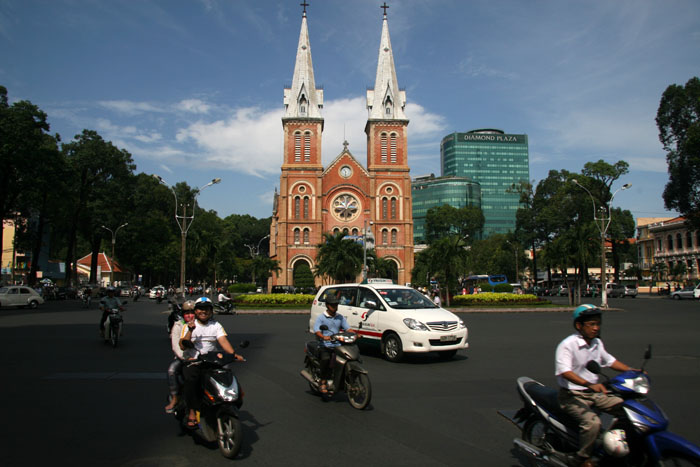
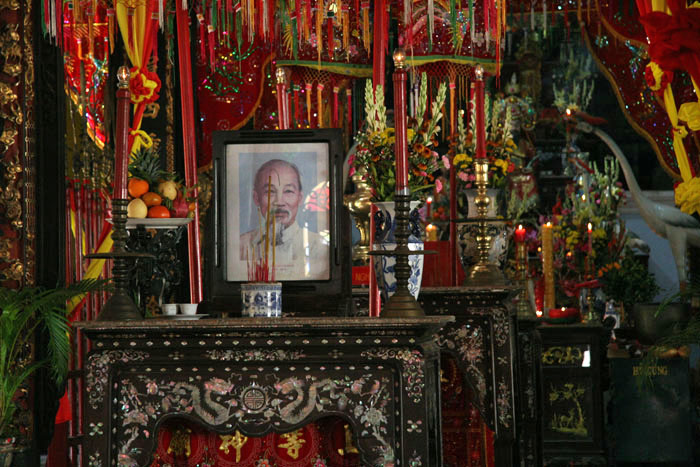
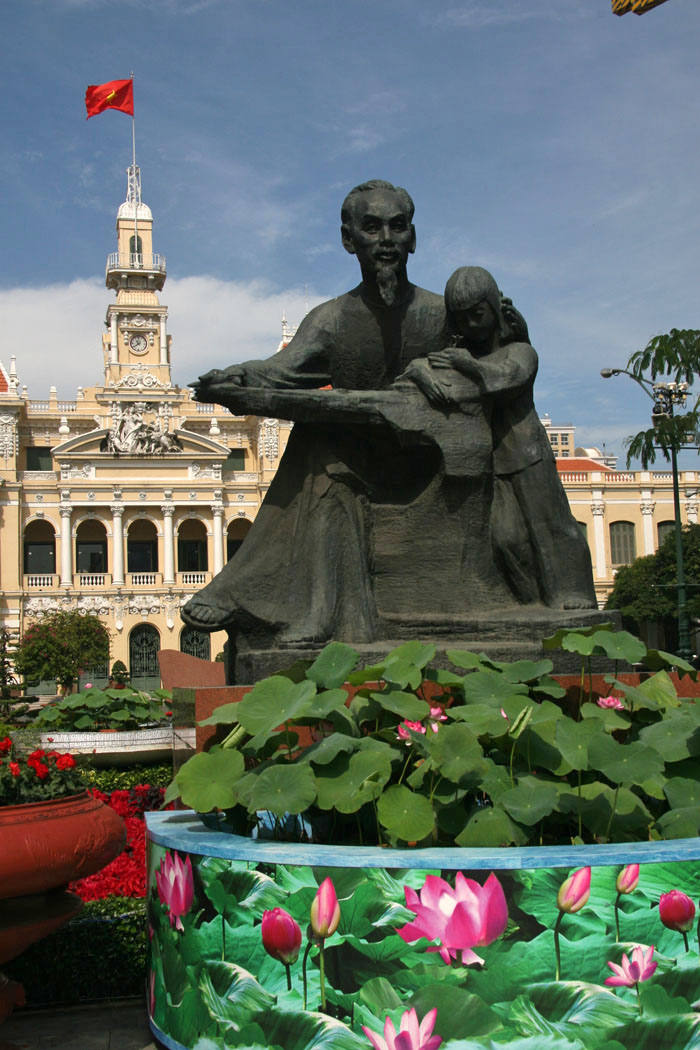
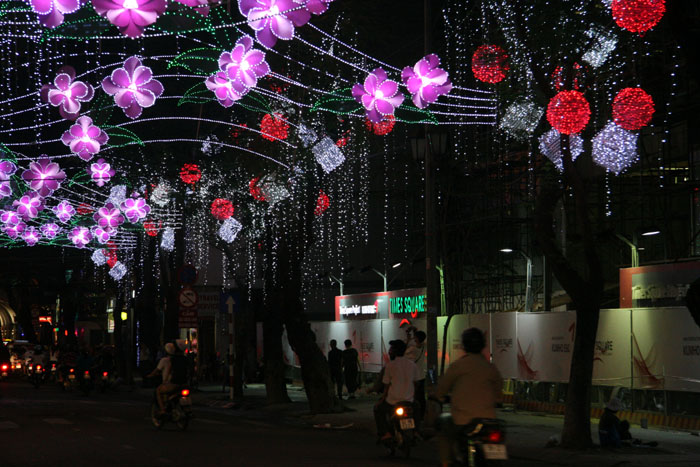
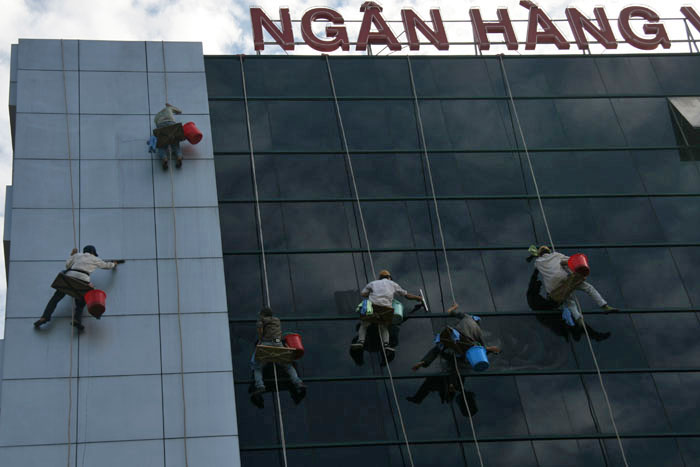
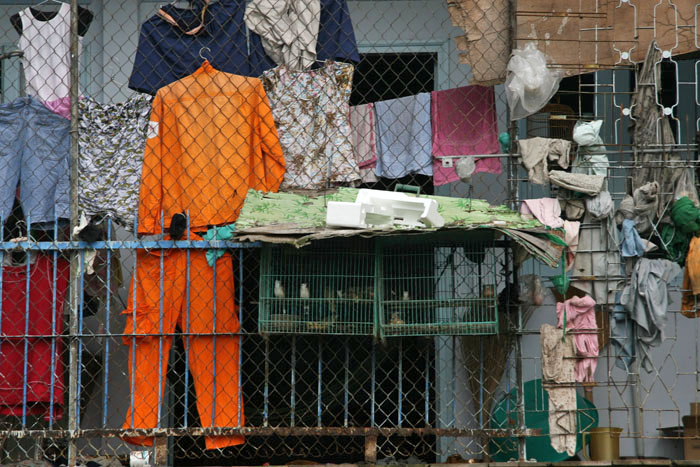
IMG_6854I don’t quite know what it is that has made me think of Vietnam recently. Maybe it was a casual mention in a conversation that made me realise that I don’t have a very vivid memory of the short time I spent in that country a couple of years ago. It was, after all, just a fleeting glimpse of the fat bottom end of a long thin country – a day in Ho Chi Minh City (Saigon) and a few days up the Mekong River.IMG_6933I wandered Ho Chi Minh City in a jet-lagged daze, stupefied by a body clock that badly needed winding and oppressive tropical heat that clung like a blanket. What did I do? I gaped at a few of the tourist sites I was told to look at. I dodged road-wide flanks of manic motorbikes (just wait until they get cars!), ate fishy, chilli-spiked noodles and bought, of all things, a copy of David Copperfield in a savagely air-conned bookshop (an unconscious hankering for the fictionalised Yarmouth coast perhaps?). The rest is a sleep-deprived blur, although I do remember Christmas lights – it was early January – incongruous as a Santa suit in steamy Indochina. The city, as I remember it, seemed an awful long way from the imagined sinful metropolis of Apocalypse Now and The Deer Hunter.IMG_6811I am also struck by the visa in my passport that reads: Socialist Republic of Vietnam. Ho Chi Minh City/Saigon – despite the reinvented name and the occasional remnant image of a wispy-bearded Uncle Ho, it was hard to imagine anywhere more unashamedly capitalist. The new moniker foisted on the city in 1976 seemed an ironic rebranding for a city that was firmly in the US camp throughout the war (The American War, the Vietnamese call it). One can only imagine the victors’ delight in defiantly renaming this southern capitalist city after their erstwhile northern communist leader. But a name is just a name – the USA may have lost the war but it was the West that inevitably won in the end. IMG_6844
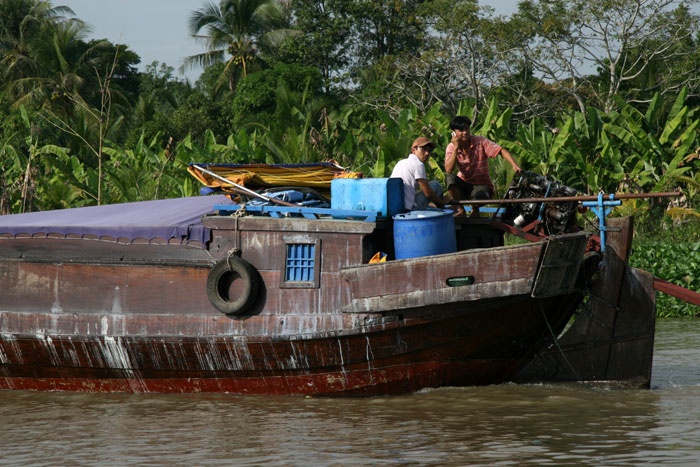
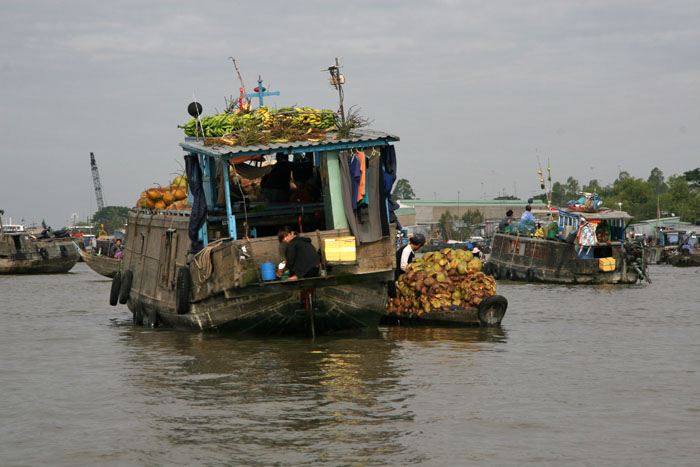
IMG_6919As for the Mekong, what stays with me most is its murkyy lifelessness. It took a day or two along the river before it dawned on me: despite fisherman eking a living from the river’s grey waters and insects aplenty, I slowly realised that there were almost no birds to be seen. No dipping kingfishers, no fish-spearing herons, no skeins of geese overhead; just an occasional swallow flitting nervously above the water. The first egrets I saw were dead: a sorry pair on display in a food market, a meagre meal for a poor family. Uncontrolled hunting and trapping, along with severe habitat depletion, appear to be the main reasons for this sad depletion of what, in a previous life, would have surely been a tropical paradise. IMG_7043A river without birds is a like a song without a melody. Things improved slightly as we approached the Cambodian border but really not that much – for the most part, the river remained the ideal film setting for a tropical version of Rachel Carson’s Silent Spring.IMG_7187IMG_7149IMG_7255
The Turning of the Year

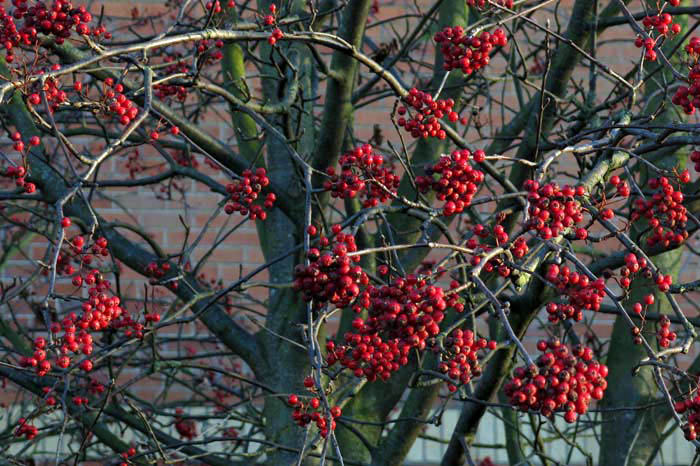
IMG_4891(This winter’s berries)

The turning of the year. These past few days mark the interregnum that sits uncomfortably between Christmas and New Year – a week of virtual Sundays and a period when some of us – those who are self-employed at least – do not know whether they should be at work or not, whether they should carry on regardless or surrender to the seasonal zeitgeist of calorific leftovers, television repeats and relentless retail opportunity. This is a living limbo marked by the dull ache of too much alcohol and rich food, and too little sunlight: rural Scandinavia in a parallel universe on a bad day, where Disneyesque fibre-optic conifers and tattered tinsel replaces the glittering white rime of pines, chain store neon glare subs for the aurora borealis and the petrochemical chug of cars queuing for city centre parking space drowns the imagined crooning of fur-clad carollers, the glassy tinkle of falling icicles and the satisfying crunch of snow beneath sensible Nordic footwear. We are now so far removed from the traditional Christmas tropes that any sense of irony has long been lost, and the multiple identities – spiritual and otherwise – of the winter soltice are now commonly, if erroneously, perceived as having been replaced by Winterval, a quasi-mythical simulacrum close to the hearts of apoplectic ‘PC-gone-mad’ bashers.

IMG_4958 (2)

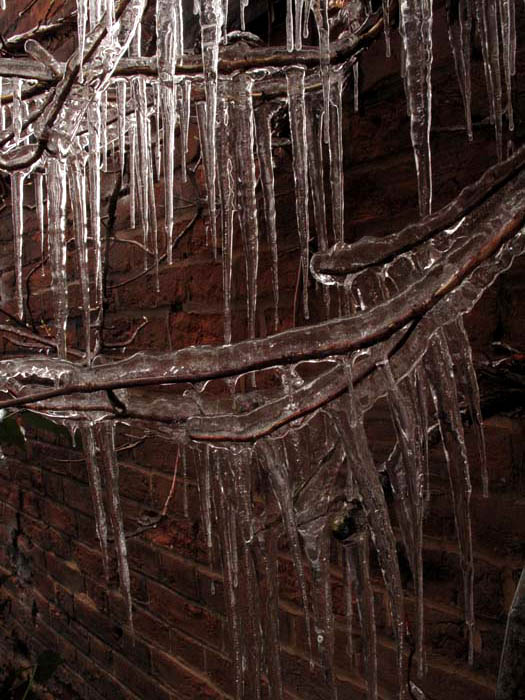
(Last winter’s icicles)

The weather doesn’t help, of course – too mild, too wet, too windy this year. At least some sort of status quo continues in the back yard where non-denominational  (or possibly JW) goldfinches arrive in pairs to feast on niger seeds as they do every day, a suitably attired mirror-image illusion of avian dandies on opposite sides of the bird feeder. Meanwhile, out in the dun damp arable fields that surround the city beyond the new-build green belt, fieldfares flock – newly arrived winter visitors from Scandinavia, the real place that is, not the parallel universe version. Elsewhere, the TV flickers like a well-behaved heart monitor as a nation prepares for the ritual liver damage and rictus-grinned high spirits that signify New Year’s Eve. Or, rather, the younger ones do: most older folk ensure they are safely tucked up in bed by the witching hour when a nation stumbles forward, arse over tip, across the calendar date line. The circle is, as they say, unbroken. Happy New Year.

Winterton-on-Sea, Norfolk

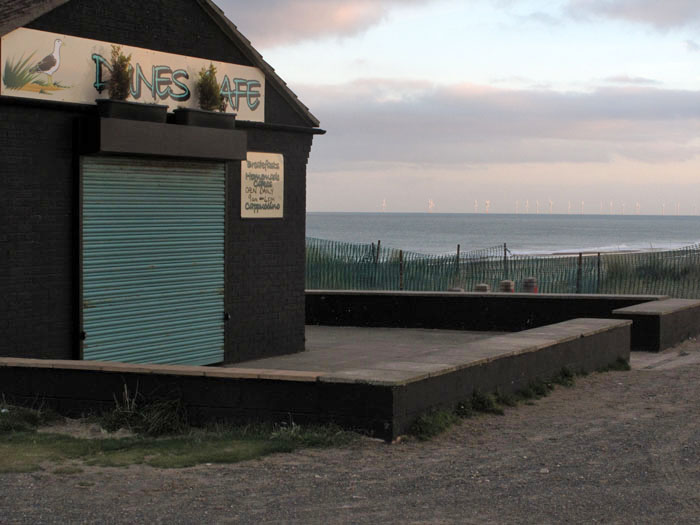
I did a circular walk at Winterton-on-Sea a couple of weeks ago, striking out from the beach car park that looked a little forlorn out of season – largely devoid of vehicles, its wooden hut cafe bolted shut for the winter.

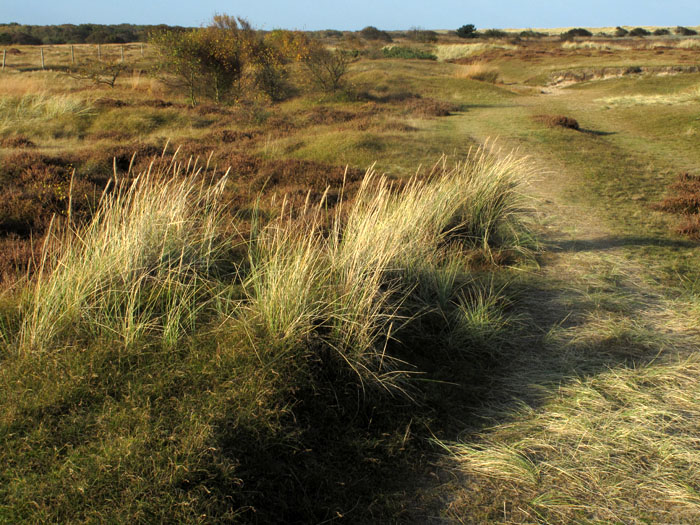
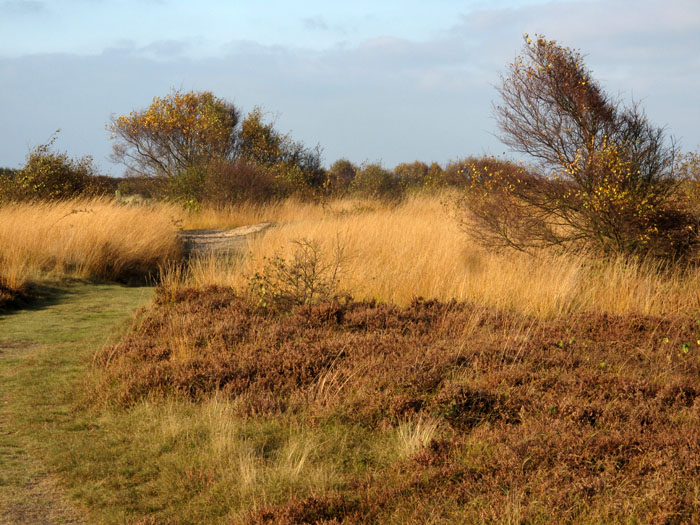
Winterton Dunes immediately north of here is a nature reserve known for its natterjack toads but, this being November, the toad population was in deep amphibian sleep, no doubt dreaming of munching insects in warmer times to come. But, even without the toads, it’s an affecting place – an undulating swathe of sand and gorse, birch trees and heather; a border zone where sea meets land meets sky.  There are other animals to consider as well: over the dunes on the beach grey seals have arrived in number to pup, their sluggish forms slumped awkwardly on the sand – plump, blotchy grey and vulnerable.

At Winterton Ness, where I leave the dunes to venture inland, large concrete blocks flank the track, a reminder that invasion was a constant threat along this coast back in the dark days of World War II. I walk inland along a farm track, through an isolated cattle yard that has leaked several inches of malodorous slurry over the concrete, before heading across fields to walk south. Here, pheasants are so prolific that I soon become immune to the shock of their flying up unnanounced in my wake – an explosive flurry of undersized wings struggling to lift over-the-top plumage clumsily into the air. There are so many pheasants here. This year, they seem almost plague-like.Walking along a lonely concrete road in the general direction of Winterton I come across a man on a bicycle, who dismounts to walk and talk with me awhile. He is a font of local knowledge. According to him, the supersized pheasant population is the result of the local landlord releasing 15,000 chicks into the wild – an awful lot of shooting for even the most enthusiastic rifle-wielder. We talk of other wildlife: the cranes that breed around here, the red deer that rut nearby, the barn owls and hen harriers that quarter the winter marshes. Then, as we approach a corner ahead, he utters, “I won’t walk along here at night on my own. Even the beaters won’t come here at night – and they’re a pretty hard bunch on the whole.” Before I have time to ask why, he answers for me, “It’s haunted, and so is the house by the corner.”The man with the bike starts to relate a story about a local who lived around here a couple of centures ago. Like many along this eastern extremity of the Norfolk coast, he was given to  smuggling and shipwrecking but this particularly unpleasant individual was also reknowned for his cruelty to women and his wraith – a cold, shadowy presence that is said to follow anyone foolish enough to wander around here at night – still haunts this stretch of the road.

We go on to discuss Winterton’s shipwrecking tradition and reputation for lawlessness that persists to this day (“The Yarmouth police don’t want to know about any trouble here, although they’ll come to Horsey just up the road”).  Then, as soon as we turn the corner, he bids me goodbye and disappears into the garden of a roadside cottage – the same one he had said was haunted.

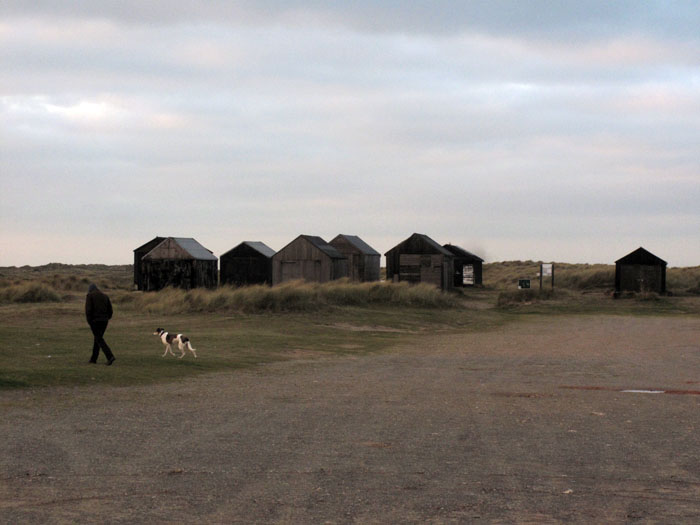
Back at the beach car park, a couple of dog-walkers catching the last hour of silvery daylight eye me (conspicuously dog-less) with suspicion. In north-east Norfolk if you don’t have a furry friend with you then you are probably up to no good. If it’s the liminal hour just before dark then you almost certainly are.

Homeward to Mingulay

Heel y’ho boys, let her go, boys

Bring her head round now all together

Heel y’ho boys, let her go boys

Sailing homeward to Mingulay!

What care we tho’ white the Minch is

 What care we for wind and weather?

Let her go boys, every inch is

Wearing homeward to Mingulay!

Wives are waiting on the bank, boys

Looking seaward from the heather

Pull her ’round boys, and we’ll anchor

‘Ere the sun sets at Mingulay!

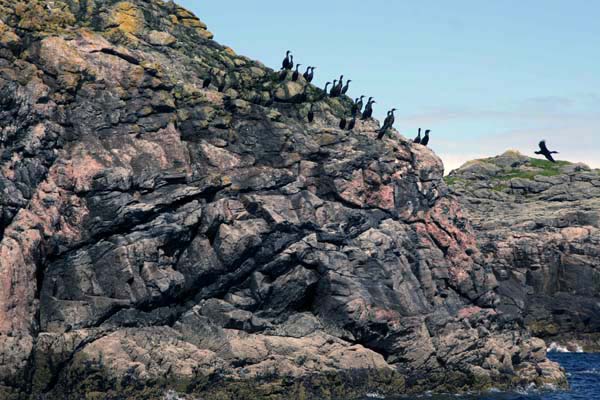
Another day, another island. Mingulay lies in the Outer Hebrides, just north of Berneray at the very southern edge of the island chain. In many ways, the island is reminiscent of St Kilda – formerly populated, now deserted, it may not quite have had Hirta’s desolate edge-of-the-world isolation but it made up for this with living conditions that must have been equally harsh.

Although there are parallels with St Kilda, the people here were more involved with fishing than they were at Hirta  where seabirds were central to both diet and economy. With frequent violent Atlantic storms but plentiful fish and some decent grazing crofting life was tough but just about sustainable. Seabirds did have their part to play though: rent was paid to absentee landlords on Barra mostly with shearwater chicks collected from the island’s precarious cliffs.

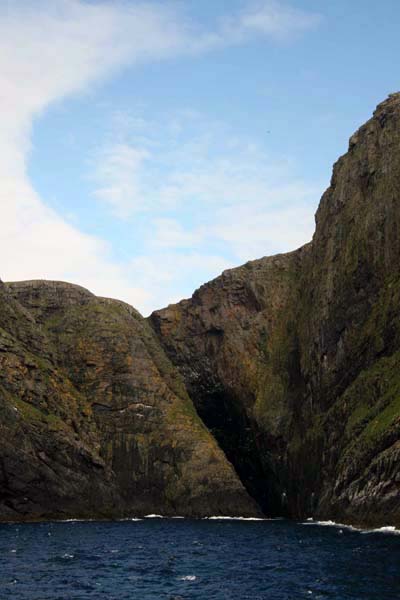
Unlike Hirta, and perhaps to the good, there was no well-intentioned but misguided 19th century tourist industry here, and Mingulay continues to lack the celebrity status that has long been associated with St Kilda. Here there is no post office, gift shop or warden’s house; no quay – just a sheltered beach, some fine views, wild yellow irises and a plethora of kittiwakes and guillemots. By way of welcome, inquisitive grey seals loiter beneath the cliffs in the bay, their sleek heads bobbing on the waves like maritime Labradors.

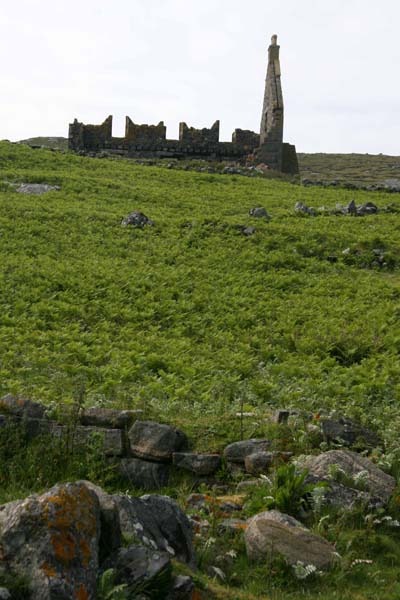
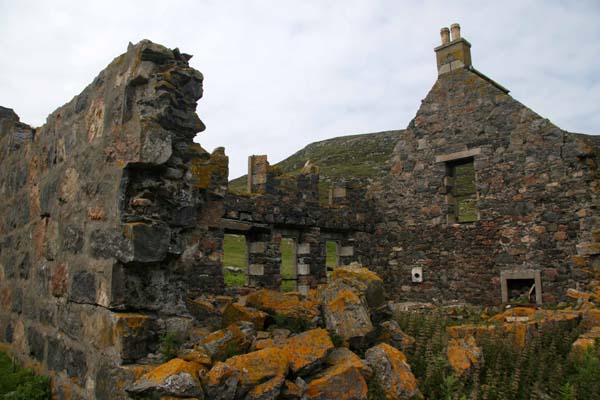
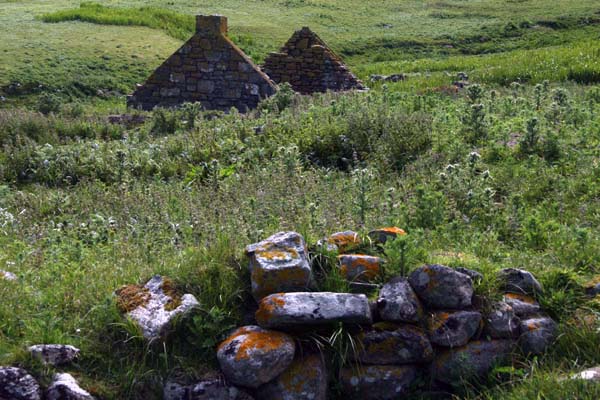
Walk uphill from the beach at Mingulay Bay and you stumble upon the remnants of a few dwellings, the roofless shells of the turf-roofed black houses that Mingulay folk called home. The most complete building is the schoolhouse, built in the 1880s by the Free Church Ladies’ Association, while further uphill lie the remains of the chapel house, which had the Catholic priest’s living quarters downstairs and a chapel above. Now the chapel house is a picturesque ruin, with one gable still standing while the chimney pot from other stands centre-stage amidst the rubble like a post-Apocalyptic pulpit. Someone has gone to the trouble of sorting the reusable roof tiles into neat piles – even today, Hebridean island life does not encourage waste or the overlooking of free architectural salvage such as this.

The sea shanty quoted above could never have been sung by Mingulay-bound sailors as it was composed  by a Glaswegian in the 1930s – the island has been deserted of folk since 1912. Nevertheless, it evokes splendidly the atmosphere of the place, its sea-tossed shoreline, heather moorland and the ghost of a seafaring tradition.

If you would like to hear a contemporary version of the Mingulay Boat Song you can find Richard Thompson’s excellent rendition here.

.

St Kilda

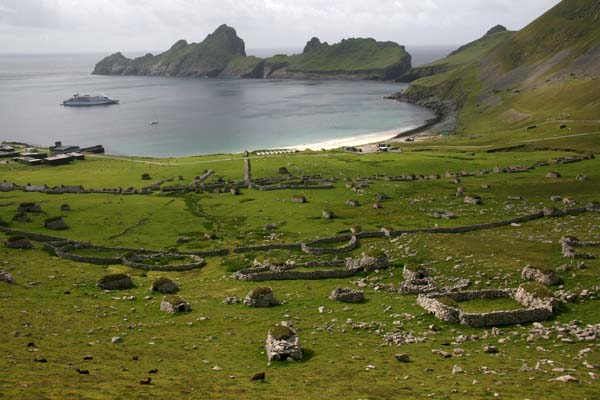
The St Kilda archipelago lies a choppy 45 miles west across the Atlantic Ocean from the Isle of Harris in Scotland’s Western Isles. Constantly settled from at least 5,000 years ago until 1930, when the inhabitants were finally evacuated, it is impossible to overestimate the brave determination of those early settlers who, seeing these rocky islands poke tantalisingly above the horizon in the far distance, pointed their flimsy boats in that direction and rowed through murderous seas to reach new land.

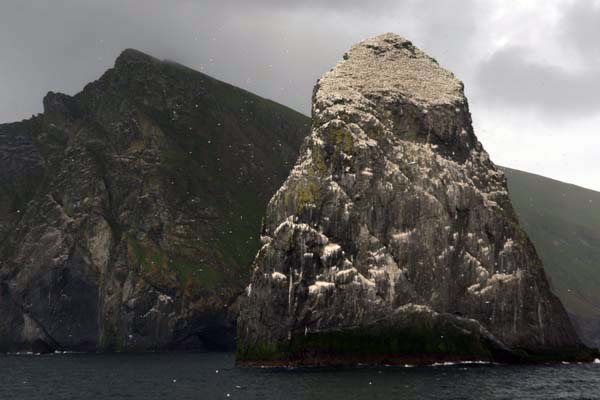
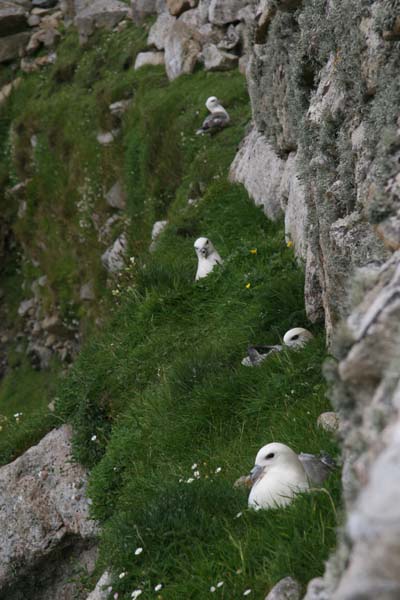
Rather than fish, the economy of the island – the main and only consistently settled one was also the largest, Hirta – was always linked to seabirds – gannets and fulmars in particular – and bare-footed St Kilda men used to gamble their lives dangling on horsehair ropes down treacherous cliffs faces in order to collect nesting birds and eggs.

Once upon a time there was a demand for fulmar oil as a fuel and St Kildans were able to barter this plentiful resource for the items they needed like grain and tobacco. But the coming of the modern age meant that the demand for this commodity waned dramatically and many of the island’s young people started to leave in order to seek their fortune on the Scottish mainland and even as far afield as Australia. Given this sudden decline in what had hitherto been a small but relatively stable population, it was perhaps inevitable that Hirta’s population would finally ask to be evacuated in 1930. For their own part, centuries of inbreeding and the islanders’ insistence on using fulmar oil to anoint the umbilical cord of newborn babies had already ensured a savagely high infant mortality rate. An evacuation was arranged but, despite having spent their entire lives on a windswept island entirely devoid of trees, the displaced islanders were offered jobs in forestry on the mainland. Such ironies did not ensure a happy outcome.

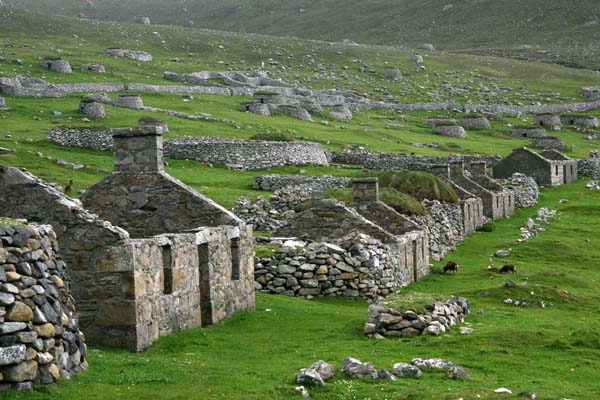
Hirta’s cottages, cleits and blackhouses may be empty and roofless now but the fulmars and gannets are still there in number, as are the high winds that characterise this archipelago, the most westerly situated group of islands in the entire United Kingdom. Visiting St Kilda is hardly straightforward even today – there is no regular transport and it’s a long rough sea trip west from the Western Isles. I am lucky to have arrived here yesterday morning on the MSS Clipper Odyssey on its Island Race expedition cruise around the British Isles. Today we visit Barra and Mingulay in the southern Outer Hebrides before heading south towards Donegal in Eire. By the miracle of a satellite-connected internet connection I am able to communicate this fact whilst on board (the connection was too slow to add images though – I added these later).

At over 8 degrees west, East of Elveden it certainly isn’t – West of Wester Ross might be a better description – but the St Kilda archipelago in the shape of Hirta, Soay, Berneray and other monumental stacks is still a place apart worthy of honour in any discussion of Britain’s special places. Not only does it stand at the very edge of the British Isles but it would seem to lie at the very edge of Europe and the entire Western world.

St Kilda already feels like a dream just one day after having left its shore. But St Kilda does not exist (the name is probably just a Norse corruption); you will find no saint of that name in the hagiographic annals.