North of Narvik

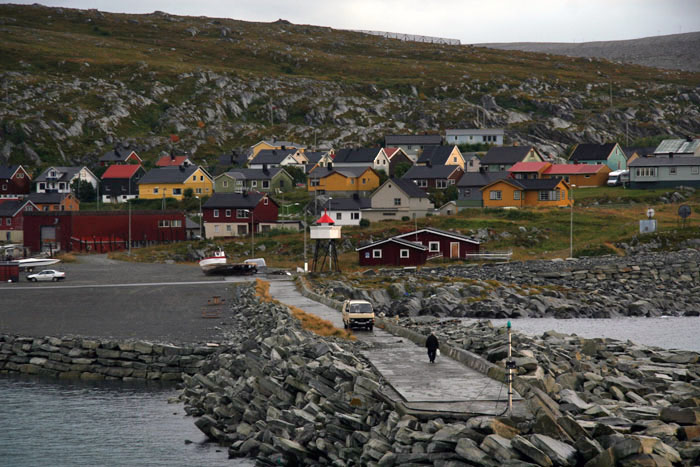
Havøysund, Finnmark

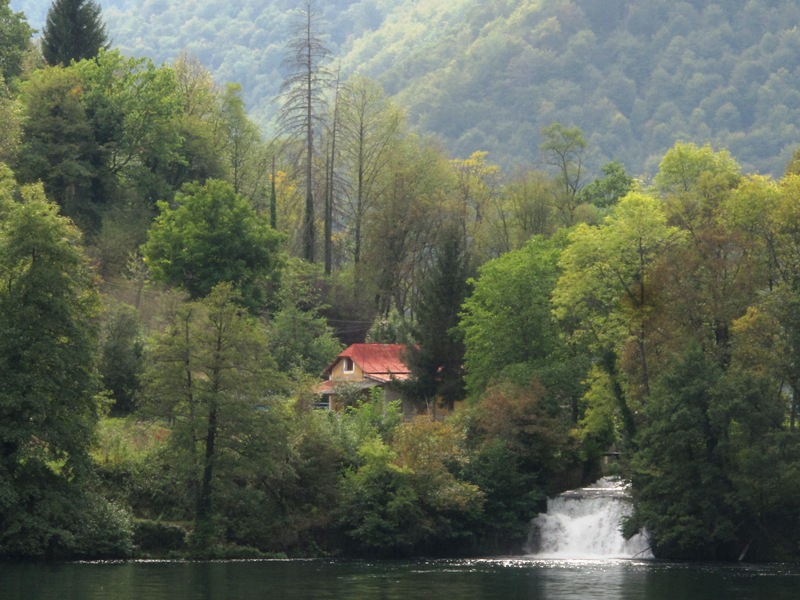
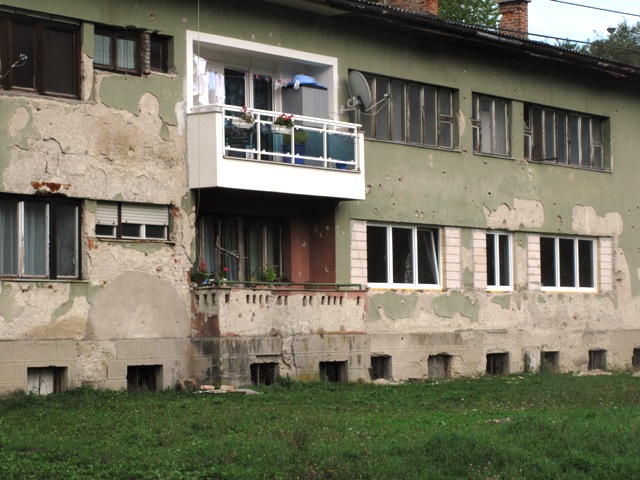
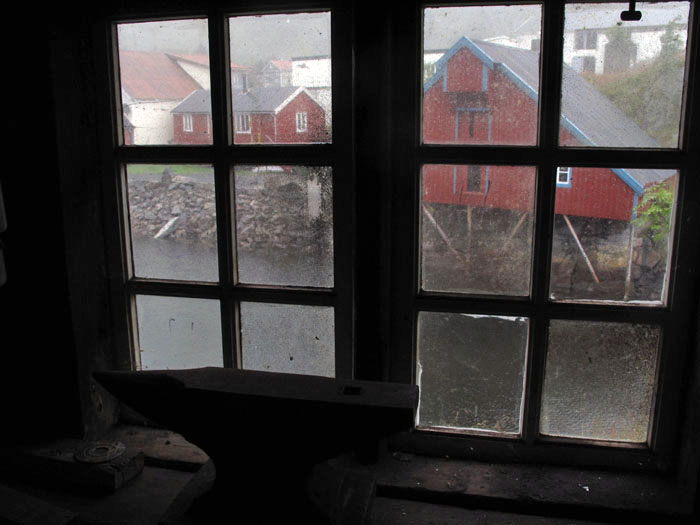
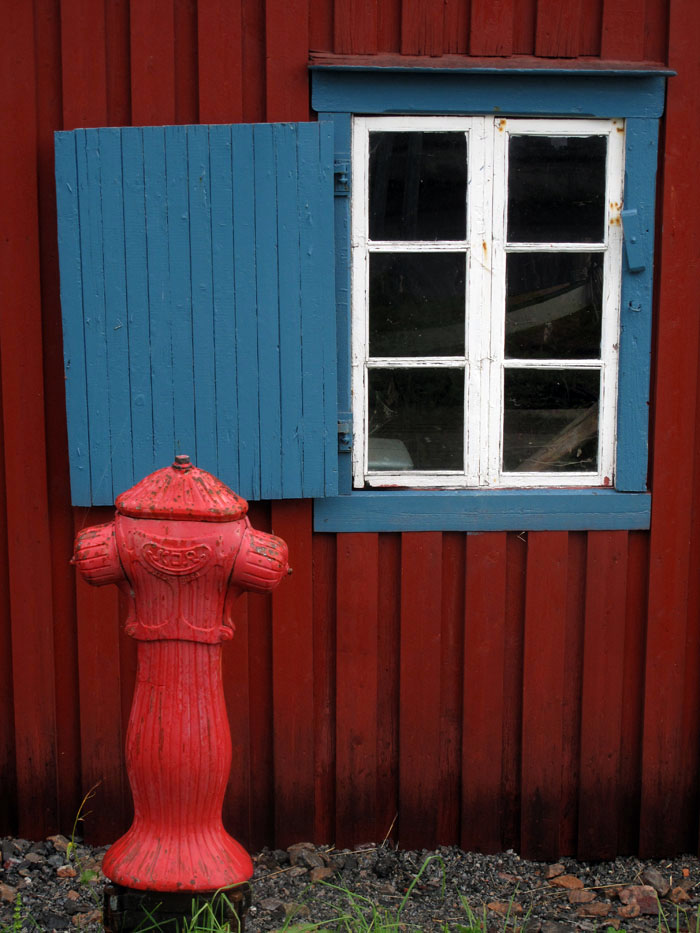
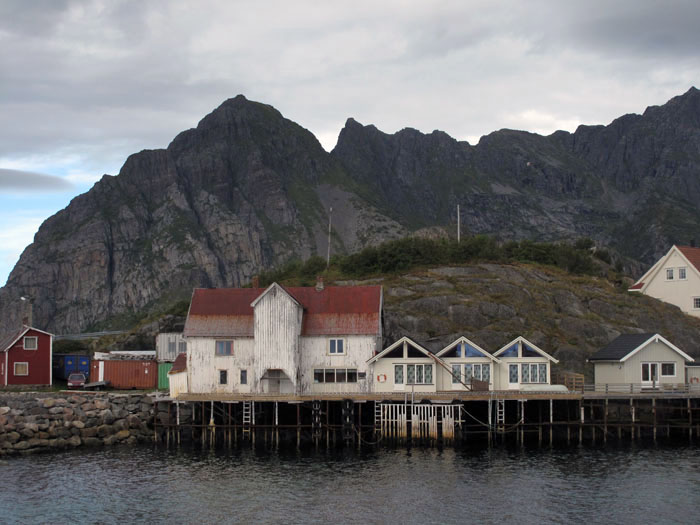
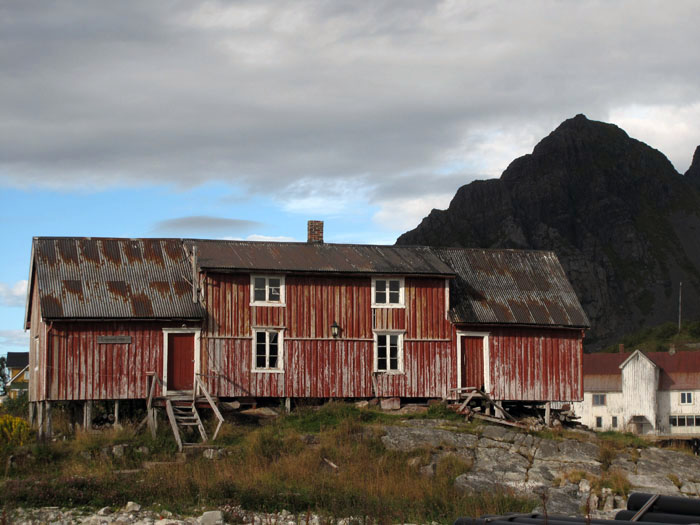
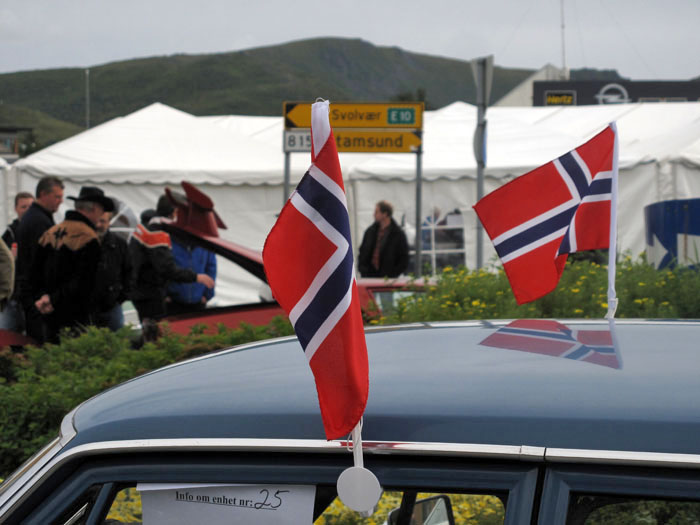
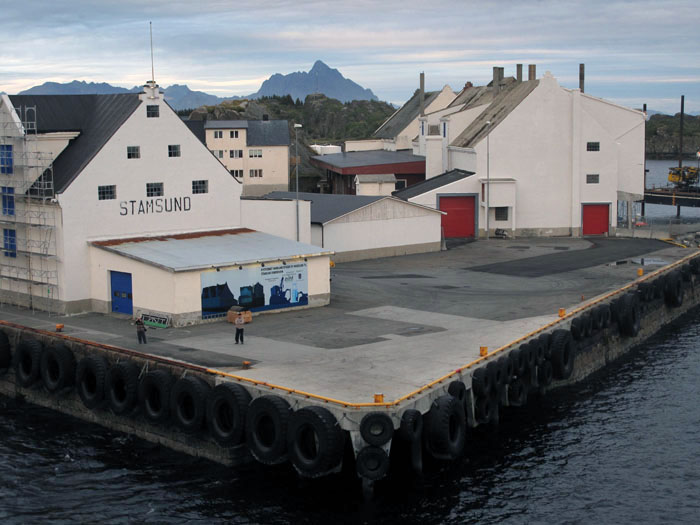
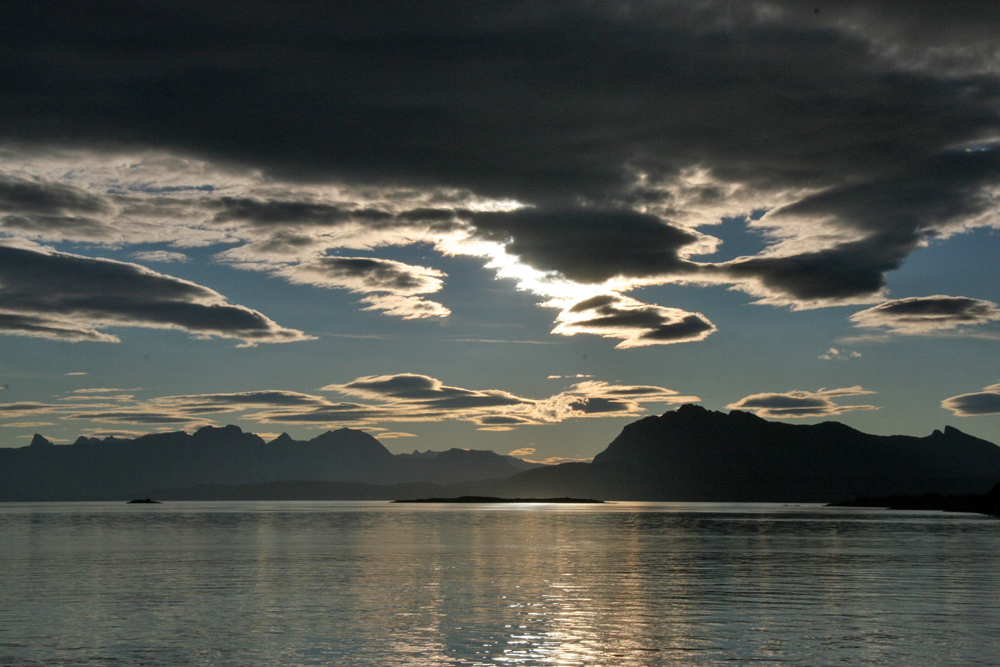
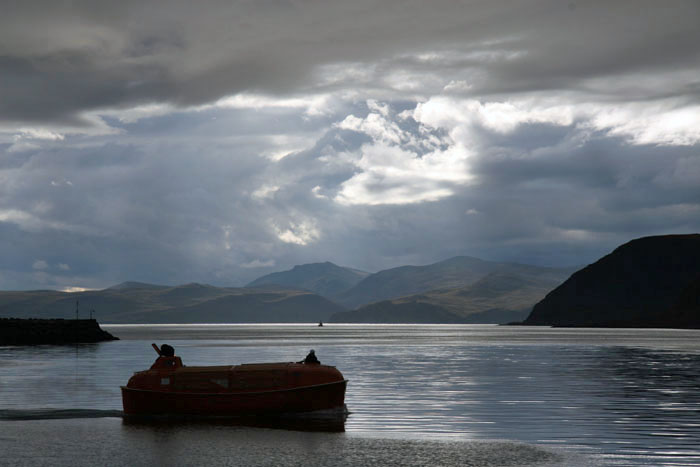
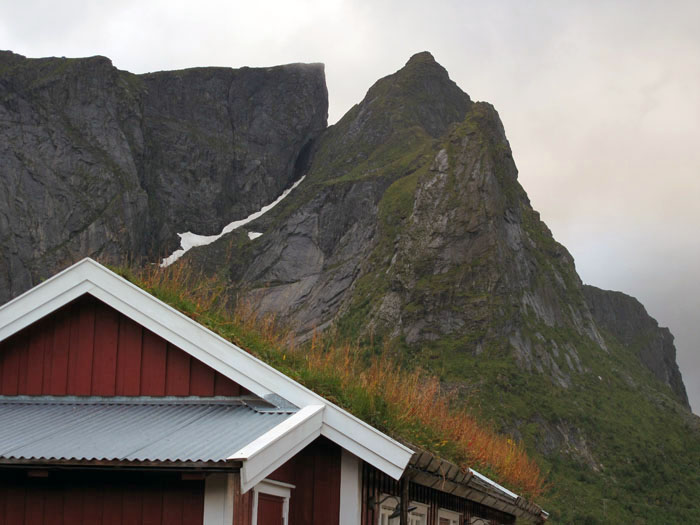
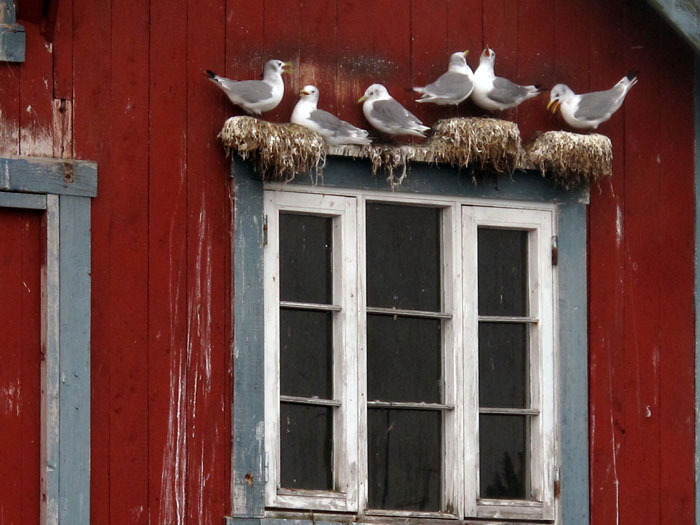
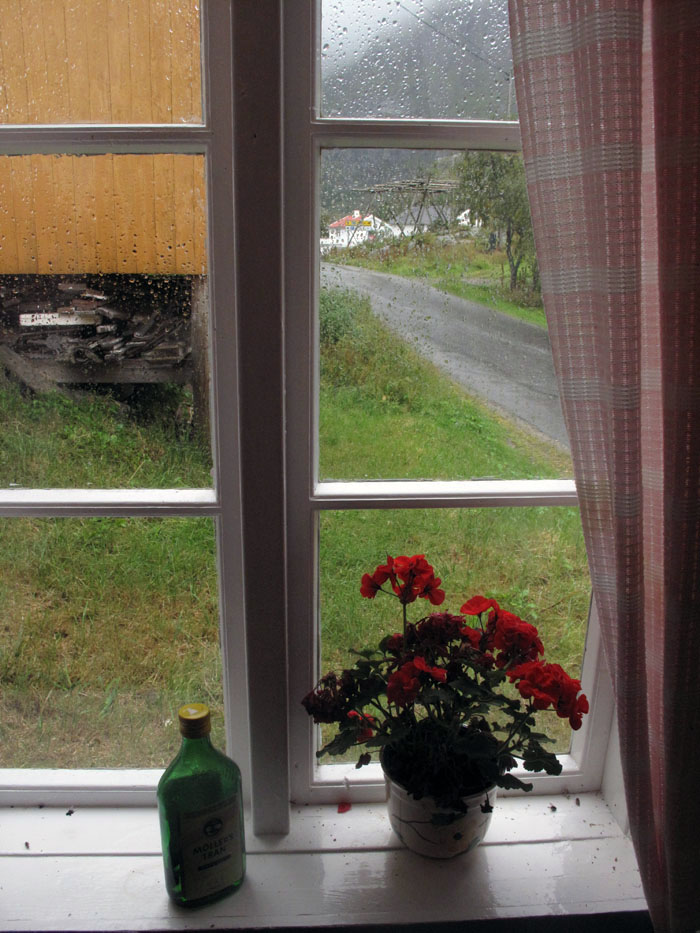
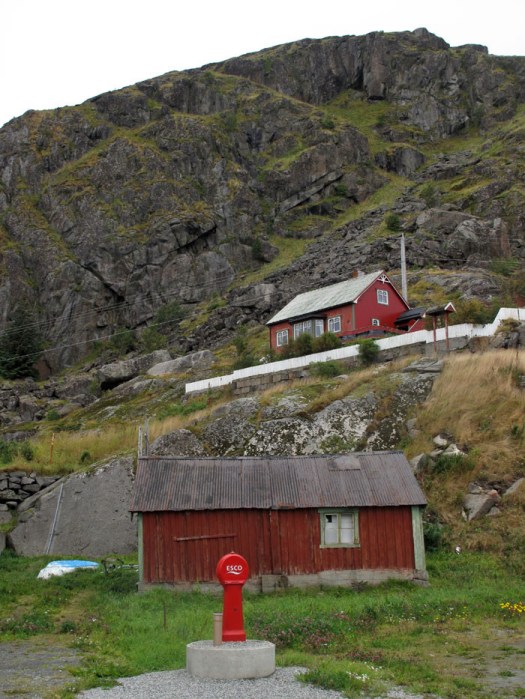
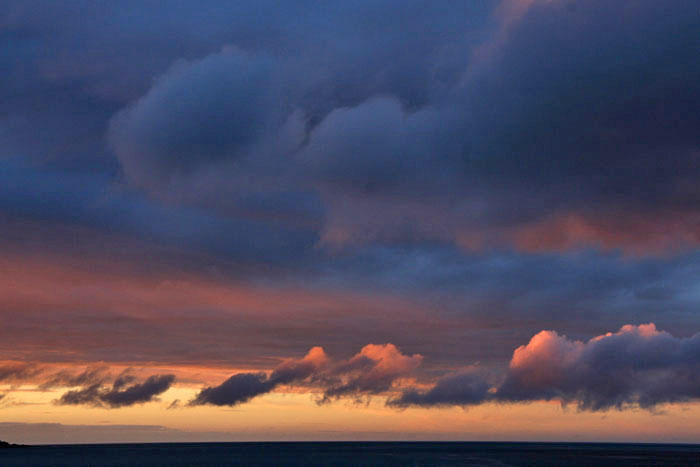
This post celebrates Europe’s most northerly reaches. I have just returned from a Scandinavian trip where I travelled between Stockholm, Sweden and Kirkenes close to the Russian and Finnish borders in Norway’s far north. Most of the travel, which was by means of train, bus and coastal Hurtigruten boat, was within the Arctic circle. My journey took in wonderful places like the magical Lofoten Islands and the so-called ‘Arctic Capital’, Tromsø, but most affecting were the small coastal communities that lay isolated yet self-contained and unperturbed along the coast of Finnmark in Norway’s most northerly region. I will say more of these in future posts but, for now, here is a selection of fairly random images from Arctic Norway.

Harstad, Vesterålen

Kjøllefjord, Finnmark

Honningsvåg, Finnmark

Reine, Moskenes, Lofoten

Å, Moskenes, LofotenStamsund, Vestvågøy, Lofoten

Close to Mehamn, 71°N

Baconsthorpe

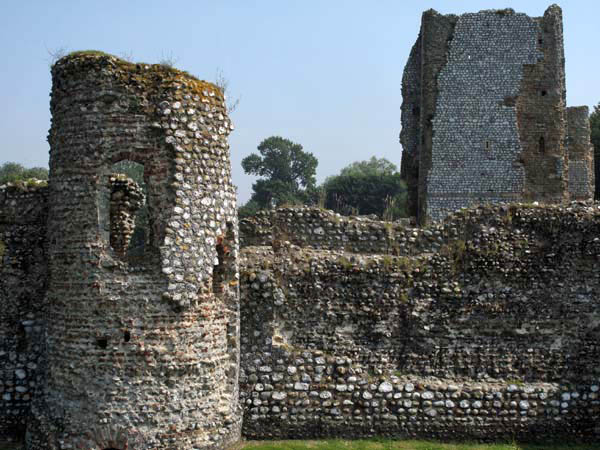
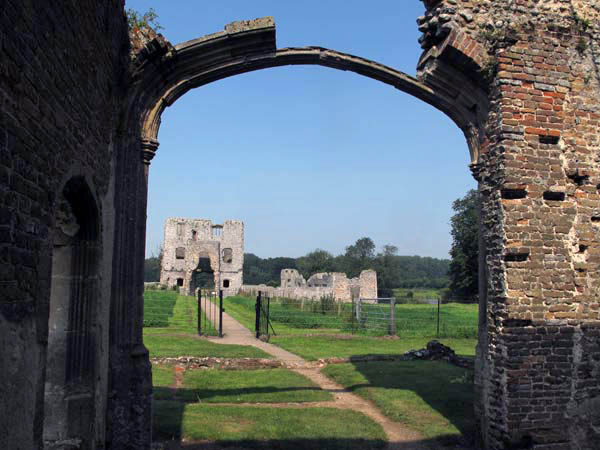
The ruined castle at Baconsthorpe in north Norfolk can hardly be described as ‘hidden’ but it does lie nicely tucked away from the limelight, located at the end of a dusty farm track at some distance from the main road. Strictly speaking, it is not really a castle, more a fortified manor house, but with a large moat, thick flint walls and a no-nonsense gatehouse, unlawful entry by unwelcome visitors would certainly not have been easy.

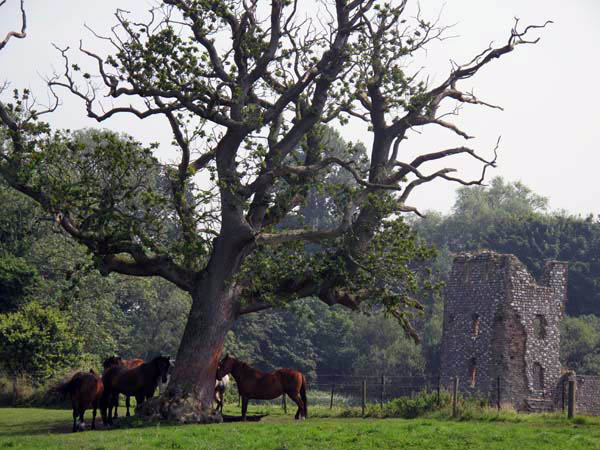
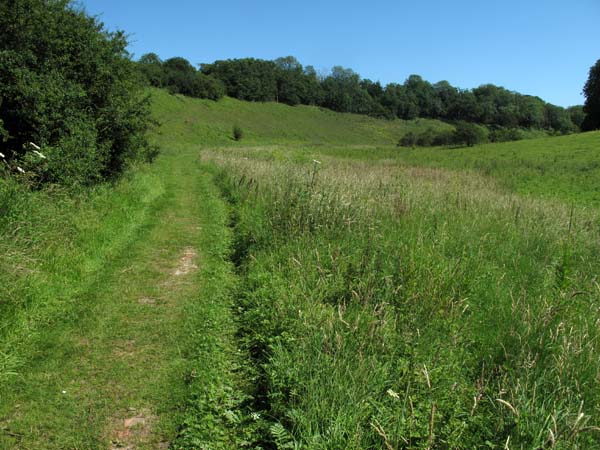
To reach Baconsthorpe Castle  you can drive right up to the door from the village of the same name.  The site is managed by English Heritage and there is no charge for car park or entry. Better still, you could walk from Bodham, the village to the north that straddles the busy Holt to Cromer road. Certainly, to follow the footpath up and down the shallow valley before skirting Baconsthorpe Wood, makes arrival here a little more special. With luck, as the castle comes into view after leaving the wood you will be greeted by some of the sleek chestnut horses that graze in the meadow beside it.

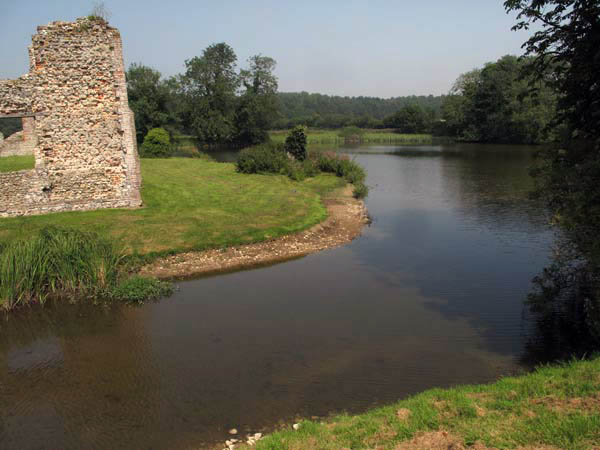
 Next door to the gatehouse stands a group of old farm buildings that have seen better days — no doubt a bustling, energetic place before the middle of the last century, now their only role appears to be that of the storage of farm machinery. Within the gate there’s a compound and a bridge across to the inner court.  Here, to the east, the moat widens to become a large pond –  known as a ‘mere’ in these parts – which provides luxury accommodation for the ducks that thrive on the sandwich crumbs left by picnicking visitors. Swallows swoop low and fast over the water to grab unsuspecting flies but there’s little sound other than a summery rustle of leaves, the narcotic coo of pigeons and, during school holidays, the gleeful cries of children here with their parents.

What is of particular interest here is not so much what remains of the castle but what has happened to those parts that are absent. Certainly, it is not just the effect of the elements. Built as a 15th-century manor house by the locally powerful Heydon family, the inner gatehouse and fortified house were added at the time of the Wars of the Roses. Some of the buildings were converted into a textile factory at the height of Norfolk’s  profitable wool trade in the Tudor years. The outer gateway came in the Elizabethan period.

The English Civil War brought an economic downturn to the Heydon family fortune (Sir John Heydon commanded Charles I’s artillery, which did not endear him to the  Parliamentarians). The castle was seized by Roundheads and occupied for a while before eventually being sold back to the Heydon family. Encumbered by accumulated debt, Sir John Heydon was obliged to demolish many of the buildings to sell as architectural salvage. Many of the stones reportedly found new purpose in the walls of nearby Felbrigg Hall. The stained glass with the Heydon family crests were removed and installed in Baconsthorpe’s St Mary’s Church.

The voices of wealthy landowners, shepherds, textile workers and Roundhead soldiers would all once have echoed here within the castle’s sturdy walls. Now, apart from the subdued utterances of occasional visitors, they stand silent: mute witnesses to history; flint and brick repositories of the past.

A Bend of the Coast

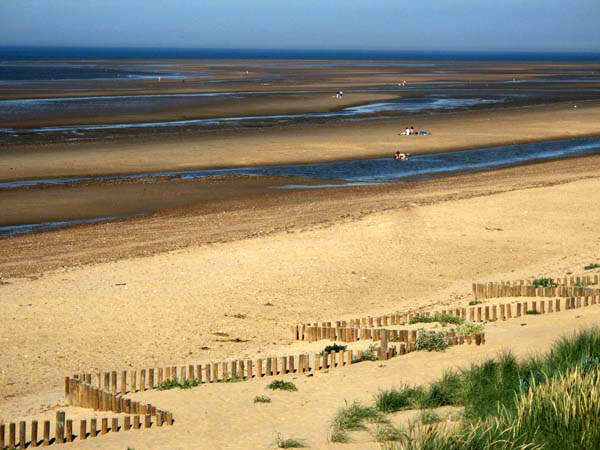
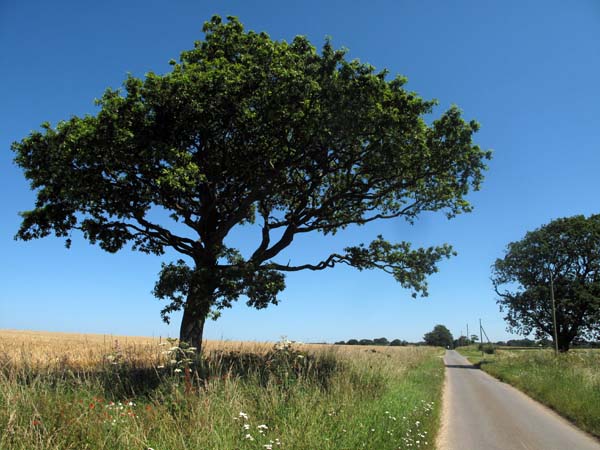
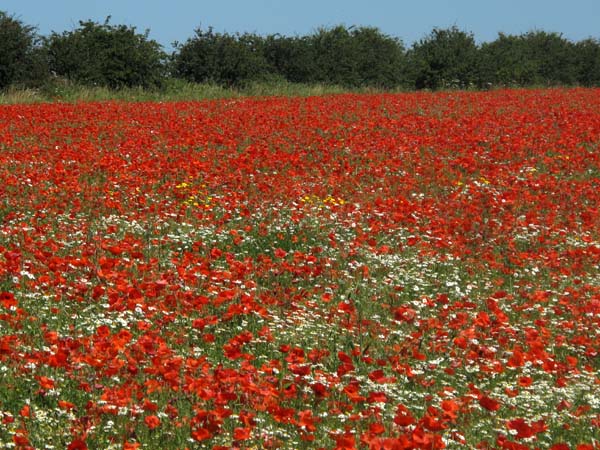
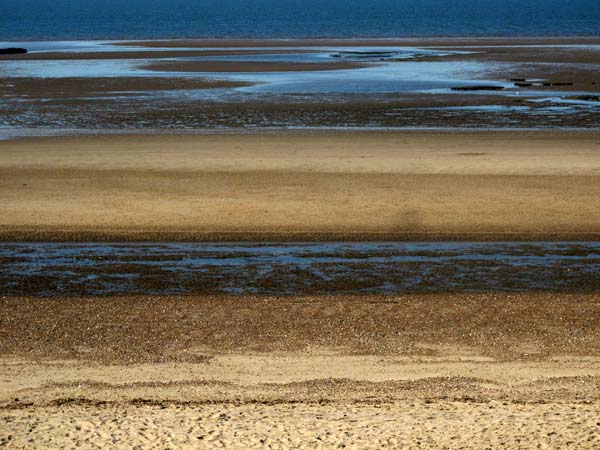
Late July. It is the hottest day of the year and recent deluges are quickly forgotten as the earth bakes beneath a cloudless sky. North Norfolk’s pristine air glows with the sharp blue light that seems only to be found close to the coast – a light that bears the reflected promise of the sea just beyond. The notion is to celebrate my birthday with a circular walk that takes in the curve of the county at its northwest extremity: that charmed stretch of sand, marsh and hinterland chalk that curves west to south between Holme-next-the-Sea and Hunstanton.
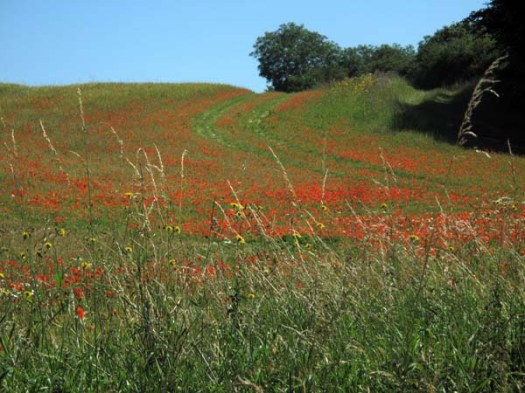
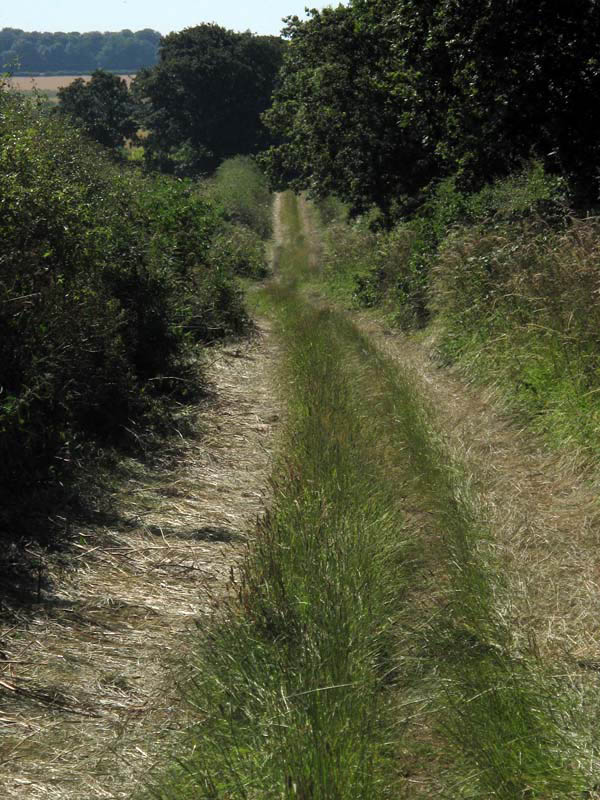
I set out from Old Hunstanton at St Mary’s Church on the fringe of the Le Strange estate, a curious feudal relic of Norman patronage that historically even has possession over the seashore as far as Holme-next-the-Sea, the incumbent bearing the complimentary title of ‘Lord High Admiral of the Wash’ and the limit of the estate boundary traditionally measured by a spear thrown into the Wash from horseback at low tide.  I circumnavigate the dense woodland of Hunstanton Park before heading south along a track marked by a sign that calls it Lovers’ Lane. But there are no lovers today, just me, and it is not really a lane as we tend to know them either, more a greenway enclosed by hedges and tall stands of nettles, one of the less pleasant by-products (along with more than usually plentiful mosquitoes) of this unseasonably wet summer.

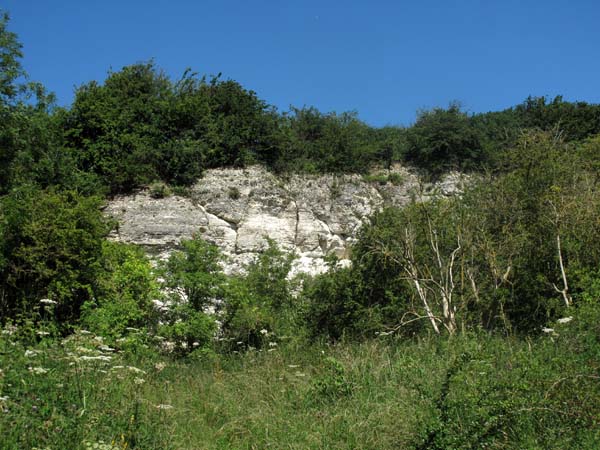
A mile or so later, following a short interlude along tractor-rutted farm-tracks, I climb gently up to a point where I can see the evocative ruin of St Andrew’s Chapel across the fields. Dropping down again, I soon reach the eastern end of Ringstead Downs. A large chalk-built barn and stark white cliff face serve as a reminder that this corner of the county is where the underlying chalk comes right to the surface. This, terminating in the striated chalk and carstone cliffs of Old Hunstanton, is the northern end of a seam of chalk that cuts diagonally southwest to northeast through southern England – the geological marker of the miscellany of paths that once constituted the Icknield Way. Chalk generally brings a gift of rich flora and Ringstead Downs, a shallow valley with the scarp slope on its northern side, does not disappoint. Thyme, eyebright, vervain, centaury and the charmingly named squinancywort are all to be found here: jewel-like miniatures that embroider the grass with pointillist spikes of colour. It’s humid and warm – a chalk valley microclimate; microscopic storm flies find their way through hair to scalp. There’s no breeze and little extraneous noise other than the summery coo of pigeons in the trees and the well-nourished buzz of satiated bees. Butterflies sip nectar; a buzzard swoops before flying off into the woods that flank the down’s eastern limit; a group of peahens – hardly native – screech alarmingly as they waddle for cover in the trees.
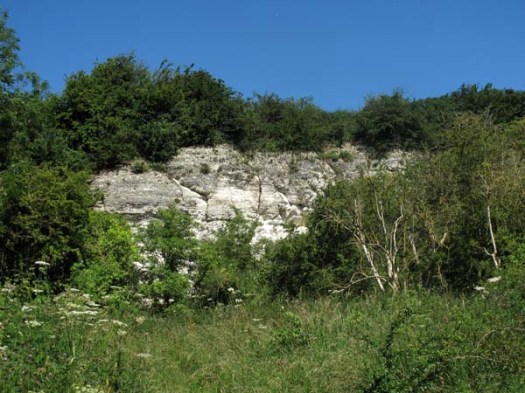
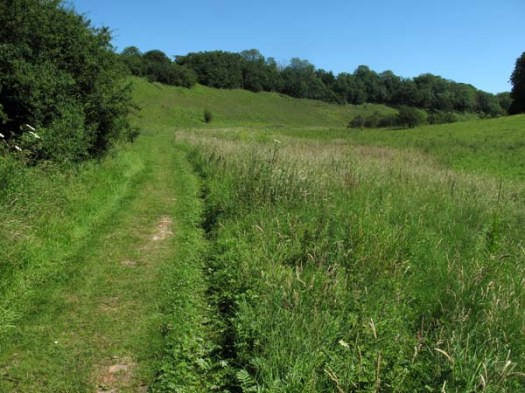
Ringstead village, a roadside strip of neat carstone and chalk cottages, is almost as silent apart from a few muffled voices emanating from the pub garden and the sudden scream of a dozen swifts plundering the sky overhead. From here, it is a plod along quiet country roads to reach the coast. Barely a car passes, just a man on a bicycle with panniers who bids me ‘Good afternoon’. Afternoon? Already? The road runs mostly parallel to the coastline, the sea out of sight but with long views over the valley to the south with its harvested cornfields and sparse green hedgerows.
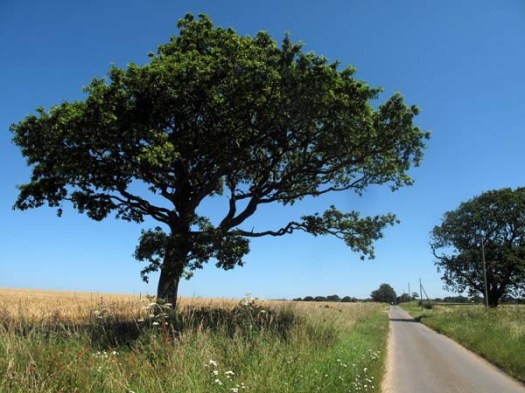
This corner of Norfolk flaunts its geology quietly but confidently: the gently contoured topography, the chalk and sandstone of village vernacular. There are more discrete clues to a glacial past too: just below the road lies Bluestone Farm, a name undoubtedly adopted because of the presence of glacial erratics (‘blue stones’) hereabouts – northern rocks carried here by ice and unceremoniously dumped like strangers in a strange land.
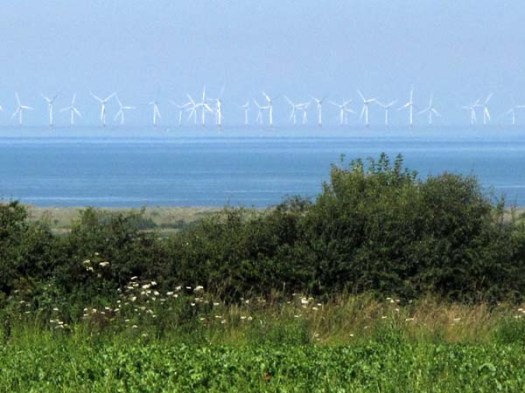
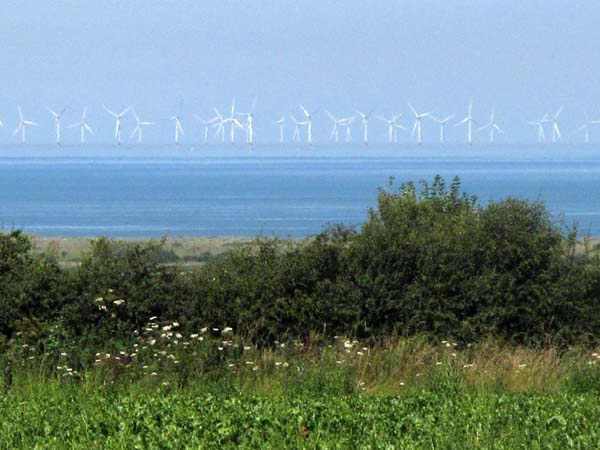
As the road climbs to its highest point – a lofty (for Norfolk) 50 metres – the coast comes abruptly  into sight: a blue salt-haze with a large wind farm on the horizon, turbines spinning slowly as if doing their bit to keep the world turning. Thornham village is but a short walk downhill. Once considered to be a ‘smuggling village’, the village is now largely a smart enclave of expensive 4x4s and wealthy folk ‘up from London’. Thornham is undeniably attractive: set just back from the coast, separated from it by bird-rich marshes, its brown carstone cottages look as if they are made from gingerbread, good enough to eat.
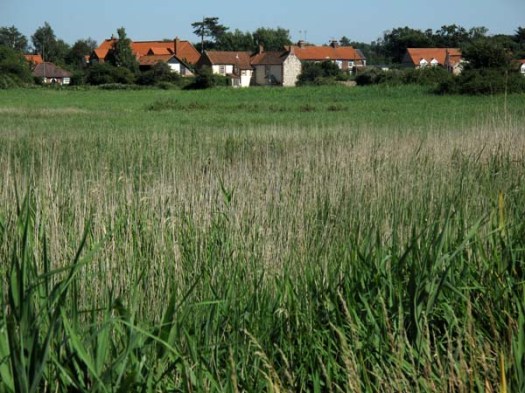
The coastal path crosses the marshes to reach a staithe before following the line of sea defences all the way west to Holme-next-the-Sea. At Thornham Staithe, and later at Holme, the busy car park exerts a curious gravitational effect that seems to prevent the majority of its visitors ever breaking much beyond its orbit: home, car, car park, beach, picnic, swim, car park, car, home. Nothing wrong with that of course, it allows the rest of us  to have the paths to ourselves most of the time. A boarded walkway leads over the top of the dunes to reach the beach at Holme-next-the-Sea, then briefly plummets through the deep shade of pines at the bird reserve before continuing between beach and marshes as the coast tips southwards towards Hunstanton. Pipits rise in alarm from the path in my wake; pyramidal orchids, slightly past their best, dot the sandy hollows in magenta clusters; yellow ragwort is everywhere.
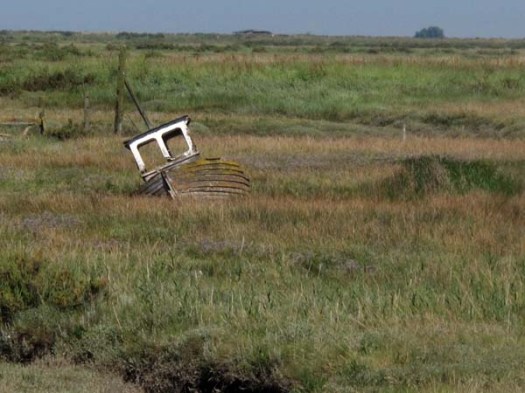
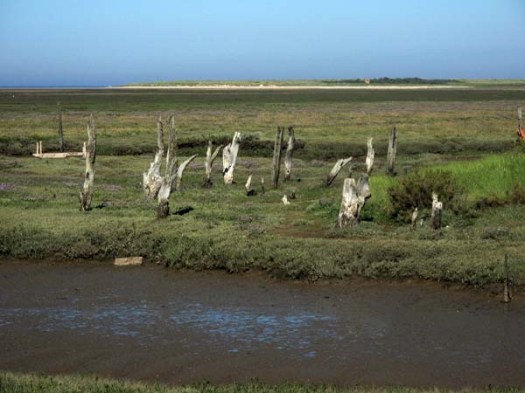
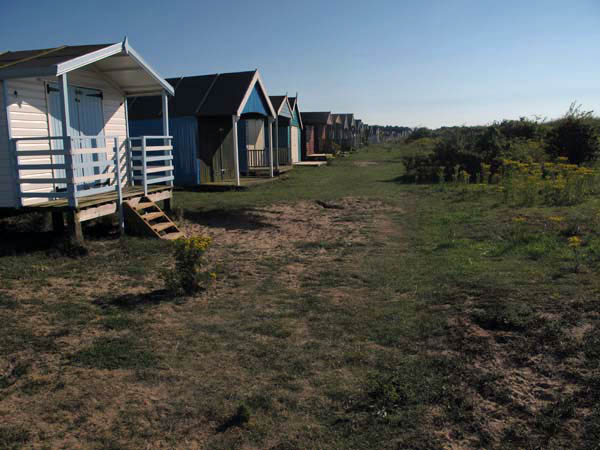
Approaching Old Hunstanton the coastal path follows the line of shingle between the dunes and a golf course. The buildings of Old Hunstanton eventually become distinguishable on the cliffs ahead.  Finally, beach huts in the dunes announce the outskirts of town, where a track leads up past the Le Strange Arms Hotel to the main coast road. My coastal circuit – less a circle, more a wobbly ellipse – is complete.
Rain

Lying in bed this morning with the curtains still drawn it was obvious enough that it was raining outside, the thrum of workday traffic softened to a watery swash. Soon the hum became augmented by the unmistakeable sound of running water on the street – the drains temporarily overloaded such that a little stream was flowing downhill along the kerbside for a brief minute or two. This soothing sound was soon interupted by the piercing screams of a group of girls on their way to school – ‘Aaargh! Oh my Gaaaad’ – more an exclamation on the shock of suddenly getting wet than any profession of faith. Extreme weather like this tends to provoke a reaction but we are lucky – this is about as extreme as it gets in dry, temperate East Anglia. This year, though, it seems hard to believe that this is the driest corner of the country.

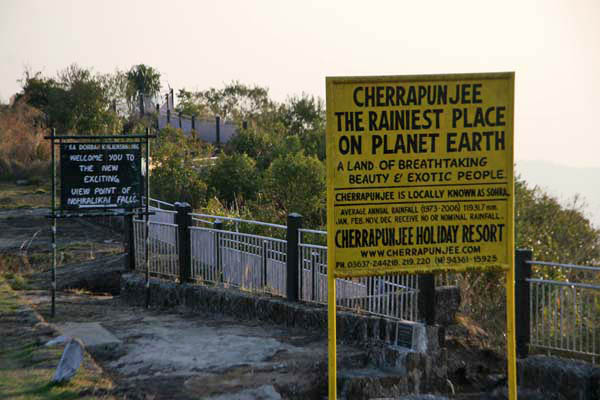
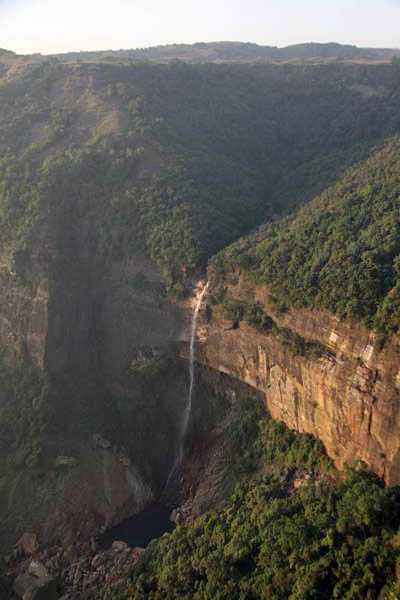
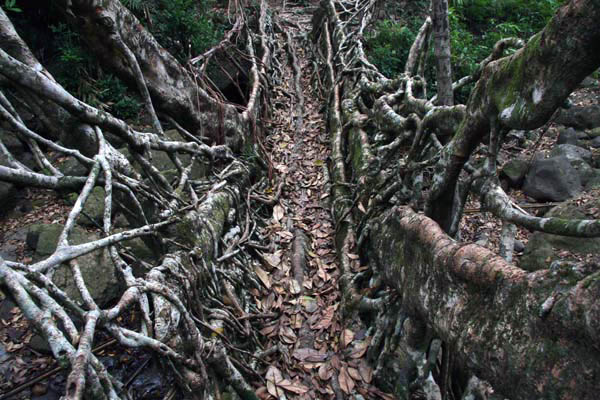
We had been warned: last night kindly TV weathermen had promised a month’s rain in a single day. This, on already saturated soils in many parts of the UK, did not bode well but at least here in Norfolk there would not be any major problems other than temporarily hazardous roads. It is all a matter of proportion, of course. To find really wet weather one has to venture much further east, to Meghalaya state in northeast India where the Cherrapunjee district holds the claim to be the wettest place in the world (although its soggy crown is challenged by neighbouring Maysynram, which likes to assert that it is just that little bit damper). Either way, it is wet: in excess of 12,000 mm per annum, and nearly 25,000 mm back in 1974, which is as much as some of us see in half a lifetime. I spent a happy week in this region a few years ago (admittedly in the dry season). You can read an article I wrote for Geographical magazine about the wonderful living root bridges of the Cherrapunjee region here.

Really wet days like this often put me in mind of places I am especially fond of – the English Lake District, the Scottish Highlands, monsoon India, Meghalaya. I remember washed-out camping holidays with long hours spent peering out of tents looking for a break in the clouds; taking shelter from the monsoon to drink sweet chai in an Indian teashop while the street outside turns into a muddy culvert; the sour smell of city pavements after heavy rain. I am also reminded of my favourite Beatles track, which features Ringo’s finest drumming, superb McCartney bass and a psychedelic backwards-vocals coda for good measure: Rain.

Orford Ness

Walking, whether rambling or hiking in the countryside, or the unplanned urban exploration of a would-be flâneur’s dérive – call it what you will – seems to be the hippest new literary genre. Often found cosily in tandem with what can only be described as ‘the new nature writing’, the genre undoubtedly has its stars. High in that firmament is Robert Macfarlane.
Almost everywhere you look in the literate media these days, Macfarlane’s name seems to crop up. As well it might, as his new book The Old Ways has instantly and deservedly become a best seller. Having already been lauded in features in the Guardian and suchlike, The Big Issue has this week also seized the opportunity to echo the zeitgeist and published a feature on Macfarlane taking a walk in the company of fellow writer and bipedalism enthusiast, the sardonic (and sesquipedalian) pavement-plodder Will Self.  The desired result: an interesting combination of styles and focii in which rural meets urban, wild nature confronts man-tamed landscape, and literary topography melds with psychogeography.  Given such a brief, it seems almost odd that the Psychogeographer General, Iain Sinclair, landscape ombudsman extraordinaire, wasn’t invited along for the stroll. There again, three is a crowd, and Sinclair was no doubt already busy enough with the Sisyphean task of hurling word-bombs of withering allusive prose at the perimeter fence of the Stratford 2012 Olympics site.

The Big Issue walk – delightfully, if almost predictably – took place along the crumbling Suffolk coast, the mysterious region between Bawdsey and Orford Ness, a coastline rich with legend and secret histories: a luminous landscape of shingle, rare birds and nuclear power stations where the mud itself murmurs of UFO sightings, secret weapons testing, silted estuaries, lost ports and sea-claimed monasteries – the most distinctly ‘Here be Dragons’ patch on the East Anglian map. Pleasingly, the Will and Rob walk also took in some of the territory I have described in my own humble walking guide to the Suffolk coast: Suffolk Coast and Heaths: Three Long-distance Walks in the AONB, available from all good book shops and even a few bad ones.

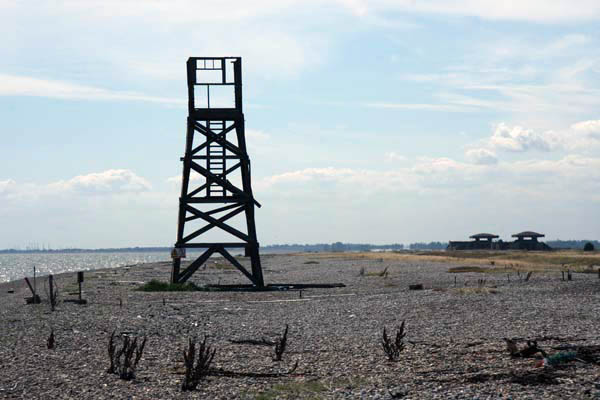
The Macfarlane-Self walk concluded at the lighthouse on Orford Ness, the mysterious island-like shingle spit that stretches south from Aldeburgh. Orford Ness is bypassed by the Suffolk Coast Path but it does feature in Slow Norfolk and Suffolk, another book of mine that hurrahs the Suffolk coastline. Here’s a brief extract:

If you are not at Orford Quay for sailing, your eyes will no doubt be drawn across the water to Orford Ness, which exudes an air of mystery typical of places associated with forbidden territory. From 1913 to the mid 1980s, the spit was firmly closed to the public, a top secret, no-go area dedicated to military testing and radar research. The links with its secret past are part of its appeal; otherwise, it’s undeniable that Orford Ness is quite a remarkable bit of geography.

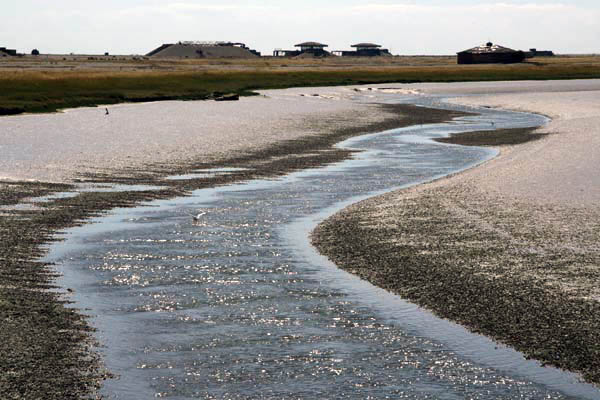
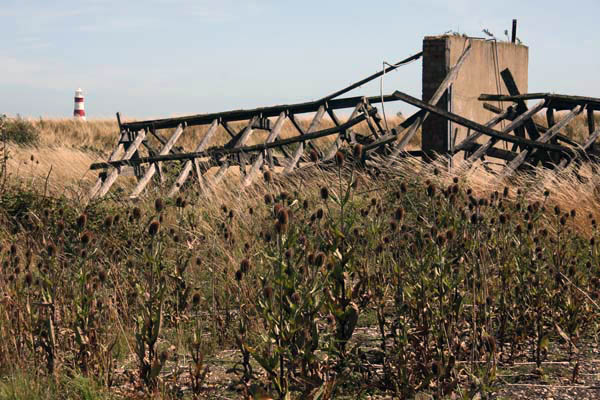
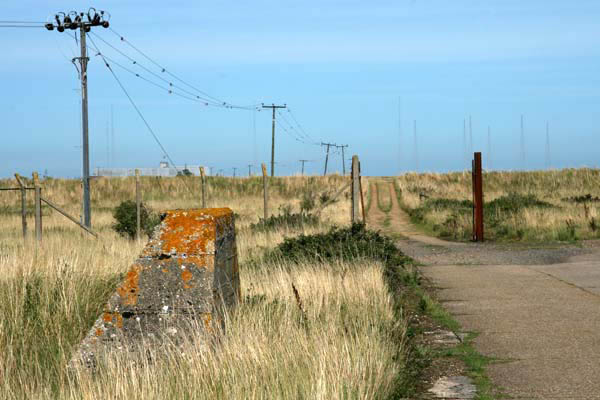
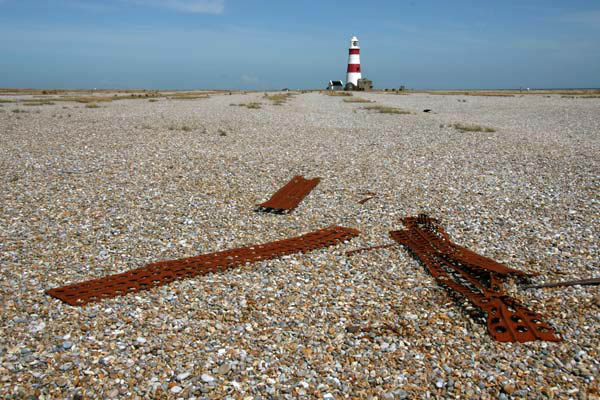
Though hardly pretty, this long shingle spit is undoubtedly evocative. Signs warn about unexploded ordinance, and everywhere you’ll see tangles of tortured metal and wire netting among the teasels in the shingle. Overall, it’s a rather melancholy landscape and you might begin to wonder if Orford Ness should actually be ‘orfordness’, a state of mind, rather than the name of a wayward landform.

Seen from Orford Quay, Orford Ness has the appearance of being an island, and the ferry trip across the River Ore simply adds to this impression, but it’s not – it’s actually a long sand spit that begins just south of Aldeburgh and gradually widens as it follows the coast south. It is the largest shingle spit in England (nearly ten miles long) and it is only when you disembark at the jetty that you can really appreciate the scale of the place. The National Trust has a number of recommended way-marked routes to follow but the reality is that you won’t see much unless you are prepared to walk some distance. Concrete roads lead around the spit and you have to trudge along these some way before you get to see anything of much interest. Bicycles are not permitted.


And yes, that is the Orford lighthouse on the East of Elveden gravatar

Iranian Street Art

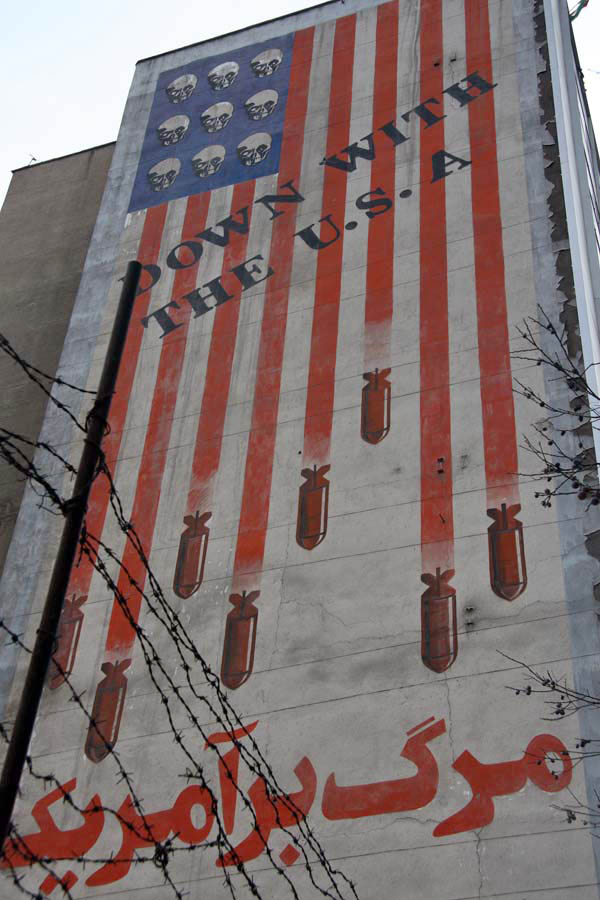
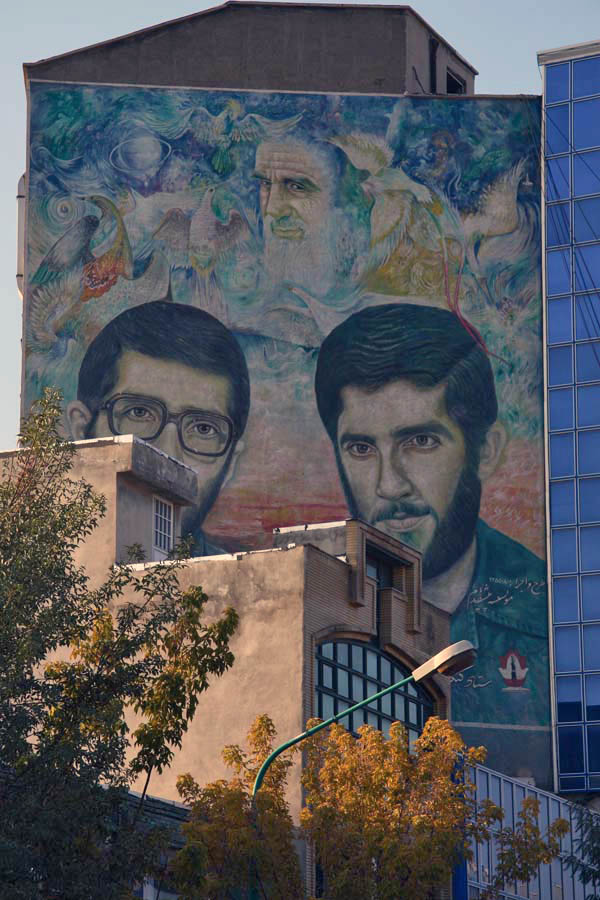
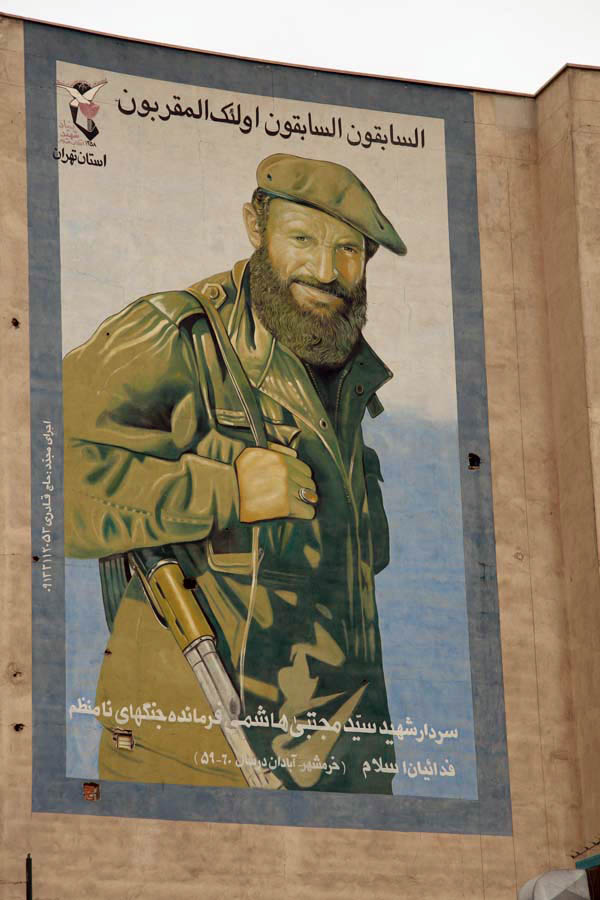
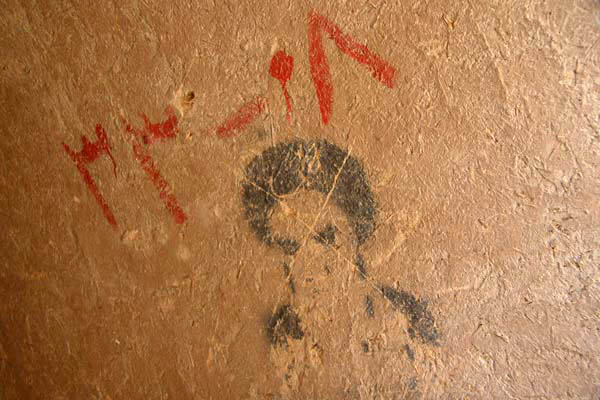
It is strange how what might be seen as radical and subversive in one culture is considered mainstream in another. Street art, wall murals and the like have nearly always belonged to the radical tradition in the West – Belfast’s paramilitary gables, both Loyalist and Republican, spring to mind. By its very nature, street art is art for the people – no fee, no exclusive gallery, it mocks those in power or at least makes a statement about some sort of alternative politics, subculture or way of life.

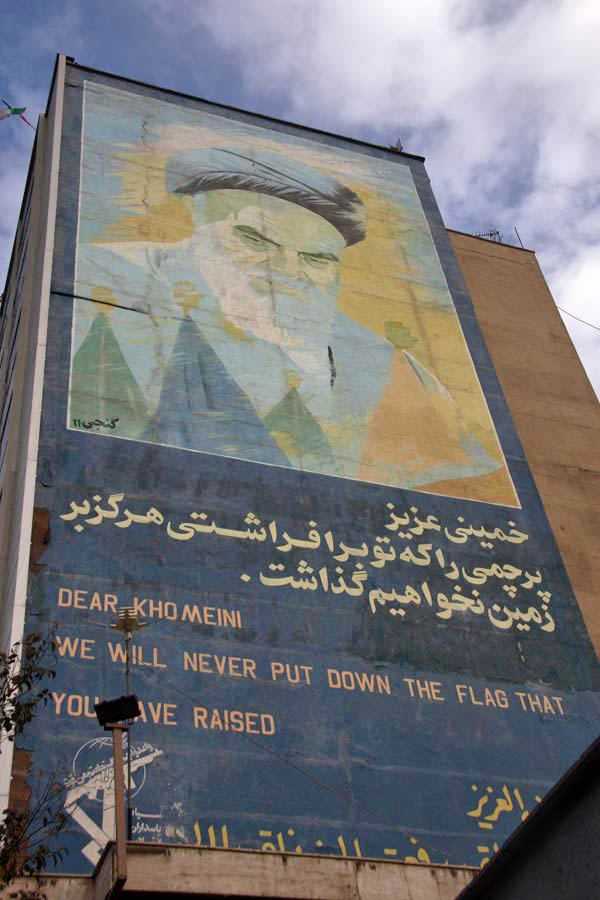
In Iran though, street art is officially sanctioned and  widely utilised to echo the government line. The subject matter is predictable – religious leaders, holy martyrs, Koranic verses and Western aggression (especially that of the USA). This is not to say that it is not creative and well-executed. Occasionally it might even be a little ambivalent and open to interpretation. But dissenters – and in Iran there are many who are not at all happy with their current theocratic governance – have to find alternative means of airing their views: Iranian street art represents the status quo rather than edgy subversion. In a way, it is the equivalent of the British government recruiting ‘Urban’ musicians to rap about the need for social service cuts and fiscal restraint. Art as non-protest.

These images from Tehran, Isfahan, Yazd, Hamedan and Orumiyeh were taken during my visit to Iran in late 2008.

Tofiq Bahramov, the ‘Russian linesman’

Last weekend England beat Norway 0 – 1 in a friendly football match at Oslo. Great Britain beat Norway at Eurovision too, although this was hardly cause for celebration as coming 25th, just a few points above 26th-placed Norway at the very bottom, is really nothing to be proud of. Many admire ‘null point’ Norway’s steely determination to achieve dependably low scores in this annual cheesy telefest, but those behind the Great Britain entry probably expected far more. But what what can you expect from a septuagenarian crooner named after an obscure German opera composer?

As we all now know, this year’s Eurovision was held in Baku, the Azerbaijan capital. The jury is still out as to whether this ex-Soviet country in the Caucasus geographically belongs to Europe or not but, for the purposes of this competition, Azerbaijan is as much a part of Europe as Norway or France…or even Israel.

I travelled to Baku back in 2000 and returned once more for a brief stay in 2010. In 2000, Baku had seemed quite a threadbare sort of place but by the time of my second visit the Azeri capital had visibly enlarged upwards and outwards to resemble a high-rise building site, with lofty buildings mushrooming near the port like blue glass monoliths. Now there was ferocious traffic too, but I braved this to seek out the Tofiq Bahramov football stadium in the north of the city. The national stadium, which had originally been a contender for the Eurovison 2012 venue, was not easy to reach on foot and necessitated the hazardous crossing of lanes of teeming city traffic. It would seem as if one of the consequences of rapid urban development is to make travel through the city on foot difficult, undesirable and even unwise. Planners seem to assume that, given shopping malls, high-rise offices and a blanket spread of MacDonalds outlets, the hapless pedestrian will happily abandon bipedalism for more appropriate means of locomotion. Clearly, those of us preferring foot power just stand in the way of progress with our unreasonable demands for footpaths, pavements and pedestrian crossings. But I digress.

The England football team’s most glorious moment back in 1966 may well owe a debt to Azerbaijan.  The sympathetic ‘Russian linesman’ at the 1966 world cup was actually an Azeri national named Tofiq Bahramov, although at the time Azerbaijan was an autonomous republic within the USSR. It was Bahramov who decided that Geoff Hurst’s extra time shot that bounced off the crossbar had actually crossed the line – a controversial decision that proved to be a vital turning point in the game in England’s favour. The final 4-2 scoreline clinched it. After the game, Bahramov, along with the referee and the other linesman,  received a golden whistle for his duties from HM the Queen. We can only presume that he would still have been given it even if England  had lost the final.

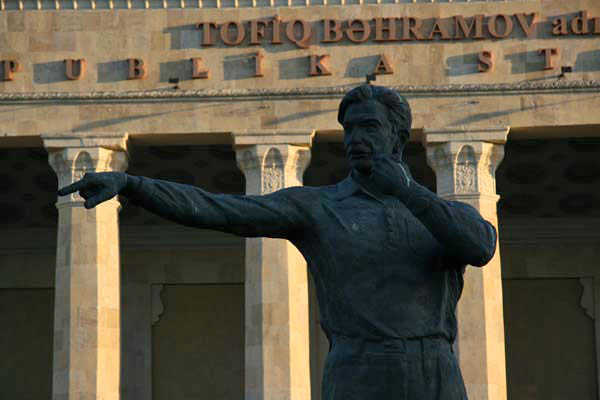
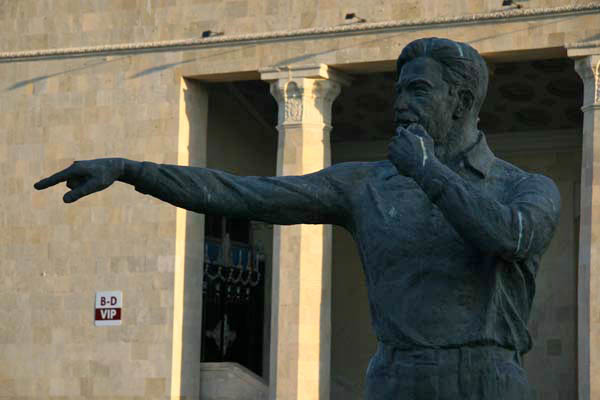
A statue of Tofiq Bahramov blowing a whistle in refereeing pose stands outside the national stadium that has borne his name since his death in 1993. The statue was unveiled in 2006 when England came to Baku to play Azerbaijan and none less than Geoff Hurst turned up to make a speech at the ceremony; FIFA president Sepp Blatter also attended. Ironically perhaps, the stadium, built in the shape of a ‘C’ to honour Stalin (C = S in the Cyrillic alphabet), was partially constructed by German prisoners during World War II. Bahramov had himself fought against the German army during WWII and on his death bed more or less admitted having a pro-English prejudice at the 1966 final –  an apocryphal story tells that when asked why he allowed the goal to stand he simply said, ‘Stalingrad’.

Ghosts of the Aral Sea

To continue from the earlier post about a hotel that thought itself a ship, here are some more landlocked boats. These, though, are real ones – the rusting remains of what was once a large fishing fleet on the Aral Sea in central Asia. The Aral Sea, which at one time was the world’s third largest inland sea, has shores in both Uzbekistan and Kazakhstan. Or rather it did have – it has now almost completely dried up (you might want to check it out on Google Earth).

It is a depressingly familiar story – large scale environmental damage thanks to government incompetence. In this case, the government was that of the Soviet Union, which diverted a vast volume of fresh water from the Aral Sea in order to grow huge expanses of cotton in Uzbekistan – a very thirsty crop in a very hot country. The fishing fleet used to catch several species of fish here, and much of the haul was transported an awful long way by train to the Baltic coast for canning. The main fishing port on the southern shore was Moynaq. Now the boats lie stranded just off the former shoreline. The water, such that remains – saturated with pollutants and virtually devoid of fish – lies hundreds of kilometres to the north.

Given mass employment, isolation, heavy metal pollution and an uncaring post-Soviet government in far off Tashkent, Moynaq is not a happy place.

I visited Moynaq by taxi from Nukus to the south. It was certainly the longest taxi ride I have ever taken – 220 kilometres each way – but even so I managed to bargain a return fare of just $60 (petrol is cheap in Uzbekistan, so is time). The road was surprisingly good, and we speeded north through Karakalpakstan (an autonomous republic within Uzbekistan that translates literally as ‘the land of the black hats’), through a flat landscape of cotton fields, reed beds and poplars yellowing with the arrival of autumn. The driver put his foot down and it took just a little over two hours to arrive at the erstwhile port.

In Moynaq, the scene from the ‘shore’ was both poignant and surreal: scrubby vegetation, sand and rotting boat hulks as far as the eye could see, everything shimmering slightly in a heat haze – the unwordly setting for a Sergio Leone Western that would never be made. My journal records it as ‘a sort of post-apolcayptic Wells-next-the-Sea where the tide never comes in’, and that seems reasonable enough. Away from the absent sea, the town itself, with its depressed air, street corner groups of listless youths and tangible taint of pollution, simply gave the impression that even with full employment, fishing and fresh water it would still be a dump. Now Moynaq was just a neglected and forgotten backwater… without the water.

(For another tale about another former Soviet fishing port now fallen on hard times you can read this about Balykchy, a threadbare port on Kyrgyzstan’s Lake Issyk-Kul.)

Nukus, where I had based myself for the dash to the rusting Aral fleet, was marginally better, although it had none of the Silk Road allure of other cities in Uzbekistan like Bokhara, Samarkand and Khiva, which despite heavy-handed reconstruction still hold  romantic appeal. Oddly enough, what Nukus does have is an incredible art collection. The Karakalpak Museum of Arts has a fantastic display of modernist work from the 1920s and 1930s that was collected by the artist Igor Savitsky (1915-84) and safely squirrelled away here in this distant corner of the former USSR. Here, far from Moscow, supposedly counter-revolutionary work such as that of the Russian avant garde managed not only to survive but also to go on display alongside ‘approved’ works of Soviet realism. There are even some who say that, in terms of Russian and Soviet art, the Nukus gallery is second only to the far more famous collection in St Petersburg’s Hermitage.

The Tarka Trail

There’s a walk through Norwich’s western edgeland that Jackie and I must have done a hundred times. It begins close to a supermarket at Eaton, Norwich’s wealthy southern suburb, and follows the bank of the meandering River Yare upstream towards the broad at the University of East Anglia before the river veers west towards its central Norfolk source. A peaceful walk, frequented by just the odd suburban dog-walker and jogger, it is the epitome of the countryside in the city or, rather, its leafy urban fringe. Drooping willows frame the water, small fish swim, birds tweet in the bushes and reedbeds; herons and kingfishers are regularly sighted along the river. The houses on the opposite bank, with their expansive back gardens and private river frontage, give rise to occasional bouts of envy but on the whole we are simply happy to have the opportunity to walk somewhere like this so close to home.

From the car park where the walk begins, a path leads to the river next to the medieval bridge that once marked the principal route into Norwich from the south. There is an attractive white wooden mill house here, a gushing weir and a NO FISHING sign. The path follows the river under a flyover that carries the bulk of traffic into the city these days – at weekends, a constant buzz of cars speeding into Norwich for retail therapy. Compared to the fine curves and warm sandstone of the nearby bridge, this has all the charm of a multi-storey car park: quotidian concrete and murky, permanently shaded water sheltering that ubiquitous creature of the urban waterway – a supermarket shopping trolley. A Ballardian microcosm, this edgeland non-place provokes an interruption in the pastoral flow of the walk; a frontier to be crossed (or underpassed) before continuing along the riverbank beyond. The smooth round pillars that hold up the flyover are splattered with spray-can ciphers – warnings and portents perhaps? A couple spell out ANARCHY, or words to that effect. Another graffito, more considered, pronounces HAPPINESS DOES NOT HAVE A BAR-CODE.

On Monday, our walk took an unexpected and delightful turn when we spotted a solitary otter at the mill pond near the bridge. Oblivious to the sign prohibiting fishing, the animal was busy hunting – diving and then resurfacing with just its head showing above the water like a small sleek Labrador. We knew that otters were frequently seen in the area by early-worm fishermen but we had never seen one here ourselves. This time, we were privileged. We watched in silence as the animal worked its way along the water’s edge, shaking the reeds at their base and leaving tell-tale trails of bubbles as it swam underwater. It eventually disappeared somewhere near the weir, just before the flyover, and we remarked on how lucky we had been to have had such a good view.

Five minutes later, I was just about to say something sagacious like, ‘It could be a year before we see one again’, when another otter –  probably the same, earlier one displaced further upstream – surfaced beneath a drooping willow. The animal progressed through the reeds at the river’s edge for some time before swimming to the opposite bank, foraging there awhile before returning midstream to dive once more with an effortless flex of its back. We followed it upstream for a full half hour, the otter hyperactive for most of the time – diving for fish, snuffling through vegetation, occasionally sneaking a look back at the two humans and one small dog that were politely in pursuit. We drew so close that we could hear teeth crunching bone as the animal munched the fish it had caught, the otter’s noisy chewing just one aural ingredient in a soundscape that included other familiar echos of the urban fringe in May: small birds chirruping, an overenthusiastic cuckoo (the first heard of the year), chiffchaffs chiff-chaffing, a background thrum of cars on the flyover and the distant eye-ore of the Cambridge train’s air-horn.

We lost track of the otter somewhere in the wider stretch of the river that leads to UEA Broad. It did not matter: our unexpected encounter had been far in excess of anything than we might have hoped for. It didn’t even matter that I did not have my camera with me: if anything, it was liberating to simply observe without the nagging distraction of having to keep a digital record.

Walking back to the car park, I made a short diversion back to the bridge on the off chance that the animal had returned there. No sign. Turning to leave, a metallic blue bullet flashed close to the water and darted beneath the arch of the medieval bridge: a kingfisher, often spotted here but hitherto unseen on this red letter day for wildlife. Happiness does not have a bar-code. True enough.

Lake Baikal

Listvankya on the northern shore of Lake Baikal in east Siberia is a small fishing village and port that also serves as a holiday destination for Russians in the short Siberian summer. By late September summer is definitely over and there was a melancholy end-of-season feel about the place when I visited in 2010. It was also surprisingly cold and the fact that Lake Baikal freezes so solidly in winter that you can drive trucks over it seemed perfectly believable.

This was the furthest east I got on that trip, having arrived in the nearby city of Irkutsk on the Trans-Siberian railway from Moscow. The Russian tourists had all left Listvyanka by the time I arrived and apart from a few fishermen, a handful of locals and a large population of ravens I had the place very much to myself.