Pink

I  will let the pictures do most of the talking in this post.

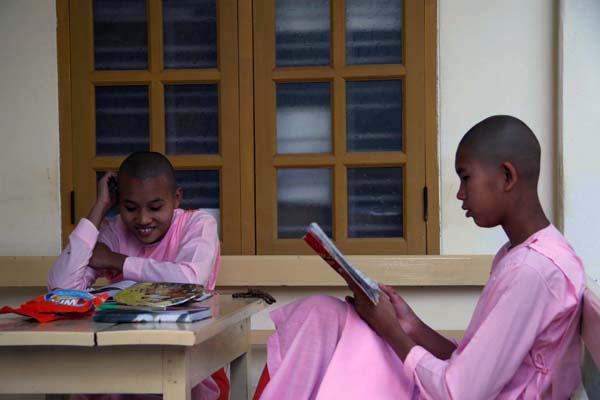
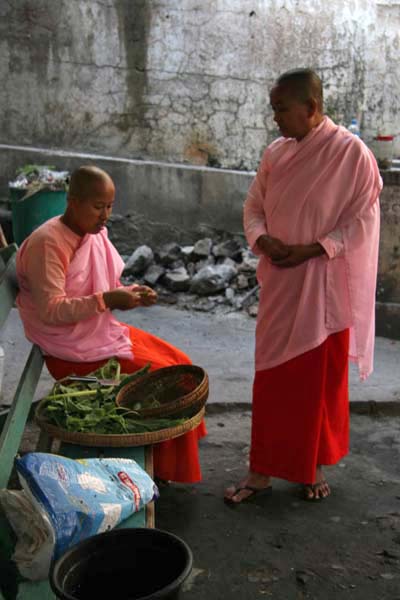
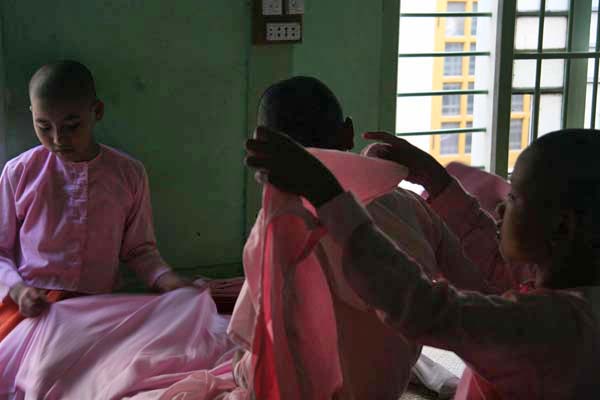
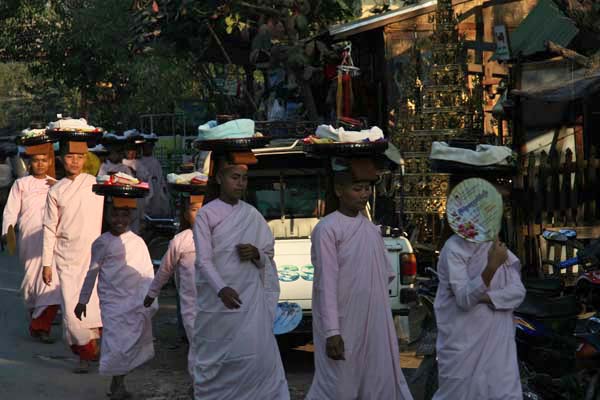
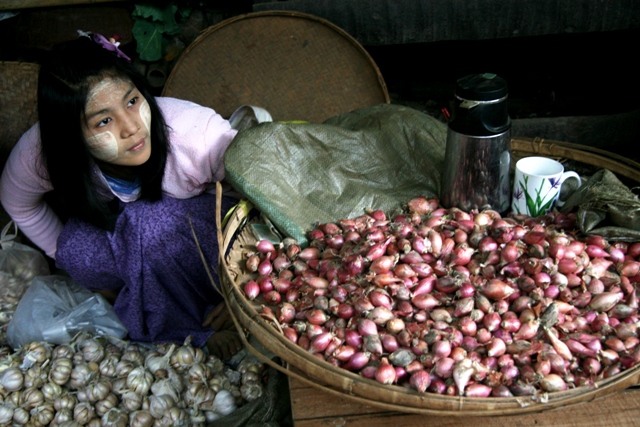
Buddhist nuns in Myanmar always dress in a fetching pink colour. A nun’s life is tough but they seem cheerful enough, collecting alms in the market, studying Pali sutras or sorting out clothes at the nunnery. The commitment is actually finite, as most Burmese girls only join the nunnery for a period of a few weeks at a time.

As with Burmese boys, time spent in monasteries is viewed as a right of passage and it is considered an honour for the family to have their child wear robes for even a short period. Naturally, it brings good karma too.

Young nuns at Mingun nunnery and at Amarapura market, Myanmar

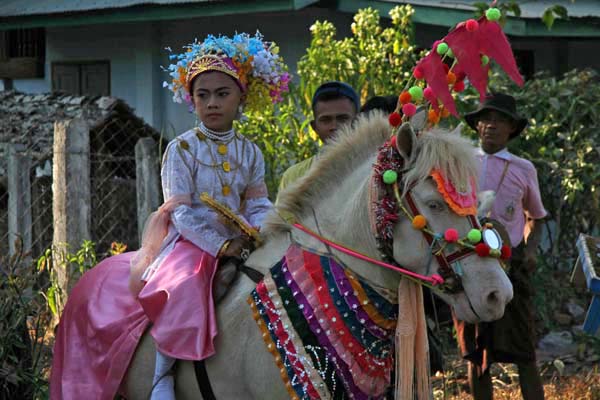
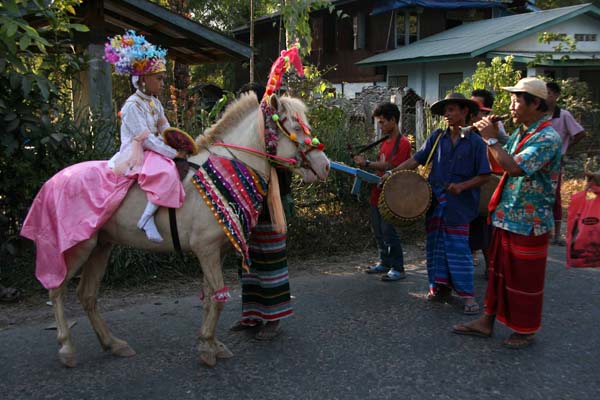
The character below is actually a boy, despite the makeup and pink get-up. He is on his way to a monastery to become a monk for a few weeks. The boy is accompanied by villagers who sing stirring valedictory songs to him as he rides along on his pony. Most of the village seems to go along for the ride – it is a party atmosphere and drink (palm toddy perhaps) has certainly been taken by some of the happy entourage. Remarkable as it may seem, this is the sort of chance event that you stumble upon every day of the week in Myanmar.

Young novice processing to Buddhist monastery near Hpa-an, Myanmar

The Road to Moulmein

‘By the old Moulmein pagoda lookin’ lazy at the sea

There’s a Burma girl a-settin’ and I know she thinks o’ me’

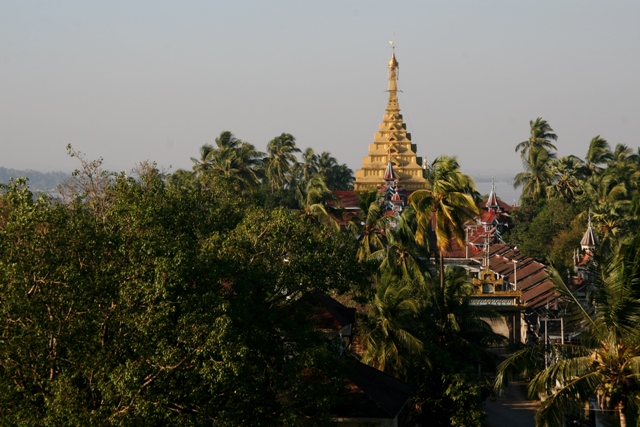
These words by Rudyard Kipling form the opening lines of the Road to Mandalay, an evocative poem that manages to capture the mysterious spirit of the East as seen through Western eyes. The work holds such an important place in the colonial canon that it comes as a surprise to discover that Kipling only spent a total of three days in Burma (now known as Myanmar). What is more, he never actually set foot in Mandalay itself. He did, however, briefly visit the southern coastal city of Moulmein (now known as Mawlamyine or Mawlamyaing) and it was the sight of a beautiful Burmese girl climbing the hill on her way to the city’s Kyaikthanlan Paya pagoda that inspired Kipling’s muse in this instance.

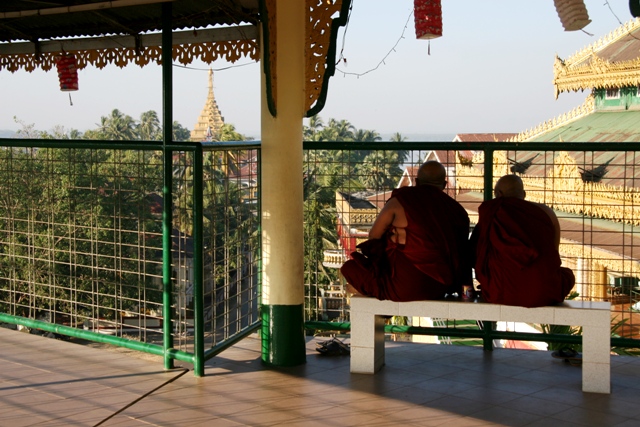
Kyaikthanlan Paya is the most prominent of a number of glistening Buddhist stupas that line the high ridge bisecting the city. Having arrived in Moulmein by means of a nine-hour train journey from Yangon in which the buckled rails made us bounce in our seats like cantering equestrians, a leg stretch seemed in order and there was just enough time to pay a visit to the pagoda before darkness fell. As things turned out I did not walk all the way up to the top as halfway up to the temple complex an elderly gentleman stopped to offer me a pillion ride on his motorbike. Such events are not out of the ordinary in Myanmar; after just a couple of days in the country I was already aware that thoughtful yet undemonstrative gestures like this were commonplace.

Watching the sun set over the sea from the viewpoint beneath the temple I met another old man who seemed delighted when I told him I was English. I am not sure if this was because he simply approved of my nationality or whether he was just pleased to have the opportunity to use the English he had learned long ago in school. Either way, the warmth seemed entirely genuine. ”It is a pleasure to see you here. I do hope we can meet here again”. (We did, the following day).

As previously mentioned, Kipling did not spend long in Moulmein – just enough time to pen his famous poem and take a fancy to a local beauty. The novelist George Orwell, on the other hand, had a far stronger relationship with the city. Orwell’s mother’s family came from Moulmein and it was also here that he underwent training with the Burma Police Force. This and subsequent Burmese experience would provide raw material for Burmese Days, his first novel and a damning account of British colonial life in which most of the colonial characters seems to be alcoholic, racist or both.

Moulmein also provides the background for Orwell’s 1936 memoir Shooting an Elephant, a work that opens with the arresting line:

‘In Moulmein, in Lower Burma I was hated by large numbers of people – the only time in my life that I have been important enough for this to happen to me.’

Wat Phou

Get there early – this is the sound advice usually given when visiting popular tourist sites. This is exactly what I did in Siem Reap, Cambodia when visiting Angkor Wat a week or so ago but it seems like several thousand others also had the same idea. As I tuk-tuked my way into the vast ancient complex the site was already crawling with a vast number of hot and sweaty camera-clicking visitors – mostly large tour groups obediently following their guides over the stones like human snakes. All I could do was join them in the fray.

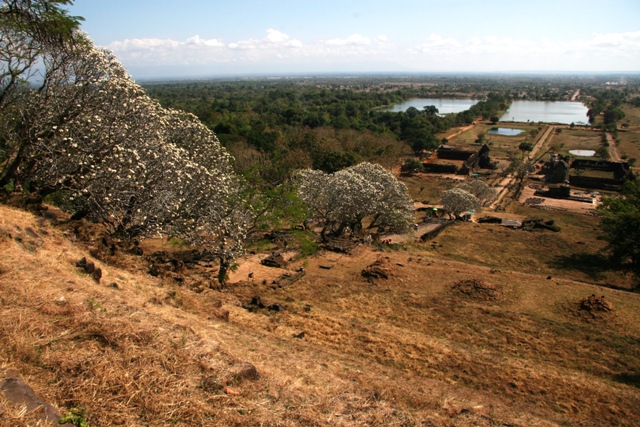
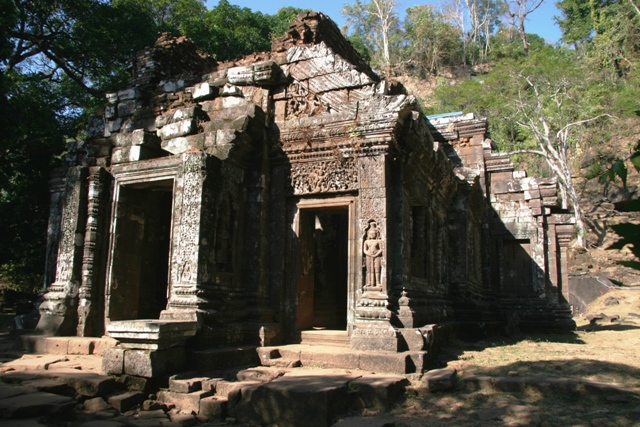
Wat Phou in southern Laos is another ancient Khmer site. While it may not have the enigmatic stone faces of Angkor Tom’s Bayon, or be as enormous in scale, it makes up for it with a gorgeous hillside location close to the Mekong River -that, and a lack of crowds.

A couple of days ago, I got up at sunrise – it is difficult to sleep late in steamy, low-lying Laos. After a quick breakfast watching the sun lift over the Mekong, I hired a bike – a much-abused machine that misleadingly bore the name ‘Turbo’ – to cycle the 10km to the site. Forty-five minutes later, I arrived at the entrance to Wat Phou on my squeaky ‘ladies’ shopper’. The dusty road that lead there was the sort of terrain that most cyclists would probably consider ‘off-road’ – but it was an interesting pedal alongside dry paddy fields and through tiny villages where the day was just starting as people burned joss sticks and prayed in front of the bird table-like spirit house that stands in front of every house, however modest, in the country.

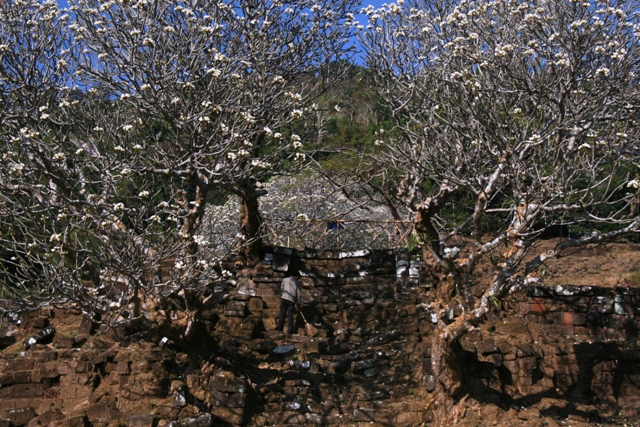
A processional way leads through the Wat Phou temple complex, passing between large baray or ceremonial ponds before climbing steps steeply up the hillside up to the sanctuary itself. The steps were lined with flowering frangipani trees so voluptuously aromatic that you could almost eat the air with a spoon. Pleasingly – or should I say, smugly – I seemed to be the first to arrive. First, apart from a few locals who were setting up their pitches at the top selling shrine offerings and soft drinks. With the place to myself, I made a leisurely tour of the sanctuary, originally Hindu, now Buddhist, seeking out the sacred Shiva spring, the rock-carved elephant and crocodile, and the library. I never did find the Buddha’s footprint but it was a pleasure to survey the shimmering plains below from this breezy elevated viewpoint beneath the deep shade of mango trees.

Eventually, a few others arrived – a friendly Lao-American family, a couple from Manchester who were staying at my guesthouse. Later still a few small tour groups turned up, French and German mostly. Even then it was hardly the circus that Angkor Wat seems to have become these days. Wat Phou may not be ‘undiscovered’ but it is certainly very low-key when compared to its sister site to the south in Cambodia. And let us not forget, Wat Phou is also the older of the two.

Mekong musings

This post comes from somewhere firmly east of Elveden – from Southeast Asia or, more precisely, the deep south of Laos.

Last week was spent travelling along the Mekong River from Ho Chi Minh City, Vietnam north into Cambodia. Then, courtesy of Lao Air, a quick crossborder turboprop hop from Siem Reap to Pakse in southern Laos.

Angkor Wat near Siem Reap was, of course, astounding but the vast crowds and grey-skied humidity were debilitating and within a few hours I found myself to be in that state universally known as ‘templed-out’. Angkor Wat, Angkor Tom and the other religious sites around Siem Reap are by far the country’s biggest draw but elsewhere Cambodia is a poor and savagely scarred place. Quite understandably, almost everyone over the age of 40 seems to have a haunted look, although these survivors of the Khymer Rouge period will tell you that contemporary Cambodian youth simply doesn’t want to know about the horrors of the past. The dreaded Killing Fields just outside Phnom Penh and the city’s infamous S-21 prison are just as bad as you might imagine – even worse perhaps. The continuing tragedy is the fact that several erstwhile senior Khymer Rouge officials still hold high-ranking government posts. These are the ones that parade around Phnom Penh in black-windowed Lexus, eating at fancy air-conditioned restaurants while the vast majority of the population barely scrapes a living farming rice in the hinterland.

Laos – or rather the People’s Democratic Republic of Laos – feels different. Poor certainly, but seemingly a happier place despite its unenviable reputation as being, in per capita terms, the world’s most heavily bombed country of all time – this, during The Vietnam War (or, as they call it in Vietnam, ‘The American War’).

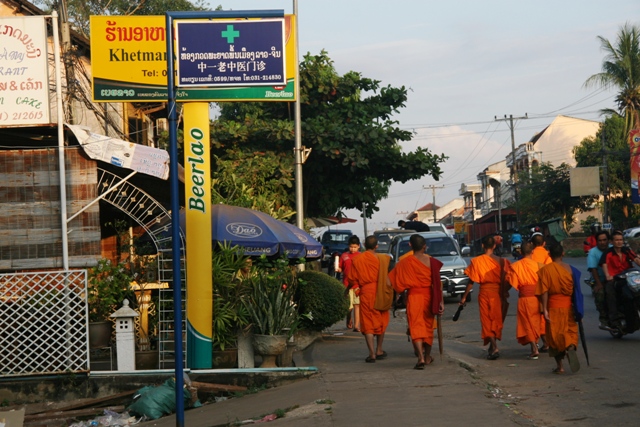
Stopping for a coffee this morning at a place that serves as an outlet for local organic coffee production there was no coffee to be had as the machine had just broken. So I drank tea instead and listened as a table of saffron-clad Buddhist monks start chanting as soon as they had finished their noodle soup. No-one reacted in the slightest: monks are everywhere here; an almost quotidian part of Laotian daily life. In Laos, the future may be orange, but so was the past.

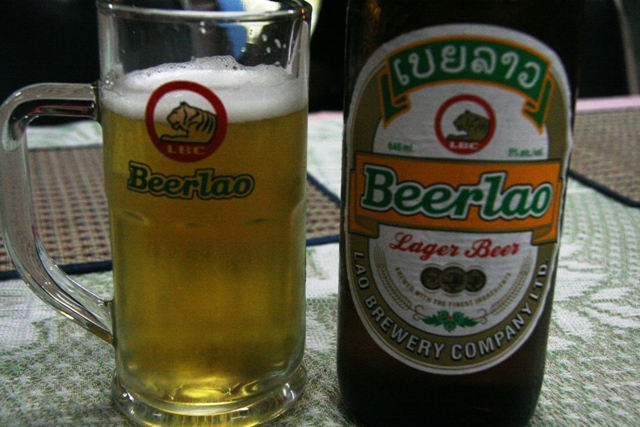
Another ubiquitous sight here is advertising for Beerlao, the nation’s favourite beer.  The beer – pretty tasty by the way – is sold everywhere in no-nonsense 640ml bottles. Everywhere, too, are the yellow signs that advertise the brew, as well as beer mats, table cloths, menu covers, waitresses’ aprons and café clocks. Its cheerful yellow and green logo is so widespread here in Laos that Beerlao appears to fill a semiotic niche even more comprehensively than Coca-Cola manages throughout much of the rest of the developing world. Unusually, signs advertising the familiar fizzy sweet are nowhere to be seen.

As the Hermetic philosophers might say:

As above, so Beerlao.

High Line

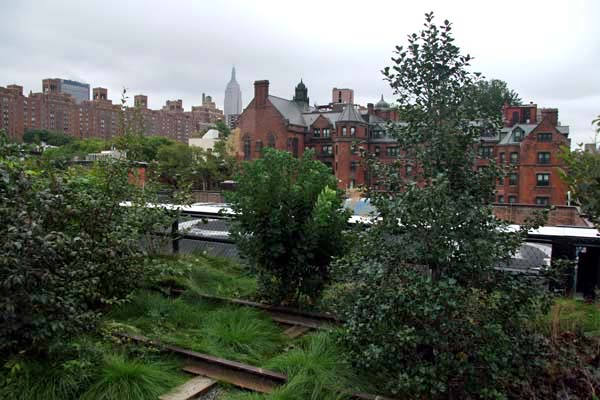
New York City isn’t the sort of place that immediately springs to mind when one thinks of walking but the city is a treasurehouse for urban exploration. Walking – with a little bit of assistance from the city’s comprehensive bus and subway system – is by far the best way to get under the skin of the ‘Big Apple’ and, to squeeze the life out of this hackneyed metaphor, who knows what you might find – pips, juicy flesh,  maybe even a worm or two?Unlike many American cities, where the assumption is that people prefer to move around in noisy mobile metal boxes, New York is a relatively pedestrian-friendly place. For a wholesome, petrochemical-free experience, there’s always Central Park, but for the past year or so there has been another traffic-free route through Manhattan’s West Side that has transformed a pre-exisiting industrial conduit to a green pedestrian byway.

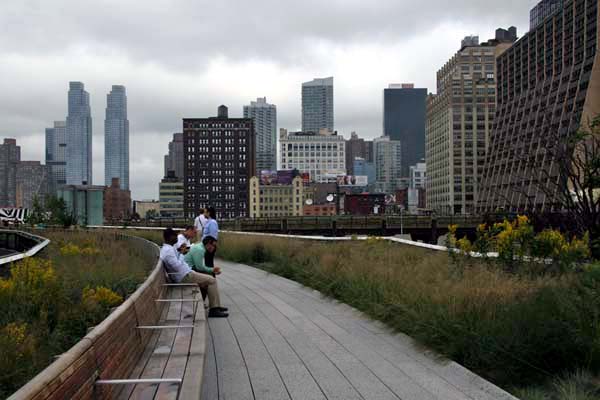
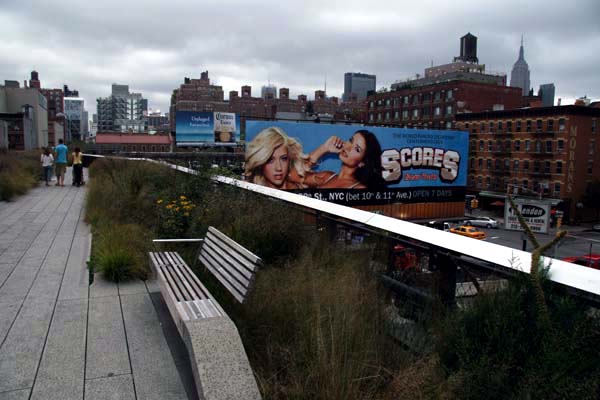
New York’s High Line, a mile and a half of raised walkway above the working class neighbourhoods of the West Side, was once part of an elevated railway that was built in the 1930s to shift goods to and from the slaughterhouses and packing plants of the Meatpacking District around Gansevoort Street. Defunct by the mid 1980s, the rail line has since been lovingly transformed into a fine green artery that links that same meaty neighbourhood with West 34th Street in Hell’s Kitchen to the north. In place of sleepers and railtracks a landscaped walkway now threads along its length, which is lined on both sides by plentiful benches and seating areas, and long leafy borders filled with grasses, perennials and shrubs. To add a bit of glamour, the Empire State Building peeks above the surrounding city roofline at regular intervals as a reminder that Midtown’s architectural bling is really not so far away.

The real beauty of the High Line is that it does not really have any specific sight to see at either end – the Meatpacking District was never a big tourist draw, although the neighbourhood is currently on the up and being gentrified faster than you can say ‘sushi bar’. Sometime in the future there will be a new American art museum built at Gansevoort Street but, for the time being, rather than any particular goal, the attraction is the High Line itself – the walking of it. What better way to take in the city than to stroll above the streets and buildings where New Yorkers actually work and play out their lives?

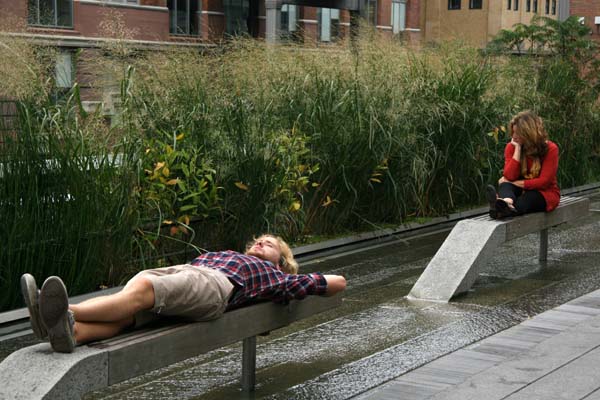
Technically speaking, the High Line is an urban park rather than a mere thoroughfare. Its not just for tourists but a place filled with office workers eating sandwiches and  friends taking a stroll together – native New Yorkers looking down on the streets they have known all their lives and seeing them from a fresh perspective. It is also quite remarkably crime-free.

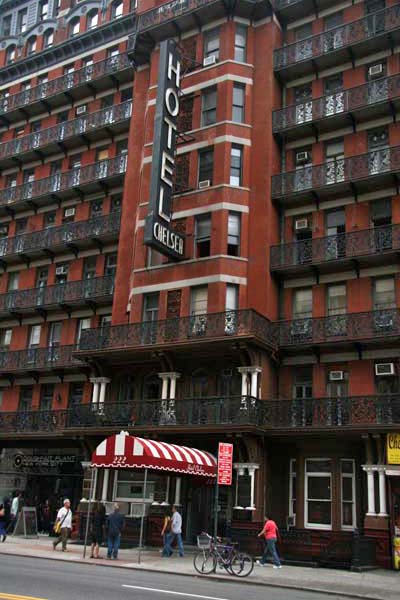
Halfway along, just south of Hell’s Kitchen, the route runs through the West Chelsea district and anyone wishing to pay homage to Sid Vicious or Dylan Thomas (who both died here), or Jack Kerouac, Bob Dylan or Joni Mitchell (who all embraced its muse), could do worse than make a short pilgrimage to visit the famous Chelsea Hotel at West 23rd Street. Sadly, the hotel has recently been bought up by a developer and is no longer open to ‘receive new guests’, so artists, writers and rock stars in search of a creative Bohemian atmosphere or a suitable venue for high-spirited shenannigans are now obliged to look elsewhere.

East of Everett – Riding the Empire Builder

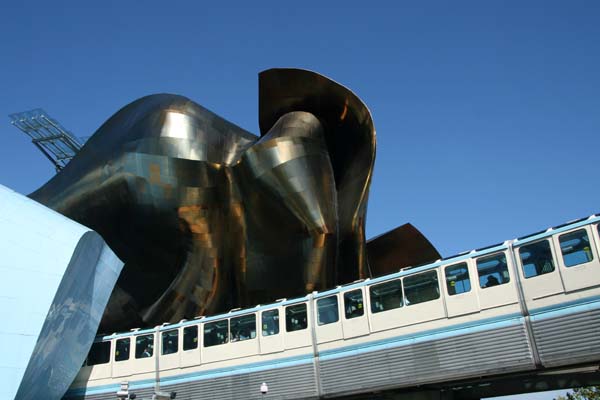
Arriving in Seattle, having spent the last two weeks on a small boat, it was time to make use of other forms of transport to get home. Flying all the way Seattle-New York-London would have been straightforward enough but after a fortnight at sea where 8-10 knots was routine I was keen to not only feel the earth beneath my feet for awhile but also to continue at a relatively stately pace. So I opted for the train: first to Chicago, then to New York City from where I would, begrudgingly but inevitably, finally take to the air to cross the Atlantic. By way of a prelude to all this cross-continental railroading I made use of the few hours I had in the city by taking the Seattle Centre Monorail to visit the Space Needle – an all-too-short run across the city centre that actually passes through the multi-coloured sheet metal flanks of Frank Gehry’s Experience Music Project Museum before arriving at its terminus.

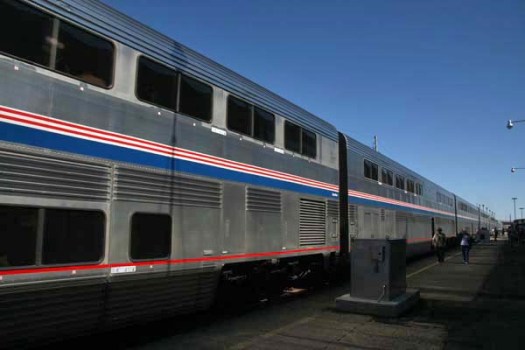
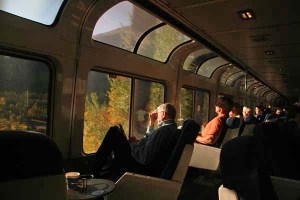
Amtrak‘s Chicago-bound Empire Builder leaves every afternoon from Seattle, taking around 46 hours – the best part of two days and nights – to reach the windy city on Lake Michigan’s shore. A parallel service runs from Portland in Oregon and both trains join up in the middle of the night at Spokane, Washington. On my first evening on the train I decided to head for the dining car just after passing through Everett, Washington. Here, I met up with Anne (Amtrak waiters insist on grouping solo travellers together at tables – dining on a train in the US is a sociable event whether you like it or not), a grandmother from Seattle on her way to visit various offspring way out east. Travelling in the United States, instant life stories and the brandishing of family photographs to total strangers are pretty much the norm and a shared meal is viewed as a welcome opportunity to make new friends. Anne was no exception. We were all friends here on the train – relaxed friendliness being the default setting of any sort of public transport in the USA. As our conductor would announce later on that night, “Ladies and gentlemen please ensure that you have not put your belongings on the neighbouring seat. We are expecting quite a few travellers to get on at Leavenworth and so you will probably have a new friend joining you when we get there. Let’s make them feel welcome.”

No-one came to sit next to me at Leavenworth but at Wenatchee an hour or so later I was joined by an elderly man called Dale who had just come from a week-long Lutheran Church retreat in the wilds of Washington State. “I see we’ve got us a groaner here”, were his first words to me as he wearily slumped down alongside, throwing a casual nod at the source of the shrill metallic wail that was emanating from the carriage wheels beneath us and had been doing so intermittently since leaving Seattle several hours earlier. Lean and bearded with plaid shirt and baseball cap, Dale might have looked like a typical retired Mid West farmer but was, in fact, a lay preacher in the no-nonsense undemonstrative Lutheran tradition. Despite an outward appearance that might give the impression of being a little ‘ornery’ Dale was the gentlest of men, with a playful, twinkly charm and a thoughtful, considered take on the world. We got talking about Alaska. He had spent a year there as a preacher on an isolated island close to the Arctic Circle just 40 miles from Russia (“And I mean 40 miles, not like that fool idea that that Sarah Palin woman had that she could see Russia from her house in Wasilla”). Dale’s northern sojourn had given him the greatest respect for the native people that endured the difficult living conditions of Alaska’s far north although he acknowledged that there were serious problems of alcohol abuse. “It was supposed to be a dry island but people being people they snuck it in somehow.”

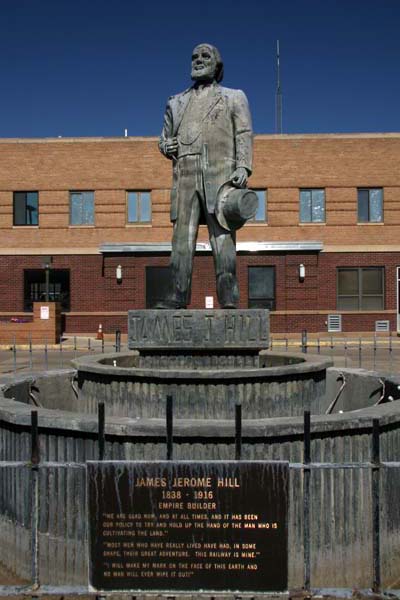
Catching a glimpse of western Montana’s Glacier National Park early the next morning – and adding on an hour as we reached the USA’s Mountain Time zone – the landscape soon settled down to the flat prarieland that we would be passing through for the rest of the day. This was cattle country but the grass looked thin and parched after a hot, dry summer. After Shelby, Montana, we entered cereal-growing territory, with newly harvested wheatfields rolling away to the horizon and tall grain silos by the roadside. Stopping at Havre, there was enough time to stretch our legs on the platform and examine the statue of James J. Hill, the founder of the Empire Builder route, in front of the station. A small group of Amish dressed in 19th-century added a touch of local colour. Amish generally spurn modern technology but are nothing if not pragmatic and for long distances it seems the train is an acceptable alternative to travel by horse and cart. Leaving Havre, we reached Glasgow (Montana, that is) two and a half hours later and passed into North Dakota and the Central Time zone in the early evening. North Dakota looked very much like eastern Montana had done and the view out of the window would not really change that much until we reached the industrial cities of the Great Lakes the following morning.

An entire day spent passing through relentless treeless praries has an unsettling effect. It instills a sense of melacholia. Perhaps it is not so much its appearance but its sheer scale that affects one so: the isolated farming settlements, the unknown family dramas lived out behind closed doors; small lives in a big landscape. It is humbling to think that the pioneer settlers who ventured this way in the 19th century had little idea of what lay beyond the next mile west other than almost inevitable danger of one sort or another.

As a reminder of the early days of this great western migration we stopped at Fargo, Minnesota in the early hours, although most of us were asleep at the time. The city, originally called ‘Centralia’, later became ‘Fargo’ in honor of Northern Pacific Railway director and Wells Fargo Express Company founder William Fargo. The arrival of the Northern Pacific Railroad here bestowed the city with the reputation as ‘Gateway to the West’.

Early next afternoon we shuffled through the endless urban sprawl of Milwaukee. Famous for its brewing industry (inspiring the song, What’s Made Milwaukee Famous Has Made a Loser Out of Me), the city’s huge car parks and warehouses put me in mind of a super-sized Swindon, although to my knowledge no tragic country anthems have ever been written about the Wiltshire town. Two hours later we pulled into Chicago, just twenty minutes behind schedule. Chicago’s Union Station lies in the heart of the city’s downtown district, towered over by some of some of the tallest buildings of the world. After southeast Alaska, where tall buildings and even tall people are scarce, this was the most urban environment imaginable. Quite a stark contrast from the tranquil waters of the Inside Passage I had been sailing through just a few days earlier. There again, so was Seattle.

Blowing bubbles in the Clarence Strait

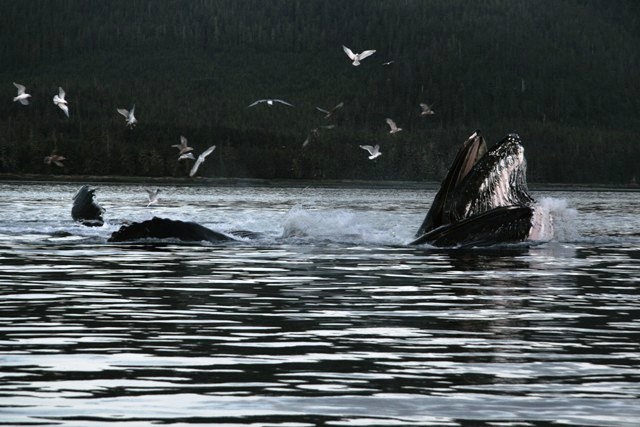
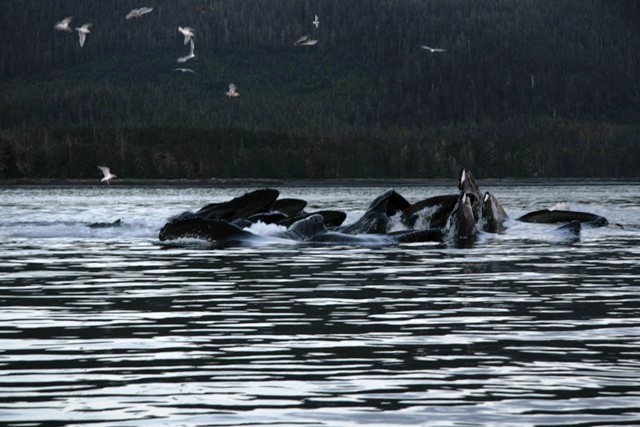
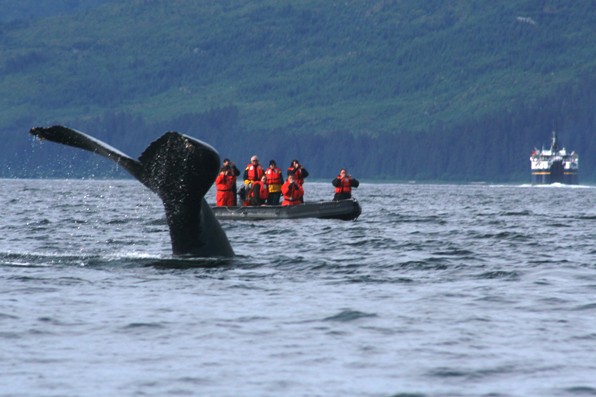
After Petersburg, a squeeze through the self-explanatory Wrangell Narrows took us south into the Clarence Strait, prime hump-backed whale territory. A group of hump-backs were soon spotted off the stern and we took skiffs out for a closer inspection. We had seen a number of them a couple of days earlier in Glacier Bay, but not like this.  Here, a group of ten or more were ‘bubble-netting’ for herring. This rare co-operative feeding behaviour involves a group of whales diving deep and producing bubbles from their blow-holes to create an underwater curtain of bubbles that traps the small fish that the whales feed on. Herrings hate bubbles and will do all they can to avoid passing through them and so what the cunning whales do is  to create a net of them that traps the disoriented fish before they rise en masse to the surface with mouths agape to scoop them up. Gulls – Bonaparte’s Gulls mostly, I think – take advantage too, grabbing those fish that manage to escape the whales’ enormous gaping jaws. In fact, it is excited gulls that tend to give away the location of the any imminent bubble net. It is a magnificent spectacle: ten 50 foot whales all hitting the surface together is an unforgettable, quite humbling sight; a phenomenon that gives new meaning to the term awe-inspiring. In less than an hour, we saw it happen four or five times

Southeast Alaska’s Clarence Strait, west of Prince of Wales Island, is one of the best locations to see this behaviour. Nevertheless, it is still very rare. Karl, our guide, reckoned that of, say, 25,000 hump-backed whales in the North Pacific maybe just 100 practised bubble-netting in groups like this. It has only ever been observed in southeast Alaska. We had just seen 10% of the world’s cetacean elite doing this very thing – a rare privilege indeed.

Petersburg

Petersburg. No, not that one – this Petersburg is in the Alaska panhandle, south of Juneau, north of Ketchikan. This is the first time in a week there has been any phone signal or internet access; the first time since leaving Juneau almost a week ago that there has been any sort of town in fact. Petersburg is named after its Norwegian founder Peter Buschmann who settled here just over a century ago to found a fish canning business. The town still has a Scandinavian character, with Norwegian-style rose-mailing prettifying its streets.

The Alaska Inner Passage cruise began in Juneau last Friday. Getting to Juneau was fun – taking 34 hours of travel time between leaving my front door in Norwich and checking in seriously jet-lagged at the hotel in Juneau. Three flights, one overnight coach journey, a long layover in Anchorage and at least of couple of hours sitting on runways awaiting permission to take off. The biggest chunk of the travel was the flight between Frankfurt to Anchorage, which instead of flying west across the Atlantic as you might expect, headed almost due north into the Arctic Circle and arced west close to the pole. It is, after all, a three dimensional world and flight routes don’t necessarily follow Mercator’s projection. Flying non-stop Frankfurt to Anchorage takes 9½ hours and because of time zone changes you arrive in Alaska thirty minutes before you left. But, if this was the secret of eternal youth then it certainly did not feel like it.

We flew over Denmark, southern Norway and then the North Sea before curving west over the northern edge of Greenland and the Canadian Arctic to hit the north Alaska coast and pass over the Denali National Park before our descent to Anchorage. Just north of Bergen, the cloud lifted to reveal the glimmering sea beneath us, with little flecks of white that I thought might be fishing boats…or whales. Is it possible to see fishing boats from 36,000 feet up? Like a living atlas unfolding, under the clear blue skies of northern Greenland it was easy to see where solid rock gave way to the pack ice of the North Pole – nothing but mountains, ridges, snow, ice and water beneath. Halfway across Alaska we flew right alongside the peak of Mount McKinley, which loomed proud above the clouds, the highest mountain in the USA, before descending over glorious golden lake country down into Anchorage. I like to think that I saw my first Alaskan bear on the final descent – it may well have just been a rock but it is perfectly feasible.

Once US immigration decided that I was respectable enough to enter their country there was a whole afternoon to kill in Anchorage. I took the local bus into town – a modest grid of low rises against an impressive mountain backdrop, with a handful of shops selling tacky souvenirs in the city centre that advertised their presence with stuffed grizzlies on the sidewalk. These were not the bears I fancied I had seen from the air. The city has something of a frontier feel about it, with small clutches of native Alaskan drunks and shifty-eyed men with baseball caps and ZZ Top beards. A surprising number of blacks and Hispanics too – but perhaps it was my use of public transport that skewed this impression. Public transport in the US tends to be mostly the preserve of the poor and disadvantaged.

Where Anchorage was fairly humdrum, Juneau was pretty and quaint, with wooden houses climbing up steep streets beneath tall bluffs. Anchorage may have been a place that shot and stuffed its bears but Juneau, with its liberal nurturing atmosphere, was a town that seemed more likely to cherish them. Juneau was wet too, pouring that first night with pounding rain that looked as if it would never stop. Thankfully, it did, and the rain was followed by four days of glorious Indian summer sunshine – ‘a bluebird summer’ as they say here.

Since embarking at Juneau last Friday I have experienced the whole gamut of classic southeast Alaska experience: walking in temperate rainforests thick with velvety moss; hikes alongside waterfalls and even on glaciers like that at Baird Glacier yesterday afternoon. There have been hot springs and bald eagles; sea lions, countless orcas and hump-backed whales – one even appeared blowing a steamy plume whilst we were out paddling kayaks. There have been bears too – some black but mostly brown – and a couple of close (but not too close) encounters at forest streams and on beaches where they greedily snatch up migrating salmon from the mouths as streams as easily and as casually as if they were picking flowers.

Tomsk Waits

In contrast to the northwest Scotland of previous posts, the central Siberian city of Tomsk is indisputably East of Elveden – both figuratively and geographically. It is, after all, almost one quarter of the way around the world heading east from where I write. I spent a few grey rainy days here last autumn as a side trip to a long Trans-Siberian rail journey.

Tomsk lies just north of the main Trans-Siberian line, a sizeable city of about half a million sitting on the right bank of the Ob, a river that snakes its way north from here to the Gulf of Ob and the Arctic Ocean. Tomsk isn’t Arctic though – it lies at about the same latitude as Moscow and Glasgow, although it does drop to less than −20 °C in winter. Back in the 19th century, Tomsk was populated mostly by Cossacks, Tatars and political exiles but the city was side-stepped during the building of the Trans-Siberian railway line, when the new city of Novosibirsk (‘New Siberia’) was favoured as a stop instead.

These days Tomsk is a youthful, student-filled city; a relatively attractive place by Siberian standards, with a clutch of trendy brightly lit cafes around Ploschad Lenin, its central square. Trendy coffee bars are all the rage in the new Russia – even in backwoodsy Siberian cities like Tomsk. Here you’ll find ‘Travellers Coffee’, where you can get a pricey ‘bolshoi’ cappuccino, and another place called ‘Food Master’ – in a land where the Cyrillic alphabet reigns supreme, Latin script and English names are considered a guarantee of Western sophistication… or cheerless fast food. Food Master dishes up Mexican food with a pronounced Siberian accent – fajitas with beetroot, refried beans with dill and so on. There’s also an awkwardly translated English menu that temptingly offers ‘Languages with mushroom sauce’ and ‘Fat lard’ – fusion cuisine perhaps, but with a ‘con-’ prefix. Even here, in an establishment that is unapologetically ‘New Russia’, a Soviet-era fixation persists that has each component priced according to weight and itemised on the final bill – bread (the precise number of slices), sauce, garnish, meat (again precise, eg: ‘pig meat, 100g’) – as it would be the humblest factory workers’ stolovaya canteen. Actually, stolovayas are the places that I generally try and seek out – redolent of boiled cabbage, they promise cheap wholesome stodge served up by plump headscarfed women – just point and smile (or scowl if you want to blend in). It’s a genuine retro experience: school dinners, Soviet style. There is one of these tucked away in a basement a little further along Prospekt Lenin.

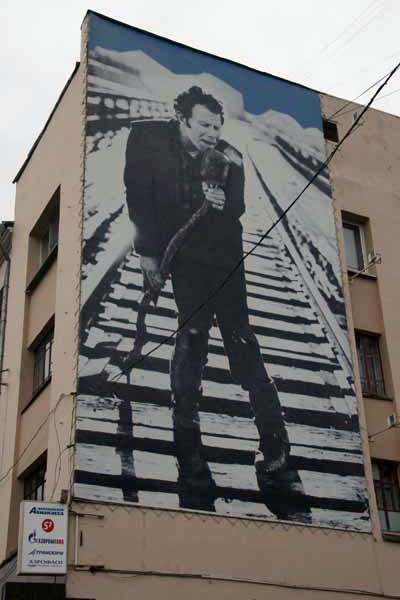
Stylish cafes are not the only concession to Western culture. Halfway along the high street a gable is covered with an enormous poster of gravel-voiced American troubadour Tom Waits standing astride a railway line and bellowing into a microphone windscreen mounted on a crooked stick – very much Tom the iconic hobo poet. The club in the basement beneath is called ‘Underground’ (a song from Swordfishtrombones) and, of course it is a lovely pun – Tom(sk) Waits – geddit. It seems unlikely that Tom Waits’ management is aware of this brazen Siberian deployment but equally doubtful that Californian copyright law stretches quite this far.  Waits is well known as an enthusiastic litigator of those who besmirch his image but this one seems to fit the brand perfectly.
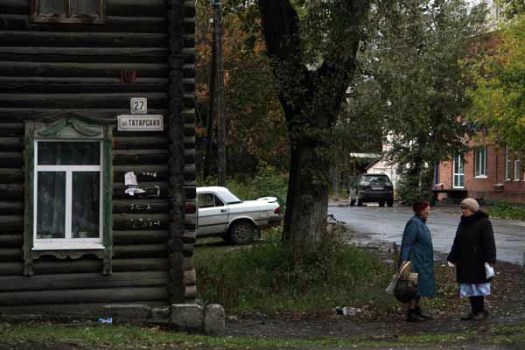
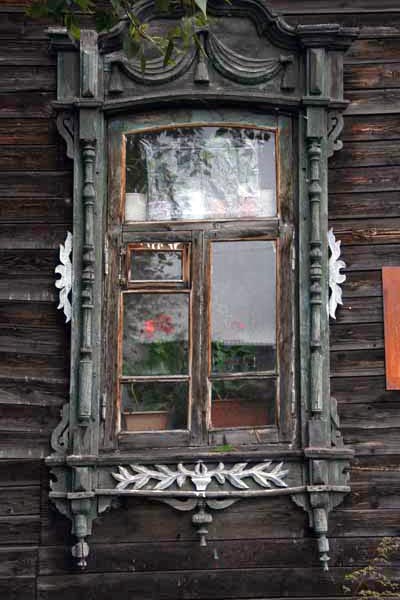
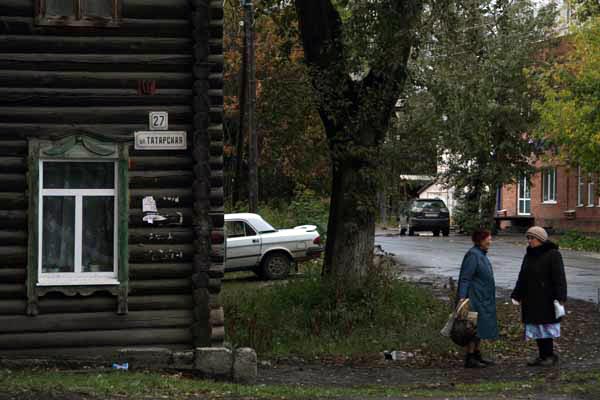
Drop down a street or two to the west, away from the clubs and cafes of Prospekt Lenin, and you immediately find yourself in Old Siberia. A leafy street called Tatarskaya (this was once the city’s Tatar quarter) has old wooden houses with elaborately carved window surrounds and friezes. Poor, a little tumbledown but undeniably picturesque, this is the sort of thing that tourists  come to see, although most tend not to wander this far off the direct Trans-Siberian route between Yekaterinberg and Irkutsk.

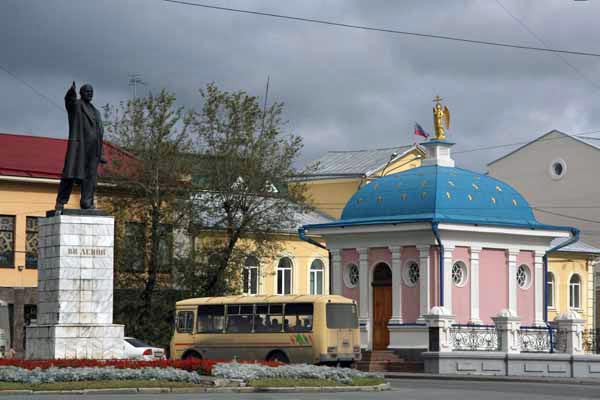
Heading further north along Prospekt Lenin you soon reach a part of town that seems to have far more resonance with the old Soviet Union. Naturally enough, there is a Lenin statue here – this one in ‘hailing a taxi’ pose – as well as some brutalist Stalin-era civic buildings, Krushchevski apartment blocks and rusting boats at the river quay. This really could be a scene from almost anywhere in the former USSR pre-1991 but it is not – it is simply a matter of post-Soviet redevelopment not quite reaching this far uptown yet.

Tomsk may have once been lauded as the ‘Siberian Athens’ thanks to its univeristies and large number of students but Anton Chekhov did not like it one bit, although surely it must have been an improvement on the penal colony at Sakhalin Island that he had visited prior to passing through the town.

He wrote to his sister: ‘Tomsk is a very dull town. To judge from the drunkards whose acquaintance I have made, and from the intellectual people who have come to the hotel to pay their respects to me, the inhabitants are very dull, too.’

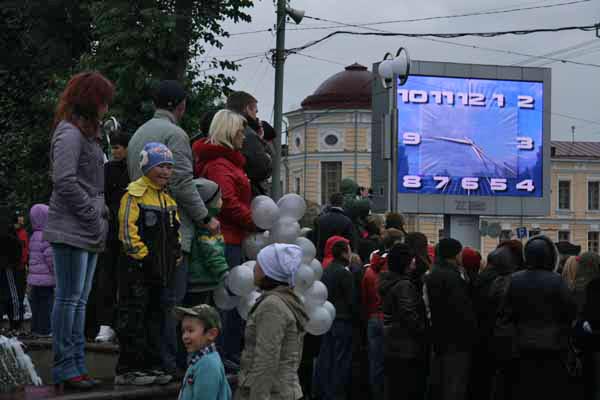
Quite understandably, Tomsk citizens have never quite forgiven this scathing dismissal of their city and in response have erected a mocking statue of Chekhov close to the university. Perhaps wounded by the accusation of  dullness, the authorities seem keen these days to instil some European-style civic fun into the Tomsk city calendar. They have inaugurated a carnival, and the one I witnessed last year was the fifth according to the posters. Roads were closed and a stage set up in the main square where a variety of acts came on to dance and mime to Russian turbo-pop. There was even a group of African djembe drummers hired for the task who grinned amiably as they performed to a bemused crowd that did not really know quite what to do. Young families and groups of friends watched the action on the stage and took pictures of each other with their mobile phones before sloping off for an ice-cream. No doubt it will take a while for imported carnival culture to catch on here – just two decades ago, rather than drumming Africans or disco-dancing teenagers, the citizens of Tomsk were watching processions of tanks and soldiers with supersized hats march by.
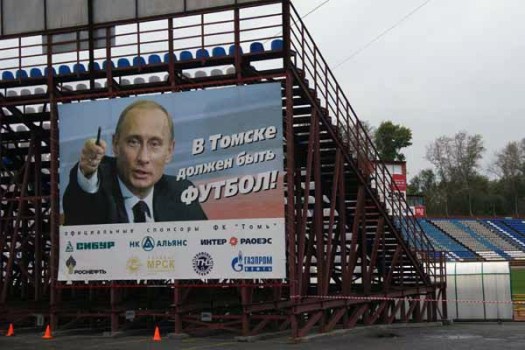
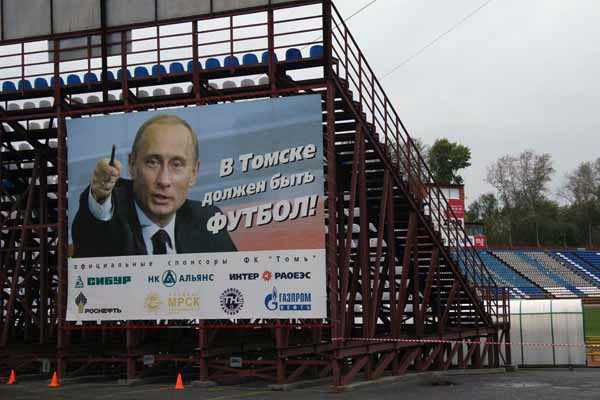
While Tomsk may struggle with the concept of carnival it is doing well in the world of football. In recent years the city’s home side FC Tom Tomsk (their logo in Cyrillic spells TOMb) has risen like an eagle up the divisions to reach the dizzy heights of the Russian Premier League. It remains there, respectably mid-table, to this day. The Hotel Sputnik where I stayed is located right next door to the team’s stadium but sadly I had to move on to Irkutsk the day before their fixture with Lokomotiv Moscow.

For a look at another quirky Russian city, Kazan, take a look at my feature in the latest edition of hidden europe magazine here.
Homeward to Mingulay

Heel y’ho boys, let her go, boys

Bring her head round now all together

Heel y’ho boys, let her go boys

Sailing homeward to Mingulay!

What care we tho’ white the Minch is

 What care we for wind and weather?

Let her go boys, every inch is

Wearing homeward to Mingulay!

Wives are waiting on the bank, boys

Looking seaward from the heather

Pull her ’round boys, and we’ll anchor

‘Ere the sun sets at Mingulay!

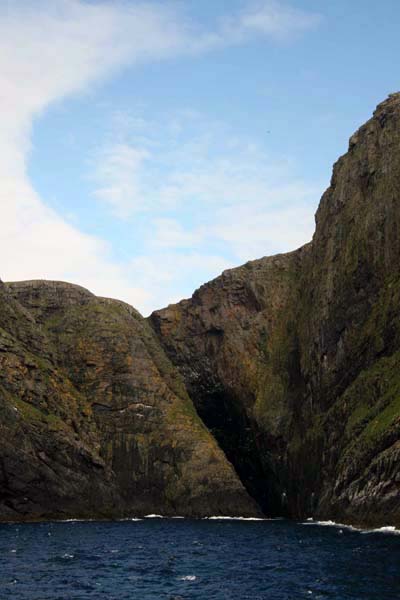
Another day, another island. Mingulay lies in the Outer Hebrides, just north of Berneray at the very southern edge of the island chain. In many ways, the island is reminiscent of St Kilda – formerly populated, now deserted, it may not quite have had Hirta’s desolate edge-of-the-world isolation but it made up for this with living conditions that must have been equally harsh.

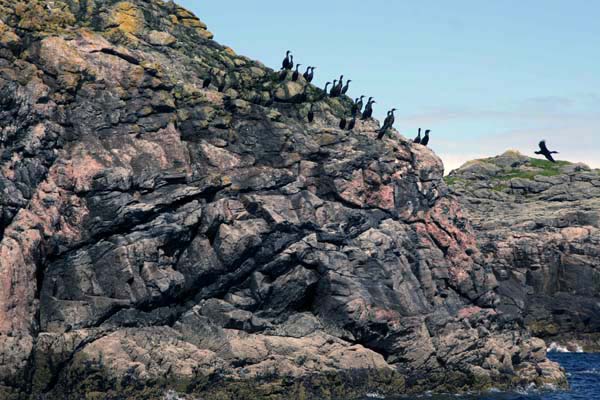
Although there are parallels with St Kilda, the people here were more involved with fishing than they were at Hirta  where seabirds were central to both diet and economy. With frequent violent Atlantic storms but plentiful fish and some decent grazing crofting life was tough but just about sustainable. Seabirds did have their part to play though: rent was paid to absentee landlords on Barra mostly with shearwater chicks collected from the island’s precarious cliffs.

Unlike Hirta, and perhaps to the good, there was no well-intentioned but misguided 19th century tourist industry here, and Mingulay continues to lack the celebrity status that has long been associated with St Kilda. Here there is no post office, gift shop or warden’s house; no quay – just a sheltered beach, some fine views, wild yellow irises and a plethora of kittiwakes and guillemots. By way of welcome, inquisitive grey seals loiter beneath the cliffs in the bay, their sleek heads bobbing on the waves like maritime Labradors.

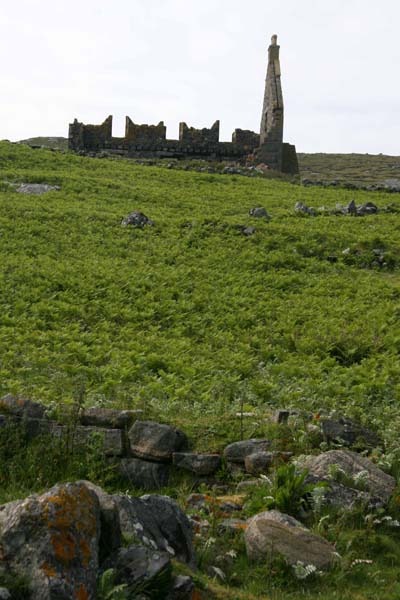
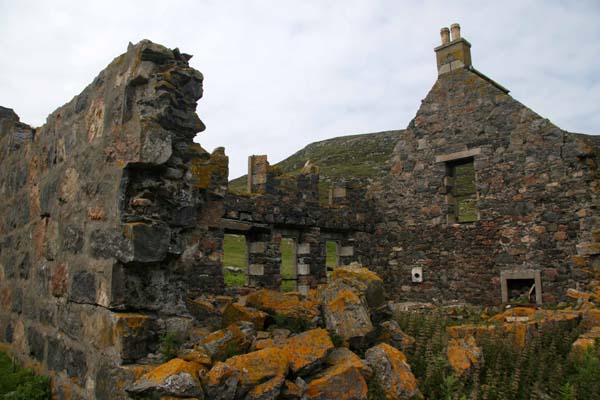
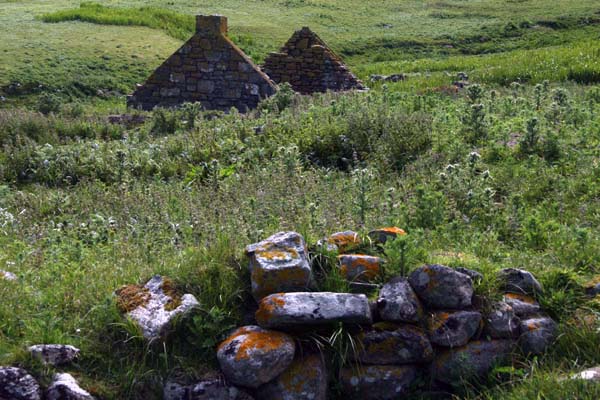
Walk uphill from the beach at Mingulay Bay and you stumble upon the remnants of a few dwellings, the roofless shells of the turf-roofed black houses that Mingulay folk called home. The most complete building is the schoolhouse, built in the 1880s by the Free Church Ladies’ Association, while further uphill lie the remains of the chapel house, which had the Catholic priest’s living quarters downstairs and a chapel above. Now the chapel house is a picturesque ruin, with one gable still standing while the chimney pot from other stands centre-stage amidst the rubble like a post-Apocalyptic pulpit. Someone has gone to the trouble of sorting the reusable roof tiles into neat piles – even today, Hebridean island life does not encourage waste or the overlooking of free architectural salvage such as this.

The sea shanty quoted above could never have been sung by Mingulay-bound sailors as it was composed  by a Glaswegian in the 1930s – the island has been deserted of folk since 1912. Nevertheless, it evokes splendidly the atmosphere of the place, its sea-tossed shoreline, heather moorland and the ghost of a seafaring tradition.

If you would like to hear a contemporary version of the Mingulay Boat Song you can find Richard Thompson’s excellent rendition here.

.