Just to update the previous post – Nick Marsh, countryside officer at Suffolk Coast and Heaths AONB, went on BBC Radio Suffolk a couple of days ago to talk about my new Cicerone guide and the walking potential that the Suffolk coastal region offers. You can listen again here (fast-forward to around 2:37). It is available online until March 5.
Suffolk Coast Walks
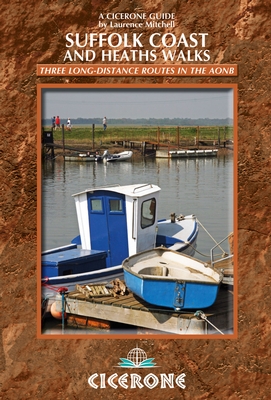
If I might be allowed a little shameless self-publicity, my new book Suffolk Coast and Heaths Walks: Three Long-distance Routes in the AONB is published today by Cicerone. A bit of a mouthful, I know – let’s just call it ‘Suffolk Coast Walks’ for the sake of brevity.
The book gives a detailed account of all three long-distance trails within the Suffolk Coast and Heaths AONB (Area of Outstanding Natural Beauty). All three routes make for excellent walking, either in their entirety or as selected day stages.
OS map extracts for the various stages are included and the book also has considerable background information outlining the history, geography and wildlife of this attractive region.
It is lavishly illustrated too, with photographs taken by yours truly (the cover shows the River Blyth at Southwold).
For a look inside the book, a sample chapter and downloadable PDF file you can visit the Cicerone website here. It is also on Amazon.co.uk here.
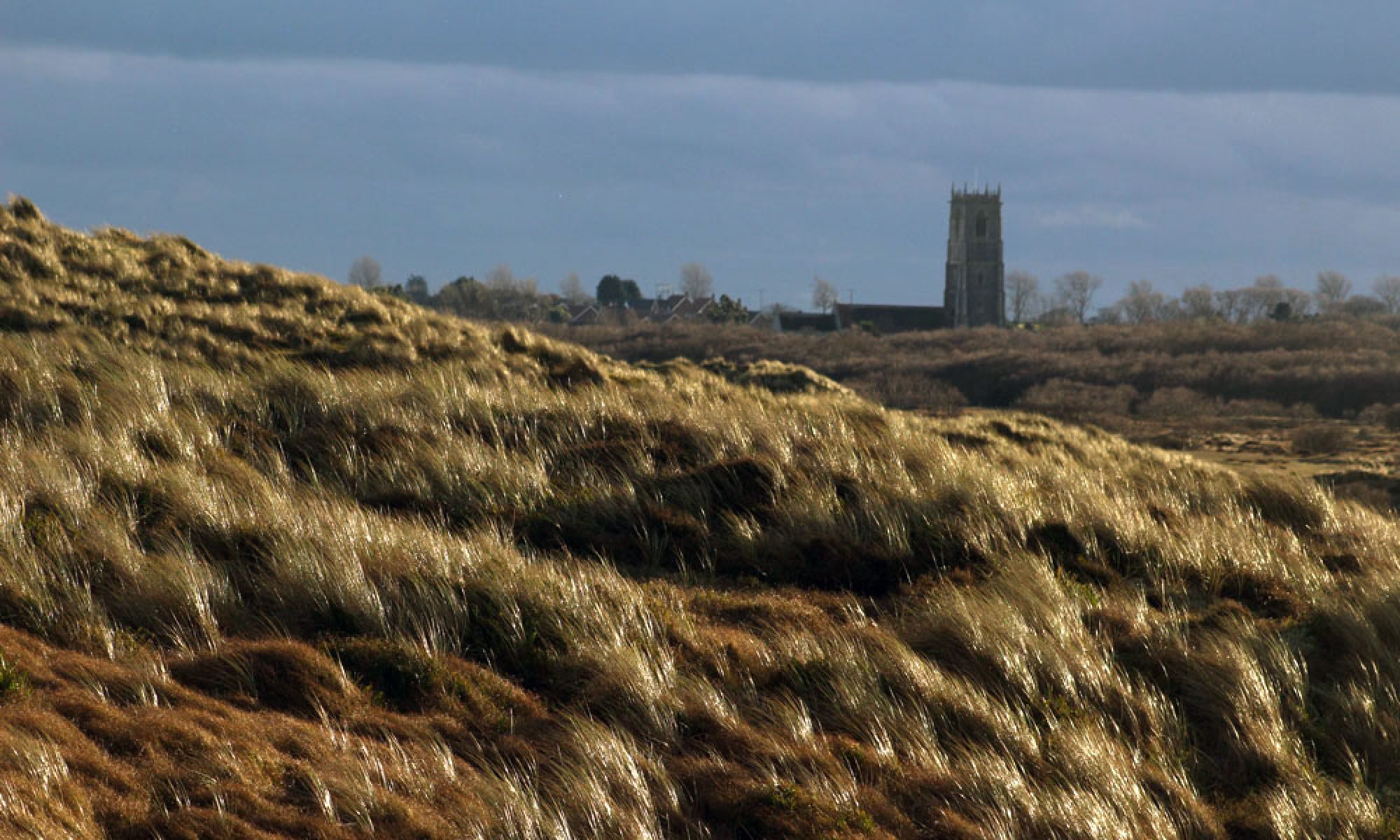
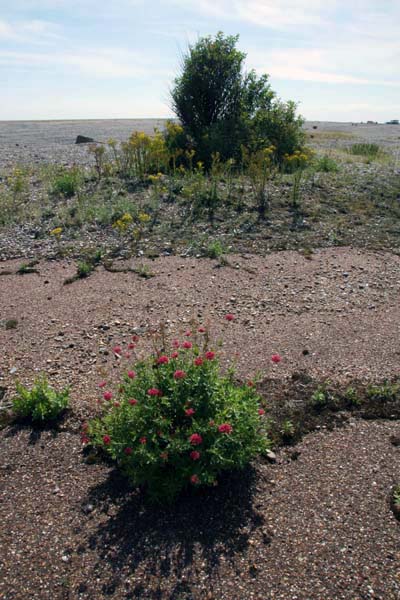
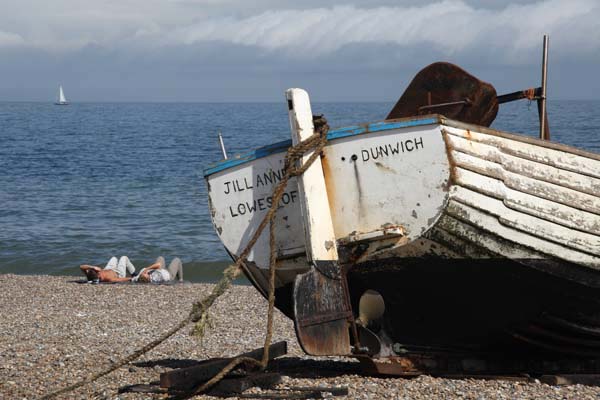
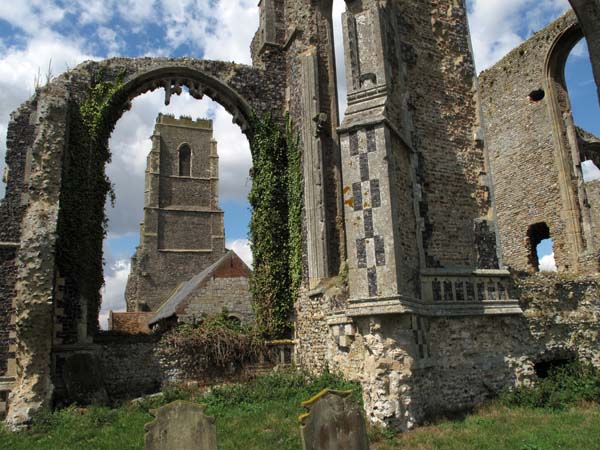
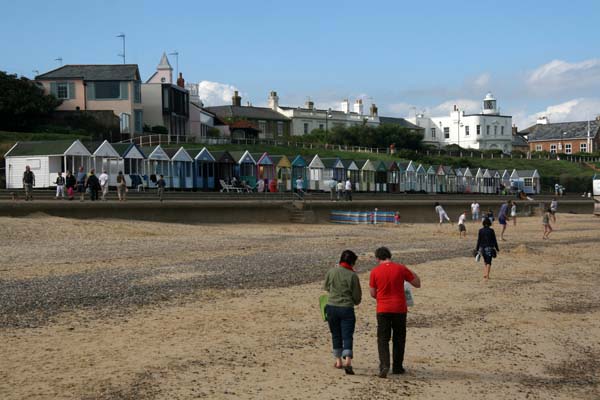
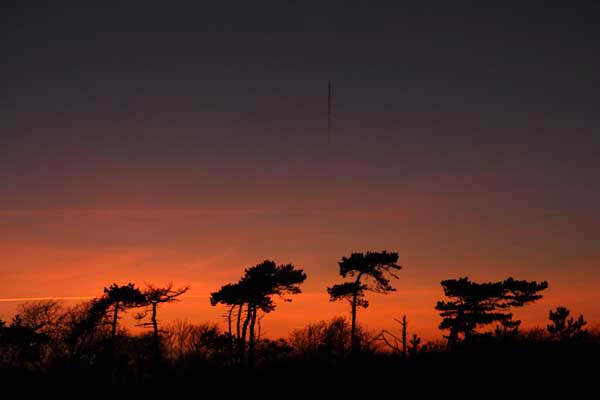
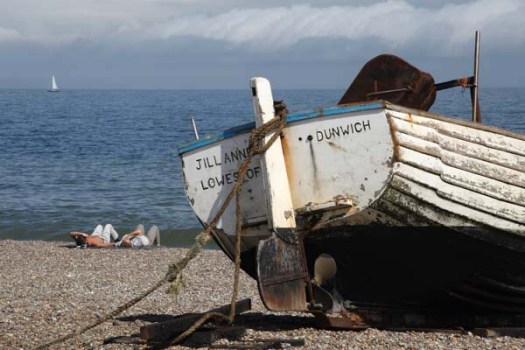
Here’s a brief sample from the introduction and a few images from the book.
Introduction
The sky seems enormous here, especially on a bright early summer’s day, and the sea beyond the shingle almost endless. Apart from the gleeful cries of children playing on the beach, the aural landscape is one of soughing waves and the gentle scrape of stones, a few mewing gulls and the piping of oystercatchers. Less than a mile inland, both scenery and soundscape are markedly different – vast expanses of heather, warbling blackcaps in the bushes, and a skylark clattering on high; the warm air is redolent with the almond scent of yellow gorse that seems to be everywhere. This is the Suffolk coast, and it seems hard to imagine that somewhere quite so tranquil is just a couple of hours’ drive away from London.
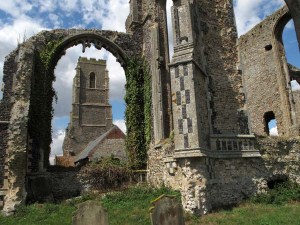
The big skies, clean air and wide open scenery of the Suffolk coast has long attracted visitors – holiday makers certainly, but also writers, artists and musicians. The Suffolk coast’s association with the creative arts is longstanding, and its attraction is immediately obvious – close enough to the urban centres of southern England for a relatively easy commute, yet with sufficient unspoiled backwater charm for creativity to flourish.
It is not hard to see the appeal – east of the A12, the trunk road that more or less carves off this section of the East Anglian coast, there is a distinct impression that many of the excesses of modern life have passed the region by. The small towns and villages that punctuate the coastline and immediate hinterland are by and large quiet, unspoiled places that, while developed as low-key resorts in recent years, still reflect the maritime heritage for which this coast was famous before coastal erosion took its toll.
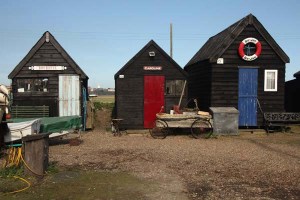
The county of Suffolk lies at the heart of East Anglia, in eastern England, sandwiched between the counties of Norfolk to the north, Essex to the south and Cambridgeshire to the west. The county town is Ipswich, by far the biggest urban centre in the county, while other important centres include Bury St Edmunds to the west and Lowestoft to the north. Much of the county is dominated by agriculture, especially arable farming, but the coastal region featured in this book has a wider diversity of scenery – with reedbeds, heath, saltmarsh, shingle beaches, estuaries and even cliffs all contributing to the variety. There is also woodland, both remnants of ancient deciduous forests and large modern plantations. Such a variety of landscapes means a wealth of wildlife habitat, and so it is little wonder that the area is home to many scarce species of bird, plant and insect.
This region can be broadly divided into three types of landscape – coast, estuary and heathland, or Sandlings as they are locally known – and the three long-distance walks described in this guide are each focused on one of these landscape types. All three have plenty to offer visitors in terms of scenery, wildlife and historic interest, and the footpaths, bridleways and quiet lanes found here make for excellent walking.
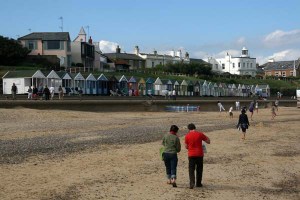
Almost all of the walks featured here fall within the boundaries of the Suffolk Coast and Heaths Area of Outstanding Natural Beauty (AONB), which stretches south from Kessingland in the north of the county to the Stour estuary in the south. The whole area – both coast and heaths – is now one of 47 Areas of Outstanding Natural Beauty in England, Wales and Northern Ireland, having received AONB status in 1970, a designation that recognises, and protects, the area’s unique landscape.
Elveden – Gateway to the Land of Nod
So why Elveden? And why east of it? Obviously there’s the name itself – E(lve)den, close enough to Eden for a cheesy pun – and let us remember that in Biblical terms the territory that lies ‘on the east’ of Eden is the Land of Nod, where Cain was exiled after murdering his brother. Of course, as well as a place of banishment for betraying siblings the Land of Nod also has connotations as a mythical place of sleep. Given Elveden’s real life position at the western end of the Suffolk-Norfolk border perhaps one of the Snorings (Little Snoring or Great Snoring – take your pick) forty miles or so to the north in West Norfolk could substitute for the aforementioned slumberland? (A real-life Land of Nod actually does exist in the East Riding of Yorkshire – it’s a tiny hamlet apparently).
Elveden itself is not without interest. The Suffolk village straddles the A11 just south of Thetford. There are traffic lights there these days and it has subsequently become quite a well known spot for traffic delays. In the bad old days, though – before the traffic lights and imposed speed limit – the stretch of single carriageway here was an infamous accident black spot. Norfolk-knockers like that nice Jeremy Clarkson have always been quick to point out that Norfolk is one of the few counties in the country that does not have a motorway leading to it and for many years there has been a strong campaign to get the whole of the A11 dual-carriagewayed right up to Norwich. As things currently stand, the A11 between Mildenhall and Thetford is one of the few remaining stretches of single carriageway. However, now that the powers that be have finally agreed to allow road widening to go ahead around Elveden, it looks as if a continuous dual carriageway will become a reality in the near future. No doubt the five minutes that will be knocked off the current London to Norfolk journey time will quickly elevate Norwich’s currently modest economy to Shanghai-like heights.
Those whizzing past the village in the future might want to consider a little of Elveden’s, frankly strange, history as it flashes past in an automotive blur. Here’s a brief extract from my Slow Norfolk and Suffolk book:
Elveden
Situated astride a busy road just beyond the Little Ouse in Suffolk, to most people this is little more a sign on the A11 and an inconvenient bottleneck for traffic. It used to be an accident black spot too before traffic-calming measures were introduced. Some will tell you that there have been more people killed on the A11 since World War II than there are names on the obelisk-like war memorial south of the village. Elveden is a small estate village centred upon Elveden Hall, a somewhat bizarre private residence. The estate, which has the largest arable farm in the country, is in the possession of the Earl of Iveagh but the hall itself was emptied of its contents in 1984 and stands empty.                                                  Â
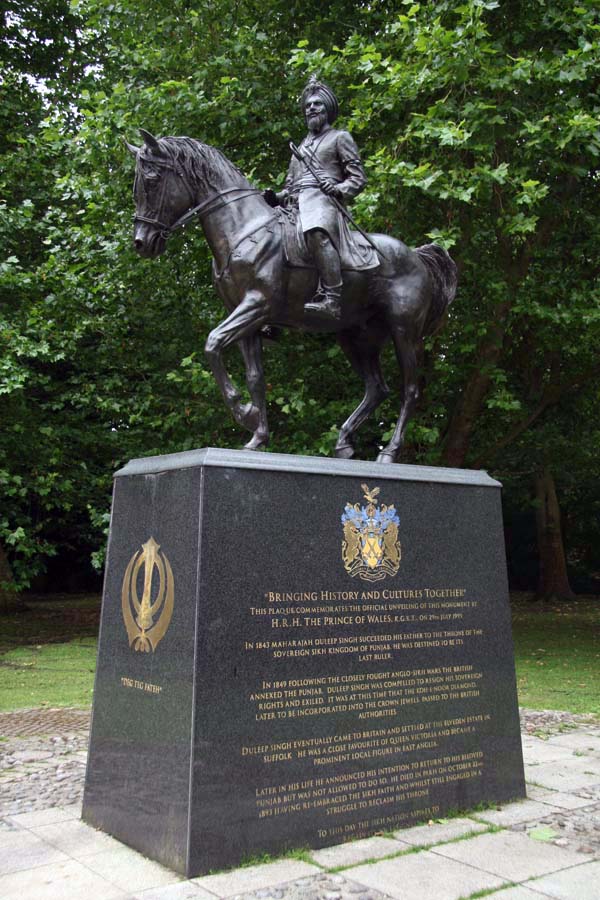
Elveden Hall is best known as the home of Maharajah Duleep Singh, a deposed Sikh prince from the Punjab who was exiled to England for his part in the Sikh Wars during Queen Victoria’s reign. The Maharajah purchased the estate in 1863 and refurbished the Georgian hall in lavish Moghul style using Italian craftsmen – a North Indian tradition apparently. He also built an aviary where he kept exotic birds and in an unselfconscious effort to outdo the English squirearchy he took up the habits of English country life with a passion, leading parties that shot thousands of pheasants on his estate on an almost daily basis. Naturally, if you have a 17,000-acre estate and a vast private fortune, you can do that sort of thing without worrying too much about the cost of it all. The Maharajah was always keen to impress the inhabitants of his adopted home and tended not to do things by halves. He was even good enough to hand over the Koh-i-Noor diamond to QueenVictoria and to cheerfully convert to the Anglican Church such was his willingness to fit in. An equestrian statue of the Maharajah stands in Thetford and, although he died in Paris in 1893, his surprisingly modest grave lies in the churchyard of Elveden’s St Andrew and St Patrick Church.
Elveden Hall passed into the hands of the Guinness family after Duleep Singh’s death and the first Earl of Iveagh went even further, building a new wing and adding a replica Taj Mahal to the complex. If the hall sounds as if it it would make a perfect film set then you are quite right as, since its interior was emptied in 1984, Elveden Hall has been used as a location for films such as Tomb Raider, the Bond movie The Living Daylights and Stanley Kubrick’s Eyes Wide Shut. The bad news is that the hall is not open to the public. You might try getting a job as a film extra here, as a friend of mine did on Eyes Wide Shut. He reports that he didn’t see much of the interior but did learn that Tom Cruise was unable to find any suitable accommodation in the area and had to be helicoptered in each day from afar for filming. You can just about get a glimpse of the hall from the rear of the village churchyard and make out its green dome.
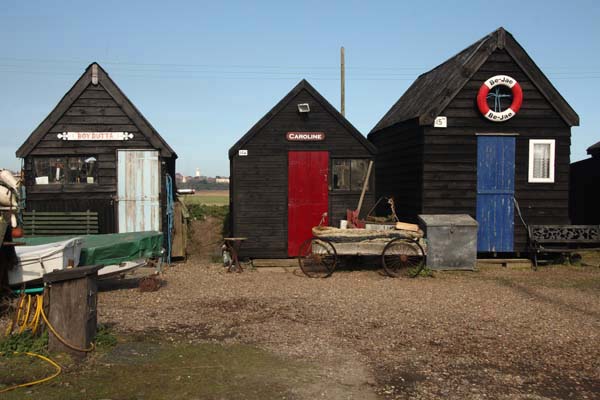
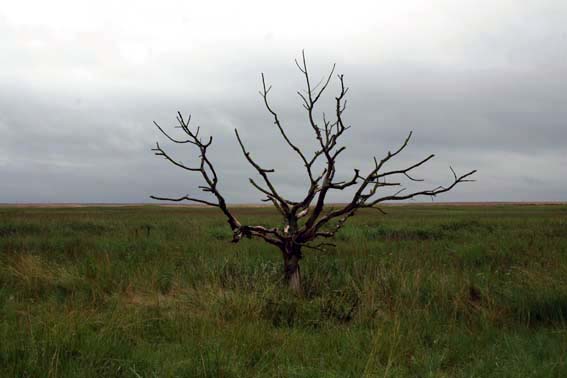
NB: The photograph at the top of this post does not represent Elveden. It was taken east of it though – at Brockdish in the Waveney Valley. I just liked its ‘fish out of water’ feel.
Metal Box
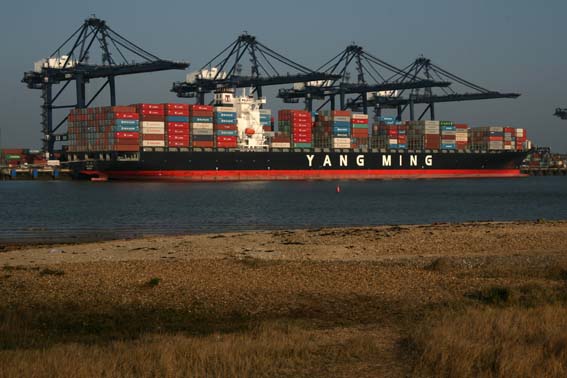
There are strange low hills in the vicinity of The Port of Felixtowe in Suffolk. Not the product of tectonic upheaval or Ice-Age earth shifting but man-made plateaus of painted steel. Around what is the largest container port in Britain vast acres of stacked shipping containers afford the local topography a distinct Legoland character. Ugly they may be, but containers can be piled high, safely and efficiently – this is really the whole point of them. Cross the Orwell estuary to the other bank and the mechanics of the terminal seem somehow easier to discern from a distance. Looking north across the water from Shotley Peninsula the enormity of the container ships becomes all too apparent, as does the immense volume of their gargatuan payloads. The juxtaposition of the tranquil saltmarshes, silent but for the piping of waders, and the distant metallic rumble of behemoths docking across the water strikes an oddly unsettling note.
There is something a little inhuman, sinister even, about shipping containers. Perhaps they are too much like a human-sized tin cans for comfort. They evoke fears of incarceration, claustrophobia – a living grave. Such fear affords them considerable dramatic possibilities.  A European shipping container was central to the plot of the second season of the acclaimed HBO production The Wire. In this, McNulty, the anti-hero cop who had been exiled to Baltimore Docks, found himself involved in a case concerning a shipping container full of dead young East European women, the victims of a people trafficking scheme that had gone terribly wrong. Even the British soap Brookside once invoked a container for criminal purposes when top-dog ‘scally’ Barry Grant locked a business opponent in a shipping container at Liverpool Docks. We never learned of his fate – or if we did, I had stopped watching by then. Containers seem to fit snugly into the lexicon of crime pulp fiction and the threat of tinny incarceration provides a welcome alternative to hackneyed themes of ‘swimming with fishes’  or being concreted into flyovers.
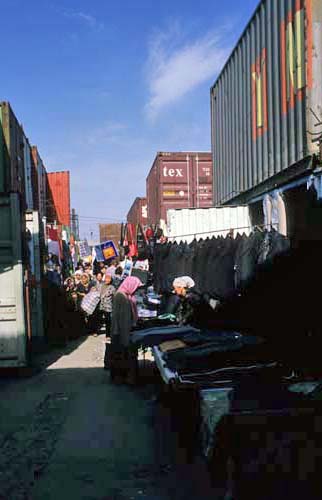
Shipping containers can be found in the most unlikely of places, not just ports. Travel about as far as you can get from an ocean – Central Asia, say – and you’ll still find them in large numbers, not so much as moveable storage but more as make-do business premises. Both of Kyrgyzstan’s two largest markets make extensive use of them, double-stacked in parallel rows to create narrow shopping streets of easily-secured retail premises. In the capital Bishkek, you can find pretty well anything you might need at the Dordoi Bazaar north of the city. While the sellers are mostly Kyrgyz, many of the shoppers strolling the market’s metallic thoroughfares come from further afield – Kazakhstan or even Russia.
Larger still is the market at Kara-Suu right on the Kyrgyz-Uzbek border close to Osh in the south. This one really is the largest market in all Central Asia. Kara-Suu is the grey economy writ large. Almost entirely populated by ethnic Uzbeks, this is the place to buy very cheap Chinese goods -clothes, electronic goods, household wares – just don’t expect a guarantee or 6-month warranty. The market is long-established and dates from Soviet times when the meandering Kyrgyz-Uzbek frontier really did not mean that much. These days Kara-Suu is closed down periodically by the authorities but most of the time shoppers from Uzbekistan are able to sneak or bribe their way across this the border to buy goods at much cheaper prices than at home.  Sometimes they even bring raw cotton to sell at a premium in Kyrgyzstan.
Bazaars like Kara-Suu are hardly typical. Away from Bishkek, Osh and a handful of small cities, Kyrgyzstan is by and large rural – wild, mountainous and very beautiful. The country may be very long way from any ocean but it does have some stunning high-altitude lakes like Issyk-Kul and Song-Kul (above). No container ships, though.
Crossing the Bridge
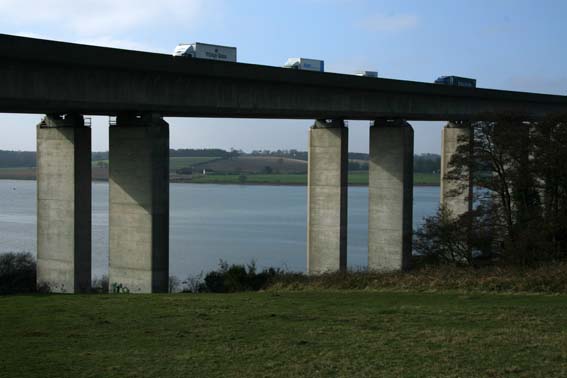
A little south of Ipswich, the vast concrete span of the Orwell Bridge stretches across the eponymous river like a conveyor belt to Hades. Well not Hades exactly, but the Port of Felixstowe. A constant rattling procession of lorries shunt to and fro the port, their drivers barely aware of the river they are crossing or the county town they are skirting by. The ciphers that identify their payloads have become household names — Maersk, China Shipping, Cosco – those magic metal boxes that contain the necessities of 21st-century life. Well-travelled, and more often than not coming from the Far East, the containers are the camels of the latter day Silk Road: a trade route, which, as any historian will tell you, was about a lot more than just silk.
The bridge might appear to be no place for pedestrians, but they are tolerated, and walkers intent on completing the Stour & Orwell Walk between Languard Point and Cattawade, and wishing to avoid the extra six or so miles of the alternative ‘Ipswich Loop’, are obliged to cross it on using the walkway on its southern side. The approach on foot from Orwell Country Park is intimidating – the noise, speed and volume of traffic all contributing to the inevitable feeling that this is an unnatural place for hikers to be setting foot. The 30-metre drop to the Black Ooze (yes, it really is called that) of the River Orwell below is held at bay by just a concrete ledge a little more than a metre high. This is certainly not comfortable strolling territory, nor a place to suddenly become aware of a hitherto undiscovered acrophobia.
Steps lead up sharply to the bridge walkway, past a Samaritans sign that bears a short but kind message and a phone number. Like steps to the gallows, the certainty that you are shadowing the last steps taken by some desperately unhappy souls is chilling. At the top is a free phone, proof that someone cares, although the lorries flying by seem wholly indifferent. The views along the Orwell estuary are pleasing – green fields, houses snuggled in woodland, little boats bobbing in silver water – but the constant thrum of the traffic, and a tangible sense of alienation, do not encourage lingering. The walk across takes around 15 minutes.
Bridges are powerful metaphors for the journeys of life, for transformation. The novelist Ian Banks wrote an entire novel – The Bridge, no less — using an enormous industrial super-complex of a bridge as the dream environment of his comatose crash victim protagonist. Religion and mythology make good use of the bridge as metaphor too and the crossing of a body of water — the River Jordan, River Styx — is ascribed a spiritual meaning. Most of the time though, our concerns are more mundane: if crossing the Orwell Bridge on foot is disturbing then it is because of its height and heavy traffic as much as its psycho-geographic imprint.
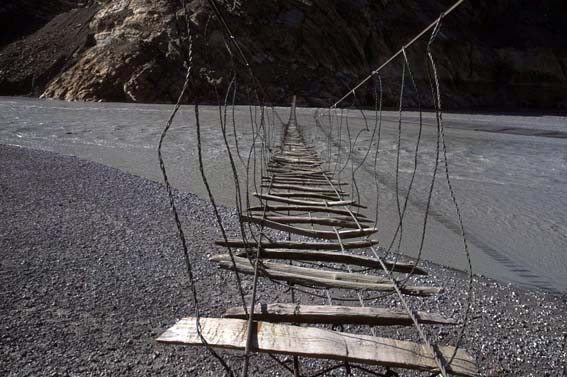
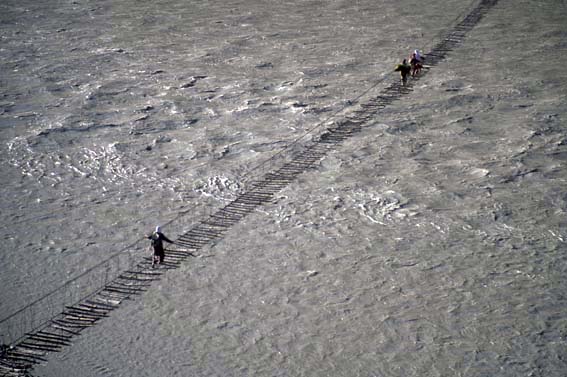
Elsewhere in the world, where health and safety concerns are not held as sacred as they are here in the West, dodgy-looking footbridges have been used daily for generations without much fuss. The one illustrated here is over the Hunza River in the far north of Pakistan. To be honest, it is a little nerve-wracking to traverse, especially when local villagers join you and the bridge sways nauseatingly above the rapid rock-filled glacial river beneath. More alarming still is to cross halfway only to discover a missing slat and the necessity of making a jump to the next complete one.
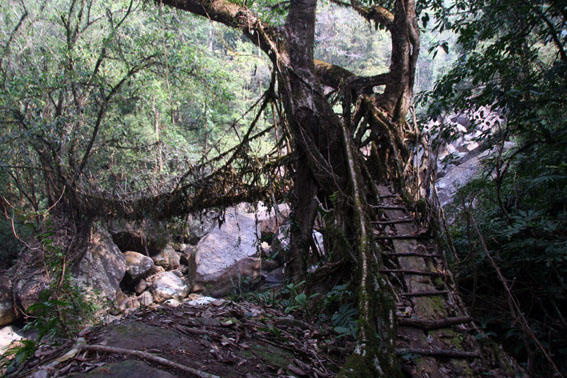
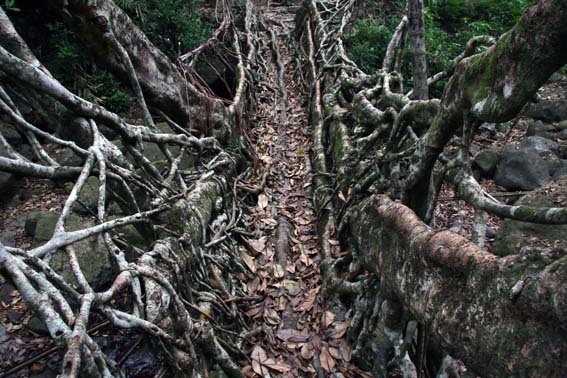
In contrast, this footbridge feels much safer; nurturing even. Perhaps it is its solid organic nature that reassures, and also the surprising realisation that it hardly sways at all? This remarkable feat of bio-engineering, which resembles something that Frodo might have encountered in The Lord of The Rings,  is one of many living root bridges found in the deep, rain-washed valleys of Meghalaya, northeast India. Fashioned from the living roots of fig (Ficus elastica) trees that grow alongside the region’s turbulent monsoon streams they take decades to build but last for centuries. You can read my article on them in Geographical magazine here.
Returning closer to home, to the Waveney Valley in fact, here is a short extract from Slow Norfolk & Suffolk that describes an encounter on the bridge across the Waveney at Mendham on the Suffolk/Norfolk border. Perhaps bridges do affect us psychologically more than we might credit?
This is classic Waveney Valley scenery — the sort of thing Munnings might have painted if he had not concentrated on horse fairs or attacking modernism quite so much. It’s the kind of landscape that brings reverie. The iron bridge crossing the Waveney seems like a giant staple attaching Norfolk to the Suffolk mainland. Brown cows wandering the meadows contentedly graze and flick flies away, keeping their eyes on a pair of locals fishing beneath the trees and catching nothing. As poplars rustle in the breeze, the very English sound of an accordion drifts down from the Munnings pub. It could almost be the 18th century, if it wasn’t from the fishermen’s car parked by the road. As I am taking all this in, a man who is clearly the worse for drink ambles down the road towards the bridge. He stumbles exactly halfway across, pauses for a moment, then goes back the way he has come. It is as if he is fearful to place his feet on Norfolk soil, or there is some sort of invisible barrier. Two minutes later, a sleek Jaguar arrives from the north to pick the man up. Then it turns around and ferries him back across the bridge… into Norfolk.
Walking the Edge
The latest issue of Geographical magazine has a feature by Alastair Humphreys on walking around London following a route as close to the M25 orbital as possible. The focus here – other than the testing of outdoor clothing and equipment – seems to be that of ‘micro-adventures’ in one’s local area: a worthy notion in this information-bloated age where, if truth be told, there are few exotic places left to explore. The adventurers of yore usually had an ulterior motive anyway – empire carving, resource procurement, trade – and so latter-day explorers, unsponsored by king and country (and usually publishers) and wishing to find something new, have to look instead at the finer detail, examine the way countries have changed, focus on the small print of ‘place’.
The writer Iain Sinclair has already written about the M25 at length in his book London Orbital where, instead of sleeping in a bivvy bag in green belt fields (and tweeting about it) as Humphreys has done, the author completed the circuit by way of day-long excursions from his Hackney home in the company of a handful of friends. Sinclair’s clockwise plod reveals a twilight zone where megalopolis begins to morph into leafy shires. Most revealingly, he identifies a ring of vanished mental hospitals and institutions that trace the course of the future motorway with uncanny accuracy. Like plague pits located beyond medieval city walls, it appears as if it was decided in Victorian times that illness – especially the mental kind – had to be kept at arm’s length and well beyond the city’s grasp lest it infect the metropolitan populace. The distance necessary for this physical and spiritual separation seems to coincide almost exactly with that of London’s orbital racetrack.
Turning to a more rural setting, here in East Anglia both Norfolk and Suffolk may be circumambulated (more or less – let us not quibble about precise boundaries) by following a series of long-distance footpaths. In Norfolk, begin with the Angles Way in Great Yarmouth, follow it along the Waveney Valley almost as far as Thetford in Breckland and then take the Iceni Way along the River Great Ouse and across the Fens north to Hunstanton where the Norfolk Coast Path can be picked up to continue east. At Cromer, the meandering Weaver’s Way can then be followed through the Broads to arrive back at Yarmouth. In Suffolk, the Suffolk Coast Path can be walked from Lowestoft to Felixstowe before continuing around the Suffolk estuaries by means of the Stour and Orwell Walk to Cattawade. Here, the county boundary may be traced west to by means of the Stour Valley Path, straying occasionally into Essex and Cambridgeshire, as far as Sudbury before continuing to Bury St Edmunds along the St Edmund Way and Icknield Way path to Breckland from where the Angle’s Way completes the circuit back to the Suffolk Coast.
Last year I had a notion that it might be interesting to split the Norfolk boundary circuit into four seasonal portions, four lengths of the county rectangle that would be walked around each of the year’s cardinal points: the Angle’s Way in mid winter; the Iceni Way in spring and so on, completing the circuit to arrive back at Great Yarmouth around the autumnal equinox. Starting out with good intentions, I walked the length of the Angles Way in late December 2009 and early January 2010. Plans for setting out on the next section, the Iceni Way, were abandoned however – or, rather, put on hold – when a commission to write a guide for Cicerone Press on the three long-distance walks within the Suffolk Coast & Heaths AONB turned my attention to trails a little further southeast. My forthcoming guide Suffolk Coast and Heaths Walks: Three Long-distance Routes in the AONB will be published in November this year.
W.G.Sebald, In Memoriam
The UEA-based German writer, W. G. (‘Max’) Sebald, died just over nine years ago in a car accident close to his home south of Norwich. One of his most famous books, and certainly the one most closely connected with the East Anglia region, is The Rings of Saturn, published in 1999. Superficially a post-illness walking tour of east Suffolk, this labyrinthine unclassifiable work delves tangentially into deep history to discuss episodes as wide ranging as the import of silkworm cultivation into Europe, the writings of 17th-century Norwich polymath Thomas Browne, Nazi concentration camps in Croatia and the scurrilous private life of the Suffolk-based translator of Omar Khayyam.
Focusing unhealthily on the dark, isolated and horrific, Sebald’s writing is hardly what one might describe as ‘feel-good’; indeed, it is often gloomy to the point of verging on the morose. His literate, hang-dog style can almost seem self-parodying on occasion, especially when it circles down to earth to confront the quotidian as in the case of an hilarious description of a disappointing dinner in Lowestoft – only Sebald could disparagingly describe the ‘breadcrumb armour-plating of the fish’ and sachet tartare sauce ‘turned grey by sooty breadcrumbs’. Although he veered towards the hyper-melancholic, his writing was always elegant and elegiac, not to mention meditative, lapidary, dream-like and solipsistic. Interweaving memory, fiction and observation along the course of his walk, there is a Proustian quality to his writing that questions the transience of life and suffering.
Clearly, The Rings of Saturn has sufficient devotees for others to want to walk in Sebald’s footsteps, seeking out the Suffolk landscape that inspired such beautiful gloom along the eastern reaches of the Waveney Valley and the Suffolk coast between Lowestoft and Dunwich – a landscape that seems oddly devoid of people in Sebald’s book. Aldeburgh Music at Snape Maltings recently held a weekend devoted to a celebration of Sebaldia that involved the American rock chanteuse Patti Smith no less. It remains to be seen whether the film Patience (After Sebald) by Grant Gee that was also screened during the weekend will be available to general view in the near future.
Here’s a short film and a piece in the Guardian.