The Writing on the Wall

Just up the road from where I live there is a large black-painted gable wall that bears the legend ‘PINK FLOYD’ in large bold white letters. Clearly, it was a gesture made using good quality paint as it has been there as long as I remember. For all I know it may even date back to the time of the original Pink Floyd line-up with Syd Barrett, although somehow
I doubt it – I rather think it is the work of a fan from the Floyd’s high-profile years of Dark Side of the Moon and after. Since that original graffito was daubed another paintbrush-wielding wag has come along to add a couple more brushstrokes and change the ‘I’ in ‘PINK’ to a slender ‘U’ thus rendering it ‘PUNK’, but this anarchic amendment  is not wholly successful, the paint being of insufficient quality to resist natural weathering. One might assume that this addition was made sometime around 1977 but here in Norwich there were individuals sporting orange Mohicans and tartan bondage trouser outfits well into the 1990s. Either way, the gable text seems to be of sufficient permanency that you can almost imagine archaeologists of the future puzzling over the meaning of its ‘Pi(u)nk Floyd’ cipher. Being archaeologists, they will probably attribute it as being of ‘possible
ritualistic significance’.

A little further up the road is a T-junction where the back of a one-way sign has been neatly and inquisitively stencilled: ‘WHY DO YOU DO THIS EACH DAY?’ Years ago, I used to turn left here every morning on my daily drive to work in North Norfolk. The graffito wasn’t there in those days but, had it been, I don’t think I could really have ignored it. It did, after all, pose the very question that was perpetually at the back of my mind and now it seems so significantly placed that I could almost believe that somehow I unconsciously put it there myself – I didn’t.

Putting to one side the familiar and shoddy tagging that seems the imperative of young men wishing to mark their territory like cock-legged dogs, graffiti seems to be at its most potent when a degree of passion is involved. Often it is the unintended permanency of a fleeting emotional state that renders it so evocative. One local piece of graffiti that immediately springs to mind, although I have long forgotten exactly where I saw it, was the legend ‘S. HEWETT IS A HOUR’ (sic), probably the work of a jilted teenage boy
who needs to work on his spelling. Inadvertently, by means of dyslexic subtext, this wounded individual has stated that ‘S. Hewett’, whoever she is, represents a fragment of time – perhaps she really was a waste of time as far as he was concerned. Although this declaration is undoubtedly passionate it seems odd that its author addresses the target of his fury by what seems to be a school register name rather than something more familiar. Maybe he is unknown and unrequited, rather than jilted, and just trying to spread rumours? These days, of course, he would do this by TXT. In contrast to this angry but passionate exclamation, another lovers’ tiff-style message I once saw scrawled on a wall in a neat feminine hand simply stated, ‘CHARLES I DESPISE YOU’. Such withering dispassion would be hard for anyone called Charles to ignore.

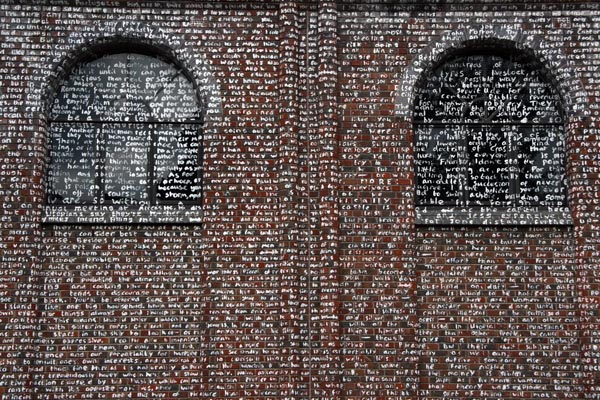
There is a fine line between urban wall scrawling and what might be considered ‘art’ but if you make the text 40,000 words long and legitimise it with an Arts Council grant then it may well become officially sanctioned. This is what the artist Rory Macbeth did in 2006, inscribing the entire text of Sir Thomas More’s 1516 work Utopia on the walls of a derelict building in central Norwich that was due for demolition. As Macbeth rightly states, ‘Most graffiti is utopian’. It should be remembered though that, in Greek, utopia actually means ‘no place’, and not ‘paradise’ as is often supposed.
Tomsk Waits

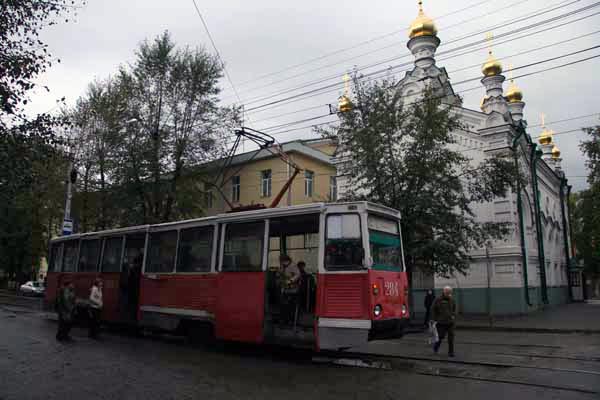
In contrast to the northwest Scotland of previous posts, the central Siberian city of Tomsk is indisputably East of Elveden – both figuratively and geographically. It is, after all, almost one quarter of the way around the world heading east from where I write. I spent a few grey rainy days here last autumn as a side trip to a long Trans-Siberian rail journey.

Tomsk lies just north of the main Trans-Siberian line, a sizeable city of about half a million sitting on the right bank of the Ob, a river that snakes its way north from here to the Gulf of Ob and the Arctic Ocean. Tomsk isn’t Arctic though – it lies at about the same latitude as Moscow and Glasgow, although it does drop to less than −20 °C in winter. Back in the 19th century, Tomsk was populated mostly by Cossacks, Tatars and political exiles but the city was side-stepped during the building of the Trans-Siberian railway line, when the new city of Novosibirsk (‘New Siberia’) was favoured as a stop instead.

These days Tomsk is a youthful, student-filled city; a relatively attractive place by Siberian standards, with a clutch of trendy brightly lit cafes around Ploschad Lenin, its central square. Trendy coffee bars are all the rage in the new Russia – even in backwoodsy Siberian cities like Tomsk. Here you’ll find ‘Travellers Coffee’, where you can get a pricey ‘bolshoi’ cappuccino, and another place called ‘Food Master’ – in a land where the Cyrillic alphabet reigns supreme, Latin script and English names are considered a guarantee of Western sophistication… or cheerless fast food. Food Master dishes up Mexican food with a pronounced Siberian accent – fajitas with beetroot, refried beans with dill and so on. There’s also an awkwardly translated English menu that temptingly offers ‘Languages with mushroom sauce’ and ‘Fat lard’ – fusion cuisine perhaps, but with a ‘con-’ prefix. Even here, in an establishment that is unapologetically ‘New Russia’, a Soviet-era fixation persists that has each component priced according to weight and itemised on the final bill – bread (the precise number of slices), sauce, garnish, meat (again precise, eg: ‘pig meat, 100g’) – as it would be the humblest factory workers’ stolovaya canteen. Actually, stolovayas are the places that I generally try and seek out – redolent of boiled cabbage, they promise cheap wholesome stodge served up by plump headscarfed women – just point and smile (or scowl if you want to blend in). It’s a genuine retro experience: school dinners, Soviet style. There is one of these tucked away in a basement a little further along Prospekt Lenin.

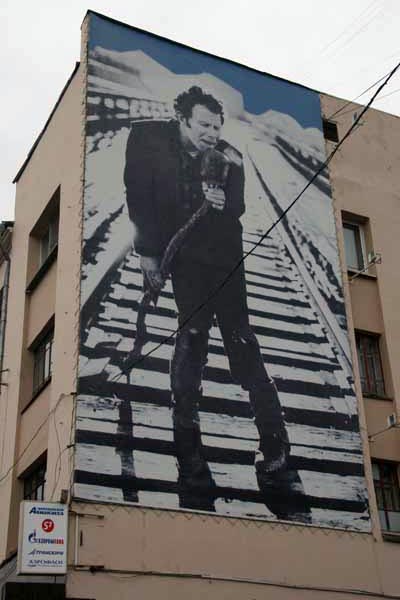
Stylish cafes are not the only concession to Western culture. Halfway along the high street a gable is covered with an enormous poster of gravel-voiced American troubadour Tom Waits standing astride a railway line and bellowing into a microphone windscreen mounted on a crooked stick – very much Tom the iconic hobo poet. The club in the basement beneath is called ‘Underground’ (a song from Swordfishtrombones) and, of course it is a lovely pun – Tom(sk) Waits – geddit. It seems unlikely that Tom Waits’ management is aware of this brazen Siberian deployment but equally doubtful that Californian copyright law stretches quite this far.  Waits is well known as an enthusiastic litigator of those who besmirch his image but this one seems to fit the brand perfectly.

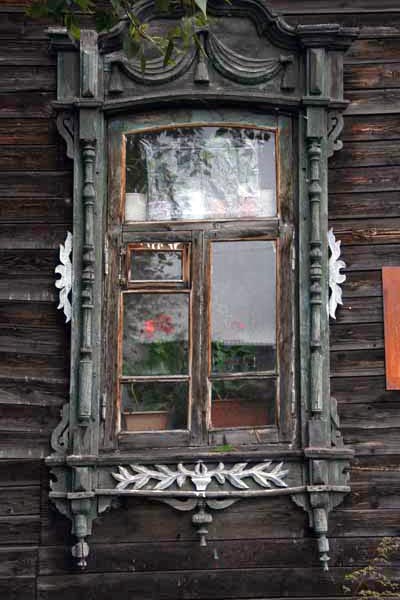
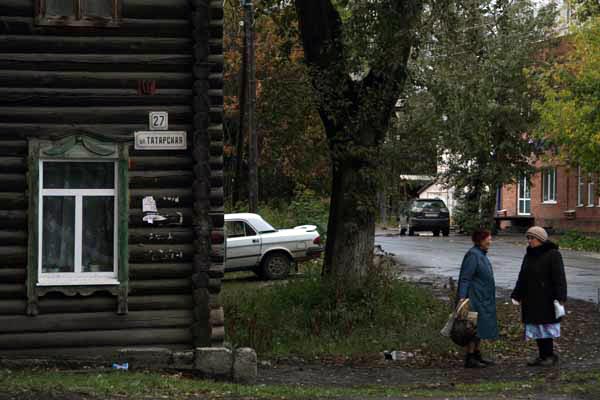
Drop down a street or two to the west, away from the clubs and cafes of Prospekt Lenin, and you immediately find yourself in Old Siberia. A leafy street called Tatarskaya (this was once the city’s Tatar quarter) has old wooden houses with elaborately carved window surrounds and friezes. Poor, a little tumbledown but undeniably picturesque, this is the sort of thing that tourists  come to see, although most tend not to wander this far off the direct Trans-Siberian route between Yekaterinberg and Irkutsk.

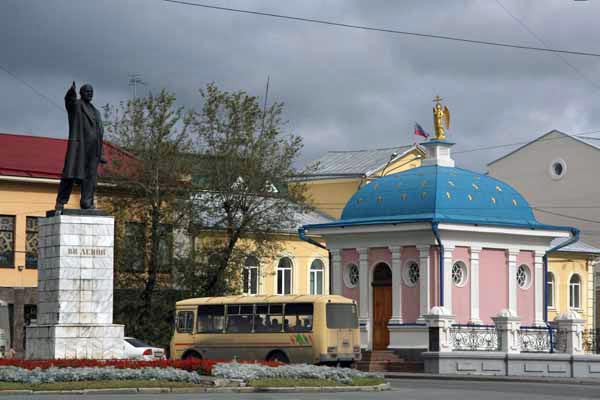
Heading further north along Prospekt Lenin you soon reach a part of town that seems to have far more resonance with the old Soviet Union. Naturally enough, there is a Lenin statue here – this one in ‘hailing a taxi’ pose – as well as some brutalist Stalin-era civic buildings, Krushchevski apartment blocks and rusting boats at the river quay. This really could be a scene from almost anywhere in the former USSR pre-1991 but it is not – it is simply a matter of post-Soviet redevelopment not quite reaching this far uptown yet.

Tomsk may have once been lauded as the ‘Siberian Athens’ thanks to its univeristies and large number of students but Anton Chekhov did not like it one bit, although surely it must have been an improvement on the penal colony at Sakhalin Island that he had visited prior to passing through the town.

He wrote to his sister: ‘Tomsk is a very dull town. To judge from the drunkards whose acquaintance I have made, and from the intellectual people who have come to the hotel to pay their respects to me, the inhabitants are very dull, too.’

Quite understandably, Tomsk citizens have never quite forgiven this scathing dismissal of their city and in response have erected a mocking statue of Chekhov close to the university. Perhaps wounded by the accusation of  dullness, the authorities seem keen these days to instil some European-style civic fun into the Tomsk city calendar. They have inaugurated a carnival, and the one I witnessed last year was the fifth according to the posters. Roads were closed and a stage set up in the main square where a variety of acts came on to dance and mime to Russian turbo-pop. There was even a group of African djembe drummers hired for the task who grinned amiably as they performed to a bemused crowd that did not really know quite what to do. Young families and groups of friends watched the action on the stage and took pictures of each other with their mobile phones before sloping off for an ice-cream. No doubt it will take a while for imported carnival culture to catch on here – just two decades ago, rather than drumming Africans or disco-dancing teenagers, the citizens of Tomsk were watching processions of tanks and soldiers with supersized hats march by.

While Tomsk may struggle with the concept of carnival it is doing well in the world of football. In recent years the city’s home side FC Tom Tomsk (their logo in Cyrillic spells TOMb) has risen like an eagle up the divisions to reach the dizzy heights of the Russian Premier League. It remains there, respectably mid-table, to this day. The Hotel Sputnik where I stayed is located right next door to the team’s stadium but sadly I had to move on to Irkutsk the day before their fixture with Lokomotiv Moscow.

For a look at another quirky Russian city, Kazan, take a look at my feature in the latest edition of hidden europe magazine here.

Homeward to Mingulay

Heel y’ho boys, let her go, boys

Bring her head round now all together

Heel y’ho boys, let her go boys

Sailing homeward to Mingulay!

What care we tho’ white the Minch is

 What care we for wind and weather?

Let her go boys, every inch is

Wearing homeward to Mingulay!

Wives are waiting on the bank, boys

Looking seaward from the heather

Pull her ’round boys, and we’ll anchor

‘Ere the sun sets at Mingulay!

Another day, another island. Mingulay lies in the Outer Hebrides, just north of Berneray at the very southern edge of the island chain. In many ways, the island is reminiscent of St Kilda – formerly populated, now deserted, it may not quite have had Hirta’s desolate edge-of-the-world isolation but it made up for this with living conditions that must have been equally harsh.

Although there are parallels with St Kilda, the people here were more involved with fishing than they were at Hirta  where seabirds were central to both diet and economy. With frequent violent Atlantic storms but plentiful fish and some decent grazing crofting life was tough but just about sustainable. Seabirds did have their part to play though: rent was paid to absentee landlords on Barra mostly with shearwater chicks collected from the island’s precarious cliffs.

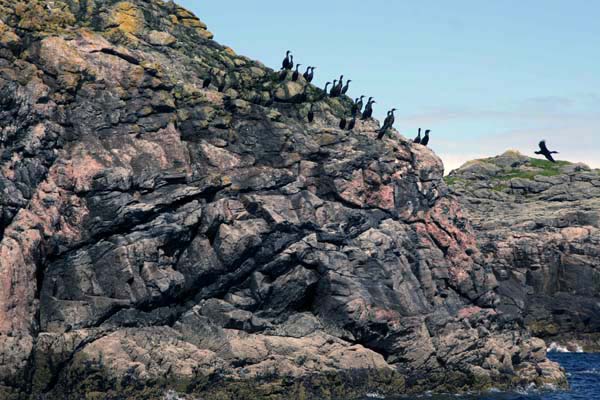
Unlike Hirta, and perhaps to the good, there was no well-intentioned but misguided 19th century tourist industry here, and Mingulay continues to lack the celebrity status that has long been associated with St Kilda. Here there is no post office, gift shop or warden’s house; no quay – just a sheltered beach, some fine views, wild yellow irises and a plethora of kittiwakes and guillemots. By way of welcome, inquisitive grey seals loiter beneath the cliffs in the bay, their sleek heads bobbing on the waves like maritime Labradors.

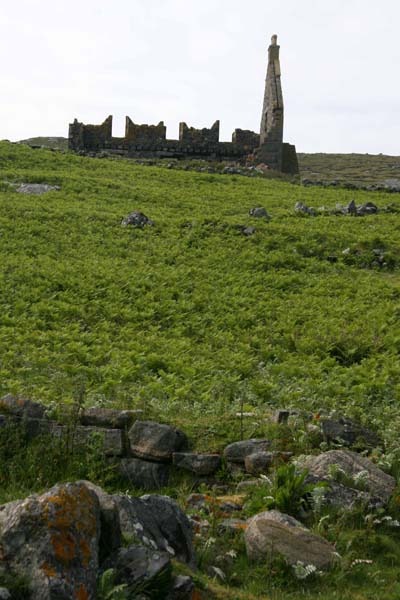
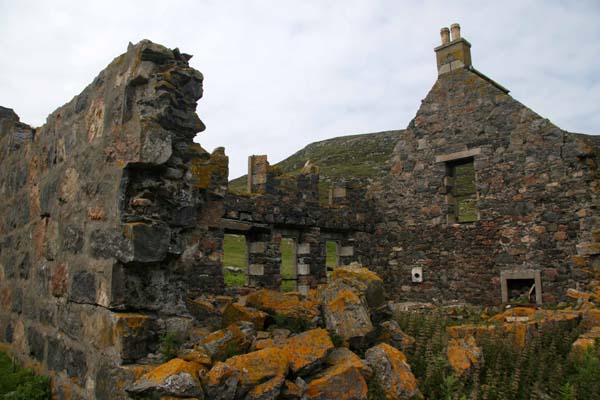
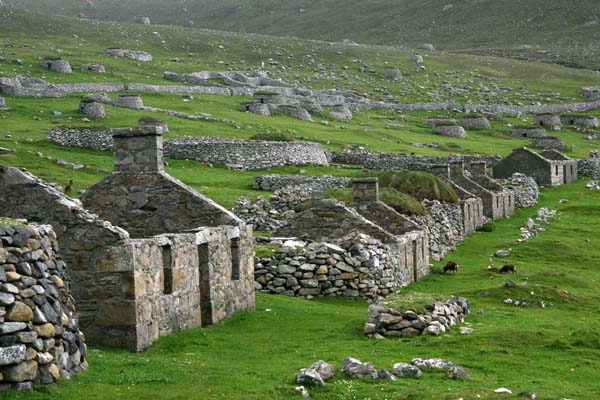
Walk uphill from the beach at Mingulay Bay and you stumble upon the remnants of a few dwellings, the roofless shells of the turf-roofed black houses that Mingulay folk called home. The most complete building is the schoolhouse, built in the 1880s by the Free Church Ladies’ Association, while further uphill lie the remains of the chapel house, which had the Catholic priest’s living quarters downstairs and a chapel above. Now the chapel house is a picturesque ruin, with one gable still standing while the chimney pot from other stands centre-stage amidst the rubble like a post-Apocalyptic pulpit. Someone has gone to the trouble of sorting the reusable roof tiles into neat piles – even today, Hebridean island life does not encourage waste or the overlooking of free architectural salvage such as this.

The sea shanty quoted above could never have been sung by Mingulay-bound sailors as it was composed  by a Glaswegian in the 1930s – the island has been deserted of folk since 1912. Nevertheless, it evokes splendidly the atmosphere of the place, its sea-tossed shoreline, heather moorland and the ghost of a seafaring tradition.

If you would like to hear a contemporary version of the Mingulay Boat Song you can find Richard Thompson’s excellent rendition here.

.

St Kilda

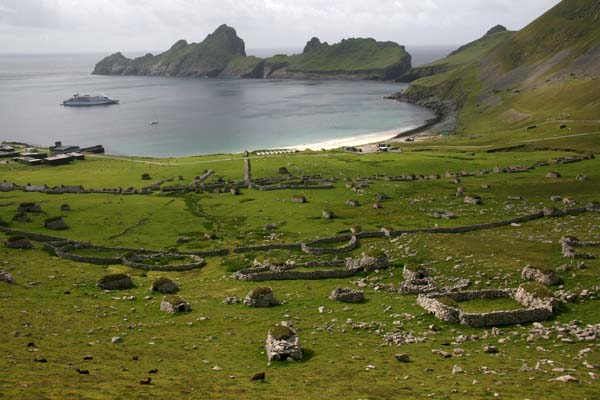
The St Kilda archipelago lies a choppy 45 miles west across the Atlantic Ocean from the Isle of Harris in Scotland’s Western Isles. Constantly settled from at least 5,000 years ago until 1930, when the inhabitants were finally evacuated, it is impossible to overestimate the brave determination of those early settlers who, seeing these rocky islands poke tantalisingly above the horizon in the far distance, pointed their flimsy boats in that direction and rowed through murderous seas to reach new land.

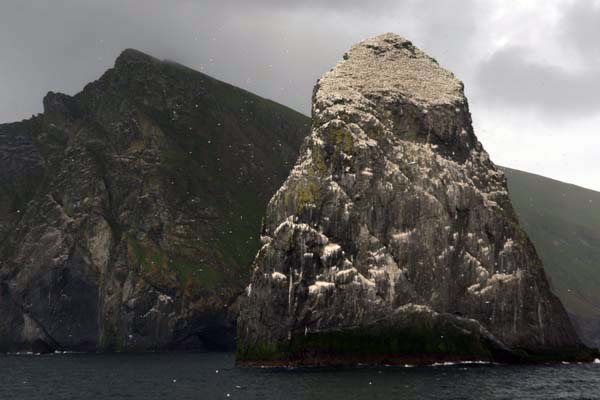
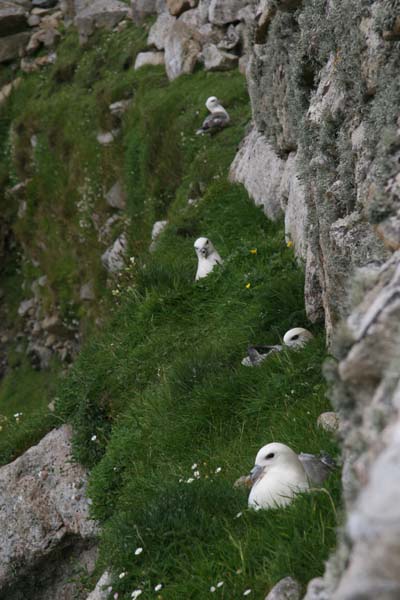
Rather than fish, the economy of the island – the main and only consistently settled one was also the largest, Hirta – was always linked to seabirds – gannets and fulmars in particular – and bare-footed St Kilda men used to gamble their lives dangling on horsehair ropes down treacherous cliffs faces in order to collect nesting birds and eggs.

Once upon a time there was a demand for fulmar oil as a fuel and St Kildans were able to barter this plentiful resource for the items they needed like grain and tobacco. But the coming of the modern age meant that the demand for this commodity waned dramatically and many of the island’s young people started to leave in order to seek their fortune on the Scottish mainland and even as far afield as Australia. Given this sudden decline in what had hitherto been a small but relatively stable population, it was perhaps inevitable that Hirta’s population would finally ask to be evacuated in 1930. For their own part, centuries of inbreeding and the islanders’ insistence on using fulmar oil to anoint the umbilical cord of newborn babies had already ensured a savagely high infant mortality rate. An evacuation was arranged but, despite having spent their entire lives on a windswept island entirely devoid of trees, the displaced islanders were offered jobs in forestry on the mainland. Such ironies did not ensure a happy outcome.

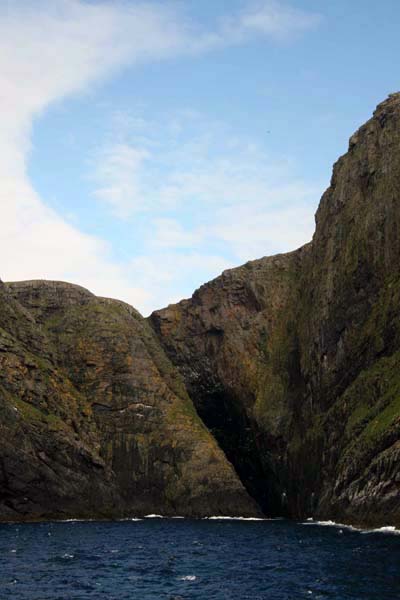
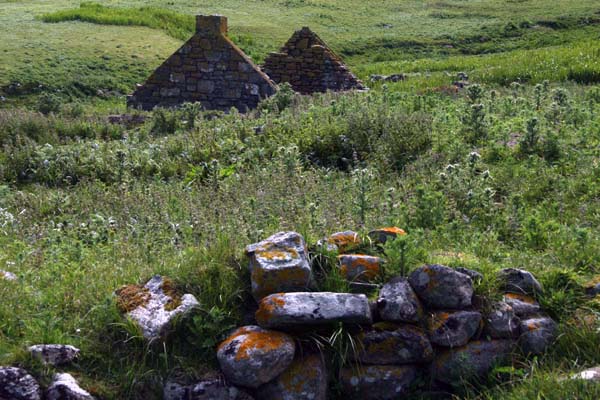
Hirta’s cottages, cleits and blackhouses may be empty and roofless now but the fulmars and gannets are still there in number, as are the high winds that characterise this archipelago, the most westerly situated group of islands in the entire United Kingdom. Visiting St Kilda is hardly straightforward even today – there is no regular transport and it’s a long rough sea trip west from the Western Isles. I am lucky to have arrived here yesterday morning on the MSS Clipper Odyssey on its Island Race expedition cruise around the British Isles. Today we visit Barra and Mingulay in the southern Outer Hebrides before heading south towards Donegal in Eire. By the miracle of a satellite-connected internet connection I am able to communicate this fact whilst on board (the connection was too slow to add images though – I added these later).

At over 8 degrees west, East of Elveden it certainly isn’t – West of Wester Ross might be a better description – but the St Kilda archipelago in the shape of Hirta, Soay, Berneray and other monumental stacks is still a place apart worthy of honour in any discussion of Britain’s special places. Not only does it stand at the very edge of the British Isles but it would seem to lie at the very edge of Europe and the entire Western world.

St Kilda already feels like a dream just one day after having left its shore. But St Kilda does not exist (the name is probably just a Norse corruption); you will find no saint of that name in the hagiographic annals.

Architecture without Architects

It all started more than 25 years ago when I bought a book called Architecture without Architects in a second-hand bookshop. The book, pithily subtitled A Short Introduction to Non-Pedigreed Architecture, and authored by Bernard Rudolfsky, came as a revelation, presenting all manner of strange and wonderful vernacular buildings from all over the globe.

The book was actually a follow up to an earlier exhibition of the same name at New York’s Museum of Modern Art. Within its pages were numerous black and white photographs of African mud huts, Galician stone granaries, Cappadocian cave dwellings and the tightly clustered dwellings of Italian hill towns. What struck me most though was
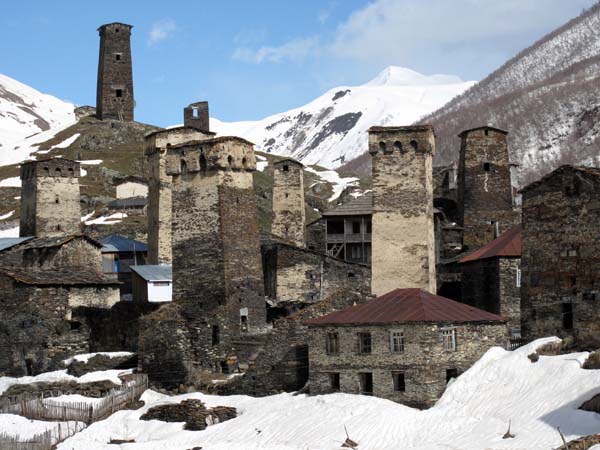
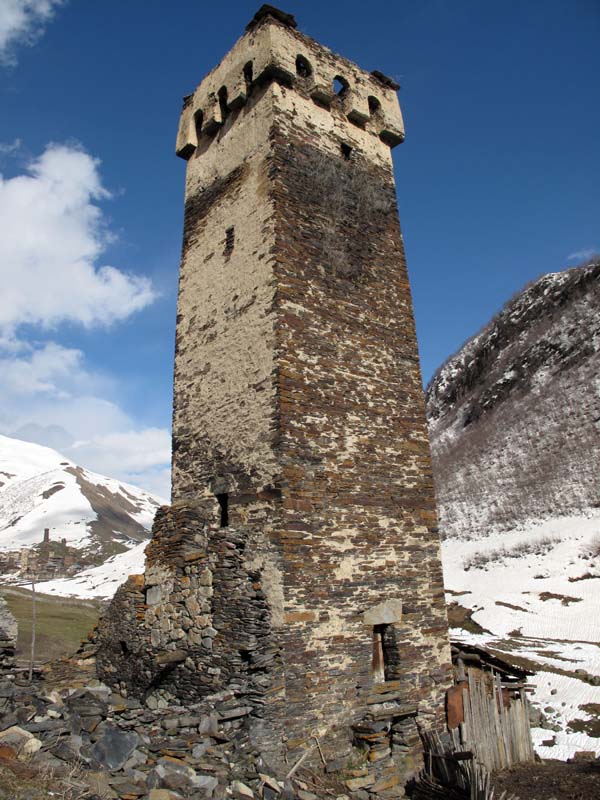
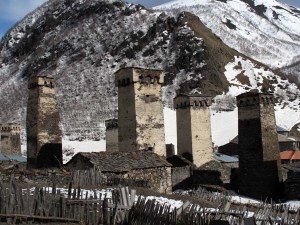
three grainy old photograph of titled: The fortified villages of Svaneti. Of all the fanciful structures depicted in the book, the buildings in these images looked the oddest, the most improbable of the lot – menacing stone skyscrapers set against a snow-covered mountainous backdrop. Accompanying the photos was a little text that explained that they
dated back to the 12th-century and were built and maintained by local families as defence against the ‘blood feuds and vendettas that raged unchecked’ in the region. It didn’t even say which country they were in, just ‘western Caucasus’. They were, I subsequently found out, in the Georgian SSSR of what was then still the Soviet Union.

Almost two decades later I get to visit Georgia – following the breakup of the USSR such things have become altogether easier – but it was not until my third visit to the country that I finally managed to travel to Svaneti and see the towers for myself. Svaneti happens to be home to some of Europe’s highest villages, with permanent settlements where snow lingers late into May, but the region is better known for its unique ancient culture and for its somewhat sinister reputation. Even within Georgia, the Svan inhabitants of the valley are treated with suspicion as Svaneti is usually thought of as a backward, lawless region with a reputation for brigandage. This certainly used to be the case, and until a decade ago Svaneti was a risky place to visit with robberies at gunpoint not uncommon. Thanks to a big clean-up operation a few years ago – the Georgian government is keen to develop tourism – it is now pretty safe.

Visiting Svaneti  for the first time I realise that the place I saw in Rudolfsky’s book all those years ago was a collection of villages  called Ushguli, nestled beneath high Caucasus peaks and stretching high up a valley. At 2,200 metres altitude, Ushguli is probably the highest permanently inhabited settlement in Europe (although currently no-go Dagestan on the other side of the Caucasus range also has contenders to the title) but it is its magnificent medieval towers that make it truly extraordinary. Some have collapsed over the years but there still sufficient to present an imposing spectacle and render Ushguli’s towers a UNESCO World Heritage Site.
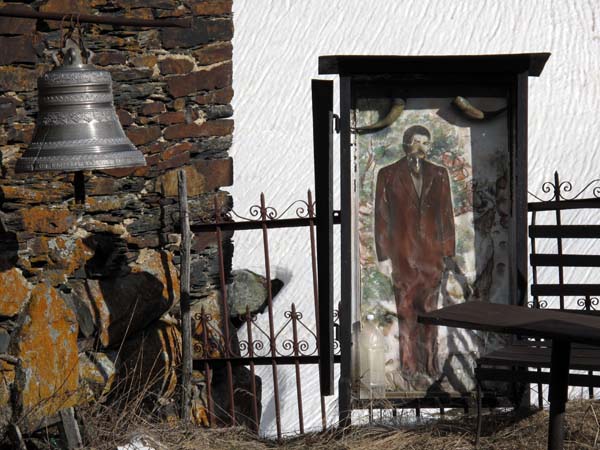
There has never been a better time to visit Svaneti, although things are changing fast – too fast for comfort perhaps. Following centuries of isolation – both the wheel and the internal combustion engine arrived here at roughly the same time during the 1930s – Svan villagers are starting to leave their high valleys for an easier life in Tbilisi, the Georgian capital. The building of a new road will no doubt help accelerate this change and the days of unadulterated Svan culture may now be numbered. For the time being though, travelling there is still to take part in an adventure.

Bradt Travel Guides have a good guide to the country. Authored by Tim Burford and recently updated by yours truly for the 4th edition, it contains all that you need to know about Georgia – Svaneti and Ushguli included.

Norwich Underground

Norwich’s network of underground passageways is the stuff of legends. Many of them may be the work of over-active imaginations but others undoubtedly do exist as relics of the city’s medieval glory days when a little subterranean expediency came in handy in times of religious persecution or civil war. Of course, even those that exist solely in folk memory still make for a good story.

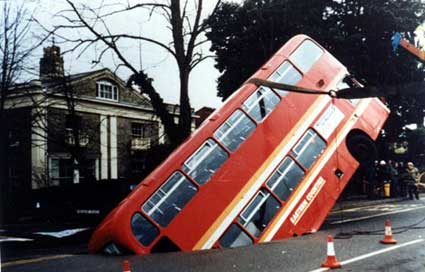
The city’s bedrock is pitted with less glamorous tunnels too. Chalk and flint mining was a Norwich tradition for centuries and both materials were necessary for building the extensive city’s walls and numerous churches of what was England’s second largest city in the medieval period. As a result, certain areas of the city have long been synonymous with subsidence problems. A reminder of this came to the fore in 1988 when a double-decker bus was unexpectedly swallowed-up by the earth on Earlham Road close to the Roman Catholic Cathedral of St John the Baptist. Thankfully no-one was hurt. This bizarre event made for some entertaining postcards and even gave the opportunity for the chocolate manufacturer Cadbury’s to promote one of its products using a photograph of the unfortunate bus alongside the slogan, ‘Nothing fills a hole like a Double Decker’.

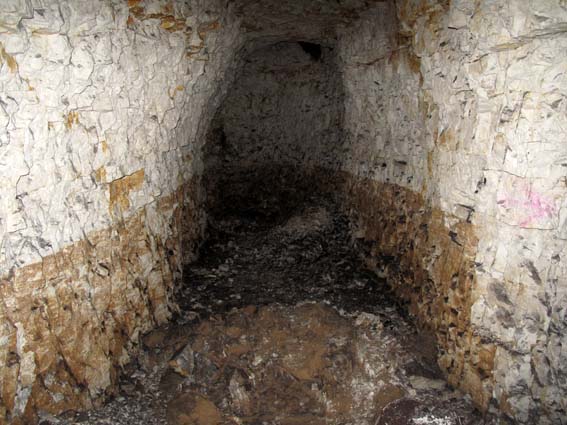
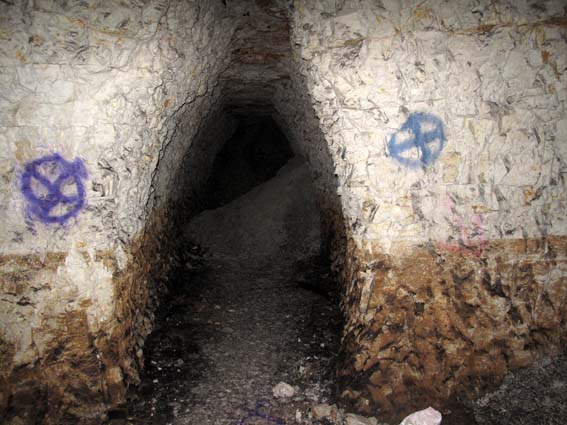
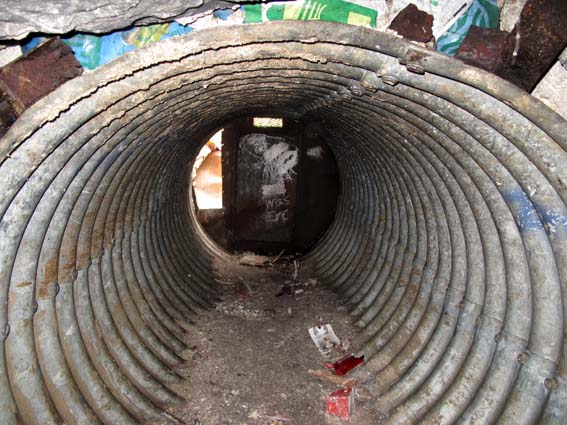
Walking recently in a formerly unexplored corner of a familiar haunt at the city outskirts I stumbled upon an entrance to this chalky underworld. Long sealed-up with steel to deter would-be intruders, this one had been recently prised open – by shadowy urban explorers, no doubt, keen on charting this unmapped terrain. Resistance was futile – there was no way to turn down such a serendipitous opportunity.

Just a few metres beyond the entrance the absolute darkness is intimidating – the light of torches too feeble to identify much more than where the tunnel floor is and highlight spray-painted ciphers marking dead ends and potential exit routes. The photos taken here with flash were made by simply pointing and hoping for the best: a strange turn of events in which the results reveal detail unseen by dim yellow torchlight at the time of their taking.

A troglodyte world such as this is a starkly alien environment that can bring out the most atavistic of fears. Past underground visits have been to well-lit caverns filled with phantasmagorical stalactites and stalagmites, or tropical caves in south-east Asia populated by strange blind fish and albino insects — beautiful unthreatening spaces. My only previous mine experience was a terrible, yet fascinating, place on the other side of the world: a Bolivian silver mine at over 4,000 metres altitude at Cerro Rico (‘rich hill’) near Potosí, where visitors are expected to bring along gifts of Coca-Cola, bags of coca leaves and sticks of dynamite – the necessities of a Bolivian mining life. The miners in turn offer their own gifts to El Tío (‘The Uncle’), the spirit of the underworld – a pact with the Devil that permits them to scratch a dangerous living from the earth for their short tough lives. Since this visit I have always afforded miners the greatest respect.

It might seem odd that a short excursion beneath the ground just a mile or so from home can feel almost as alien an experience as a visit to a Bolivian silver mine – even without a cheek-wad of coca leaves and the necessity of appeasing ‘The Uncle’. There again, the juxtaposition of a jarring new experience in a wholly familiar setting is always going to be disturbing.

Time and Tide

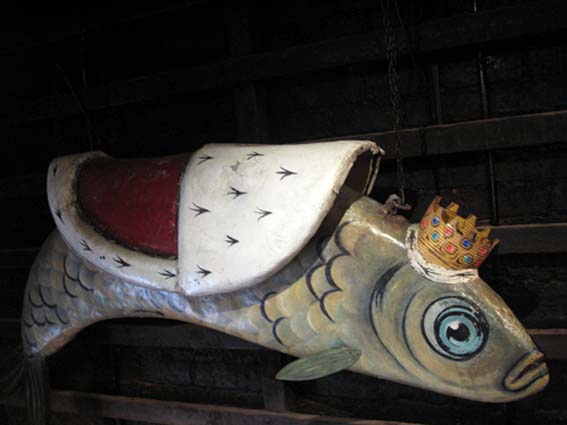
Great Yarmouth’s excellent Time and Tide Museum continues to fly the flag for that town’s half-forgotten herring industry. Located near the old town walls just off South Quay in a former herring smokehouse, the museum informs and charms in equal measure. With mock-ups of 19th century ‘rows’ – the tiny terraced back-to-backs that once housed Yarmouth’s men and women of the sea – and with plenty of newsreel and black and white photographs of whiskery sailors and itinerant Scottish fishergirls it transports the visitor back to a time when the herring was king and Yarmouth served as his palace: ‘the fishiest town in all England’ as Charles Dickens once observed. Such erstwhile fishiness is tangible: the very walls of the museum are still redolent of smoked fish — rich, evocative, appetising. Once, the whole of South Quay must have smelled like this.

Yarmouth has had to reinvent itself several times over the past couple of centuries: prosperous periods as a boatbuilding hub, fishing port, herring processing centre and seaside resort have come and gone, overlapping one another as palimpsests of industry. These days, although a vestige of low-expectation tourism still clings on, it is more an ambience of low-rent charity shops, Portuguese cafes and boarded-up businesses that characterises this urbanised sand spit on England’s easternmost shore.

The Time and Tide Museum is struggling a little despite numerous plaudits since its establishment that include becoming a Gulbenkian Prize Museum of the Year finalist in 2005. Recently the Silver Darlings cafe in the museum courtyard was forced to close through lack of funding – a soft target for funding cuts in this penny-pinching era. The vending machine that has been installed is scant compensation. To Yarmouth’s credit, there was widespread dissent about this. People here are proud and do not like to see the ongoing decline of their town, especially considering that it once held such an elevated position in Britain’s maritime heritage.

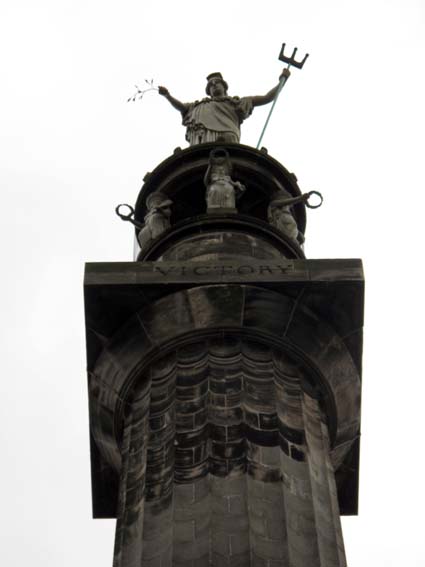
Nowhere is this proud heritage better displayed than at the Britannia Monument at The Denes a mile or so south of the museum. The monument was erected in 1819 as a memorial to Admiral Horatio Nelson, Norfolk’s most famous son (give or take Stephen Fry or Delia Smith). Standing 44 metres high, just eight metres short of the Nelson monument in London’s Trafalgar Square, the column appears anachronistic towering above the humdrum low-rises of an industrial estate: a weather-stained monolith to past glory and the red-jacketed hubris of empire. Over less than two centuries, a booming herring trade, bucket and spade holidaymakers and lacklustre industry have all had their place in the sun here beneath Britannia’s unwavering gaze: such has been the drift of Yarmouth’s cultural topography.

But there is an undeniable glory to it too: a thick-set Doric column topped by a pergola framed by six caryatids that in turn supports a figure of Britannia atop a globe inscribed Plamam Qui Meruit Ferat (‘Let him who merits it take the palm’), the motto of Nelson’s coat of arms. All is not quite what it might first appear: you cannot tell from the ground but Britannia and her caryatids are modern fibreglass replacements of the stone originals — if you come here hot-foot from the Time and Tide Museum then you will already have seen the original head of Britannia there. I mentioned hubris; one might assume that Britannia would be facing square-jawed out to sea warning continental upstarts not to mess with the Royal Navy but no, she faces inland — towards northwest Norfolk and Nelson’s birthplace at Burnham Thorpe, some say.