The Road to DirÄ“ Dawa

The road to Dirē Dawa is a long one: an eight-hour drive from Addis Ababa, or so we are told.

We left Addis Ababa at dawn, our bus rattling through empty streets shadowed by new-build office blocks. As with almost everywhere currently in Ethiopia, the pavements were piled with concrete rubble, the result of Prime Minister Abiy Ahmed’s ambitious nationwide road-widening project, a controversial scheme that had already demolished parts of some poorer city districts and displaced many residents in its wake.

For the first hour or so we sped along a pristine tarmacked dual carriageway, the brightening horizon ahead weighed down by clouds the colour of watermelon juice. We could have been almost anywhere; or, at least, anywhere that comes blessed with a backdrop of purple-shadowed mountains and lush tropical greenery. Eventually the freeway morphed into a narrow two-lane highway, which meandered around the heads of valleys as we plied our way eastwards. Traffic was heavy in both directions. Coming towards us was an endless stream of heavily laden trucks from Djibouti, each one towing a trailer, vehicle and driver bonded in lockstep like driven cattle. We slotted into a gap in the fast moving crocodile of trucks that were heading east towards the coast, some of which were piggybacking another truck strapped to their flatbed.

As elsewhere in the country there were checkpoints and roadblocks to slow things down. We had already experienced these travelling the roads of the south, especially in Oromia state, although they had rarely delayed us for long. Sometimes they were administered by the Ethiopian army but more often than not they were manned by local militia who wanted to keep an eye on who was coming into their territory. It had not taken long in the country to come to the conclusion that, rather than the unified sense of national identity promoted by the government, Ethiopia was in the process of becoming increasingly fragmented by region, language, culture and political persuasion.

Before our arrival in Ethiopia we had made firm decisions as to our itinerary. These were based on information gleaned from online travel forums and British FCO warnings regarding more unstable areas of the country. Much of the north – the highlands of Amhara and part of Tigray – was considered unsafe because of rebel activity and kidnappings. Similarly, part of the large sprawling region of Oromia that fans south, west and east from Addis Ababa also came with similar warnings about safety. The FCO had produced a map of the country that divided the country into three zones according to perceived safety: red (‘Advise against all travel’), amber (‘Advise against all but essential travel’) and green (‘see our travel advice before travelling’). I had consulted the updated map frequently throughout the second half of 2024 in the vain hope that brotherly love might prevail throughout the land but the map did not appear to change very much. Much of the south, in particularly the area around Hawassa where we had spent the previous week, was largely amber and therefore considered relatively safe. The highway between Addis Ababa and Dirē Dawa appeared to pass through both amber and green zones, nudging the red briefly between the Oromia towns of Welenchiti and Metehara.

Road blocks and heavy traffic aside, the other barrier to easy progress was roaming animals – donkeys, goats and camels. The donkeys especially were a law unto themselves, totally unfazed by the vehicles that swerved around them as they pottered along oblivious to any danger. It seemed almost as if the animals understood the fast and loose rules of the road – fully aware that if they were harmed then their owners would require compensation from the guilty driver. On a couple of occasions I actually saw one cross the road using a zebra crossing. Camels were a different matter though, large enough to call the shots, they were generally unwilling to step aside or allow any vehicle to manoeuvre past them.
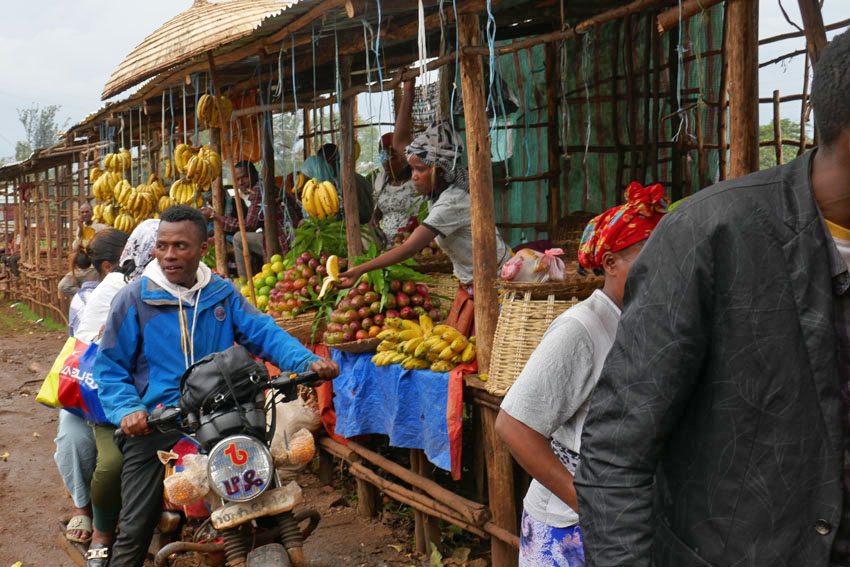
We passed through an endless parade of villages that had little to differentiate themselves from one other: a blurred flash-by of roadside settlements, all flimsy housing and lean-do shops thrown together out of scrap wood, plastic sheets and corrugated iron. The goods on sale – fruit and vegetables, flyblown meat, second hand clothes, spare parts for vehicles – were the bread and butter (or, perhaps, injera) of everyday life. As always in the Global South, it was intriguing how such a base-level financial system managed to thrive, a poor man’s economy in which ragged ten birr notes continually changed hands until all the value had been squeezed out of them.

There was another product on sale that seemed to be ubiquitous in this part of the world – we had seen it on display along almost every roadside in southern Ethiopia the previous week. Khat, the stimulant of choice across much of the Horn of Africa, is an innocuous looking leaf that resembles bay or privet. Legal throughout the region, khat is, as many Ethiopians will attest, less a stimulant, more a way of life. Our driver was clearly an aficionado; as was our guide, a young man who kept his own counsel throughout the journey and did not utter a word of information about the foreign (to us) country that lay beyond the window. The pair just stared ahead for the whole way, locked in herbal reverie as they slowly worked through the pile of leaves that lay at their elbow.

Khat seems to be very much a driving drug, an herbal alternative to the so-called energy drinks whose slim cans over-caffeinated motorists toss out of their windows along Britain’s motorways. It might even be considered to be a green alternative to caffeine, although there is absolutely no shortage of coffee in this land of stay-awake plenty. A week earlier, motoring through the coffee-rich Sidama region of the south, our previous guide, Wonde (‘Wander’), had regaled us with horror stories about khat-crazed drivers careering off the road due to lack of sleep and/or poor decision-making. It seemed perfectly believable. Between Addis and Dirē Dawa I counted at least eight trucks that had crashed and gone off-the-road; some lay forlornly on their side, while others had ended up completely upside down with wheels akimbo. It was unclear as to what had become of the drivers, although it did not look as if they would have escaped unscathed.

One crashed truck that we passed had unleashed a load of crated beer bottles onto the slope beside the road. Slowing down to make our way around the crowd that had gathered around the wrecked vehicle, the air smelled as malty as a Sunday morning pub. A couple of armed men were guarding the booty as approved wreckers sifted through the debris, placing the unbroken bottles in crates ready for resale. Who the men with guns were was anybody’s guess. It was the same at some of the checkpoints we were obliged to stop at, where youths with rifles peered inside the bus before lowering the barrier – no more than a rope stretched across the road – to allow us to pass. A single word from the driver, ‘Turist’, and a glance at our pale well-fed faces within, was usually sufficient for us to be waved on.

While khat consumption is widespread, it was something that was shared with other countries in the region like Somalia. Other aspects of Ethiopian culture are decidedly more unique. One is the country’s unorthodox calendar, which is seven or eight years behind the rest of the world. While the year elsewhere might be 2024 according to the Gregorian calendar, in Ethiopia it is currently 2017. ‘Welcome to Ethiopia, and congratulations,’ we had been told more than once, ‘here you are seven years younger.’ Another Ethiopian curiosity is the music that is played loud and proud almost everywhere, which whether traditional, pop, or the rather wonderful Ethio-Jazz that I had already developed a taste for, uses a pentatonic scale that has a distinctive modal sound to it. A world away from other African music that is generally more accessible to Western ears, Ethiopian music has a tendency to sound rather other-worldly and even a little Chinese at times.

Another facet of Ethiopian culture that sets the country apart is the food, which is quite unlike anywhere else. The mainstay of the diet is a sour spongy pancake called injera, which is made from an ancient indigenous grain called teff. This is eaten along with small helpings of spicy vegetable or meat sauces. For many Ethiopians, if they can afford it, kitfo (spicy raw beef) is the preferred accompaniment, although, perhaps counter-intuitively, there are actually two days of the week, Wednesday and Friday, when restaurants are obliged to serve only ‘fasting’ food, which is strictly vegan. Whether meat or vegetable, raw or cooked, freshness is probably the most important factor in regards to health, and I believe it was the suspicious, rather tired-looking sauce that came with the injera I had eaten the previous night in Addis that had been the cause of the stomach cramps that troubled me throughout the long journey.
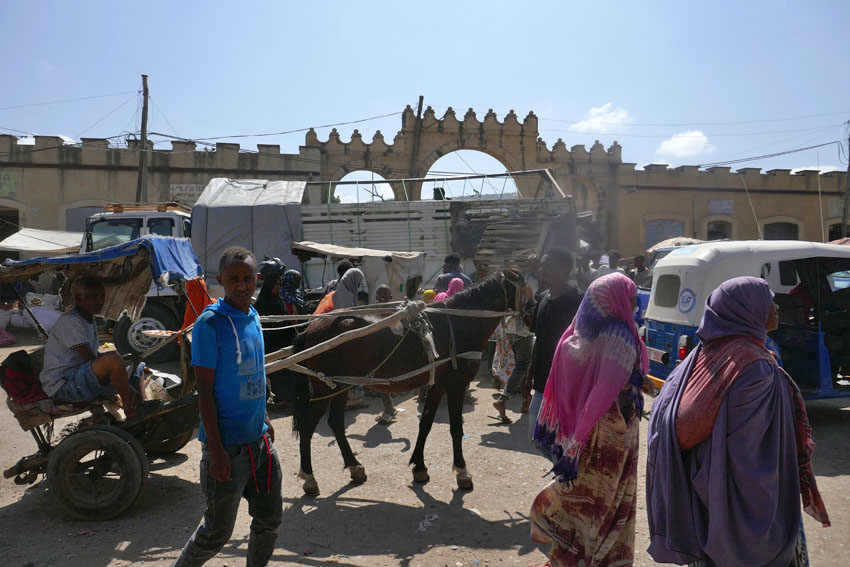
We pulled into DirÄ“ Dawa just as it was becoming dark, the onset of the city’s flickering neon countering the rapid tropical plunge into night. The journey had taken twelve hours – sunrise to sunset. Considerably lower in altitude than where we had come from, the city felt hot and humid compared to Addis’s fresher, spring-like climate. But it was as bustling and noisy as the capital, with a honking stream of three–wheel bajajs (tuk-tuks) plying DirÄ“ Dawa’s wide boulevards. Tomorrow there would be the opportunity to visit the city’s sights, such as they were. Tonight though, after a day of unremitting motion, it was the promise of laying still on an immobile bed that held the greatest appeal.

The Ghost of a River – The Walbrook

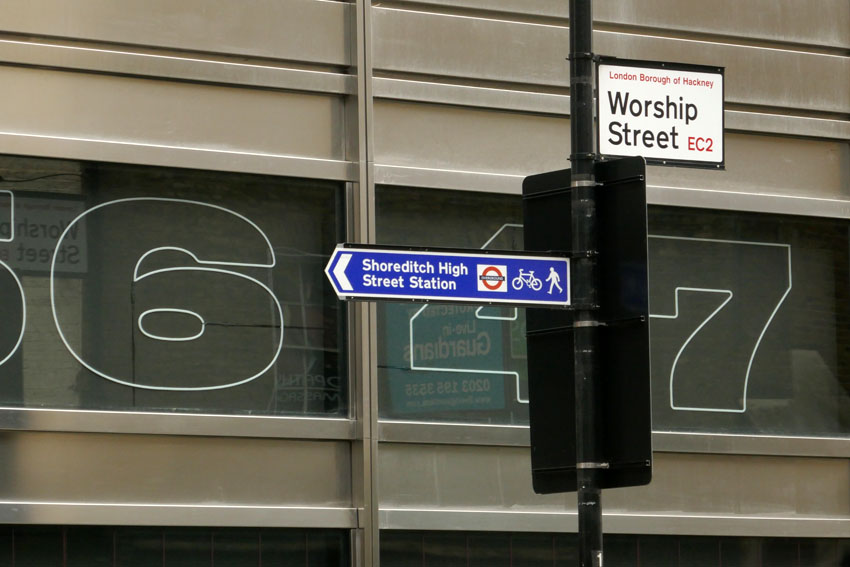
Of all London’s lost rivers it is the Walbrook that is the most irrefutably lost: lost to time, lost to place… well, almost. An important source of water in Roman times, when its banks were lined with the workshops of Roman industry – tanneries, potteries and glass workshops – the river has not been visible on the surface since the 15th century when the last open sections were vaulted over. Ghosting the boundary of Roman London, its confluence with the Thames lay close to what is now Cannon Street Station Bridge. Where the Walbrook began is less certain, although what is clear is that its course flowed between the City of London’s two principle hills – Ludgate and Cornhill. Some say its source was a spring close to what is now Shoreditch High Street, while others point to higher ground at Islington.

Lost to time, perhaps, but there clues to place – in street names, in signs, in places of worship, in the Roman street plan. The walking route tracing the Walbrook’s course that I describe here is faithful to that given in Tom Bolton’s excellent London’s Lost Rivers: a Walker’s Guide Volume 1.

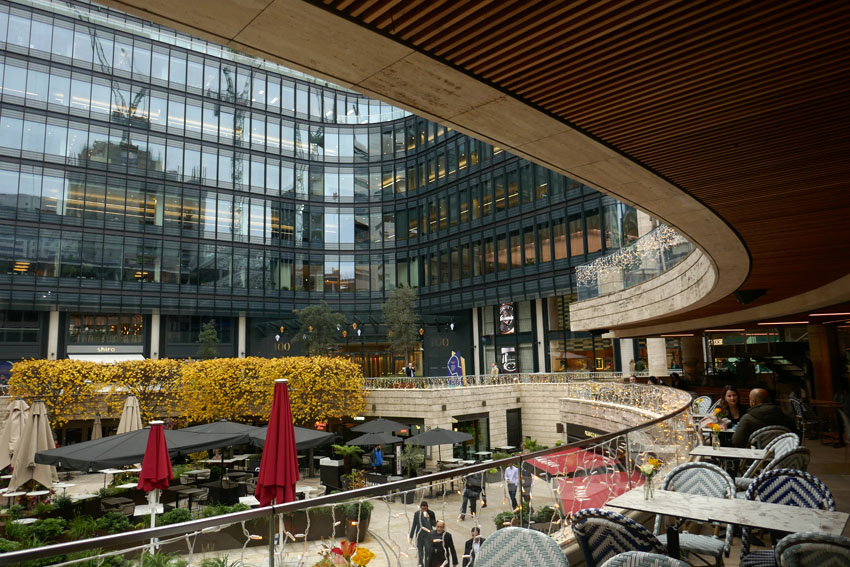
I begin on Curtain Road that runs south from Shoreditch. Holywell Road that abuts it to the east is an intimation of the location of the aforementioned spring. Curtain Street leads to Appold Street and through Broadgate Circle, an upmarket shopping and leisure hub that until 1984 served as a railway station and which was formerly a burial ground for the Bethlehem Royal Hospital, better known as Bedlam.  It also served as a mass grave for victims of the various bubonic plague outbreaks in pre-Fire London – grim, no doubt, but dig down almost anywhere in central London and you will find human bones sooner or later. The River Walbrook would have passed through here before flowing along what is now Bloomfield Street to reach the Roman-built London Wall, which served as the boundary of the City until the 18th century. The Walbrook is believed to have flowed through a hole in the wall at an aqueduct close to where Bloomfield Street meets the Wall.

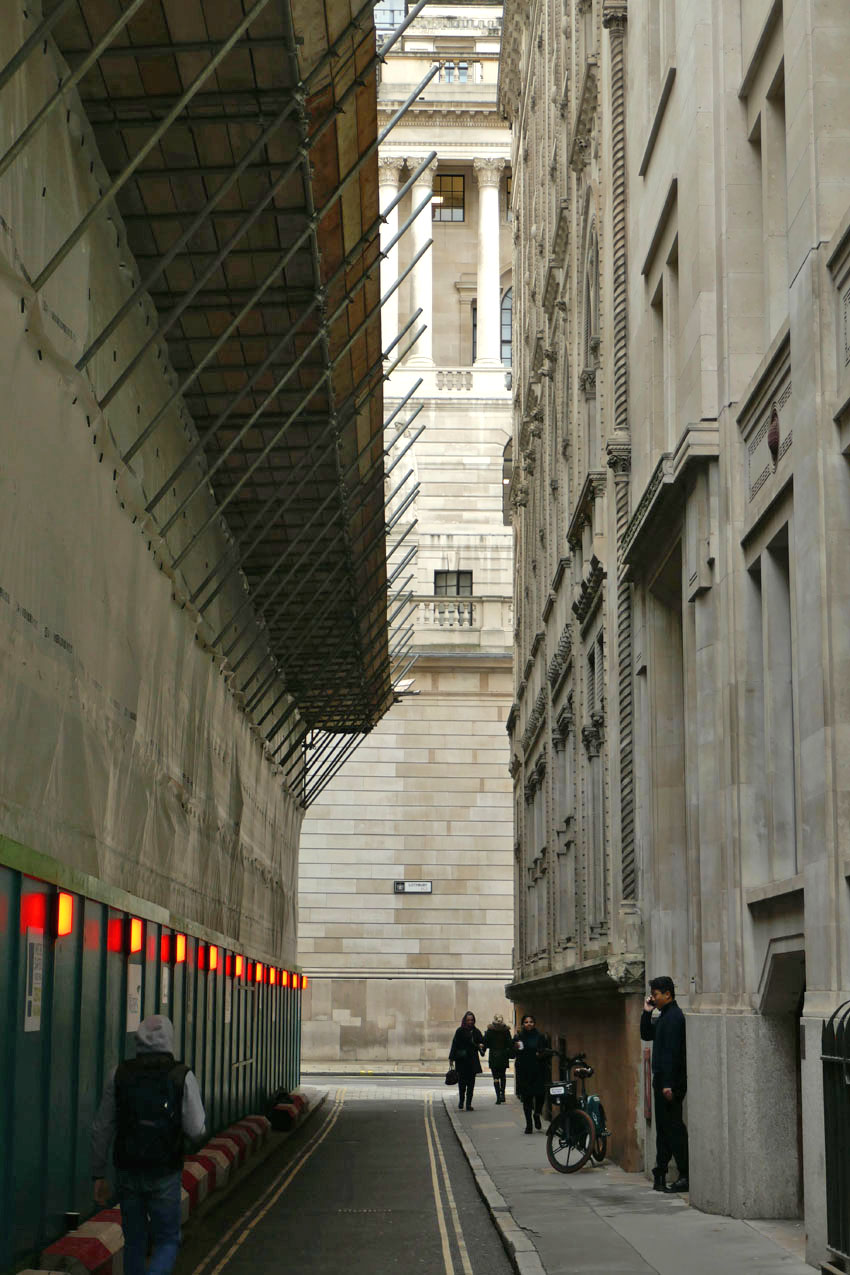
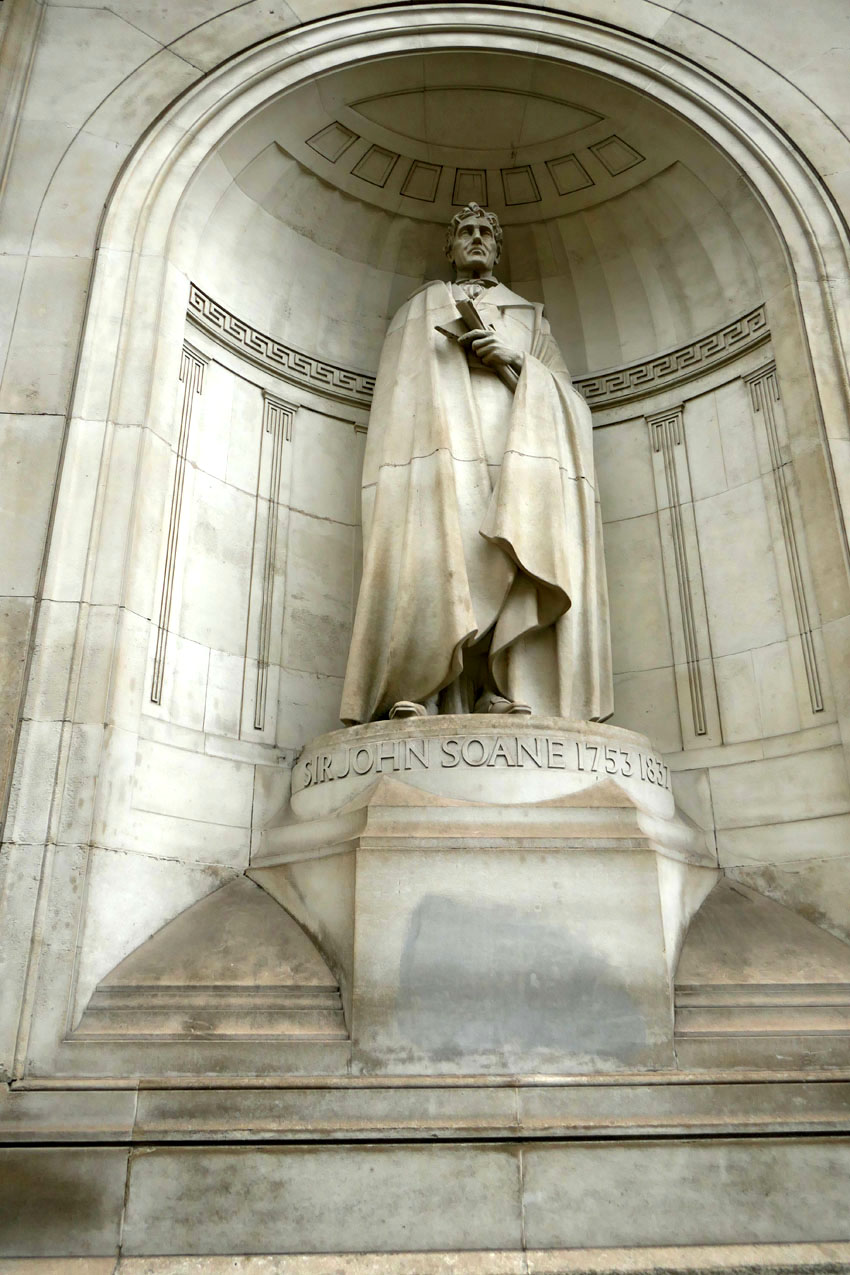
Channelling the disappeared river, I pass through elegant iron gates of the Wall into Throckmorton Avenue, then turn right and left into an alleyway opposite a barber’s shop that seems incongruous amidst all this high-rise estate of capital. But even financiers need to be shaved and shorn occasionally – sharp haircuts and a regular supply of barista coffee are the basic necessities of life in the City. The alleyway leads into to the narrow passageway of Tokenhouse Yard, at the end of which is the reflected light of the north wall of the Bank of England, the building’s Portland stone preternaturally aglow in the gloom of an overcast November day. The magnetic pull of capital here is almost spiritual: money buys, Jesus saves, sinners spend. Sir John Soane, the Bank of England architect, surveys the scene from his statue recessed high into the wall, while the ghost of the river traverses beneath the building, symbolically moistening – perhaps laundering – the horded lucre in the vaults beneath.
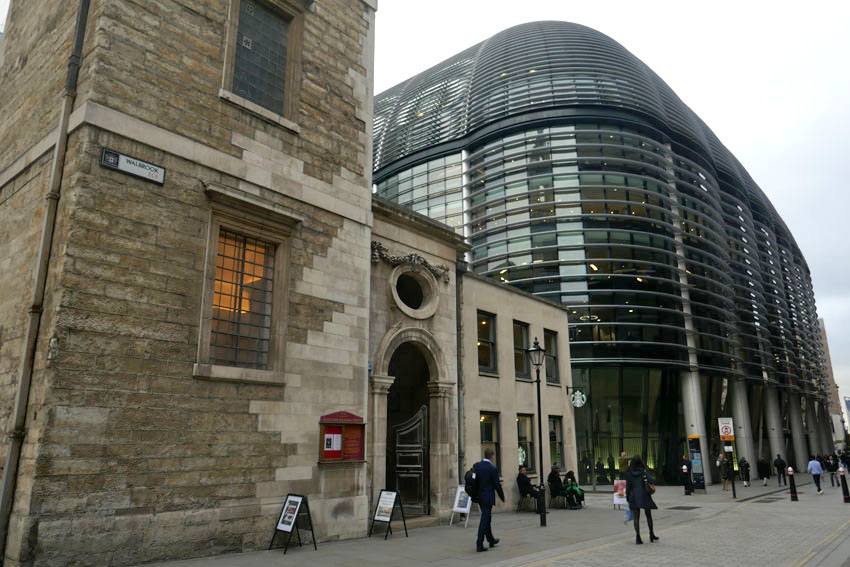
Riverwards, beyond the Bank, lies the Church of St Stephen’s Walbrook and a street of the same name. The elusive river is acknowledged at last. The church, originally situated on the bank of the Thames, was moved here in the 14th century. The Walbrook would have flowed just west of here. The street is dominated by the block-length, Norman Foster-designed Bloomberg building, which has an undulating profile that hints at the vanished river. On its ground floor, an etched glass door leads into the London Mithraeum, a museum dedicated to the Mithras temple that once stood on the banks of the Walbrook nearby. A place where Mithras and Bacchus were once worshipped by Roman soldiers, Mammon has since taken over as chief deity on this patch of expensive real estate.

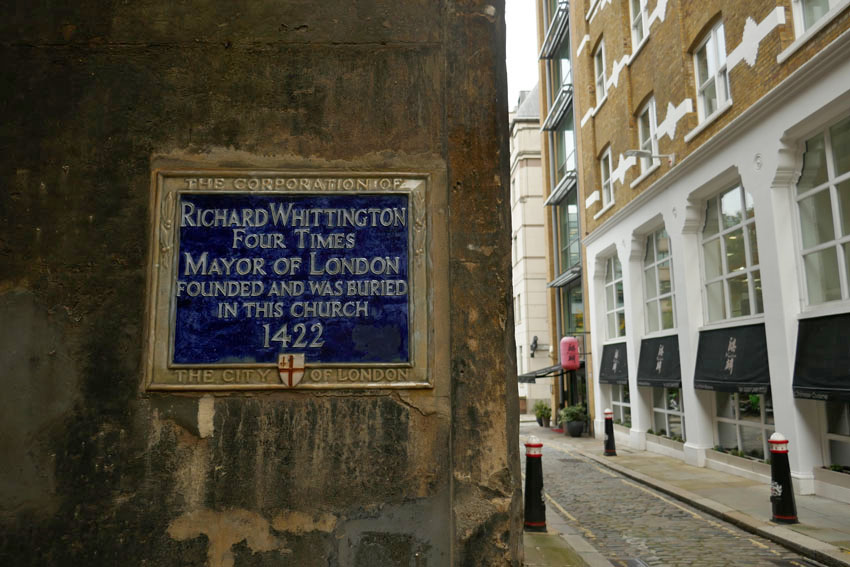
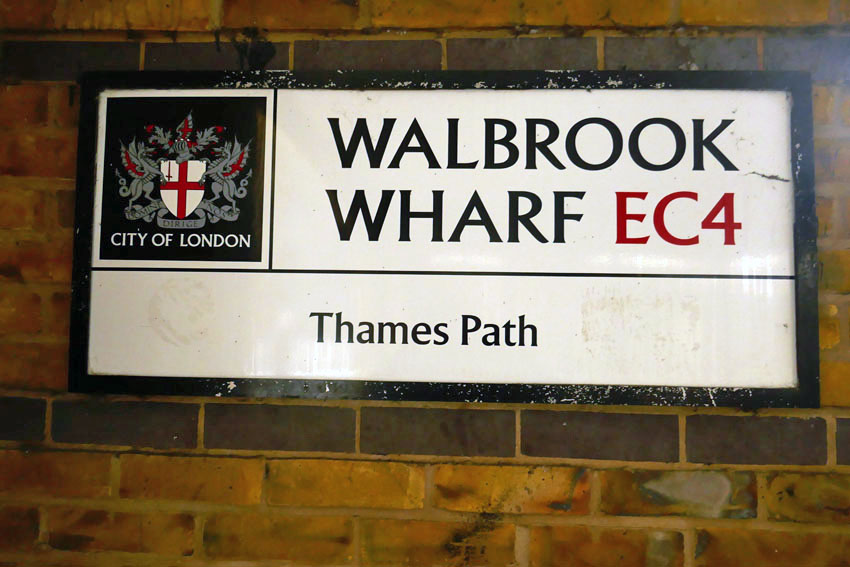
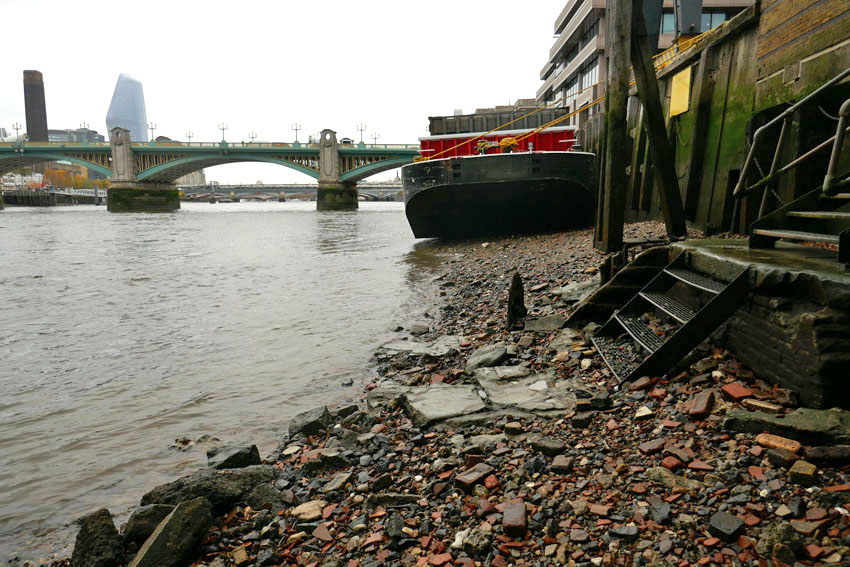
Just south of here, within sight of Cannon Street Station, is the Church of St Michael Paternoster Royal. Alongside are Whittington Gardens, named after the famous cat-loving, four-time Lord Mayor of the city who is buried here. This was the original location of confluence of the Walbrook with the Thames – the mighty river has shifted south in the two millennia that has passed since Roman times.  Upper Thames Street now flows with traffic where once the tidal river lapped. The modern confluence, theoretical as it may be, lies not far away along Cousin Lane, a narrow street that traces the long wall of Cannon Street Station down to the railway bridge over the Thames. Here there is a pub and steps leading down to the water. There is also a river path that leads west along Walbrook Wharf, where black barges lie tilted on the shore awaiting the incoming tide.  
The tide is out and so I descend to the beach, which is covered with assorted pebbles, water-blunted bricks and a few rusted scraps of iron. Scattered among the pebbles, a small piece of pottery reveals itself at my feet – curved, brown; reassuringly rustic. Roman? Who knows, probably not, but somehow it feels right. A votive offering – it marks the place where London began.

Ghost Factory

Much of the fabric of Birmingham’s history is, like the city’s modest river, the oft-culverted Rea, half-hidden or tucked away from sight. Occulted beneath flyovers and underpasses, the city’s past flows sluggishly beneath redundant factories and car parks. Unconvincingly disguised, and with the vaguest hint of rusting metal, it escapes as vapour from drains and manholes. It goes with the territory: this is a city where there is a strong tendency for destroying evidence of the past, of knocking things down only to build them again in rearranged form. As the city’s coat of arms proclaims in its simple motto, it is the Birmingham tradition – ‘Forward!’ The subtext is ‘Don’t Look Back!’ The past is bulldozed. Even so, modern high-rise Birmingham, brash and shiny though it may be, is replete with ghosts of the past, of industry, of once busy factories and workshops. The whole city is a ghost factory.

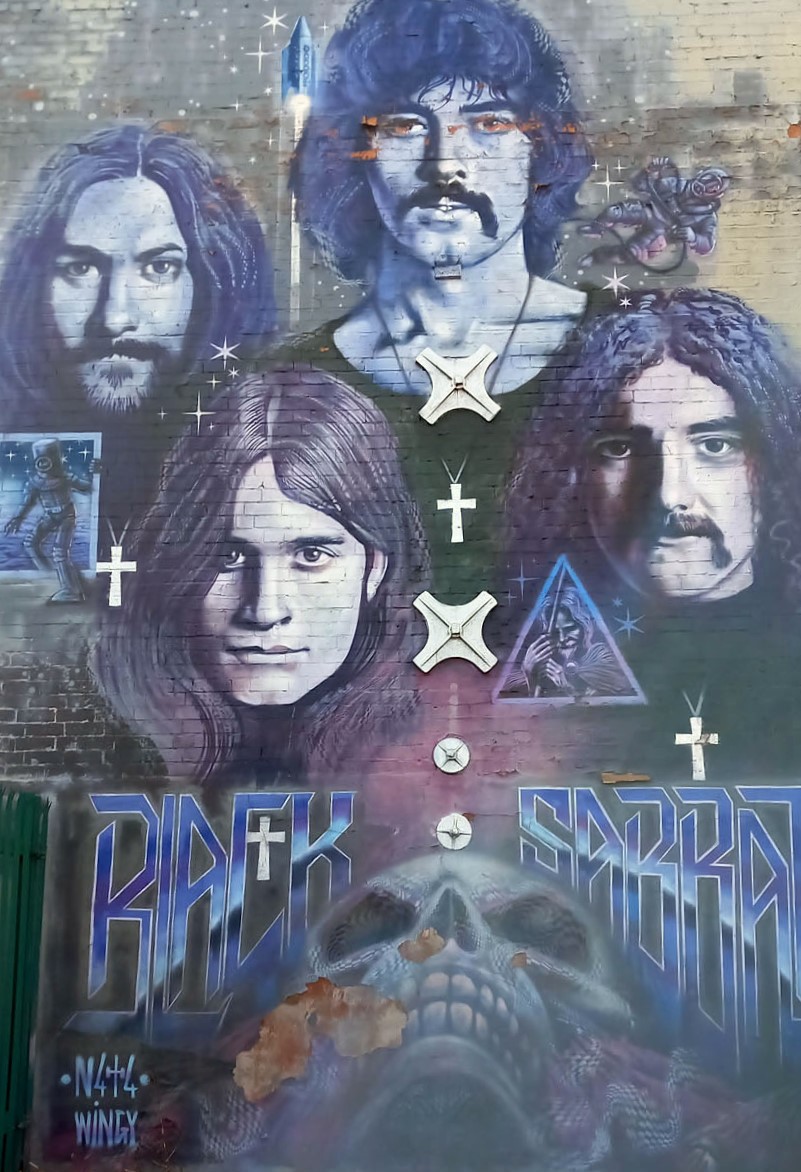
 These days there is a new-found reverence for some of Birmingham’s more iconic anti-heroes.  Peaky Blinders with its skewed myth-making has afforded the city some retro-gangster glamour, while established city brands like Black Sabbath have become the stuff of legend. Now there is even a Black Sabbath Bridge on Broad Street spanning the canal, where the likenesses of Aston’s own heavy metallists – Geezer, Bill, Ozzy and Tony – are immortalised on a bench (iron, naturally). Who’d have thought that in the halcyon days of my Birmingham Town Hall gig-going youth it would be faux-demonic Black Sabbath who would be chosen as the musical emblem of the city? My money would probably have been on the Moody Blues or Roy Wood.

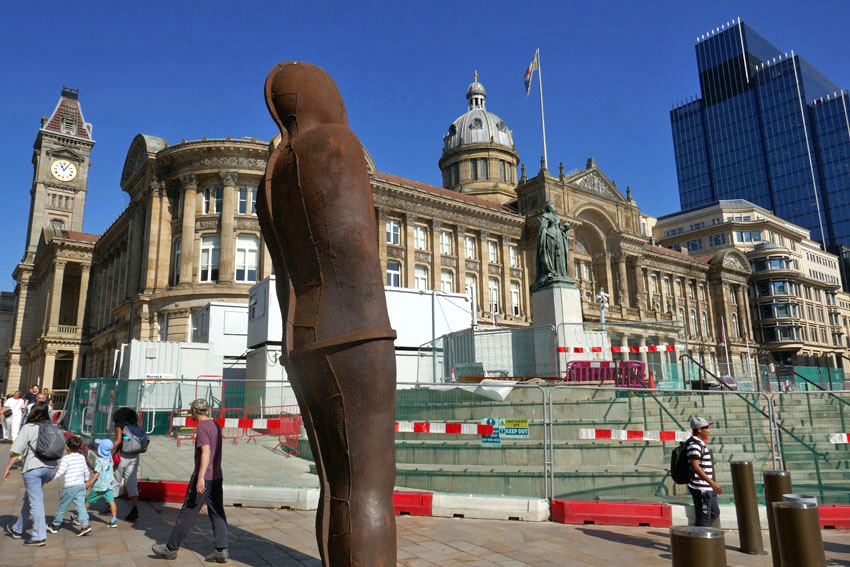
In Victoria Square, the neoclassical Town Hall is just as I remember it, all pale stone and Corinthian columns, but its immediate surroundings have changed dramatically in recent years. A tram line now passes in front of it that follows a route through the Black Country to Wolverhampton, somewhere that seems exotically distant from this city centre ground zero. Between the town hall and the tram tracks stands Antony Gormley’s Iron:Man, a six-metre-tall leaning metal figure that pays tribute to Birmingham’s erstwhile industry, its original heavy metal heritage.

Head downhill from Victoria Square, past the stainless steel, baking foil roof of New Street station, past the aluminium-disc-clad blobitecture of Selfridges, through the Southside district and the areas that are now marked on maps as Gay Village and Chinatown. Soon you’ll arrive at the former industrial district of Digbeth, which nowadays is probably the closest thing Birmingham has to a Bohemian quarter. This part of the city is actually the oldest quarter, the location of the original Saxon village at a ford on the River Rea, around which the satanic mills of Victorian Birmingham would later cluster.

Digbeth High Street is in a state of flux, one side of it enclosed in chain-link. Gentrification might be too strong a term, but Digbeth is undergoing change: empty factory sites are being cleared to await new development. Tram tracks are being laid down; pavements are being widened and made pedestrian-friendly, flower beds are being set out awaiting planting. The side streets that slope down beneath the railway arches are lined with one-time industrial buildings that have morphed into event spaces – ghost factories stand at every corner. The wall murals that abound have already been here long enough to develop a patina of age. As I wrote in an earlier post, the transformation has already been going on for several years.

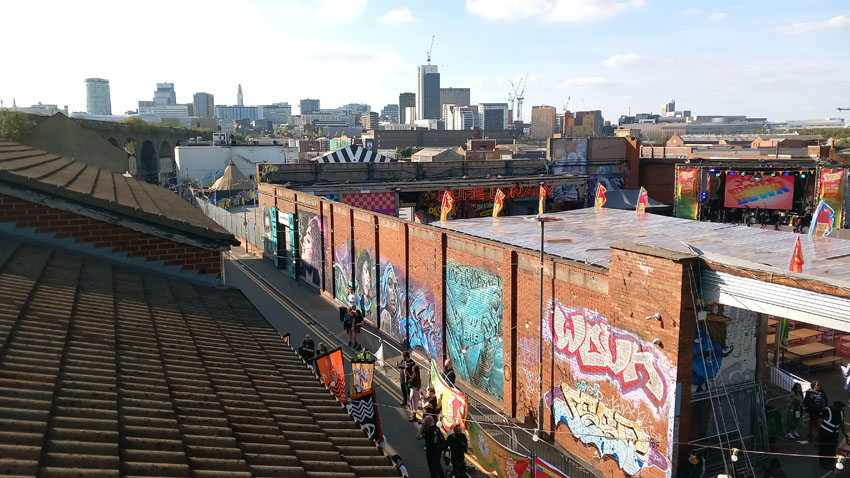
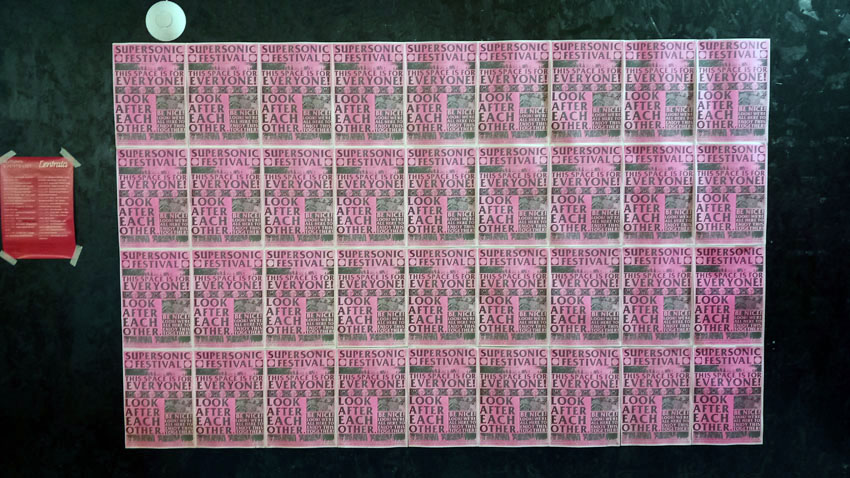
Digbeth is the location for Supersonic, an annual festival of experimental music that celebrated its twentieth anniversary this year. Supersonic is by no means a heavy metal festival but the spirit of Black Sabbath permeates like a benign, if mischievous, presence. Performances take place in two neighbouring buildings, one of which served as a warehouse in a previous life. Dark clothing is almost de rigueur, as are Sunn O))) T-shirts. Light-hearted doom is perhaps the oxymoron that best fits an atmosphere that I can only describe as feel-good apocalyptic. The music is loud but the mood is calm; the ethic is kind, inclusive and super-friendly. Perhaps it helps that this is Birmingham. Would it be the same in Manchester or London?

The Sunday night headliners Lankum play a glorious set of drone-laden alt-folk to an ecstatic crowd. Alternating between heart-rending murder ballads, frantic Irish jigs and dark sea shanties, the music veers from gentle to violent, from elegiac to almost frightening. In one of the between-song chats with the audience, guitarist Daragh Lynch mentions that he was delighted to discover that both of Sabbath bassist Geezer Butler’s parent’s were Irish and concludes from this that heavy metal must therefore be an Irish invention. We all laugh. But Birmingham, and especially Digbeth, did once have a sizeable Irish presence. It’s all part of Birmingham’s proud black, white and brown cosmopolitanism. The city was built on metal and people. Iron Man (Black Sabbath); Iron:Man (Antony Gormley) are both worthy tributes. While Birmingham’s iron has rusted to be replaced by stainless steel and aluminium, its people shine on.

The Greenway

Picking up from where we left off, back in November, my friend Nigel Roberts and I travelled to London on Wednesday* to walk Section 14 of the Capital Ring. We arrive at our starting point at Hackney Wick by way of the 26 bus from Liverpool Street Station, whose upper deck gives excellent views of upwardly and downwardly mobile Shoreditch and Hackney along the way.

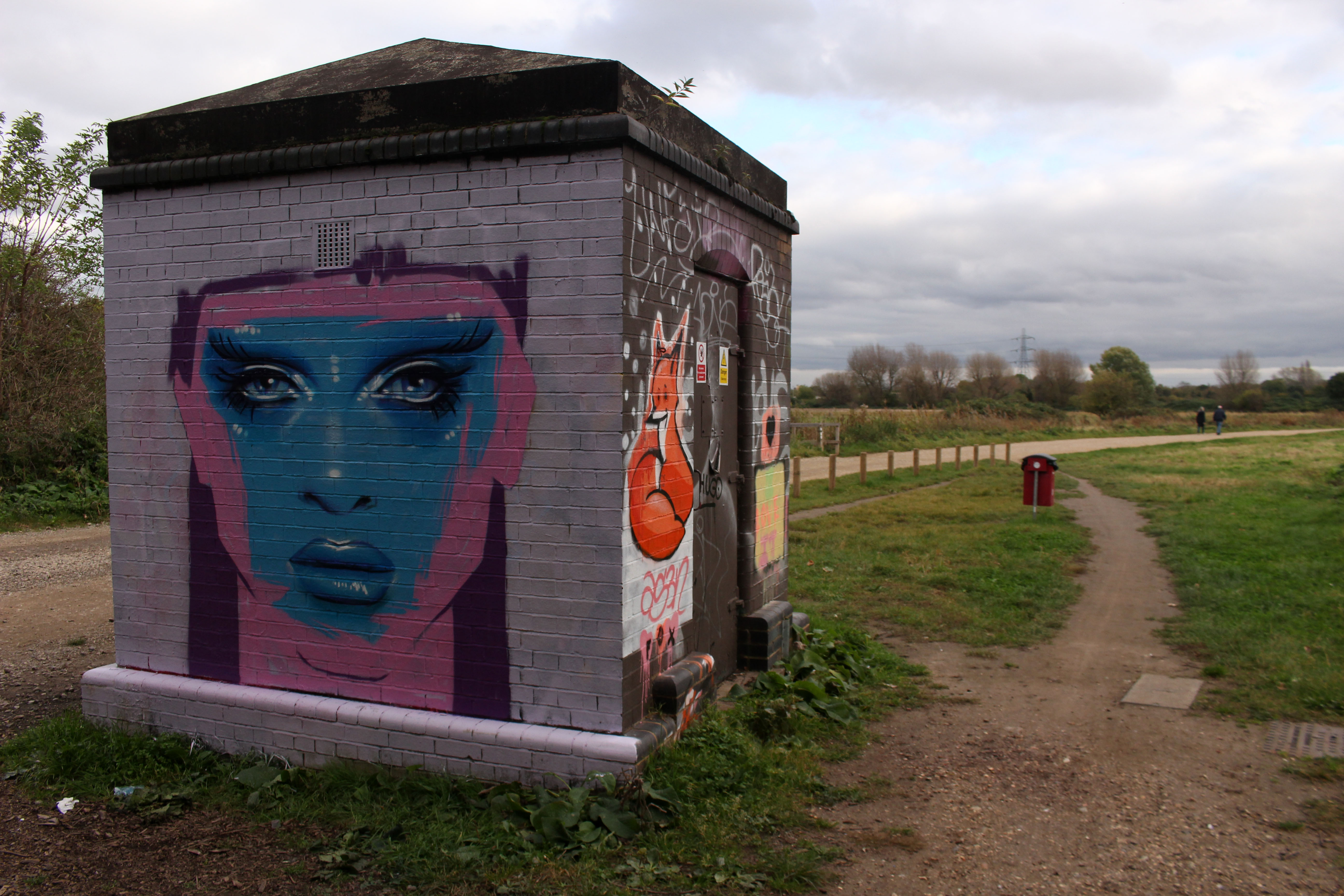
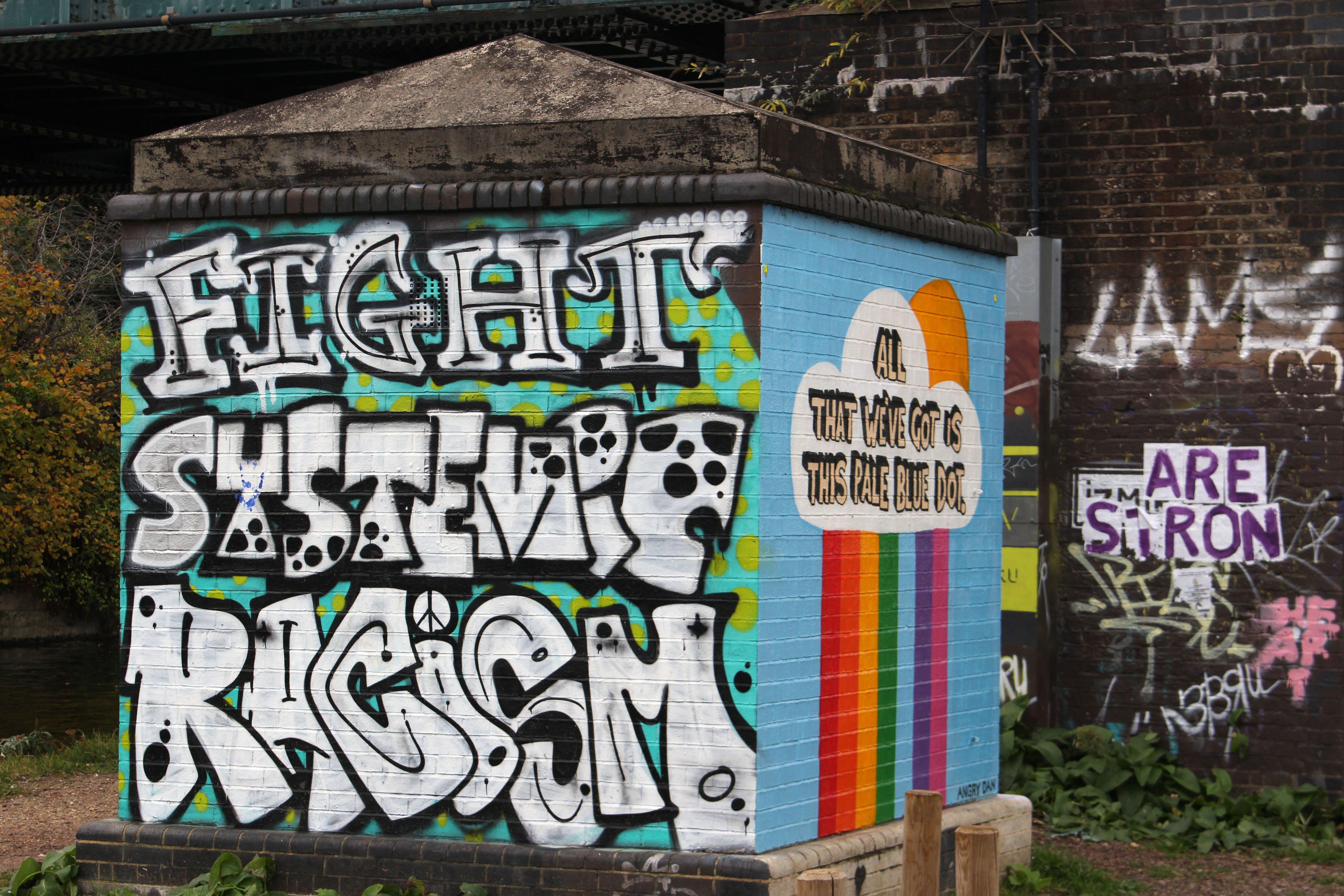
Hackney Wick, an East London zone heavily revamped by the 2012 Olympics, is already starting to develop a distinct patina – a place that is part bohemia and part industrial estate, with pleasing, professionally executed murals amid rag-tag graffiti.  We require sustenance before we set off, so bacon and egg rolls are purchased from a snack van near the station. The rolls, amply filled and luxuriously lubricated with brown sauce, are excellent value and of sufficient deliciousness that I am tempted to adopt them as an alternative monetary unit – a BER (Bacon and Egg Roll), a benchmark by which to compare prices. As I sit on a bench gnawing away, Nigel – always one to document every detail en route – Milibands me with his phone camera, capturing my awkward mastication for the benefit, no doubt, of his thousands of Facebook followers and leaving my political career in tatters even before it is begun.

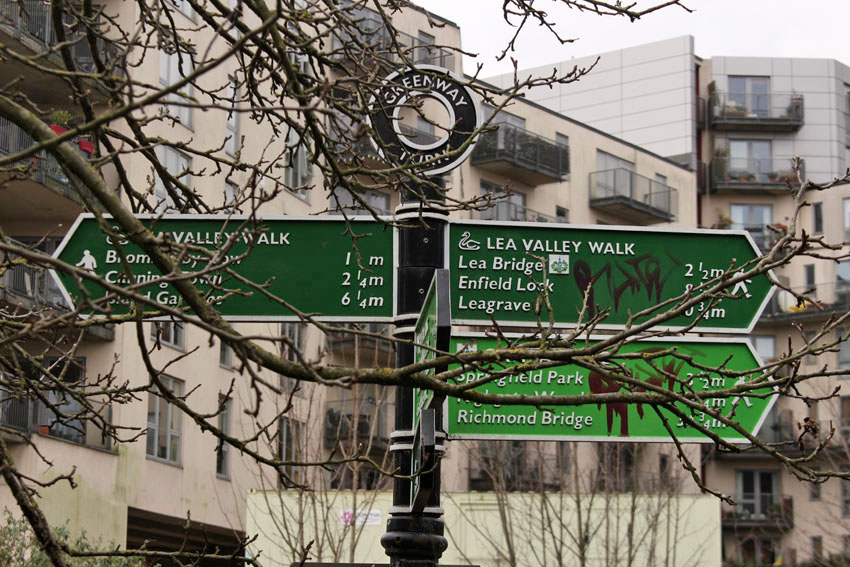
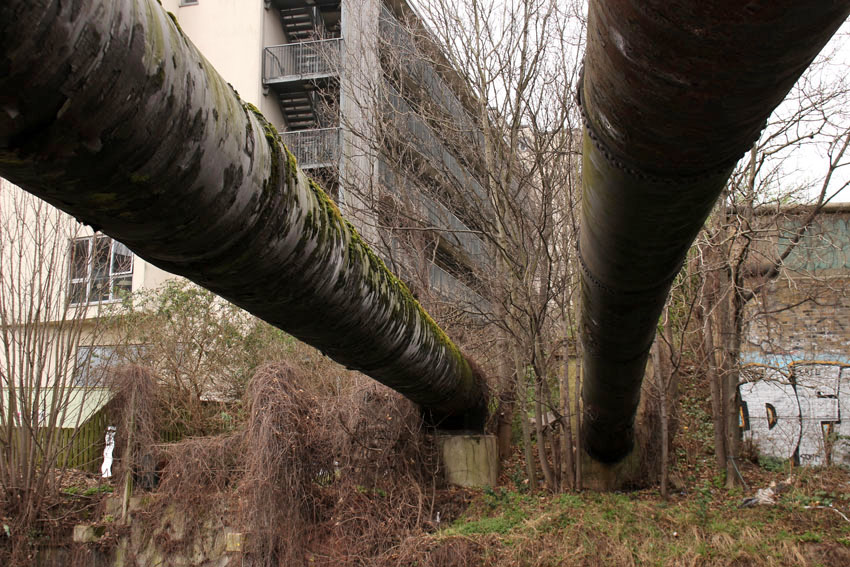
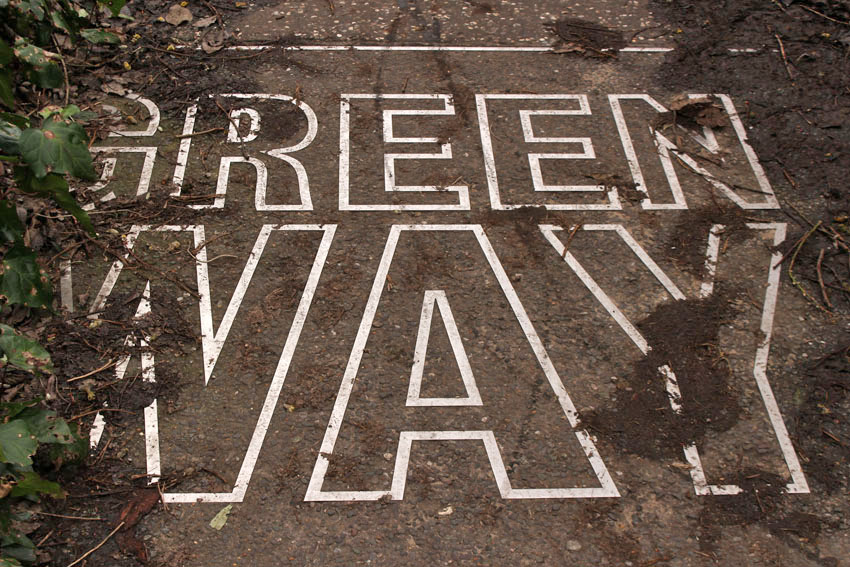
From the station we cross a bridge over the Lea Navigation (Hackney Cut) and follow the towpath south for a short distance before veering off left to join the route of The Greenway. The Greenway, well signposted and walker-friendly, is a six-mile-long pedestrian and cycle route that sits on top of the Northern Outfall Sewage embankment (N.O.S.E), directly above the 1860s Joseph Bazalgette-built sewer that shifts vast quantities of London sewage to a treatment plant in Beckton where, once purified, it is released into the Thames. Had Situationists ever trodden its well-maintained path they might have declared, ‘Sous les pavés, la merde!’ While Tony Blair once recommended a centrist Third Way, here, we are following something akin to a turd way, although the official name, The Greenway, undoubtedly has a more fragrant ring to it. 

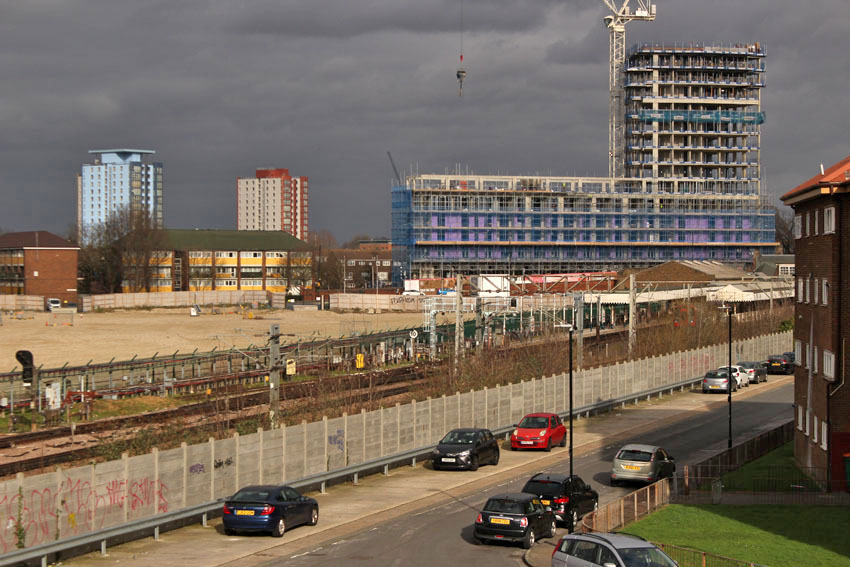
Queening it over Queen Elizabeth Olympic Park to our left is the London Stadium, now the claret and blue home of West Ham FC, along with the fantasy fairground ride that is Anish Kapoor’s ArcellorMittal Orbit sculpture. Further on, just before reaching the railway line, we come to the View Tube Café & Bar, where we stop for a coffee (1.2 BER for a polystyrene cupful) but pass on the cocktails on offer (1 mojito = 4 BER).

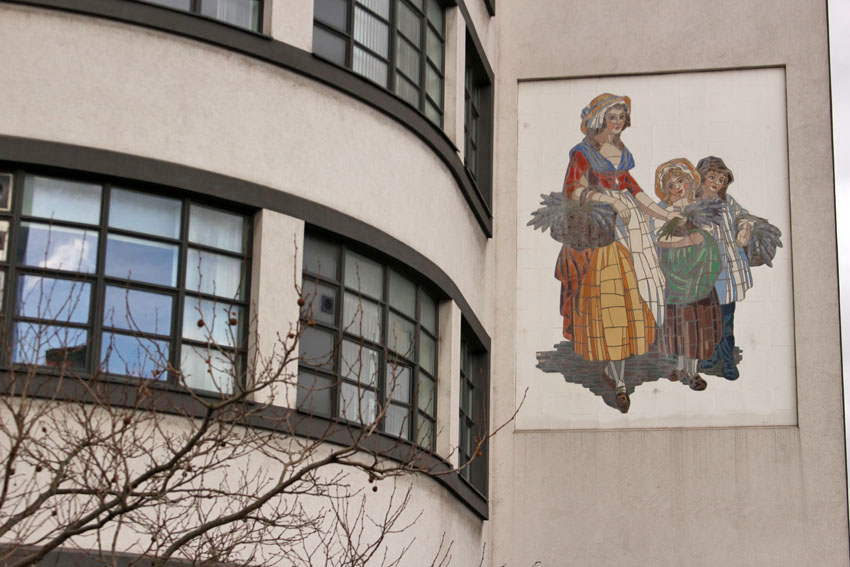
Suitably caffeinated, we follow the ramps that take us beneath the multiple tracks of the former Great Eastern Railway before returning to The Greenway again. We cross Waterworks River and then Stratford High Street, which is busy with traffic and lined with gleaming new office blocks. One of these bears a mural of a Victorian woman with baskets of lavender – a memorial to the onetime Yardley soap factory that stood nearby. Equally intriguing is a strange tower that stands a little way down the street by the river. It is something I have seen from the train many times before and had always wondered about. The Stratford East Tower, on close inspection, is built of timber and mimics an elongated (and leaky) ice cream cone. What it really represents, of course, is an Olympic torch – another architectural heirloom of the glory days of 2012. These days, more prosaically, it also houses a mobile phone mast hidden within.

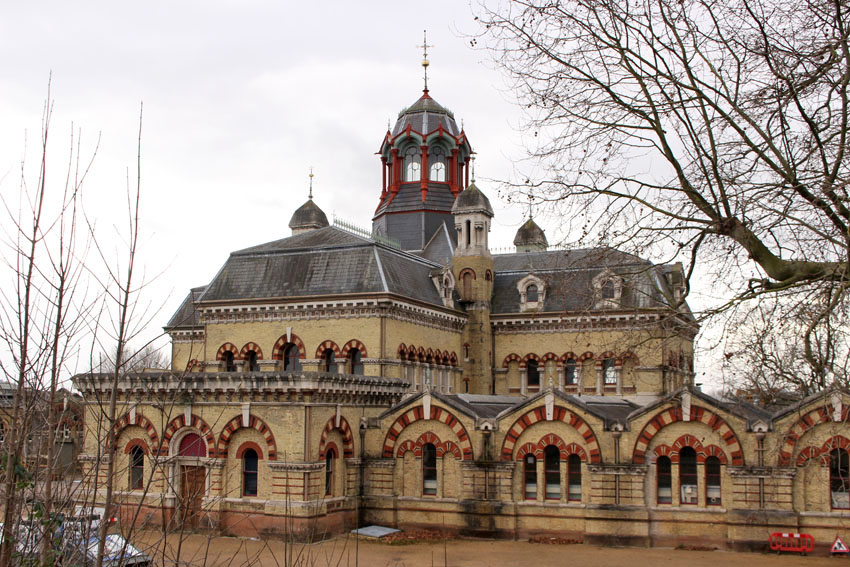
Back on The Greenway, a Thames Water crew is carrying out some sort of maintenance of the sewer below. Aluminium ladders lead underground through open manholes that offer our noses a mild hint of that which flows beneath. Just beyond here, down a slope to the right, stands the quite magnificent edifice of the Abbey Mills pumping station behind high razor wire fencing. Constructed by Bazalgette in the 1860s, it originally housed the beam engines required to pump city sewage 40 feet up to the height of the Northern Outfall Sewer. Byzantine-style, and yellow brick with cupolas, it resembles nothing less than a cathedral, Bulgarian Orthodox perhaps? St Bazalgette’s? Or maybe even Catholic? – Spain already has its own Our Lady of the Sewers**, so it is not such a far-fetched notion.

A little way beyond the pumping station is Abbey Creek The tide is out, leaving a grey expanse of mud stippled with fragments of wire netting, dead shopping trolleys and other Anthropocene detritus. Overlooking the creek is another relic of the pumping station: a curious piece of ironwork that resembles a giant nautilus fossil… or maybe a super-sized tuba, a fiendish instrument that can only be blown by the foul breath of the sewer beneath.

Back on The Greenway itself, a little further on, large white letters on the wall spell out:

L O N G   L I V E   C O M M U N I S M

Nigel, channelling revolutionary БРСМ*** spirit, poses for a photograph with a raised fist. It feels anachronistic. Perhaps, by way of balance, or simply to bring it up to date, there should also be another that says:    

D E A T H   T O   N E O L I B E R A L I S M    and/or 

O B S E R V E   T H E   D E A T H   T H R O W S   O F   

L A T E   C A P I T A L I S M

Such slogans are absent, although they are easily brought to mind by a head swivel across to the silhouetted high-rises that mark the distant City of London – the sky-piercing monoliths of Canary Wharf Tower and The Shard being the most familiar of the cluster. Here, encapsulated in glass, steel and concrete, are the architectural marker stones of the London Launderette, the machinery of which is currently rinsing roubles on fast cycle. Londongrad: an established playground for oligarchs, kleptocrats, KGB cathedral fanciers and Premiership billionaires – bullion for bricks, gas for glass, irony for iron, gold for goalkeepers; cash for condos, cash for honours, cash for tennis. Another hidden sewer: the secret culvert of dirty money that seeps unseen into The City.

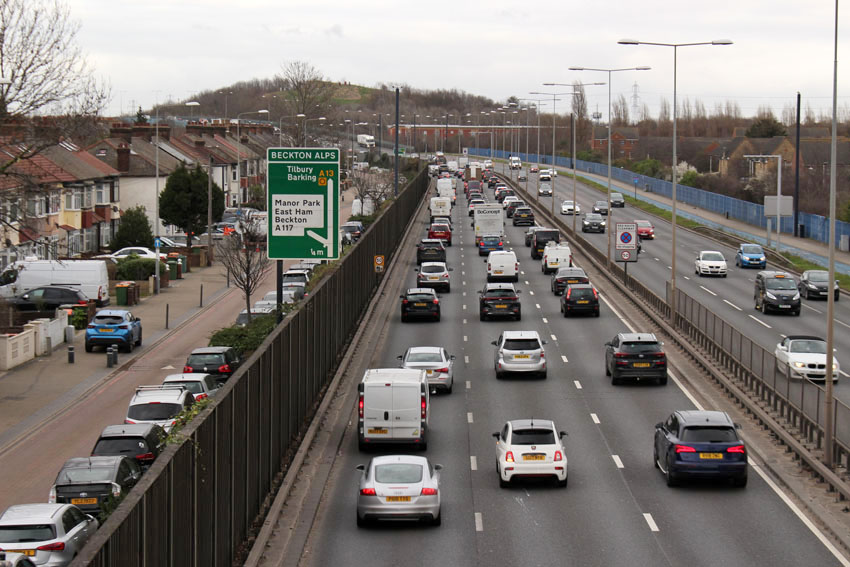
We cross another railway line and then have views through trees to the stones and avenues of the East London Cemetery. Next we pass Newham University Hospital and some giant concrete balls at the junction with Boundary Lane. At a primary school playground a little further on we leave The Greenway behind, heading south to reach the ramps that take us across the dual-carriageway of the A13. Looking east beyond the red brake lights of queued traffic is the modest rise of Becton Alp, a fake hill made by piling the toxic spoil of a former gas works. It is no Silbury but at 36 metres is still the highest artificial mound in London.

Our walk ends with a meander through Beckton District Park. This area feels more Ballardian suburb than gritty city edge. Nigel observes, ‘This could be Worcester, you know.’ And he is right, it could be almost anywhere. The trees planted in the park come from far and wide, each bearing a sign to identify species and provenance. Tired and footsore by now, we forget to look until the last one – Algerian Ash.

The DLR from Royal Albert Station speeds us back into central London – a driverless train through the heart of The City providing all the metaphors you might possibly need. Later, over beers in a Soho pub (1 pint = 2BER), we discuss prog bands we saw back in the glory days of the last century. A man at the next table joins in the conversation. He tells us he likes visiting pubs that come with a bit of history. Currently he is on a tour of George Orwell haunts in the city. After a quick chat about The Road to Wigan Pier, a book we both admire, I ask: ‘So did Orwell used to frequent this place.’ His reply was unexpected, ‘No, but Dennis Nilsen used to come here to look for victims, I think.’

* Wednesday, February 23 – the day after ‘Palindrome Day’ 22.02.2022; the day before Russia’s invasion of Ukraine 24.02.2022

** see Paul Richardson’s Our Lady of the Sewers and other Adventures in Deep Spain 1998

 *** БРСМ = Belarusian Republican Youth Union (…only kidding, although Nigel is undoubtedly a Belarus pioneer of sorts)

Walking the Ring: Stoke Newington to Hackney Wick

Stoke Newington, London N6. We are here to walk part of the Capital Ring that circuits the capital by way of 15 stages. Slightly perversely we decide to begin at Stage 13, which links Stoke Newington with Hackney Wick by means of a park and a path alongside the River Lea and Lea River Navigation. Less defiantly, we will follow the overall route clockwise as suggested. To go widdershins might be an enticement but we are civilised men not maniacs.

Firstly though, Abney Park cemetery beckons. The main Egyptian Gate on the high street is closed but there is a way round the side that funnels us between barriers into the non-conformist boneyard. The park, as much arboretum as cemetery, is quiet – dense foliage neutralising the din of traffic from the roads that surround it; just a few muffled barks from exercising dogs and the jungle shriek of an unseen parakeet. Quiet or not, the tree-lined paths are fairly busy with strollers and dog-walkers. We come across one woman who has no less than seven small lead-dragging dogs in her charge, including a one-eyed pooch that clearly bears a grudge against binocular humans.

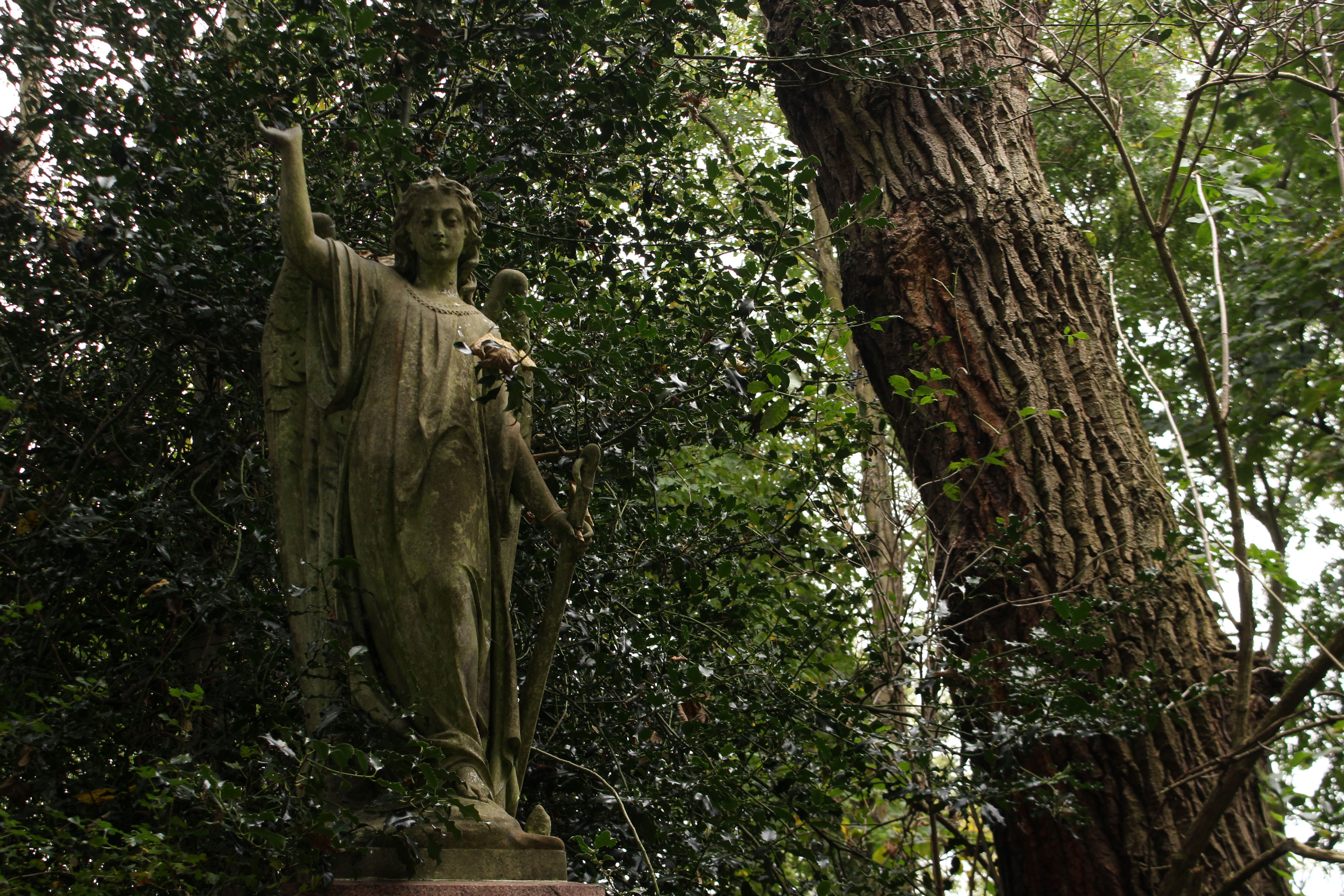
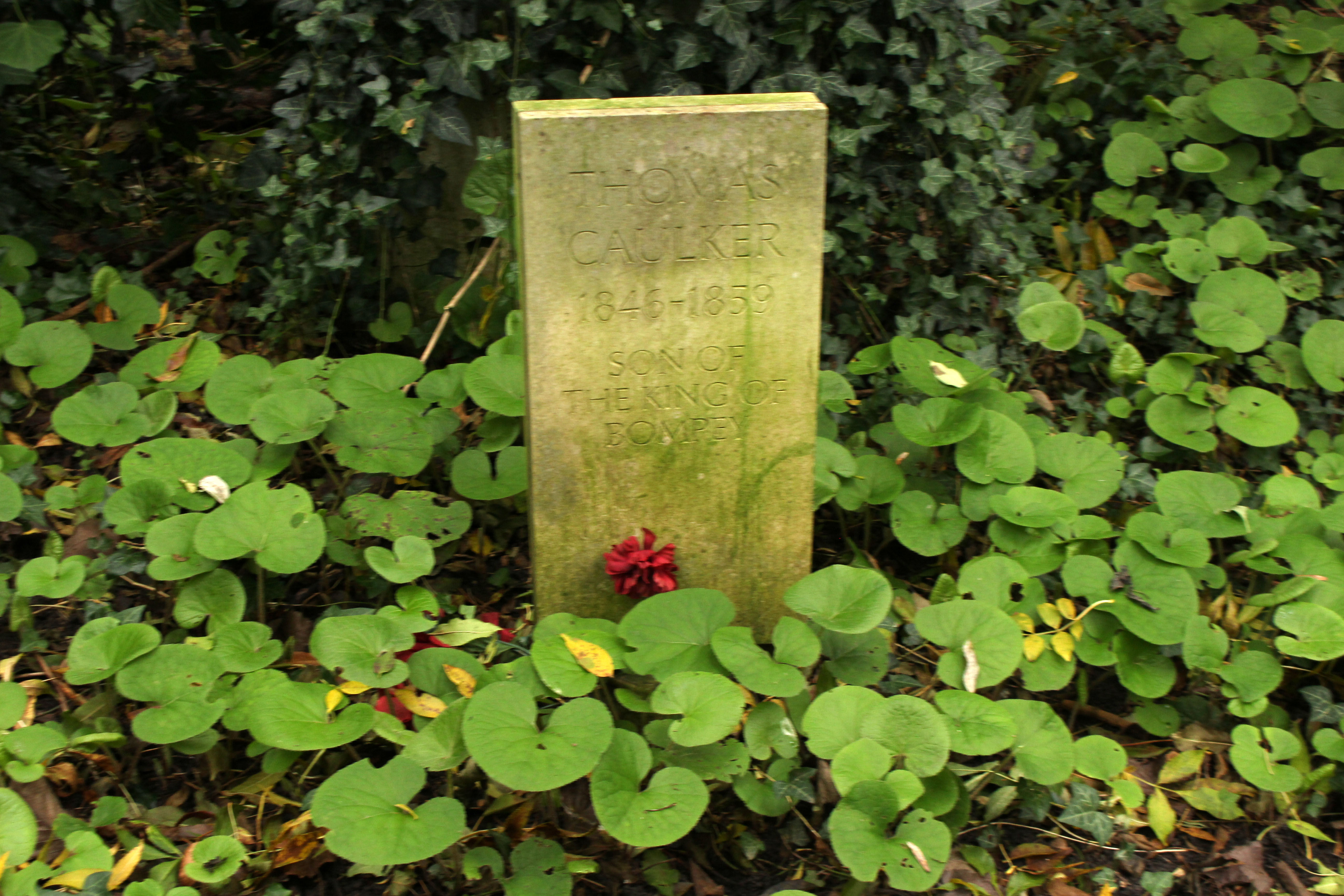
We have no purpose or aim other than just to wander and take it all in – the trees, the gravestones, the gothic atmosphere, the knowledge that this cemetery was the inspiration for the hidden fragment of Paradise that Arthur Machen wrote about in his short story N. We find no such paradise garden but instead plenty of interesting angel-perched tombs and several oddities – a wooden marker that asserts mysteriously ‘Elvis put his hand on my shoulder’ and the simple stone gravestone with the legend: ‘Thomas Caulker 1846—1859 Son of the King of Bompey’. Bompey, we later discover, was an early 19th century West African chiefdom that was eventually incorporated into Sierra Leone in 1888. The stone looks like a fairly modern replacement. What is curious is that the 160-year-old grave is still attended – a single flower has been recently placed upon it.

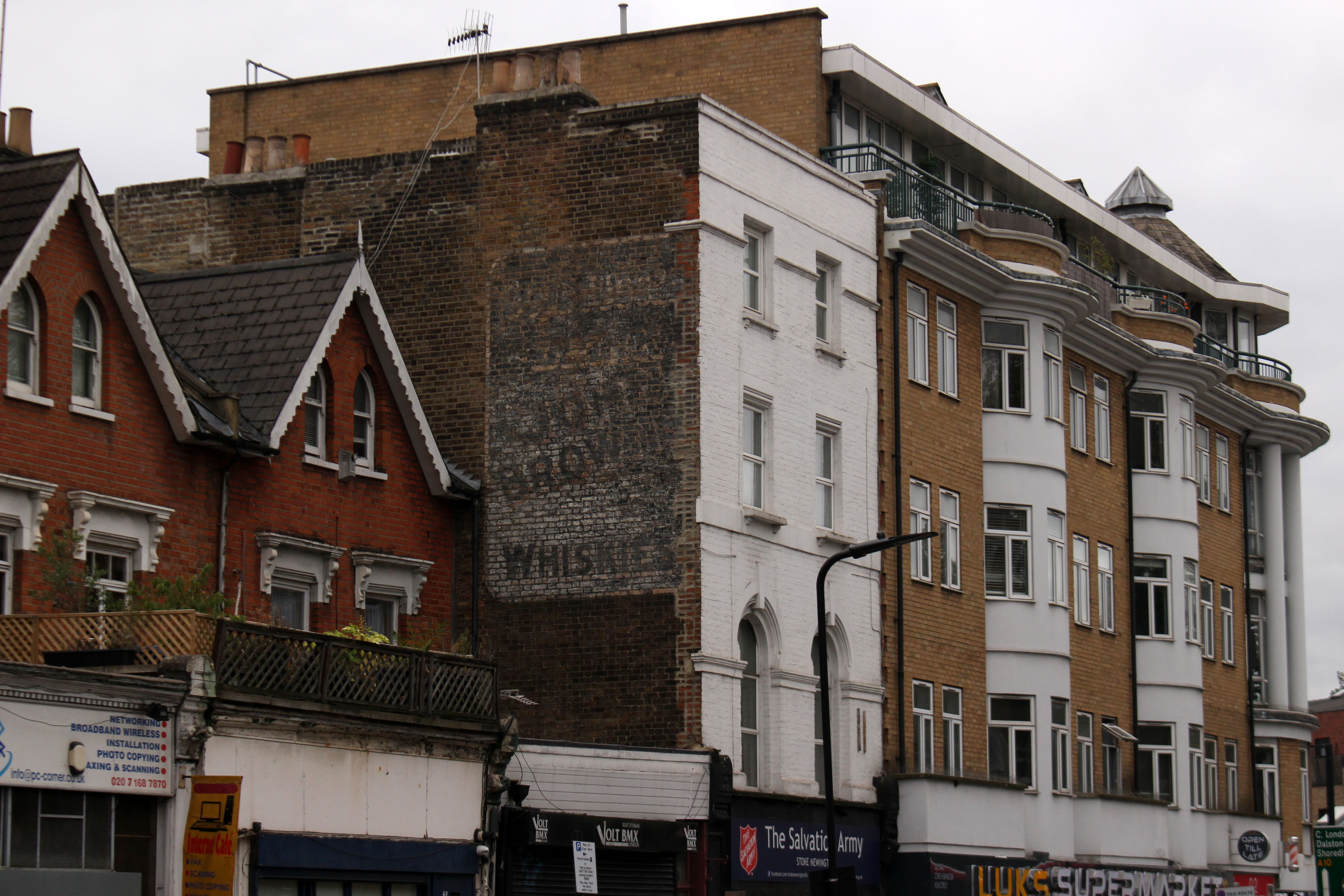
We exit the park to join the Ring; a sign right outside the cemetery confirms we are on the right path. My companion Nigel takes a photograph of me in front of the sign and as he does this a cheerful Black woman pushing an empty shopping trolley offers to take a snap of the two of us – she assumes we are tourists, and in many ways she is right. We head up Cazenove Road, where a fading ghost sign on a gable advertises a discontinued brand of whisky and an abandoned charity shop, as niche as you like, boasts a Bosnia & Herzegovina connection. It is all comfortingly multicultural – orthodox Jewish men in black hats and long coats rub shoulders with Muslims in white skullcaps and shalwar kameez. Looking at our map to check the route, one of the latter, a helpful elderly Pakistani, asks if we need directions and points us towards Springfield Park. There is no denying it – we really do look like tourists.

At the rise of the park the Lea Valley suddenly comes into view beyond – a proper valley, a river-carved ha-ha that slopes down to the water and sharply up again. A sign at a viewpoint helpfully informs us that we are standing on Hackney gravel, below that is London clay. Another parakeet screeches, this one perched in a tree, lurid green, channeling the tropics.

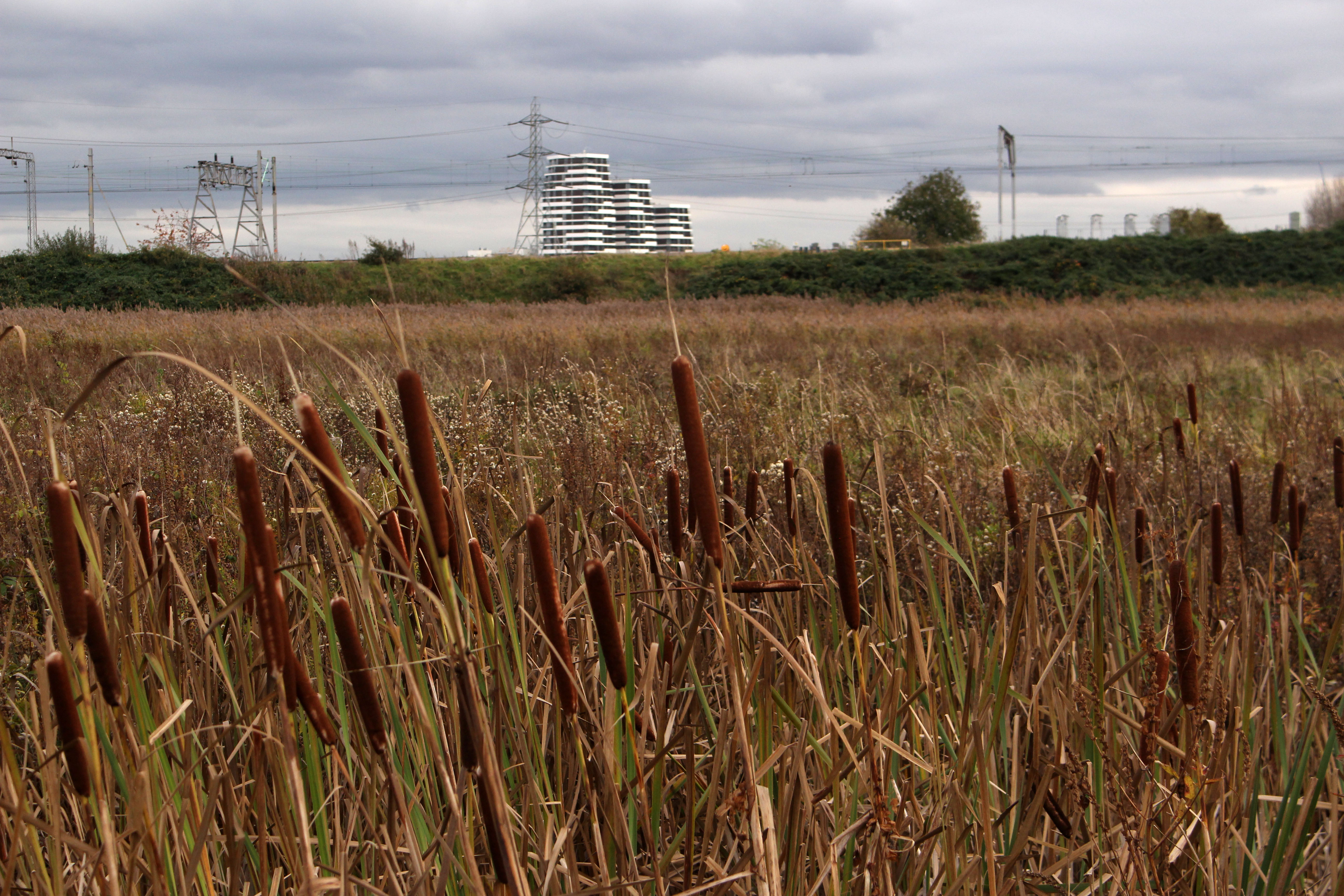
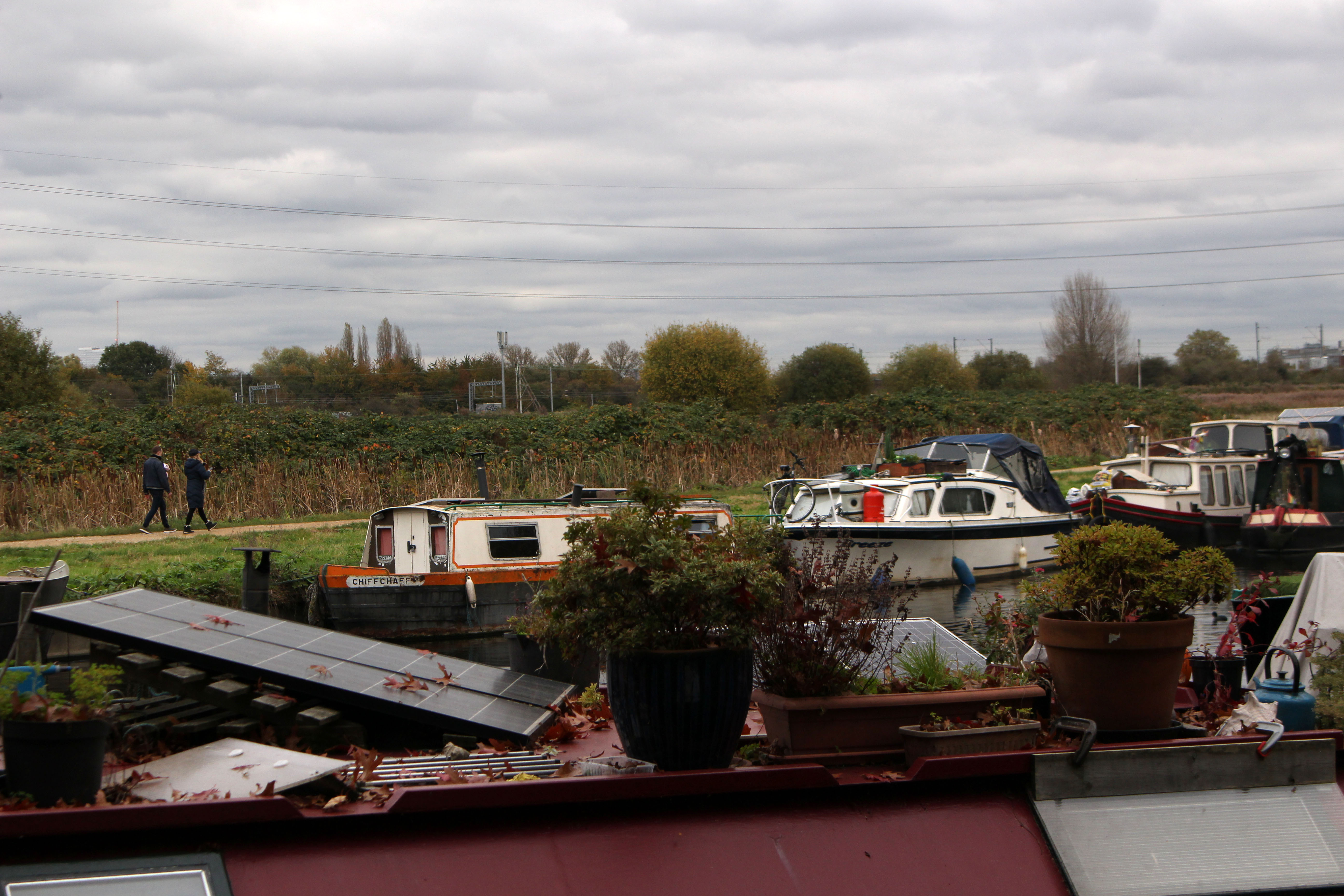
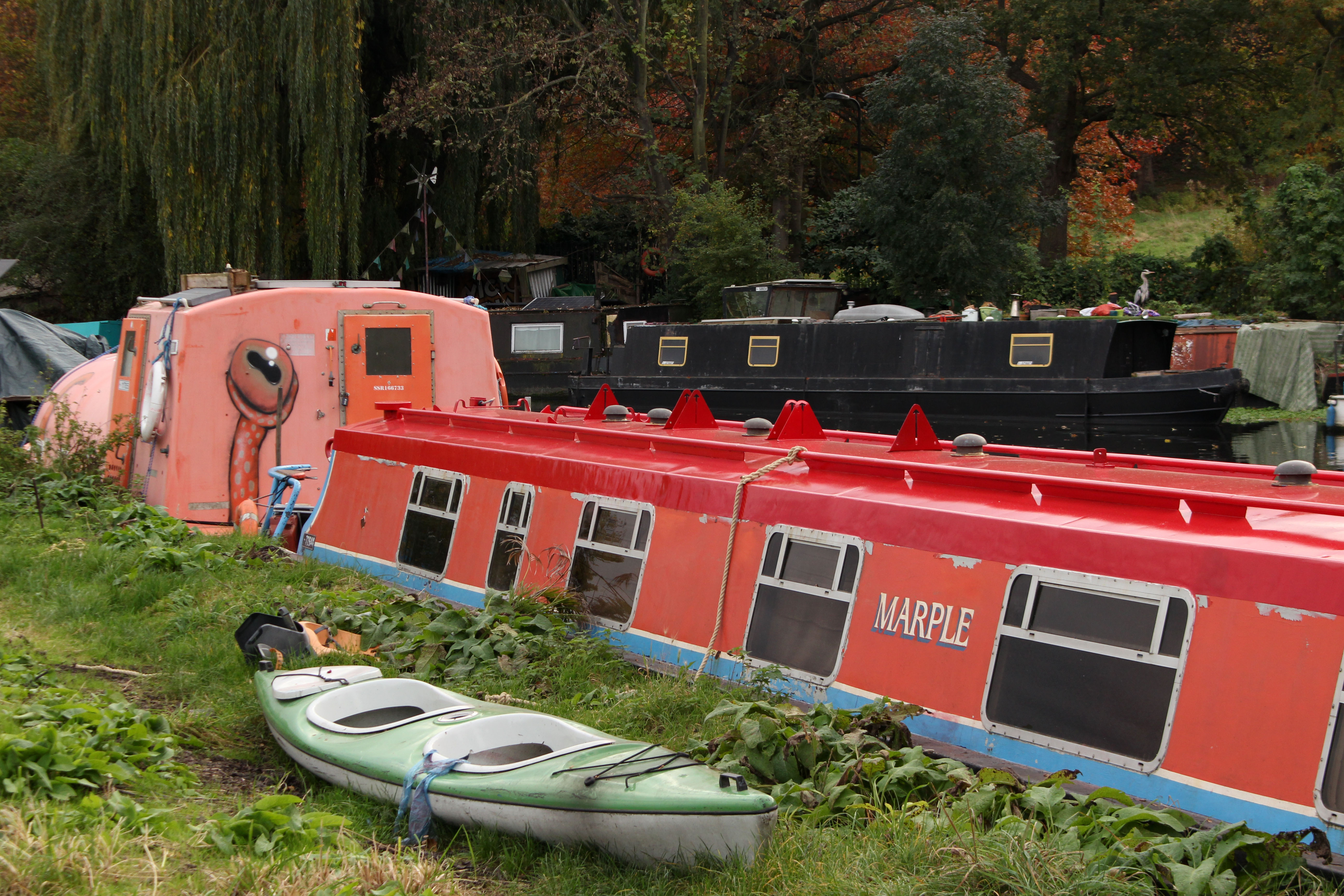
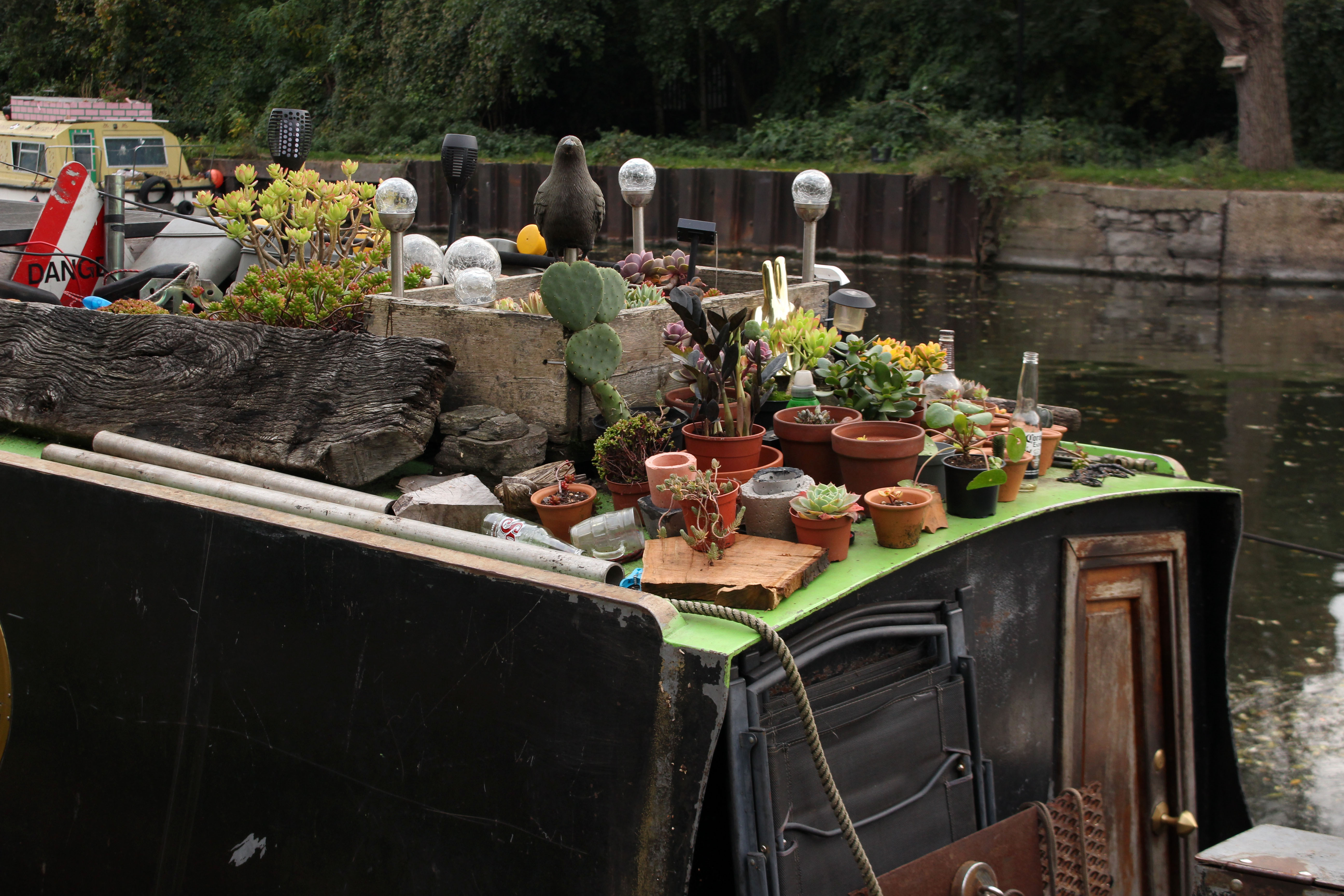
A more at home, native species – a heron – stands guard on a houseboat close to the footbridge at the bottom of the park. It sees us but looks unperturbed. We cross over the river to the east bank and start walking south. Walthamstow Marsh stretches away to the east, all reed, sedge and soggy pasture; rising above the marsh, beyond the railway, stands an island of modern development that may or may not be offices. There is an almost endless line of houseboats moored to both banks. Nothing too chi-chi – vaguely counter-cultural but mostly no-nonsense make do and mend: heaps of burner firewood, car batteries, plants in plots, well-used bicycles; a few seasoned boat dwellers going about daily chores, clenched roll-ups, dreadlocks piled high.

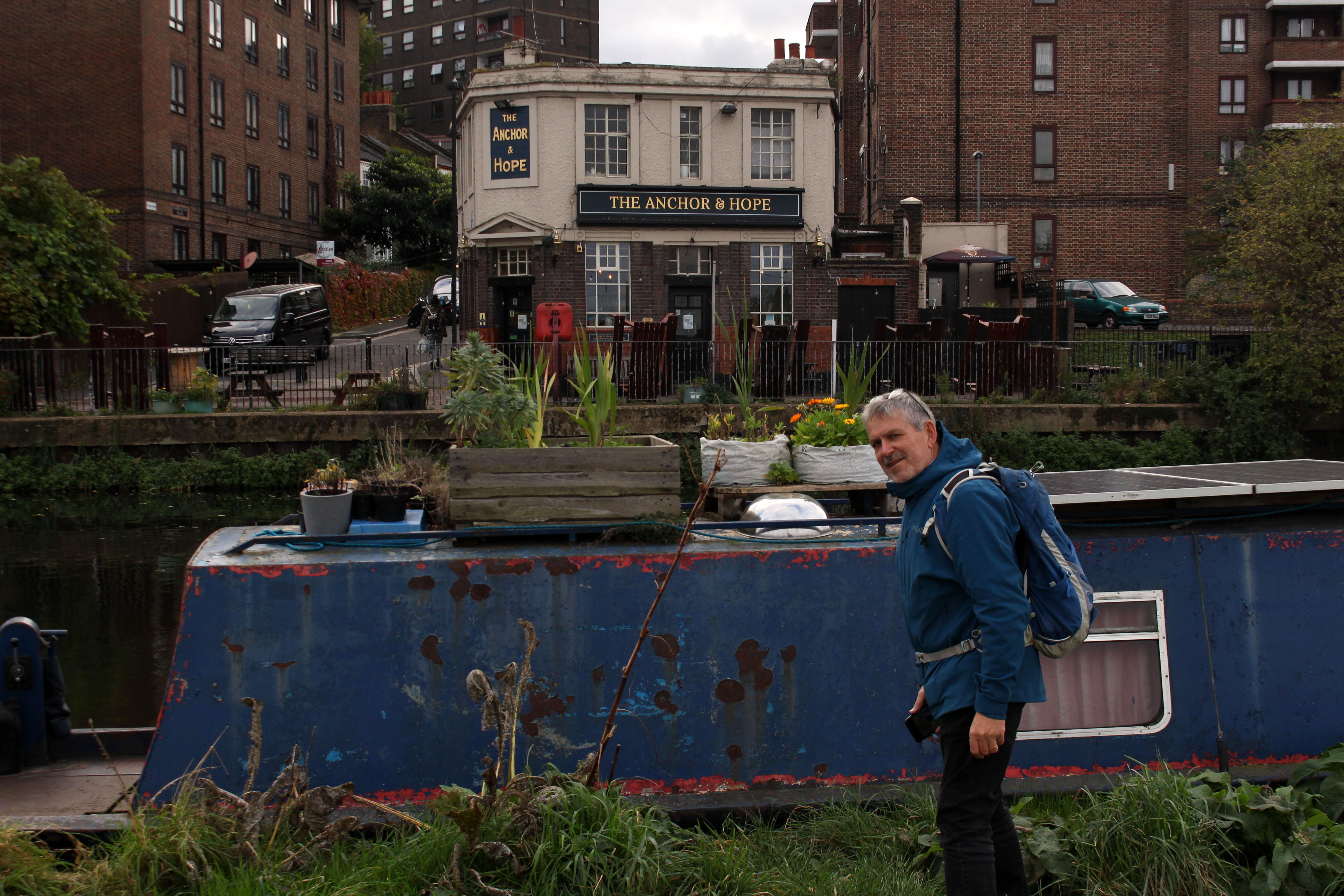
Across the water, a little further along, is a pub with outside trestle tables stacked for winter: The Anchor & Hope. Not the Hope & Anchor, the historic pub rock venue in Islington that we remember hearing tales of in our youth. Anchor & Hope – Anchor (or at least moor) and Hope your boat doesn’t sink? Anger and Hope maybe? There seems to be plenty of anger about but hope can be elusive; as they say, it is the hope that kills.

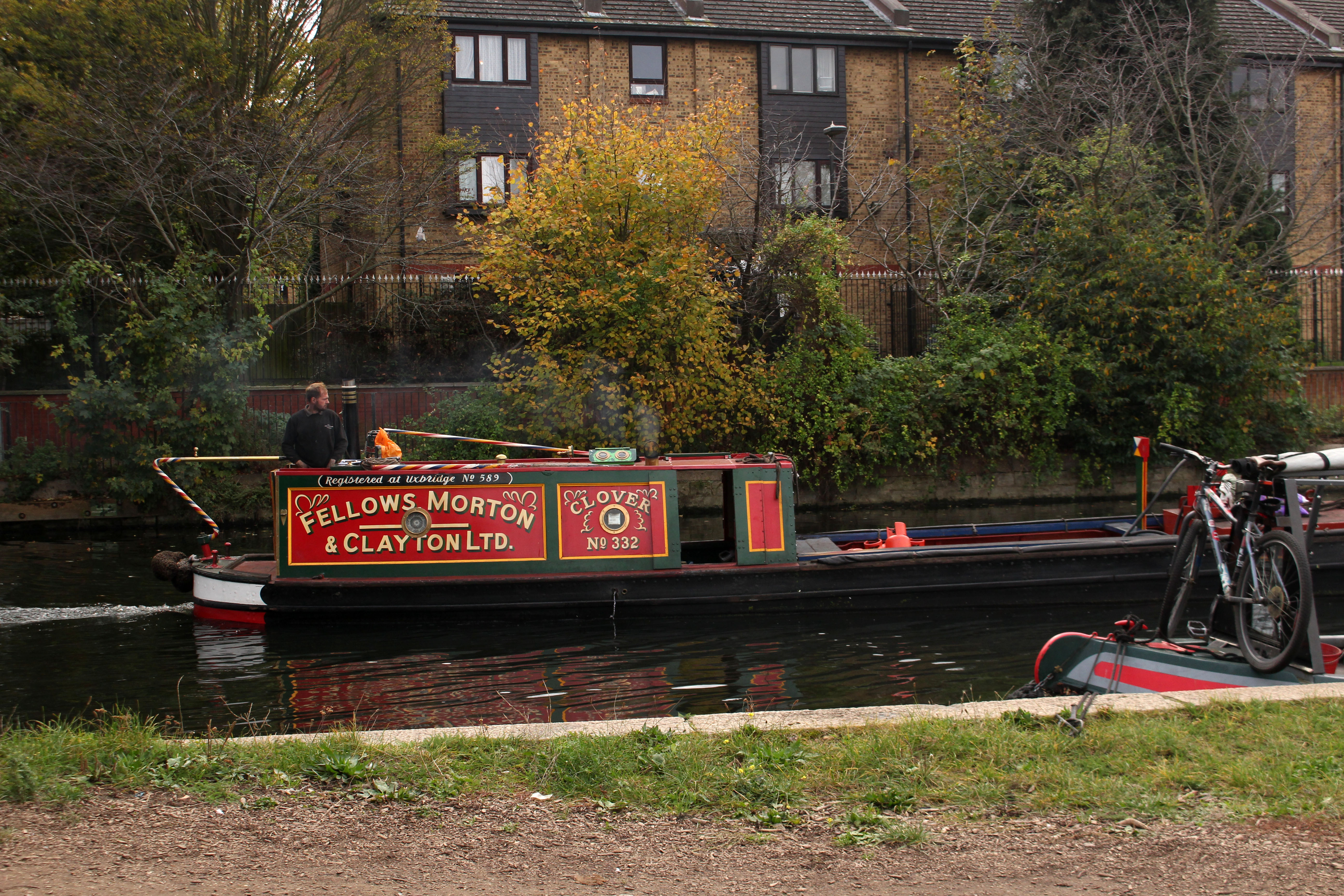
Approaching Clapham Junction Viaduct we hear the two-stroke put-put of a barge on the move. Another barge comes from the rear to slowly overtake and the two boatmen exchange chummy bargee greetings as they pass on the water. A sign under the viaduct arches indicates that this is the original location of A V Roe’s workshop where the first all-British powered flying craft, a precarious-looking tri-plane held together with wire and glue, was built in 1909. Inspired by the Wright Brothers’ achievement of just six years earlier, the aeronaut successfully managed a short wobbling flight across the adjacent marshes, a sight that must have given the local herons quite a start.

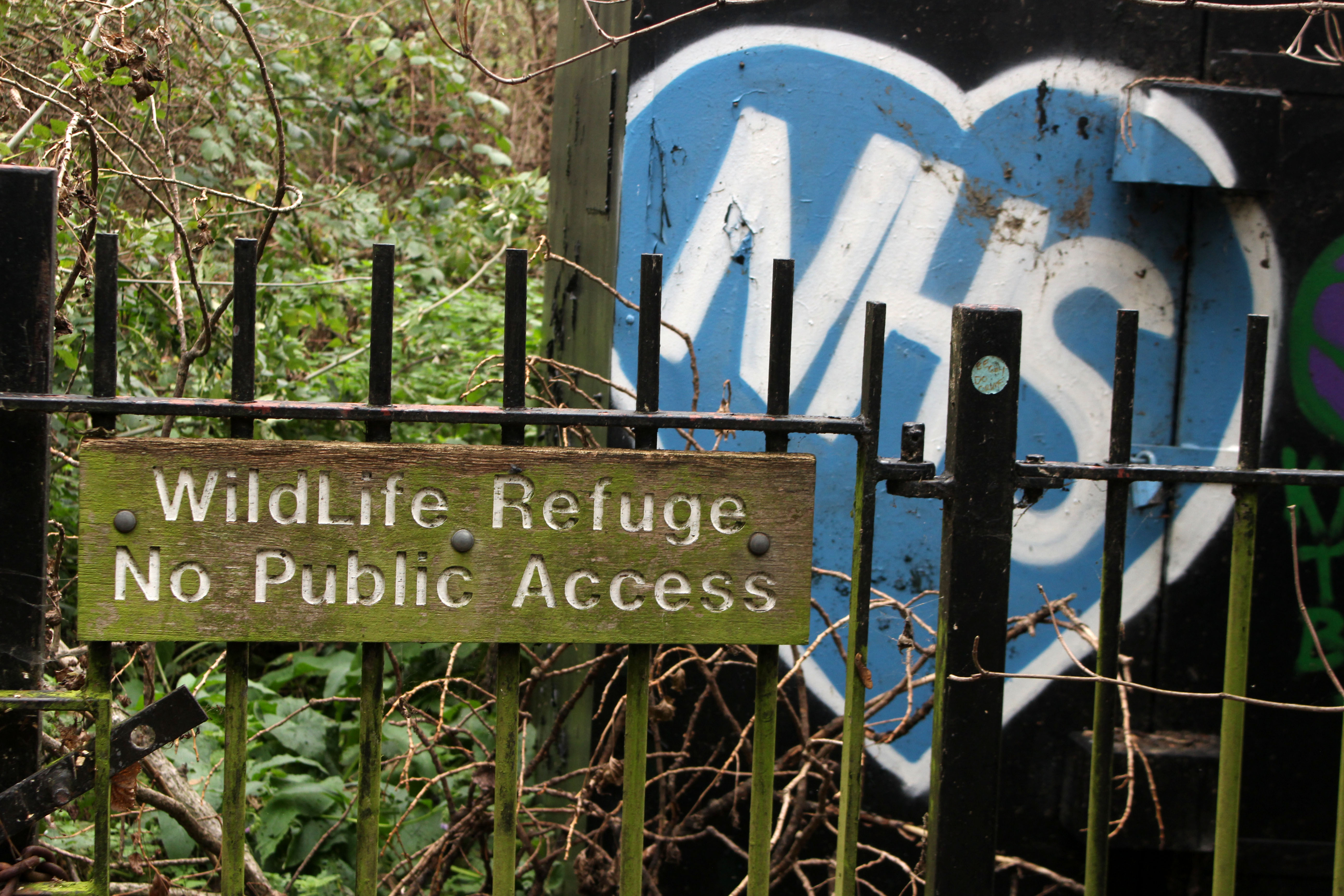
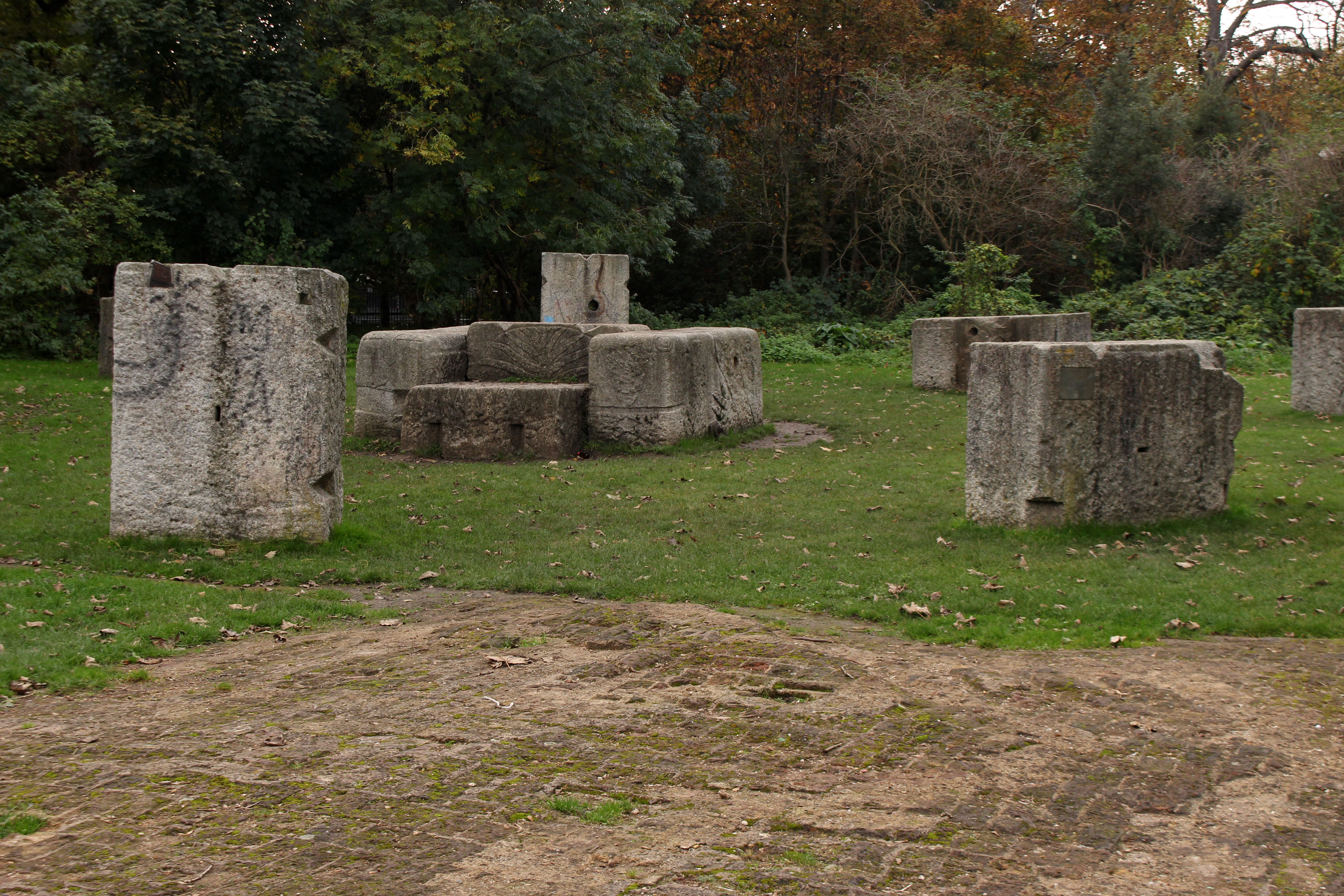
At Lea Valley Ice Centre the path diverts along the canalised Lea River Navigation, the wide green expanse of Hackney Marshes stretching invitingly to our left. We detour briefly to view the former site of the Middlesex Filter Beds, now a designated nature reserve, where we find the granite blocks that once held the pumping engine in place rearranged into what has become known as the ‘Ackney Enge’. A little further on we find the hope we had been looking for back at the waterside pub: a footbridge over the water has a draped banner that proclaims BELIEVE IN OUR COLLECTIVE IMAGINATION on one side, and on the other, DARE TO DREAM BEYOND CAPITALISM. Hope indeed.

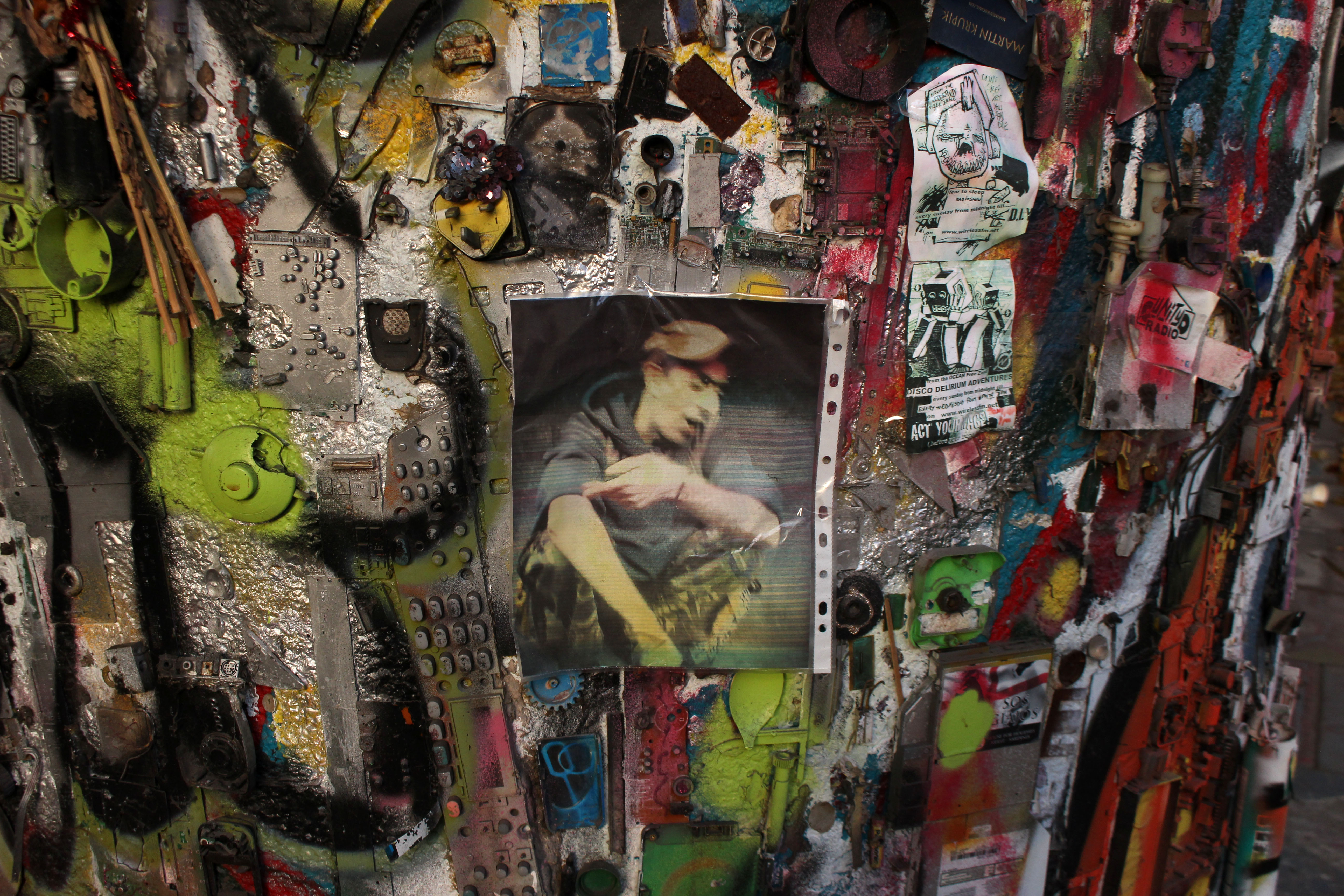
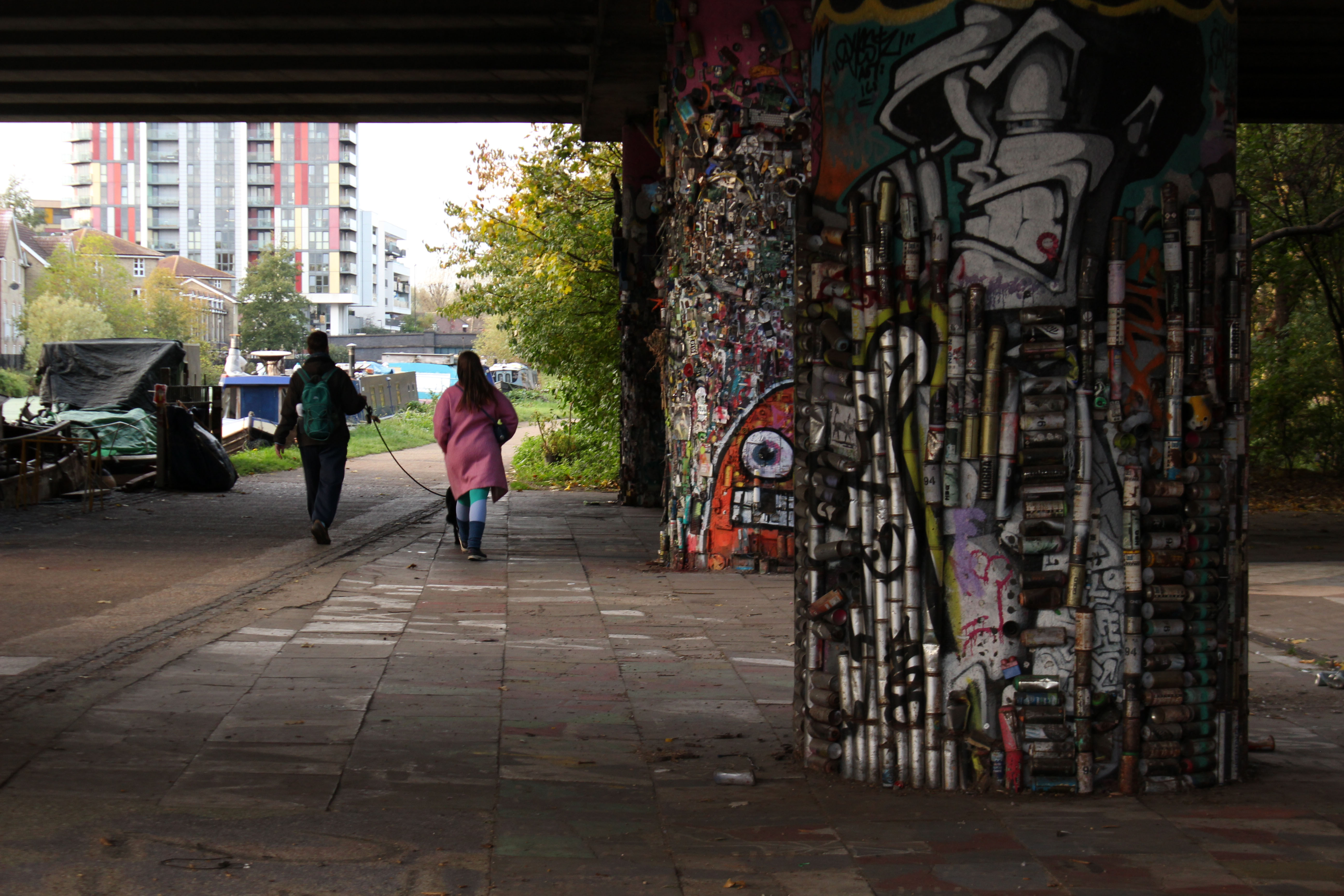
Shortly before reaching Hackney Wick we pass beneath a roadway where the supporting concrete arches have been comprehensively decorated with all manner of found objects – bottle tops, cans, bits of wire, keys, keyboards, electronic components, beer cans – all lovingly glued in place and spray-painted. As I stop to take a photograph, a man on a bike appears out of nowhere to inform me that the artist, a lovely fellow by all accounts, was a friend of his who had died quite recently. He pedals off back into the shadows as quickly as he arrived. Then I notice a portrait of the artist attached to the second of the pillars. The artist in question looks remarkably like the man I have just spoken to. Could this be a ghost artist obliged to return and show visitors around his urban art gallery, a revenant on a bicycle?

Our walk ends at Hackney Wick. We know we have arrived when we see West Ham’s London Stadium at Queen Elizabeth Olympic Park in the distance, the deranged helter-skelter of Anish Kapoor’s ArcelorMittal Orbit alongside it. Somewhat disoriented by the glare of the new development that engulfs us on all sides, we look for the bus stop we need for the service back to central London. I know that it is close to the Church of St Mary at Eton but its location proves to be elusive. My A to Z is well out of date, the streets marked on it have since been redacted; new ones with new names have taken their place. Nigel employs his smart phone to engage with a satellite to find the correct route and we beat a path past Hackney Wick Overground station and along streets parallel to the thrumming A12. Despite the nearby traffic frenzy, the area is relatively quiet and uncluttered by commerce, just a scattering of car body repair shops and the occasional cafe. A random sign offers sourdough pizza – you can almost hear self-respecting Neapolitans crying in anguish. But nothing is sacred and change is inevitable: the deeply layered lasagne that is East London has had its time-honoured béchamel topping scraped away and replaced with something considered to be more wholesome. As ever, the city is a palimpsest.

Irkutsk

IMG_7776

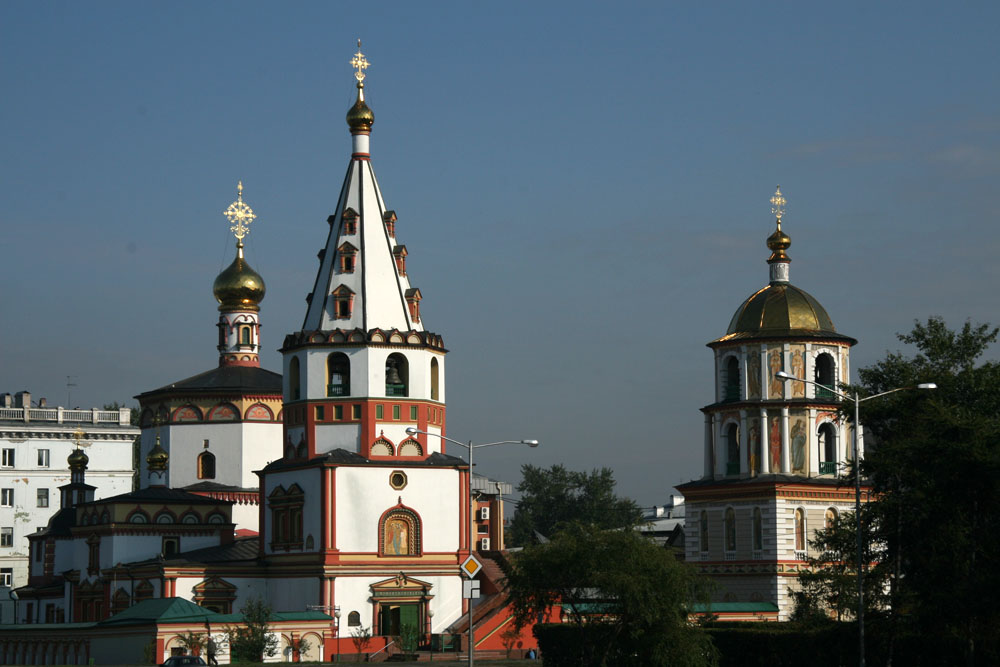
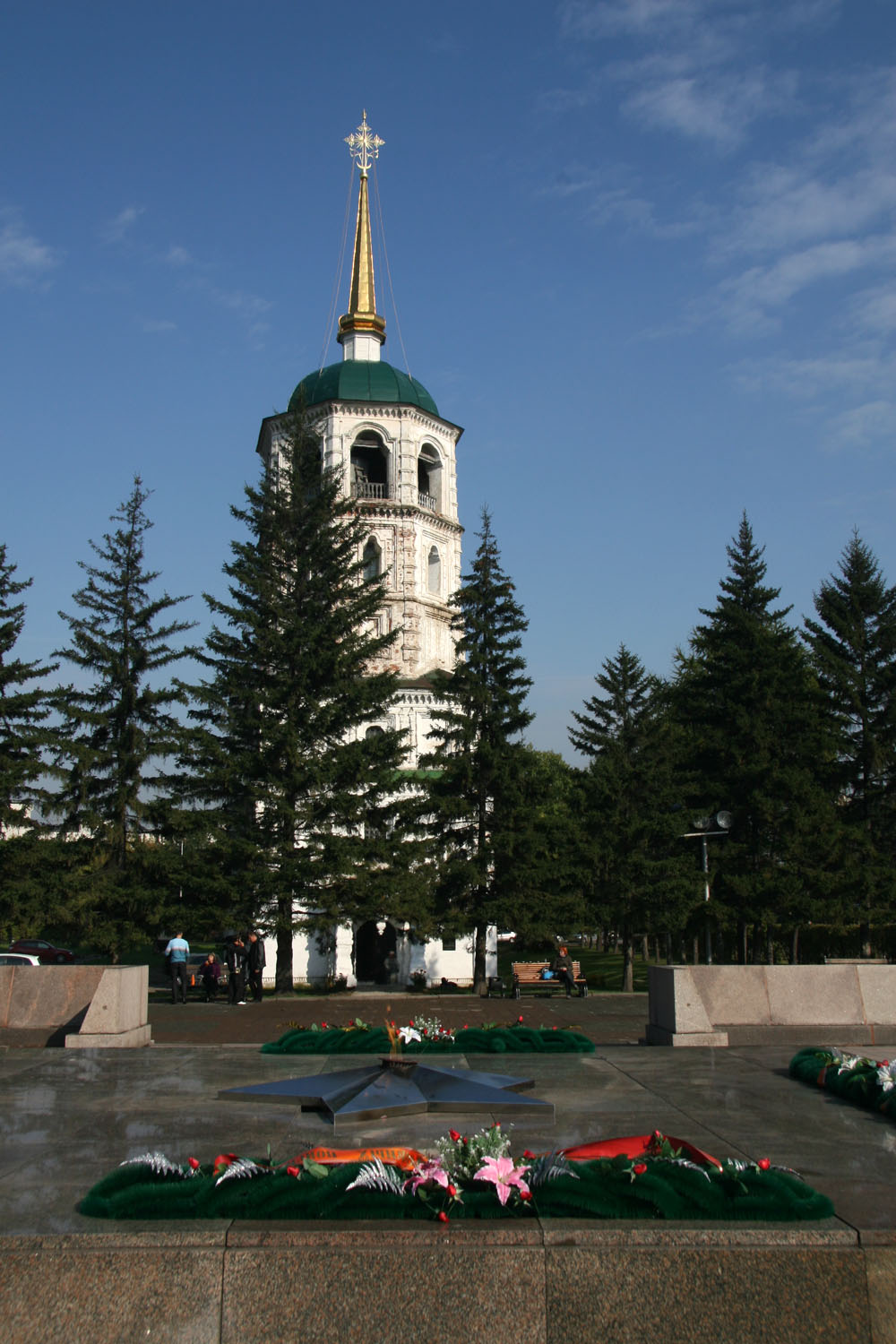
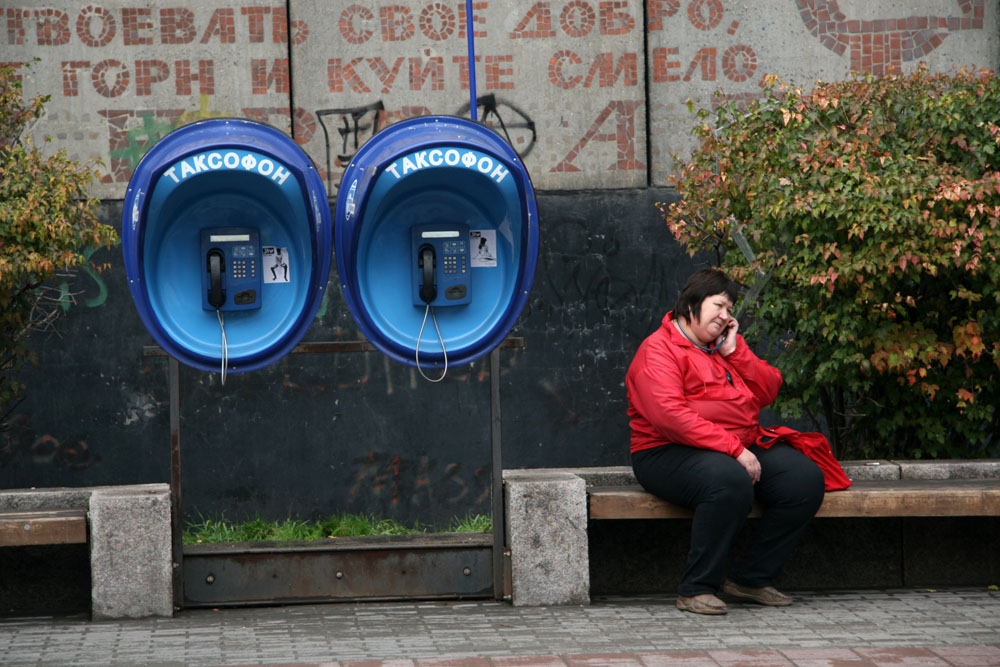
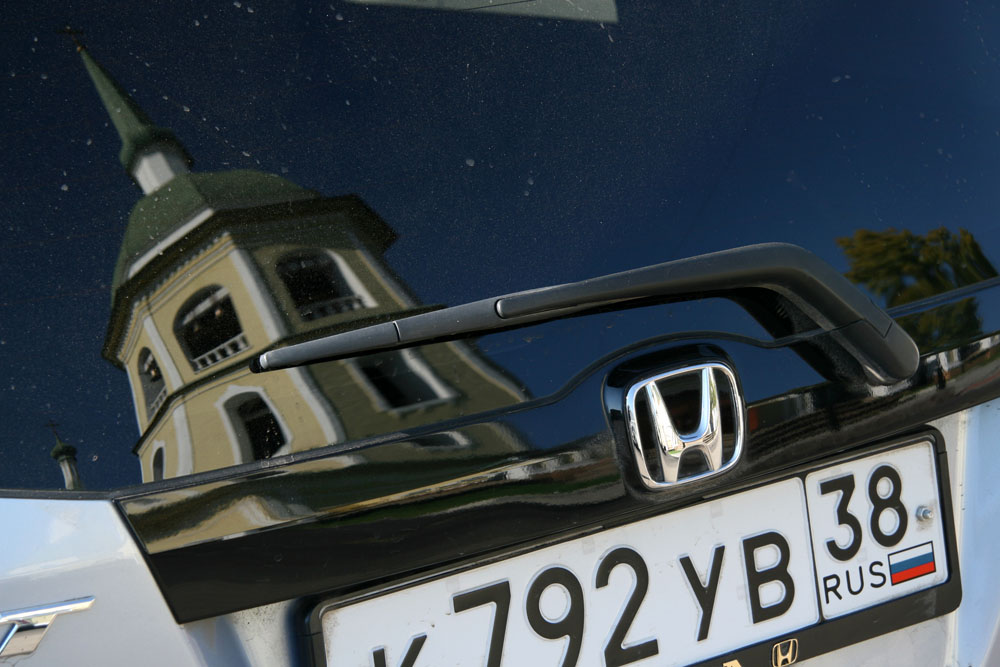
Ten years ago, when travel was altogether an easier undertaking, I travelled by train to Siberia. Following the route of the Trans-Siberian Railway, and taking a few detours along the way, I eventually got as far as Lake Baikal before I turned around to head back home once more. The most easterly city I visited was Irkutsk. Lying at about the same latitude as Birmingham but as far east as Bangkok, it seemed strange after many days of rail travel to arrive in an Asian city that seemed to still cling firmly to Europe, or at least the part of Europe that was Russia.

IMG_7668IMG_7679IMG_7764IMG_7615IMG_7617IMG_7691IMG_7907IMG_7878IMG_7989IMG_7996IMG_8002IMG_7905IMG_8006IMG_7927


Abandoned Ferris wheel

IMG_0300Ferris wheel, Toktogul, Kyrgyzstan

One of the enduring images from Pripyat, the main town in Ukraine’s Chernobyl disaster region, is that of an abandoned amusement park. A totem for the fall from innocence, here are rides that children once played upon but will never do so again. Rising above the park is an abandoned yellow Ferris wheel – a dejected structure that has fallen in grace from a onetime wheel of fun and joy to a symbol of nuclear catastrophe.

At one time Ferris wheels could found in most Soviet towns of a certain size. One former SSR state I know better than most is the central Asian republic of Kyrgyzstan, a country named after the once-nomadic people indigenous to the region. With three revolutions now since its independence in 1991, it is classic example of a territory in transition, a new country of arbitrarily imposed political boundaries that is still trying to find its feet.

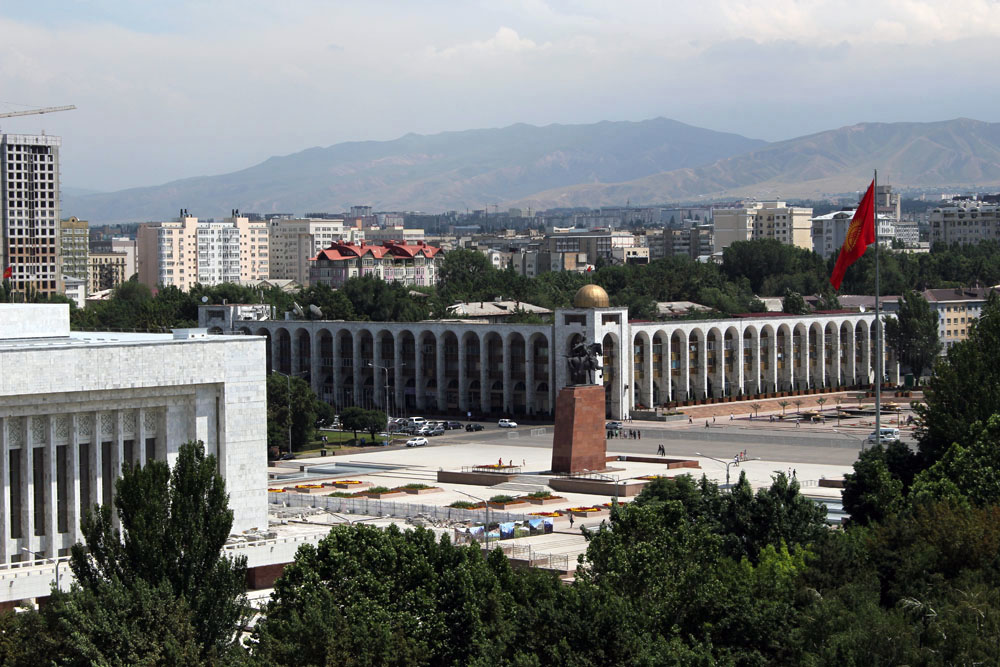
IMG_1250View of Manas Square from Bishkek Ferris wheel, Kyrgyzstan
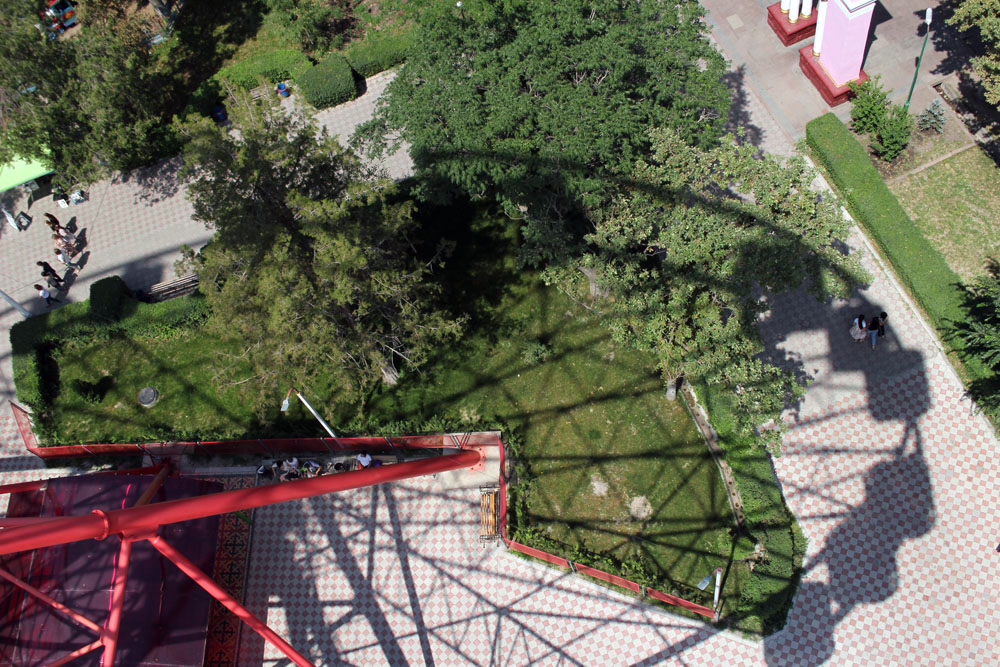
To my knowledge there are at least four Ferris wheels that stand in Kyrgyzstan today, although there may be more. The one in Panfilov Park in the heart of the Kyrgyz capital Bishkek has been upgraded in recent years to replace the somewhat creakier Soviet-era one that stood before. Kyrgyzstan’s second city of Osh in the south of the country has another. This Ferris wheel is older (and a little cheaper) than its Bishkek rival and stands in a city park close to the rather desultory canalised river that flows through the city. Alongside the wheel is decommissioned Aeroflot Yak-40 that has been repurposed as a children’s playground. Both Bishkek and Osh wheels afford excellent city views for an outlay of just a few Kyrgyz som.

IMG_1254Panfilov Park, Bishkek, Kyrgyzstan
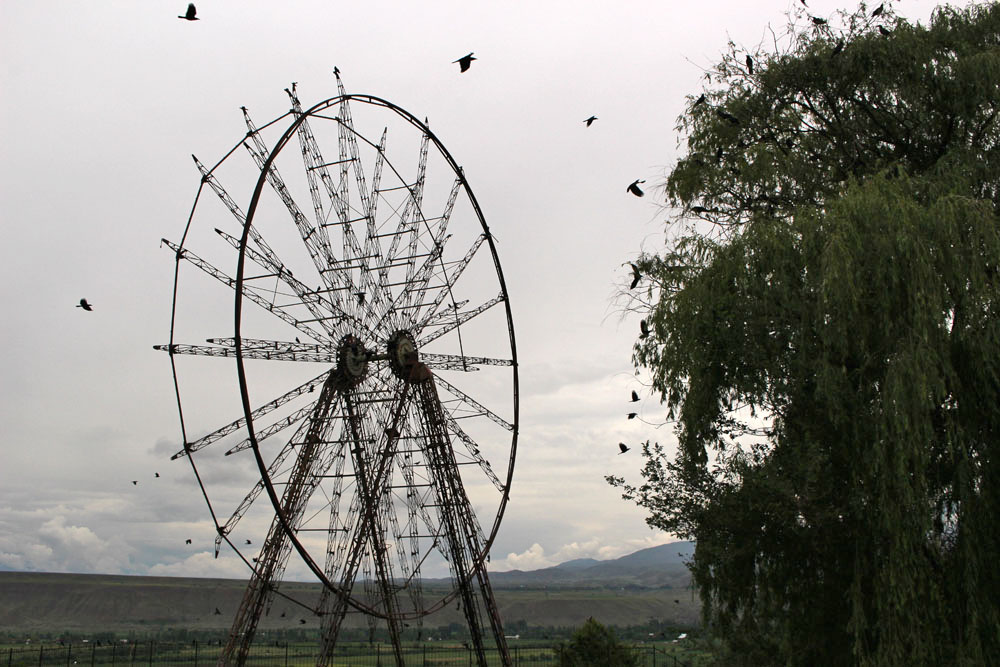
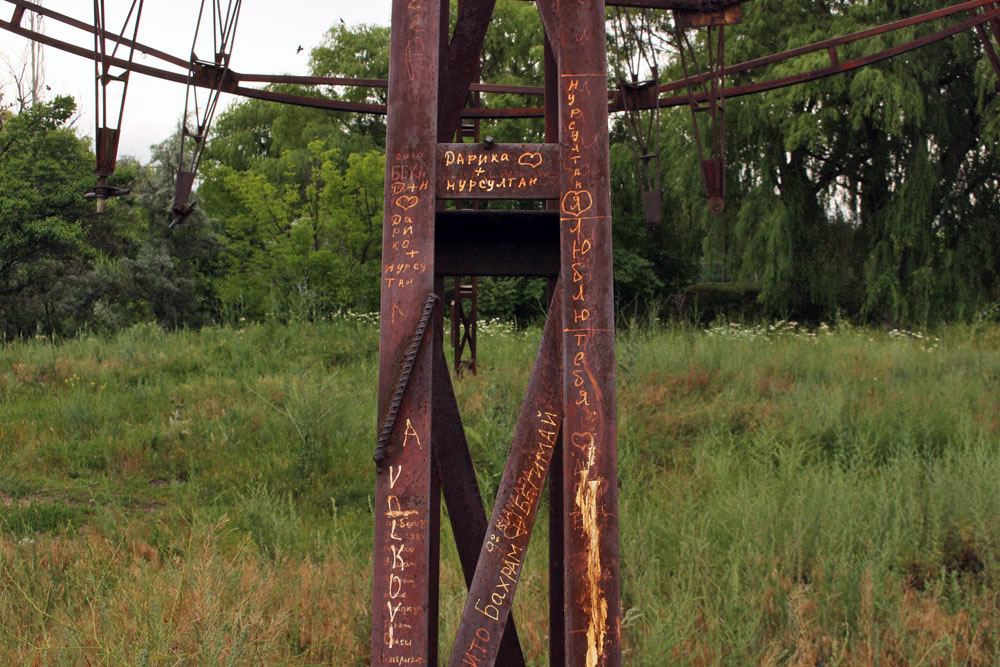
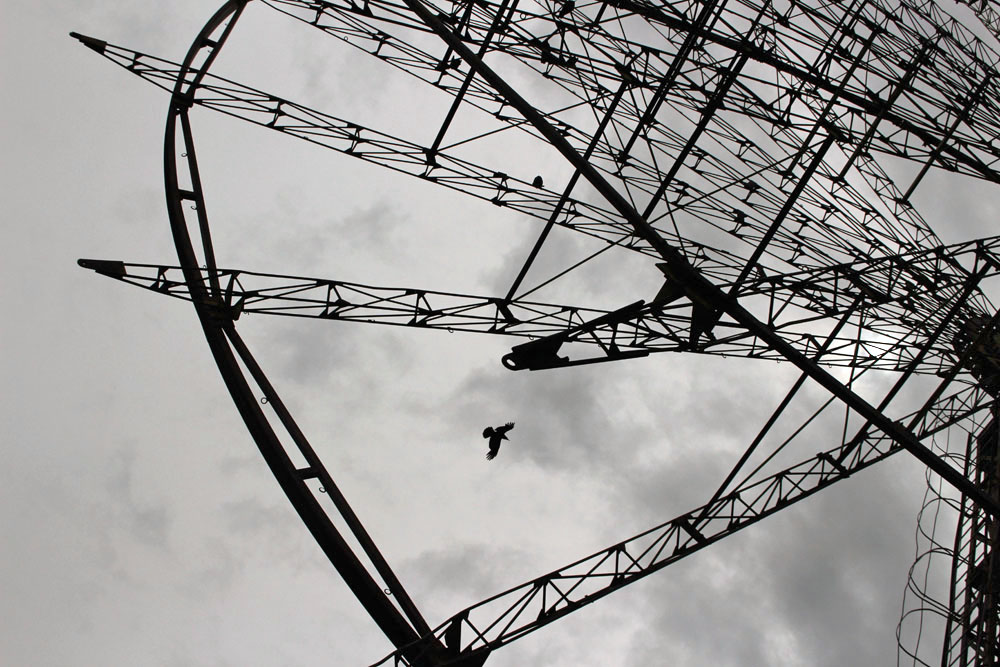
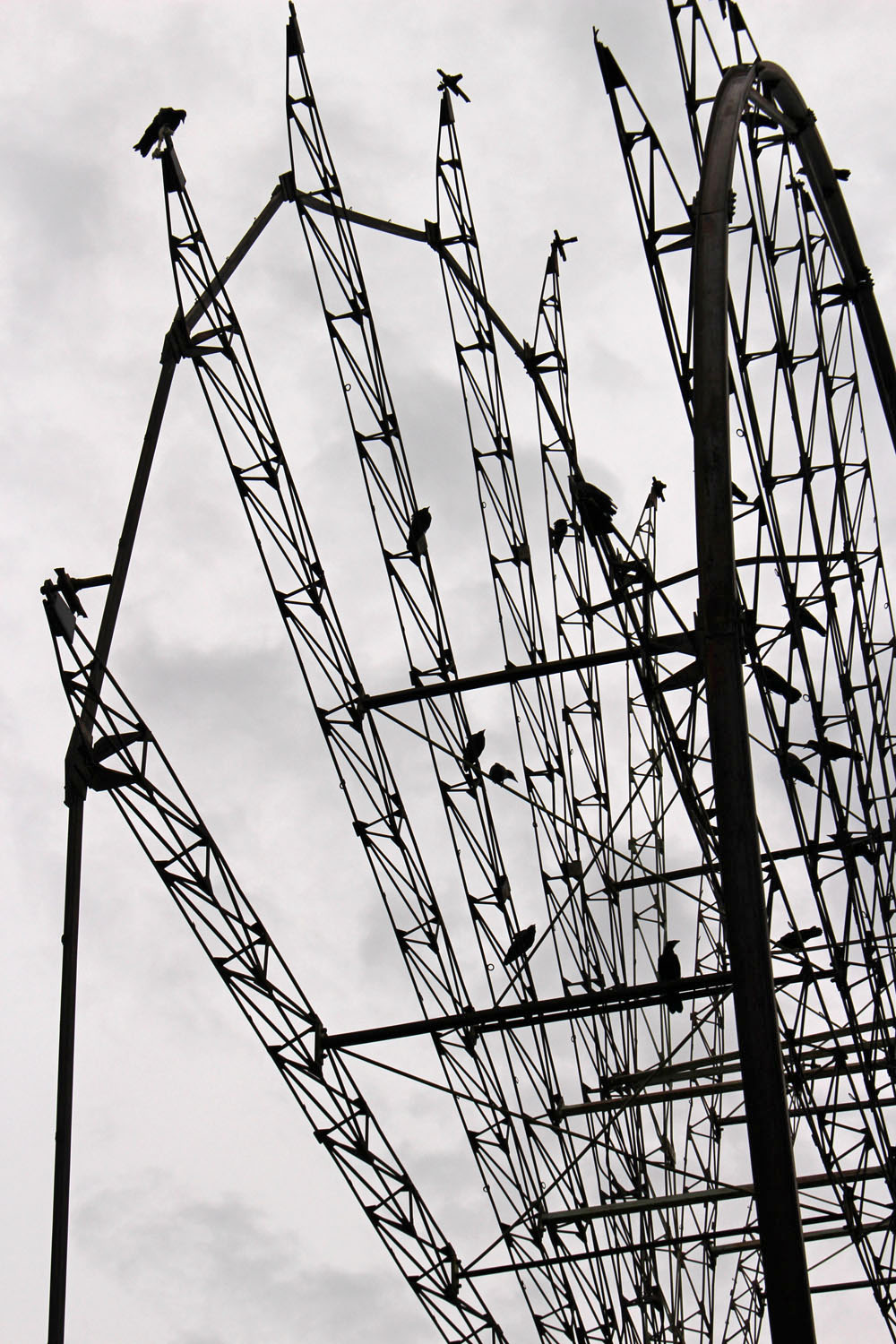
There is another wheel, said to be the largest in the country, in the resort of Bosteri on the north shore of Lake Issyk-Kul but the other Kyrgyzstan Ferris wheel that I have personal experience of can be found in the small town of Toktogul halfway between Bishkek and Osh. Skeletal and long abandoned, this one is found at the edge of a leafy park next to a crumbing sports stadium. Old-fashioned fairground rides can still be found in some of the clearings; the wheel, though, no longer turns. With its seats removed – for their scrap value presumably – and left to the attention of the elements, the wheel, framed against the blue central Asian sky, evokes an air of melancholia. Argumentative crows perpetually flock around the structure as if it had always been theirs to inhabit, taunting its immobility with wheeling flight. At one time this over-sized bicycle wheel delighted children and adults alike with its thrilling views of Toktogul Reservoir and the snow-capped peaks of the Fergana mountains beyond. Now it is a wheel that no longer wheels; a rusting reminder of a half-forgotten past unknown to the children who visit the park today.

IMG_0319

IMG_0318

IMG_0307

Crows and abandoned Ferris wheel, Toktogul, Kyrgyzstan

All photographs ©Laurence Mitchell

If you are curious to discover more about Kyrgyzstan you might want to try this…

910lOT0ixPL._AC_UY327_QL65_

Blakean Spirit

81513110_10156866786633479_8772260888632623104_n

I wander thro’ each charter’d street,

Near where the charter’d Thames does flow. 

And mark in every face I meet

Marks of weakness, marks of woe.

William Blake London

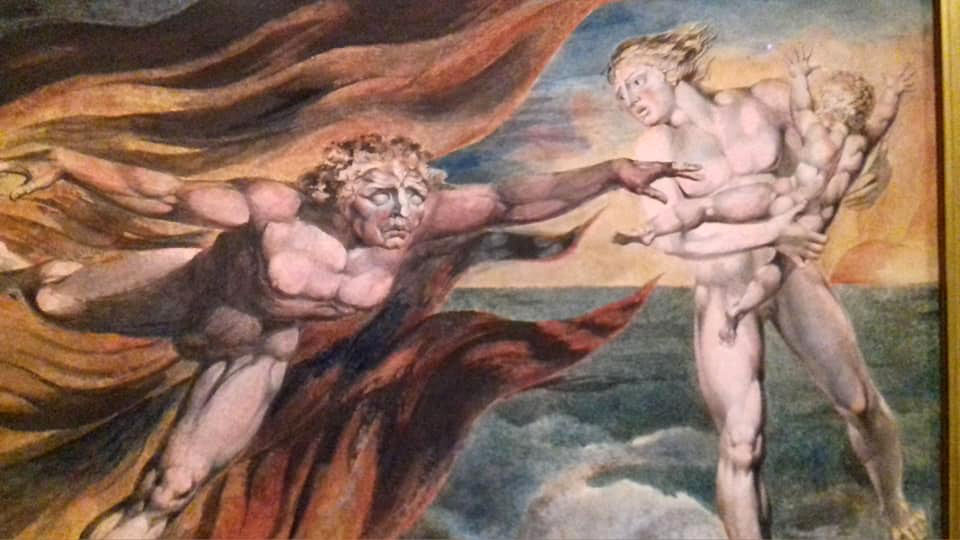
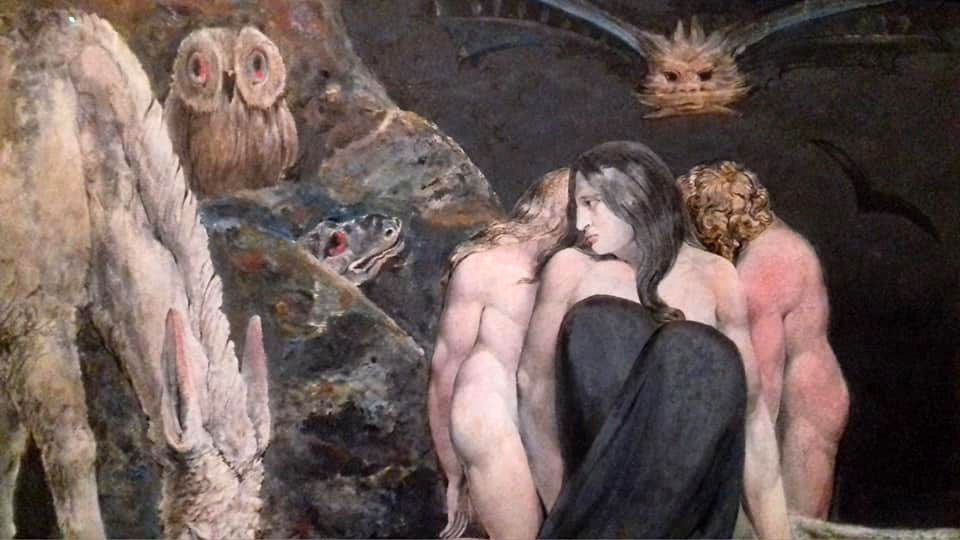
Last week I paid a visit to London to go and see the Blake exhibition at Tate Britain. Every visit to London – not so frequent these days – seems to reveal yet more new building projects, more cranes on the skyline, more high blue fences. Multinational finance keen to invest in real estate seems intent on filling in any remaining gaps, such as they are, with new buildings – a new transistor soldered onto the crowded circuit board that is hi-rise central London. Each new piece of architectural bling serves as a totem to (someone else’s) capital. Meanwhile, the people on the street, who hurry between meetings, or stand hunched smoking and phone-swiping outside revolving glass doors, appear indifferent to the edifices that rise above them as if they were little more than fill-in detail on an architect’s plan.

The affect can be alienating. I cannot relate to any of this: my own navigation of the city depends on outdated mental maps and more familiar topography. Peering through the few remaining gaps in the crowded cityscape I am at least able to identify some landmarks by their distinctive form or superior height – the London Stadium fronted by Anish Kapoor’s helter-skelter Orbit sculpture, the Shard, the Gherkin, the pyramid-topped One Canada Square. But even these relatively familiar sights are less old friends than over-enthusiastic schoolboys with their hands up – ‘Me, Sir! Me, Sir!’

I have to face it: this is not my city. But whose is it? Who does it speak to?

Two hundred or so years ago, London spoke to William Blake but the city he lived in has now largely vanished. All that remains is location and shabbily dressed ghosts. In 1820 – exactly two hundred years ago – Blake moved with his wife Catherine to the last place they would live together, a house at Fountain Court off the Strand. It was here, approaching the end of his life, where he experienced his most profound visions, and where he was judged – the jury will always be out – to be either genius or madman. While living here he must have come close to bumping into fellow traveller (and ‘madman’) John Clare, who on one of his rare visits to the capital lodged nearby, although no such meeting has been recorded. The pair had much in common – Blake, an engraver, artist, poet; Clare, a labourer, fence-builder, poet. Both visionaries of sorts, both opposed to militarism and empire, both horrified by the desecration they saw coming in the guise of the Industrial Revolution.

Coming out of the exhibition, almost cross-eyed from hours of peering at intricate artwork and deciphering Lilliputian script in low light, my friend Nigel Roberts remarked that it was actually a good thing that nothing remained of any of Blake’s London homes – his legacy was one of pure spirit. All that marked his various residences was its former address (if the street still existed) and an optional blue plaque. Even the monument at Bunhill Fields (a place I had visited defiantly on the day they buried Margaret Thatcher, an anti-Blake figure if ever there was one) was merely a memorial stone not a grave marker. The common grave he was actually buried in went unmarked until August 2018, when a ledger stone was finally put in place with the legend: Here lies William Blake 1757—1827 Poet Artist Prophet.

What did remain, in addition to an enormous body of work and a roll-call of sacred locations, was Blake’s indelible imprint on the city. Like a sleeping giant, any future London, however changed or corrupted its topography, would invariably retain a Blakean spirit, a spirit that could be evoked on demand. Blake’s legacy does not depend on bricks and mortar. Here was a man who could see a world in a grain of sand, and angels in a tree at Peckham Rye.

82714687_10156866786878479_1474032209051516928_n

The Crossing Place

IMG_7485

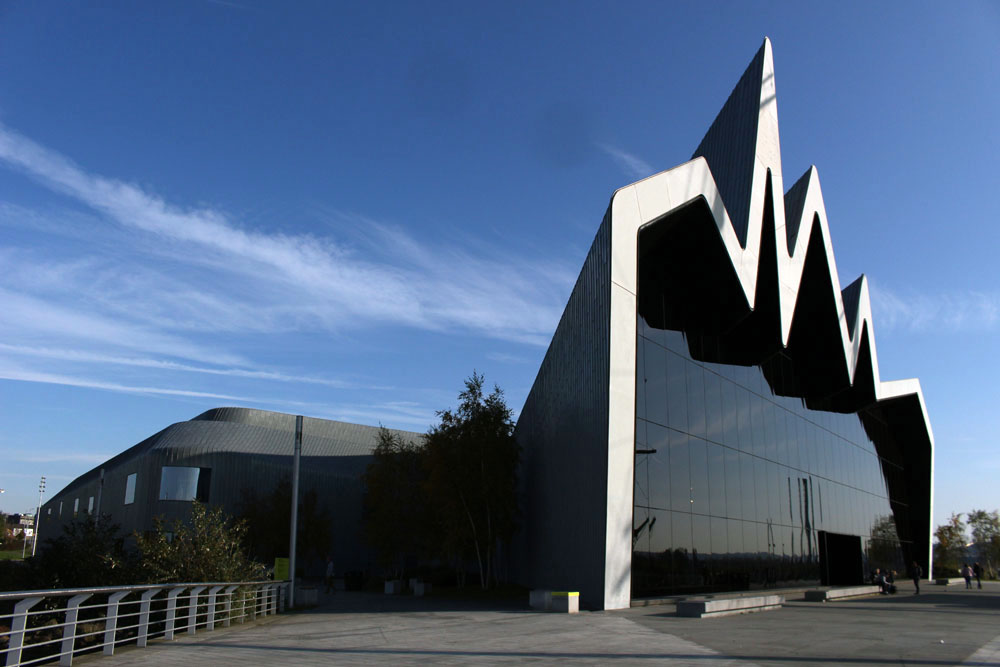
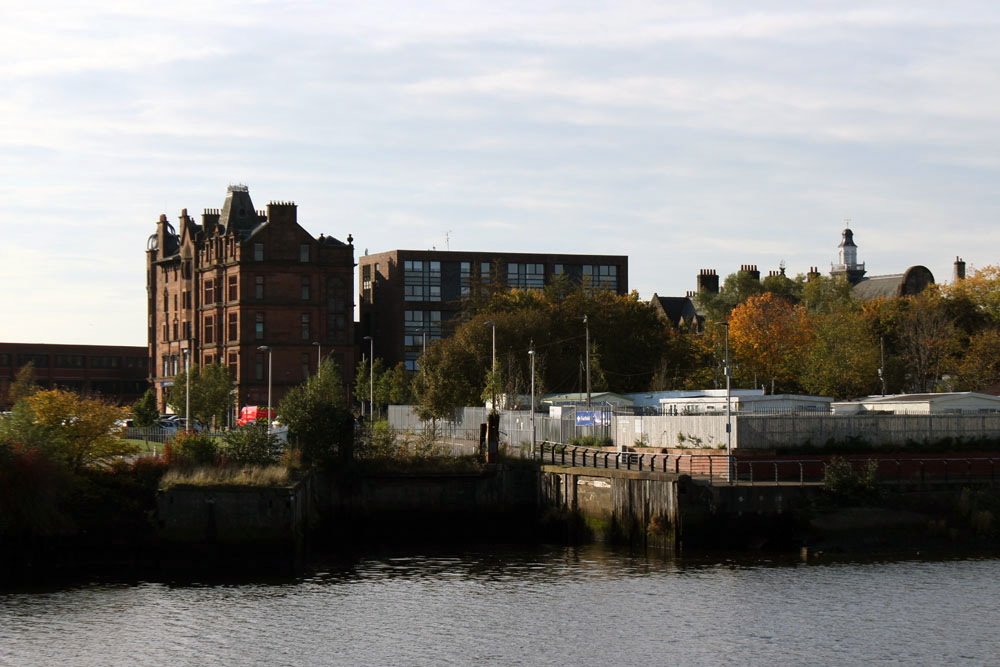
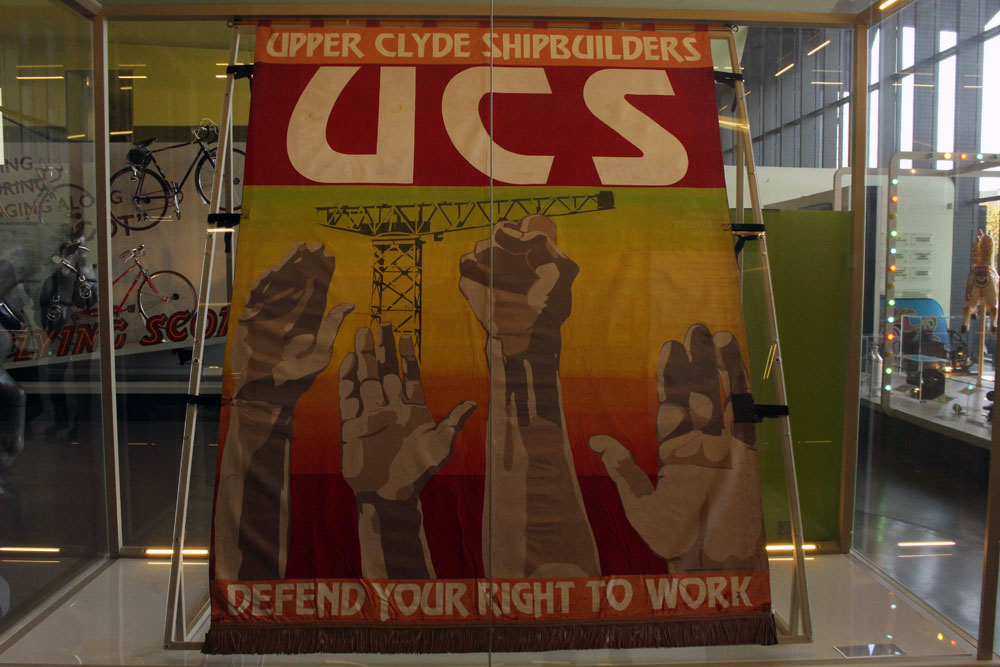
A pinch of the River Clyde; a squeezing of the water that flows west through Glasgow towards the sea; a watery place where shipyards once dominated the shoreline and the air shook with the hammering of rivets, the scrape and spark of steel plate, the blinding blue light of arc welding. Across the river, south of the here, lies the city district of Govan, depleted of industry now but once the hub for shipbuilding in the region. Here on the northern bank, at Glasgow Harbour on the site of a former shipyard on the edge of Partick, we stand outside the city’s Riverside Museum. The museum is an arresting zinc and glass structure with a steeply curving roofline that resembles a cardiogram – a late work by the Anglo-Iraqi architect Zaha Hadid.

IMG_7483

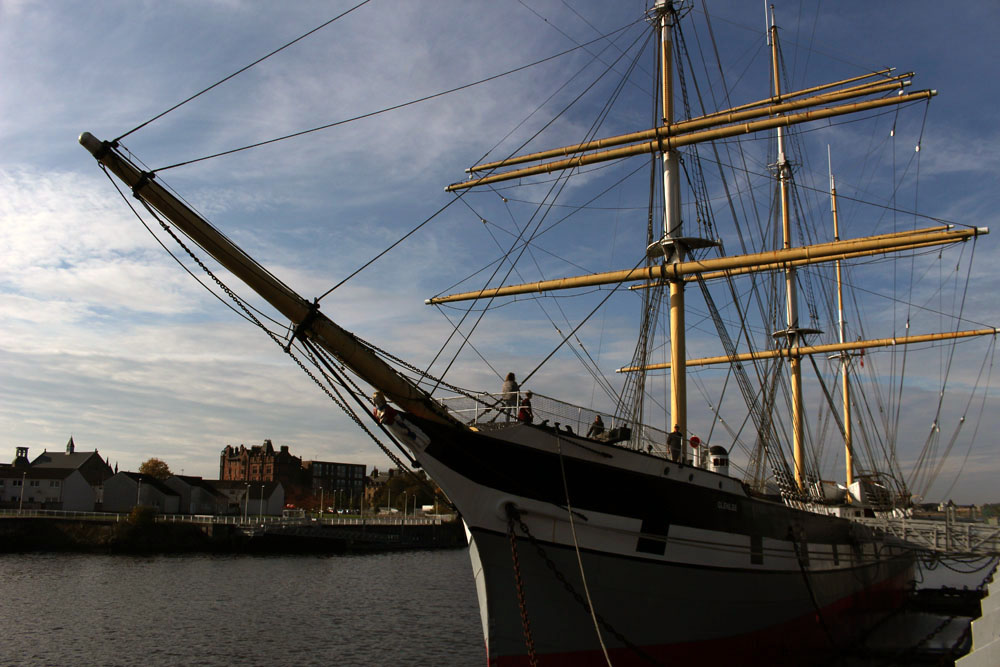
Afloat in the water in front of the museum, in purposeful contrast, is the handsome three-masted sailing ship Glenlee, a trading ship that after circumnavigating the world four times (and rounding Cape Horn 15 times) ended her nautical life as Galatea, a training vessel for the Spanish Navy. Abandoned and forgotten in Seville the ship was eventually saved by a British naval architect and in 1993 was towed home to Glasgow to end her days on the river of her birth. From the deck of Glenlee we can make out the old buildings of Govan across the water. But there is no way to cross, not outside the summer months anyway, as the seasonal ferry has stopped operating. So it means a retreat on foot back to Partick Subway station to take the Inner Circle beneath the river to reach our goal on the other side.

IMG_7494

Emerging from the subway into the bright sunlight of a gleaming autumn day, the Govan streets seems quiet, provincial even; not quite what we had been expecting. The Victorian buildings have a patina of age but are well-scrubbed, made of sandstone the colour of ginger cake. Govan’s Old Parish Church is built of the same stone.

Govan is the oldest part of Glasgow. Until 1912 it was a separate burgh that was historically part of Lanarkshire. Once a centre for the ancient Kingdom of Strathclyde or Alt Clut, it was the northernmost part of the Cumbric (a variant of Brythonic or Old Welsh)-speaking region of Hen Ogledd* or the Old North. A monastery was founded here in the 7th-century by King Constantine (later to be canonised as St Constantine of Strathclyde and Govan), to whom the Old Govan Parish Church is dedicated. In the early medieval period Govan was ruled from Dumbarton Rock at the mouth of the Clyde on the opposite shore until it was destroyed by Vikings in 870AD. The Kingdom of Strathclyde, the only part of the Old North not to be conquered by Anglo-Saxons, eventually became part of the Kingdom of Scotland in the 11th century.

IMG_7568

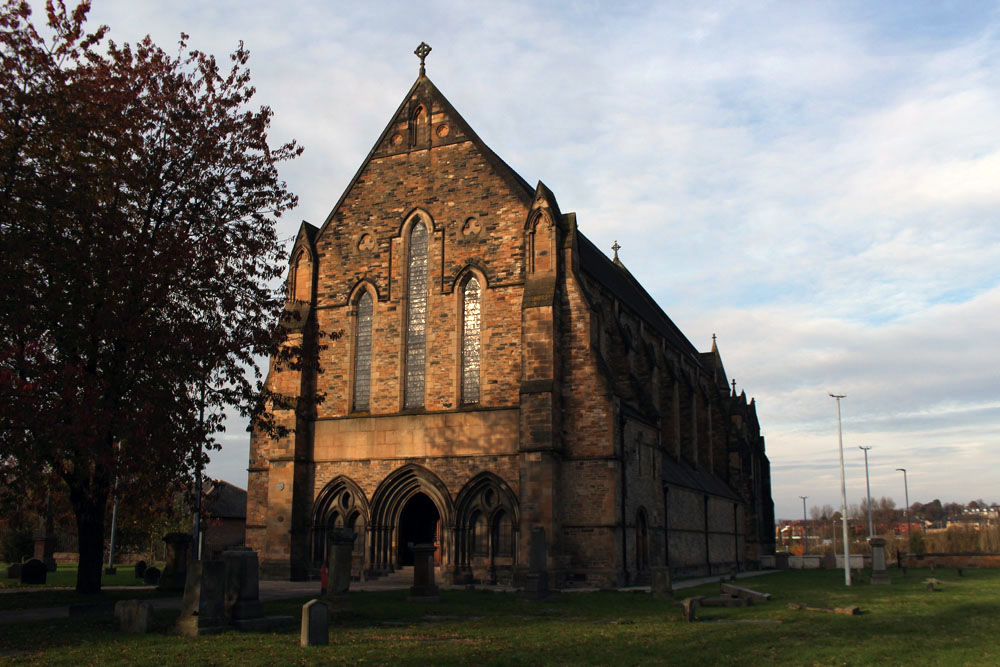
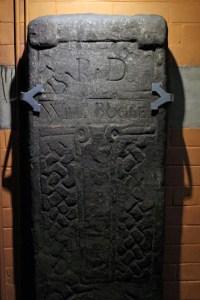
Govan Old Parish Church is home to the Govan Stones, a remarkable collection of 31 grave markers that date back to the 9th century. The church, a fine Scottish Gothic Revival building, is not so old but it stands on a sacred site that was in existence long before the Normans came to dominate the lands to the south. Our timing is impeccable – October 31, the Celtic festival of Samhain – is the last day of the year on which the church is open. As our enthusiastic Scottish-Canadian guide explains, it is too expensive to keep the church heated for the winter months and so it is locked up for the duration.

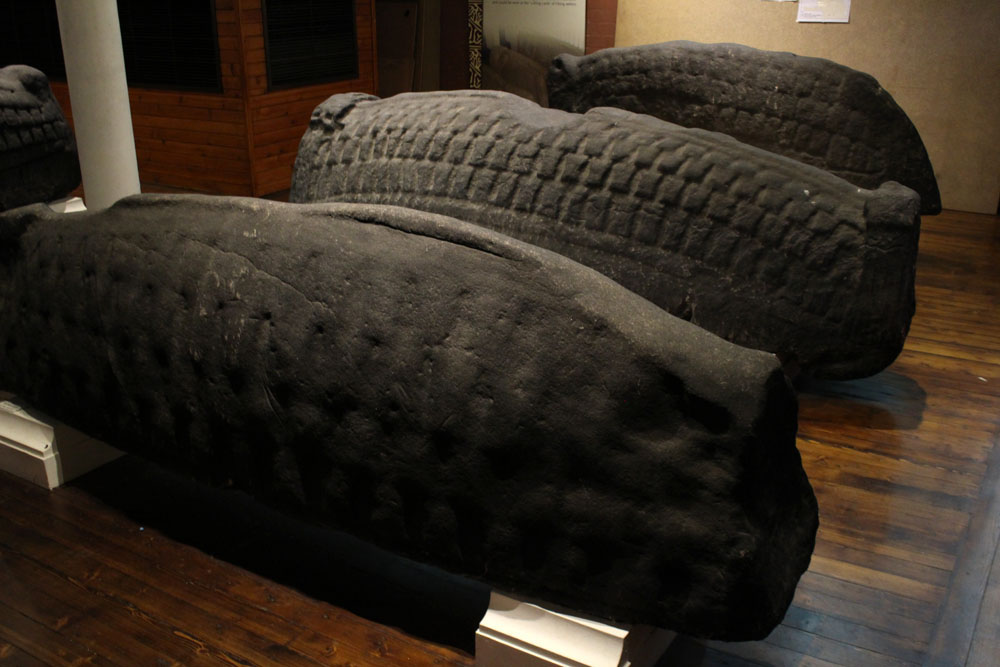
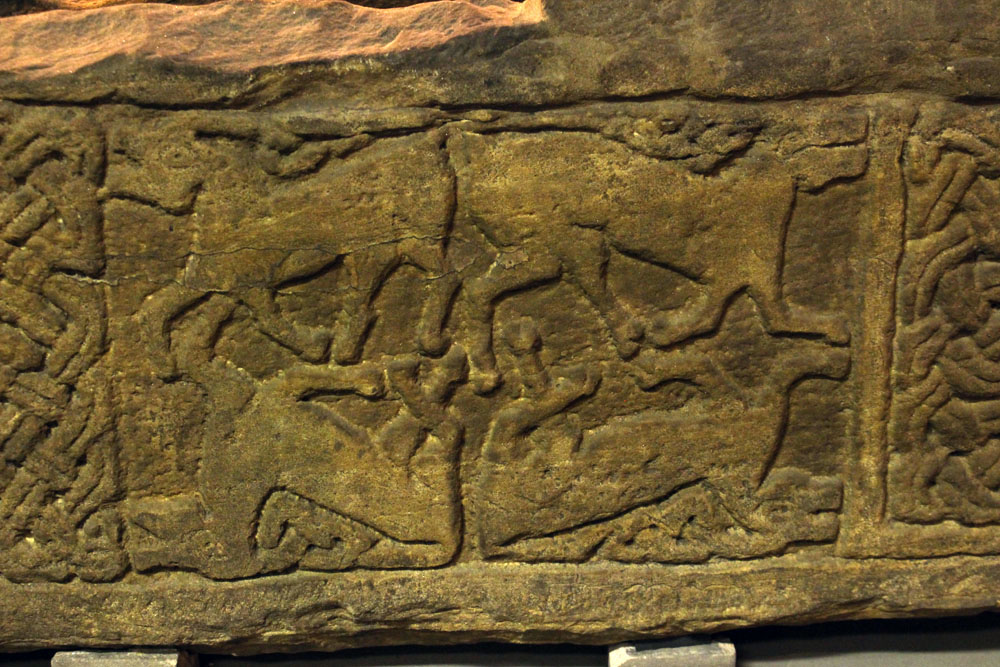
IMG_7566 The stones are arranged around the church interior so as to make a circuit. There is intricate Celtic lattice work on the first two – the ‘Sun Stone’ and the Jordanhill Cross – and on the third, the ‘Cuddy Stane’, a representation of a man on a horse, or possibly a donkey (‘cuddy’) bearing a Christ figure. A group of five Viking hogbacks, dark and heavy, and resembling those giant slugs that sometimes venture out along garden paths after rain, dominate the transept.  Unnoticed until is pointed out to us, the paws of a supine bear clutch one of the stones at its corners, a complex symbol that combines animal strength and tenderness and might, perhaps, relate to the high-ranking Viking it commemorates. The highlight of the collection is probably the Govan Sarcophagus, the only one of its kind from the pre-Norman era, which was unearthed in the graveyard in 1855. This intricately carved structure is thought to have once held the remains of King Constantine himself, although its symbols suggest that is more likely to have been made a couple of centuries after his death. Elsewhere are ancient stones that have been recycled as markers for later graves – palimpsests where earlier detail has been erased to allow a new name to be cut into the stone.
IMG_7562

The stone for each of the grave markers, like the church itself, comes from the hills across the Clyde. The feat of moving such a heft of stone might seem Herculean in its endeavour but a millennium ago the river would have been shallower and narrower and there would have been a ford across it; there may even have been stepping stones bridging the two shores. Later, in the medieval period, a ferry would have run between the two banks to transport Highland cattle drovers and their stock across the river to markets south of Glasgow.

IMG_7558

By the 19th century Govan became better known as a centre for shipbuilding. It would go on to achieve fame as the birthplace of strong-willed characters like Jimmy Reed, Sir Alex Ferguson and Kenny Dalglish. But long before any ship was launched, Govan was a strategic and spiritual centre where Britonnic, Celtic and Scandinavian worlds overlapped thanks to an important crossing place on the river. If the Govan Stones could speak of those who carved them they would, of course, tell you this… in Cumbric naturally.

IMG_7540


*Hen Ogledd is also the name of an excellent Newcastle-based musical combo whose work sometimes references the early medieval Brythonic world their name suggests

A Berlin Interlude

img_1874What do you do on a drizzly grey day in Berlin? A midwinter day when the sun is enfeebled and hidden, cowering somewhere beneath a thick duvet of cloud. What do you do in a city that you do not know well and only have experience of in winter?
img_1875

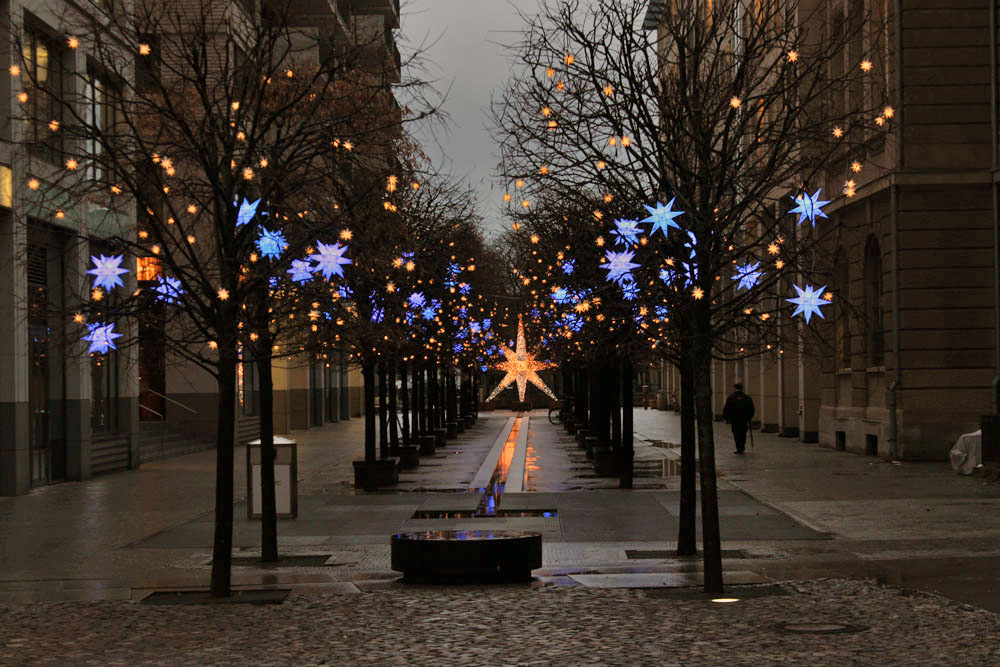
In early January the detritus of Christmas can still be seen in the streets – fairy lights cling obstinately to avenues of artificial trees, and discarded Christmas trees litter the pavements awaiting collection for recycling. The year has turned and spirituality and festivities will soon give way to politics. In less than a week, Berliners of a left-leaning persuasion will be attending another regular winter event, the commemoration of the deaths of the Spartakusbund (Spartacist League) leaders, Karl Liebknecht and Rosa Luxemburg, who were summarily executed during the uprising of January 1919. Each year on the second Sunday in January Berliners gather at the Memorial to the Socialists at Friedrichsfelde Cemetery to commemorate Luxemburg, Liebknecht and others who perished at the hands of the right wing Freikorps. This year is the centenary.

img_1883

img_1859img_1864

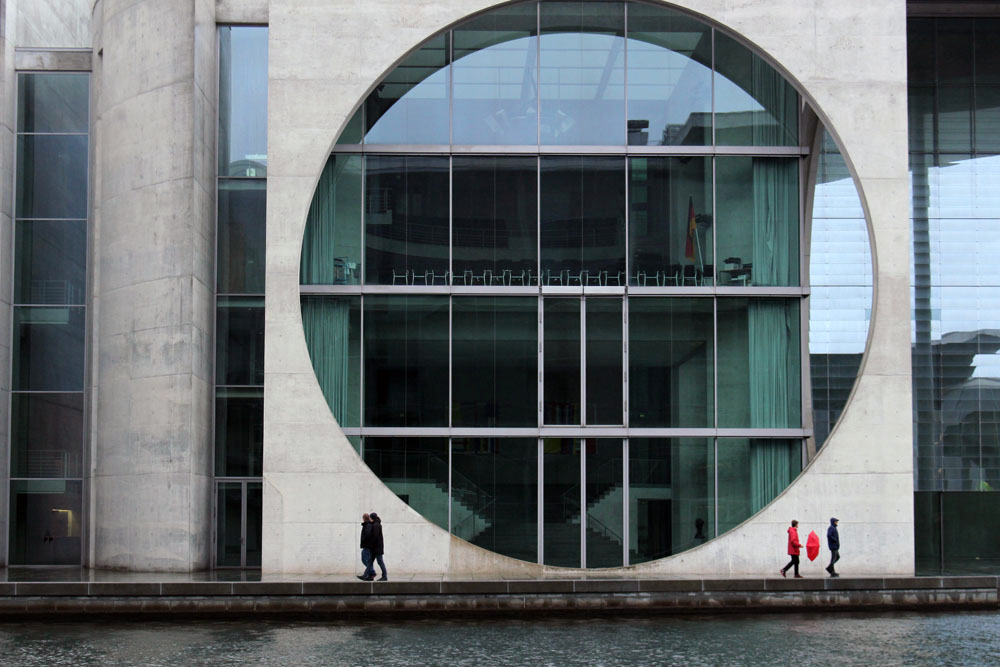
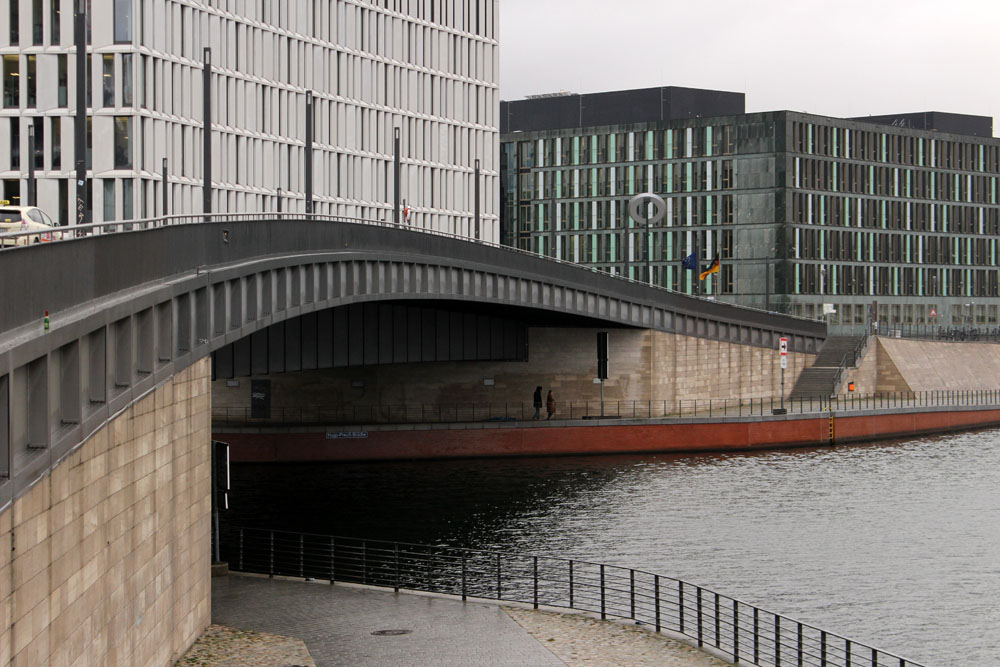
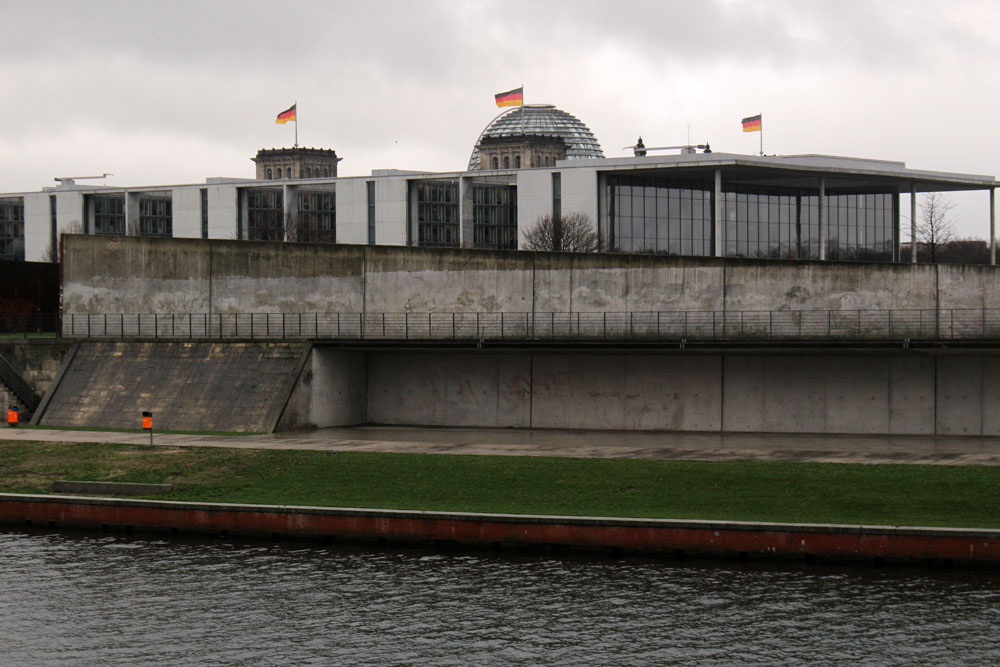
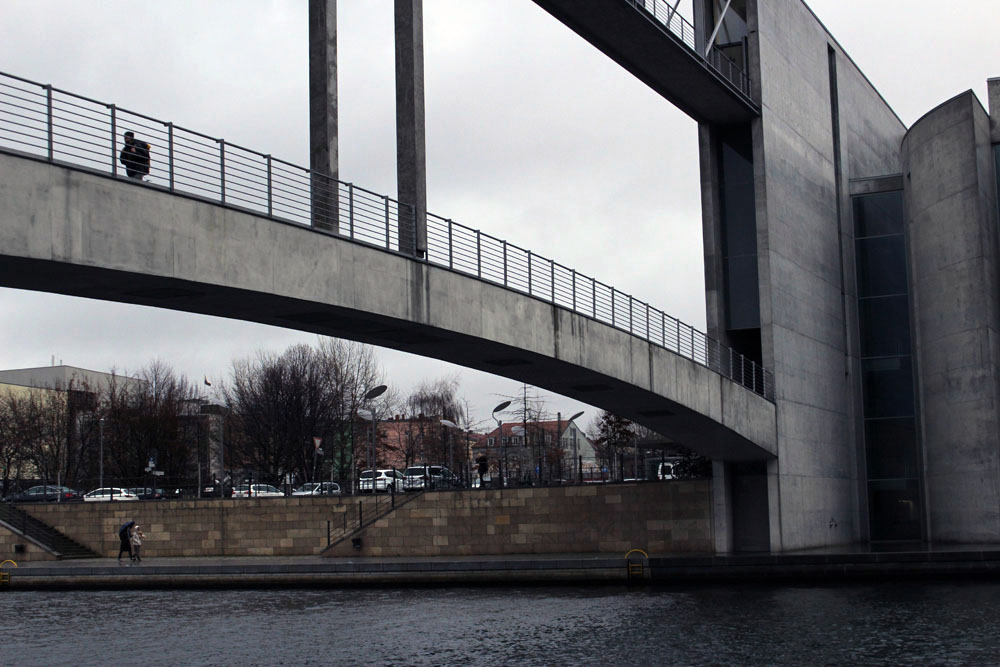
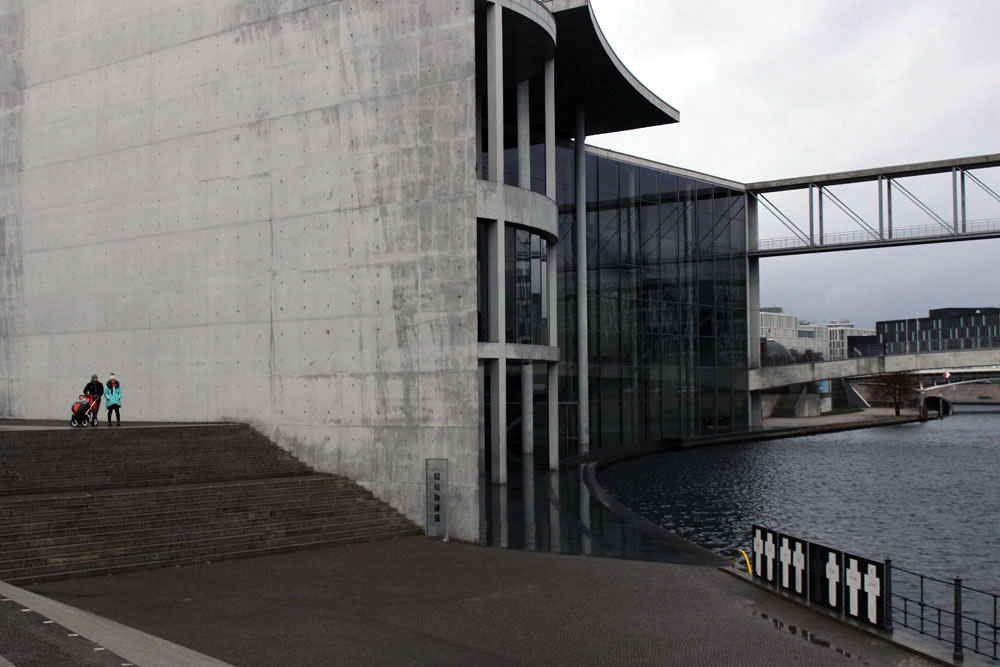
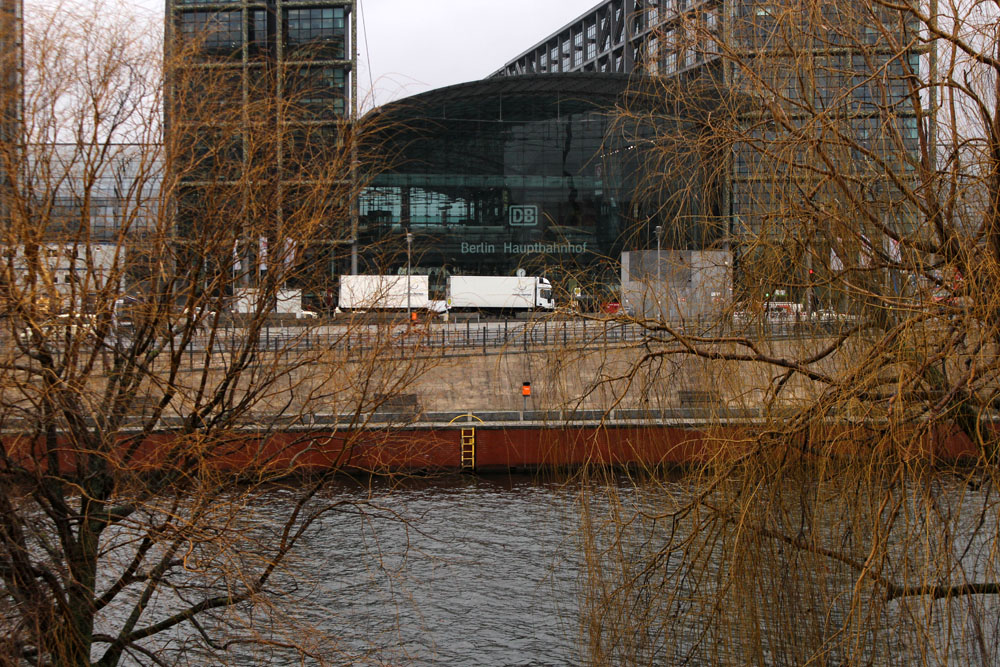
I am a few days too early for this event so I decide instead to take a walk along the main body of water that flows through central Berlin, the River Spree. I walk out of Berlin Hauptbahnhof railway station and cross the river to its south bank to follow the path to Museuminsel (Museum Island), from where I will strike west away from the river towards Alexanderplatz. Light rain and dense cloud renders the urban landscape almost monochrome. Such colour that there is stands out for its rarity – traffic lights, bright umbrellas, the hi-vis orange jackets worn by street workers. Although this is the heart of a populous capital city there are few other walkers to be seen – the poor weather has seen to that – but here and there is a jogger, a strolling couple, a woman pushing a pram. Tracing the river, I pass a succession of ultra-modern waterside buildings – enterprise temples of concrete and glass that give the impression of being hermetically sealed from the gloom outside. Office workers in a brightly lit dining canteen pay me no attention as I walk past on the other side of the glass wall that separates us. The Foster-designed glass dome of the Reichstag makes an appearance above the surrounding buildings as I progress; black, red and yellow flags flutter in the breeze.

img_1858img_1855

img_1865

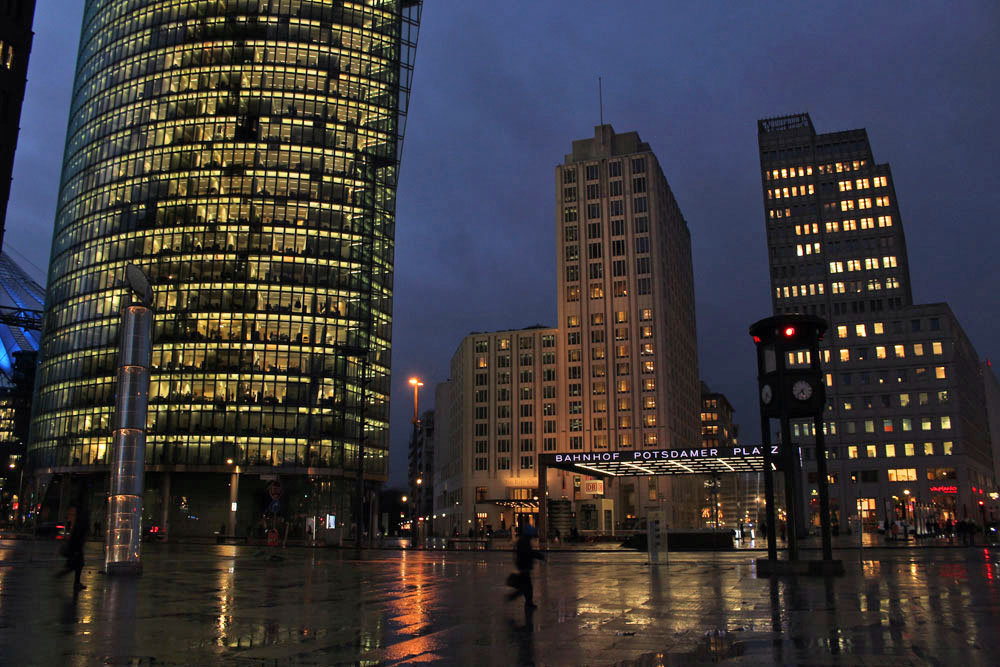
Leaving the canal behind after traversing Museuminsel, the lofty TV tower of the Fernsehturm at Alexanderplatz comes into view, as eventually do the twin Communist period tiered towers that flank Karl-Marx-Allee. At Alexanderplatz I descend underground to catch the U-bahn and a few stops later emerge once again at Potsdamer Platz where I cross the square to enter the railway station. Past sunset by now, the sky squid-ink black, the fluorescent blaze from the office blocks that fringe the square throws up reflected light from the rain-wet pavement. After colour-robbed days such as this the bright lights of human endeavour contrasted against the intense darkness of night can seem almost a comfort.

img_1932

img_1912