Scratching the Earth

To begin the New Year, here is a piece on something close to home and close to heart – allotments. I touched on this subject briefly last year in my post on Dacha.

The feature below originally appeared in Issue 3 of the very excellent EarthLines magazine last November. The issue content for the forthcoming February edition can be seen here.

Scratching the Earth: a celebration of the English allotment

Words and images by Laurence Mitchell
IMG_1523

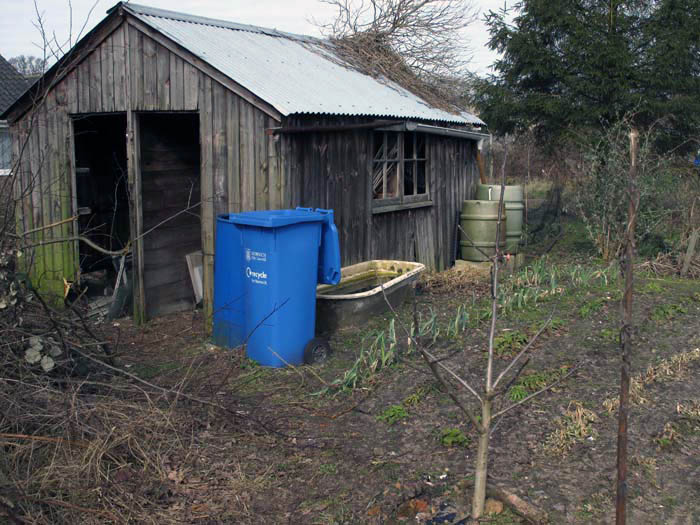
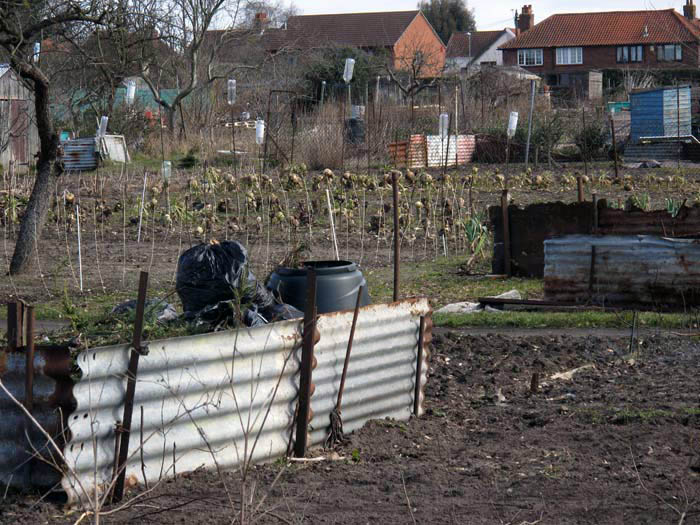
I am a scratcher, a scraper of earth. Not a full-time farmer but a fair-weather organic vegetable grower. ‘Urban smallholder’ might be a better description, but what I hold is very small indeed and, despite the regular print of my boots, I do not have possession of my own patch of dirt. What I have is something altogether different: temporary stewardship of that quintessentially English tract of land, a city allotment plot.

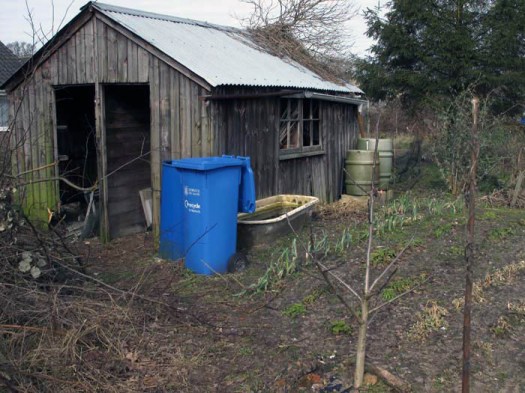
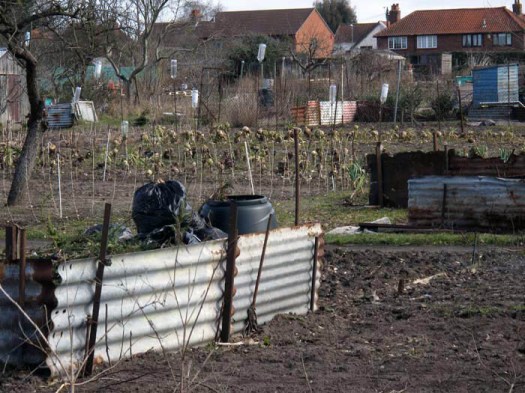
Scotland also has them but, like beech trees, they tend to be thin on the ground north of the border. But travelling by train across England or Wales you cannot miss them, especially as you make the final backyard run into towns and cities: a few acres of long thin plots with ragged lines of vegetables, tumble-down sheds, compost heaps and algae-stained green houses. In winter, there will probably be stands of frosted Brussels Sprouts (contrarily, the most singularly English of vegetables, which you would be hard-pressed to find in the Belgian capital); in summer, you will inevitably see vines of runner beans entwined up wigwam frames of bamboo, scarlet flowers scrambling for the sky. From your window seat you might witness solitary figures hunched over tending the soil, or red-faced individuals dressed in old clothes clutching a fistful of leaves or a plastic container of soft fruit.

You will not find these oases of fecundity anywhere else in Europe – not quite like this, anyway. True, Germans and Danes have some sort of equivalent with their tidy city gardens, but these have the well-ordered feel of suburbia about them: neat gingerbread cottages, straight lines, pampered lawns and picket fences. In contrast, there is more than a touch of anarchy about the English counterpart: an improvised, hotchpotch character that comes partly from the inherited hubris of surviving maritime blockades and aerial attack, along with the earthy pragmatism of having to live on wits and scraps during wartime. But they have a role to play in times of plenty too; allotments serve as places of refuge for those fleeing latter-day consumer culture. With garden sheds cobbled together from builder’s waste and unhinged old doors, allotments resemble nothing less than Third-World shanty towns – squatter settlements, bidonvilles or favelas. That is, of course, minus the misery: there are no drugs, guns or mudslides to torment their part-time occupants. The worst that can happen here is a plague of aphids, potato blight or tools stolen from sheds.

There is a freedom that comes with all this, this make-do and mend, this non-reliance on throwing money at anything; this quiet undemonstrative snub of consumerism. These are not private gardens after all, where such messy improvisations might snobbishly be seen as a decay of civic pride – the abandoned fridge reverting to nature on the untended scrap of lawn. Rather, they are communal spaces where the individual can do much as he or she wishes. This is not to say that there are no rules of engagement – there are – but these tend to be unwritten yet universally understood by anyone who have served enough time on a plot. Newcomers who fritter away good money on smart sheds and new tools are viewed with suspicion and are seen as unlikely to stay the course – this is usually the reality. Neophyte allotment holders are often viewed as fly-by-night lightweights. To be accepted and, harder still, to be taken seriously, it is necessary to earn one’s spurs, to prove oneself worthy of the respect of the old hands. A decade or so will probably do it, although not necessarily. As well as a place where old-fashioned neighbourliness and community spirit can shine, this is also the sort of territory where traditional English bloody-mindedness can also be freely and wilfully expressed.

Lengthy tomes have been written concerning the history of the English allotment. Suffice it to say, they mostly came into being during one of the nation’s more enlightened interludes when the paternalistic powers-that-be saw fit to grant plots of unused urban space for the use of the city-dwelling working class. The urban allotment was devised as a place where the poor could grow fruit, flowers and vegetables, take health-giving exercise and practice the sort of rosy-cheeked temperance beloved by Victorian philanthropists who, well-meaning though they might have been, felt it necessary to offer a firm guiding hand to the lower orders lest they fall prey to temptation and collapse helplessly in an orgy of gin, laudanum and sexual vice.

Ironically, many of the workers that swelled Britain’s new industrial cities in the Victorian period came because they had already been disenfranchised from the soil they had been sweating over for generations. The Enclosure Movements of the late 18th and early 19th centuries meant that many country dwellers had ended up as landless labourers, subject to the whims and requirements of the landowning class. It was only a savage depletion of their number as cannon fodder during World War I that led to agricultural labourers becoming a scarce-enough commodity for their value to be begrudgingly appreciated once more. Nevertheless, farming declined through the first half of the 20th century, and when it did finally recover after World War II it was with the assistance of power machinery not horny-handed men with teams of horses.

Working men had already taken a stand some centuries earlier. At the outbreak of the English Civil War, the Diggers, led by Gerrard Winstanley, were Christian nonconformists who wished to reform the existing social order with the introduction of egalitarian rural communities. True to their name, they dug; cultivating common land with the claim that the people had been robbed of their birthright by the ruling class that had become established six centuries earlier around the time of the Norman Conquest. The Diggers would fail in their quest, of course, as would their contemporaries, the Levellers – so-named because of their early tendency to raise hedges in rural enclosure riots. What has persisted, though, is Winstanley’s belief that ‘true freedom lies where a man receives his nourishment and preservation, and that is in the use of the earth’ and the notion of ‘the Earth’ (note the capital this time) ‘as a Common Treasury for all’. Effectively, the provision of allotments would represent a form of benign tokenism: the equivalent of scraps from the kitchen for the poor, a handful of coins from the Common Treasury that only a small élite held the keys to.

The earliest allotments were founded in rural areas during the reign of Elizabeth I when the first enclosures of the commons were partly compensated by allocations of land to tenant cottages. The General Enclosure Act of 1845, anticipating civil unrest as a result of earlier sweeping enclosure legislation, made provision for landless poor in the shape of so-called ‘field gardens’ of a quarter of an acre, but only a tiny fraction of land was effectively provided from the enclosed territory. A later act of 1887 obliged local authorities to provide allotments if there was sufficient demand, and this was strengthened by a follow-up act of 1908 that imposed more binding responsibilities.

Allotments came into their own in times of hardship. During World War I, the food blockade imposed by the Germans resulted in greater demand for allotments. In the Great Depression of the 1930s, unemployed coal miners in Wales and northeast England would somehow manage to feed large families on potatoes, cabbages and leeks grown on exhausted soot-begrimed plots. Later, during World War II, food blockades and a lack of farm workers meant that allotments would be the only source of fresh greens for many poorer city dwellers. ‘Dig for Victory’ became the watchword, although food rationing, which continued until 1954, was an equally strong imperative. Following the Allied victory in 1945, allotment numbers declined dramatically right up until the 1970s, when an upsurge of interest in self-sufficiency caused a blip in the overall trend. Since the 1990s the decline has been relatively slow, despite enormous pressure to sell off prime urban sites for building land.

IMG_1296

The most controversial allotment story in recent years concerns the fate of the Manor Gardens allotments in East London. These allotments, once a green refuge of tomatoes and turnip, carrot and coriander next to the River Lea, were cleared in 2007 to make way for landscaping for the London 2012 Olympics. They were fêted in the British media, and painted and photographed by inner city archivists. It does not take much imagination to understand the sense of loss felt by a poor inner-city community for which allotments such as these had long provided a vital social space. Serving as a combined place in the country, picnic spot and community centre for its multi-cultural tenants, it is hard to envisage a better tribute to social cohesion, cultural and class integration and eco-cuddliness. ‘It was an island surrounded by water. Lea Valley Park made a nature reserve at the back of it. You walked out of lousy old Hackney… into Shangri La,’ as one former allotment holder confessed who had inherited his plot from his father back in 1948. Several former tenants have even had their ashes scattered quietly here – a sacred site in the hidden urban core desecrated in the name of progress and ‘urban renewal’, air-brushed and landscaped as part of the warp and weft of the 21st century ‘Olympic’ capital. Since the allotments were cleared, and a temporary alternative site offered, an agreement has been made to reinstate them on the original site once the Games are over. Unfortunately, Marsh Lane, the makeshift new site to which the plots have been temporarily relocated, has, as its name suggests, very poor drainage.

My own humble plot in Norwich took an age to acquire. I placed my name on a waiting list and bided my time for several years before an unexpected telephone call one wintry morning offered me an allotment a couple of miles from my home. I was required to act quickly, as the city council needed a decision that same day. It was hardly perfect – a large rectangle of coarse grass fringed on one side by a long-neglected plot buried in head-high bramble thorns. The plot was close to the edge of the allotments, near to a boundary fence that had been breached by residents of the surrounding council estate, who had chosen the plot next door as a convenient spot to deposit their unwanted household rubbish – shattered television tubes and dismembered bicycles, broken glass and metal detritus. Naturally, I said ‘yes’ immediately, excited that finally I had my own scrap of land to do with as I wished. It may have been in the blood: my grandfather had worked as a gardener and his immediate Victorian ancestors were among those who had exchanged tilling the land and work ‘in service’ to the gentry for more profitable but soul-destroying work in the mills and factories of the English West Midlands. Undoubtedly, there was something primordial in my craving: an atavistic urge to work the earth and practice the alchemy of producing food from dirt, sweat and a packet of seed.

It is easy to over-romanticise the notion of an oasis of peace in an urban environment. The soundtrack to my labours may sometimes be birdsong – or more often the harsh screech of bad tempered gulls – but above the punctured-tyre hiss of tinnitus I am also privy to the familiar click-track of council estate Britain – slamming car doors, raised voices, domestic arguments. And it is not just the birds who croon: one of my allotment neighbours is an unconscious whistler, though the only tune fragment he seems to know is the chorus from ‘Hole in My Shoe’ by Traffic, a Top Ten hit back in 1967. Why is this so fixed in his brain, as repetitive as birdsong? One day the local starlings will probably also mimic the refrain – either that or ‘Popeye the Sailor Man’, which chimes metallically and repeatedly from a cruising ice-cream van – and which is, fittingly perhaps, a song about spinach.

But an allotment can be genuinely magical on occasion: a direct link with the world of nature that lies all around but is all too easy to overlook and increasingly hard to connect with whilst living in a city – a world more feral than truly wild, perhaps, but a cogent reminder of it nevertheless. Arriving early in the morning, you may be lucky enough to witness a family of neighbourhood foxes basking in the low sun – hardly tame, but not exactly fearful either. These magnificent rusty creatures, although now commonplace in urban Britain, still engender wild associations. Reviled by some for their scavenging habits, loved by others for their feral tenacity, they still manage to quicken the heart of city-dwellers with their untamed animal arrogance. And when the pigeons, who wait lazily in trees for cabbage patches to be left unguarded, scatter instantly in a slack-winged flurry of panic, you know that a sparrowhawk has been spotted on the prowl, keen red eyes and cruel talons ready to swipe at unwatchful prey.

An urban existence tends to hold nature away at arm’s length, a little offended perhaps at its unpredictable character and our frail human inability to control it. With tall buildings blocking the sun, and central heating blurring the change of seasons, a patch of dirt untainted by real estate is enough to remind ourselves of the greater seasonal dramas at work. In January, the ground may be too frozen to work and last season’s parsnips will grip the soil as if they were slaves to gravity. A snatch of early March sunshine can warm the air sufficiently to bring out hibernating butterflies from their allotment shed hideaways: gorgeous glimpses of colour – a fluttering tortoiseshell, an eye-winged Peacock, a raggedy Comma – punctuating the afternoon. In contrast, those Lepidoptera that arrive in abundance later in the year – cabbage whites and leek moths – are viewed with all the affection of barnstorming rats. In the dog days of August, drought and a stiff summer breeze is sometimes all it takes to blow away precious topsoil as we slavishly hoe away the weeds: pale dust that sticks to legs before filtering down to boots. Wet warm weather is worse: no chance to hoe away the fast-growing weeds that thrive so much better than those vegetables we try to nurture. Bindweed, couch grass, thistle, horse-tail – the lexicon of horticultural hate.
IMG_1525As allotment holders, we tend to be finely tuned to the vicissitudes of weather and the long-game of climate fluctuation. Our knowledge and memory of the year just passed is more sophisticated than a simple appraisal of ‘cold winter’ or ‘wet summer’. We know from experience that the mild spring and moist summer last year was excellent for the fruit harvest, as we remember plums and damsons that bent the branches earthwards with the weight of their juicy, skin-bursting load – a veritable jamboree that we are still enjoying preserved in jars. It tends to be feast and famine though, and that same hard-won experience tells us that a poor crop will no doubt ensue this season, the trees exhausted and needing to recoup energy following the ostentatious display of last year’s fruit-fest. Besides, it was a cold wet spring too, and so flowering trees were unable to set fruit.

Summer has fluctuations of temperature but the mere yo-yo-ing of a column of mercury discloses little useful information. The weather as reflected in the dynamics of insect populations reveals far more. A consistently warm period heralds an invasion of parthenogenetic sap-suckers: aphids – green, white or black. Warmer still, then expect a sudden boost in the population of aphids’ red-spot nemesis: ladybirds, the nation’s favourite beetle. We know – or rather, learn from old hands – that if the summer is cool and wet then runner beans will probably thrive; a hot dry August, then French beans will do better than their flat-pod British cousins – a bluff Gallic reminder of their continental provenance. Sudden weather changes – cool to hot, wet to dry – and onions will bolt, in a hard-wired urge to flower, set seed and survive genetically for another generation. Winter, too, has subtle degrees of cold that are reflected in the fortunes of the plot. A hard frost that rimes the waxy leaves of cabbages may deter hungry birds, but only to a point. Woodpigeons that generally prefer to shred young broccoli leaves will, in really hard weather, turn the attention of their serrating beaks to the normally unappealing stands of kale if all the more palatable brassicas are efficiently netted. At least we have no rabbits or deer to contend with. Winter is largely a time of fallow and reclamation, but cold weather is no barrier to hardier plot-holders, as there are many ways to warm up, and few activities are more rewarding than turning the soil on a cold misty day observed by a worm-hungry, winter-fluffed robin.

After a while working a plot, subtleties of terrain become apparent and the presence of microclimates reveal themselves. My plot lies at the corner of the block and, with the land sloping gently towards it from both north and west, it is something of a frost pocket. Arrive early enough in the day and it is possible to witness a thin layer of cold air sliding menacingly downhill like dry ice on a stage set, frost-burning tender leaves in its wake. The leaves of early potatoes curl and blacken down here when those higher up near the entrance gate stand green and firm, unaffected by overnight frost. One learns to adapt – plant a little later, earth soil up higher.

Intimacy with the vagaries of the weather is one thing, but as allotment holders we also get to know the topography of the ground beneath our feet with great precision, as years spent hoeing, weeding, digging and harvesting engender a close familiarity with our own designated patch of earth. The small territory that is our plot becomes the place on Earth we know most intimately: a microcosm of achievement, change and intent. We create mental maps of the minutiae of its landscape by repetition, by constant stalking. Without recourse to paper or plan we can map our own territories with quite alarming accuracy. These features appear on no known charts other than those in our mind’s eye. On my own: Couch Grass Hill (a two metre-high man-made round barrow – the clue’s in the name), the asparagus bed, the bramble patch, the soft fruit enclave, the ‘wildlife area’ (former raised beds now rotting under grass and wild flowers), the old pear tree (inherited – purveyor of hard, dry fruit), the apricot tree (planted – purveyor of no fruit thanks to late frosts). As inheritors of a relatively blank canvas we bring the plot into being, unwittingly creating songlines of place and event in the process: the exact location where I once saw a toad, the burrow where foxes used to lived, the place where I once cut myself on hidden glass, where I lost my Swiss Army knife (thus far, a forgotten song). Paths are marked – or rather, left un-dug. Unplanned desire paths are created by repeated footfall – the way through long grass and nettles to the shed where I keep tools (foxes, too, used to leave imprints of regular pathways through the grass before they deserted for pastures new). Each plot is a palimpsest of that which came before, previous tenants leaving marks that fade with time (or grow and mature as in the case of fruit trees). Like a river, the plot is both permanent and ever-changing.

More than anything, stewardship (and that is what it is – the land is owned by faceless others) of an allotment affords a taste of poverty – real life-on-the-edge poverty: an oblique empathy with those millions whose very existence depends on whether their crops succeed or fail. We in the West are, of course, mere dabblers – we will not go hungry – but we become attached nevertheless, and the working of an allotment gives some flavour of deep involvement with the earth and what it must feel like if environmental disaster occurs or ancestral land is stolen or gerrymandered by politics and territorial conflict.

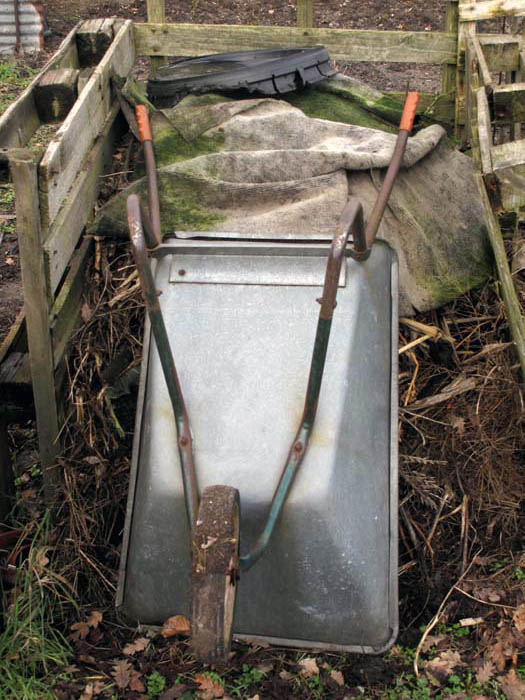
The tenure of an allotment is a sometimes frustrating and occasionally heartbreaking business, but there’s beauty in the organic industry of it all. Leaves, weeds and cuttings rot down in time to make rich black compost. Even old clothes: this is the closest that you can get to giving a worn-out pair of jeans a Tibetan sky burial. Put your trust in bacteria and worms, organise them a little, and in a year or two they will be helping to nurture potatoes and onions. The best thing of all, though, is to see the plants grow before your eyes: the seed that transforms into a tiny plant that, before you know it, morphs into something that actually tastes good. As spring bleeds into summer, bright red bean flowers drop like confetti to reveal miniature pods; asparagus spears push upwards through the soil inviting you to savour their piss-tainting delicacy; yellow squashes swell visibly until they are almost too heavy to lift, and potatoes fatten in trenches hiding their treasure underground until it is no longer possible to resist digging up that first forkful of the season. All life is here: birth, sex and death. Naturally, as many allotment holders are well into their later years it is usually the last of this triumvirate that is foremost in their minds. All the more reason, then, to savour the horticultural equivalent of the first two.
Orthodox Walsingham

IMG_4535A few months ago whilst travelling in central Serbia I met a nun at Manasija monastery near Despotovac. I was talking with my Serbian friends in the monastery shop when the nun behind the counter, hearing our conversation in English, started to chat with us. It turned out she was Irish, although she sounded Home Counties English to my ears, and had once taught Religious Education at the same school that Princess Diana had attended. The nun, whose name I never learned, was bright and engaging, and keen to hear news of the old country. “Tell me, is Mrs Thatcher still alive? Is it true that she’s gone a bit doolally these days?” I ventured to suggest that the Iron Lady always was quite doolally in my book and she laughed. “And how is the Duke of Edinburgh? He always had a twinkle in his eye. Quite an eye for the ladies, I fancy.”
IMG_4470We went on to talk about Norfolk and she mentioned Dame Julian of Norwich. When I said that I lived less than a mile from her chapel she went quite dewy-eyed before going on to talk about Walsingham and the time she had spent there many years ago. We talked more, about Norwich, about education (“Ah, I could tell you were a teacher”); about how the best books require an input of effort in order to get something back out of them. We also spoke of children’s expectations of instantaneous reward, and about delayed gratification, which I can only suppose,  given the sort of unshakable faith that its adherents generally have, is the essence of what the monastic life is all about.

It was starting to go dark outside and my friends were hovering at the doorway wanting to leave – clearly, it was time to go. I picked up the jars of honey I had bought and bade the nun goodbye. She smiled warmly as I made my exit. “Thank you for bringing me those wonderful memories of Walsingham. I will treasure them. God bless.” It was nice to be appreciated but I never did find out how a well-educated Irishwoman came to be an Orthodox nun in an isolated monastery in the middle of Serbia: I was too polite to ask.

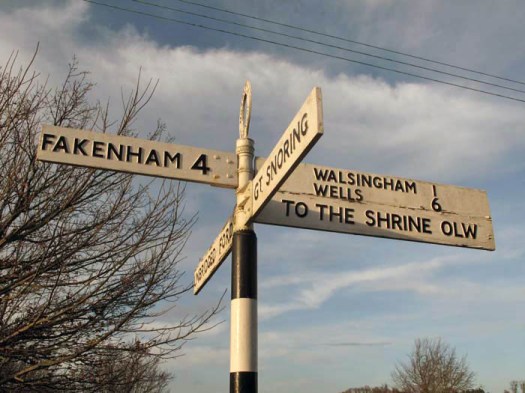
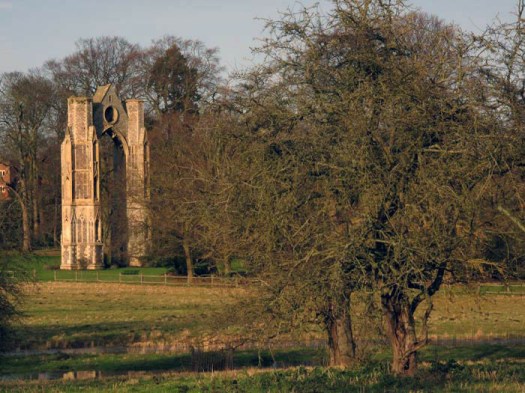
IMG_4525Fast forward to December and I am back in Walsingham myself, researching for a forthcoming book on Norfolk walks that will come out next year. It is a beautifully bright day with a huge sky and green corduroy fields that gleam as spikes of newly emerged winter wheat catch the low-slung mid-winter sun. I walk up the east side of the valley from the village and then descend down to the Stiffkey River before going up the opposite side. At the valley bottom, the river is in flood, its ford almost impassable with the recent deluge. The landscape around here is perhaps Norfolk at its least typical (although some might argue that the nearby village of Great Snoring is quintessentially Norfolk in spirit). Undulating, lush and well-wooded, with discrete valleys and hazy horizons, it reminds me of the Welsh Borders in many ways – something distinctly Celtic, almost Byronic, about its folds and creases.

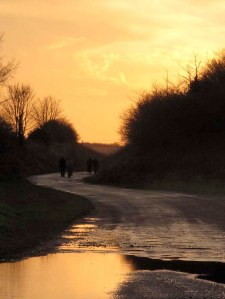
IMG_4596 I return to Walsingham from the west side of the valley, following a greenway that would  have been one of several pilgrimage routes to the village in the past. The track emerges at the edge of the village alongside the path of an old railway track that in recent years has found new use as a walking route for pilgrims from the Slipper Chapel, a mile away. It was always a tradition to walk this last stretch to Walsingham barefoot – even King Henry VIII once performed this act of humility before returning two decades later to trash the priory during the Dissolution. As I arrive at the track, a group of robed monks are silhouetted as they walk west; walking, quite literally, into the sunset.

IMG_4603Across the track, the original station building still stands next to its redundant platform. But something strange has happened. Now the small red-brick building sports a small silver onion dome with a cross above it: it has found a new life as an Orthodox chapel. Surely it is this humble chapel that my Manasija nun remembers so fondly? This modest converted building is her personal connection with Walsingham. Now, purely by chance, it is also mine.

Winterton-on-Sea, Norfolk

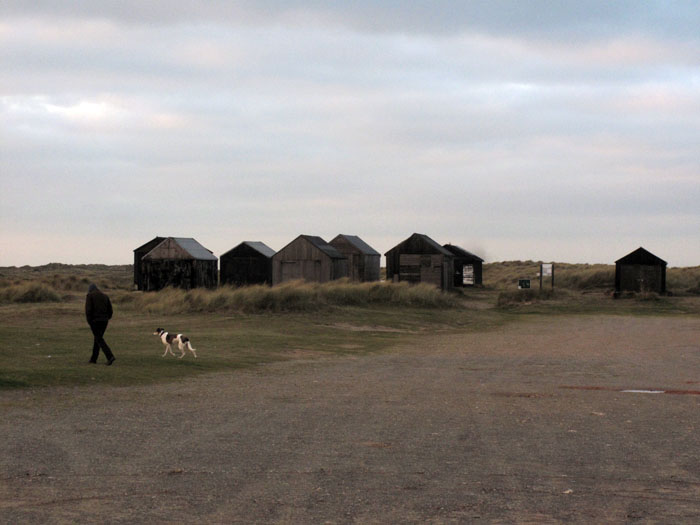
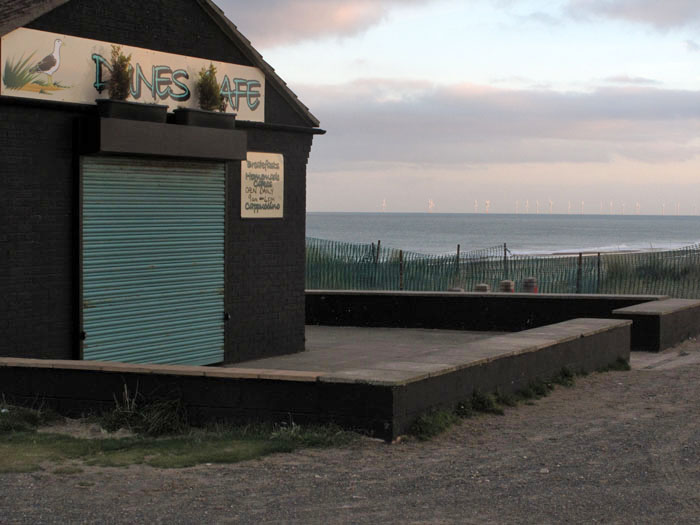
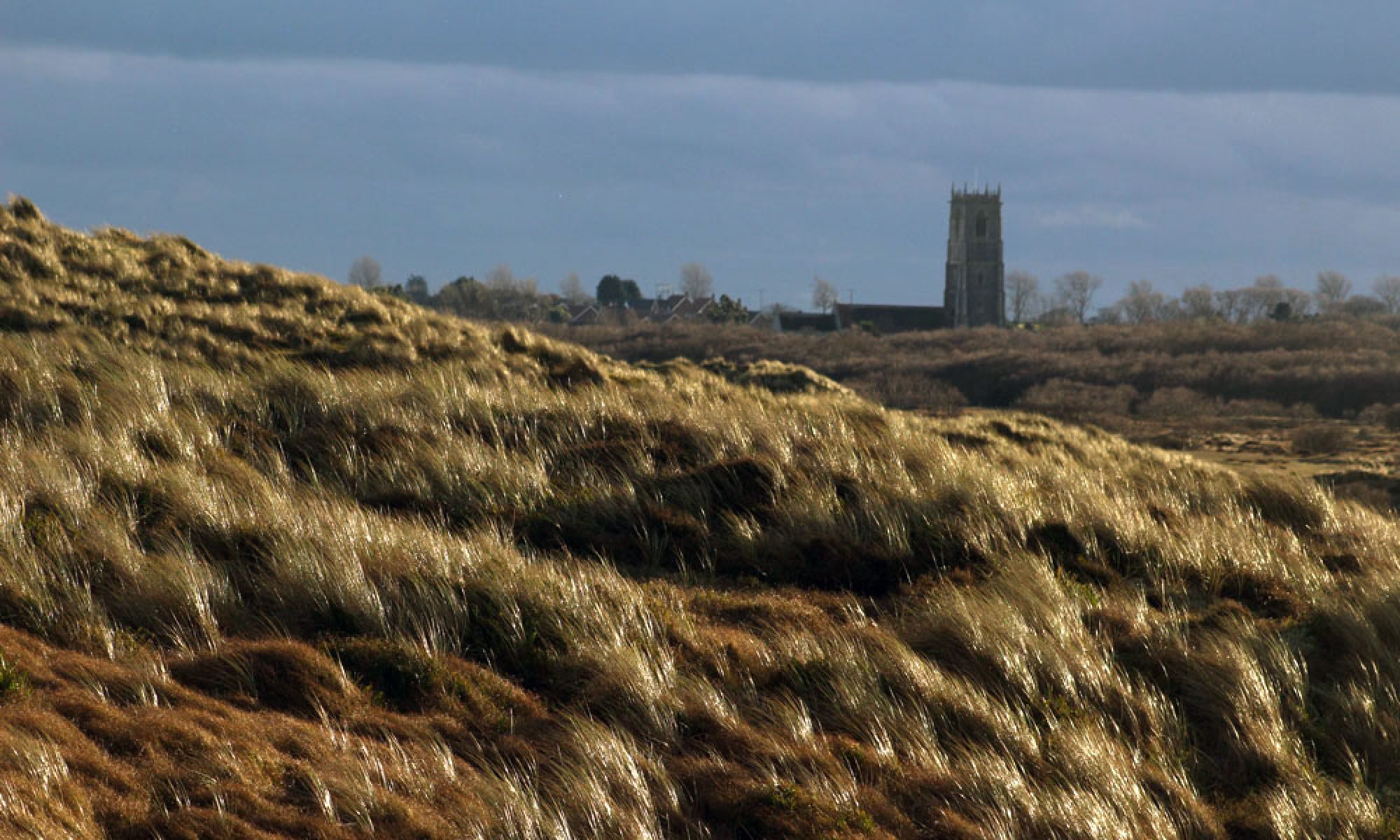
I did a circular walk at Winterton-on-Sea a couple of weeks ago, striking out from the beach car park that looked a little forlorn out of season – largely devoid of vehicles, its wooden hut cafe bolted shut for the winter.

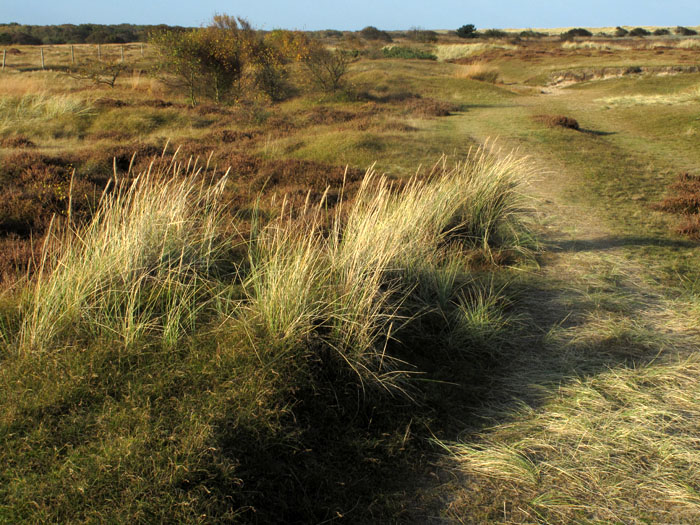
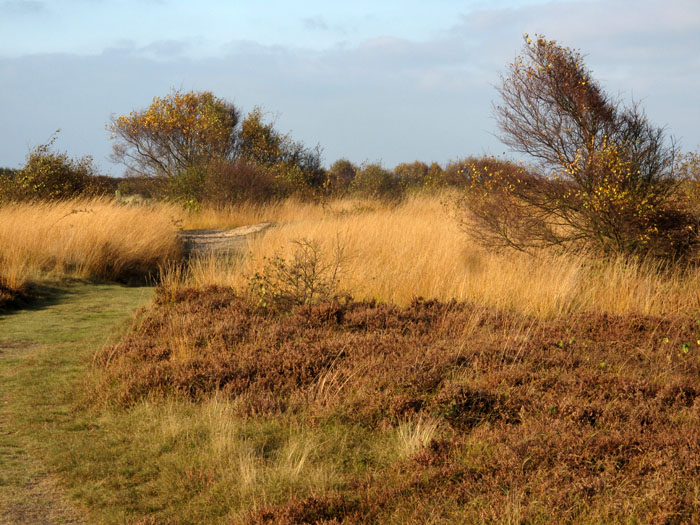
Winterton Dunes immediately north of here is a nature reserve known for its natterjack toads but, this being November, the toad population was in deep amphibian sleep, no doubt dreaming of munching insects in warmer times to come. But, even without the toads, it’s an affecting place – an undulating swathe of sand and gorse, birch trees and heather; a border zone where sea meets land meets sky.  There are other animals to consider as well: over the dunes on the beach grey seals have arrived in number to pup, their sluggish forms slumped awkwardly on the sand – plump, blotchy grey and vulnerable.

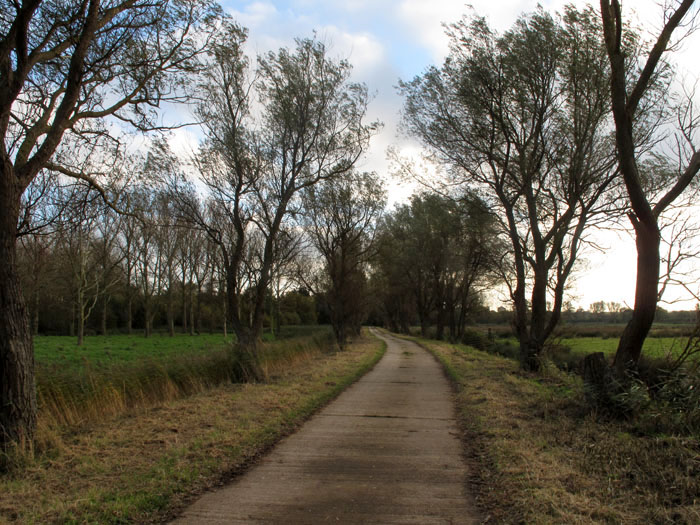
At Winterton Ness, where I leave the dunes to venture inland, large concrete blocks flank the track, a reminder that invasion was a constant threat along this coast back in the dark days of World War II. I walk inland along a farm track, through an isolated cattle yard that has leaked several inches of malodorous slurry over the concrete, before heading across fields to walk south. Here, pheasants are so prolific that I soon become immune to the shock of their flying up unnanounced in my wake – an explosive flurry of undersized wings struggling to lift over-the-top plumage clumsily into the air. There are so many pheasants here. This year, they seem almost plague-like.Walking along a lonely concrete road in the general direction of Winterton I come across a man on a bicycle, who dismounts to walk and talk with me awhile. He is a font of local knowledge. According to him, the supersized pheasant population is the result of the local landlord releasing 15,000 chicks into the wild – an awful lot of shooting for even the most enthusiastic rifle-wielder. We talk of other wildlife: the cranes that breed around here, the red deer that rut nearby, the barn owls and hen harriers that quarter the winter marshes. Then, as we approach a corner ahead, he utters, “I won’t walk along here at night on my own. Even the beaters won’t come here at night – and they’re a pretty hard bunch on the whole.” Before I have time to ask why, he answers for me, “It’s haunted, and so is the house by the corner.”The man with the bike starts to relate a story about a local who lived around here a couple of centures ago. Like many along this eastern extremity of the Norfolk coast, he was given to  smuggling and shipwrecking but this particularly unpleasant individual was also reknowned for his cruelty to women and his wraith – a cold, shadowy presence that is said to follow anyone foolish enough to wander around here at night – still haunts this stretch of the road.

We go on to discuss Winterton’s shipwrecking tradition and reputation for lawlessness that persists to this day (“The Yarmouth police don’t want to know about any trouble here, although they’ll come to Horsey just up the road”).  Then, as soon as we turn the corner, he bids me goodbye and disappears into the garden of a roadside cottage – the same one he had said was haunted.

Back at the beach car park, a couple of dog-walkers catching the last hour of silvery daylight eye me (conspicuously dog-less) with suspicion. In north-east Norfolk if you don’t have a furry friend with you then you are probably up to no good. If it’s the liminal hour just before dark then you almost certainly are.

Botanising the asphalt

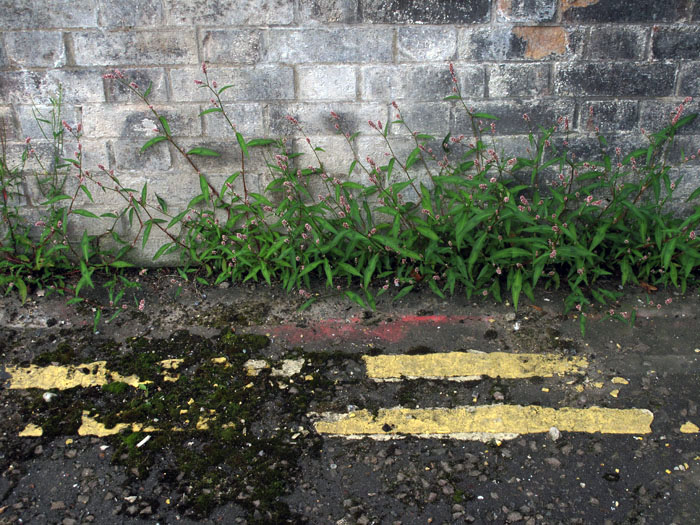
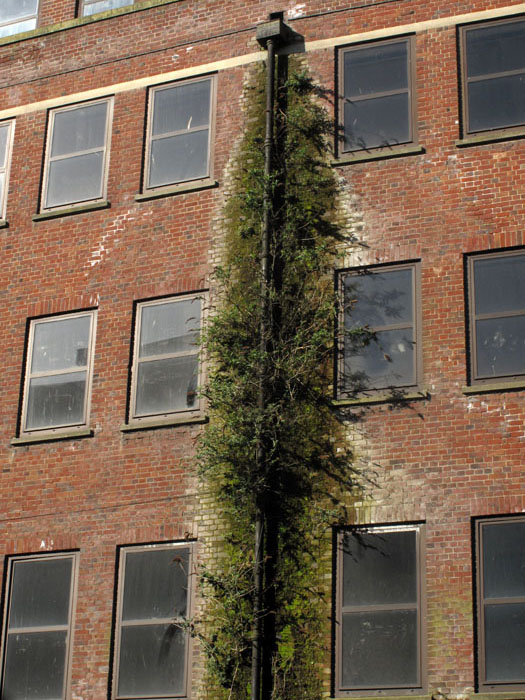
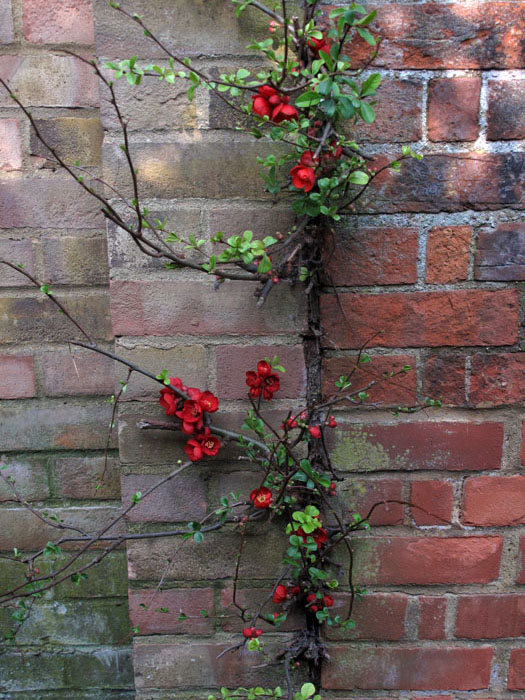
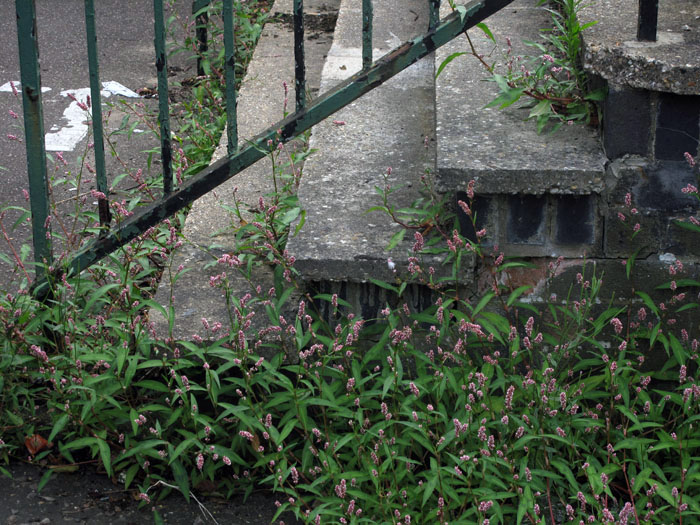
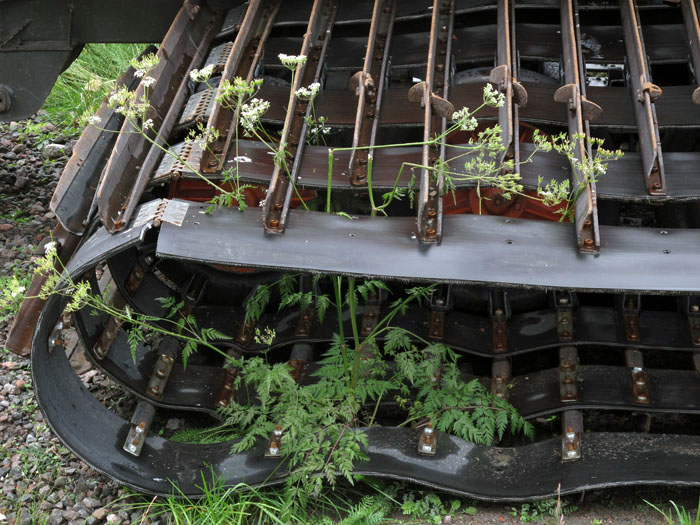
The German philosopher and literary critic Walter Benjamin referred to the unwitting psychogeographical practices of the urban flâneur as that of ‘botanising the asphalt’: a way of experiencing the city as a repository of collective memory by means of a dérive. For Benjamin, the landscape in question was the Paris of his Arcades Project but what if we took this expression a little more literally and paid closer intention to both botany and tarmac? Do the weeds themselves have no tale to tell? After all, a country road with grass growing in the middle is a common rural trope that speaks of lonely byways and car-shunned back roads. Do the plants that find a foothold in the neglected marginalia of city streets not have as much to tell us as a cacophony of road signs or the ciphers of graffiti?

In UK cities, hollyhocks, buddleia, sycamores and ink cap mushrooms all manage to find footholds in the unlikeliest of places, in the latter case even breaking through the asphalt like a Sci-fi horror, as if tarmac and gravel were its life blood. Some weeds – often alien interlopers – flourish best in the improbable niches of foot-worn pavements and industrial brickwork. They remind us with nose-thumbing disdain that we are disposable as a species and in the event of a hastily pressed nuclear button, a manmade climate crisis or inevitable decline brought about by unflinching hubris, it is they that will thrive and not us.

The photos above were taken in Norwich and London, UK and Abisko, Sweden.

Savamala, Belgrade

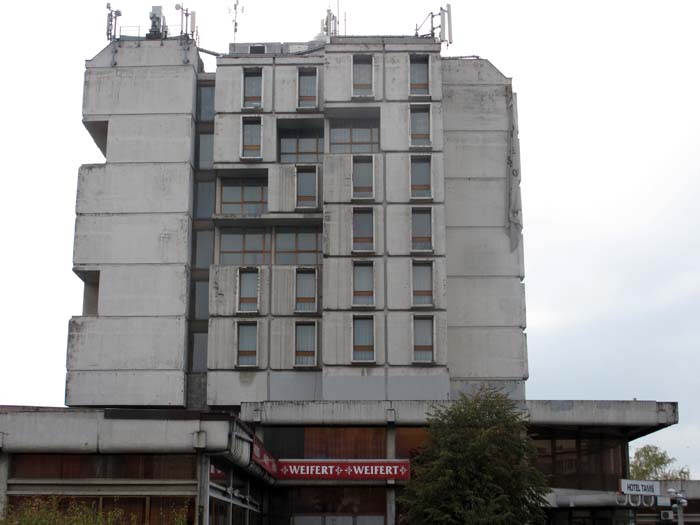
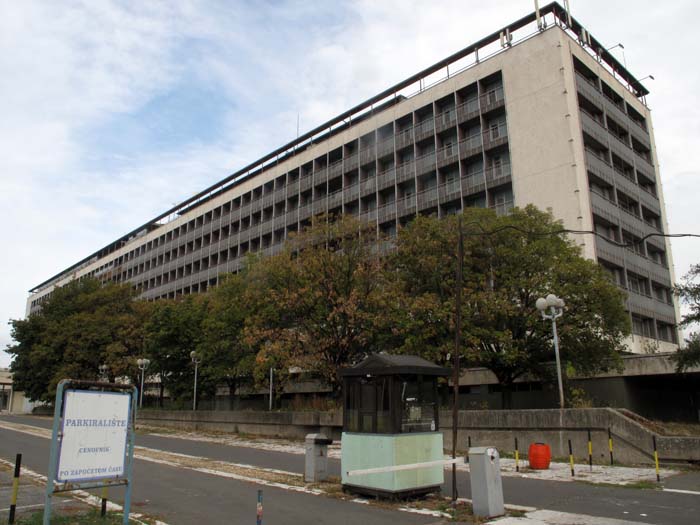
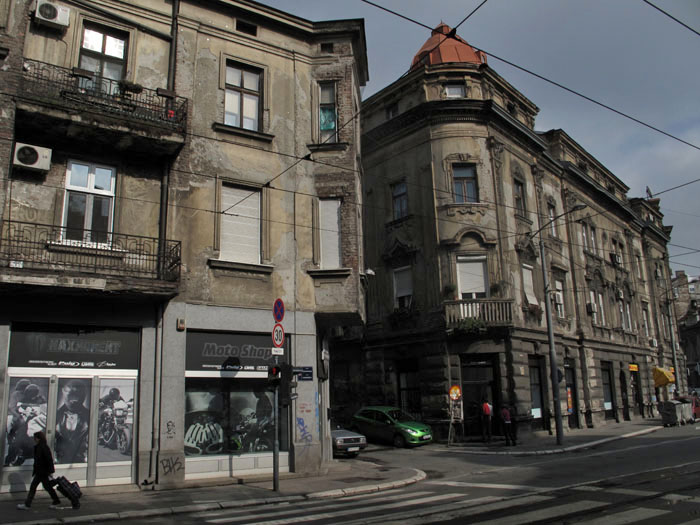
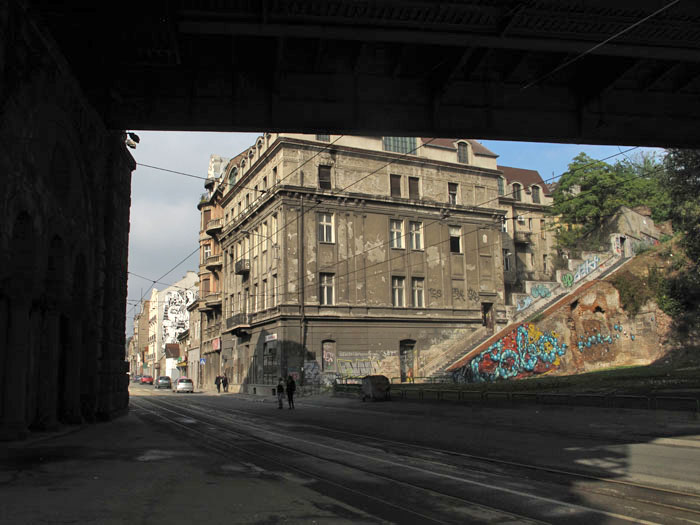
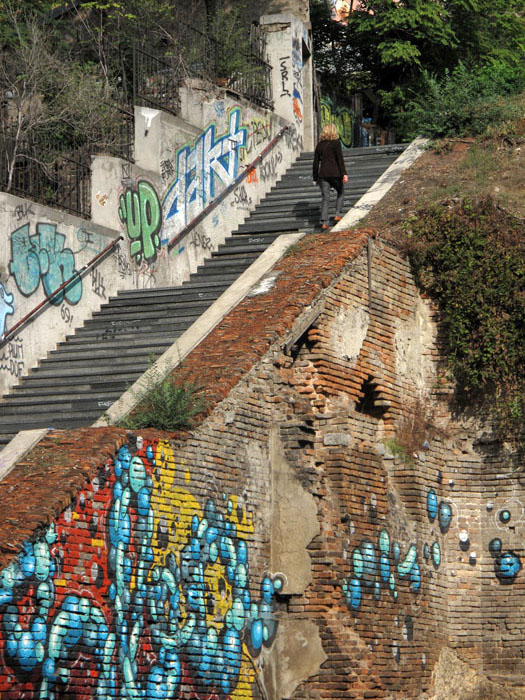
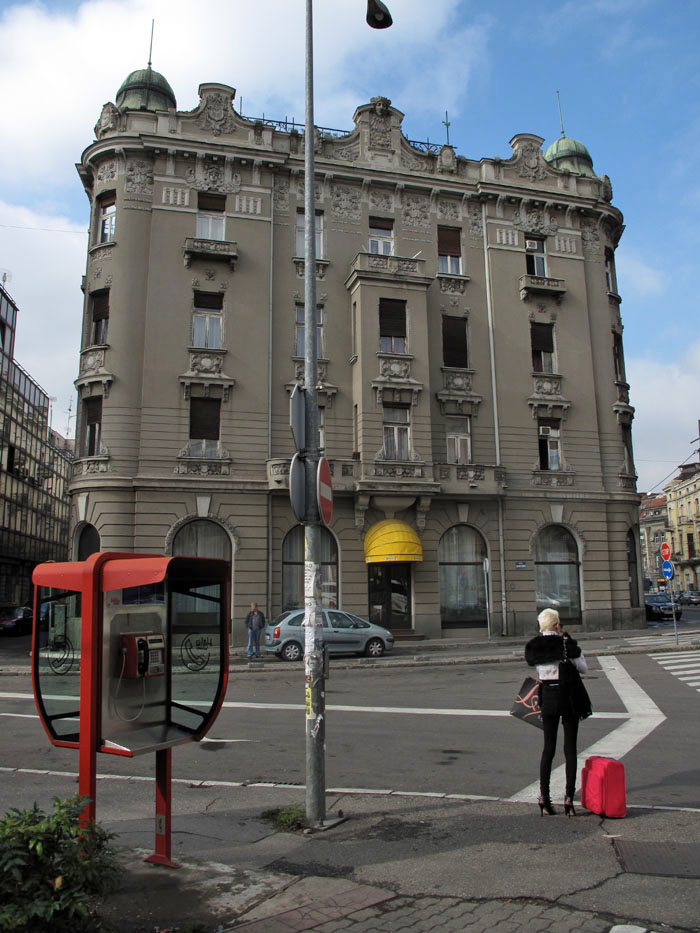
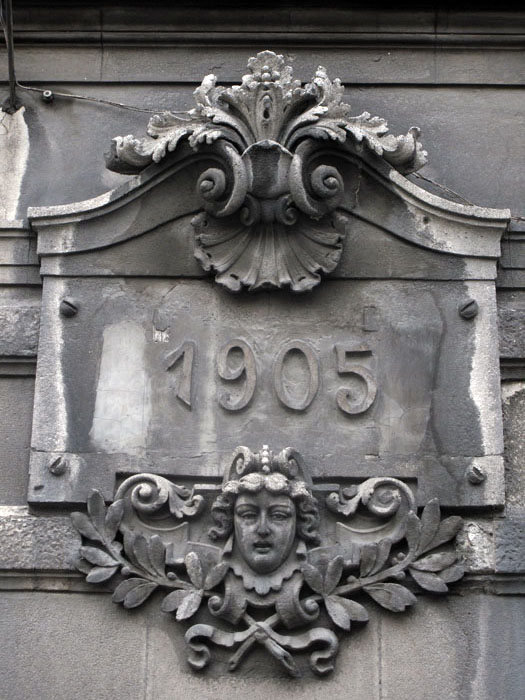
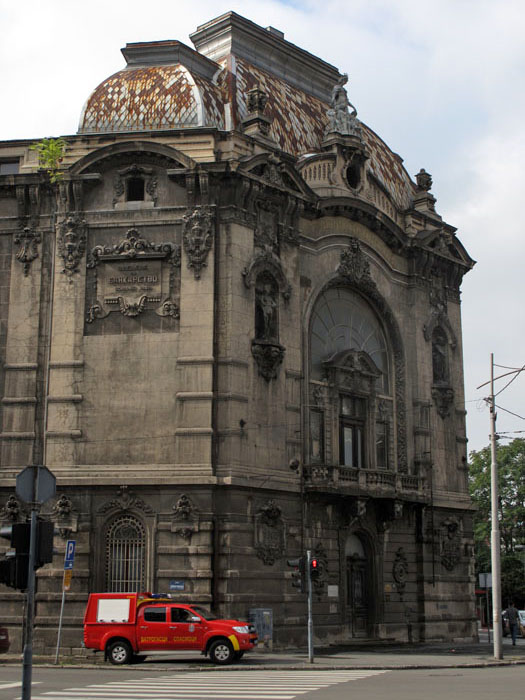
I have just returned from Belgrade, the Serbian capital, where I have been doing research for the fourth edition of my Bradt Serbia guide that will be published next summer sometime. Belgrade never was the white city that its name (Beo = white, grad = city) suggests but some parts are certainly more grey than others. One such ‘grey area’ is the Savamala district that lies along the traffic-choked thoroughfare of Karadjordjeva close to the railway station and River Sava port. Heavy traffic, air pollution and decades of neglect have seen to it that, at first glance at least, this would appear to be one of the more down at heel neighbourhoods in the city. A closer look, though, reveals a wealth of wonderful, if slightly crumbling, architecture in Secessionist style.

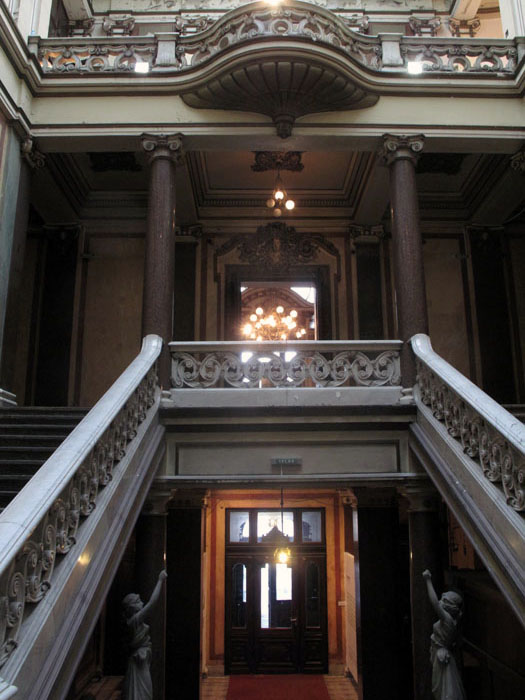
The best of all the buildings here, albeit in poor shape these days, is the Geozavod building that started life as an Austro-Hungarian stock exchange before later becoming Yugoslavia’s State Geological Institute. Normally it is impossible to get inside as the building is considered to be unsafe but as it has been used to house this year’s 53rd October Art Salon I managed to gain access thanks to my artist friend Ivana.

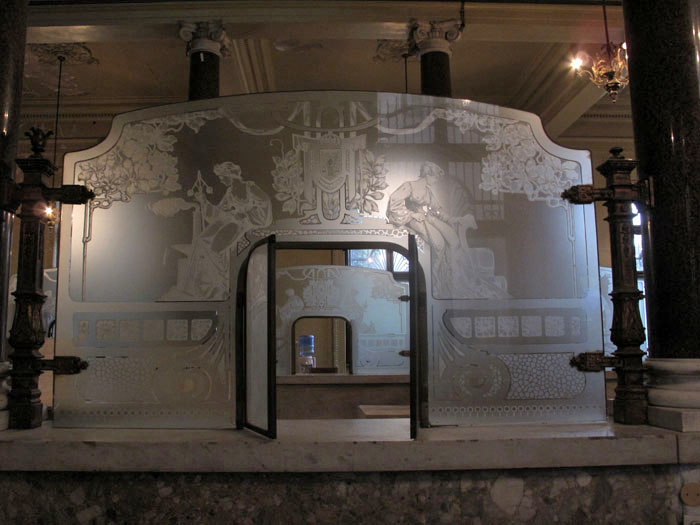
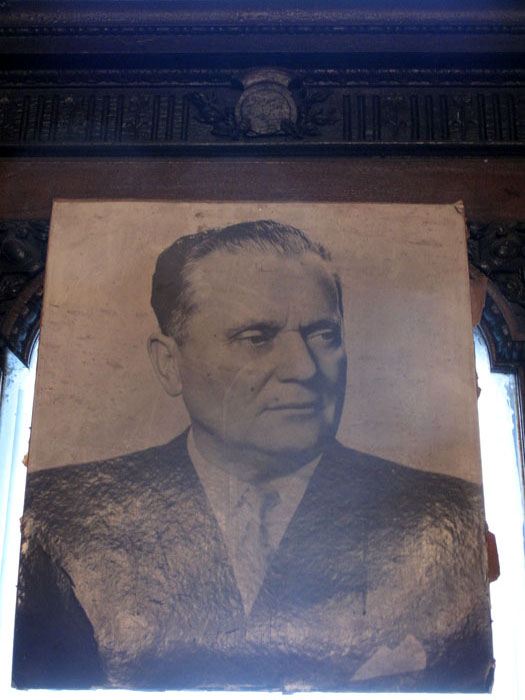
Evidence of the building’s original use can still be seen on the ground floor, where as well as solid German-made safes, the exchange counters are still in place, their  marble and finely engraved glass pristinely preserved. Elsewhere a broken clock and cupboards filled with dusty tomes tell of its time as a geological institute. A portrait of Tito adds to the feel of a vanished world -the once powerful and influential nation that was Yugoslavia.

Jezero to Jajce

Incompetence can have its benefits, it can even sometimes lead to adventure – that is my experience. A simple small error or misunderstanding can lead the way to the unexpected: an experience that perhaps you did not plan for but which you are grateful for in hindsight. This is how I came to walk from Jezero to Jajce in central Bosnia, from the Republika Srpska  (RS) to the Bosnian Federation.

In Jajce I had enquired at the bus station about transport to the nearby Pliva Lakes. I used the Serbian/Bosnian/Croat word for lake, ‘jezero’, and was sold a ticket for a bus that was leaving almost straight away. Getting on the bus, I also checked with the driver – I wanted to go to ‘Jezero’. Sure, no problem.

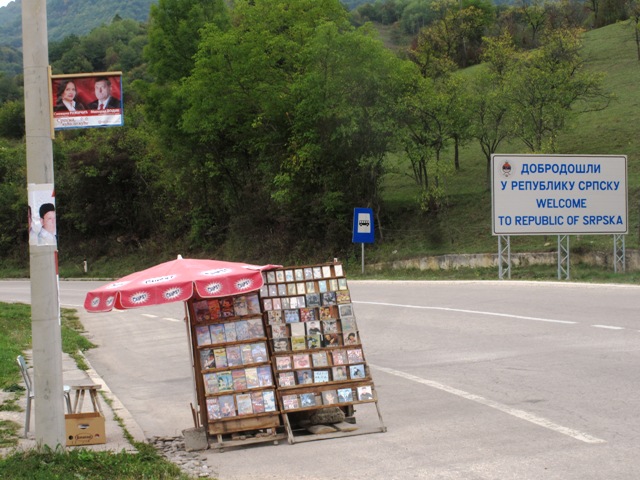
We set off out of town and very soon a large body of water became visible through the trees beneath the road. After a while the lake petered out and we followed a river along a narrow gorge. By this stage it was clear that we had already travelled considerably further than the five kilometres I had been told it would be. I mentioned this to the driver but he just motioned that ‘Jezero’ lay a little further on. A few minutes later, a large sign at the roadside announced in English and Serbian Cyrillic, WELCOME TO THE REPUBLIC OF SRPSKA and then, shortly after, a town sign that simply said JEZERO. Then it dawned on me what had happened – in these parts ‘Jezero’ was not just some generic geographical feature but the name of a small town, although calling a town ‘lake’ when it is not actually next to one seemed odd to me.

Stepping down from the bus, a road sign pointing back the way we had just come announced that Jajce was 12 kilometres distant. There was nothing else to but to start walking.

Passing a busy café-bar full of men drinking Jelen beer and a Bosnian Serb policeman who eyed me suspiciously I retraced my steps eastwards along the road. At least the road was quiet, with only an occasional lorry or speeding car to break the silence every few minutes or so. Back at the sign that announced the RS border were a handful of roadside stalls selling cut-price CDs and DVDs, and even tape cassettes with unreadable sun-bleached covers. Why the stalls had set up here was a mystery. Was it some sort of legal loophole, free-trading in the no man’s land that lay between the RS and the Federation, or does some sort of psychogeographical phenomena exist in which motorists entering the Republika Srpska develop a sudden unexplained hankering for Ceca ’Live in Concert’ and Turbo-folk CDs?

The road back to Jajce followed the river closely, steep wooded slopes rising to a high ridge on the opposite bank. Like much of central Bosnia, it was a landscape of prodigious beauty – lush, green and bursting with bucolic bountifulness – a countryside so gorgeous that the notion of any sort of violent conflict ever taking place against such an exquisite backdrop seemed unlikely, almost impossible. But appearances can be deceptive –this was not only Bosnia but a region that straddled one of the country’s fragile ethno-political fault-lines.

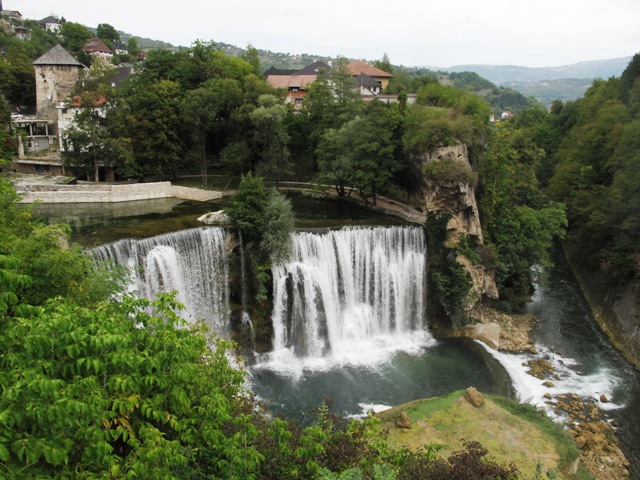
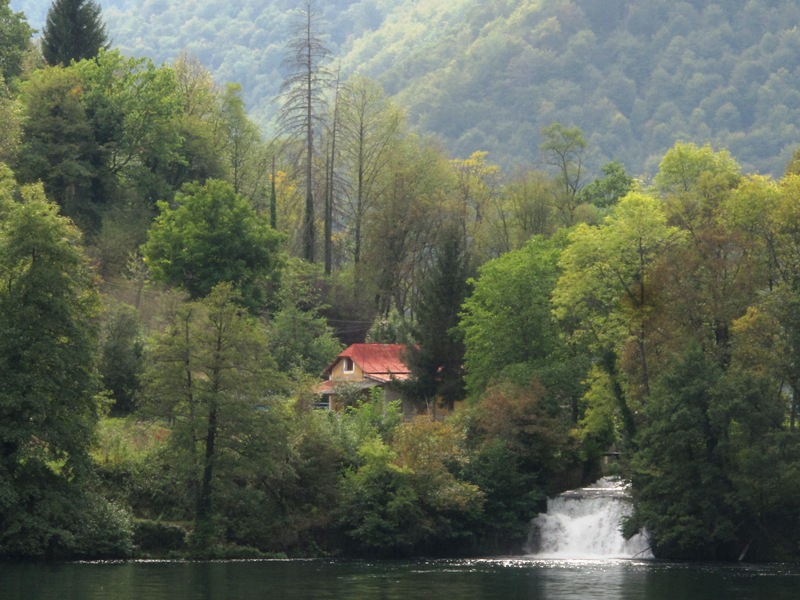
An hour’s brisk walk brought me to the edge of the lake close to where a large abandoned glass building rose above trees at the roadside – once a fancy restaurant with a panoramic view perhaps? Now it was unloved with shattered windows and rampant weeds colonising its stairway. From here a track lead away from the road to follow the lake shore and then a series of weirs until the separate channels eventually converged to revert back into a river once more. It was along this stretch that a picture-perfect cluster of small wooden water mills stood, lovingly preserved as quaint rustic heritage.

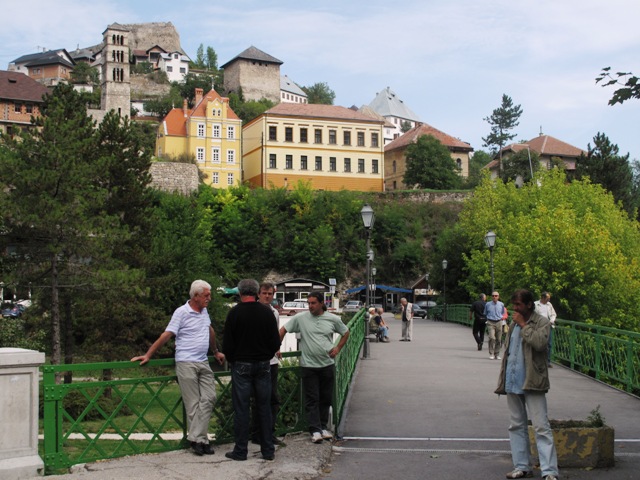
Venturing a little further east, the main road became visible once more high above the river. The track soon passed directly underneath it and little by little the steep-pitched roofs of Jajce started to reveal themselves on the hillside ahead, although, as yet, there was no sign of the town’s fortress or its famous waterfall.

Jajce always was Bosnia’s poster girl. Quite literally: the town’s famous waterfall appears on numerous tourist posters and did so even in the days of package-holiday Yugoslavia back in the 1970s. But this western approach to the town revealed a side of Jajce’s history that does not appear in conventional tourist literature. Walking through the town’s outskirts I passed the ruined shells of houses and long-abandoned orchards, while bullet-scarred walls provied further evidence of recent conflict if ever there was any doubt. This, I suspected, was the part of town where Jajce’s Serb population probably used to reside. These days some of them no doubt live just up the road, across the RS border in Jezero. This is just inference on my part but the reality is what was once a town with a mixed population of Serbs, Muslims and Croats is now overwhelmingly Croat and Muslim. Nearly every town in Bosnia has a similar tale to tell, although the demographic changes vary depending on whoever had the upper hand in a three-sided ‘ethnic cleansing’ war of attrition. Often this was the Serbs but not always.

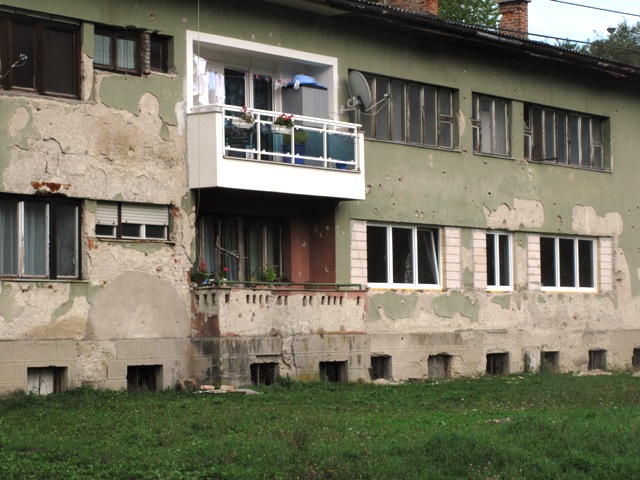
A positive note though: in one battle-scarred apartment block on Jajce’s outskirts someone had clearly recently moved back in, as a brightly painted new balcony complete with satellite dish now stands out defiantly from the bullet-wracked front wall. Bosnia needs its optimists.

Lofoten – from Ã… to Bø

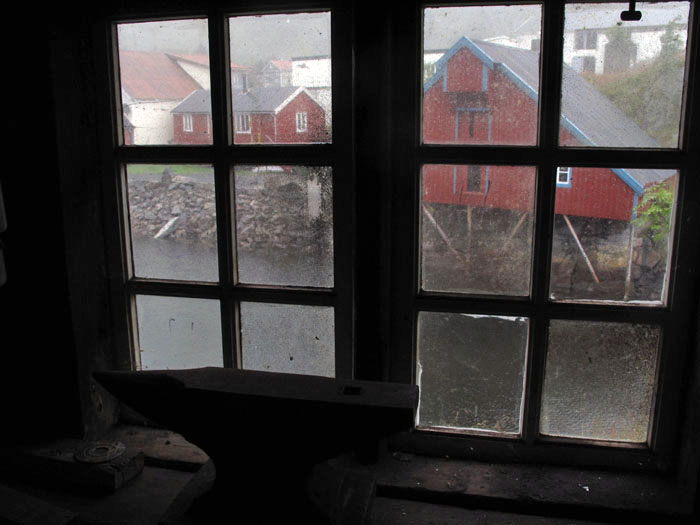
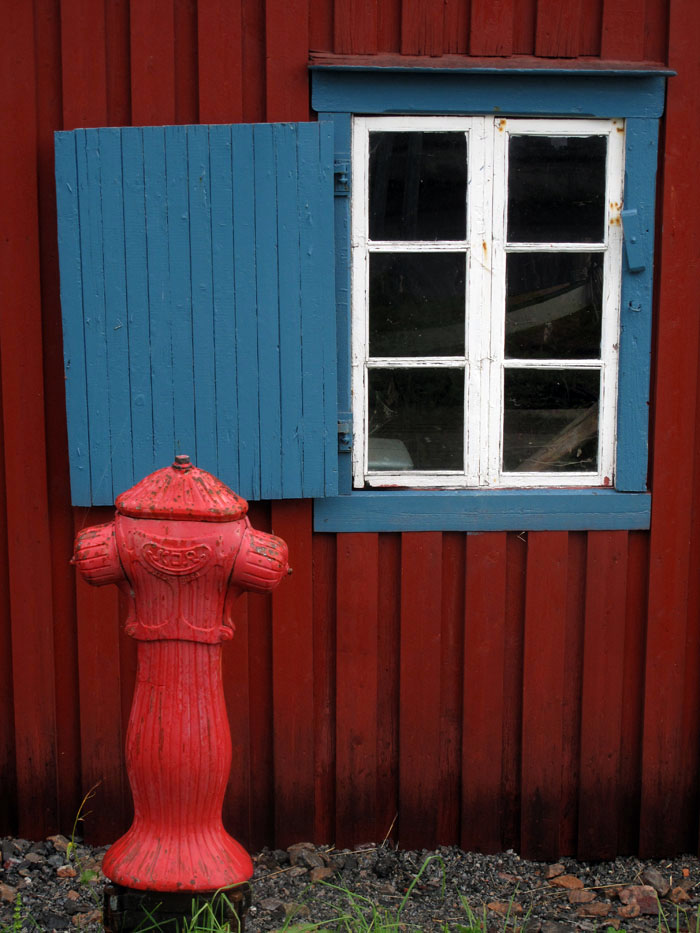
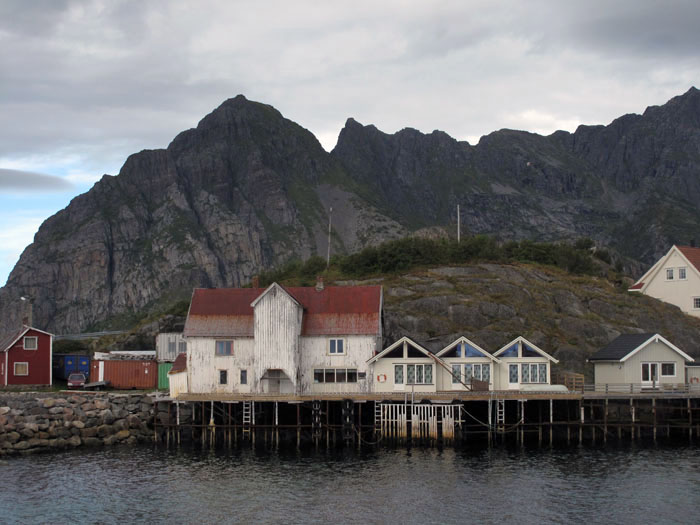
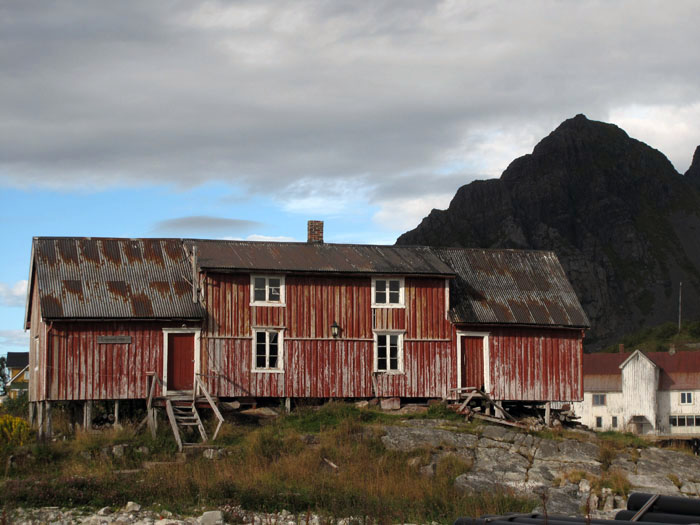
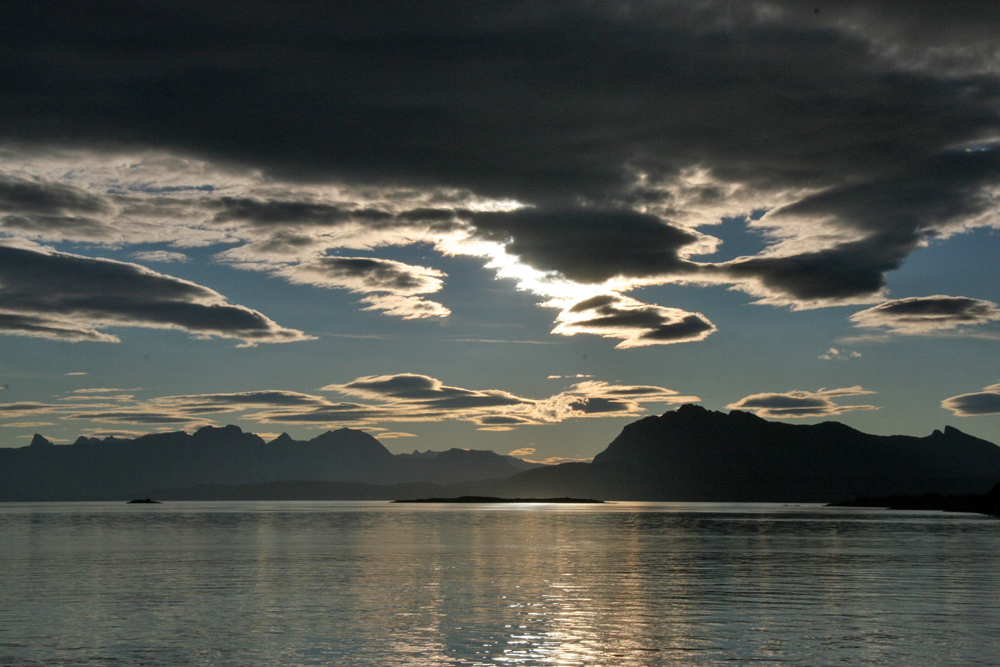
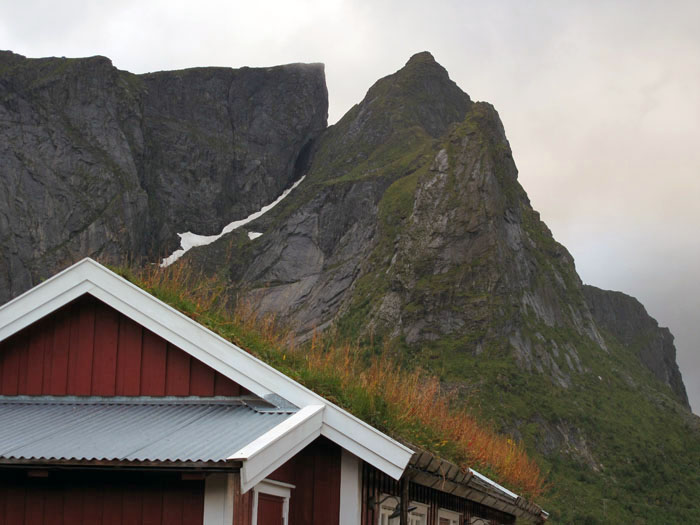
North Norway’s Lofoten Islands are famous for their beauty. Not for nothing have these islands been sometimes described as the most beautiful in the world. Even on the dullest of days, the landscape here is breathtaking. Vertiginous ridges of ancient granite and gneiss emerge almost directly from the sea like sharpened teeth and, in those rare places where the land is flat enough to have allowed a thin layer of soil to develop, a velvety carpet of grass clings like green baize. Around the islands’ coastline, homely clusters of rorbuer – wooden fishermen’s cottages painted the colour of ox blood – project over the sea on platforms.

It may seem counter intuitive given the rawness of nature here but this has long been a peopled landscape, its folk drawn by the bounty of cod fishing grounds that lie not so very far offshore. Cod remains an industry here, although these days it is less the catching of the fish as much as the processing of them. As evidence, each village displays an array of the fish drying racks that are used in winter to salt and dry the cod in order to produce the bacalao much loved by the Portuguese, Spanish and Italians.

One of Lofoten’s most iconic locations lies at the far southern end of the archipelago, a fishing hamlet whose name is spelled using just a single Norwegian letter: Å. Travelling by bus south to Å from the Lofoten capital Svolvær, you might also catch a glimpse of a road sign that points away from the main road to a village called Bø. So, perhaps only in Lofoten is it possible to literally travel from A (or rather, Å) to B(ø)?

Å may sound like a disappointment (the Norwegian letter is pronounced ‘oh!’) but the village is anything but, even though on the very wet end-of-season day that we visit we find everything closed apart from the museum. In Å, ‘everything’ simply refers to a bakery, restaurant and gift shop – the village is a quiet place at the best of times, apart from in peak season when the occasional coach-load of tourists descends on the village to visit the museum and take a few snaps before sampling salt cod for lunch.

Ã… may be Lofoten’s poster girl but there are ravishing villages around every turn; like Reine, where we stayed for a couple of nights, and Henningsvær at the end of a rocky isthmus close to Svolvær. Other settlements like Hamnøy, Ramberg and KabelvÃ¥g, passed through swiftly on our bus journeys in the islands, looked to be equally alluring from the mind’s eye snapshot that a window view affords.

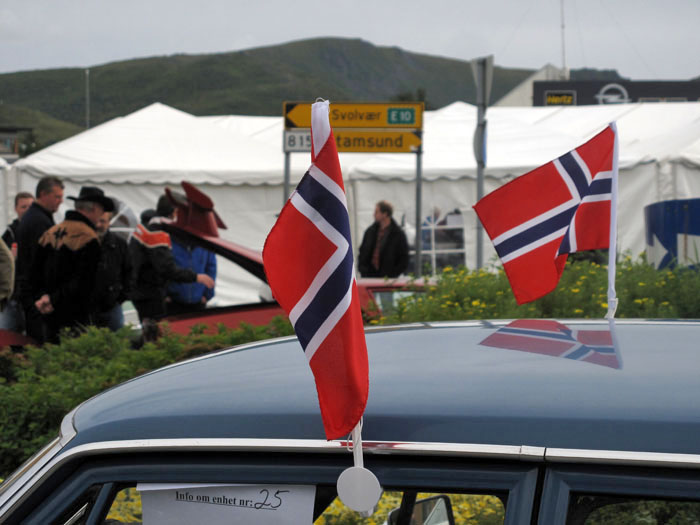
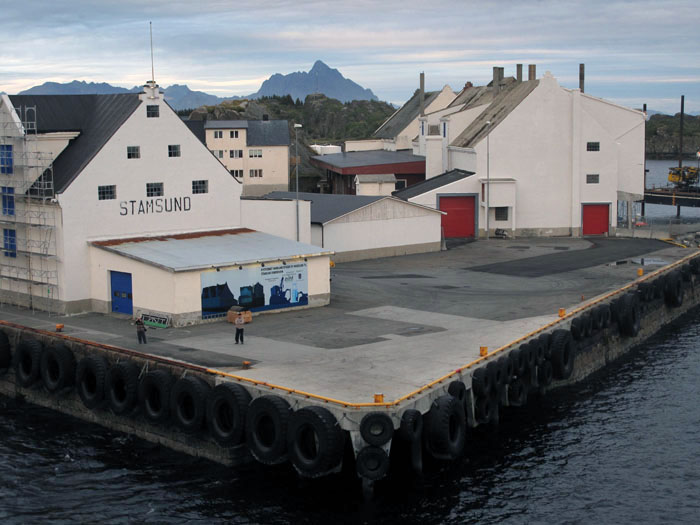
Such is the numinous splendour of the Lofoten landscape that accidently stumbling on the quotidian comes almost as a relief, a chance to draw breath and rest weary eyes from  relentless beauty. Passing through Leknes, a refreshingly ordinary market town, the place was busy with its annual Western festival – a chance for townsfolk to dress up in cowboy hats, drink plenty of Norwegian beer (which must be brewed from unicorn tears given its price) and survey the classic American cars that had mysteriously assembled on its streets overnight. Elsewhere, the small port of Stamsund seemed just a little less prosperous than its neighbours, with just the slightest hint of decay – the perfect place to take our leave of the islands by catching the Hurtigruten ferry service north.

North of Narvik

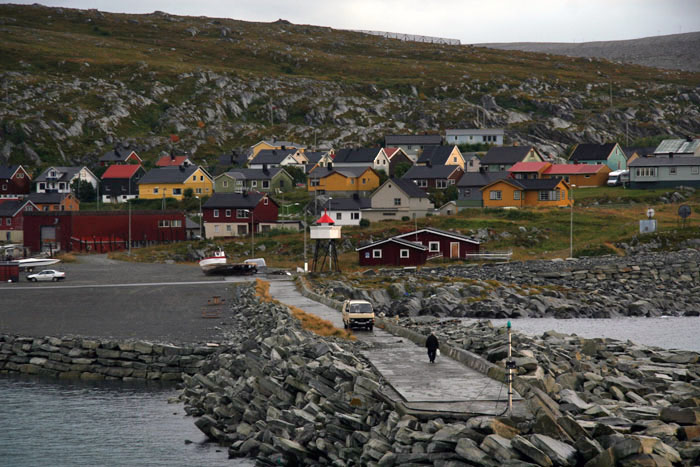
Havøysund, Finnmark

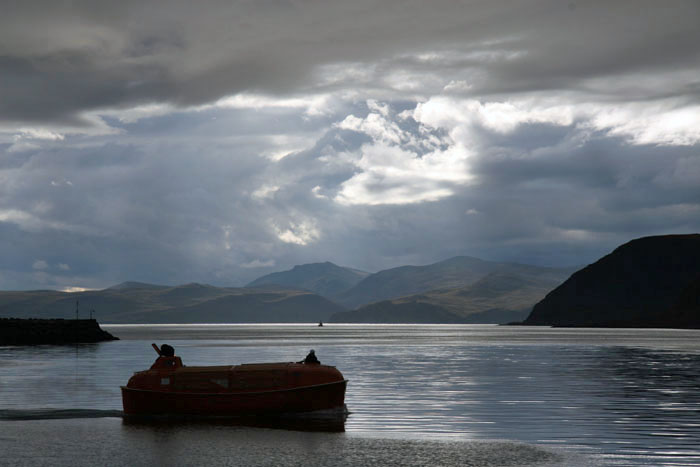
This post celebrates Europe’s most northerly reaches. I have just returned from a Scandinavian trip where I travelled between Stockholm, Sweden and Kirkenes close to the Russian and Finnish borders in Norway’s far north. Most of the travel, which was by means of train, bus and coastal Hurtigruten boat, was within the Arctic circle. My journey took in wonderful places like the magical Lofoten Islands and the so-called ‘Arctic Capital’, Tromsø, but most affecting were the small coastal communities that lay isolated yet self-contained and unperturbed along the coast of Finnmark in Norway’s most northerly region. I will say more of these in future posts but, for now, here is a selection of fairly random images from Arctic Norway.

Harstad, Vesterålen

Kjøllefjord, Finnmark

Honningsvåg, Finnmark

Reine, Moskenes, Lofoten

Å, Moskenes, LofotenStamsund, Vestvågøy, Lofoten

Close to Mehamn, 71°N

Baconsthorpe

The ruined castle at Baconsthorpe in north Norfolk can hardly be described as ‘hidden’ but it does lie nicely tucked away from the limelight, located at the end of a dusty farm track at some distance from the main road. Strictly speaking, it is not really a castle, more a fortified manor house, but with a large moat, thick flint walls and a no-nonsense gatehouse, unlawful entry by unwelcome visitors would certainly not have been easy.

To reach Baconsthorpe Castle  you can drive right up to the door from the village of the same name.  The site is managed by English Heritage and there is no charge for car park or entry. Better still, you could walk from Bodham, the village to the north that straddles the busy Holt to Cromer road. Certainly, to follow the footpath up and down the shallow valley before skirting Baconsthorpe Wood, makes arrival here a little more special. With luck, as the castle comes into view after leaving the wood you will be greeted by some of the sleek chestnut horses that graze in the meadow beside it.

 Next door to the gatehouse stands a group of old farm buildings that have seen better days — no doubt a bustling, energetic place before the middle of the last century, now their only role appears to be that of the storage of farm machinery. Within the gate there’s a compound and a bridge across to the inner court.  Here, to the east, the moat widens to become a large pond –  known as a ‘mere’ in these parts – which provides luxury accommodation for the ducks that thrive on the sandwich crumbs left by picnicking visitors. Swallows swoop low and fast over the water to grab unsuspecting flies but there’s little sound other than a summery rustle of leaves, the narcotic coo of pigeons and, during school holidays, the gleeful cries of children here with their parents.

What is of particular interest here is not so much what remains of the castle but what has happened to those parts that are absent. Certainly, it is not just the effect of the elements. Built as a 15th-century manor house by the locally powerful Heydon family, the inner gatehouse and fortified house were added at the time of the Wars of the Roses. Some of the buildings were converted into a textile factory at the height of Norfolk’s  profitable wool trade in the Tudor years. The outer gateway came in the Elizabethan period.

The English Civil War brought an economic downturn to the Heydon family fortune (Sir John Heydon commanded Charles I’s artillery, which did not endear him to the  Parliamentarians). The castle was seized by Roundheads and occupied for a while before eventually being sold back to the Heydon family. Encumbered by accumulated debt, Sir John Heydon was obliged to demolish many of the buildings to sell as architectural salvage. Many of the stones reportedly found new purpose in the walls of nearby Felbrigg Hall. The stained glass with the Heydon family crests were removed and installed in Baconsthorpe’s St Mary’s Church.

The voices of wealthy landowners, shepherds, textile workers and Roundhead soldiers would all once have echoed here within the castle’s sturdy walls. Now, apart from the subdued utterances of occasional visitors, they stand silent: mute witnesses to history; flint and brick repositories of the past.

A Bend of the Coast

Late July. It is the hottest day of the year and recent deluges are quickly forgotten as the earth bakes beneath a cloudless sky. North Norfolk’s pristine air glows with the sharp blue light that seems only to be found close to the coast – a light that bears the reflected promise of the sea just beyond. The notion is to celebrate my birthday with a circular walk that takes in the curve of the county at its northwest extremity: that charmed stretch of sand, marsh and hinterland chalk that curves west to south between Holme-next-the-Sea and Hunstanton.

I set out from Old Hunstanton at St Mary’s Church on the fringe of the Le Strange estate, a curious feudal relic of Norman patronage that historically even has possession over the seashore as far as Holme-next-the-Sea, the incumbent bearing the complimentary title of ‘Lord High Admiral of the Wash’ and the limit of the estate boundary traditionally measured by a spear thrown into the Wash from horseback at low tide.  I circumnavigate the dense woodland of Hunstanton Park before heading south along a track marked by a sign that calls it Lovers’ Lane. But there are no lovers today, just me, and it is not really a lane as we tend to know them either, more a greenway enclosed by hedges and tall stands of nettles, one of the less pleasant by-products (along with more than usually plentiful mosquitoes) of this unseasonably wet summer.

A mile or so later, following a short interlude along tractor-rutted farm-tracks, I climb gently up to a point where I can see the evocative ruin of St Andrew’s Chapel across the fields. Dropping down again, I soon reach the eastern end of Ringstead Downs. A large chalk-built barn and stark white cliff face serve as a reminder that this corner of the county is where the underlying chalk comes right to the surface. This, terminating in the striated chalk and carstone cliffs of Old Hunstanton, is the northern end of a seam of chalk that cuts diagonally southwest to northeast through southern England – the geological marker of the miscellany of paths that once constituted the Icknield Way. Chalk generally brings a gift of rich flora and Ringstead Downs, a shallow valley with the scarp slope on its northern side, does not disappoint. Thyme, eyebright, vervain, centaury and the charmingly named squinancywort are all to be found here: jewel-like miniatures that embroider the grass with pointillist spikes of colour. It’s humid and warm – a chalk valley microclimate; microscopic storm flies find their way through hair to scalp. There’s no breeze and little extraneous noise other than the summery coo of pigeons in the trees and the well-nourished buzz of satiated bees. Butterflies sip nectar; a buzzard swoops before flying off into the woods that flank the down’s eastern limit; a group of peahens – hardly native – screech alarmingly as they waddle for cover in the trees.

Ringstead village, a roadside strip of neat carstone and chalk cottages, is almost as silent apart from a few muffled voices emanating from the pub garden and the sudden scream of a dozen swifts plundering the sky overhead. From here, it is a plod along quiet country roads to reach the coast. Barely a car passes, just a man on a bicycle with panniers who bids me ‘Good afternoon’. Afternoon? Already? The road runs mostly parallel to the coastline, the sea out of sight but with long views over the valley to the south with its harvested cornfields and sparse green hedgerows.

This corner of Norfolk flaunts its geology quietly but confidently: the gently contoured topography, the chalk and sandstone of village vernacular. There are more discrete clues to a glacial past too: just below the road lies Bluestone Farm, a name undoubtedly adopted because of the presence of glacial erratics (‘blue stones’) hereabouts – northern rocks carried here by ice and unceremoniously dumped like strangers in a strange land.

As the road climbs to its highest point – a lofty (for Norfolk) 50 metres – the coast comes abruptly  into sight: a blue salt-haze with a large wind farm on the horizon, turbines spinning slowly as if doing their bit to keep the world turning. Thornham village is but a short walk downhill. Once considered to be a ‘smuggling village’, the village is now largely a smart enclave of expensive 4x4s and wealthy folk ‘up from London’. Thornham is undeniably attractive: set just back from the coast, separated from it by bird-rich marshes, its brown carstone cottages look as if they are made from gingerbread, good enough to eat.

The coastal path crosses the marshes to reach a staithe before following the line of sea defences all the way west to Holme-next-the-Sea. At Thornham Staithe, and later at Holme, the busy car park exerts a curious gravitational effect that seems to prevent the majority of its visitors ever breaking much beyond its orbit: home, car, car park, beach, picnic, swim, car park, car, home. Nothing wrong with that of course, it allows the rest of us  to have the paths to ourselves most of the time. A boarded walkway leads over the top of the dunes to reach the beach at Holme-next-the-Sea, then briefly plummets through the deep shade of pines at the bird reserve before continuing between beach and marshes as the coast tips southwards towards Hunstanton. Pipits rise in alarm from the path in my wake; pyramidal orchids, slightly past their best, dot the sandy hollows in magenta clusters; yellow ragwort is everywhere.

Approaching Old Hunstanton the coastal path follows the line of shingle between the dunes and a golf course. The buildings of Old Hunstanton eventually become distinguishable on the cliffs ahead.  Finally, beach huts in the dunes announce the outskirts of town, where a track leads up past the Le Strange Arms Hotel to the main coast road. My coastal circuit – less a circle, more a wobbly ellipse – is complete.