Walking in Norfolk

51Ym0tIQenL__SY445_

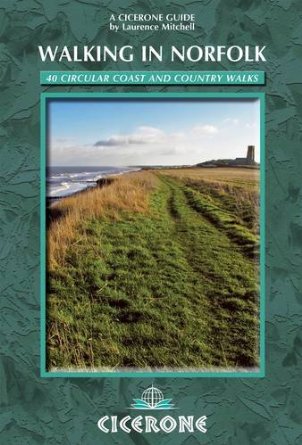
My new Cicerone walking guide, Walking in Norfolk is going to be published in a week or two’s time and so here is a small taster of what to expect. The book contains 40 circular walks in all, and covers all parts of the county from northeast Norfolk to the Waveney Valley to the Fens.

Here’s a bit from the Introduction:

‘Very flat, Norfolk’, asserts Amanda in Noël Coward’s Private Lives, reflecting pretty much the commonly held view of the county: a place, with attitude perhaps (think of its heroes – Horatio Nelson, Thomas Paine, Delia Smith, Stephen Fry…Alan Partridge), but certainly not with altitude. The stereotyped view, although misleading, is understandable enough, as most people have some sort of image of Norfolk even if they have never visited the county. Many will have seen the vast sandy expanse of North Norfolk’s Holkham Beach in films like Shakespeare in Love or TV programmes like Stephen Fry’s Kingdom. Many more will think of boating holidays on the Norfolk Broads, or make associations with the low-lying Fenland region of the far west of the county: aspects of Norfolk, certainly, but not the full picture by any means.

…and here’s a snippet from Walk 10: Burgh St Peter and ‘The Triangle’:

039‘The Triangle’ is a local name that was sometimes used to refer to the parishes of Aldeby, Wheatacre and Burgh St Peter in southeast Norfolk. Bound on two sides by a bend of the River Waveney and on the other by the now-dismantled Beccles to Great Yarmouth railway, the triangle of land so defined has something of the feel of an island to it. There is no through road here, just a quiet single-track lane that links the farmsteads on the marshland edge. To the north, east and south a large flat area of marshes lies between the relatively high land of ‘The Triangle’ and the river itself.

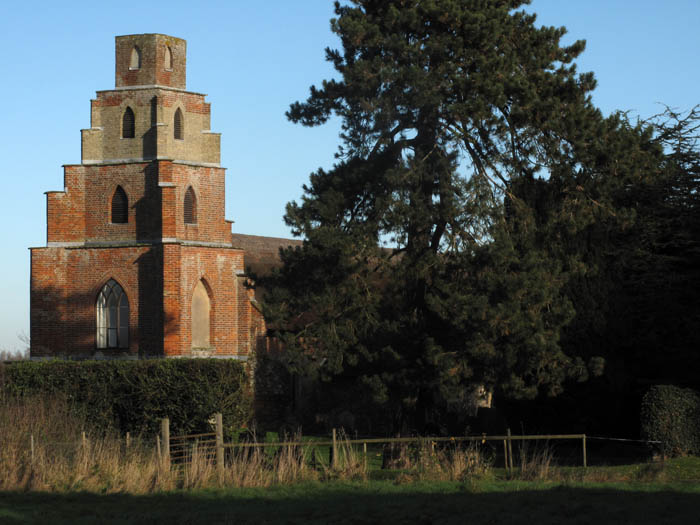
041Burgh St Peter’s Church of St Mary the Virgin is one of Norfolk’s oddest churches as its tower is in the form of a five-section ziggurat (or, as some have fancied, a collapsible square telescope). The body of the church dates from the 13th century but the tower is an 18th-century addition, supposedly inspired by the Italian travels of William Boycott, the rector’s son. A dynasty of Boycotts served the church for a continuous period of 135 years and Charles Cunningham Boycott, the son of the second Boycott rector, gave the term ‘boycott’ to the English language when he behaved badly over absentee rents in Ireland and was socially ostracised as a result.

Mappa Mundi – but whither Norwich?

Hereford_mappa_mundi_14th_cent_repro_IMG_3895[1]

This summer I visited Hereford for the first time in decades. I have long wanted to see the famous Mappa Mundi at the cathedral there and so this was an opportunity. The ancient map, along with the almost as well-known chained library, is on display in a special exhibition area beside the cloisters. With an entrance fee to pay, the map is clearly a nice little earner for Hereford Cathedral, as is the gift shop where visitors can purchase souvenir posters, books, and fridge magnets – ‘mappa money’ perhaps? It is all the more surprising then to learn that not so very long ago Hereford Cathedral was considering selling its precious artefact to raise cash and the map was saved at the eleventh hour by generous donations from the National Heritage Memorial Fund and long-time Anglophile John Paul Getty Jr.

The Mappa Mundi was made by a man called Richard de Haldingham e de Lafford from Lincolnshire, whose real name was Richard de Bello, a prebendery (senior member of clergy) of Lafford (Sleaford) in the diocese of Lincoln Cathedral. Richard was promoted to a stall in Hereford Cathedral around the end of the 13th century. The map is thought to have been drawn sometime between 1276 and 1290.

The map is certainly a wondrous thing – a single piece of vellum measuring 1.58 x 1.33 metres and tapering towards the top like an upside down shield. It depicts the world that was known in the late 13th century, a world of fact and fiction, of the familiar and fantastical, of uncanny accuracy and cartographic howlers. More than anything it is a map that superimposes the oceans and landmasses of the known world with the fantasmagorical topography of the dark medieval psyche. At the centre, of course, is Jerusalem surrounded by the continents of the Old World. Asia, the orient, lies at the top, Europe at bottom left hand corner and Africa to the right of this. Superimposed on this are drawings of famous cities and towns, Biblical events and personalities like Noah and his family at sea in the Ark, and figures from mythology like the Golden Fleece and the Cretan labyrinth. There are images of peoples of the world as well as plants, animals and disturbing weird creatures that belong to ‘Here be Dragons’ territory like Gangines, Grifones and the Sciapod, who shelters himself from the sun by the shade of a single enormous foot.

The British Isles lie at the extreme lower left hand edge of the map. England and Scotland are pinched at their join to be depicted almost as separate islands. Some of the rivers – Severn, Thames, Humber – have taken on an Amazon-like width. London and Oxford are pretty well where they should be, although Durham is clearly in the wrong place, located here south of Carlisle and west of York. There’s clearly a degree of local bias at play in the drawing of the map. Lincoln, thought to be the home town of the map’s creator, is depicted as an elaborate castle that nearly equals the Tower of London in status, while the representations of Winchester and Oxford are both rather puny in terms of their relative importance at the time. Hereford is shown as you might expect, and even nearby Clee Hill (Môr Clee) looking something like a cartoon jelly, a humble bit of topography but perhaps included as a local detail in a nod to the map’s Hereford home.

Studying the map (there’s a much clearer English equivalent on the wall opposite to facilitate this) we did what I am sure most visitors do; we looked for our own city of residence, in our case Norwich. There is no sign of it. Indeed, even the bulge of East Anglia is unrepresented as if cartographically redacted like a revisionist face on a Stalin-era photograph. The map maker, a native of Lincolnshire, would surely have known of the existence of Norwich. The city was, after all, the second largest city in England at the time. With a magnificent cathedral, a Norman castle and a large city population, the city was then a far more significant urban centre than it is today. Far more important than Hereford, Gloucestershire or even York, all of which are represented on the map.

This deliberate omission seemed a mystery until I reflected on the date of the map and what was taking place around that time. In the late 13th century several violent confrontations took place between the aggrieved citizens of Norwich and the clergy incumbent at the city’s Cathedral. As a result, Norwich has the distinction of being the only English city ever to be excommunicated following a particularly bloody riot between citizens and monks in 1274. The Etheldreda Gate to the Cathedral, which still stands today, was constructed as penance by Norwich citizens. Was it this excommunication that led Richard de Bello to ignore the city and omit it from his map? After all, the map was drawn to show the creation of God not the world of Man. Norwich, excommunicated at the time, may simply have been considered insufficiently God-fearing to be included as part of His world.

This God-less tradition may have continued to some extent. The 2011 census revealed that Norwich had the highest proportion of respondents in England and Wales saying they were of ‘no religion’ – 42.5% of the population against an average of 25.1%. There again, the city, which historically is strongly non-conformist, claims to have an above average churchgoing rate, and of the 56,268 who proclaimed no religion in the census nearly 800 were Jedi Knights.
Einstein on the Heath

It’s been a long time since my last post. The main reason for this is that I have been busy working on Slow Norfolk, a new guide for Bradt that is scheduled for publication early next year. Rather than a new edition of Slow Norfolk & Suffolk, that guide will become two separate books in the future: Slow Norfolk and Slow Suffolk. Naturally, there will be a degree of cut and paste involved but, as well as a fresh look and a new emphasis – less in the way of listings, more in the way of a personal take on the county — there will be lots of new material that celebrates that which is strange, quirky and particular about the county. For a taster of the sort of thing that Slow Norfolk will contain, here’s a snippet about a certain German physicist’s brief sojourn in north Norfolk.

Einstein on the Heath

U237135ACME[1]

A couple of miles southeast of Felbrigg Hall is the village of Roughton on the Norwich to Cromer road. Although the village is unremarkable, Roughton Heath just to the north was the unlikely residence of Albert Einstein for a few weeks in 1933. The celebrated German physicist was brought here under tight security to live in a small hut on the heath after fleeing Nazi Germany. Whilst living in his modest hut Einstein continued with important work that would later be put to use developing the world’s first atomic bomb. The scientist also found time to pose for a sculpture by Jacob Epstein. It was this brief episode by the Norfolk coast that provided inspiration for Philip Glass’s opera Einstein on the Beach. A blue plaque commemorating Einstein’s short-lived residence on the heath adorns the wall of the New Inn in Roughton village. The whereabouts of the hut itself is not known.

Serbia 4

1849[1]

The new edition of my Serbia guide is published today. It’s fully updated, of course, with revised text and lots of new listings, especially for Belgrade, a city that despite considerable setbacks seems to drive itself forever onwards and upwards. Here’s a snippet from the new edition that describes a possible future development for the Serbian capital. It looks quite remarkable (although probably hugely expensive too).

A ZAHA HADID DEVELOPMENT FOR KALEMEGDAN?

A large plot of land between Kalemegdan Fortress and the Dorćol riverfront is currently awaiting development. Originally owned by Beko, a company that went bankrupt, the land has been bought by Lamda development, a Greek company that is part of a holding company with EFG Bank and EKI Petrol. The Greek company approached the studio of Zaha Hadid to come up with a project for the land and the Iraqi-British architect has come up with a stunning plan for the development: a sweeping modernist design that connects with the surrounding landscape and incorporates essential public spaces and public transition between the fortress and the riverfront. At the time of writing, the proposed project was still awaiting public review (www.beobuild.rs). The design can be seen on line at: http://www.zaha-hadid.com/architecture/beko-masterplan.

Belgrade’s not a stranger to developments that never quite get off the ground. Here’s another snippet from the Belgrade chapter of Serbia 4:

GOING UNDERGROUND – THE METRO THAT NEVER WAS

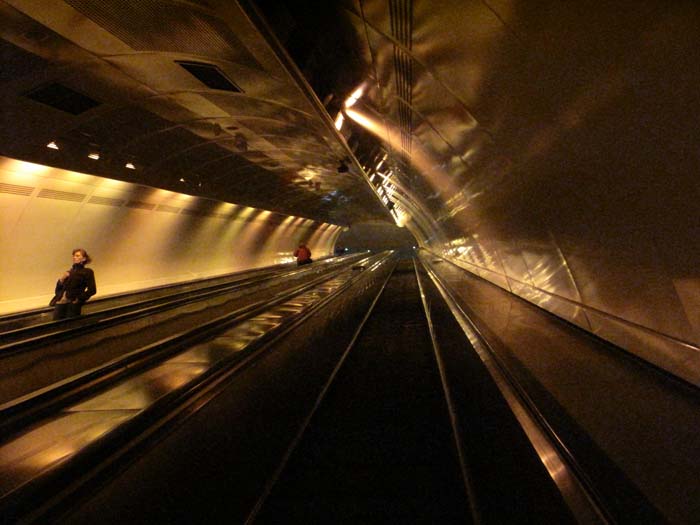
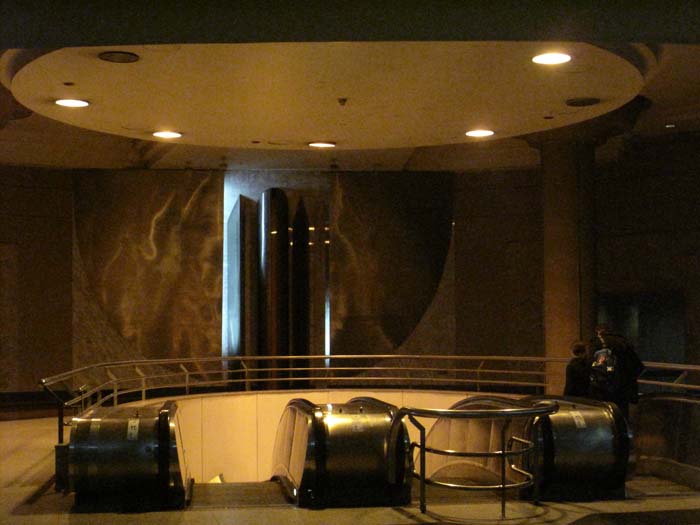
At the edge of Ćirila i Metodija Park in the city centre, under the whiskery gaze of Vuk Karadžić whose statue graces the western corner, are several entrances that lead down to what appears to be an underpass. But there is more to this than you might imagine: this is the location for the only station on Belgrade’s metro. The station, known simply as Vukov Spomenik (‘Vuk’s Statue’) was to be part of an underground system that never came to fruition, and which, as things turned out, ended up being one of the city’s biggest white elephants. It was built during the Milošević period in 1995 as the first component of what would be a comprehensive underground network but the turn of events in Serbia in the late 1990s resulted in the country having far more pressing needs than that of a highly expensive underground railway. The part that was completed is well worth seeing, even if it is a bit surreal. A number of entrances lead down to a stylish atrium in brushed steel from where escalators plummet down further to the platform. The station has since found use as a stop on the Beovoz line that plies between Zemun and Pančevo and a few shops have opened for business in the atrium.

IMG_2152

IMG_2153

Of Saints and Shipwrecks

IMG_8370

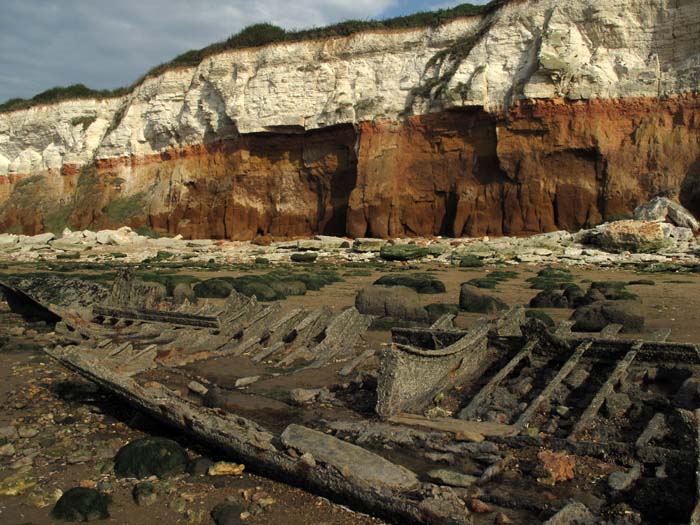
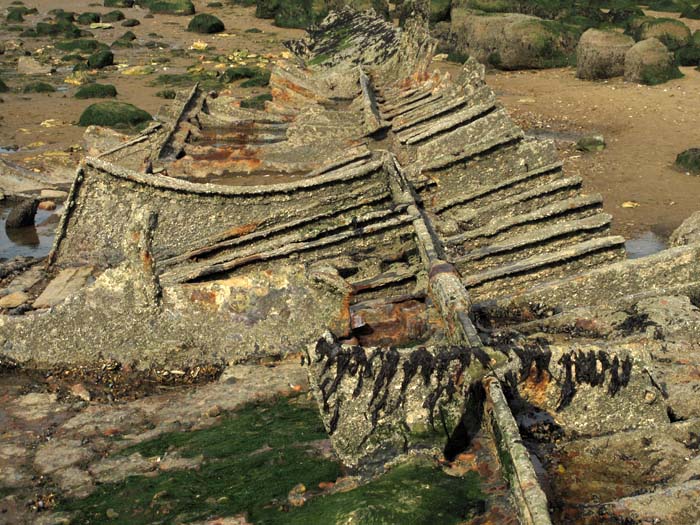
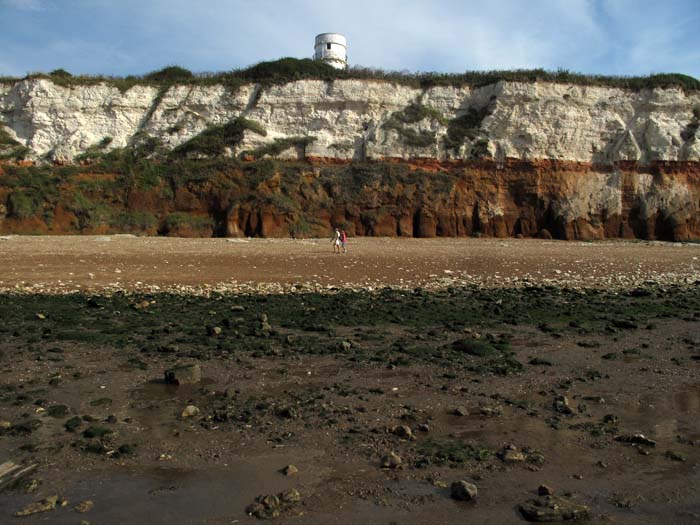
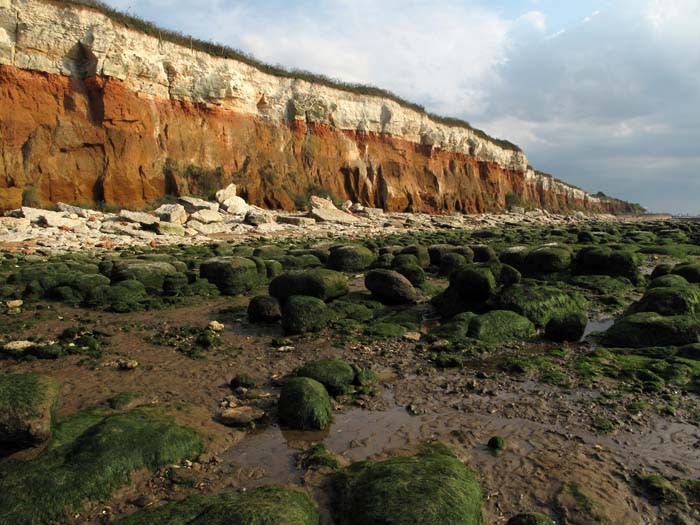
Beneath the spectacular white and red chalk cliffs of Old Hunstanton in northwest Norfolk lie the sorry remains of what was once a working boat, the Steam Trawler Sheraton. Although she started life in 1907 as a Grimsby fishing trawer, and would later serve a a patrol boat and mine sweeper during World War II,  the Sheraton suffered the ignominy of serving as a target practice vessel for the RAF in 1946. In 1947, a gale caused the boat to break free of her mooring on the Lincolnshire side of the Wash and the Sheraton eventually washed up on Old Hunstanton beach.  Much of her bulk and fixtures were salvaged and now only the bottom of her hull remains, reduced to just a barnacle-covered skeleton of ribs and braces after more than half a century’s scourging by the tide.IMG_8366

The coast at this spot is known as St Edmund’s Point, a name that references the arrival of St Edmund who is said to have been shipwrecked here in AD855. The 14-year-old boy, who would be crowned King of East Anglia the following year, would go on to become a religious cult hero and England’s first patron saint after his matrydom at the hands of Danes in 870. Later, in the 13th century, the monks of Bury St Edmunds would build a chapel on the cliffs above the spot where Edmund was reputed to have landed in gratitude for his safe deliverence. The ruins of the chapel lie close to a white early 19th-century lighthouse, now a private residence, whose light was extinguished at the outbreak of World War I never to be rekindled.

IMG_8324

The beach at Hunstanton is one of the few places in Britain where the foreshore is privately owned. The Le Strange family, who have been lords of the manor here since shortly after the Norman Conquest, have in their possession a charter that states that as well as the beach itself they own ‘everything in the sea as far as a man riding a horse can throw a javelin from the low-tide mark’. The hereditary title of Lord High Admiral of the Wash is also retained by the family. So, the skeletal remains of the Sheraton wreck belong, technically at least, to the Le Strange estate, as do the picturesque seaweed-covered rocks that set off any decent photograph of the cliffs. If St Edmund had pitched up here a couple of centuries later than he did perhaps he would have become the property of the Le Strange estate too?

.IMG_8418

Norwich Gorillas

IMG_2828

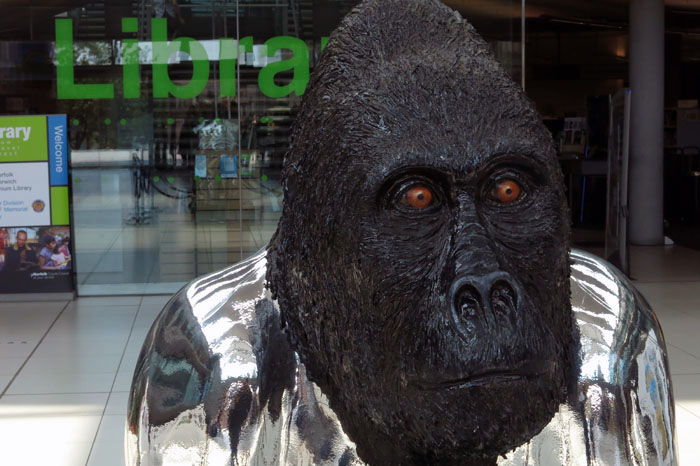
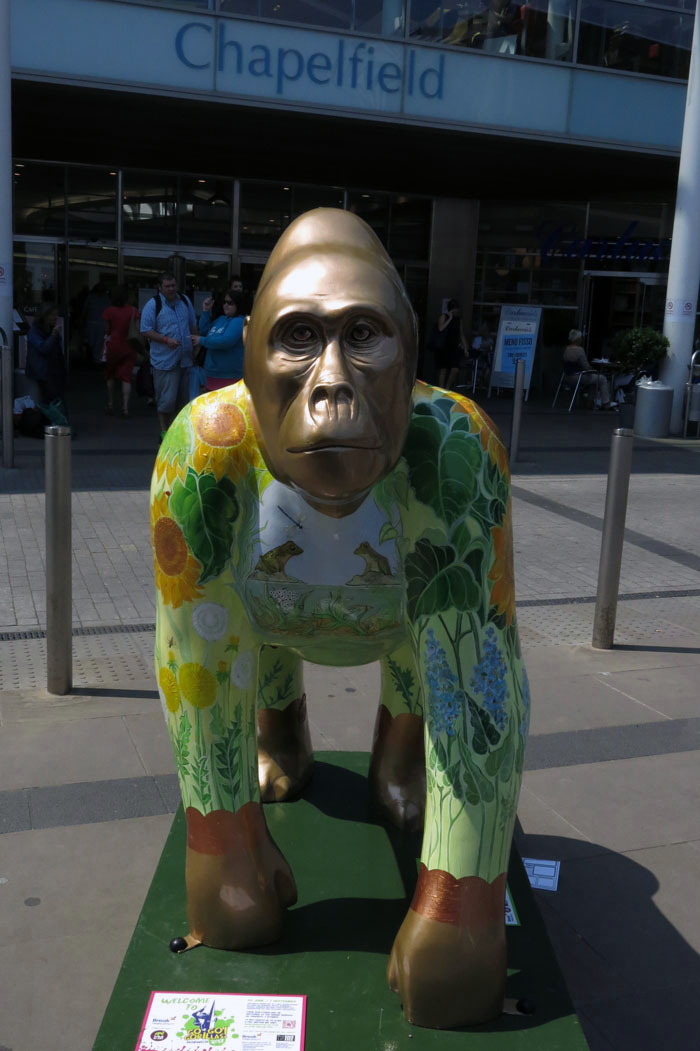
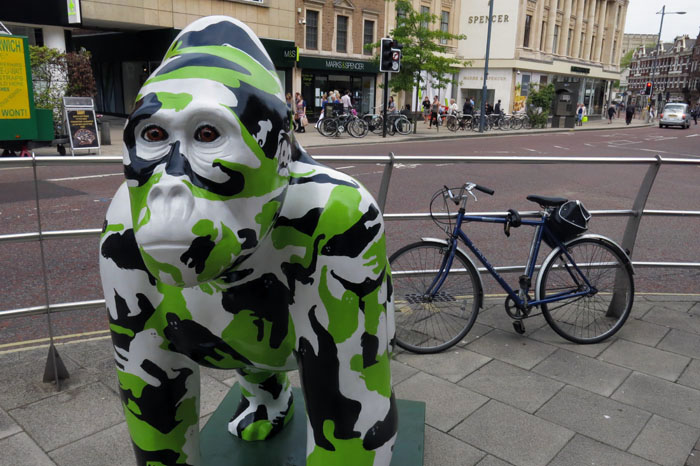
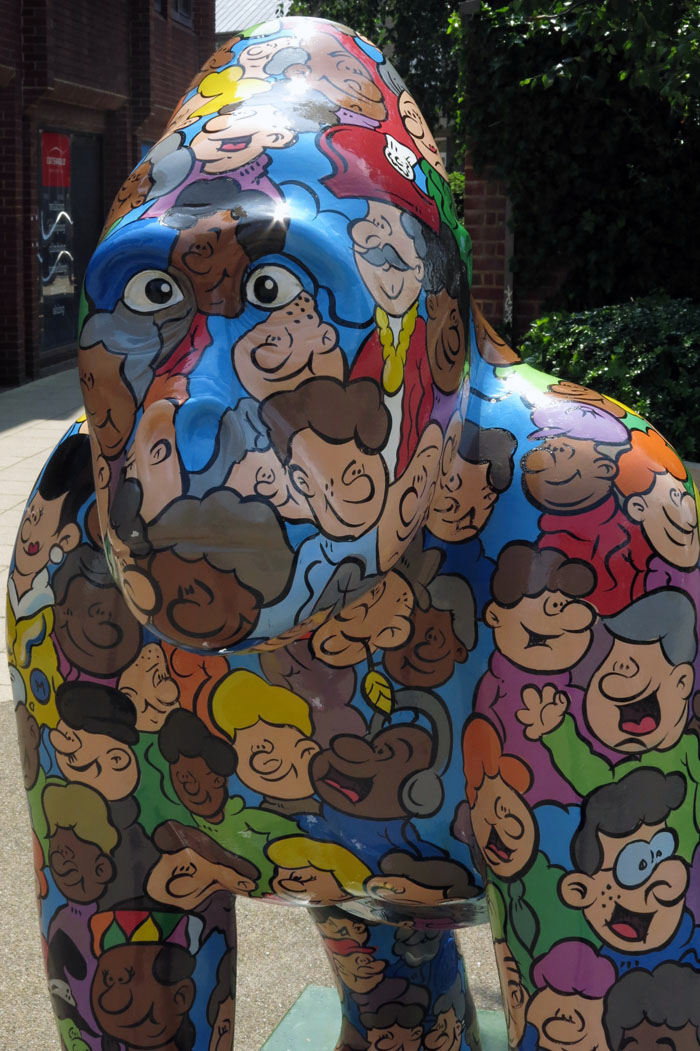
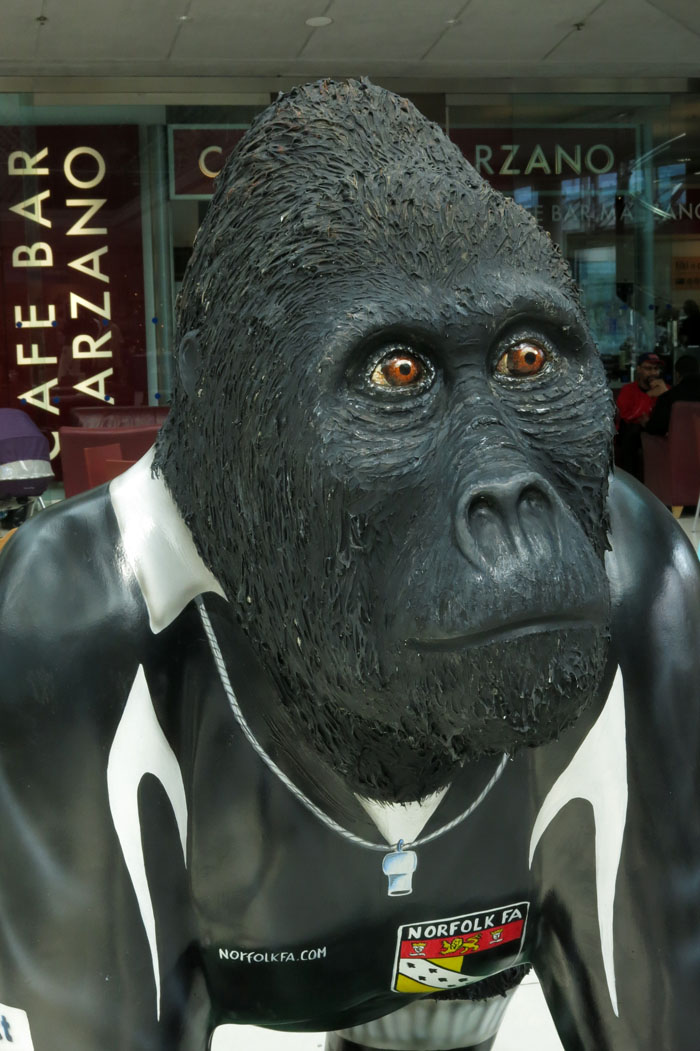
Over the past few days a large number of gorillas have taken over Norwich city centre. No leaf-munching friends of David Attenborough these, the Norwich gorillas are fibreglass but compensate for their inanimate nature by coming dressed in a wide range of outlandish outfits. The splendid beast above – ‘Chromilla’ – can be found in front of the library in The Forum.

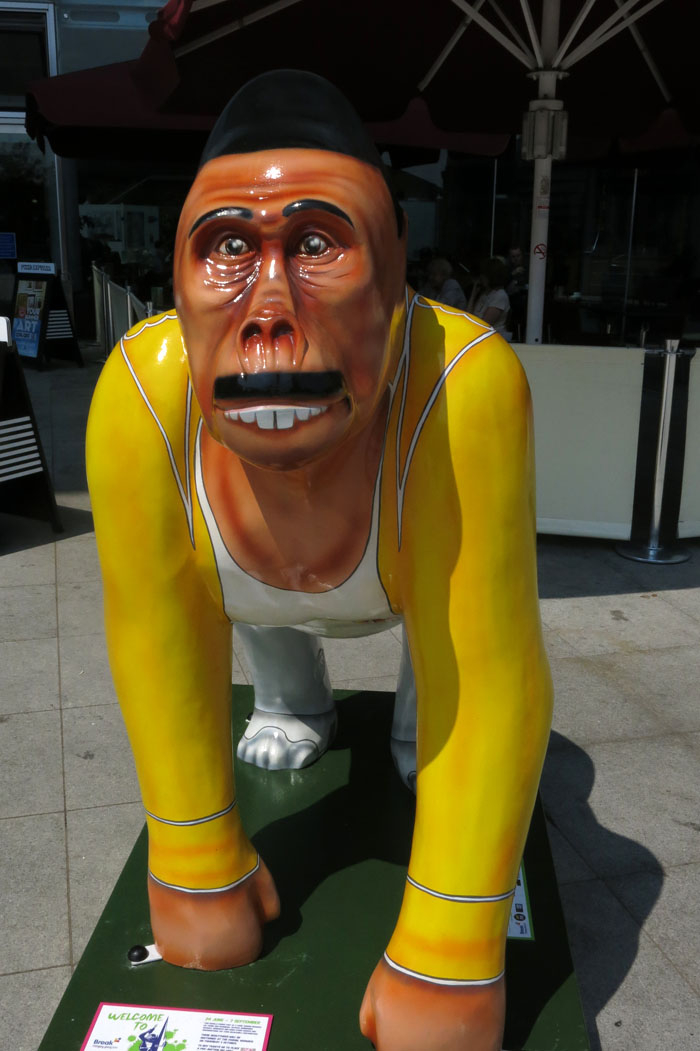
IMG_2802IMG_2861 With over 50 gorillas scattered around the city there is considerable variety and plenty of local flavour. There’s even an ‘Ivan the Iconic  Norwich Gorilla’ outside The Forum who bears the canary logo of Norwich City FC in addition to a representation of the city’s Norman castle and Stephen Fry’s clever avuncular visage. There is also a ‘Mr Carrow’ gorilla dressed in the yellow and green strip of Norwich’s Premier League heroes. I could probably live without Freddie Mercury reincarnated in gorilla form, and sadly there is no sign of local antihero Alan Partridge aping about, but you cannot have everything.

IMG_2811     IMG_2814     IMG_2852

IMG_2858

For some reason there is always something rather cheering about gorillas. Perhaps it is their power and intelligence, their ‘gentle giant’ demeanour? Maybe it is simply because they remind me of the first Bonzo Dog Doo Dah Band album released way back in the late 60s – Gorilla – which was ‘Dedicated to Kong because he must have been a great bloke’.

For more information go go go to Gogogorillas.

Fiesta

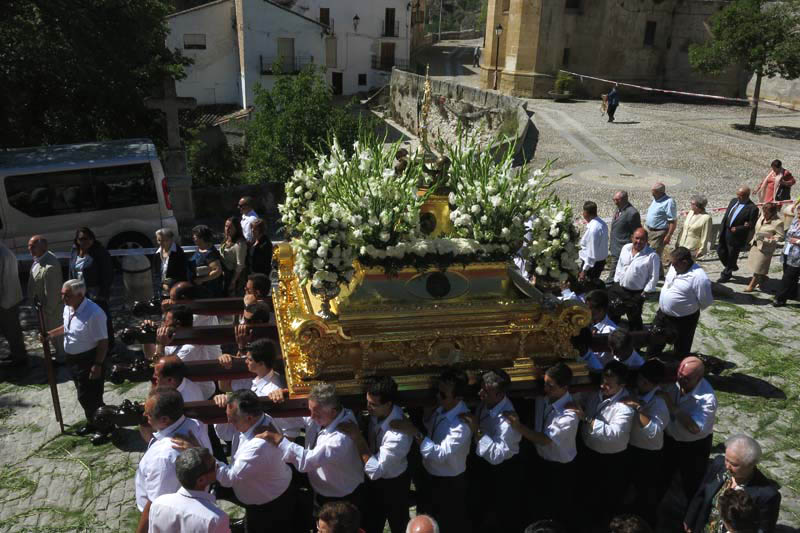
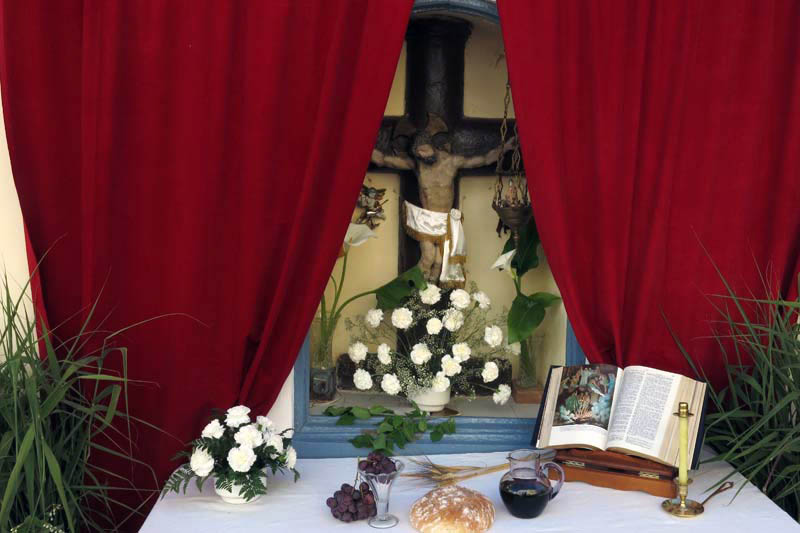
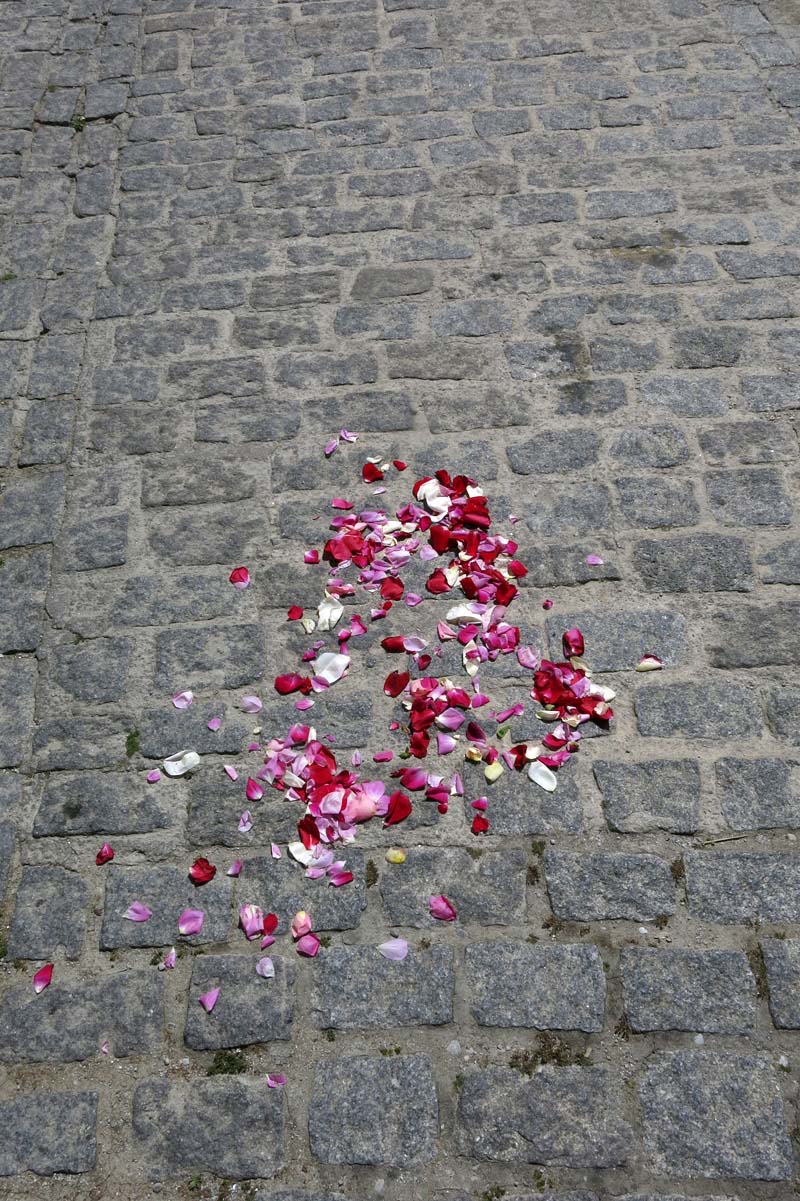
 IMG_1467Small town Spain at the end of Whitsun. In Alhama de Granada, a hill town midway between Malaga and Granada in Andalucía, the celebration of Corpus Christi on the first Sunday in June takes the form of a religious procession through the streets of the old Arab town. The event is announced by a stirring peal of bells from the huge earthquake-scarred tower of the Church of La Encarnación. Temporary flower-decked altars have already been set up strategic points along the processional route, the course of which is marked by a wide swathe of horsetail gathered from the nearby gorge.

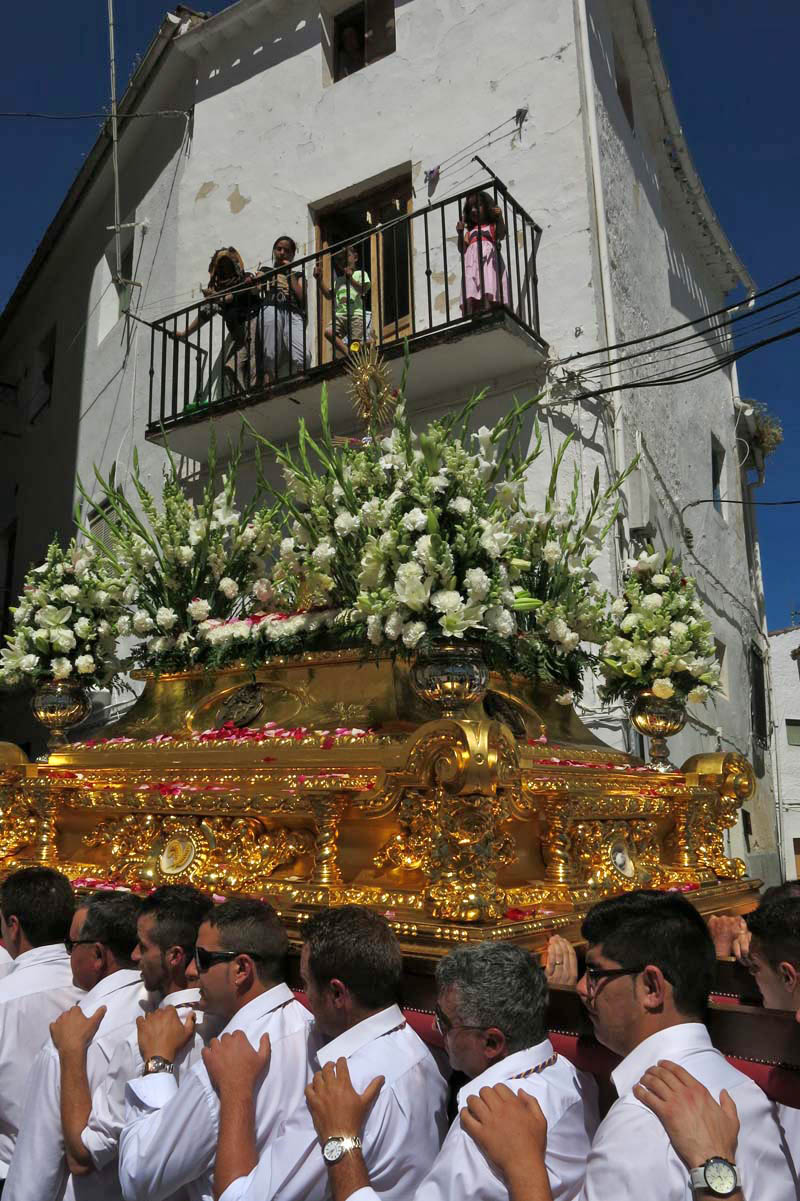
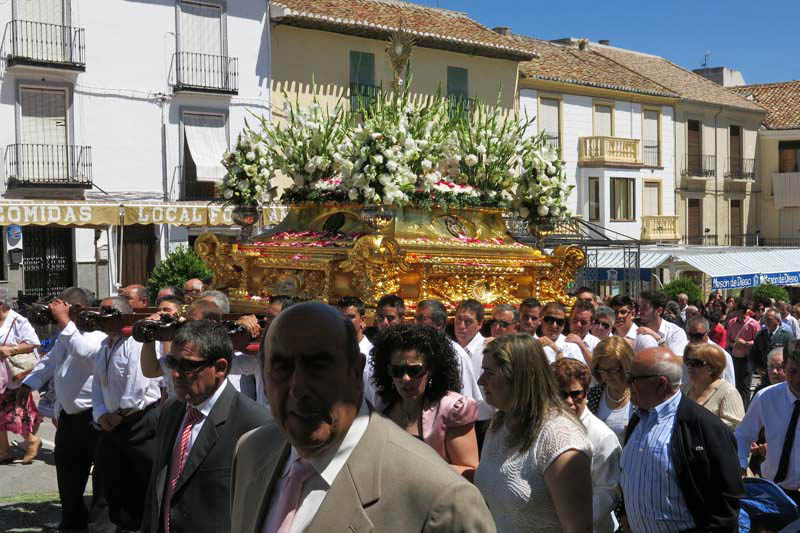
IMG_1531Musicians carrying trombones and drums saunter across Plaza de la Constitución to assemble outside the main door of the Iglesia del Carmen that overlooks the gorge. Eventually, the congregation files out of church and after a fanfare of deafening fircrackers the procession leaves to make its way around the town’s narrow streets. Leading the entourage along with the priest are girls in white dresses carrying baskets and boys in sailor suits, then comes the heavy wooden float carried on the shoulders of a rota of 28 men followed by the band and what seems like most of Alhama’s population dressed in their Sunday best.

IMG_1567IMG_1585It takes an hour or two to make the circuit, stopping for blessings a long the way, and then, after returning to the starting point, the crowd slowly disperses. Already, municipal workers in high-visibility jackets have swept up the horsetail and rose petals and Alhama is returned to tranquil whitewashed normality. Now, it’s just like any other another sleepy Sunday afternoon – muy tranquilo: a stroll and chat in the square, an unhurried meal, a drink, a sun-drugged siesta.

IMG_1395

IMG_1504

IMG_1609IMG_1581IMG_1627IMG_1620

Bunhill Fields

IMG_0156Three weeks ago I happened to be in London. As things turned out, on that very same day  the city was somewhat preoccupied with a very high-profile event at London’s most iconic church. Given the circumstances, I felt the need to escape the gravity of St Pauls and mark my all-too-rare visit in a more personal way. So on the morning of April 17 I headed to Bunhill Fields in the Borough of Islington. Here, at a quiet Nonconformist graveyard tucked away from the thrum of city traffic, are buried some of England’s less showy heroes.

IMG_0145Here you’ll find John Bunyan, radical preacher of Pilgrim’s Progress fame, whose stone form lies prone atop a hefty tomb. Nearby stands an obelisk that commemorates Daniel Defoe, a man who in addition to writing Robinson Crusoe was also a great traveller and author of an opinionated account of the  nation in the early years of the 18th century. Next to the Defoe obelisk, and far more humble, is a plain stone that marks the life of another great Londoner– William Blake. So unpretentious is this tomb marker that it does not even stand on the exact spot where Blake are buried – the actual grave is unmarked and the poet’s bones lie elsewhere nearby, although the exact spot is uncertain.

It was a cold grey day, and workmen were working industriously clearing the ground in another part of the graveyard. Otherwise, there were no other visitors to Blake’s – or anyone else’s – grave on that particular morning. Meanwhile, just a mile or so to the south, the traffic had been stopped and bells silenced – no ding-donging permitted on this day. Assorted armed forces lined the street in a gung-ho revival of Falklands fever as a sorry procession of politicians, prison novelists, low-rent celebrities, arms dealers, blubbing chancellors and sundry Spitting Image characters entered the cathedral to take their seats beneath the lofty Wren dome.

As history was rewritten for the umpteenth time in a matter of days, Blake’s bones lay sleeping unperturbed in Bunhill Fields – definitely not for turning. A bone fide Londoner who wrote of higher places, William Blake was a man whose words could reach out to everyman – to Londoners of every stripe certainly, but also to those in Scotland, County Durham, Liverpool…South Wales…South Yorkshire…

Do what you will, this world’s a fiction and is made up of contradiction

Galata Bridge, Istanbul

IMG_1910I’ve been thinking about Istanbul lately – it is one place that has been a constant in decades of travel. I first went there over 35 years ago and must have revisited the city at least eight, maybe ten, times since. When I think of Istanbul, I immediately think of Galata Bridge, as somehow this more than anywhere represents all that is great and cosmopolitan about the city. More than a mere link between the two sides of the Golden Horn – Eminönö and Kariköy – the bridge is a place for fishing and socialising, for eating and drinking; a place for lovers’ trysts, for poets to watch the sunset, for tourists to plan their next day in this great city at the very edge of Europe.IMG_1903While other bridges are merely functional – a dull concrete conduit for traffic over water like this one in Suffolk, or a human footbridge as sumptuous and organic as this one in Meghalaya, India, Galata Bridge is much more. Galata Bridge may not be beautiful of its own accord but it provides a platform from which to enjoy the iconic Istanbul skyline – the Venetian Galata Tower in one direction, the sky-piercing minarets of Sultanahmet’s mosques in the other. More than a mere bridge, it is a location in its own right that, in the Istanbullu psyche, has long been elevated above the role of merely conveying traffic .IMG_2639IMG_3158IMG_2655

IMG_3174IMG_2652

Yugoslav Hotels

IMG_1091

They are a dying breed, Yugoslav hotels. And I use the word ‘Yugoslav’ advisedly as, although the buildings shown here are in what is now Serbia, all were erected during the period when that country was still part of Yugoslavia. At worst, these hotels, largely built in the 1960s and ’70s,  are concrete monoliths: multi-storey overnight people-parks, the sort of structures that might make Prince Charles go bug-eyed with apoplectic rage. Indeed, some are so brutally concrete and cubic that they bring to mind Rachel Whiteread’s House – a three-dimensional concrete representation of the internal space of an earlier dwelling.
IMG_1094At best though, they are imaginative, ironic, faux-futurist; canny enough to display an architectural sense of humour (although never quite as precocious as the Titanic Hotel in Nagorno-Karabakh). I’m thinking here of the skyrocket-like edifice that casts its long shadow over  Partisan Square in Užice, western Serbia. I have stayed here a couple of times and all I can say is that what the hotel lacks in working light bulbs and reliable lifts it makes up with excellent views over the city from its upper floor windows.

IMG_9468

If the Hotel Zlatibor in Užice is a skyrocket then the Hotel Vrbak in Novi Pazar is a space station, albeit a very 1970s space station with neo-Oriental touches. And a semi-deserted, slightly disturbing space station too: on both occasions that I stayed here I was one of less than half a dozen guests. Perhaps it should be renamed Solaris?

IMG_9533
While some of these government-owned hotels manage to keep going, most of their trade coming from large wedding parties and occasional school-trip groups, many have closed for business and languish unloved in provincial town centres awaiting investors that never come. They remain as ghostly real estate of the recent Yugoslav past, an embarrassment of concrete and glass that is too big and decrepit to profitably invest in, and too massive to easily demolish.
IMG_1527The hotels shown here are in Novi Pazar, Užice, Niš, Pančevo, Pirot, Knjaževac and Belgrade. The first three are still working; the remainder are not.

IMG_9537IMG_1442IMG_8487IMG_2268IMG_2404