Ho, Ho, Ho Chi Minh!

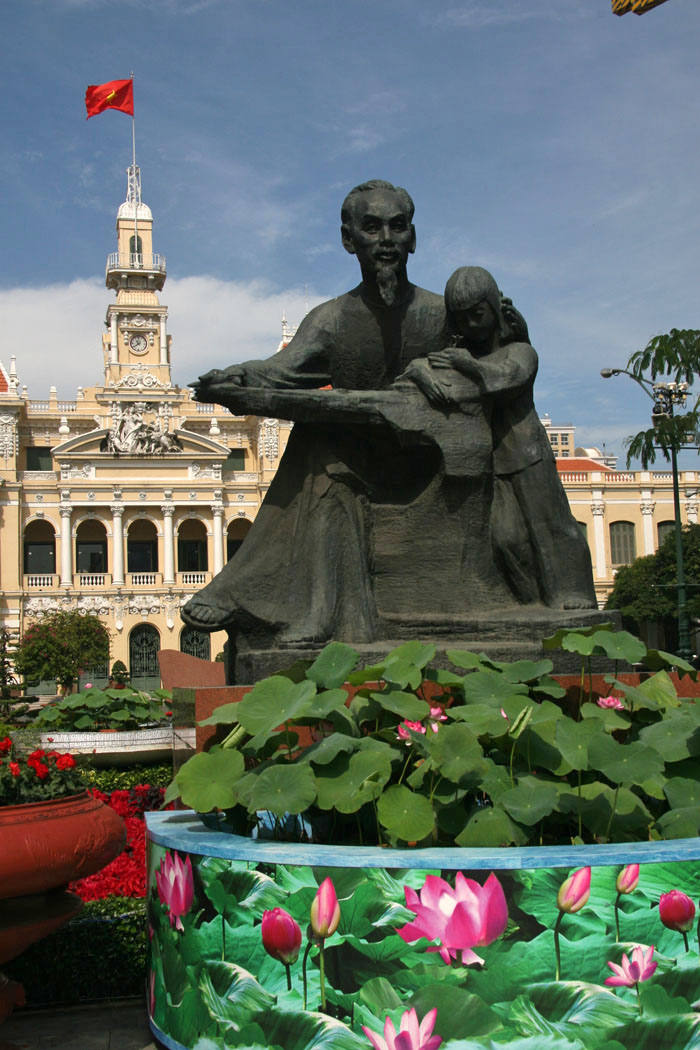
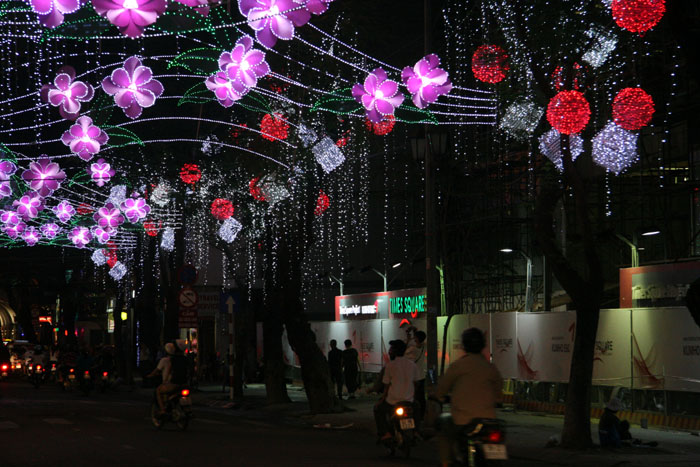
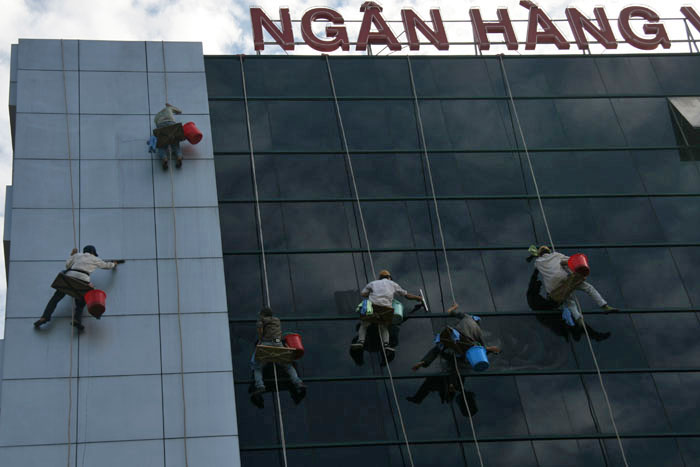
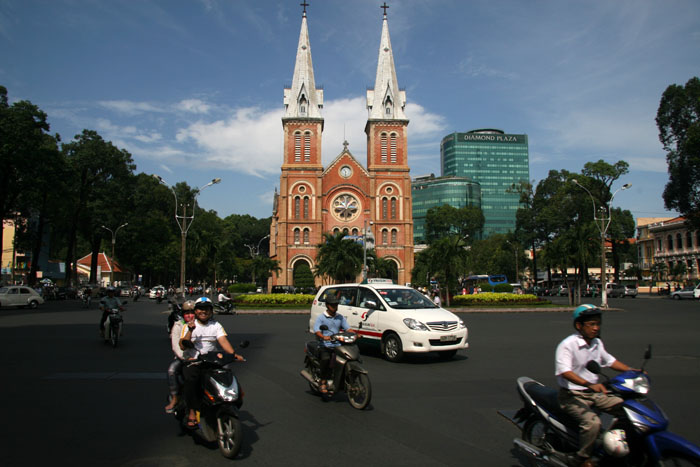
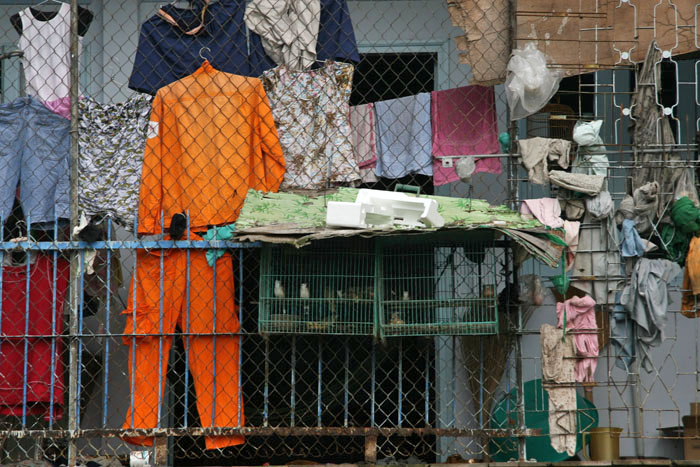
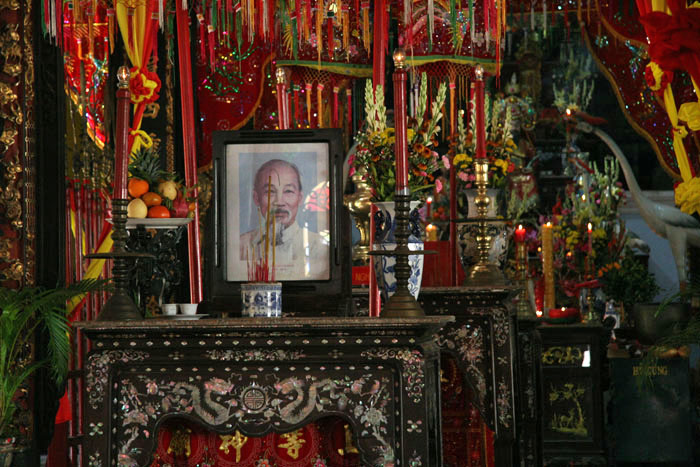
IMG_6854I don’t quite know what it is that has made me think of Vietnam recently. Maybe it was a casual mention in a conversation that made me realise that I don’t have a very vivid memory of the short time I spent in that country a couple of years ago. It was, after all, just a fleeting glimpse of the fat bottom end of a long thin country – a day in Ho Chi Minh City (Saigon) and a few days up the Mekong River.IMG_6933I wandered Ho Chi Minh City in a jet-lagged daze, stupefied by a body clock that badly needed winding and oppressive tropical heat that clung like a blanket. What did I do? I gaped at a few of the tourist sites I was told to look at. I dodged road-wide flanks of manic motorbikes (just wait until they get cars!), ate fishy, chilli-spiked noodles and bought, of all things, a copy of David Copperfield in a savagely air-conned bookshop (an unconscious hankering for the fictionalised Yarmouth coast perhaps?). The rest is a sleep-deprived blur, although I do remember Christmas lights – it was early January – incongruous as a Santa suit in steamy Indochina. The city, as I remember it, seemed an awful long way from the imagined sinful metropolis of Apocalypse Now and The Deer Hunter.IMG_6811I am also struck by the visa in my passport that reads: Socialist Republic of Vietnam. Ho Chi Minh City/Saigon – despite the reinvented name and the occasional remnant image of a wispy-bearded Uncle Ho, it was hard to imagine anywhere more unashamedly capitalist. The new moniker foisted on the city in 1976 seemed an ironic rebranding for a city that was firmly in the US camp throughout the war (The American War, the Vietnamese call it). One can only imagine the victors’ delight in defiantly renaming this southern capitalist city after their erstwhile northern communist leader. But a name is just a name – the USA may have lost the war but it was the West that inevitably won in the end. IMG_6844

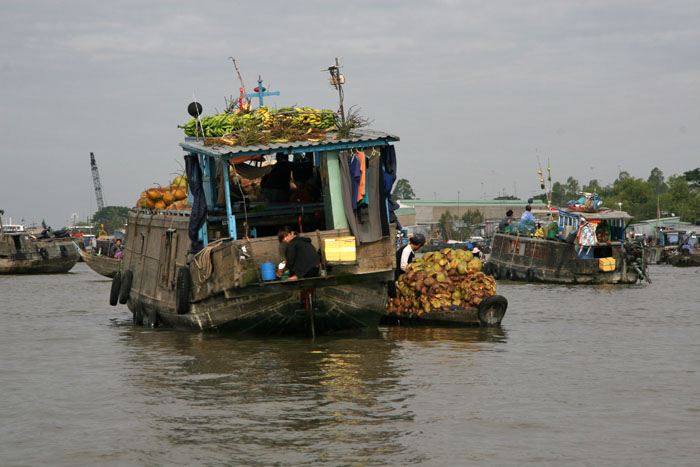
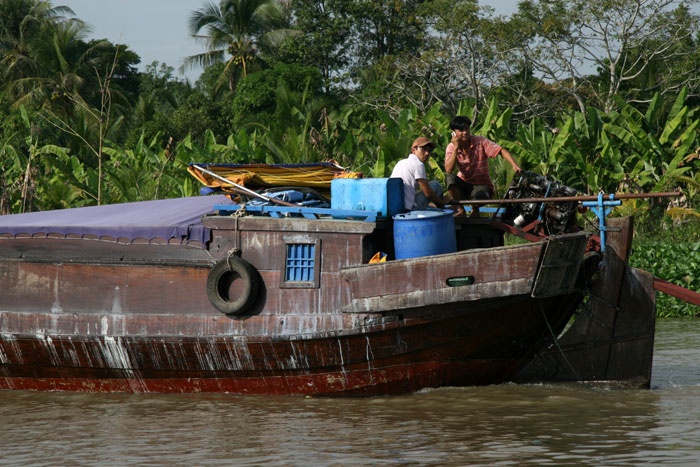
IMG_6919As for the Mekong, what stays with me most is its murkyy lifelessness. It took a day or two along the river before it dawned on me: despite fisherman eking a living from the river’s grey waters and insects aplenty, I slowly realised that there were almost no birds to be seen. No dipping kingfishers, no fish-spearing herons, no skeins of geese overhead; just an occasional swallow flitting nervously above the water. The first egrets I saw were dead: a sorry pair on display in a food market, a meagre meal for a poor family. Uncontrolled hunting and trapping, along with severe habitat depletion, appear to be the main reasons for this sad depletion of what, in a previous life, would have surely been a tropical paradise. IMG_7043A river without birds is a like a song without a melody. Things improved slightly as we approached the Cambodian border but really not that much – for the most part, the river remained the ideal film setting for a tropical version of Rachel Carson’s Silent Spring.IMG_7187IMG_7149IMG_7255

Edgeland

IMG_4934Edgelands are everywhere, orbiting our towns and cities like unbeautiful rings of Saturn: non-places, junkspace, transitory transition zones that lie between that which is unequivocally urban or rural. Transitory because they are spaces in flux, with fluid geography that today may be brownfield site or landfill but tomorrow could be new housing, an out-of-town shopping emporium or a bypass. I hesitate to use the term ‘liminal’ here, that overused adjective beloved of psychogeographers, but … oh go on, I will. Edgelands are, if you’ll excuse the trope, zones of liminality, thresholds of the urban world. They might also be defined as those places that people pass through but do not usually stop at. They represent the view from the car  on the daily commute, that untidy marginal landscape glimpsed flashing by through the grimy window of the morning train.

IMG_4921Paul Farley and Michael Symmons Roberts in Edgelands, their definitive book on the subject, quote a long list of names associated with waste landscapes of this type in the United States, a lexicon that starts with ‘boomberg’ and ends with ‘world city’. My favourite though is ‘stimdross’, which sounds like some sort of propriety brand of exfoliant cream.

IMG_4944Like anywhere, Norwich, the city where I live, has its own edgelands. These take on a different character depending on which side of the city you look. To the north, the city sprawls for miles through ‘30s council estates, Tudorbethan suburbs and rural fringe new-build with leadlight windows and double garages. Heading in this direction from the centre, it is only after the airport is passed that the city finally gives way to the arable farmland that continues all the way to the Norfolk coast.

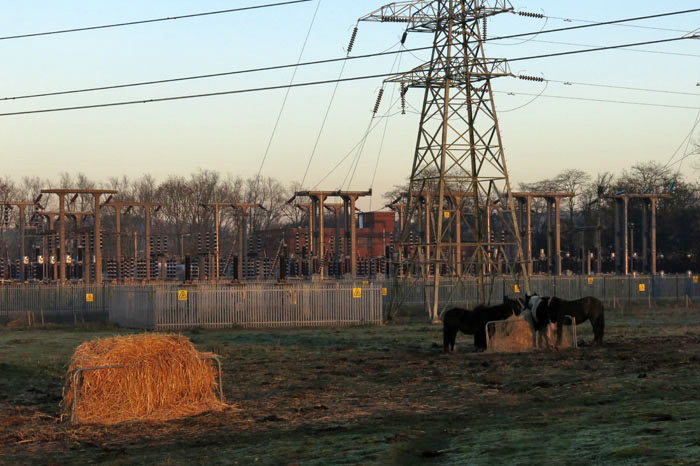
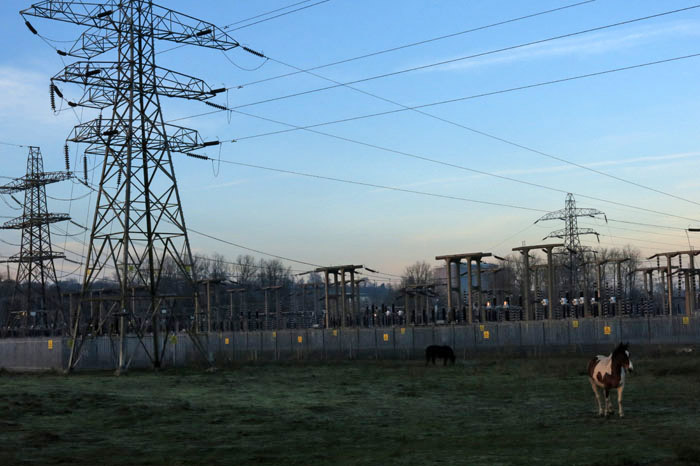
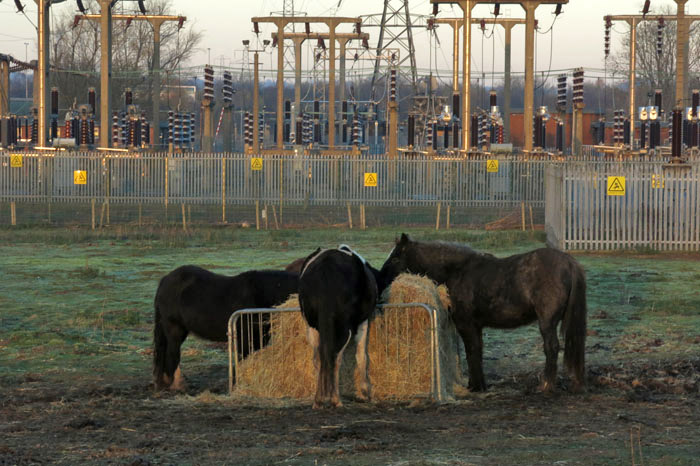
IMG_4946Heading south, the transition comes much sooner. A little way beyond the ring road the landscape changes abruptly as it crosses a railway line and the River Yare. Here, where the traffic of the southern bypass creates an ever-present thrum, is an edgeland par excellence: a territory that has elements of both urban and rural but belongs to neither camp. The rough grassland here is too poor for arable crops but supports both grazing horses and a vast imposing electricity substation. Lofty pylons march across the landscape, dwarfing the horses. The scene is a strange juxtaposition that shouts of marginalisation but the horses do not seem to mind. Who owns them? Travellers probably, or is it wrong to make such an assumption?

IMG_4926

The OS map of the territory reveals a henge in the field here, right next to where the electricity substation and horses are. The Arminghall Woodhenge, which was discovered in 1929 thanks to crop marks on an aerial photograph, was excavated in 1935 and discovered to be a Neolithic monument orientated on the mid-winter sunset. All that remains now is a vague bump and dip in the ground but once this was a place of power, a place of knowledge, ritual and observation. Now that power is reduced to a ghost of landscape, forgotten, returned to the earth – a palimpsest overlaid with electrical distribution hardware and grazing horses. Most of the motorists speeding by on the southern bypass avert their eyes from the unsightly pylons and transformers and do not give these fields a second glance. How can they ever know of the henge if they do not even notice the horses?

IMG_4951

Mildred Holland’s Seven-year Task

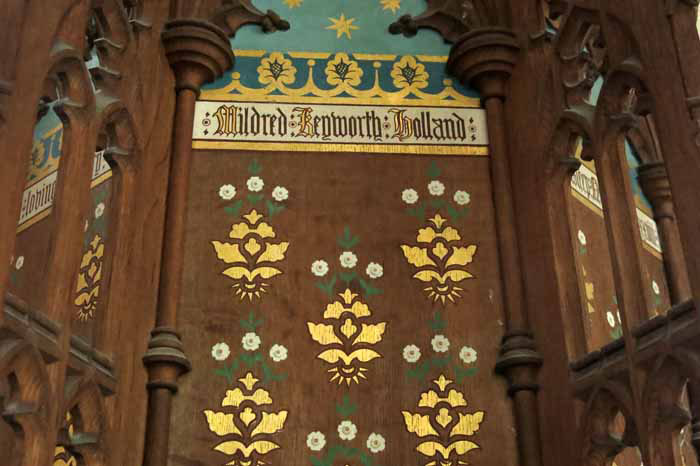
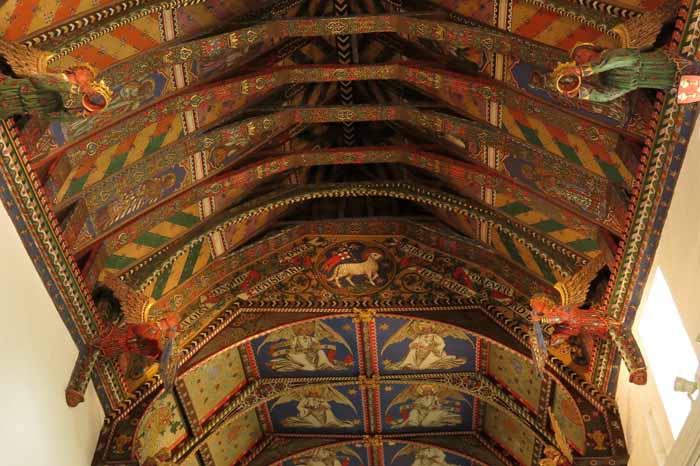
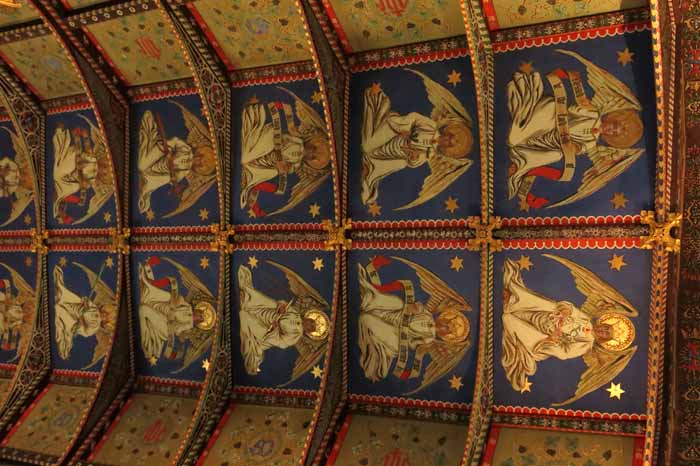
IMG_3824Mildred Holland was an unusual and determined woman. Not content with  being merely the new rector’s wife at St Mary’s, the parish church at Huntingfield in northeast Suffolk, Mildred took it on herself to singlehandedly repaint the ceiling of the church’s hammerbeam roof. This enormous labour took seven whole years between 1859 and 1866, a period in which spent she much of her time on her back atop scaffolding wielding a paint brush. First she painted the chancel, then the nave. A novice to church painting, Mildred was given some advice by E L Blackburne FSA, an expert on medieval decoration, but other than this and the help she received from workmen erecting the scaffolding she had no assistance whatsoever. Naturally, such arduous toil took its toll and Mildred died in 1878, a relatively young woman, not so many years after completing her task.

IMG_3812

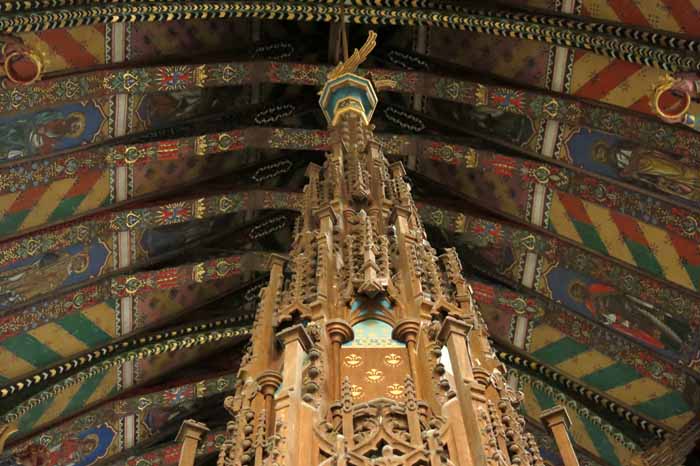
There may be those who will find the roof decoration here far too bright for their taste –  the colours are brilliant and vibrant, the overall affect almost psychedelic. But if you have  a plentiful supply of pound coins  – there is a cash-hungry slot for inserting coins to supply short-lived electrical illumination – you can see for yourself the sort of church decoration that might have held illiterate medieval peasants in awe. True, Mildred’s work was a Victorian makeover but it was probably quite faithful to the original paint job – the bling of medieval church decoration was often far more garish than many of us imagine it to be.

IMG_3800

To find the church you must first venture down winding narrow lanes southeast of Halesworth in Suffolk, a modest adventure in its own right. There is a monument to Mildred and her husband in the churchyard close to the gate. The dedicated font cover, a sort of internal church steeple, is rather impressive too.

IMG_3821

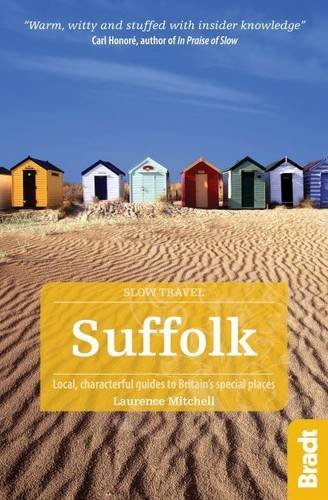
St Mary’s, Huntingfield and the story of Mildred Holland makes an appearance in my new book Slow Travel Suffolk, a companion volume to the recently published Slow Travel Norfolk, although the book is by no means solely about churches, medieval decoration or single-minded determined women.

51O4sulwLyL__


Radical Norfolk

2013188929Norfolk doesn’t tend to be the first place that comes into mind when you think of political radicalism but, surprisingly perhaps, there is  a strong tradition here and the East Anglian countryside has not always been as true blue as some might have you think.

Thetford in the Norfolk Brecks is the birthplace of republican and revolutionary pamphleteer Thomas Paine (1737-1809), a man who had an important part to play in both French and American revolutions. Two hundred an fifty years earlier, Robert Kett, a yeoman farmer from Wymondham was another radical figure who became a thorn in the side of the ruling class. It was Kett who, along with his brother, sided with his own impoverished labourers and helped break down fences erected to enclose common land in 1549. Kett’s ragged rebel army  camped on Mousehold Heath just outside Norwich before eventually being defeated by government forces, after which Robert Kett was hanged at Norwich Castle, and his brother William at Wymondham Abbey, as an example to uppity peasants.

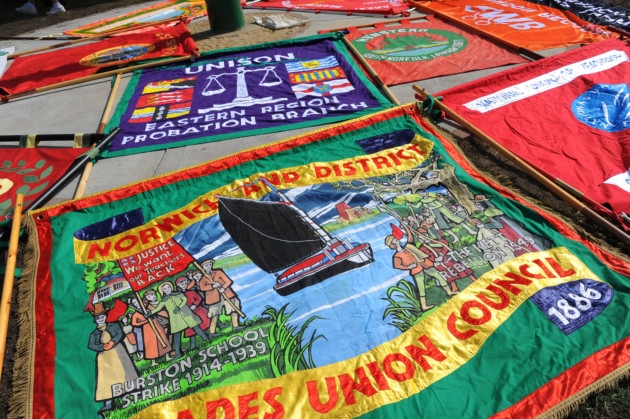
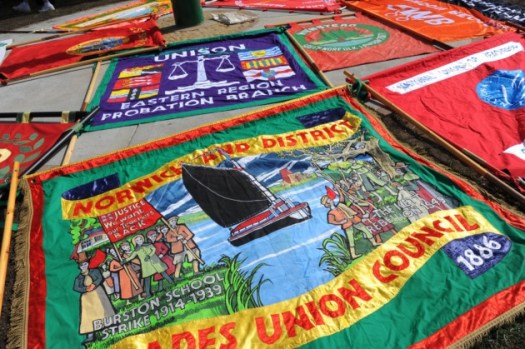
Another pair of local heroes were Tom and Kitty Higdon who in the first half of the 20th century led the longest strike in British history at their tiny school  at Burston in south Norfolk. Here  is a brief extract from Slow Travel Norfolk on the subject:

The Burston Strike School

‘The labourer must henceforth take his place industrially socially and politically with the best and foremost of the land.’

Tom Higdon, 1917

In brief, the story goes that Tom and Kitty Higdon were appointed as teachers at Burston School in 1911 after previously working for nine years at Wood Dallingin north Norfolk. The Higdons, who were Christian socialists, had complained about the poor conditions at the Dalling school and the frequent interruption of the children’s education when recruited for farm work. Many of the farmers employing the children were also school managers and tensions mounted as a result of this, particularly as the Higdons had also encouraged local farm labourers to join trade unions. When matters came to a head, the Higdons were given the simple choice of dismissal or removal to a different school.

The couple were transferred to Burston, where they found conditions much the same:their complaints to the school managers, the chairman of whom was the local rector, created tensions here too. The pair were dismissed on fabricated charges of pupil abuse on April Fool’s Day 1914 and, following their dismissal, 66 of the school’s 72 pupils marched along Burston’s ‘candlestick’ (a circular route around the village) carrying placards that bore messages like ‘We Want Our Teachers Back’. Many parents refused to send their children to the official council school and, as a result, a separate ‘strike’ school was established.

The Burston Strike School, as it came to be known, began as little more than a tent on the village green but later moved to a carpenter’s shop in the village. There was considerable intimidation by local employers against the rebel parents and many workers were sacked or evicted from their tied cottages. The village rector, the Reverend Charles Tucker Eland, who firmly believed that labourers should know their place in the social order, also went as far as evicting poor families from church land. Fortunately, the labour shortage created by the onset of World War I worked to the advantage of the labourers. Money was raised by labour organisations such as the Agricultural Labourers’ Union and the Railwaymen and, by 1917, there were sufficient funds to build a new schoolhouse. Both Sylvia Pankhurst and George Lansbury attended the opening ceremony in that same year. The school ran until 1939 when Tom Higdon died and the same modest building serves today as a museum of the strike school’s history. There has been a rally organised by the TGWU held annually in the village since 1984, the 70th anniversary ofthe school’s founding.

An annual rally still takes place in the village each year on the first Sunday in September. It’s a colourful, upbeat affair and a rallying call for what might be described as ‘the old Left’, with speeches by well-known political figures and trades unionists, and music by the likes of Billy Bragg. Regular – indeed, almost annual – speakers were two men who have both sadly passed on this week: Bob Crow and Tony Benn. (The last time I saw Tony Benn here I remember that he recounted the words of Thomas Paine from Rights of Man: ‘My country is the world, my religion is to do good.’)

As 2014 is the centenary year of the strike there is additional event this year on April 1st, but now that both of these two mighty oaks of the Left have fallen it may prove to be a poignant occasion.
Slow Travel Norfolk

2029[1]

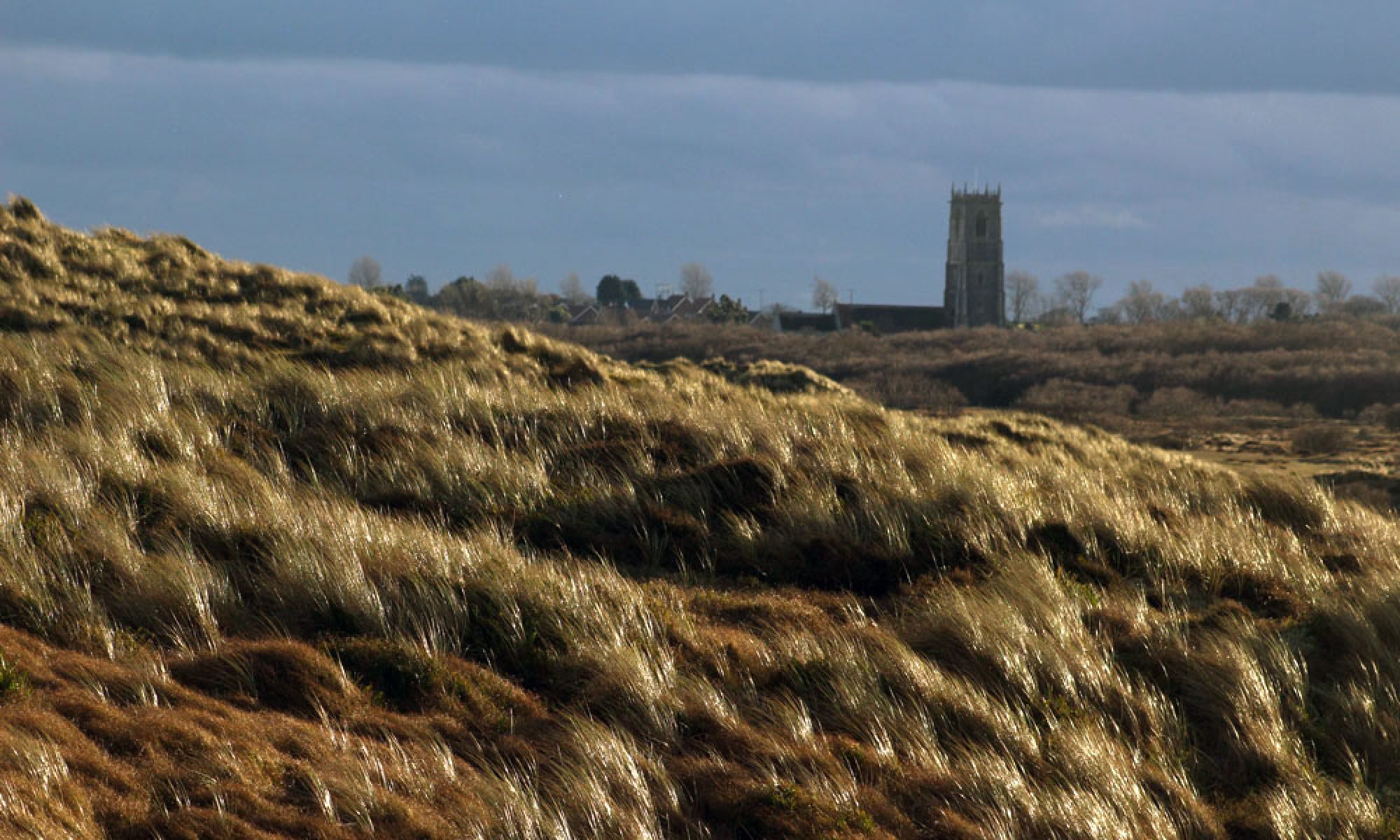
Well, it is finally out – my new book Slow Travel Norfolk.

Here is a brief extract from the book about an extraordinary rook roost that takes place at Buckenham Carrs each winter:

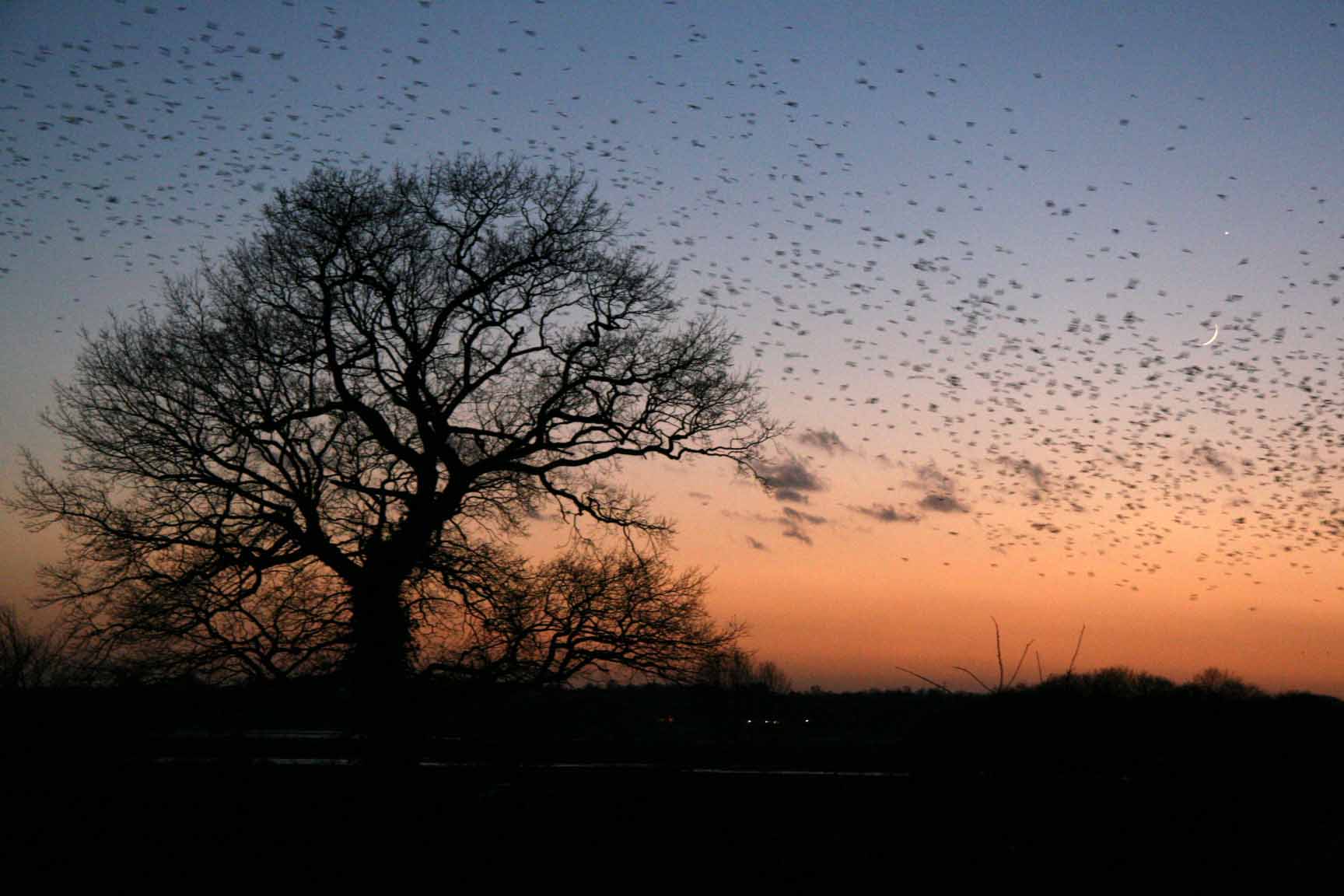
A  large  wooded  area  just  east  of   Buckenham  station, Buckenham Carrs is in winter home to an enormous rook and jackdaw roost mentioned in the Domesday Book. It’s thought there may be as many as 80,000 birds. The roost is the central motif of Mark Cocker’s Crow Country, which celebrates both crows and the Yare Valley where he lives. The Buckenham roost, which takes place in the winter months, roughly between late October and March, is quite a spectacle to behold, a natural phenomenon that has been taking place long before the fields were ploughed here and the church at Buckenham constructed. Ideally, you’ll want a crisp winter’s evening with a clear sky and a full moon.                                                                                                                                                    The best vantage point is to walk up the narrow road from Buckenham station until you reach a copse on the left with a small ruined brick shelter. You’ll see it all from here. The performance – if you can call it that – is a slow burn. Just after sunset, groups of rooks, and some jackdaws, fly in to gather on the large ploughed area immediately to the west; others land in the trees that surround it. Some have come quite a long way to be sociable but the crow conversation taking place sounds rather tetchy, all guttural complaining caws.                                                                                                                                       Momentum slowly builds as more and more groups of birds fly in to land in the field. As the light fades, the noise from the congregation builds louder and eerily expectant: something is clearly about to happen. Eventually, when the darkness is almost complete some sort of signal spurs the birds airborne and the sky blackens with rooks that swirl noisily east to settle in the woods of Buckenham Carrs where they will spend the night together.                                                                                                                                                It’s an astonishing, almost primal, event. One that almost laughs in the face of man’s perceived dominion over nature. No collective noun can adequately describe it: a building of rooks, a train of jackdaws. It’s less a murder of crows, more a mass execution.

IMG_0287

For an another take on Slow Norfolk, here is a lovely post about Going Slow on the north Norfolk coast on The World According to Dina, which generously mentions my book too.

Keswick All Saints

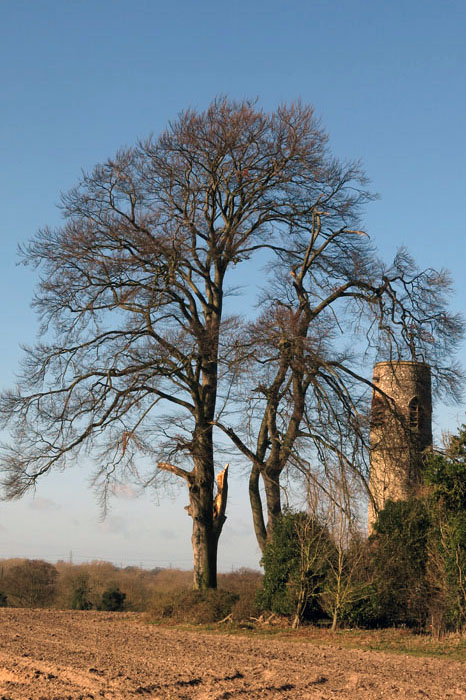
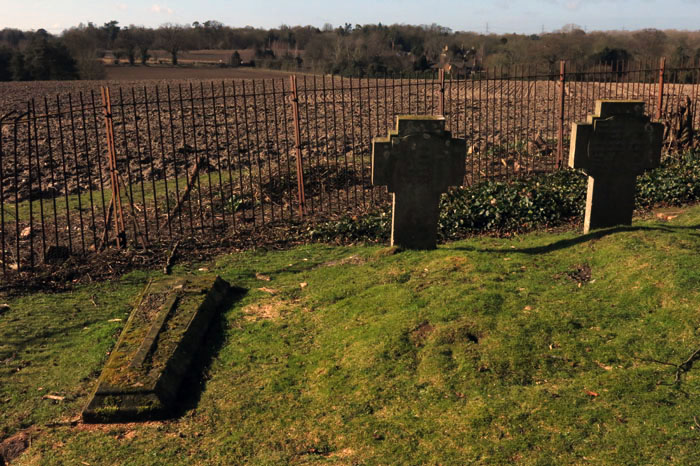
IMG_5265A little way south of Norwich, standing atop what counts for a hill in these parts, is a tiny roundtower church nestled amidst trees. All Saints Church stands above the small village of Keswick  in a crumpled corduroy landscape of wintry ploughed fields. Like most of the territory of this urban fringe, the church lies within the acoustic shadow of the city’s southern bypass and the dull thrum of traffic melds with the chatter of birds in the trees and hedgerows – mostly finches, tits and blackbirds at this time of year. Across the valley, a thread of pylons leads inexorably north towards Norwich where they will deliver electricity to power the city’s PlayStations, fridge-freezers and TiVo boxes. IMG_5289A narrow track leads from the main road up to the church but this is impassable in a car as a collapsable central barrier has been installed. With nowhere to park, we sneak into a bus lay-by on the main road in the knowledge that, this being Sunday, there won’t be one along for at least an hour or so. Arriving on foot at the gate, the church noticeboard informs us that services are held once a month on the last Sunday of the month, an impressive boast for such a small church in this day and age. In fact, a quick look at Simon Knott’s highly commendable Norfolk Churches website tells us that this is probably the smallest working church in all the county. And, as Norfolk has the lion’s share of Europe’s roundtower churches (124 of 185 in the whole of the UK), Keswick All Saints is probably the smallest functional roundtower church in Britain, if not in Europe. Not today, though – today, the church door remains firmly locked.

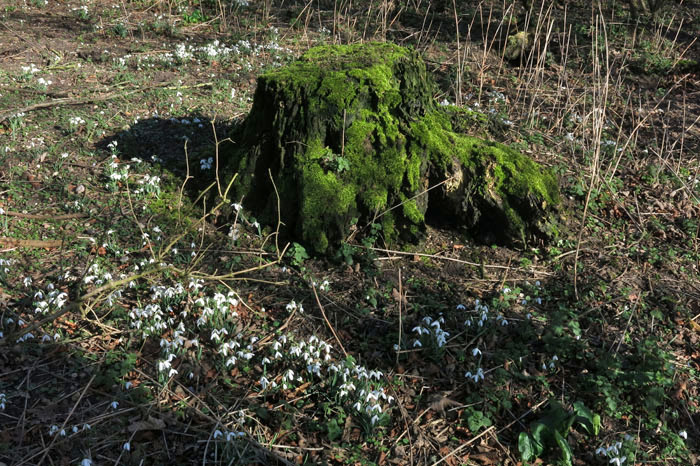
IMG_5277  IMG_5320  IMG_5282Keswick Hall just across the valley was once the home of the Gurney family, a local dynasty with farming and banking interests. The mossy tombs of several family members look down from the vantage point of the graveyard towards the hall that was once their earthly domain. The original church fell into disuse in the 16th century and was later partly demolished to repare the church at nearby Intwood (also All Saints) when the two parishes were united. Nearly four hundred years later in 1893, it was the Gurney family who came to the rescue, restoring the ruin and adding a short nave to create a mortuary chapel, which eventually became a church once more when services were authorised in 1934. IMG_5311If the earlier church was small, the Gurney restoration is tiny, just half the size of the original. But we could not get inside this ecclesiastic doll’s house to see the stained glass window or roof angels. No matter – on a sunny and unseasonably mild February day that already bore the promise of spring it was enough to enjoy the snowdrops in the copse and watch a pair of buzzards circle overhead on the thermals that rose from the sun-warmed fields.IMG_5322

Pleasure of Ruins

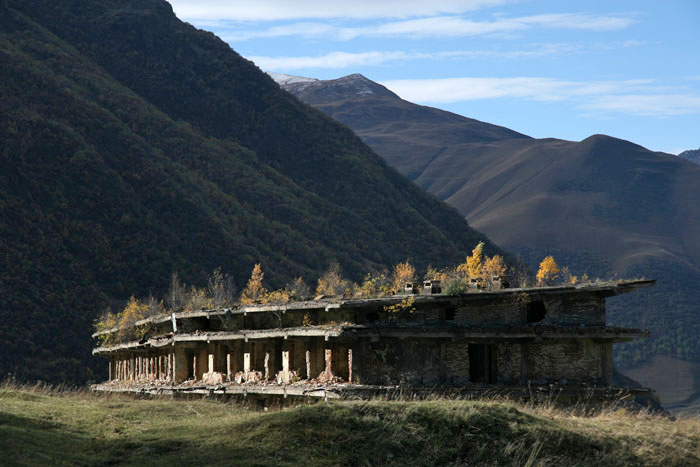
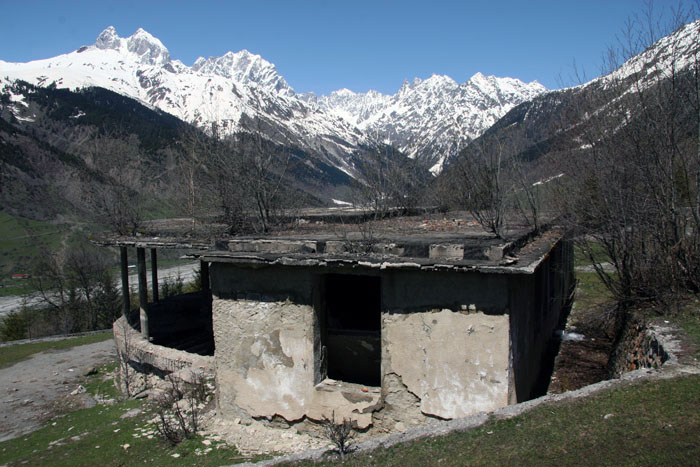
IMG_9714Abandoned Soviet-era hotel, Kazbegi, Georgia

“You don’t know why ruins give so much pleasure. I will tell you. . . Everything dissolves, everything perishes, everything passes, only time goes on. . . How old the world is. I walk between two eternities. . . What is my existence in comparison with this crumbling stone?”   Denis Diderot

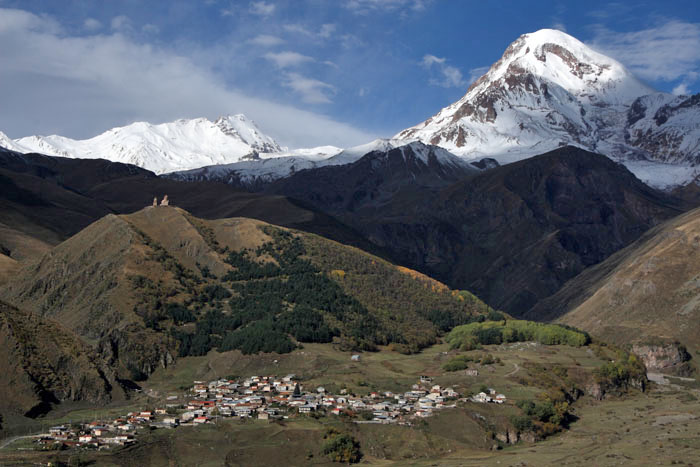
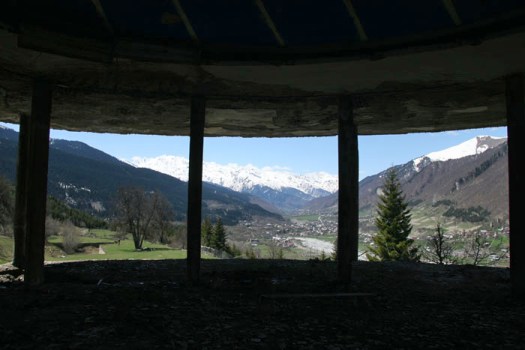
IMG_9700Mount Kazbek and valley seen from abandoned hotel, Kazbegi

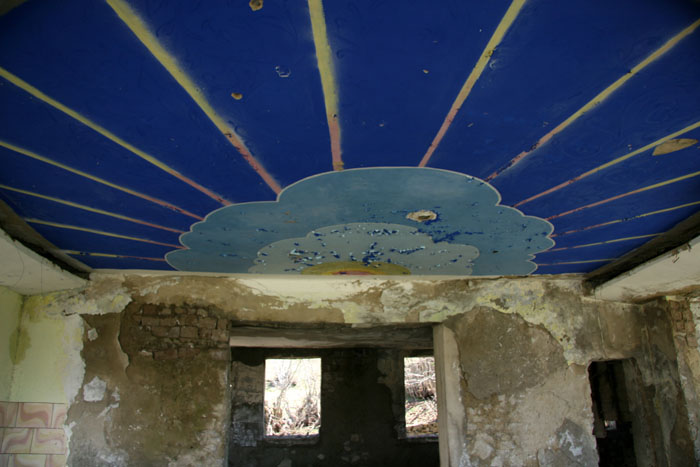
Entropy has its own beauty: the serendipitous artfulness of decay – the romantic ruin aesthetic. The crumbling stone mentioned above, quoted in Rose Macaulay’s Pleasure of Ruins, refers to the classical world but the principal is the same. Like the effect of medieval cathedrals on awestruck, little-travelled peasants, ruins put the viewer in direct contact with the inevitability of time, with their own mortality and decay. Like mould growing in the Petri dish of mankind’s hubris, they illustrate the way in which the delicate interface of man and nature can perceptibly change in a relatively short period.

IMG_4567Abandoned Soviet-era restaurant, near Mestia, Svaneti, Georgia

Sometimes, there are darker violent forces at play, the guilty, flinching schadenfreude of gazing at post-conflict landscapes. More usually though, architectural ruins simply result from financial or political bankruptcy, of a national or regional ideological refit. Abandoned to nature, they stand quietly rotting before consignment to the architectural skip of failed (or rejected) narratives.

IMG_4560IMG_4561Abandoned restaurant near Mestia, Georgia

These days such sights tend to be more common in the countries of the post-Soviet world than they are in Western Europe. Nevertheless, even these are vanishing fast and I have no idea whether the Georgian buildings shown in these images from 2010 are still nobly rotting away or have been bulldozed to make way for new development. Georgia is, after all, a country that in recent years has distanced itself as much as possible from its neighbours across the Caucasus and, in defiance of its recent history, done its utmost to buddy-up with the neoliberal West. I like to imagine how these places might have looked 30 years ago: the Kazbegi hotel filled with holidaying Soviet workers; the Mestia restaurant, with Moscow apparatchiks slurping borscht and slugging vodka. Surely they must have enjoyed the view?

IMG_4564

The Turning of the Year

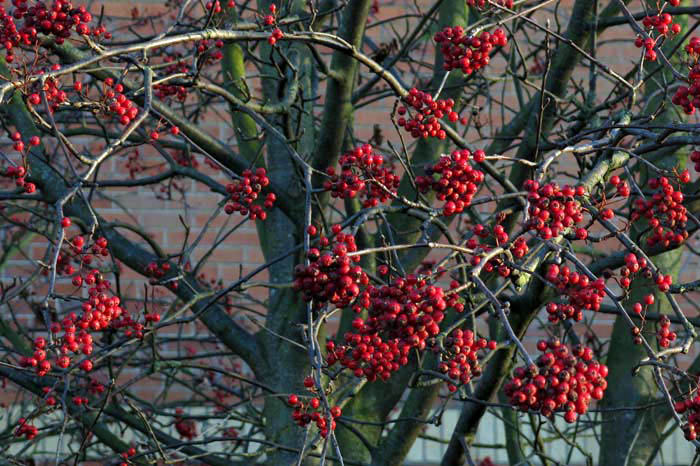
IMG_4891(This winter’s berries)

The turning of the year. These past few days mark the interregnum that sits uncomfortably between Christmas and New Year – a week of virtual Sundays and a period when some of us – those who are self-employed at least – do not know whether they should be at work or not, whether they should carry on regardless or surrender to the seasonal zeitgeist of calorific leftovers, television repeats and relentless retail opportunity. This is a living limbo marked by the dull ache of too much alcohol and rich food, and too little sunlight: rural Scandinavia in a parallel universe on a bad day, where Disneyesque fibre-optic conifers and tattered tinsel replaces the glittering white rime of pines, chain store neon glare subs for the aurora borealis and the petrochemical chug of cars queuing for city centre parking space drowns the imagined crooning of fur-clad carollers, the glassy tinkle of falling icicles and the satisfying crunch of snow beneath sensible Nordic footwear. We are now so far removed from the traditional Christmas tropes that any sense of irony has long been lost, and the multiple identities – spiritual and otherwise – of the winter soltice are now commonly, if erroneously, perceived as having been replaced by Winterval, a quasi-mythical simulacrum close to the hearts of apoplectic ‘PC-gone-mad’ bashers.

IMG_4958 (2)

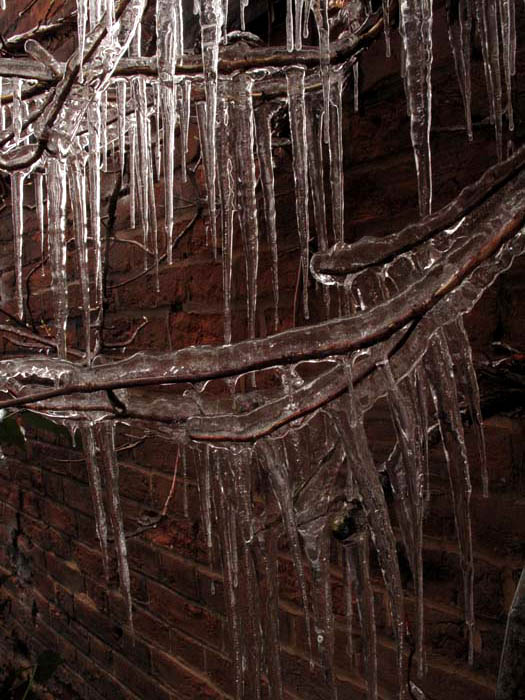
(Last winter’s icicles)

The weather doesn’t help, of course – too mild, too wet, too windy this year. At least some sort of status quo continues in the back yard where non-denominational  (or possibly JW) goldfinches arrive in pairs to feast on niger seeds as they do every day, a suitably attired mirror-image illusion of avian dandies on opposite sides of the bird feeder. Meanwhile, out in the dun damp arable fields that surround the city beyond the new-build green belt, fieldfares flock – newly arrived winter visitors from Scandinavia, the real place that is, not the parallel universe version. Elsewhere, the TV flickers like a well-behaved heart monitor as a nation prepares for the ritual liver damage and rictus-grinned high spirits that signify New Year’s Eve. Or, rather, the younger ones do: most older folk ensure they are safely tucked up in bed by the witching hour when a nation stumbles forward, arse over tip, across the calendar date line. The circle is, as they say, unbroken. Happy New Year.

Into the Sunset

IMG_0645Today heralds the winter solstice in the northern hemisphere. The last couple of weeks leading up to this seasonal turning point have been characterised, in eastern England at least, by unseasonally sunny skies and sunsets so magnificent they seem to be defying the script that dictates that late December should be grim, grey and gloomy. These are short days, certainly, but days that have been beautifully illuminated by a cool, low-slung orange sun. Oddly enough, this has put me in mind of another orange sun in an altogether more exotic place.

IMG_0648

U Bein’s Bridge at Amarapura near Mandalay in Myanmar/Burma is a well-known tourist hotspot in that country. The 1300m-long footbridge is thought to be the longest teak bridge in the world but that is not really the reason why visitors flock here. The truth is: this particular bridge is so photogenic that if you have ever perused the glossy travel literature offered by tour operators that deal with Myanmar the chances are you will have already seen it. Tour companies tend to know what tourists want and U Bein’s Bridge is a prime example of how the iconic and visually appealing has been successfully commodified. If aesthethic capital were on par with economic capital then Myanmar would be a wealthy country.

IMG_0650

Tour leaders tend to make sure that their foreign clients arrive here just before sunset – just enough time for a short boat excursion on Lake Taungthaman to get the best shots. While the sight of the bridge silhouetted by the setting sun is undeniably lovely, the experience can seem somewhat surreal as hordes of freshly arrived westerners eagerly snap the scene from gently bobbing boats rowed by local fishermen. The  impoverished fishermen, who have never owned even the most rudimentary camera in their lives, are sufficiently familiar with the ritual to know exactly what to do and where to go. Meanwhile, the monks and villagers who obligingly cross the bridge and unwittingly silhouette themselves for the benefit of the foreign photographers seem oblivious of their walk-on role in this unfolding daily drama.

IMG_0655

IMG_0663

IMG_0668

IMG_0672

Yugostalgic Belgrade

IMG_1948Although Tito was half Croat and half Slovene he spent most of his time as Yugoslav helmsman in the Serbian capital, Belgrade. It is here, in the leafy Topčider suburb that lies south of the city centre, where you can find the former leader’s memorial complex – an art gallery, museum and mausoleum scattered among birches, landscaped lawns and whimsical statuary. When I first visited back in 2005 this was a fairly neglected place. I don’t remember there being any other visitors and once the guards had let me through I had the place to myself. What I remember as being poignant were the one-way arrows on the walkway that led up to the mausoleum – indicators of once-necessary pedestrian traffic control that had long become meaningless.

IMG_1905         IMG_1939

Fast-forward seven years to a return visit. This time it is certainly busier and now there are English-language signs and even a gift shop at the gatehouse. Although the House of Flowers does not see the crowds that would have assembled here in the 1980s there appears to be a slow renaissance and I am informed that even a group of Slovene Hells Angels now make an annual pilgrimage here on 25 May, Tito’s birthday.

Ever the unrepentant tourist, I purchase a Tito mug and mouse-mat but pass on buying a T-shirt. At the mausoleum itself – the poetically named ‘House of Flowers’ – I swap cameras with a Romanian visitor as we take turns to pose by the marble slab that bear the simple inscription: Josip Broz Tito 1992 –1980. The ‘Old Museum’ next door bears a collection of the gifts presented to Tito during his long presidency. The gifts – no doubt just small sample – range from homemade socks and hand-stitched blouses to weaponry and musical instruments. Tito apparently loved dressing up and, correspondingly, there are plenty of costumes on display too, the most remarkable of which is a Bolivian witchdoctor’s outfit. Tito always was something of a shaman.

IMG_1913     IMG_1924

There are still those that miss him. Tito ruled for 35 years until his death in 1980 but his memory has been laced with ambiguity since the traumatic breakup of the Yugoslav federation. In recent years, though, there has been a considerable amount of revisionism taking place in the Balkan region. So-called ‘Yugostalgia’ is one reflection of this. Playful and ironic, as well as sentimental and nostalgic, the commonest expression of this phenomenon seems to be the Yugostalgia theme-café. There’s an excellent one in Sarajevo right next to the war museum but others can be found throughout the former Yugoslavia(although probably not in Kosovo where Bill Clinton is still undisputed king).

IMG_2129     IMG_2130

On my last trip to Serbia, the Republika café in Belgrade’s Skadarlija quarter, a former bastion of Yugostalgia, seemed to have closed for business but I was more than compensated in discovering a new kafana (traditional café-restaurant) behind the Vuk Theatre in the city centre. Like all the best places in Belgrade, Kafana Pavle is a little hard to find. Tucked away down a graffiti-scrawled alleyway that seems to go nowhere, its presence is given away by a menu card in a steamed-up window that proudly displays the red star and hammer and sickle. Inside, it’s an Aladdin’s cave of Yugostalgic bric-a-brac – framed photos of Tito, Lenin and even Stalin (if Stalin on display then you can be sure the intention is tongue-in-cheek). Shelves are piled with dog-eared photo books of old Yugoslavia and stacks of 1970s Yugo-rock LPs that have hairy young men sporting flared trousers and mullets on the cover. On the wall hangs a map of the former Yugoslavia in the shape of a red star.

IMG_1959    IMG_1918

Of course, all this serves as homage to a country that no longer exists but at least you can get a taste of what it might have once been at rare enclaves such as this. Just be sure to bring along a sense of irony and check in your cynicism at the door.