 The far west of Norfolk between Terrington St John and Walsoken on the Cambridgeshire border is often referred to as Fen country but technically it is part of the Norfolk Marshland. John Seymour in his Companion Guide to East Anglia (1970) writes: “The Marshlands are not to be confused with the Fens. The Marshlands, nearer to the sea than the Fens, are of slightly higher land, not so subject to flooding, and have been inhabited from the earliest times”.
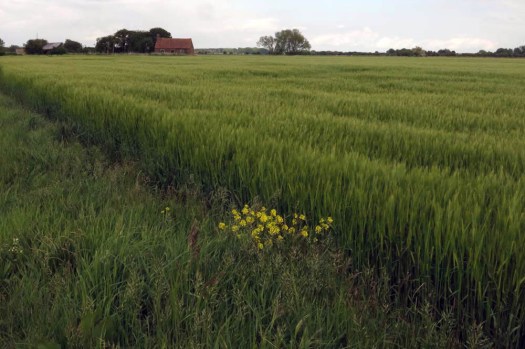
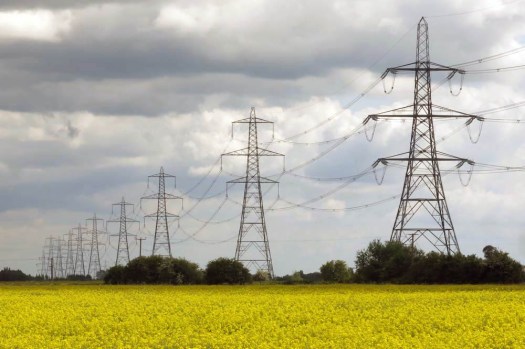
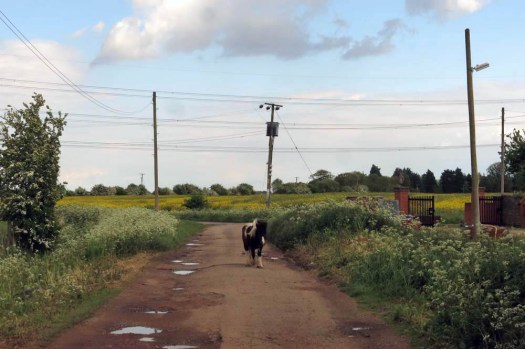
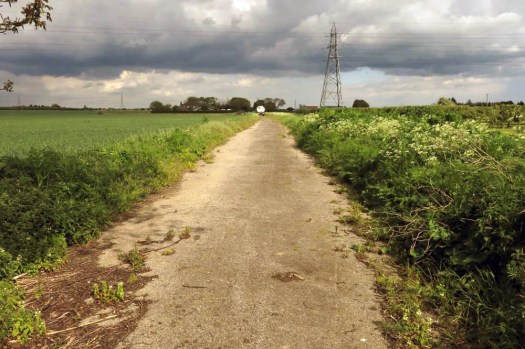
 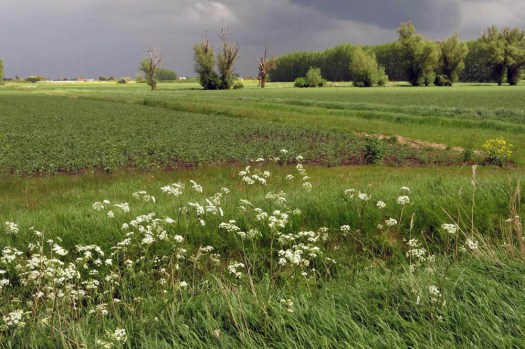 Like the Fens proper this is a region of wide horizons and big skies, a table-flat landscape of barley and mustard fields, of plantations of poplars and lonely farmsteads, of electricity pylons that march across the landscape like robotic sentinels. This is the countryside of The Goob, of Eastern European farm labourers and itinerant travelling folk. This is Tony Martin territory, where the stark cereal prairies of west Norfolk give way to the reclaimed farmland of the Cambridgeshire Fens. No airs or graces, no romantic rural idyll, this is countryside without finesse, without apology.
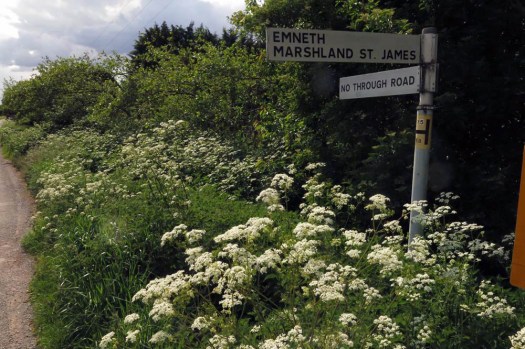
  This region, along with the Fens to the west, is a Brexit stronghold where many bear a grudge towards the Eastern Europeans who come to work in the fields here. Antipathy to itinerant farm labourers is nothing new and Emneth, a village located hard against the Cambridgeshire border, has become particularly, and probably unfairly, infamous thanks to its Tony Martin connection. Interestingly, John Seymour, writing in the late 1960s, describes Emneth as having “one of the pubs in the Wisbech fruit-growing district that does not display the racialist (and illegal) sign: NO VAN DWELLERS, and consequently it is one of the pubs in which a good time may often be had”. They still grow fruit in the Wisbech district but I cannot vouch for the welcome currently proffered by its pubs.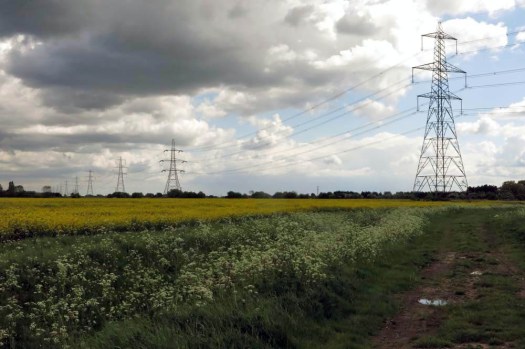
Hidden places, secret histories and unsung geography from the east of England and beyond
 East of Elveden