Thingvellir

IMG_4329a

The winter solstice marks the dark frontier of the annual cycle: that time of year when days are at their shortest; the period of feasting before the corner of the year is turned and daylight and warmth return to awaken barren nature with voluptuous spring. Perhaps it is appropriate to represent this seasonal turning point with images of another type of frontier – a geographical one?

Thingvellir in southern Iceland lies at the meeting point of two continents and two major tectonic plates – the Eurasian Plate and the North American Plate. Rather than a violent collision of rock, as in the case of great mountain ranges like the Andes or Himalayas, here the plates are pulling apart in opposite directions – the rift valley between the two is actually becoming wider by approximately 7 mm every year. This is, in fact, the only place on earth where seafloor spreading of a mid-ocean ridge can be seen on solid land rather than at the bottom of an ocean. Elsewhere in the world this might seem remarkable but in such a newborn baby of a landmass as Iceland, where it is possible to witness the creation of new terra firma before your very eyes, such phenomena seem almost commonplace.

IMG_4352a

By what we can only imagine was serendipity the earliest Viking settlers in Iceland chose this very place for their annual outdoor assembly. Thingvellir and the beautiful lake of Thingvallavatn, the largest lake in the country, lie at a natural crossroads that connects the south and west of Iceland and so make for a convenient location for large gatherings. It was undoubtedly a pragmatic choice but, even so, the landscape here seems to glow with an inherent magic that goes beyond mere aesthetic appeal. Such magic of place seems to be at its most powerful during the short days of mid-winter when these images were taken. Those early Icelanders clearly knew what they were doing.

Happy Christmas

IMG_4356a

Snettisham

IMG_3195

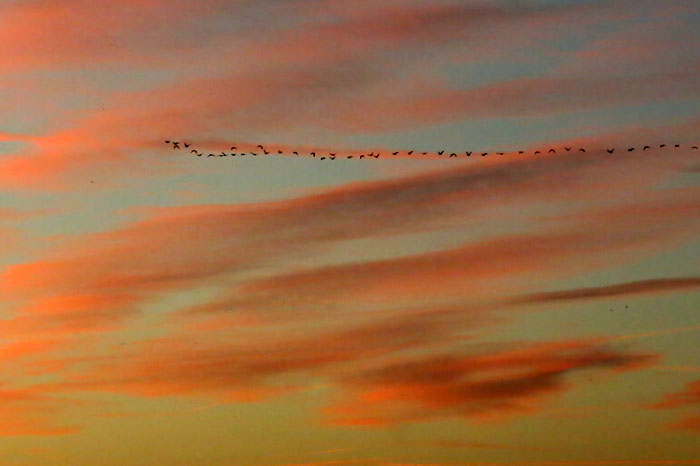
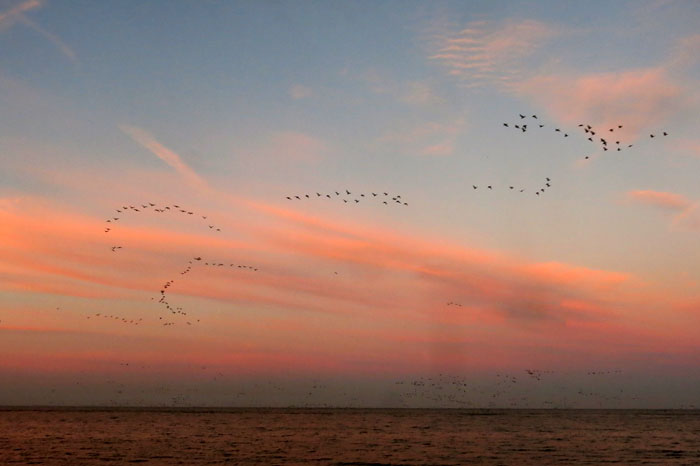
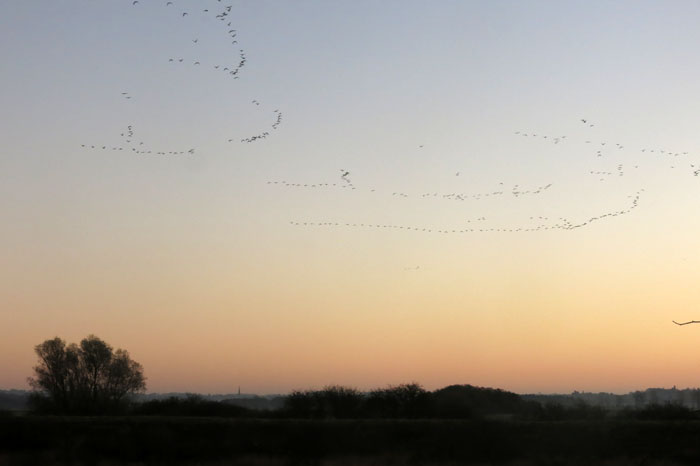
There’s a good omen as we leave Heacham before dawn: the sharp cry of a tawny owl emanating from somewhere in the woods. Fifteen minutes later, walking from Snettisham RSPB car park towards the beach at The Wash, there are already a  few skeins of geese in the sky, flying west, ready to breakIMG_3208fast on sugar beet fields.

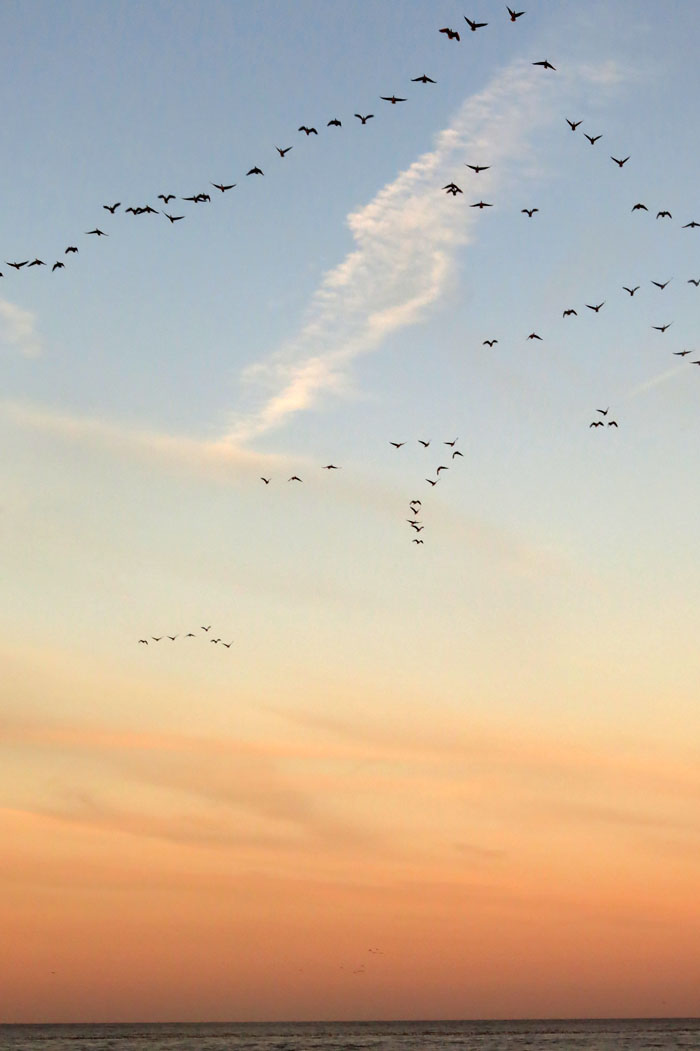
Mostly though, you hear them before you see them – a noisy gabbling racket coming from dark rafts of life out on the water. Tens of thousands of pink-footed geese overwintering from Greenland and Iceland – west Norfolk must seem like Shangri-La after all that tundra and icy water. The geese peel off in groups at regular intervals, forming fluid arrowheads as, honking excitedly, they fly west inland.

IMG_3247

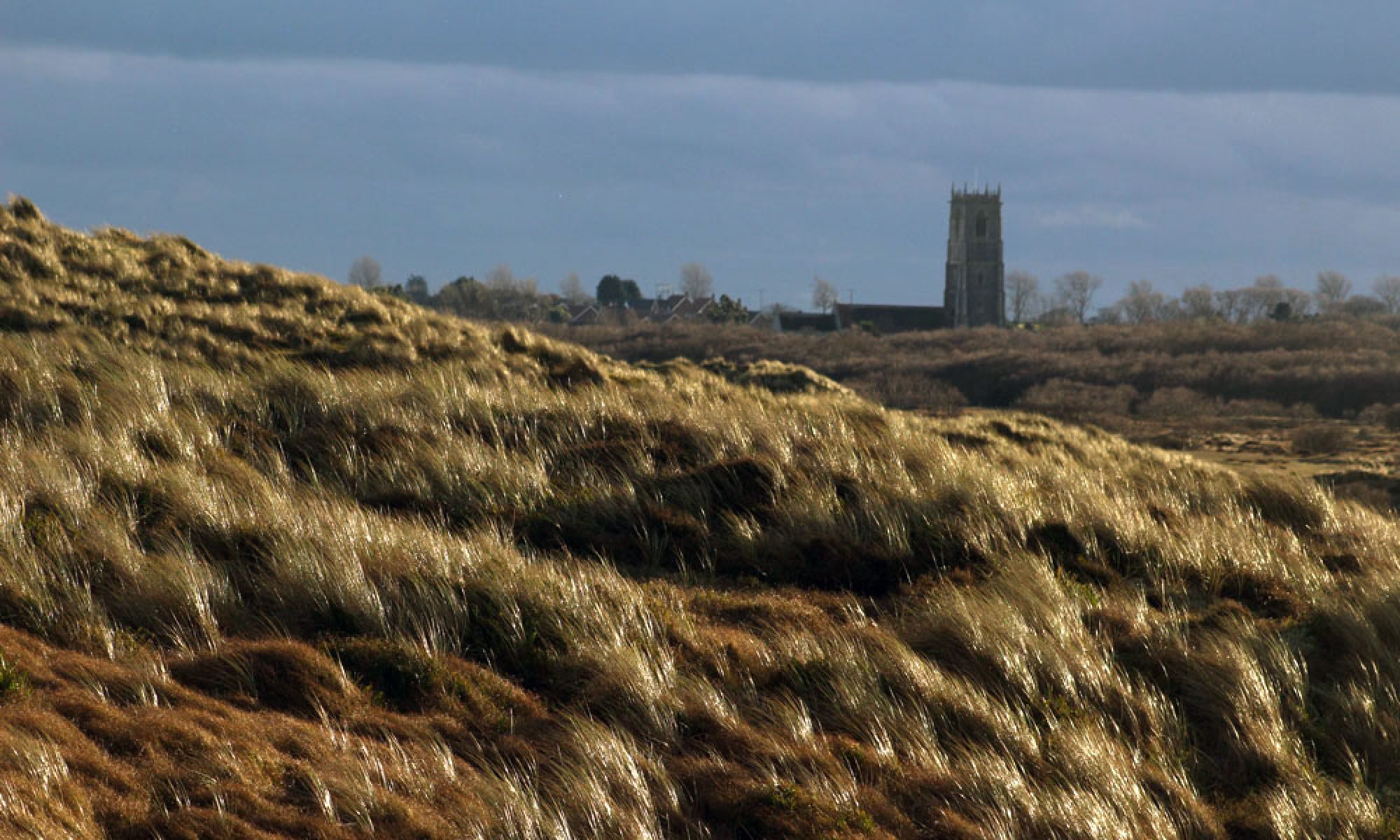
There is an unwritten discipline at work, and every bird seems to know its place in the squadron. Flapping inland, the geese merge loosely with other groups before they eventually disappear from view. To our human eyes, Snettisham church rising out of the mist is the only recognisable local landmark; perhaps its steeple serves as a beacon to the geese too, as they seem to know exactly where they are going. IMG_3218

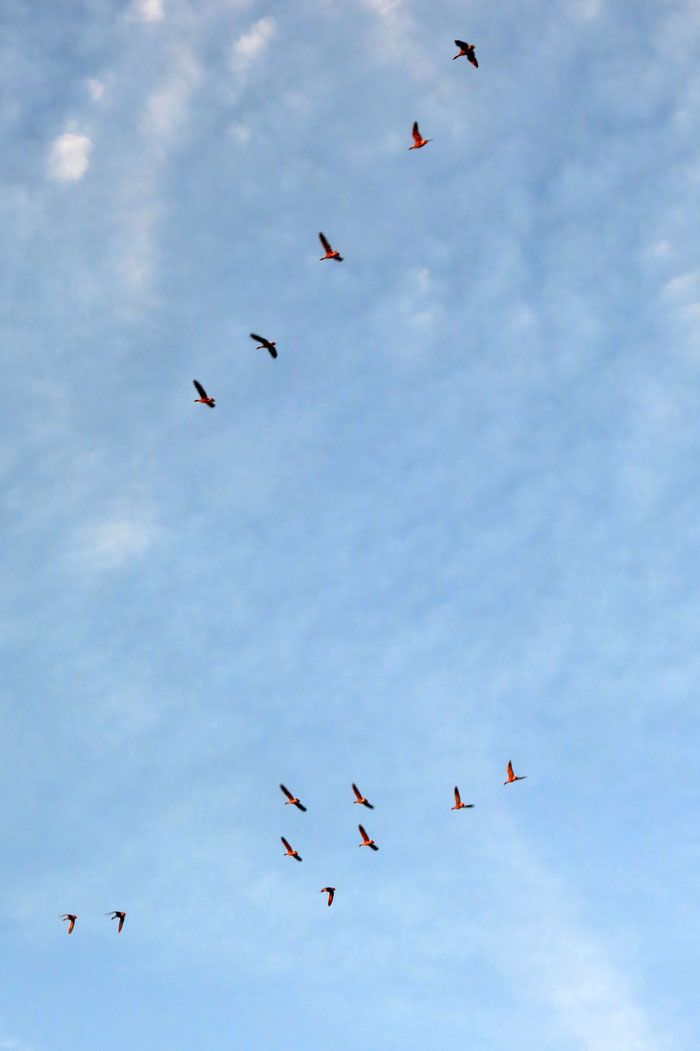
The sun rises over the land, a brilliant orange fire that lights the birds as they fly over head, turning their underbelly pink, orange, red. Momentarily they almost resemble flamingos.

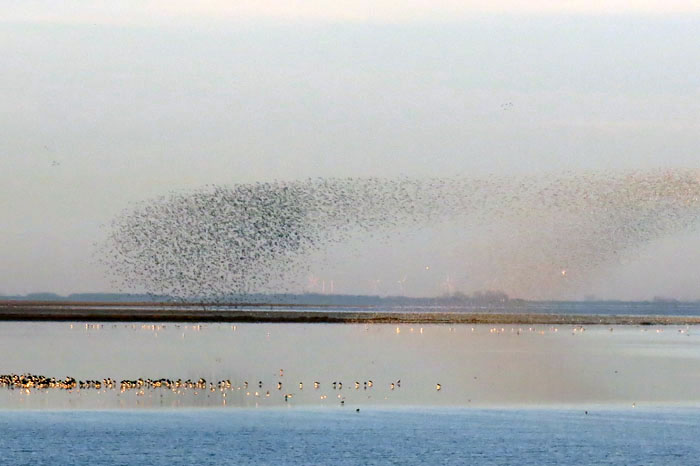
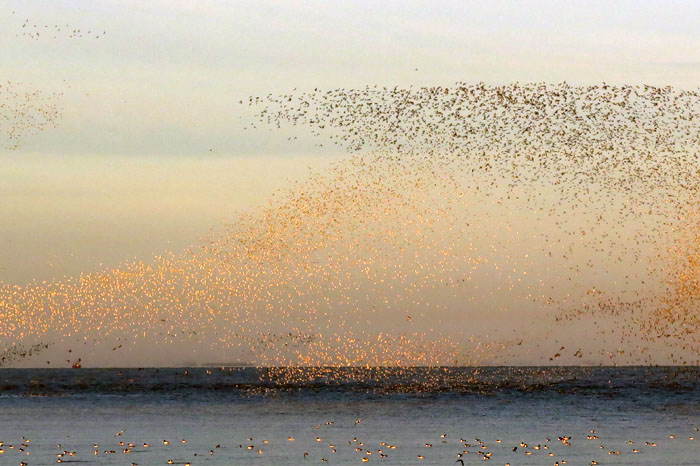
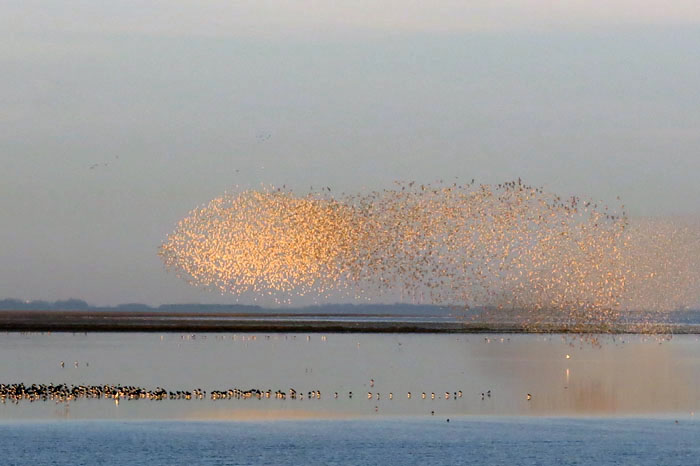
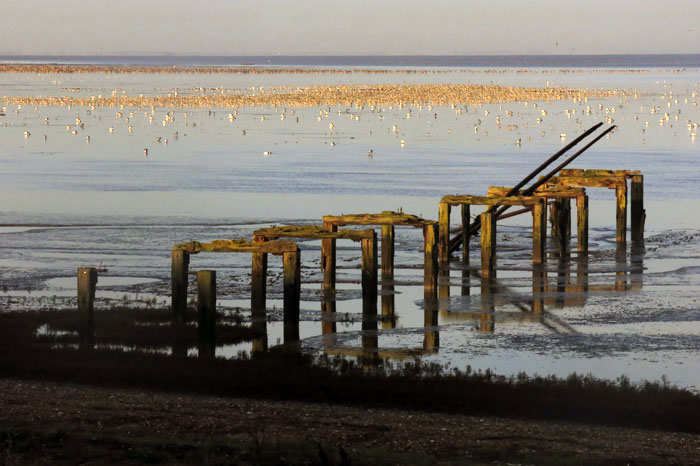
IMG_3244The tide is turning quickly and hidden sandbanks are revealed as the unseen moon sucks water from the land. As dawn-pink drains from the sky our attention is drawn to an untold number of hyperactive waders a little way to the south. Mostly dunlin, curlew and knot, it is the latter, another Arctic winter visitor, that are the most extraordinary as dense clouds of them rise sporadically into the sky, tightly grouped like starling murmurations. As they swiftly weave and turn, shifting the angle of their wings, the colour of this mass organism transforms dramatically from black to white to golden – the avian equivalent of a firework display. Such fleeting serendipity of form and colour: a photograph can hardly do this justice. As with the pink-footed geese, the Arctic’s seasonal loss is Norfolk’s gain.

IMG_3282IMG_3269IMG_3265

IMG_3267

IMG_3313 IMG_3344