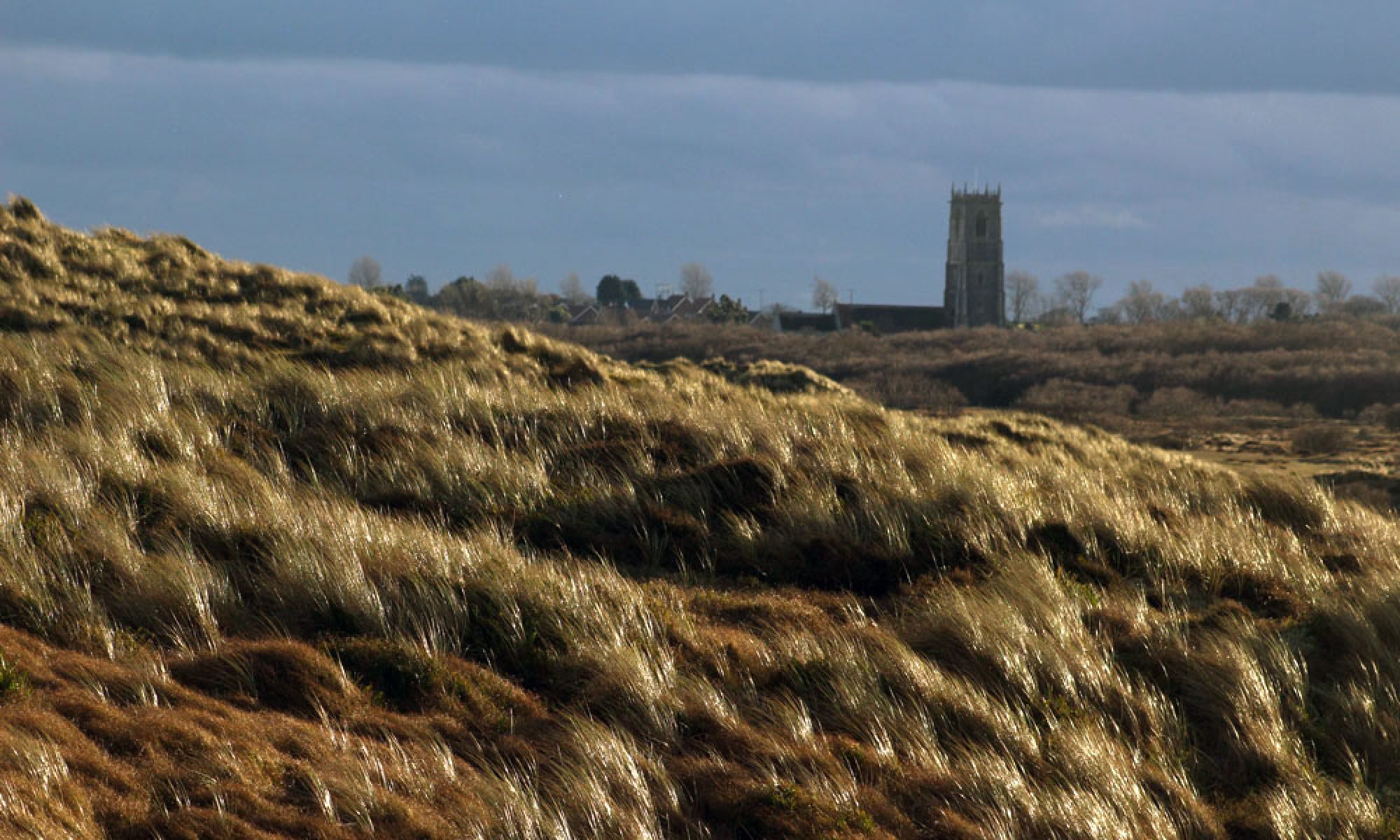
 Although Tito was half Croat and half Slovene he spent most of his time as Yugoslav helmsman in the Serbian capital, Belgrade. It is here, in the leafy Topčider suburb that lies south of the city centre, where you can find the former leader’s memorial complex – an art gallery, museum and mausoleum scattered among birches, landscaped lawns and whimsical statuary. When I first visited back in 2005 this was a fairly neglected place. I don’t remember there being any other visitors and once the guards had let me through I had the place to myself. What I remember as being poignant were the one-way arrows on the walkway that led up to the mausoleum – indicators of once-necessary pedestrian traffic control that had long become meaningless.

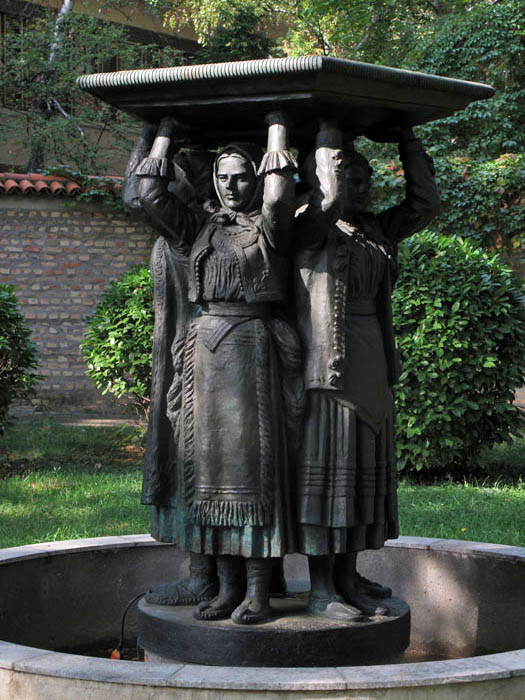
Fast-forward seven years to a return visit. This time it is certainly busier and now there are English-language signs and even a gift shop at the gatehouse. Although the House of Flowers does not see the crowds that would have assembled here in the 1980s there appears to be a slow renaissance and I am informed that even a group of Slovene Hells Angels now make an annual pilgrimage here on 25 May, Tito’s birthday.
Ever the unrepentant tourist, I purchase a Tito mug and mouse-mat but pass on buying a T-shirt. At the mausoleum itself – the poetically named ‘House of Flowers’ – I swap cameras with a Romanian visitor as we take turns to pose by the marble slab that bear the simple inscription: Josip Broz Tito 1992 –1980. The ‘Old Museum’ next door bears a collection of the gifts presented to Tito during his long presidency. The gifts – no doubt just small sample – range from homemade socks and hand-stitched blouses to weaponry and musical instruments. Tito apparently loved dressing up and, correspondingly, there are plenty of costumes on display too, the most remarkable of which is a Bolivian witchdoctor’s outfit. Tito always was something of a shaman.
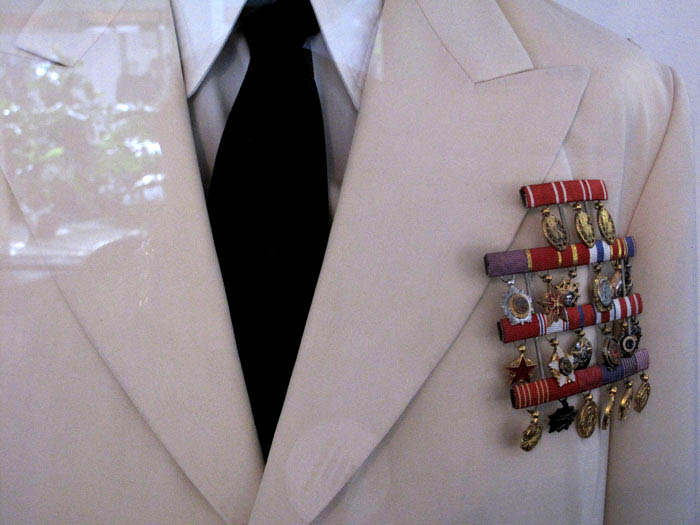

There are still those that miss him. Tito ruled for 35 years until his death in 1980 but his memory has been laced with ambiguity since the traumatic breakup of the Yugoslav federation. In recent years, though, there has been a considerable amount of revisionism taking place in the Balkan region. So-called ‘Yugostalgia’ is one reflection of this. Playful and ironic, as well as sentimental and nostalgic, the commonest expression of this phenomenon seems to be the Yugostalgia theme-café. There’s an excellent one in Sarajevo right next to the war museum but others can be found throughout the former Yugoslavia(although probably not in Kosovo where Bill Clinton is still undisputed king).

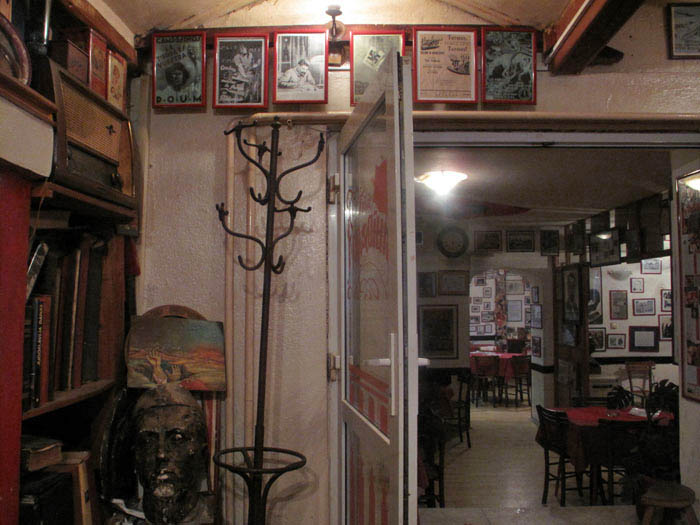
On my last trip to Serbia, the Republika café in Belgrade’s Skadarlija quarter, a former bastion of Yugostalgia, seemed to have closed for business but I was more than compensated in discovering a new kafana (traditional café-restaurant) behind the Vuk Theatre in the city centre. Like all the best places in Belgrade, Kafana Pavle is a little hard to find. Tucked away down a graffiti-scrawled alleyway that seems to go nowhere, its presence is given away by a menu card in a steamed-up window that proudly displays the red star and hammer and sickle. Inside, it’s an Aladdin’s cave of Yugostalgic bric-a-brac – framed photos of Tito, Lenin and even Stalin (if Stalin on display then you can be sure the intention is tongue-in-cheek). Shelves are piled with dog-eared photo books of old Yugoslavia and stacks of 1970s Yugo-rock LPs that have hairy young men sporting flared trousers and mullets on the cover. On the wall hangs a map of the former Yugoslavia in the shape of a red star.
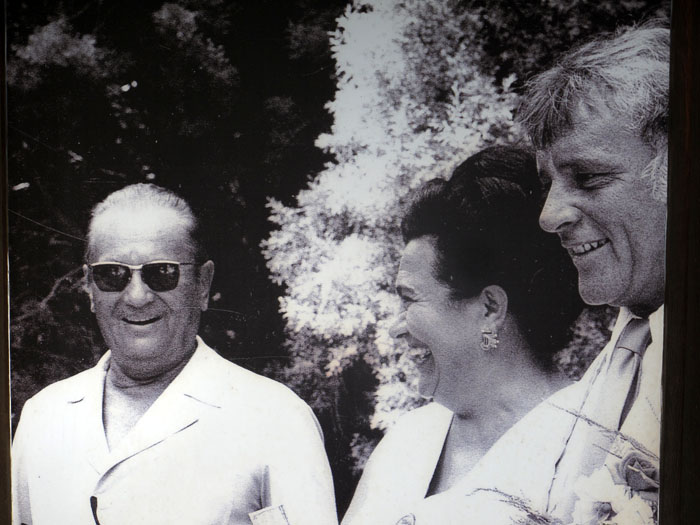

Of course, all this serves as homage to a country that no longer exists but at least you can get a taste of what it might have once been at rare enclaves such as this. Just be sure to bring along a sense of irony and check in your cynicism at the door.

 East of Elveden