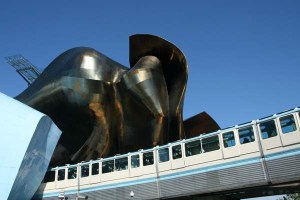
 Arriving in Seattle, having spent the last two weeks on a small boat, it was time to make use of other forms of transport to get home. Flying all the way Seattle-New York-London would have been straightforward enough but after a fortnight at sea where 8-10 knots was routine I was keen to not only feel the earth beneath my feet for awhile but also to continue at a relatively stately pace. So I opted for the train: first to Chicago, then to New York City from where I would, begrudgingly but inevitably, finally take to the air to cross the Atlantic. By way of a prelude to all this cross-continental railroading I made use of the few hours I had in the city by taking the Seattle Centre Monorail to visit the Space Needle – an all-too-short run across the city centre that actually passes through the multi-coloured sheet metal flanks of Frank Gehry’s Experience Music Project Museum before arriving at its terminus.
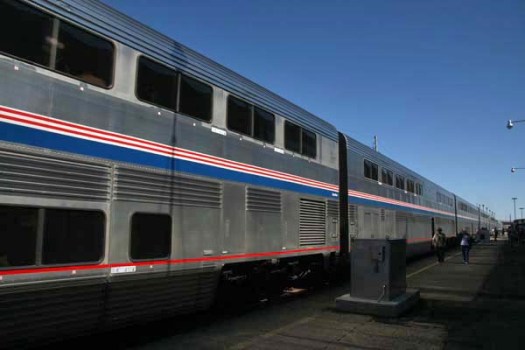 Amtrak‘s Chicago-bound Empire Builder leaves every afternoon from Seattle, taking around 46 hours – the best part of two days and nights – to reach the windy city on Lake Michigan’s shore. A parallel service runs from Portland in Oregon and both trains join up in the middle of the night at Spokane, Washington. On my first evening on the train I decided to head for the dining car just after passing through Everett, Washington. Here, I met up with Anne (Amtrak waiters insist on grouping solo travellers together at tables – dining on a train in the US is a sociable event whether you like it or not), a grandmother from Seattle on her way to visit various offspring way out east. Travelling in the United States, instant life stories and the brandishing of family photographs to total strangers are pretty much the norm and a shared meal is viewed as a welcome opportunity to make new friends. Anne was no exception. We were all friends here on the train – relaxed friendliness being the default setting of any sort of public transport in the USA. As our conductor would announce later on that night, “Ladies and gentlemen please ensure that you have not put your belongings on the neighbouring seat. We are expecting quite a few travellers to get on at Leavenworth and so you will probably have a new friend joining you when we get there. Let’s make them feel welcome.”
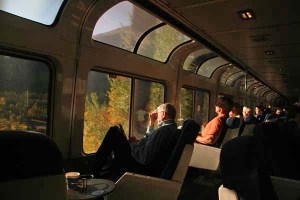 No-one came to sit next to me at Leavenworth but at Wenatchee an hour or so later I was joined by an elderly man called Dale who had just come from a week-long Lutheran Church retreat in the wilds of Washington State. “I see we’ve got us a groaner here”, were his first words to me as he wearily slumped down alongside, throwing a casual nod at the source of the shrill metallic wail that was emanating from the carriage wheels beneath us and had been doing so intermittently since leaving Seattle several hours earlier. Lean and bearded with plaid shirt and baseball cap, Dale might have looked like a typical retired Mid West farmer but was, in fact, a lay preacher in the no-nonsense undemonstrative Lutheran tradition. Despite an outward appearance that might give the impression of being a little ‘ornery’ Dale was the gentlest of men, with a playful, twinkly charm and a thoughtful, considered take on the world. We got talking about Alaska. He had spent a year there as a preacher on an isolated island close to the Arctic Circle just 40 miles from Russia (“And I mean 40 miles, not like that fool idea that that Sarah Palin woman had that she could see Russia from her house in Wasilla”). Dale’s northern sojourn had given him the greatest respect for the native people that endured the difficult living conditions of Alaska’s far north although he acknowledged that there were serious problems of alcohol abuse. “It was supposed to be a dry island but people being people they snuck it in somehow.”
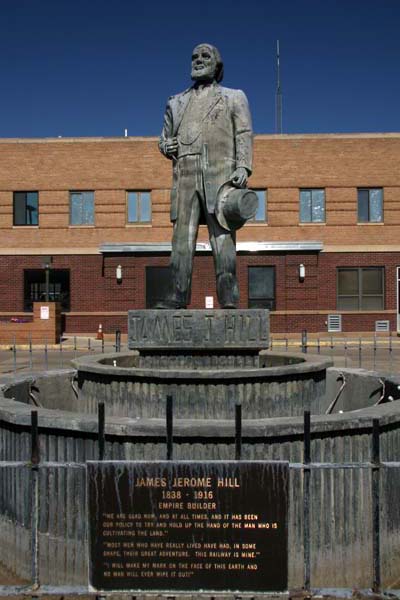
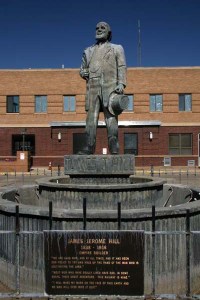 Catching a glimpse of western Montana’s Glacier National Park early the next morning – and adding on an hour as we reached the USA’s Mountain Time zone – the landscape soon settled down to the flat prarieland that we would be passing through for the rest of the day. This was cattle country but the grass looked thin and parched after a hot, dry summer. After Shelby, Montana, we entered cereal-growing territory, with newly harvested wheatfields rolling away to the horizon and tall grain silos by the roadside. Stopping at Havre, there was enough time to stretch our legs on the platform and examine the statue of James J. Hill, the founder of the Empire Builder route, in front of the station. A small group of Amish dressed in 19th-century added a touch of local colour. Amish generally spurn modern technology but are nothing if not pragmatic and for long distances it seems the train is an acceptable alternative to travel by horse and cart. Leaving Havre, we reached Glasgow (Montana, that is) two and a half hours later and passed into North Dakota and the Central Time zone in the early evening. North Dakota looked very much like eastern Montana had done and the view out of the window would not really change that much until we reached the industrial cities of the Great Lakes the following morning.
 An entire day spent passing through relentless treeless praries has an unsettling effect. It instills a sense of melacholia. Perhaps it is not so much its appearance but its sheer scale that affects one so: the isolated farming settlements, the unknown family dramas lived out behind closed doors; small lives in a big landscape. It is humbling to think that the pioneer settlers who ventured this way in the 19th century had little idea of what lay beyond the next mile west other than almost inevitable danger of one sort or another.
As a reminder of the early days of this great western migration we stopped at Fargo, Minnesota in the early hours, although most of us were asleep at the time. The city, originally called ‘Centralia’, later became ‘Fargo’ in honor of Northern Pacific Railway director and Wells Fargo Express Company founder William Fargo. The arrival of the Northern Pacific Railroad here bestowed the city with the reputation as ‘Gateway to the West’.
Early next afternoon we shuffled through the endless urban sprawl of Milwaukee. Famous 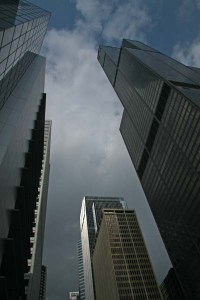 for its brewing industry (inspiring the song, What’s Made Milwaukee Famous Has Made a Loser Out of Me), the city’s huge car parks and warehouses put me in mind of a super-sized Swindon, although to my knowledge no tragic country anthems have ever been written about the Wiltshire town. Two hours later we pulled into Chicago, just twenty minutes behind schedule. Chicago’s Union Station lies in the heart of the city’s downtown district, towered over by some of some of the tallest buildings of the world. After southeast Alaska, where tall buildings and even tall people are scarce, this was the most urban environment imaginable. Quite a stark contrast from the tranquil waters of the Inside Passage I had been sailing through just a few days earlier. There again, so was Seattle.
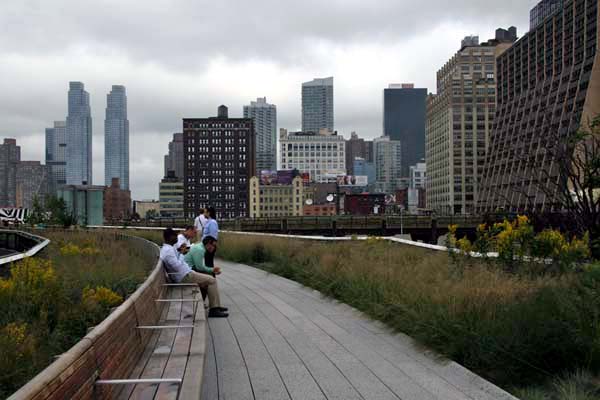 New York City isn’t the sort of place that immediately springs to mind when one thinks of walking but the city is a treasurehouse for urban exploration. Walking – with a little bit of assistance from the city’s comprehensive bus and subway system – is by far the best way to get under the skin of the ‘Big Apple’ and, to squeeze the life out of this hackneyed metaphor, who knows what you might find – pips, juicy flesh, maybe even a worm or two?Unlike many American cities, where the assumption is that people prefer to move around in noisy mobile metal boxes, New York is a relatively pedestrian-friendly place. For a wholesome, petrochemical-free experience, there’s always Central Park, but for the past year or so there has been another traffic-free route through Manhattan’s West Side that has transformed a pre-exisiting industrial conduit to a green pedestrian byway.
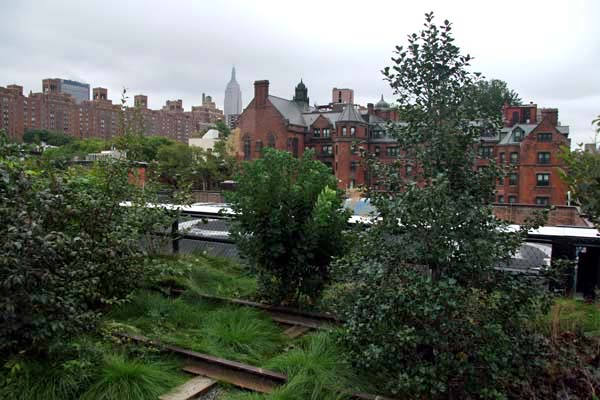 New York’s High Line, a mile and a half of raised walkway above the working class neighbourhoods of the West Side, was once part of an elevated railway that was built in the 1930s to shift goods to and from the slaughterhouses and packing plants of the Meatpacking District around Gansevoort Street. Defunct by the mid 1980s, the rail line has since been lovingly transformed into a fine green artery that links that same meaty neighbourhood with West 34th Street in Hell’s Kitchen to the north. In place of sleepers and railtracks a landscaped walkway now threads along its length, which is lined on both sides by plentiful benches and seating areas, and long leafy borders filled with grasses, perennials and shrubs. To add a bit of glamour, the Empire State Building peeks above the surrounding city roofline at regular intervals as a reminder that Midtown’s architectural bling is really not so far away.
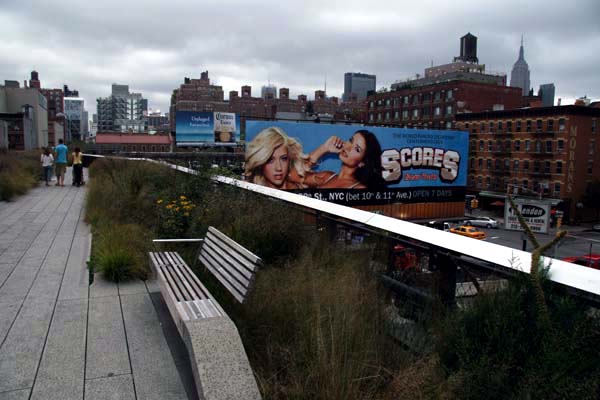 The real beauty of the High Line is that it does not really have any specific sight to see at either end – the Meatpacking District was never a big tourist draw, although the neighbourhood is currently on the up and being gentrified faster than you can say ‘sushi bar’. Sometime in the future there will be a new American art museum built at Gansevoort Street but, for the time being, rather than any particular goal, the attraction is the High Line itself – the walking of it. What better way to take in the city than to stroll above the streets and buildings where New Yorkers actually work and play out their lives?
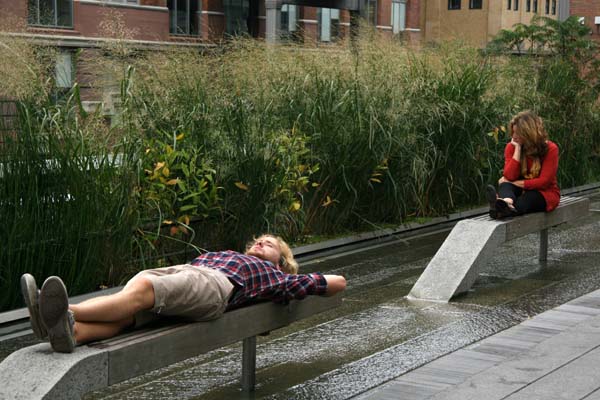 Technically speaking, the High Line is an urban park rather than a mere thoroughfare. Its not just for tourists but a place filled with office workers eating sandwiches and friends taking a stroll together – native New Yorkers looking down on the streets they have known all their lives and seeing them from a fresh perspective. It is also quite remarkably crime-free.
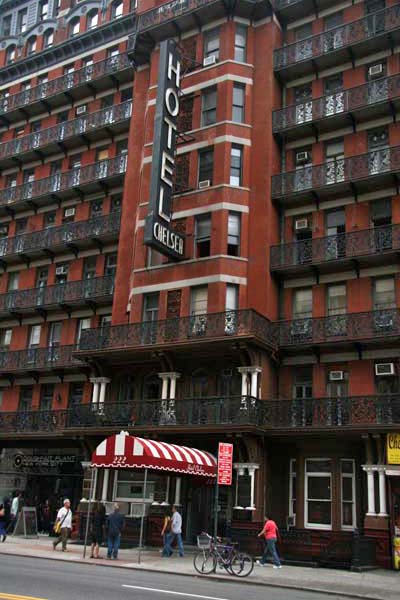 Halfway along, just south of Hell’s Kitchen, the route runs through the West Chelsea district and anyone wishing to pay homage to Sid Vicious or Dylan Thomas (who both died here), or Jack Kerouac, Bob Dylan or Joni Mitchell (who all embraced its muse), could do worse than make a short pilgrimage to visit the famous Chelsea Hotel at West 23rd Street. Sadly, the hotel has recently been bought up by a developer and is no longer open to ‘receive new guests’, so artists, writers and rock stars in search of a creative Bohemian atmosphere or a suitable venue for high-spirited shenannigans are now obliged to look elsewhere.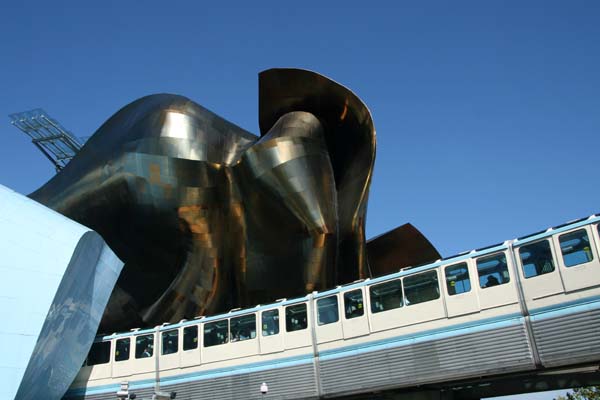

 East of Elveden